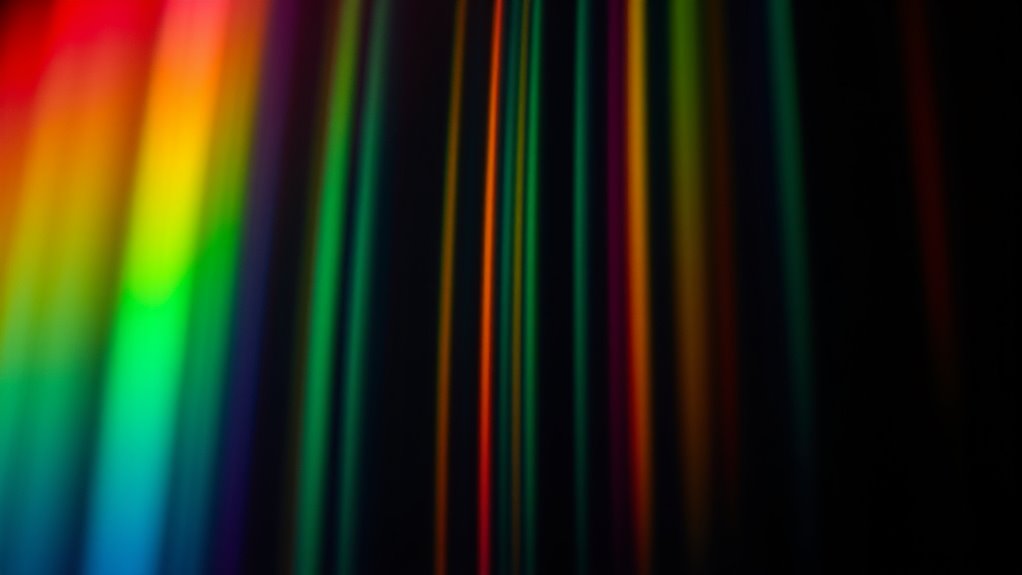

The rainbow effect on DLP projectors appears as quick, colorful flashes caused by the spinning color wheel that separates and blends red, green, and blue light. You might notice it more during high-contrast scenes or fast motion. To reduce this effect, choose a projector with a faster-spinning color wheel, or consider models using LED or laser technology that eliminate the wheel altogether. Exploring these options can help you enjoy smoother visuals—if you keep exploring further, you’ll discover how to minimize this phenomenon effectively.

Get business pricing on your home office setup
- Business-only prices and quantity discounts
- Tax-exempt purchasing
- Multiple users, one account, clear invoices
Key Takeaways
- The rainbow effect is caused by rapid color separation in DLP projectors’ spinning color wheels, creating brief rainbow flashes.
- Increasing the speed of the color wheel minimizes the duration of color segments, reducing visible rainbow flashes.
- Using projectors with multiple or faster-spinning color wheels, or switching to LED or laser tech, helps eliminate the rainbow effect.
- Adjusting viewing conditions, such as sitting farther from the screen or dimming the room, can lessen rainbow flash perception.
- Individual sensitivity varies; testing different projector models can help find one with minimal rainbow effect for your viewing needs.

If you’ve ever noticed fleeting rainbow-like flashes when watching a DLP projector, you’re experiencing the rainbow effect. This phenomenon occurs because DLP projectors use a spinning color wheel to produce colors. As the wheel spins rapidly, it separates light into red, green, and blue components, which are then combined to create the full image. However, because the color wheel temporarily isolates each color, your eyes may perceive brief flashes of the individual colors—these are what create the rainbow effect. This effect is especially noticeable during high-contrast scenes or quick motion. The key factor here is color separation, which is inherent in the DLP technology, and your viewer sensitivity to these fleeting color shifts. Some people are more prone to noticing these flashes because their eyes are more sensitive to rapid changes in light or color contrast. If you’re particularly sensitive, the rainbow effect can be distracting and diminish your viewing experience.
To minimize the rainbow effect, understanding the role of color separation is essential. Modern DLP projectors have tried to combat this by improving the speed and quality of the color wheel, reducing the duration of each color segment. Faster-spinning wheels mean the colors blend more seamlessly, making the flashes less perceptible. Additionally, some projectors incorporate multiple color wheels or use different technologies altogether, like LED or laser illumination, which eliminate the need for a spinning wheel and consequently the rainbow effect. If you’re highly sensitive, choosing a projector with a faster color wheel or one that employs alternative color technology can make a significant difference. Color wheel technology influences how quickly the colors are blended and impacts the visibility of the rainbow effect.
Another way to lessen the rainbow effect involves adjusting your viewing conditions and settings. Sitting closer to the screen or in a darker room can reduce the visibility of rainbow flashes. Also, some projectors offer settings to smooth out color transitions or reduce the contrast between colors, which can help diminish the flashes’ prominence. Keep in mind that individual viewer sensitivity varies; some people might never notice the effect, while others find it quite bothersome. If you’re concerned about this, testing different models before purchasing is a good idea. Ultimately, understanding the science behind color separation and recognizing your own sensitivity will help you select a projector that minimizes the rainbow effect, ensuring a more comfortable viewing experience.
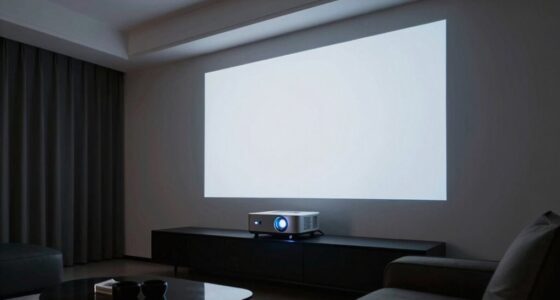
DLP projector with fast-spinning color wheel
As an affiliate, we earn on qualifying purchases.
As an affiliate, we earn on qualifying purchases.
Frequently Asked Questions
Can the Rainbow Effect Cause Long-Term Eye Strain?
Yes, the rainbow effect can cause long-term eye strain, especially if you’re sensitive to color vision differences. Constant exposure might lead to visual fatigue, making your eyes work harder to process the flashing colors. Over time, this strain could cause discomfort or headaches. To minimize these effects, take regular breaks, adjust your seating, or consider alternative display options if you notice persistent eye discomfort.
Does the Rainbow Effect Vary Between Different Projector Brands?
Is the rainbow effect a one-size-fits-all experience? Not at all. When you compare projector brands, you’ll notice significant rainbow effect variability. Some brands use advanced technology to minimize this phenomenon, while others may exhibit it more prominently. Your choice of projector brand directly impacts how much rainbow effect you see, so it’s wise to do projector brand comparisons to find a model that suits your sensitivity and viewing preferences best.
Are There Specific Settings to Reduce Rainbow Artifacts?
Yes, you can reduce rainbow artifacts by adjusting settings like color wheel adjustments and refresh rate tuning. Try changing the color wheel speed or switching to a faster refresh rate to minimize the effect. Experiment with these settings through your projector’s menu to see what works best for you. These tweaks help synchronize color shifts and lessen rainbow visibility, providing a smoother, more enjoyable viewing experience.
How Does Ambient Lighting Influence Rainbow Perception?
Imagine watching a vibrant scene, but added ambient light dims the colors and blurs the rainbow’s flicker. Bright surroundings make you less sensitive to the rainbow effect because your perception variance shifts, reducing its visibility. Conversely, dim lighting heightens your awareness, making the rainbow artifacts more noticeable. So, controlling ambient light helps you experience clearer images, minimizing the rainbow perception and enhancing your viewing enjoyment.
Is the Rainbow Effect More Common in Certain Age Groups?
Yes, the rainbow effect tends to be more common in younger viewers due to age-related sensitivity. Youth perception is often sharper, making them more aware of the color flashes caused by DLP projectors. As you grow older, your eyes typically become less sensitive to these effects, so adults usually notice the rainbow effect less frequently. If you’re concerned, consider alternative projector technologies that minimize this visual phenomenon.
As an affiliate, we earn on qualifying purchases.
Conclusion
Imagine watching your favorite movie, fully immersed, when suddenly a fleeting rainbow flashes across the screen. That’s the rainbow effect on DLP projectors—a small but noticeable distraction. Just like tuning a guitar string to harmony, adjusting settings or choosing different models can minimize this effect. With a little patience, you can transform your viewing experience from a fleeting distraction into a seamless, vibrant journey—ensuring every scene feels as magical as the first.
projector for minimal rainbow effect
As an affiliate, we earn on qualifying purchases.
As an affiliate, we earn on qualifying purchases.
high contrast home theater projector
As an affiliate, we earn on qualifying purchases.
As an affiliate, we earn on qualifying purchases.
Fall Picks
fall essentials
As an affiliate, we earn on qualifying purchases.