TL;DR

Get business pricing on your home office setup
- Business-only prices and quantity discounts
- Tax-exempt purchasing
- Multiple users, one account, clear invoices
Apple Home can display live power use and historical energy data for compatible Matter accessories, alongside separate features for grid forecasts and some utility accounts. The setup and available data depend on device support, location, and—in the case of whole-home utility data—whether a supported provider is available.
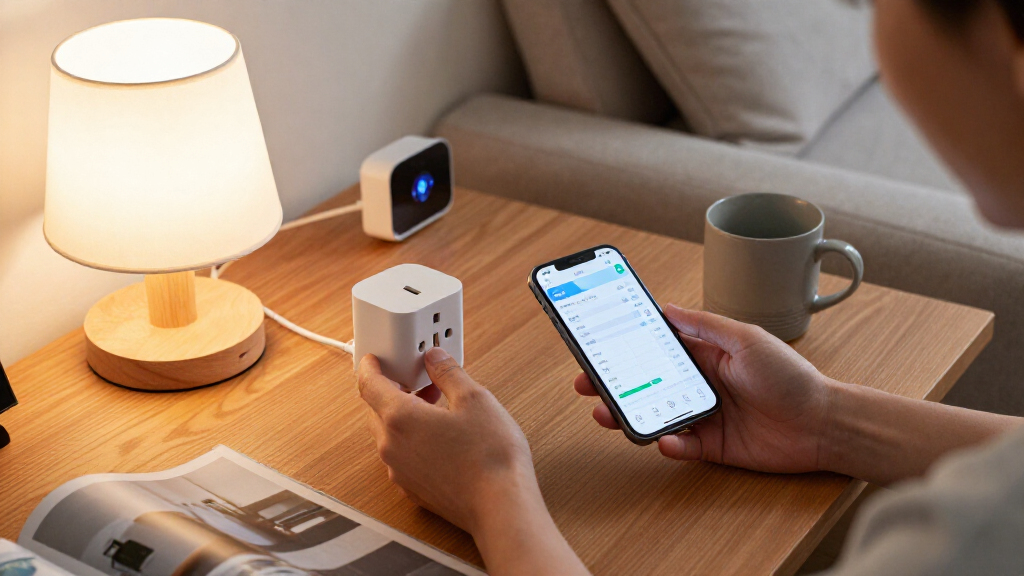
Apple Home can show live power use and historical energy readings from compatible Matter accessories, according to a setup guide published by Matter Alpha. The guide outlines where to find the data in the Home app and how to turn on Grid Forecast, giving users a way to inspect supported devices’ consumption without relying only on each device’s separate app.
To check live readings, users need an energy-monitoring-capable Matter device added to Apple Home. The guide says to open the Home app, tap Energy or Grid Forecast, then choose Power. The Power screen lists compatible devices; when one is drawing electricity, its current consumption appears beneath its name. A total for the listed devices is shown on the Energy screen’s Power button.
For historical readings, the guide directs users to Energy or Grid Forecast, then to wait for Usages to appear below the Grid Forecast timeline. After opening Usages, users can select a device from the drop-down menu. Apple Home then displays usage totals and averages in charts organized by day, week, month, six months, and year, according to the report.
The guide names the Inovelli White Series Smart Dimmer Switch, Aqara Thermostat Hub W200, and Eve Energy In-Wall Outlet as devices its authors have seen working with Apple Home’s energy display. That list is not presented as an exhaustive compatibility directory. A Matter label alone does not establish that a product supports energy reporting, so users should check a device’s specifications and the data Apple Home actually shows, including which Matter devices are certified.
What Home Energy Readings Can Show
Live and historical readings can help users see which connected devices are drawing power and how their consumption changes over time. That can make it easier to spot patterns or investigate a device that appears to use more energy than expected. The readings apply to compatible accessories; they should not be treated as a complete account of household electricity use.
Apple Home also offers two distinct ways to add broader energy context. Grid Forecast indicates when local electricity is expected to be cleaner or less clean, while utility-account integration can show whole-home consumption for supported providers. These tools may help users compare device use with grid conditions or their own household totals, but the guide does not claim that tracking alone lowers bills or emissions. Any savings depend on usage choices, local electricity supply, and the customer’s rate plan.
Products Worth Considering

Philips Hue Smart Light Starter Kit with Bridge and 4 White and Color A19 Bulbs

Levoit Vital 100 Air Purifier for Home Bedroom

Levoit Core 400S-P Smart Air Purifier for Large Rooms
As an affiliate, we earn on qualifying purchases.
Three Sources of Energy Information
The report describes three separate features in Apple Home: readings from supported accessories, a location-based Grid Forecast, and whole-home data supplied by participating utilities. The first reports on individual devices that support energy monitoring. Grid Forecast is a timeline about local electricity conditions, not a measurement of a particular device’s consumption.
According to Matter Alpha, Grid Forecast is available to homes in the contiguous United States, excluding Alaska and Hawaii, and requires Location Services to be enabled for the Home app and Home Service. The guide says utility-account linking is limited to Pacific Gas and Electric and Southern California Edison. It describes that integration as covering overall home use rather than only smart accessories. The article’s feature and availability details are attributed to the supplied guide and may depend on software, region, and provider support.
““When a device is actively drawing power, real-time energy consumption data will appear underneath its name.””
— Matter Alpha guide
Compatibility and Coverage Limits
The supplied report does not give a complete list of compatible Matter devices, nor does it specify whether every supported accessory exposes the same readings or historical time ranges. It also does not explain how quickly data updates, how long records are retained, or whether readings are identical to a utility meter’s billing measurements. Users may see different options depending on their hardware, software version, location, and provider.
The guide identifies iOS 27 as the release in which Apple Home’s energy features were introduced, but the supplied material does not include an Apple statement independently confirming the rollout or its current availability. It also does not provide dates for additional utility providers or geographic expansion. Those details remain unconfirmed by the source material.
Check Device and Regional Support
Users can start by confirming that an accessory supports energy monitoring, adding it to Apple Home, and checking Energy or Grid Forecast for a Power screen. To turn on Grid Forecast, the guide says to open the Home app’s menu, choose Home Settings, then Energy, and enable Show Grid Forecast. Users can tap the bell icon and select Notify Me for clean-energy notifications; a Grid Forecast widget is also described for iOS and macOS.
For whole-home readings, eligible customers can open Home Settings, choose Energy, tap Connect Account, and follow the prompts to link a utility account. Feature availability should be checked against current Apple and utility information, particularly for households outside the stated regions or served by other providers. The supplied report gives no announced date for broader support.
Key Questions
Does every Matter device show energy use in Apple Home?
No. The guide says live and historical readings require a Matter accessory with energy-monitoring capabilities. Matter compatibility by itself does not confirm that a product reports energy.
Where do I find a device’s live power reading?
Open Apple Home, tap Energy or Grid Forecast, then tap Power. Compatible devices appear in a list, with a live reading beneath a device name when it is drawing power, according to the guide.
How far back can Apple Home show device usage?
Matter Alpha says the historical charts can be sorted by day, week, month, six months, and year. The supplied report does not state how long Apple retains records for every device or account.
Can Apple Home show my entire home’s electricity use?
The guide says whole-home usage can be displayed by linking an eligible utility account. It lists Pacific Gas and Electric and Southern California Edison as supported providers at the time described; availability elsewhere is not established by the supplied material.
What does Grid Forecast measure?
Grid Forecast provides a timeline indicating when local electricity is expected to be cleaner or less clean. It is separate from a Matter accessory’s measured device consumption and, according to the guide, requires Location Services and is available in the contiguous United States.
Source: matteralpha.com