To stop guessing, use a speaker placement calculator that guides you based on your room’s dimensions and features. It considers acoustics, angles, and distances to optimize sound quality, while providing placement scores to show how well your setup performs. Simply measure your space, input the details, and follow the recommendations for positioning and adjustments. Keep exploring these tools to reveal better sound and enjoy a more immersive listening experience.
Key Takeaways
- The calculator provides data-driven recommendations for optimal speaker placement based on room measurements and acoustics.
- Accurate input of room dimensions and features ensures precise placement scores and effective sound balancing.
- Proper placement involves positioning speakers at ear level, equidistant from the listening spot, and away from walls or corners.
- Adjustments like angling speakers and fine-tuning levels improve sound clarity and stereo imaging as guided by the calculator.
- Regular calibration and acoustic treatments complement the calculator’s advice, ensuring immersive, high-quality sound.
Understanding the Basics of Speaker Placement
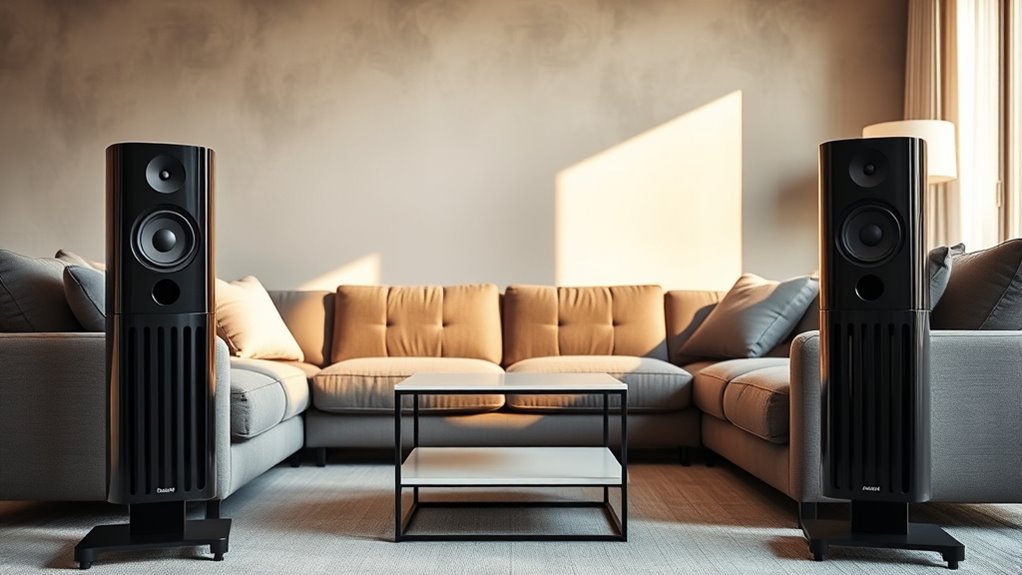
Understanding the basics of speaker placement is essential for creating a balanced and immersive sound experience. Proper placement helps guarantee your speakers work with your room’s acoustics, so acoustic treatment is vital. You’ll want to position your speakers at ear level and equidistant from your listening position to achieve ideal sound. Keep in mind that speaker calibration can fine-tune your setup, correcting any inconsistencies caused by room acoustics or speaker angles. Avoid placing speakers too close to walls or corners, as this can cause unwanted bass buildup or reflections. Additionally, using a headphone can help you identify the true sound quality and stereo imaging of your setup during calibration. By understanding these fundamentals, you set a solid foundation for a more accurate and pleasing listening environment. Proper speaker placement, combined with acoustic treatment and calibration, transforms your space into a true sound haven.
Why Proper Positioning Matters for Sound Quality
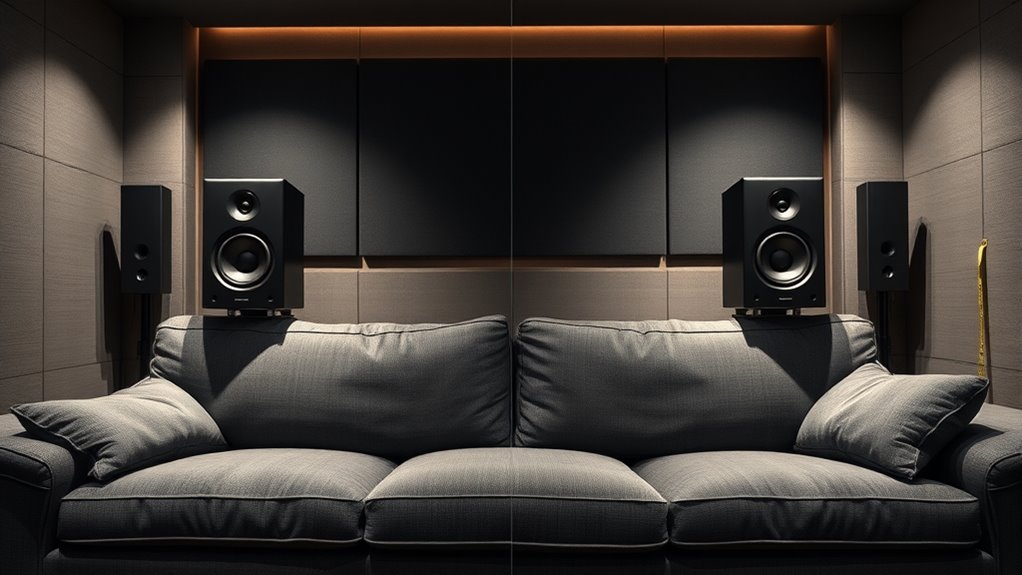
Proper positioning of your speakers directly impacts the clarity, depth, and overall quality of your sound. When your speakers are correctly placed, acoustic treatment becomes more effective, reducing unwanted reflections and echo. This creates a cleaner, more accurate listening environment. Additionally, proper placement simplifies speaker calibration, making it easier to fine-tune sound levels and balance. Poor positioning can cause sound muddiness, uneven bass, and inconsistent stereo imaging, which diminishes your listening experience. By carefully considering speaker placement, you optimize acoustic properties and guarantee your system performs at its best. This not only enhances sound quality but also minimizes the need for excessive adjustments later. Proper positioning is an essential step toward achieving professional-grade sound in your space.
The Core Principles Behind the Calculator
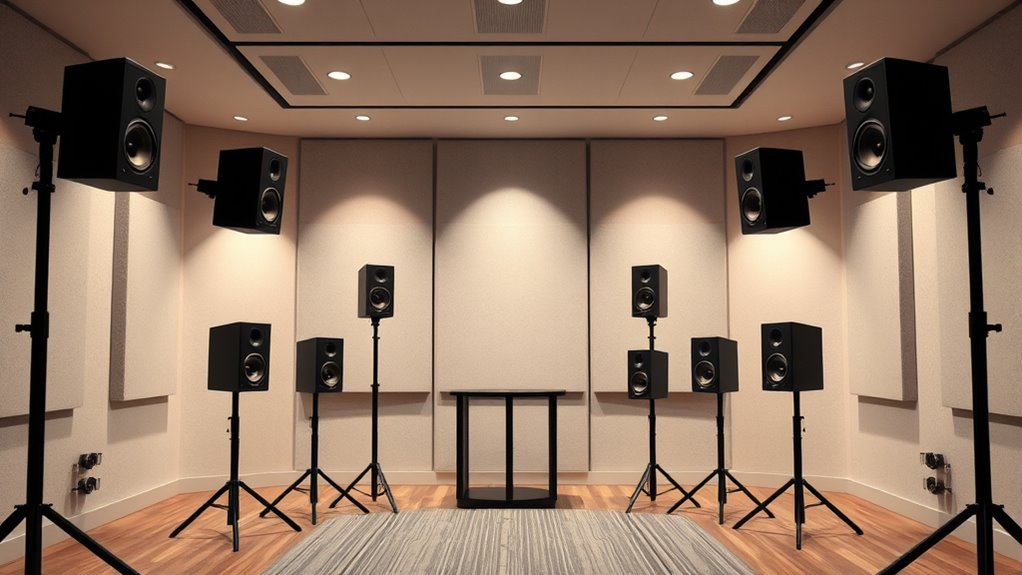
The core principles behind the speaker placement calculator are rooted in acoustics and ergonomic guidelines that guarantee ideal sound distribution. It considers how sound waves interact with your room, emphasizing proper acoustic treatment to reduce reflections and echoes that can distort audio. The calculator also relies on accurate speaker calibration to ensure each speaker produces the correct output levels and timing. By aligning speakers correctly, you minimize phase issues and achieve a balanced, immersive soundstage. These principles help you optimize your setup without guesswork, ensuring your speakers work together harmoniously. Ultimately, understanding these core concepts allows you to create a listening environment where sound is clear, well-defined, and true to the original recording. Additionally, continuous monitoring of AI behavior in related fields highlights the importance of ongoing adjustments and safety measures to maintain optimal performance.
How to Input Your Room Dimensions and Setup Details
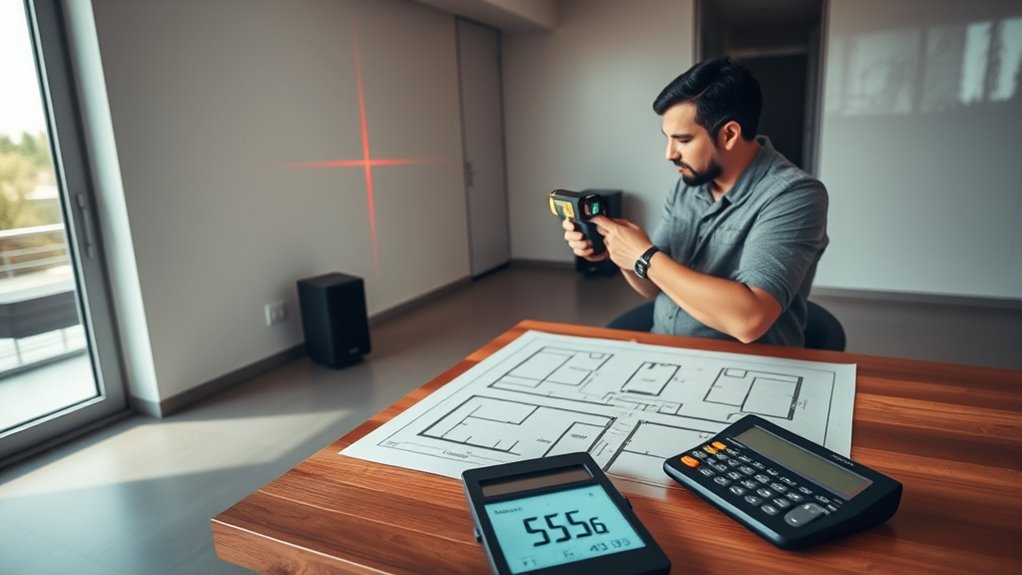
To get accurate results, you need to input your room dimensions carefully. Make sure to measure the length, width, and height precisely, using a reliable tool. Then, detail your speaker arrangement to guarantee the calculator can optimize placement effectively. Additionally, considering your ambient-light conditions can help tailor the speaker placement for optimal sound performance.
Accurate Room Measurements
Accurate room measurements are essential for getting the best speaker placement results, so take the time to measure carefully. Proper input of your room dimensions guarantees effective speaker calibration and helps you identify where acoustic treatment might be needed. Here’s what to do:
- Measure the length, width, and height of your room with a tape measure, noting exact numbers.
- Record the placement of windows, doors, and any built-in features that could affect sound.
- Note the position of existing acoustic treatments, like panels or bass traps.
- Input these measurements precisely into your speaker placement calculator for ideal results.
- Consider the room’s shape and any building materials that may influence sound reflections and absorption.
Getting these details right helps ensure your setup minimizes reflections and sound issues, providing a balanced listening experience.
Detailing Speaker Arrangement
Inputting your room dimensions and setup details accurately is vital for effective speaker placement. Start by entering your room’s length, width, and height to guarantee precise calculations. When detailing your setup, consider subwoofer placement carefully—position it near walls or corners for better bass response, but avoid placing it directly against the wall to prevent muddiness. Adjusting the speaker angle is also key; tilt your speakers slightly towards your listening position to optimize sound clarity and stereo imaging. Be specific about the distances between your speakers and listening area, as well as their height relative to ear level. Accurate input of these details helps the calculator recommend ideal placement, ensuring balanced sound, clear dialogue, and immersive audio experience. Additionally, understanding speaker placement principles can significantly enhance your overall sound quality.
Interpreting the Calculator’s Recommendations
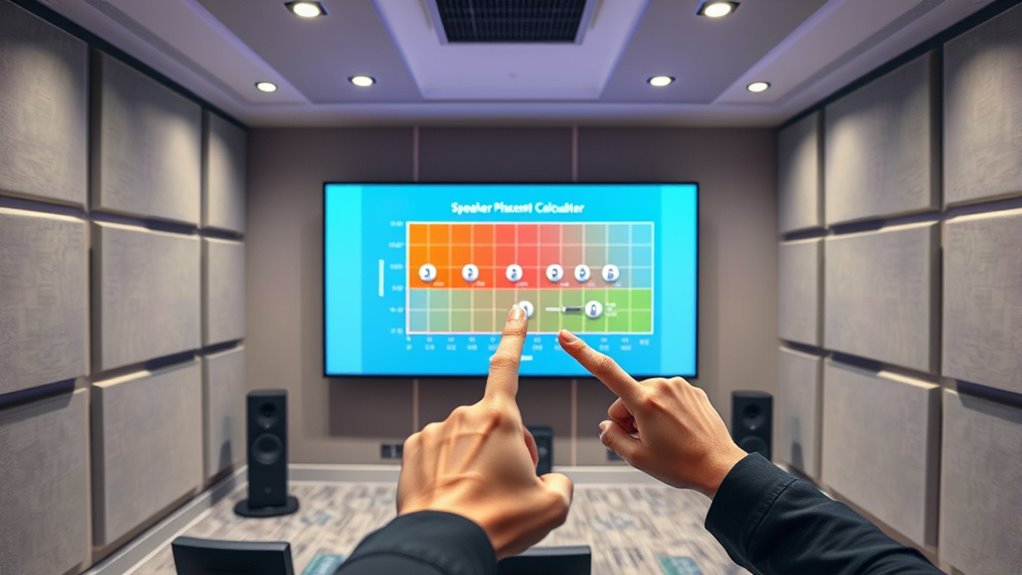
When you see the placement scores, they tell you how well your speaker setup should perform in your room. Keep in mind that room variables like furniture and acoustics can influence these recommendations. Adjusting your setup based on these factors helps you get the best sound quality. Being aware of room acoustics can further refine your speaker placement for optimal results.
Understanding Speaker Placement Scores
Understanding speaker placement scores is key to interpreting the calculator’s recommendations effectively. These scores reflect how well your setup will perform, considering factors like subwoofer calibration and acoustic treatment. Higher scores indicate ideal positioning for sound clarity and balance. To make sense of them:
- Look for scores above 80 for the best sound quality.
- Use lower scores as a guide to adjust speaker placement.
- Consider how acoustic treatment can improve scores by reducing reflections.
- Remember, the calculator’s recommendations aim to optimize your setup, but fine-tuning might still be necessary.
- Incorporating on-device AI capabilities can help analyze your room acoustics more precisely for better placement.
Adjusting for Room Variables
Adjusting for room variables is essential because no two spaces are the same, and acoustic conditions can vary widely. Your speaker height influences sound clarity—aim for ear level for ideal results. Proper cable management ensures your setup remains clean, free of hazards, and doesn’t interfere with sound quality. When interpreting the calculator’s recommendations, consider these factors:
| Room Variable | Impact on Sound |
|---|---|
| Speaker Height | Affects sound direction and clarity |
| Cable Management | Prevents noise interference, keeps tidy |
| Room Acoustics | Alters sound reflection and absorption |
Additionally, understanding home cinema principles can help optimize your overall audio environment.
Adjusting Your Speakers Based on the Results
Once you have your speaker placement results, the next step is to fine-tune their positions for ideal sound quality. Adjusting involves considering decorating acoustics and speaker aesthetics to create a seamless look while optimizing sound. Here are some tips:
- Slightly move speakers closer or farther from walls to balance bass and clarity.
- Elevate or lower speakers for better ear level alignment.
- Ensure speaker angles direct sound toward your listening position.
- Hide or incorporate speakers into your decor to enhance aesthetics without sacrificing acoustics.
- Regularly monitor your speaker setup and make adjustments based on acoustic performance to achieve the best sound experience.
Making these small adjustments improves sound clarity and maintains a pleasing room appearance. Remember, fine-tuning is about balancing sound performance with the room’s decor, ensuring both great acoustics and appealing aesthetics.
Common Mistakes to Avoid When Positioning Speakers
Many common mistakes can undermine your efforts to achieve ideal sound, so it’s important to be aware of them as you position your speakers. One mistake is neglecting speaker isolation, which can cause vibrations and distort sound quality. Make sure your speakers are stable and isolated from surfaces that could transfer unwanted vibrations. Another mistake is poor cable management, which can lead to tangled wires, accidental disconnects, or interference. Keep cables organized and away from foot traffic to prevent damage and maintain clarity. Additionally, avoid placing speakers too close to walls or corners, which can cause boomy bass and muddled audio. Proper placement, combined with effective speaker isolation and cable management, helps you achieve supreme sound without unnecessary issues. Recognizing layer concepts in your setup can also help you understand how different components interact and optimize your audio environment.
Tips for Fine-Tuning Your Sound System at Home
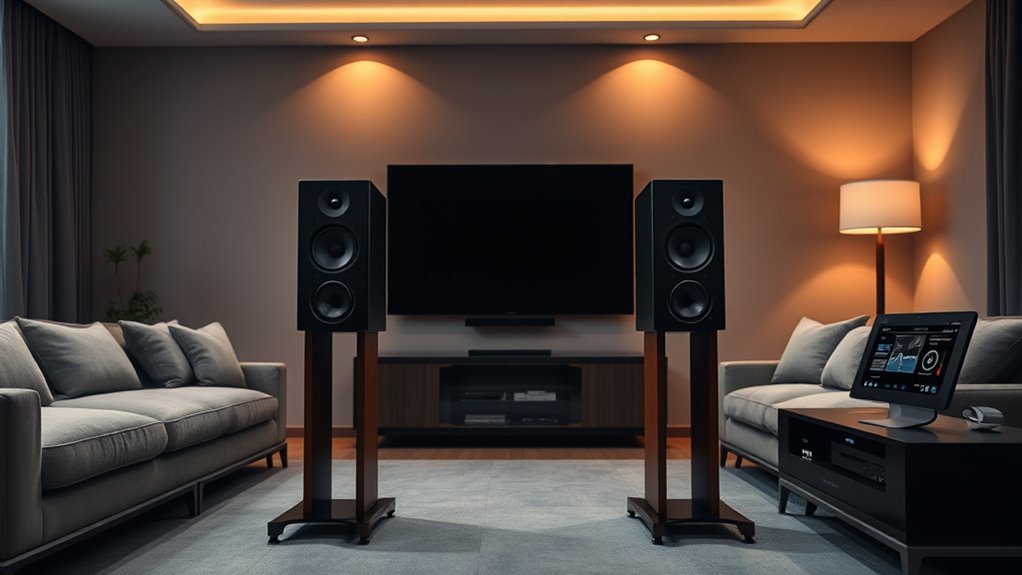
Fine-tuning your sound system at home is the next step after proper placement and isolation. To optimize your audio, focus on these key tips:
- Perform subwoofer calibration by adjusting its volume and crossover frequency for balanced bass.
- Use acoustic treatment, like bass traps and diffusers, to control reflections and improve clarity.
- Run test tones and measurements with a calibration microphone to identify frequency issues.
- Fine-tune speaker angles and distances based on your listening position to create a cohesive soundstage.
Implementing these steps helps eliminate sound inconsistencies, ensuring a richer, more accurate listening experience. Proper calibration and acoustic treatment are essential in transforming your setup from average to audiophile quality.
Benefits of Using the Speaker Placement Calculator Regularly
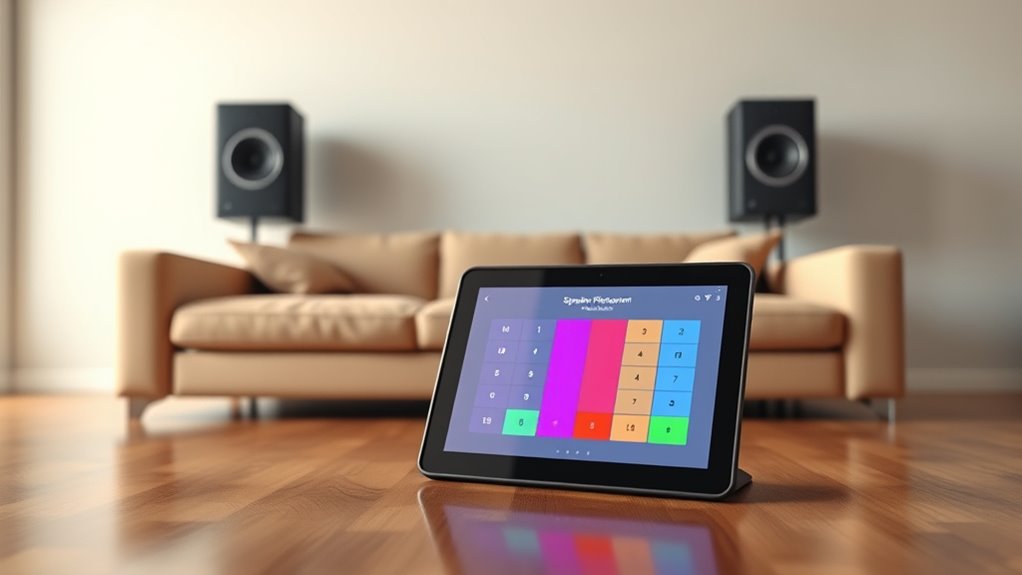
Using a speaker placement calculator regularly helps you achieve consistent, ideal sound quality by providing precise, data-driven recommendations. It guarantees your speaker orientation is optimized for the best audio experience, reducing sound wave interference and dead spots. With regular use, you can fine-tune sound calibration more accurately, improving clarity and balance across your listening area. The calculator guides you on the best placement angles and distances, making it easier to set up speakers correctly from the start. Consistent use helps you avoid guesswork, saving time and frustration. Ultimately, it leads to a more immersive sound environment, whether for music, movies, or gaming, by maintaining optimal speaker positioning and sound calibration over time.
Frequently Asked Questions
Can the Calculator Account for Different Types of Speakers?
Yes, the calculator can account for different speaker types, helping you optimize placement based on your specific equipment. By inputting details about your speaker types, the calculator considers their unique characteristics and guarantees compatibility. This way, you get precise recommendations tailored to your setup, improving sound quality. It’s designed to adapt to various equipment compatibility issues, making your speaker placement more effective and less guesswork.
Is the Calculator Suitable for Outdoor or Large Venues?
Yes, the calculator is suitable for outdoor environments and large venues. Imagine your event unfolding seamlessly as sound travels clearly across vast spaces, filling outdoor areas or expansive halls. It considers factors like space size and acoustics, helping you optimize speaker placement. You’ll enjoy balanced sound, minimal echo, and audience satisfaction, whether you’re hosting a festival, concert, or outdoor gathering. This tool guarantees your sound setup hits the mark every time.
How Often Should I Re-Evaluate My Speaker Placement?
You should re-evaluate your speaker placement regularly, especially after making changes like speaker calibration or adding acoustic treatment. Typically, check every 3 to 6 months or if you notice sound quality issues. Environmental changes, new furniture, or different audience sizes can impact acoustics. Periodic re-evaluation ensures peak sound, helping you maintain balanced coverage and clarity across your venue.
Does Room Acoustics Impact the Calculator’s Accuracy?
Room acoustics do impact the calculator’s accuracy. Room reflections can cause sound waves to bounce unpredictably, skewing the results, while sound absorption helps minimize these issues. If your space has many reflective surfaces, the calculator might give less precise recommendations. To improve accuracy, consider adding sound-absorbing materials and adjusting for room-specific acoustics. This way, your speaker placement will be more aligned with true sound behavior, providing better audio experiences.
Can I Use the Calculator for Multi-Room Audio Setups?
Yes, you can use the calculator for multi-room compatibility, but guarantee it accounts for your specific speaker configuration. When setting up multiple rooms, input each room’s details accurately, including speaker type and placement, to get precise recommendations. Remember, a proper speaker configuration across all rooms optimizes sound quality and synchronization, so double-check the calculator’s settings for multi-room setups to achieve the best audio experience.
Conclusion
By understanding your room, applying the calculator’s guidance, and fine-tuning your speakers, you’ll achieve richer sound, clearer dialogue, and a more immersive experience. Embrace proper placement, eliminate guesswork, and enjoy better audio quality every time you listen. Remember, consistent adjustments lead to perfect sound; patience, practice, and precision are your best tools. Make smarter choices, optimize your setup, and transform your space into a true sound sanctuary.