
To connect your projector with a soundbar, first choose a compatible soundbar and decide on your connection method—HDMI ARC, Bluetooth, or optical output. For the best sound, use HDMI ARC if available and position the soundbar directly below or above the screen. Pair via Bluetooth for wireless setup or connect cables securely. Adjust audio settings and calibrate for clear, immersive sound. Keep exploring for more tips to optimize your home theater experience.
Key Takeaways
- Connect the projector to the soundbar using HDMI ARC, optical, or Bluetooth, ensuring compatibility and proper input/output ports.
- Position the soundbar directly below or above the projector screen for optimal sound distribution.
- Perform sound calibration on both devices to balance volume, clarity, and surround sound modes.
- Adjust audio output settings on the projector to ensure it routes sound correctly to the soundbar.
- Troubleshoot connection issues by checking cable securement, device compatibility, and adjusting placement for best acoustics.
HDMI ARC soundbar for home theater
As an affiliate, we earn on qualifying purchases.
As an affiliate, we earn on qualifying purchases.
Choosing the Right Projector and Soundbar
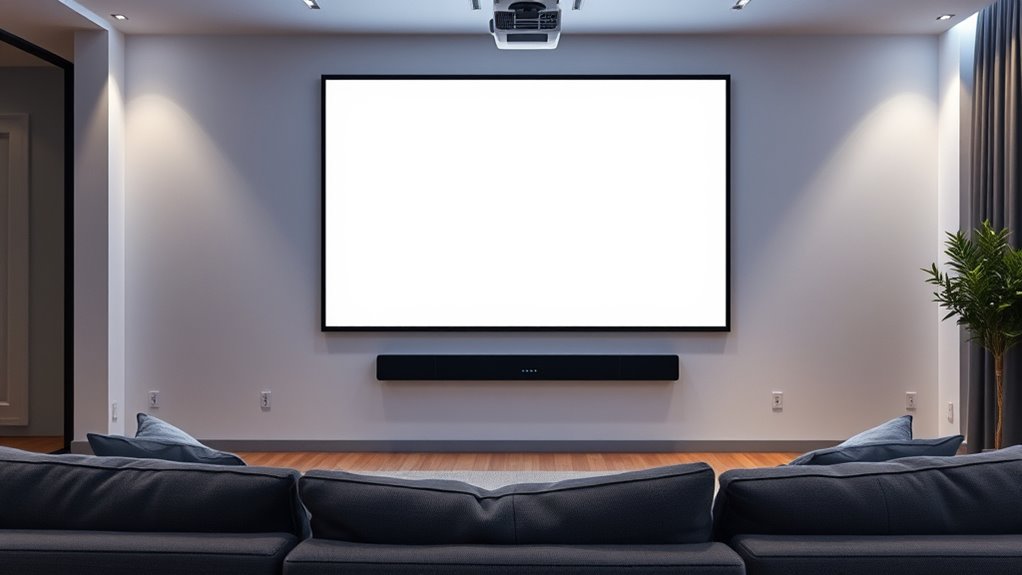
When selecting a projector and soundbar for your home theater, it’s important to contemplate compatibility and performance to get the best experience. Start with projector brightness; a higher lumens count guarantees clear images even in well-lit rooms. Look for a projector with enough brightness to display vivid visuals without washing out in ambient light. Equally important is soundbar placement—position it where sound can evenly fill the room and avoid obstructions. Proper placement enhances audio clarity and immersion. Verify your chosen soundbar complements your projector’s audio output and fits well within your space. Additionally, understanding digital literacy can help you utilize smart home technology effectively. By considering projector brightness and strategic soundbar placement, you set the foundation for a seamless, high-quality home theater setup that delivers impressive visuals and immersive sound.

Assistrust Sound Bar for Smart TV, Soundbar with Bluetooth/ARC/Opt/AUX Connect, Auto Volume Boost, 3 Equalizer Modes, 2 in 1 Detachable Soundbar for TV/PC/Gaming/Projectors
【𝐈𝐦𝐩𝐚𝐜𝐭𝐟𝐮𝐥 𝐕𝐨𝐥𝐮𝐦𝐞 𝐁𝐨𝐨𝐬𝐭】: Elevate faint sounds to vibrant with automatic loudness boost. Experience immersive sound through 4 versatile…
As an affiliate, we earn on qualifying purchases.
As an affiliate, we earn on qualifying purchases.
Understanding Connection Options and Compatibility
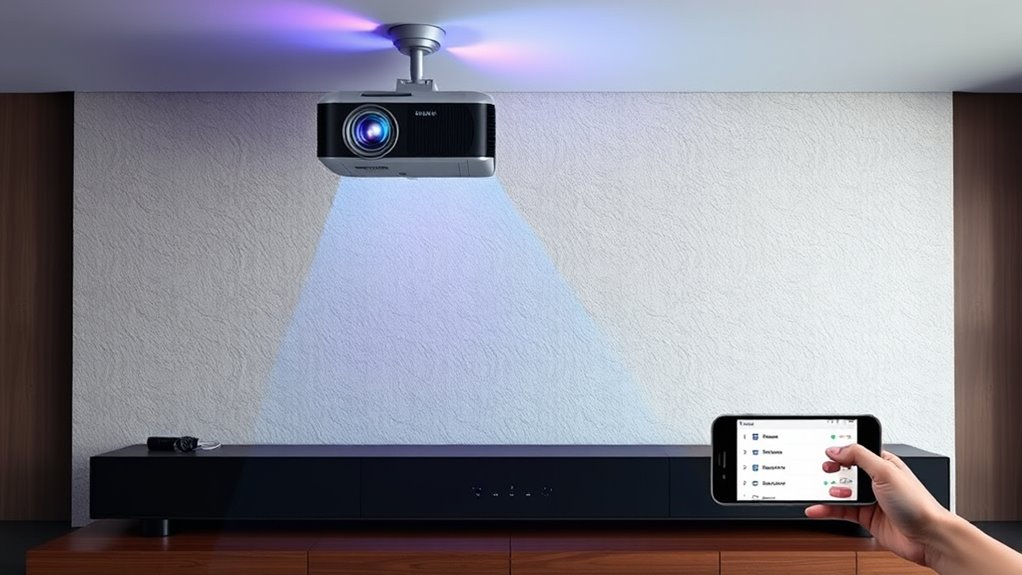
To guarantee your projector and soundbar work seamlessly together, understanding their connection options and compatibility is essential. First, consider the available connection types:
- Optical or TOSLINK – ideal for high-quality digital audio, ensuring clear sound.
- Bluetooth – offers wireless convenience but may introduce latency.
- 3.5mm Auxiliary – simple but often lower sound quality.
- HDMI ARC/eARC – supports both audio and video in one cable, perfect for modern setups.
Once connected, focus on speaker placement for ideal sound. Proper audio calibration helps balance volume and tone, giving you a richer experience. Confirm compatibility between your projector and soundbar to prevent connection issues, ensuring your setup delivers immersive sound with perfect clarity.
optical digital audio cable for soundbar
As an affiliate, we earn on qualifying purchases.
As an affiliate, we earn on qualifying purchases.
Connecting Your Projector to a Soundbar via HDMI
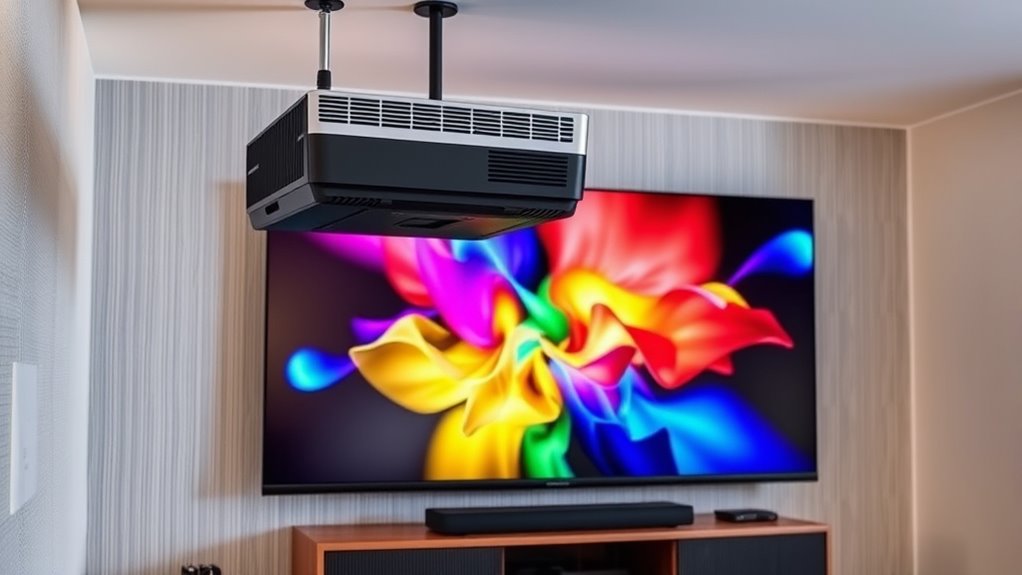
Connecting your projector to a soundbar via HDMI is straightforward and offers a streamlined way to enhance your audio experience. First, connect an HDMI cable from your projector’s HDMI ARC port to your soundbar’s HDMI ARC input. This allows audio signals to pass smoothly. Proper speaker placement is essential; position the soundbar directly below or above the screen for ideal sound distribution. After connecting, perform sound calibration on your projector or soundbar to balance volume and clarity. Use the following table for quick reference:
| Step | Action | Tips |
|---|---|---|
| Connect HDMI | Plug into HDMI ARC ports | Ensure compatibility |
| Position soundbar | Place for even sound coverage | Avoid obstructions |
| Calibrate sound | Adjust settings for clarity | Use calibration tools |
This setup ensures immersive audio and clear sound, and considering audio quality can further optimize your viewing experience.
projector with HDMI ARC port
As an affiliate, we earn on qualifying purchases.
As an affiliate, we earn on qualifying purchases.
Using Bluetooth to Pair Your Soundbar and Projector
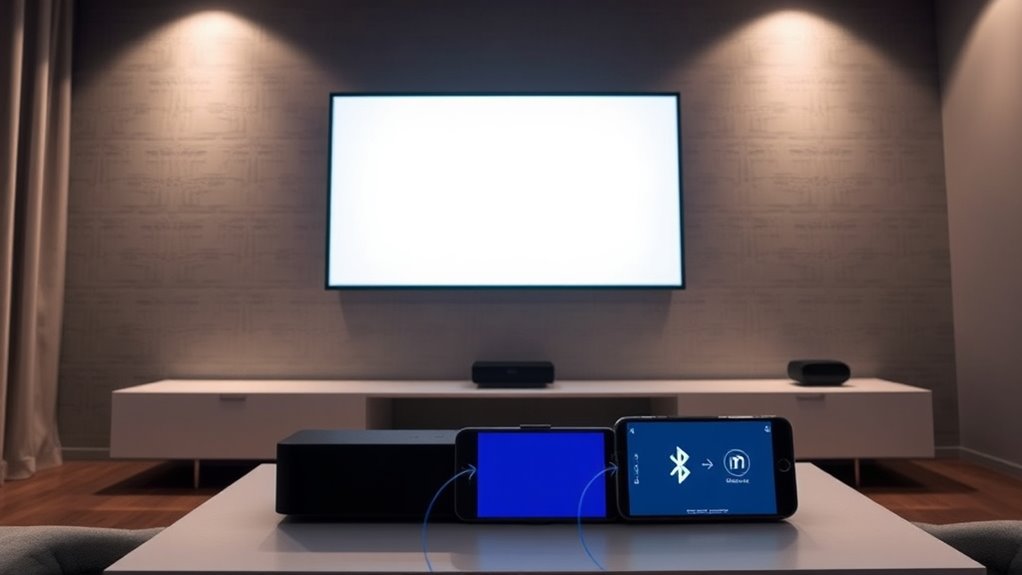
Ever wondered how to wirelessly connect your soundbar to your projector? Bluetooth pairing makes this simple and clutter-free. To get started with wireless connectivity:
- Turn on your projector and soundbar, then enable Bluetooth on both devices.
- Put your soundbar into Bluetooth pairing mode—usually by pressing a dedicated button.
- On your projector, scan for available Bluetooth devices.
- Select your soundbar from the list and confirm the pairing.
- Using Bluetooth technology, you can enjoy a seamless audio experience without the mess of cables.
Once connected, your soundbar will automatically sync with your projector whenever both are powered on within range. This method eliminates the need for cables, providing a clean setup. Keep in mind, Bluetooth connections may have slight latency, but they’re convenient for casual viewing and audio enhancement.
Connecting Through Optical or Audio Output Ports
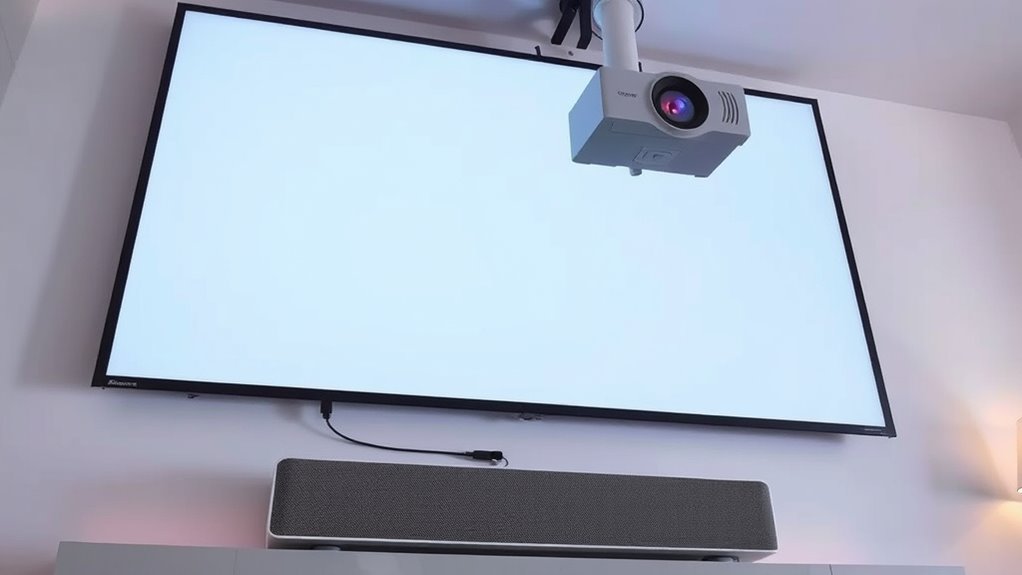
Using optical or audio output ports is a reliable way to connect your soundbar to your projector, especially when wireless options aren’t ideal. These ports deliver a high-quality audio signal, making audio calibration straightforward and effective. To set it up, plug the optical or audio cable from your projector’s output into your soundbar’s input. This direct connection minimizes audio lag and interference, ensuring synchronized sound. While wired connections are generally more stable, they also integrate smoothly with your existing setup, enhancing overall sound quality. This method is especially useful if your projector lacks advanced wireless integration features. Once connected, you can focus on fine-tuning your audio calibration to achieve the best sound experience, knowing your connection is stable and reliable. Additionally, staying informed about AI advancements in entertainment technology can help you optimize your setup for future innovations.
Configuring Audio Settings for Optimal Sound
To get the best sound from your projector and soundbar setup, start by adjusting the audio output settings to match your preferences. Next, enable surround sound modes to create a more immersive experience, and then fine-tune the volume levels for balance. Making these adjustments guarantees you’ll enjoy clear, powerful audio during your viewing sessions.
Adjust Audio Output Settings
Adjusting your audio output settings is a crucial step to guarantee the best sound quality when using projectors with soundbars. Proper configuration ensures clear, balanced audio. Start with these steps:
- Perform an audio calibration to match your soundbar’s output to your room’s acoustics.
- Adjust the volume levels for a balanced sound, avoiding distortion.
- Check your soundbar placement to ensure ideal sound dispersion.
- Select the appropriate audio output mode, like PCM or Bitstream, for compatibility with your device.
- Consider sound quality features and settings, such as equalizer adjustments, to further optimize your audio experience.
Enable Surround Sound Modes
Once you’ve set your audio output, activating surround sound modes can considerably enhance your listening experience. To do this, access your soundbar’s settings menu and look for options labeled “surround sound,” “DSP modes,” or similar. Enable these modes to create a more immersive audio environment, making it feel like sound comes from multiple directions. Proper audio calibration is essential here; adjust settings such as speaker distance and volume levels for each channel to optimize the surround sound effect. Keep in mind that not all content benefits equally from surround sound, so experiment with different modes to find what best suits your environment. Additionally, aligning your sound settings with your mindset can help attract a more enjoyable and immersive audio experience. By enabling surround sound modes and fine-tuning your audio calibration, you’ll enjoy richer, more dynamic sound when using your projector and soundbar together.
Balance Volume Levels
Balancing volume levels across your soundbar and projector is essential for achieving clear, harmonious audio. Proper audio calibration guarantees each device complements the other without one overpowering the other. To optimize sound, consider these steps:
- Use your device’s audio calibration tools to set baseline levels.
- Adjust volume automation features to automatically balance sound during different scenes or moments.
- Manually fine-tune the soundbar’s volume to avoid distortion or quiet spots.
- Test with various content types to ensure consistent audio quality across all media.
5o, paying attention to sound quality can help identify if additional adjustments are needed for optimal performance.
Positioning Your Soundbar for the Best Audio Experience
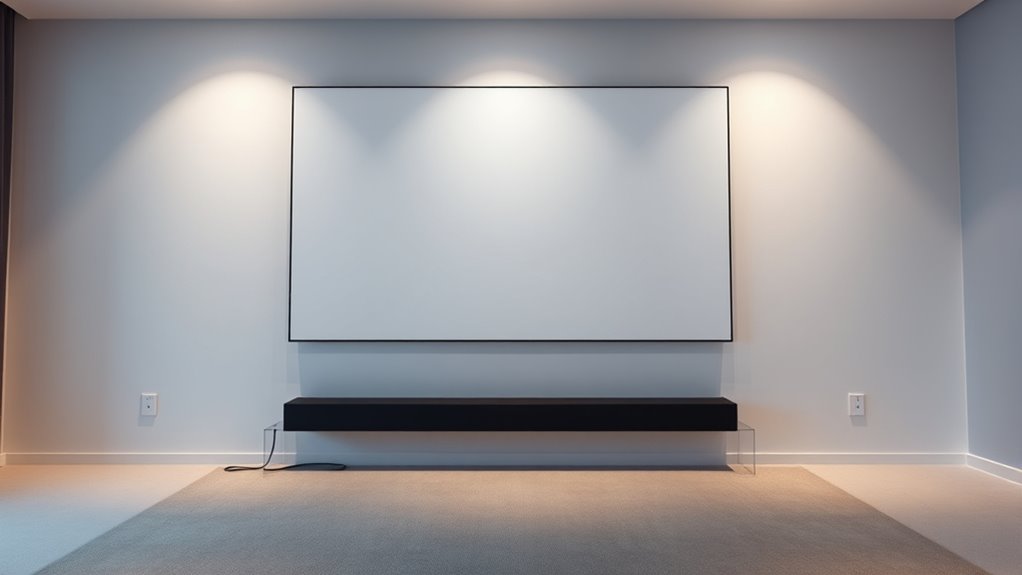
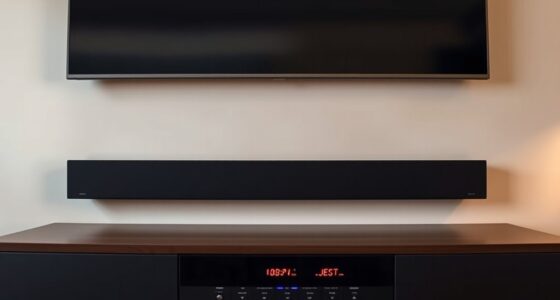
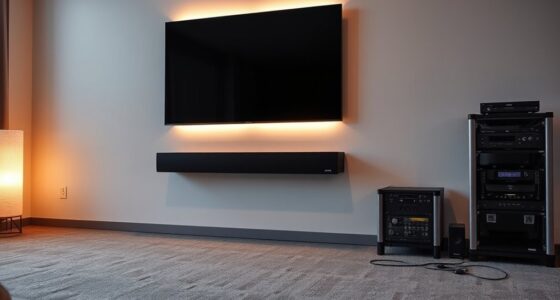
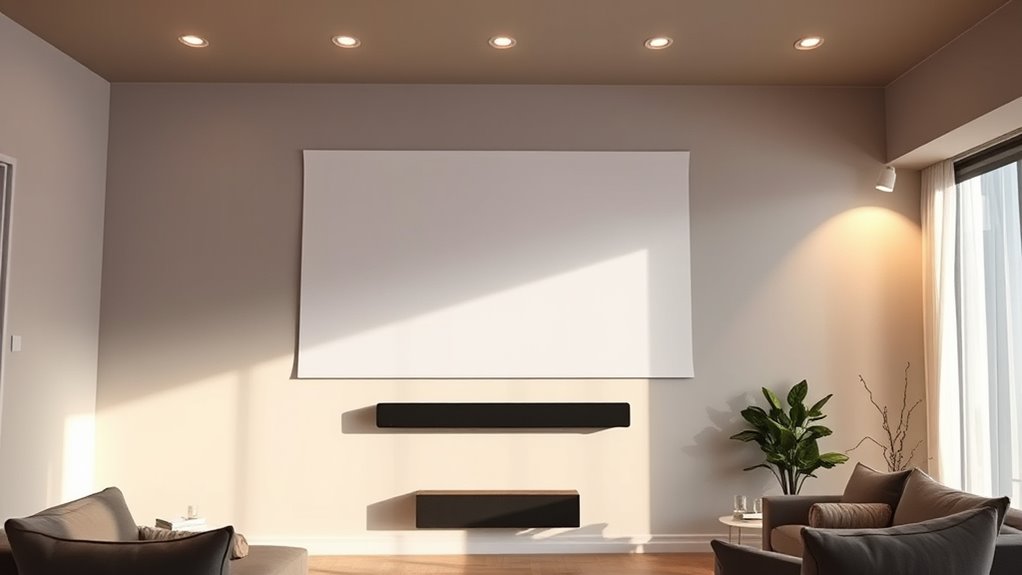
To get the best audio from your soundbar, you need to carefully position it within your space. Proper soundbar placement enhances room acoustics, ensuring clear, immersive sound. Place the soundbar directly below or above your projector screen, ideally centered. Avoid blocking speaker drivers or vents, which can muffle sound. Consider the room’s shape and furniture to prevent sound reflections or echoes. Use this visual guide to help you imagine *ideal* placement:
| Wall Surface | *Perfect* Position | Room Features | Effects |
|---|---|---|---|
| Flat Wall | Centered, aligned horizontally | Minimal furniture interference | Balanced sound distribution |
| Corner | Slightly away from corner | Avoid echo or bass buildup | Clearer, more direct sound |
| Shelves or Units | Keep clear of obstructions | Reduce sound distortion | Better clarity and depth |
Additionally, proper placement can significantly improve sound quality, creating a more engaging viewing experience.
Troubleshooting Common Connection and Sound Issues
Connection and sound issues are common but often easily fixable with some troubleshooting. If you’re experiencing audio latency or unclear sound, try these steps:
- Check your speaker placement—ensure your soundbar is positioned correctly for peak sound delivery.
- Verify all cables are securely connected and compatible with your devices.
- Adjust audio settings on your projector and soundbar to reduce latency and improve sync.
- Test different input sources to identify if the issue is device-specific.
- Consider compatibility between your projector and soundbar to ensure seamless audio performance.
Enhancing Your Home Theater Setup for Better Performance
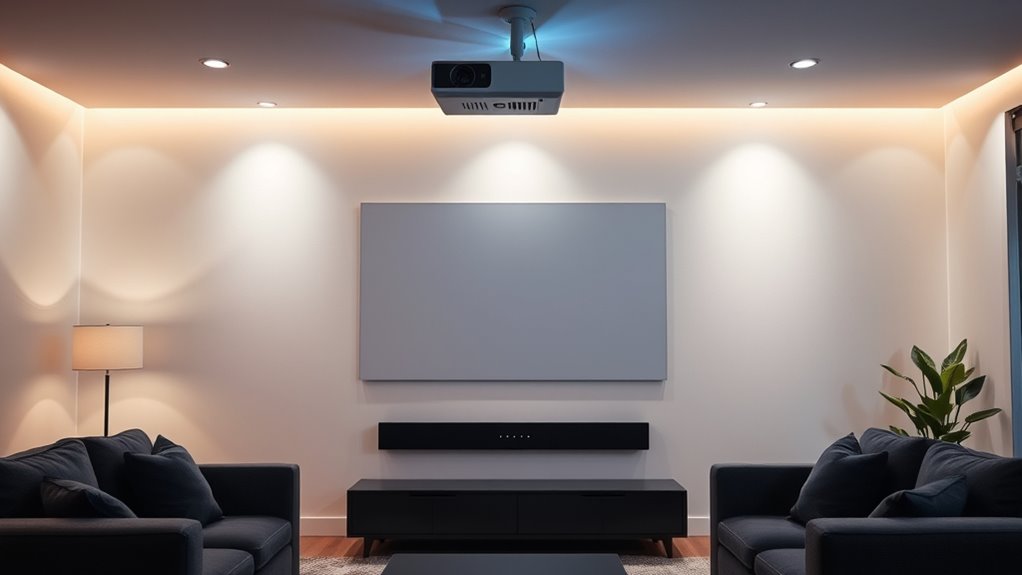
Enhancing your home theater setup can substantially improve your overall viewing experience. Start by optimizing your projection techniques; experiment with screen angles and distances to achieve sharp, bright images. Proper soundbar placement is equally important—you want it aligned with your screen, ideally just below or above it, to maximize sound clarity. Use a table to visualize placement options:
| Projection Techniques | Soundbar Placement |
|---|---|
| Adjust tilt for focus | Centered with screen |
| Use a wall mount | Slightly above/below screen |
| Experiment with distance | Near the front speakers |
This setup creates immersive visuals and sound, making your movie nights more engaging and enjoyable. Proper placement and technique are key to unblocking your home theater’s full potential. Additionally, extended hours during peak shopping times can help you find the perfect equipment when stores are less crowded.
Frequently Asked Questions
Can I Connect Multiple Soundbars to One Projector Simultaneously?
You can connect multiple soundbars to one projector, but it’s tricky. You’ll need a device like an audio splitter or a receiver that supports multi soundbars to guarantee proper audio synchronization. Keep in mind, not all setups will work seamlessly, and you might experience audio lag or mismatch. To get the best experience, choose compatible soundbars and use a high-quality splitter or receiver designed for multi audio outputs.
How Do I Synchronize Audio Delay Between Projector and Soundbar?
You can synchronize audio delay between your projector and soundbar by diving into audio calibration settings. Start by accessing your soundbar’s menu or remote control; look for sound delay or sync adjustment options. Adjust the sound delay gradually, testing with your content until the audio perfectly matches the visuals. This precise sound delay adjustment guarantees an immersive experience, eliminating that annoying lag and bringing your viewing to life.
Are There Wireless Options for Connecting Projectors and Soundbars?
Yes, there are wireless options for connecting projectors and soundbars. You can use wireless connectivity features like Bluetooth compatibility or Wi-Fi streaming to link your devices without cables. Many modern projectors and soundbars support Bluetooth, allowing you to pair them easily for audio transmission. Alternatively, you can use Wi-Fi-based solutions like Chromecast or other wireless audio transmitters for a seamless, clutter-free setup, ensuring high-quality sound without the hassle of cords.
What Is the Maximum Distance for Reliable Bluetooth Connection?
Bluetooth range typically extends up to 33 feet (10 meters), but this can vary depending on your environment. You might experience shorter distances due to signal interference from walls, furniture, or other electronic devices. To guarantee a reliable connection, keep your Bluetooth devices within this range and minimize obstacles. Testing your setup in your specific space helps confirm the maximum distance for smooth audio transmission without interruptions.
How Do I Improve Audio Quality if I Experience Lag or Distortion?
To improve audio quality and reduce lag or distortion, start with proper audio calibration on your soundbar and projector. Make sure the soundbar’s settings match your room’s acoustics. Use high-quality cables to guarantee a clean signal, minimizing interference. Keep devices close to reduce latency, and update firmware regularly for peak performance. These steps help you enjoy clearer, synchronized audio without lag or distortion.
Conclusion
Now that you know how to connect your projector with a soundbar, your home theater will be transformed into an epic cinematic universe. With the right setup, crystal-clear sound and stunning visuals become your new reality—making every movie night feel like a blockbuster premiere. Just follow these simple steps, and you’ll be immersed in sound so immersive, it’s like having an orchestra in your living room. Get ready for the best movie experience ever!