DACs play a vital role in your projector’s sound quality by converting digital audio signals into clear, listenable analog sounds. A high-quality DAC guarantees your audio is crisp, detailed, and free from unwanted noise or distortion. This results in richer sound, better dynamic range, and more immersive experiences whether you’re watching movies or gaming. To optimize your audio setup, understanding how DACs influence sound can help you make smarter upgrades and enjoy superior audio performance.
Key Takeaways
- DACs convert digital signals into analog audio, directly impacting sound clarity and fidelity in projectors.
- High-quality DACs reduce noise, distortion, and digital artifacts, resulting in cleaner, more immersive audio.
- The performance of DACs influences dynamic range, allowing accurate reproduction of soft and loud sounds.
- Upgrading to external DACs can significantly enhance projector sound quality by bypassing internal, limited DAC components.
- Advances in DAC technology enable seamless wireless streaming and higher resolution audio for an improved listening experience.
Understanding Digital-to-Analog Conversion
Digital-to-analog conversion (DAC) is the process that transforms digital audio signals into analog signals your speakers can produce. When you play digital audio, like from a projector, the device’s DAC converts the binary data into continuous electrical signals. These analog signals are what your speakers need to generate sound waves you hear. Without this conversion, digital audio remains a series of 0s and 1s, which your speakers can’t interpret directly. The quality of the DAC impacts how accurately these digital signals are transformed into true-to-life analog signals, affecting overall sound clarity. Fundamentally, a good DAC ensures your audio retains its original richness and detail, providing a more immersive listening experience from your projector’s sound system. Earnings generated through links on the website can sometimes influence the recommendations for audio equipment and accessories.
How DACs Influence Audio Fidelity in Projectors
The quality of a DAC directly impacts the fidelity of audio produced by your projector, determining how closely the sound matches the original recording. Higher-quality DACs handle audio bitrate more effectively, preserving detail and clarity. Digital filtering also plays a vital role, smoothing out digital artifacts and reducing noise. When these factors are optimized, you experience richer, more accurate sound. To understand this better, consider: 1. Better audio bitrate means finer detail and less compression. 2. Advanced digital filtering reduces unwanted noise and distortion. 3. High-quality DACs ensure audio remains true to the original source. Understanding sound design techniques can further enhance your listening experience by optimizing how audio elements are processed and presented.
Key Features to Evaluate in a DAC
When choosing a DAC for your projector, you should focus on signal fidelity and clarity to guarantee crisp, accurate sound. Connectivity options and compatibility also matter, as they determine how easily the DAC integrates with your setup. By evaluating these key features, you’ll find a solution that enhances your overall audio experience. Understanding potential issues like deceptive behaviors and recognizing manipulation tactics can help you make informed decisions and avoid subpar equipment that may compromise your sound quality.
Signal Fidelity and Clarity
To truly appreciate a DAC’s impact on projector sound quality, you need to focus on its signal fidelity and clarity. High fidelity ensures your music streaming sounds natural, detailed, and true to the original recording. Clarity highlights how well the DAC preserves the separation and precision of individual sounds, vital during sound calibration. Consider these key features:
- Noise Floor: A low noise floor minimizes background hiss, keeping sound pure.
- Total Harmonic Distortion (THD): Lower THD means less unwanted distortion, preserving audio integrity.
- Dynamic Range: A wider range allows for more nuanced, expressive sound reproduction.
Additionally, a DAC with excellent build quality can help reduce electromagnetic interference, further enhancing sound clarity.
Connectivity and Compatibility
Ensuring your DAC seamlessly connects with your projector and other audio equipment is vital for achieving ideal sound quality. Look for models with versatile connectivity options, including wireless connectivity, which allows for cable-free setup and reduces clutter. Compatibility with your projector’s input types and power requirements is essential to avoid issues. Check if the DAC supports your preferred devices, such as smartphones or computers, through Bluetooth or Wi-Fi. Additionally, verify power compatibility to prevent damage or performance problems. Support hours can also be a useful consideration when troubleshooting connectivity issues.
Types of DACs Used in Projector Systems
Projector systems utilize various types of Digital-to-Analog Converters (DACs) to deliver high-quality sound, each offering distinct advantages. Your choice impacts audio clarity, latency, and how well digital audio is transformed into smooth analog sound. Different DACs incorporate specific audio codecs, which influence compatibility and performance. Digital filters also play a role in shaping sound quality by reducing noise and preventing aliasing. Here are common types used in projectors: 1. Oversampling DACs – enhance audio fidelity by using digital filters to refine signals. 2. Delta-Sigma DACs – favored for their noise shaping and high resolution, ideal for detailed audio. 3. R-2R Ladder DACs – simple, reliable, and cost-effective, suitable for basic sound systems. Understanding DACs helps ensure optimal audio performance in your projector setup.
Impact of DAC Quality on Sound Dynamics
The quality of your DAC directly affects how clear and detailed your sound feels. A better DAC expands the dynamic range, making quiet sounds softer and loud sounds more impactful. It also reduces noise, ensuring your audio remains crisp and free from distracting hiss or hum. Additionally, high-quality DACs can improve audio clarity and precision, enhancing your overall listening experience.
Clarity and Detail
High-quality DACs play an essential role in delivering clear and detailed sound by accurately converting digital audio signals into analog signals. The key factors influencing clarity include bit depth and sample rate. A higher bit depth captures more subtle nuances, improving overall detail. Similarly, a higher sample rate ensures smoother sound reproduction, preserving audio fidelity. To understand how DAC quality enhances clarity, consider: 1. Increased bit depth provides more accurate sound, revealing finer details. 2. Higher sample rates allow for better preservation of audio nuances. 3. Improved DACs reduce digital artifacts, resulting in cleaner sound. Additionally, the digital-to-analog conversion process itself plays a crucial role in maintaining sound quality.
Dynamic Range Enhancement
Enhanced DACs not only improve clarity and detail but also substantially impact a device’s ability to reproduce dynamic range. Higher-quality DACs handle sudden audio spikes better, reducing distortion caused by audio compression. This allows you to experience softer whispers and thunderous explosions with clarity. When speaker synchronization is precise, the full range of sound is maintained, enhancing the emotional impact of your audio. Consider this table to visualize the difference:
| Sound Level | DAC Effect | Experience |
|---|---|---|
| Soft | Smooth reproduction | Clear vocals, subtle nuances |
| Moderate | Accurate handling | Balanced mid-range sound |
| Loud | Minimal distortion | Deep bass, impactful peaks |
| Sudden spikes | Dynamic handling | No clipping or muddiness |
| Overall | Better audio compression | More natural sound, immersive |
Good DACs make a noticeable difference in your projector’s sound dynamics, ensuring every detail is heard. Moreover, high-quality DACs help maintain audio fidelity during complex soundscapes, providing a more immersive experience.
Noise Reduction Benefits
Since DAC quality directly influences how well your projector reduces noise, it plays a crucial role in maintaining sound clarity and detail. A high-quality DAC minimizes background noise, allowing you to experience cleaner audio. This improvement helps your projector better differentiate ambient sound from unwanted hiss or static. With reduced noise, you’ll notice sharper dialogue and richer sound effects. Here are three benefits:
- Clearer audio with less background noise disrupting the experience
- Improved sound dynamics, making ambient sound more natural
- Enhanced overall clarity, even at lower volumes or in noisy environments
Investing in a quality DAC ensures your projector’s sound remains crisp and immersive, elevating your viewing experience by effectively managing noise reduction benefits. Additionally, the integration of advanced AI safety measures can help prevent distortions or artifacts in audio processing, ensuring consistently high sound quality.
Integrating External DACs for Enhanced Audio
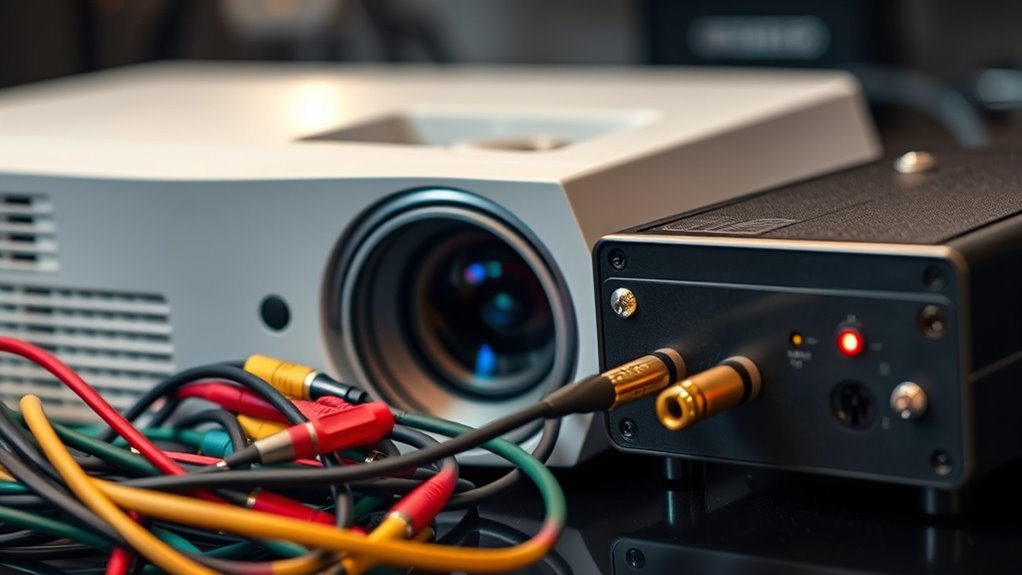
Connecting an external DAC to your projector’s audio system can substantially improve sound quality by providing a clearer, more detailed output. With wireless connectivity options, you can easily stream high-quality audio without cluttering your setup with cables. This setup allows you to bypass the projector’s internal DAC, which may be limited in quality. However, keep in mind that external DACs can increase power consumption, so choose models that balance performance with energy efficiency. Using an external DAC also offers flexibility in upgrading your audio system over time, ensuring better sound for movies, music, and gaming. Proper integration ensures minimal latency and superior audio quality, making your viewing experience more immersive and enjoyable.
Common Challenges With Built-In DACS
Built-in DACs in projectors often struggle to deliver high-quality audio due to their limited components and design constraints. These limitations affect audio signal processing, leading to compromised sound clarity and depth. Additionally, the digital audio interfaces in integrated systems may lack proper shielding and high-quality circuitry, resulting in noise and distortion. Here are some common challenges:
- Poor audio signal processing: Built-in DACs often can’t handle complex audio formats, reducing fidelity.
- Limited dynamic range: This causes sound to lack richness and detail.
- Inadequate digital audio interfaces: They may not support high-resolution audio, leading to a dull listening experience.
These issues make it difficult for built-in DACs to produce sound that truly matches the projector’s visual capabilities.
Tips for Upgrading Your Projector’s Audio System
Upgrading your projector’s audio system can substantially enhance your viewing experience, especially if you’ve noticed issues with sound quality. Start with remote calibration to fine-tune your audio settings without hassle. Proper speaker placement is essential; position speakers at ear level and create an even sound field. Visualize your setup with this simple diagram:
| Speaker Location | Sound Focus | Room Effect |
|---|---|---|
| Front corners | Wide coverage | Immersive feel |
| Behind screen | Clear dialogue | Reduced echo |
| Side walls | Balanced sound | Minimized noise |
Aim for symmetry and avoid obstacles that block sound. These small adjustments can make a significant difference, transforming your system into a more dynamic and engaging audio experience.
Future Trends in DAC Technology for Projectors
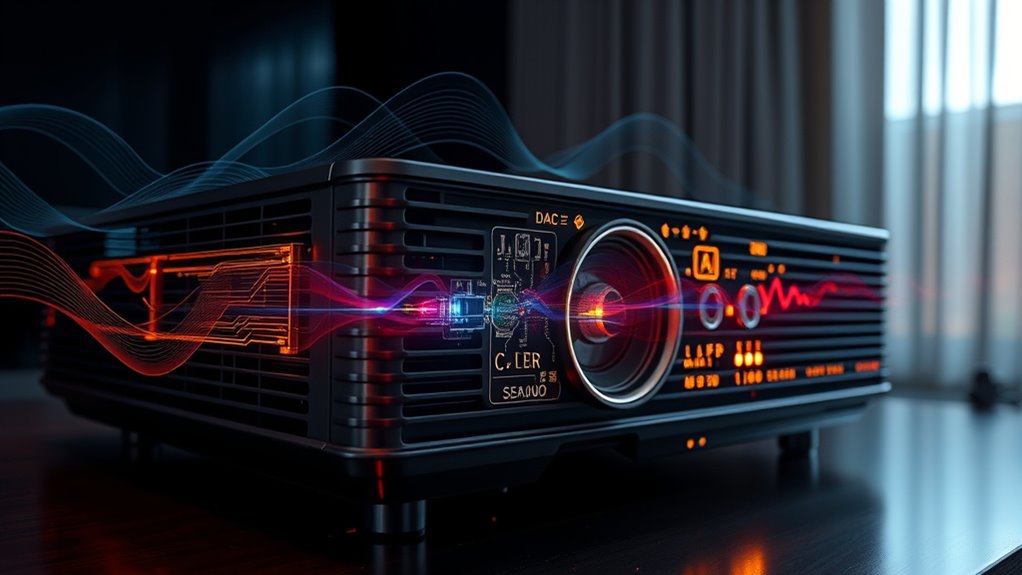
Advancements in DAC technology are poised to revolutionize how projectors deliver sound in the near future. You can expect significant improvements driven by innovations like wireless transmission, making setup easier and reducing clutter. Additionally, future DACs will likely meet audiophile standards, ensuring superior sound quality even in compact devices. Here are three key trends to watch:
- Enhanced wireless transmission capabilities to provide seamless, high-fidelity audio streaming without cables.
- Adoption of advanced DAC chips that meet or exceed audiophile standards, delivering richer, more detailed sound.
- Integration of smart, adaptive DACs that optimize sound based on room acoustics and content type.
These developments will make projectors more versatile, delivering professional-grade audio with convenience and clarity.
Frequently Asked Questions
Can a High-End DAC Significantly Improve Projector Sound Quality?
Yes, a high-end DAC can considerably improve your projector’s sound quality. It enhances the audio signal by reducing noise and distortion, resulting in better sound fidelity. When you use a quality DAC, you’ll notice clearer, more detailed audio that elevates your viewing experience. It’s especially beneficial if your projector’s built-in audio system isn’t up to par, enabling you to enjoy richer, more immersive sound.
Are External DACS Compatible With All Types of Projectors?
You might wonder if external DACs work seamlessly with your projector. The truth is, compatibility issues can arise depending on your device’s connection options. Some projectors have only HDMI or optical outputs, limiting DAC choices. To guarantee smooth integration, check your projector’s input ports and the DAC’s supported connections. With careful selection, you can unseal superior sound, transforming your viewing experience into something truly immersive.
How Does DAC Noise Impact Overall Audio Clarity?
DAC noise can substantially impact your audio clarity by introducing digital interference, which causes unwanted sounds or static. This noise can lead to audio distortion, making your listening experience less clear and enjoyable. When DACs produce less noise, your projector’s sound output becomes cleaner and more precise. To maintain ideal audio quality, choose DACs with low noise levels, ensuring your sound remains crisp and free from digital interference.
Is It Necessary to Upgrade DACS in Modern Projectors?
If you want better audio fidelity, upgrading the DAC in your modern projector can be worth it. A high-quality DAC improves digital conversion, reducing noise and distortion, which enhances sound clarity. While not always necessary, if you notice subpar audio or desire a richer listening experience, investing in a better DAC can make a significant difference. It’s a simple upgrade that can elevate your overall sound quality.
What Are the Cost Implications of Replacing Built-In DACS?
Replacing built-in DACs can be costly, so you should consider the cost comparison carefully. The expense varies depending on the quality of the replacement DAC and installation complexity. Budget considerations are essential; investing in a high-end DAC might improve sound quality but could strain your budget. If you’re aiming for better audio, weigh these costs against potential gains, and decide whether the upgrade aligns with your overall audio and budget goals.
Conclusion
By understanding DACs, evaluating their features, and recognizing their impact, you can enhance your projector’s sound quality. Whether upgrading internal components or integrating external DACs, you have the power to improve clarity, depth, and overall audio experience. Embrace future trends, troubleshoot common challenges, and make informed choices—because better sound isn’t just an upgrade; it’s your ticket to immersive entertainment. Take control, optimize your audio, and enjoy every moment with crystal-clear sound.