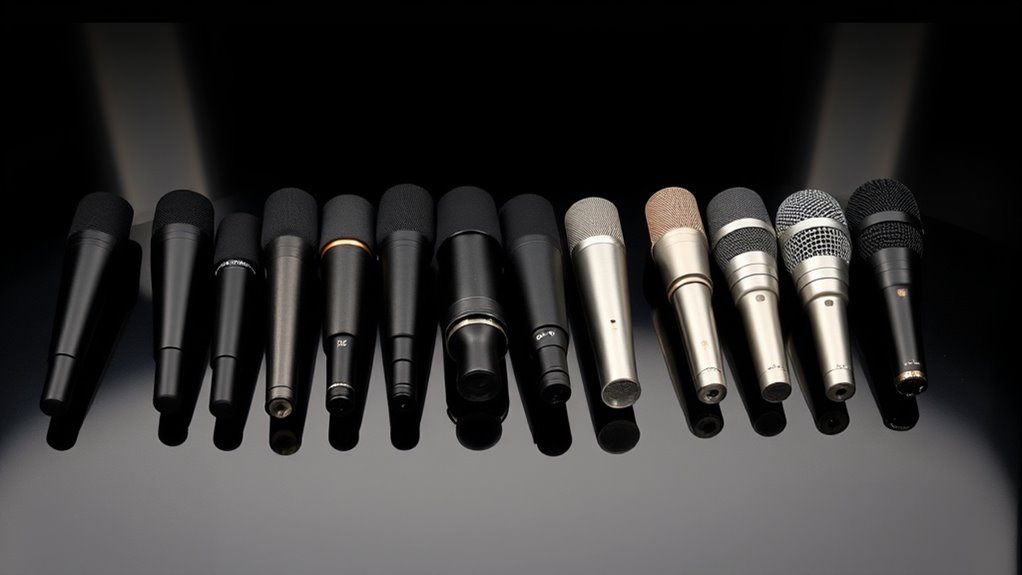

Finding the right premium room acoustic measurement mic can significantly improve your audio environment analysis. The Earthworks M30 stands out for its high-frequency response and precision, making it ideal for detailed acoustic calibration. The Dayton Audio UMM-6 offers excellent value for those seeking professional-grade measurements without breaking the bank, while the Beyerdynamic MM-1 shines for its ease of use and robust build quality. Most options in this category balance between high performance and cost, but tradeoffs often involve complexity, calibration needs, or price. Keep reading for a detailed breakdown of each mic to find the best fit for your setup.

Get business pricing on your home office setup
- Business-only prices and quantity discounts
- Tax-exempt purchasing
- Multiple users, one account, clear invoices
Complete the kit


Key Takeaways
- Top picks are distinguished by their calibration accuracy and frequency response range, critical for precise acoustic measurements.
- Ease of use varies widely; some mics require extensive setup or calibration, while others are plug-and-play.
- Build quality and durability are key for long-term reliability, especially in professional environments.
- Price correlates with features like frequency response, calibration options, and compatibility, but not always linearly.
- Choosing the right mic depends heavily on specific use cases—studio calibration, room tuning, or AV integration—each favors different features.
| Dayton Audio iMM-6C Calibrated Measurement USB-C Microphone for iPhone, iPad, Tablet, and Android | 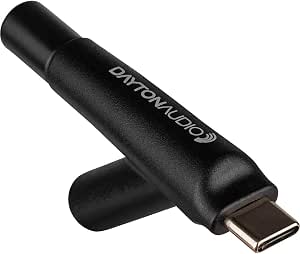 | Best for Mobile Measurement Flexibility | Compatibility: iPhone, iPad, Android tablets | Pattern: Omnidirectional | Features: Calibrated flat frequency response, pass-through jack, kickstand | VIEW ON AMAZON | See Our Full Breakdown |
| Audyssey ACM1-X Individually Calibrated Microphone for Select AVRs |  | Best for Home Theater Room Calibration | Compatibility: MultEQ-X app for Windows 10/11 | Calibration: Individually calibrated | Application: Room acoustics measurement and calibration | VIEW ON AMAZON | See Our Full Breakdown |
| Dayton Audio OmniMic 40k Precision Measurement Microphone System |  | Best for Wide Frequency Range Analysis | Frequency Response: 5 to 40,000 Hz | Dynamic Range: Up to 145 dB | Harmonic Distortion Measurement: Up to 13,333 Hz | VIEW ON AMAZON | See Our Full Breakdown |
| EVERSOLO EM-01 Measurement Microphone, Omnidirectional Calibrated Microphone for Measurement, Home Recording, Online Meetings, Live Streaming |  | Best for Multi-Use Versatility | Microphone Chip: 6mm electret | Frequency Response: 20Hz–20kHz | Sensitivity: -13dBFS | VIEW ON AMAZON | See Our Full Breakdown |
| Beyerdynamic MM-1 Omnidirectional Condenser Measurement Microphone |  | Best for Professional, Low-Range Analysis | Type: Omnidirectional Electret Condenser | Frequency Response: 50Hz-16kHz | Deviation: ±1.5dB | VIEW ON AMAZON | See Our Full Breakdown |
| Audix TM1 Condenser Room Measurement Microphone – Nickel |  | Best Overall for Professional Room Analysis | Connectivity Technology: XLR | Polar Pattern: Omnidirectional | Frequency Response: 20,000 Hz | VIEW ON AMAZON | See Our Full Breakdown |
| Dayton Audio iMM-6 Calibrated Measurement Microphone for iPhone, iPad, Tablet, and Android |  | Best for Mobile Device Compatibility | Connectivity Technology: 3.5mm TRRS | Polar Pattern: Omnidirectional | Frequency Response: 18 KHz | VIEW ON AMAZON | See Our Full Breakdown |
| Dayton Audio EMM-6 Precision Omnidirectional Electret Condenser Microphone |  | Best for Professional Acoustic Analysis | Type: Electret Condenser | Application: Room acoustic analyzers | Includes: Stand mount, foam windscreen, calibration graph | VIEW ON AMAZON | See Our Full Breakdown |
| Dayton Audio UMM-6 USB Measurement Microphone |  | Best for Easy Computer-Based Measurement | Connection: USB | Pattern: Omnidirectional | Frequency Response: Calibrated flat | VIEW ON AMAZON | See Our Full Breakdown |
| Apex220 Linear Measurement Omnidirectional Condenser Microphone with Clip |  | Best for Simple, Accurate Room Measurements | Element: Back Electret Condenser | Polar Pattern: Omnidirectional | Frequency Response: 20Hz – 20kHz | VIEW ON AMAZON | See Our Full Breakdown |
| Earthworks M30 30kHz Omnidirectional Measurement Microphone |  | Best Overall for High-Precision Audio Analysis | Connectivity Technology: XLR | Connector Type: XLR | Polar Pattern: Omnidirectional | VIEW ON AMAZON | See Our Full Breakdown |
| miniDSP UMIK-1 Calibrated Measurement Microphone |  | Best for Easy, Cross-Platform Acoustic Tuning | Calibration: Unique calibration file with sensitivity (SPL monitoring) | Compatibility: Windows, Mac, Linux, iOS, iPad | Included accessories: Mini tripod, USB cable, windscreen | VIEW ON AMAZON | See Our Full Breakdown |
| premium room acoustic measurement mic | Frequency Response |
|---|---|
| Dayton Audio iMM-6C Calibrated | — |
| Audyssey ACM1-X Individually C | — |
| Dayton Audio OmniMic 40k Preci | 5 to 40,000 Hz |
| EVERSOLO EM-01 Measurement Mic | 20Hz–20kHz |
| Beyerdynamic MM-1 Omnidirectio | 50Hz-16kHz |
| Audix TM1 Condenser Room Measu | 20,000 Hz |
| Dayton Audio iMM-6 Calibrated | 18 KHz |
| Dayton Audio EMM-6 Precision O | — |
| Dayton Audio UMM-6 USB Measure | Calibrated flat |
| Apex220 Linear Measurement Omn | 20Hz – 20kHz |
| Earthworks M30 30kHz Omnidirec | 30 Hz – 30 kHz |
| miniDSP UMIK-1 Calibrated Meas | — |
More Details on Our Top Picks
Dayton Audio iMM-6C Calibrated Measurement USB-C Microphone for iPhone, iPad, Tablet, and Android
This calibrated omnidirectional microphone excels in delivering accurate acoustic measurements directly through smartphones and tablets, making it ideal for on-the-go room analysis. Its flat frequency response and rugged build ensure dependable, repeatable results, especially when used with compatible devices. Compared with the Dayton Audio EMM-6, the iMM-6C offers greater portability and convenience for mobile setups, though it sacrifices some versatility for fixed studio environments. Its pass-through jack and included kickstand enhance usability, but it’s limited to measurement tasks and not suited for general recording or high-resolution audio. This pick is best for professionals or hobbyists who need quick, reliable measurements in the field without complex setup. However, users requiring ultra-high fidelity or multi-purpose recording may find it less adaptable.
Pros:- Accurate measurement with calibrated flat frequency response
- Highly portable and compatible with various smartphones and tablets
- Includes a practical kickstand for flexible positioning
- Durable construction for field use
Cons:- Requires a device with a USB-C port, limiting compatibility
- Designed solely for measurement, not general audio recording
Best for: Mobile acoustic measurement enthusiasts and field technicians needing portable, calibrated tools.
Not ideal for: Studio engineers seeking ultra-high-resolution recordings or detailed spectral analysis for production work.
- Compatibility:iPhone, iPad, Android tablets
- Pattern:Omnidirectional
- Features:Calibrated flat frequency response, pass-through jack, kickstand
- Construction:Rugged
Our verdict“This microphone suits users who prioritize mobile, calibrated acoustic measurements over multi-purpose recording capabilities.”
Audyssey ACM1-X Individually Calibrated Microphone for Select AVRs
This microphone is tailored for precise room calibration with the MultEQ-X app, providing individually calibrated measurements that improve home theater sound accuracy. Its omnidirectional pattern and dedicated calibration process make it a step above generic AVRs’ built-in mics, offering detailed acoustic insights. Compared with the Dayton OmniMic 40k, the ACM1-X focuses more on calibration accuracy for AV setups rather than broad frequency response measurements. It requires the purchase of MultEQ-X software, which adds cost but yields highly tailored room correction. Limited to select AVRs supporting MultEQ-X, it’s less flexible for other measurement tasks. This choice best fits home theater enthusiasts who want professional-grade room tuning, but it’s not suitable for those needing broader audio analysis or multi-purpose measurement tools.
Pros:- Provides highly accurate, individually calibrated measurements
- Enhances room correction with detailed acoustic data
- Optimized for use with MultEQ-X software for tailored calibration
- Omnidirectional for comprehensive room coverage
Cons:- Requires purchase of MultEQ-X software, increasing total cost
- Limited compatibility outside select AVRs and MultEQ-X
- Not designed for general purpose or field measurements
Best for: Home theater owners seeking precise room calibration with compatible AVRs.
Not ideal for: Audio professionals needing high-resolution spectral measurements or portable measurement setups.
- Compatibility:MultEQ-X app for Windows 10/11
- Calibration:Individually calibrated
- Application:Room acoustics measurement and calibration
- Design:Omnidirectional
Our verdict“This microphone is ideal for home theater enthusiasts who want precise, software-driven room calibration within compatible AVRs.”
Dayton Audio OmniMic 40k Precision Measurement Microphone System
The Dayton OmniMic 40k is designed for detailed frequency response analysis from 5 Hz up to 40 kHz, making it suitable for both professional and enthusiast audio measurements. Its high dynamic range (up to 145 dB) allows distortion-free testing across loud and quiet signals, and the real-time acoustic time-of-flight calculation simplifies complex measurements. Compared with the Beyerdynamic MM-1, the OmniMic offers a broader frequency response, making it more versatile for high-fidelity and research applications. However, it requires calibration files to achieve its best accuracy, which can be an extra step for users. This system is best for those who need wide-range, high-precision measurements, especially when analyzing high-frequency response or distortion in studio or research settings. It may be overkill for simple room calibration tasks, though.
Pros:- Exceptional frequency response from 5 Hz to 40 kHz
- High dynamic range for distortion-free testing
- Real-time acoustic time-of-flight calculation
- Suitable for complex audio analysis
Cons:- Requires calibration files, adding setup complexity
- More expensive and complex than simpler measurement mics
- Designed more for technical analysis than quick room setup
Best for: Audio engineers and researchers requiring extensive frequency response analysis and high dynamic range measurements.
Not ideal for: Casual users or home theater owners who only need basic room calibration or SPL measurements.
- Frequency Response:5 to 40,000 Hz
- Dynamic Range:Up to 145 dB
- Harmonic Distortion Measurement:Up to 13,333 Hz
- Built-in Indicator:2.83 volt indicator
Our verdict“This system fits professionals and researchers demanding wide-range, high-precision measurements over simplicity or portability.”
EVERSOLO EM-01 Measurement Microphone, Omnidirectional Calibrated Microphone for Measurement, Home Recording, Online Meetings, Live Streaming
The EVERSOLO EM-01 offers a versatile solution with its wide frequency response and high sensitivity, making it suitable for professional calibration, home recording, and online communication. Its lightweight aluminum body and low noise level support clear, accurate audio capture in various environments. While it covers a standard 20Hz–20kHz range, it doesn’t match the extreme precision or wider frequency span of specialized measurement mics like the Dayton OmniMic 40k, but its multi-device compatibility adds convenience. Compared with the Beyerdynamic MM-1, the EM-01 provides more flexibility across different use cases, though it sacrifices some measurement precision for versatility. It’s best for users who need a single mic for multiple roles, but less so for those seeking ultra-precise room calibration or research-grade analysis.
Pros:- Wide frequency response suitable for calibration and recording
- Lightweight, durable aluminum construction
- Low noise level for clear audio in noisy environments
- Compatible with multiple devices via USB Type-C
Cons:- Limited to 24bit/48kHz sampling rate, not high-resolution
- No included accessories or stand
- Requires USB-C port, may need adapters
Best for: Home recording enthusiasts and online streamers seeking a calibrated, multi-purpose microphone.
Not ideal for: Professional audio researchers needing ultra-high-resolution or specialized measurement features.
- Microphone Chip:6mm electret
- Frequency Response:20Hz–20kHz
- Sensitivity:-13dBFS
- Maximum SPL:130dBSPL
Our verdict“This microphone works well for users needing a flexible, all-around calibrated mic for various applications, rather than dedicated measurement precision.”
Beyerdynamic MM-1 Omnidirectional Condenser Measurement Microphone
The Beyerdynamic MM-1 offers a straightforward, reliable measurement solution with a focus on low-frequency accuracy, featuring a frequency response between 50Hz and 16kHz and a deviation of ±1.5dB. It’s designed for precise measurements in the lower to mid-frequency spectrum, making it suitable for certain types of acoustic analysis but less capable for high-frequency detailed work. Compared with the Dayton OmniMic 40k, its limited frequency range makes it less versatile for broad-spectrum analysis, though it remains a solid choice for specific calibration tasks. Its simplicity and focused design mean less setup complexity, but it doesn’t provide the extended frequency response or advanced features of more comprehensive systems. It’s best for professionals focused on low-frequency room or equipment calibration.
Pros:- Low deviation and high measurement accuracy
- Omnidirectional pickup pattern
- Simple and reliable for targeted calibration
- Compact and easy to use
Cons:- Limited frequency response range (50Hz-16kHz)
- No advanced features or extended spectrum capabilities
- Less suitable for high-frequency analysis
Best for: Acoustic technicians and professionals needing accurate low to mid-frequency measurements.
Not ideal for: Users requiring wide frequency analysis or high-resolution spectral testing for research or studio work.
- Type:Omnidirectional Electret Condenser
- Frequency Response:50Hz-16kHz
- Deviation:±1.5dB
Our verdict“This mic is ideal for precise low to mid-frequency measurements but not for comprehensive spectrum analysis.”
Audix TM1 Condenser Room Measurement Microphone – Nickel
The Audix TM1 stands out for its high accuracy and reliable linear response, making it ideal for precise room calibration and acoustic analysis. Compared with the Dayton Audio EMM-6, the TM1 offers superior linearity and a more robust brass enclosure, but it’s limited to XLR connectivity and lacks wireless options, which could be a drawback for mobile setups. Its omnidirectional pattern ensures comprehensive sound capture, essential for detailed measurements. While overkill for casual or hobbyist use, this microphone excels in professional environments where accuracy is paramount.
Pros:- High accuracy and linear frequency response for precise measurements
- Durable brass enclosure crafted in the USA
- Omnidirectional pickup captures sound from all directions
- Affordable relative to professional-grade measurement mics
Cons:- Limited to XLR connectivity, requiring compatible equipment
- No wireless or battery-powered options
- May be more complex than necessary for basic room calibration
Best for: Professional audio engineers requiring reliable, high-precision room measurements.
Not ideal for: Casual users or hobbyists who need wireless or battery-powered solutions for quick setups.
- Connectivity Technology:XLR
- Polar Pattern:Omnidirectional
- Frequency Response:20,000 Hz
- Impedance:200 ohm
- Signal-to-Noise Ratio:76 dB
- Weight:8.16 ounces
Our verdict“Perfect for professionals who prioritize measurement accuracy and durability over portability.”
Dayton Audio iMM-6 Calibrated Measurement Microphone for iPhone, iPad, Tablet, and Android
The Dayton Audio iMM-6 makes critical acoustic measurements accessible for users on smartphones and tablets, thanks to its 3.5mm TRRS connection. Unlike the Dayton EMM-6, which targets dedicated audio analysis setups, the iMM-6 offers instant portability with a built-in stand and headphone pass-through, facilitating quick tests on the go. Its omnidirectional pattern ensures comprehensive sound capture, but its limited frequency response and dependence on adapters for newer devices may restrict its professional precision. This model is ideal for those needing immediate, portable measurements without specialized gear.
Pros:- Compatible with a wide range of mobile devices including iPhone and Android
- Includes a stand and pass-through jack for ease of use
- High-precision condenser microphone suitable for critical measurements
- Compact and lightweight for portability
Cons:- Requires a 3.5mm TRRS jack, which may need adapters on newer devices
- Limited frequency response compared to dedicated measurement mics
- No wireless connectivity options
Best for: Sound designers, acousticians, or hobbyists conducting measurements with smartphones or tablets.
Not ideal for: Professional studios or users needing detailed frequency response calibration, due to its limited response range.
- Connectivity Technology:3.5mm TRRS
- Polar Pattern:Omnidirectional
- Frequency Response:18 KHz
- Signal-to-Noise Ratio:70 dB
- Weight:3.52 ounces
- Included Accessories:Stand, pass-through jack
Our verdict“An excellent choice for portable, device-compatible measurements, especially for field work or quick checks.”
Dayton Audio EMM-6 Precision Omnidirectional Electret Condenser Microphone
The Dayton Audio EMM-6 is a solid choice for room acoustic analysis, offering high-quality components and included accessories like a stand mount and foam windscreen. Its calibration response graph ensures measurement accuracy, making it comparable to more expensive options such as the Audix TM1 but with a focus on professional systems. While its build quality and low noise make it ideal for detailed analysis, it might be overkill for casual users or simple calibration tasks, where simpler mics would suffice. Its rugged design and comprehensive package make it suitable for studio and field use.
Pros:- High-quality components for accurate measurements
- Includes essential accessories like stand mount and windscreen
- Calibration data included for precise analysis
- Rugged and reliable construction
Cons:- Designed primarily for professional analysis, not casual use
- Lacks wireless or battery-powered options
- May be more complex than necessary for simple tasks
Best for: Acoustic engineers and room analysts needing detailed, calibrated measurements in professional settings.
Not ideal for: Casual hobbyists or users seeking wireless or portable measurement solutions.
- Type:Electret Condenser
- Application:Room acoustic analyzers
- Includes:Stand mount, foam windscreen, calibration graph
- Noise Level:Low noise
- Connectivity:Analog
Our verdict“A top-tier choice for professionals requiring detailed, calibrated room acoustic measurements.”
Dayton Audio UMM-6 USB Measurement Microphone
The Dayton Audio UMM-6 simplifies measurement tasks with its USB connection, making it ideal for users who prefer plug-and-play setups on PC or Mac. Compared to the Dayton iMM-6, the UMM-6 offers a true omnidirectional pattern and a calibrated flat response, suitable for both professional analysis and quick room checks. Its rugged design adds durability, but it’s limited strictly to measurement and recording uses, without wireless options or advanced features. This makes it a versatile choice for those who want straightforward, high-precision measurements directly via their computer.
Pros:- USB connectivity for simple setup and use
- Calibrated flat frequency response for accurate readings
- Rugged construction and portable design
- True omnidirectional pattern
Cons:- Limited to measurement and recording functions, no wireless
- Requires compatible PC or Mac
- No additional features like remote control or multi-channel support
Best for: Audiophiles, room acousticians, and recording engineers seeking an easy-to-use USB mic for calibration and measurements.
Not ideal for: Mobile users or those wanting wireless or multi-device connectivity options.
- Connection:USB
- Pattern:Omnidirectional
- Frequency Response:Calibrated flat
- Construction:Rugged
- Includes:Carrying case
Our verdict“Ideal for users who need reliable, computer-connected measurements with minimal fuss.”
Apex220 Linear Measurement Omnidirectional Condenser Microphone with Clip
The Apex220 offers a straightforward solution for linear measurement with its omnidirectional response and broad 20Hz to 20kHz frequency range. Its simple clip attachment makes it suitable for quick setups in both professional and hobbyist contexts. While it provides decent sensitivity and a wide response, the limited details on durability and the relatively basic design suggest it’s best for short-term or less demanding applications. Compared to the Dayton EMM-6, it provides a more accessible form factor but may lack the calibration support and accessory bundle that professionals might prefer.
Pros:- Omnidirectional pattern captures sound from all directions
- Wide frequency response suitable for accurate measurements
- Includes a clip for easy attachment
- Simple and easy to use
Cons:- Sensitivity may be affected by high impedance
- Limited information on build quality and durability
- No calibration data or accessories included
Best for: Hobbyists or field technicians needing a basic, reliable measurement mic with easy attachment.
Not ideal for: Professional studio setups or users requiring detailed calibration data and accessory packages.
- Element:Back Electret Condenser
- Polar Pattern:Omnidirectional
- Frequency Response:20Hz – 20kHz
- Sensitivity:-63 dB
- Impedance:<250 Ohms
- Includes:Clip
Our verdict“A practical choice for straightforward room measurements where ease of use is prioritized over extensive calibration features.”
Earthworks M30 30kHz Omnidirectional Measurement Microphone
The Earthworks M30 stands out for its exceptional frequency response, extending from 9Hz to 30kHz, making it ideal for detailed room and loudspeaker measurements. Compared with the miniDSP UMIK-1, which offers plug-and-play convenience, the M30’s wider frequency range and electronically calibrated accuracy deliver more reliable results for professional acoustic analysis. However, its need for +48V phantom power and larger size make it less portable and less suitable for on-the-go testing. This microphone excels in settings where precision outweighs portability, such as studio calibration and research environments.
Pros:- Highly accurate frequency response from 9Hz to 30kHz, ideal for detailed analysis
- Includes electronic calibration files for precise measurement customization
- Omnidirectional pattern suitable for comprehensive room and loudspeaker testing
- Reliable, well-known brand specializing in measurement microphones
Cons:- Requires +48V phantom power, limiting compatibility with some portable audio interfaces
- Larger size makes it less portable compared to compact options like UMIK-1
- Primarily designed for professional measurement, not casual recording or quick setups
Best for: Professionals conducting detailed room acoustics or loudspeaker measurements who need maximum accuracy and flexible calibration options.
Not ideal for: Casual users or home enthusiasts seeking a compact, easy-to-use microphone for quick measurements, as the M30’s size and power requirements add complexity.
- Connectivity Technology:XLR
- Connector Type:XLR
- Polar Pattern:Omnidirectional
- Frequency Response:30 Hz – 30 kHz
- Impedance:200 ohm
- Signal-to-Noise Ratio:60 dB
- Item Dimensions:11.9 x 5.3 x 2.7 inches
Our verdict“This mic is best suited for users prioritizing accuracy and professional-grade data over convenience and portability.”
miniDSP UMIK-1 Calibrated Measurement Microphone
The miniDSP UMIK-1 makes professional measurement accessible with its plug-and-play setup and unique calibration file, ensuring reliable results across different software and platforms like Windows, Mac, Linux, and iOS. In comparison to the Earthworks M30, which provides broader frequency accuracy for detailed analysis, the UMIK-1 simplifies the process with driverless operation and a compact form factor, making it ideal for home use and quick room tuning. Its main tradeoffs are limited to measurement and tuning, with no built-in audio playback features, and some users may need to understand calibration procedures for optimal results.
Pros:- High-precision calibration file for accurate measurement results
- Plug & Play, driverless installation compatible with multiple OS
- Compact, portable design with included tripod, windscreen, and USB cable
- Easy to use for quick setup and real-time tuning
Cons:- Requires some technical knowledge to interpret calibration data properly
- Limited to measurement and tuning applications—no audio playback or advanced analysis features
- Less suitable for detailed research requiring extremely wide frequency response
Best for: Home audio enthusiasts and sound engineers seeking straightforward, accurate measurements without complex setup or professional calibration requirements.
Not ideal for: Users needing the highest frequency range or professional-grade laboratory measurements, as the UMIK-1’s specs are more tailored to general tuning and less to research-grade analysis.
- Calibration:Unique calibration file with sensitivity (SPL monitoring)
- Compatibility:Windows, Mac, Linux, iOS, iPad
- Included accessories:Mini tripod, USB cable, windscreen
- Features:Plug & Play, driverless installation
Our verdict“This mic offers a practical balance of accuracy and convenience, perfect for users who want reliable measurements with minimal hassle.”

How We Picked
The products in this roundup were evaluated based on multiple criteria that matter most for high-quality acoustic measurement. Performance metrics such as frequency response, sensitivity, and calibration accuracy were primary considerations, ensuring reliable and precise readings. Usability factors, including setup complexity, compatibility with recording or measurement software, and ease of calibration, also played a role. Build quality and durability were assessed to guarantee long-term reliability in professional or demanding environments. Finally, value was considered by comparing features relative to price, helping identify options that provide the best quality for the investment. These criteria ensure the rankings highlight mics suited for serious acoustic analysis rather than casual or hobbyist use.Factors to Consider When Choosing Premium Room Acoustic Measurement Mics
Choosing a premium room acoustic measurement microphone involves balancing technical performance with practical usability. Beyond specs, consider how well the mic integrates into your existing setup and your specific measurement goals. Knowing what features are essential can prevent overspending on unnecessary capabilities or missing critical performance traits. This guide covers key factors to help you make an informed decision and avoid common pitfalls in selecting the best measurement mic.Frequency Response and Sensitivity
Accuracy in your measurements depends heavily on a microphone’s frequency response and sensitivity. A wider response range captures more detail, especially in high-frequency ranges crucial for room tuning. Cheaper or less capable mics may have limited frequency ranges, leading to less precise data. Therefore, investing in a mic with a flat, extended response ensures your measurements reflect true room acoustics, avoiding skewed results caused by sound coloration or roll-off at certain frequencies.
Calibration and Consistency
Calibration is a critical step that ensures your measurements are accurate and repeatable. Premium mics often come with calibration files or require calibration against a known standard. Inconsistent calibration can lead to misleading results, especially when fine-tuning a room or audio system. Choosing a mic with easy calibration procedures or factory-calibrated options can save time and improve reliability, particularly for detailed acoustic analysis or professional use.
Ease of Use and Compatibility
Consider how user-friendly the microphone is, especially if you need quick setup or use it across multiple environments. Plug-and-play models with straightforward software compatibility reduce setup time. Conversely, some professional-grade mics demand specialized interfaces or software, which may add complexity but offer higher precision. Match the mic’s connection type (USB, XLR) with your existing equipment and software ecosystem to streamline your workflow and avoid unnecessary adapters or additional gear.
Build Quality and Durability
Since measurement microphones are often used in demanding environments, durability matters. A sturdy housing, solid connectors, and protective features help prevent damage during regular use or transport. Cheaper models might be more fragile, risking calibration drift or failure over time. Investing in a well-built mic reduces replacement costs and ensures consistent performance over years of use, especially in professional or field settings.
Price and Value Considerations
While high-end mics tend to offer superior performance, they also come at a premium price. Evaluate whether the added features—such as extended frequency response, calibration options, or robust build—are necessary for your goals. For hobbyists or casual users, a mid-range mic might suffice, providing good accuracy without excess expense. Conversely, professionals needing pinpoint precision should prioritize models that deliver top-tier performance, even if it costs more upfront.
Frequently Asked Questions
Do I need a calibrated measurement microphone for room tuning?
Yes, calibration is fundamental for obtaining accurate, reliable measurements. A calibrated microphone ensures that the frequency response and sensitivity are known and can be accounted for during analysis. This is especially important for professional room tuning or critical listening environments, where precision directly impacts sound quality. Uncalibrated mics may provide data that is inconsistent or misleading, leading to incorrect adjustments and suboptimal acoustic results.
Can I use a regular studio mic for acoustic measurements?
While some studio microphones can be used in a pinch, they are generally not ideal for precise room acoustic measurements. Measurement microphones are designed with flat frequency responses and specific sensitivity levels to provide accurate data. Studio mics often have tailored frequency curves or colorations meant for musical recording, which can distort measurement results. Investing in a dedicated measurement mic ensures your acoustic analysis is based on true sound characteristics.
What connection type should I choose for my measurement mic?
The choice between USB and XLR connections depends on your setup. USB microphones are typically easier to use, plug directly into computers, and are suitable for most measurement tasks. XLR microphones, however, often require an audio interface but can offer higher fidelity and better compatibility with professional equipment. Consider your existing gear and whether you prioritize convenience or maximum audio quality when selecting the connection type.
Is it worth paying more for a measurement microphone?
Investing in a higher-priced measurement mic often results in better accuracy, durability, and features like extended frequency response or calibration. If your work requires high precision—such as professional room tuning, research, or critical audio calibration—spending more can be justified. For casual or hobbyist purposes, mid-range models may provide sufficient performance at a more accessible price point. Ultimately, the decision hinges on your specific measurement needs and budget.
How important is build quality in a measurement microphone?
Build quality directly influences the longevity and reliability of a measurement mic. A well-constructed microphone with sturdy connectors and housing resists damage, maintains calibration over time, and performs consistently in different environments. Cheaper, fragile models may suffer from calibration drift, physical damage, or inconsistent performance, which can compromise measurement accuracy. Investing in a robust design ensures your measurements remain dependable over the long term, especially in professional or high-use settings.
Conclusion
For most users seeking a well-rounded, reliable choice, the Earthworks M30 emerges as the best overall pick, offering high-frequency accuracy and durability. Budget-conscious buyers or those new to acoustic measurement might prefer the miniDSP UMIK-1 for its ease of use and solid performance at a lower price. The Beyerdynamic MM-1 makes sense for those who prioritize simplicity and robust build quality without sacrificing too much precision. Professionals requiring the highest accuracy and calibration options should consider models like the Dayton Audio UMM-6 or Dayton Audio OmniMic. Ultimately, your choice depends on your measurement goals, technical comfort, and budget constraints, but these picks cover the spectrum of needs effectively.
As an affiliate, we earn on qualifying purchases.Fall Picks

eufy Security Essential 7-Piece Alarm System