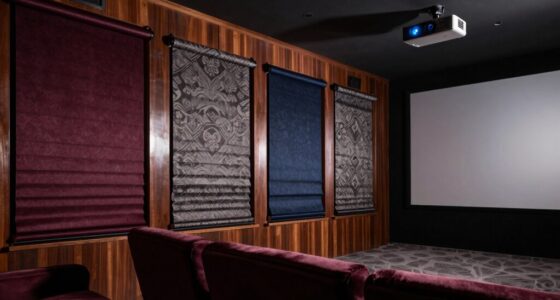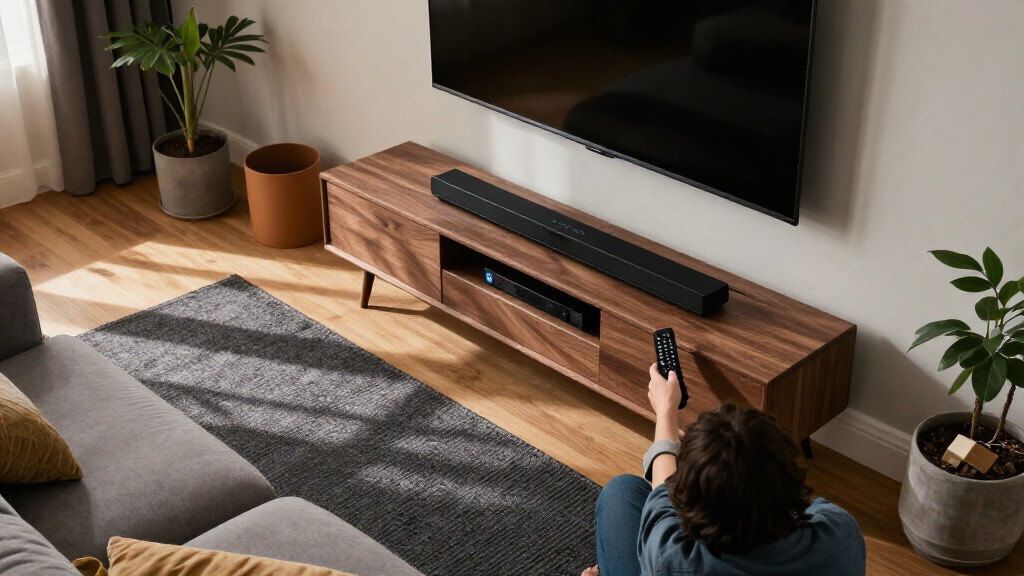
For a media room, my best overall pick is the JBL Bar 800, which pairs Dolby Atmos with detachable surround speakers and a wireless subwoofer for a more enveloping setup. The JBL Bar 1300XMK2 is a stronger fit for buyers seeking a more ambitious premium system, while the Sonos Beam (Gen 2) suits smaller rooms and listeners who value a compact design. The main tradeoff is between a simple soundbar that saves space and a multi-speaker system that takes more setup but can create more convincing surround sound. Room size, dialogue clarity, bass needs, and speaker placement matter as much as format support. Read on for the full comparison and my picks for different media room setups.

Get business pricing on your home office setup
- Business-only prices and quantity discounts
- Tax-exempt purchasing
- Multiple users, one account, clear invoices
Complete the kit


Key Takeaways
- Detachable speakers distinguish the JBL Bar 800 and Bar 1300XMK2: they can place surround sound behind the seating area, while single-bar models rely more on processing and room reflections.
- The Sony BRAVIA Theater Bar 9 and Bose Smart Ultra prioritize an uncluttered premium setup: their appeal is immersive processing from a main soundbar, not a set of rear speakers included in the system.
- The Sony HT-S40R takes a different route to surround: its dedicated rear speakers provide physical placement behind listeners, but installation is less minimal than with a one-piece bar.
- Compact and entry-level options serve narrower needs: the Yamaha SR-C30A brings a separate subwoofer to a small system, while the Samsung HW-B400F and Amazon Fire TV Soundbar keep the setup simpler.
- Channel count and Dolby Atmos labels do not tell the whole story: room layout, speaker placement, and whether a system includes rear channels affect the result more directly than format support alone.
| Bose Smart Ultra Dolby Atmos Soundbar with Voice Control |  | Best for Dialogue and Spatial Audio | Audio format: Dolby Atmos | Audio processing: Bose TrueSpace and A.I. Dialogue Mode | Transducers: Six, including two upward-firing dipole speakers | VIEW LATEST PRICE | See Our Full Breakdown |
| Yamaha SR-C30A Compact 2.1-Channel Sound Bar with Wireless Subwoofer and Bluetooth |  | Best Compact 2.1 Setup | Audio channels: 2.1 | Soundbar width: 23 inches | Subwoofer: Wireless, 5.13-inch diameter | VIEW LATEST PRICE | See Our Full Breakdown |
| Samsung HW-B400F 2.0-Channel Soundbar with Built-In Subwoofer |  | Best Simple TV Upgrade | Audio channels: 2.0 | Maximum output power: 40 watts | Dimensions: 4.21 x 25.23 x 2.62 inches | VIEW LATEST PRICE | See Our Full Breakdown |
| JBL Bar 800 5.1.2-Channel Soundbar with Detachable Surround Speakers and Wireless Subwoofer |  | Best for True Surround Sound | Audio channels: 5.1.2 | Output power: 720W | Subwoofer: 10-inch wireless | VIEW LATEST PRICE | See Our Full Breakdown |
| ULTIMEA Poseidon M60 5.1-Channel Dolby Atmos Soundbar System |  | Best for Sound Customization | Audio output: 5.1-channel surround sound with Dolby Atmos | Peak output power: 300W | Drivers: Five built-in full-range drivers and one wired subwoofer | VIEW LATEST PRICE | See Our Full Breakdown |
| Amazon Fire TV Soundbar, 2.0 Channel with DTS Virtual:X, Dolby Audio, and Bluetooth |  | Best Simple Upgrade for Fire TV Rooms | Speaker channels: 2.0 | Audio formats: DTS Virtual:X, Dolby Digital | EQ modes: Movies, Music, Dialogue | VIEW LATEST PRICE | See Our Full Breakdown |
| TOVZAIX 100W Detachable Soundbar with Bluetooth 5.3 |  | Best for Flexible Speaker Placement | Maximum output power: 100 watts | Audio output mode: Stereo | Design: Detachable soundbar or two tower speakers | VIEW LATEST PRICE | See Our Full Breakdown |
| Sony BRAVIA Theater Bar 9 Soundbar with 13 Speakers |  | Best Premium Single-Bar Surround | Speaker units: 13 | Audio output mode: Surround | Supported audio formats: Dolby Atmos, DTS:X, IMAX Enhanced | VIEW LATEST PRICE | See Our Full Breakdown |
| Bose TV Speaker Compact Soundbar with Bluetooth and HDMI-ARC, Black |  | Best for Clear Dialogue in a Compact Room | Audio output mode: Stereo | Drivers: Two angled full-range drivers and a center tweeter | Connectivity: Bluetooth, HDMI, optical, AUX | VIEW LATEST PRICE | See Our Full Breakdown |
| TCL S60K 3.1-Channel Soundbar with Dolby Atmos, DTS:X, Wireless Subwoofer, Bluetooth, and AI Sonic Room Calibration |  | Best Overall Media Room Package | Audio channels: 3.1 | Maximum output power: 340 watts | Audio technologies: Dolby Atmos, DTS:X, DTS Virtual:X | VIEW LATEST PRICE | See Our Full Breakdown |
| Sony HT-S40R 5.1-Channel Home Theater Soundbar System, Black |  | Best for Physical Rear-Speaker Surround | Audio channels: 5.1 | Maximum output power: 600 watts | Connections: HDMI, optical, analog, Bluetooth, USB | VIEW LATEST PRICE | See Our Full Breakdown |
| JBL Bar 1300XMK2 Dolby Atmos Soundbar with Detachable Speakers, Black |  | Best Premium Immersive System | Audio channels: 11.1.4 | Maximum output power: 1570 watts | Audio formats: Dolby Atmos, DTS:X | VIEW LATEST PRICE | See Our Full Breakdown |
| JBL Bar 300MK2 5.0-Channel Dolby Atmos Soundbar |  | Best All-in-One Media Room Pick | Audio channels: 5.0 | Maximum output power: 450 watts | Speaker size: 37 inches | VIEW LATEST PRICE | See Our Full Breakdown |
| Assistrust KY-8000 Detachable Soundbar for TV, PC, and Gaming |  | Best for Flexible Placement | Audio channels: 2 | Audio output: Stereo | Power output: 80 W | VIEW LATEST PRICE | See Our Full Breakdown |
| Sonos Beam (Gen 2) Soundbar with Dolby Atmos, Black |  | Best Compact Premium Soundbar | Audio channels: 2 | Audio output mode: Surround | Audio drivers: 5 | VIEW LATEST PRICE | See Our Full Breakdown |
| media room soundbar | Connectivity | Audio channels |
|---|---|---|
| Bose Smart Ultra Dolby Atmos S | — | — |
| Yamaha SR-C30A Compact 2.1-Cha | Bluetooth, HDMI, optical, and auxiliary | 2.1 |
| Samsung HW-B400F 2.0-Channel S | Wireless pairing and Bluetooth-compatible Samsung TVs | 2.0 |
| JBL Bar 800 5.1.2-Channel Soun | Bluetooth, Ethernet, HDMI, USB, and Wi-Fi | 5.1.2 |
| ULTIMEA Poseidon M60 5.1-Chann | HDMI eARC, optical, and Bluetooth 5.4 | — |
| Amazon Fire TV Soundbar | — | — |
| TOVZAIX 100W Detachable Soundb | Bluetooth 5.3, ARC, optical, AUX, USB | — |
| Sony BRAVIA Theater Bar 9 Soun | Wi-Fi, Bluetooth | — |
| Bose TV Speaker Compact Soundb | Bluetooth, HDMI, optical, AUX | — |
| TCL S60K 3.1-Channel Soundbar | HDMI eARC, HDMI input, Bluetooth, USB, Wi-Fi | 3.1 |
| Sony HT-S40R 5.1-Channel Home | — | 5.1 |
| JBL Bar 1300XMK2 Dolby Atmos S | Bluetooth, Wi-Fi, Ethernet, HDMI, optical, USB | 11.1.4 |
| JBL Bar 300MK2 5.0-Channel Dol | Bluetooth, HDMI, optical, USB, Wi-Fi | 5.0 |
| Assistrust KY-8000 Detachable | Bluetooth 5.0, ARC, optical, AUX | 2 |
| Sonos Beam | HDMI, Wi-Fi, Ethernet | 2 |
More Details on Our Top Picks
Bose Smart Ultra Dolby Atmos Soundbar with Voice Control
The Bose Smart Ultra suits media rooms where clear speech and an expansive sound field matter more than building a multi-speaker system. Its Dolby Atmos and TrueSpace processing use six transducers, including two upward-firing dipole speakers, to add a sense of height and space from a single bar. A.I. Dialogue Mode targets voices that can get lost in busy movie mixes, a useful contrast with the simpler Samsung HW-B400F, which sticks to 2.0-channel sound and a built-in woofer. Alexa, Voice4Video, Wi-Fi, and Bluetooth add flexible control and streaming, while HDMI eARC or optical handles TV audio. The tradeoff is that this is a standalone soundbar, not a full surround package like the JBL Bar 800; buyers seeking physical rear speakers or a dedicated subwoofer should look elsewhere. Its plastic enclosure also feels less substantial than its premium sound-processing ambitions.
Pros:- Dolby Atmos and TrueSpace create a wider, taller presentation from a single soundbar
- A.I. Dialogue Mode helps bring speech forward in complex movie mixes
- Built-in Alexa and Voice4Video provide voice-control options
- HDMI eARC, optical, Bluetooth, and Wi-Fi support varied TV and streaming setups
Cons:- Does not include a separate subwoofer or physical surround speakers
- Plastic enclosure feels less substantial than the metal-and-plastic JBL Bar 800
- Not water resistant
Best for: Movie and TV viewers who prioritize intelligible dialogue, Atmos effects, and voice control without adding rear speakers
Not ideal for: Buyers who want a separate subwoofer and physical rear surrounds, or who prefer a more substantial enclosure
- Audio format:Dolby Atmos
- Audio processing:Bose TrueSpace and A.I. Dialogue Mode
- Transducers:Six, including two upward-firing dipole speakers
- TV connections:HDMI eARC and optical audio
- Wireless connectivity:Bluetooth and Wi-Fi
- Voice control:Amazon Alexa and Bose Voice4Video; compatible with Google devices
- Mounting type:Tabletop
- Enclosure material:Plastic
Our verdict“Choose the Bose Smart Ultra if clear dialogue and spacious Atmos sound matter more than dedicated rear speakers and a separate subwoofer.”
Yamaha SR-C30A Compact 2.1-Channel Sound Bar with Wireless Subwoofer and Bluetooth
The Yamaha SR-C30A is the compact pick for a media room where a full-size surround system would crowd the furniture. Its 23-inch bar and wireless subwoofer bring dedicated bass to a small footprint, while the subwoofer can sit vertically or horizontally to fit a shelf or floor spot. That gives it a more substantial low-end setup than the Samsung HW-B400F, which keeps its woofer inside the bar, though neither offers the room-filling physical surround package of the JBL Bar 800. Yamaha adds 3D Movie and Game modes, Clear Voice, and Adaptive Low Volume, making it adaptable for films, games, and quieter listening. The compromise is a 2.1-channel design with virtual surround rather than Dolby Atmos or rear speakers. It also needs a wired TV connection despite the wireless subwoofer, so it is not a cable-free setup.
Pros:- Compact 23-inch bar fits tighter media-room layouts
- Wireless subwoofer adds dedicated bass and allows flexible placement
- Clear Voice and Adaptive Low Volume support speech clarity at quieter levels
- HDMI, optical, auxiliary, and Bluetooth connections cover common sources
Cons:- 2.1-channel virtual surround cannot match the JBL Bar 800’s detachable physical surrounds
- No Dolby Atmos support
- The soundbar still needs a wired connection to the TV
Best for: Apartment and smaller media-room owners who want a compact bar, a separate subwoofer, and useful dialogue and low-volume modes
Not ideal for: Buyers seeking Dolby Atmos, physical rear surrounds, or a wireless connection between the soundbar and TV
- Audio channels:2.1
- Soundbar width:23 inches
- Subwoofer:Wireless, 5.13-inch diameter
- Sound modes:Standard, Stereo, 3D Movie, and Game
- Sound features:Clear Voice and Adaptive Low Volume
- Connectivity:Bluetooth, HDMI, optical, and auxiliary
- Mounting type:Wall mount
- Warranty:2-year manufacturer warranty
Our verdict“Pick the Yamaha SR-C30A for a space-conscious 2.1 setup with a separate subwoofer, not for immersive Atmos or true rear-channel surround.”
Samsung HW-B400F 2.0-Channel Soundbar with Built-In Subwoofer
The Samsung HW-B400F is the straightforward choice for viewers who want fuller TV sound without making room for a separate subwoofer. Its built-in woofer keeps the setup to one slim bar, and dialogue enhancement helps voices stand out over everyday programming. Compared with the Yamaha SR-C30A, it trades a wireless subwoofer and 2.1-channel design for fewer pieces and less placement planning. It is also a much simpler media-room option than the Bose Smart Ultra, which adds Dolby Atmos processing, Wi-Fi, and voice control. Compatible Samsung TVs can pair wirelessly and use the TV remote for key functions, but that convenience depends on owning the right television. The 2.0-channel configuration limits surround immersion, and the listed wireless pairing support is narrower than a broadly equipped HDMI eARC soundbar.
Pros:- Built-in woofer adds bass without a separate subwoofer
- Dialogue enhancement helps make speech easier to follow
- Compatible Samsung TV remote can control key soundbar functions
- Wireless pairing with compatible Samsung TVs can reduce cable clutter
Cons:- 2.0-channel sound offers less surround immersion than the Yamaha SR-C30A or JBL Bar 800
- Some wireless features depend on having a compatible Samsung TV
- No dedicated subwoofer for stronger, more flexible bass placement
Best for: Samsung TV owners who want clearer dialogue and more body than TV speakers provide, with minimal setup and no separate subwoofer
Not ideal for: Media-room buyers who want Dolby Atmos, a dedicated subwoofer, or broad connection options independent of Samsung TV compatibility
- Audio channels:2.0
- Maximum output power:40 watts
- Dimensions:4.21 x 25.23 x 2.62 inches
- Weight:4.6 pounds
- Audio features:Built-in woofer, dialogue enhancement, and Surround Sound Expansion
- Connectivity:Wireless pairing and Bluetooth-compatible Samsung TVs
- Enclosure material:Metal
- Warranty:1-year manufacturer warranty
Our verdict“Choose the Samsung HW-B400F for a simple one-bar upgrade with a compatible Samsung TV, but skip it if surround immersion is the priority.”
JBL Bar 800 5.1.2-Channel Soundbar with Detachable Surround Speakers and Wireless Subwoofer
The JBL Bar 800 is the strongest fit here for a media room built around immersive movie playback. Its 5.1.2-channel layout combines two up-firing drivers with detachable, battery-powered surround speakers and a 10-inch wireless subwoofer. The detachable speakers create physical rear channels without permanent speaker wiring, a more convincing surround approach than the virtual effects from the Yamaha SR-C30A or single-bar presentation of the Bose Smart Ultra. HDMI eARC with 4K Dolby Vision pass-through, room calibration, and app-based EQ give it the connections and tuning options to anchor a dedicated setup. PureVoice also addresses dialogue clarity. This is a more involved system than either compact alternative: the main bar needs corded power, and the detachable speakers require charging and placement. Buyers who mainly watch news or want one unobtrusive bar may find the extra hardware unnecessary.
Pros:- Detachable battery-powered speakers provide physical surround channels without permanent rear wiring
- Dolby Atmos and two up-firing drivers add height effects
- 10-inch wireless subwoofer supports deeper, dedicated bass
- Room calibration, app EQ, Wi-Fi streaming, and PureVoice broaden setup options
Cons:- Main soundbar requires corded power
- Detachable surround speakers add charging and placement work
- More components and setup steps than the Bose Smart Ultra or Yamaha SR-C30A
Best for: Movie-focused media-room owners who want physical rear surround speakers, Atmos height effects, and a dedicated subwoofer without running permanent rear-speaker cables
Not ideal for: Buyers who want a compact one-piece setup, minimal charging and placement tasks, or a soundbar mainly for everyday TV dialogue
- Audio channels:5.1.2
- Output power:720W
- Subwoofer:10-inch wireless
- Surround speakers:Two detachable, battery-powered speakers
- Audio format:Dolby Atmos
- HDMI:eARC with 4K Dolby Vision pass-through
- Connectivity:Bluetooth, Ethernet, HDMI, USB, and Wi-Fi
- Streaming:AirPlay, Alexa Multi-Room Music, and Chromecast built-in
- Control and setup:App, remote, voice control, and room calibration
Our verdict“Choose the JBL Bar 800 if movies and physical rear surround are central to your media room and you can accommodate its extra components.”
ULTIMEA Poseidon M60 5.1-Channel Dolby Atmos Soundbar System
The ULTIMEA Poseidon M60 fits media-room listeners who want a surround-oriented setup and plenty of control over its tuning. Five built-in full-range drivers use side-firing output to create surround effects without separate rear speakers, while HDMI eARC and Dolby Atmos support a modern TV connection. Its app offers a 10-band EQ, 121 presets, and 13 surround levels, giving hands-on listeners more ways to shape sound than the simpler Samsung HW-B400F. The 5.25-inch wired wooden subwoofer supplies dedicated bass, but its cable limits placement compared with the JBL Bar 800‘s wireless subwoofer and detachable surrounds. This is a more configurable alternative to the JBL, not a direct substitute for its physical rear channels. Buyers who prefer automatic setup and minimal adjustment may find the extensive controls more work than they want.
Pros:- Five built-in drivers and side-firing output create surround effects without rear speakers
- HDMI eARC supports Dolby Atmos audio from compatible TVs
- App provides a 10-band EQ, 121 presets, and 13 surround levels
- Wired wooden subwoofer adds a dedicated bass enclosure
Cons:- Wired subwoofer limits placement flexibility compared with the JBL Bar 800’s wireless subwoofer
- No separate rear speakers for physical surround channels
- Large range of EQ and preset controls may be more adjustment than some buyers want
Best for: Media-room listeners who want Atmos support, app-based EQ control, and surround effects without placing separate rear speakers
Not ideal for: Buyers who need a wireless subwoofer, physical rear speakers, or a simple plug-in-and-leave-it sound setup
- Audio output:5.1-channel surround sound with Dolby Atmos
- Peak output power:300W
- Drivers:Five built-in full-range drivers and one wired subwoofer
- Subwoofer:5.25-inch wired wooden enclosure; 5.3L cabinet
- Frequency response:45 Hz–18 kHz
- Maximum SPL:99 dB
- Connectivity:HDMI eARC, optical, and Bluetooth 5.4
- Sound adjustment:10-band graphic EQ, 121 presets, and 13 surround levels
- Mounting:Tabletop or wall mount
Our verdict“Pick the ULTIMEA Poseidon M60 if you want adjustable Atmos surround from built-in drivers and can place its wired subwoofer near the bar.”
Amazon Fire TV Soundbar, 2.0 Channel with DTS Virtual:X, Dolby Audio, and Bluetooth
I’d pick the Amazon Fire TV Soundbar for a media room where the main need is fuller TV audio without adding a subwoofer or a large cabinet. Its compact 2.0-channel layout, DTS Virtual:X, and Dolby Audio aim to improve dialogue and give movies a wider feel, though virtual surround cannot match the separate subwoofer and 3.1 layout of the TCL S60K. Movie, Music, and Dialogue EQ modes let viewers adjust the presentation without navigating complex settings. HDMI eARC/ARC and optical cover common TV connections, while Bluetooth adds an easy way to play audio from a phone. I like that an HDMI cable and wall-mounting kit are included; the tradeoff is a more limited, bass-light presentation than a system with a dedicated subwoofer. Buyers also need a compatible TV audio connection.
Pros:- Compact 2.0-channel setup fits easily below many TVs.
- DTS Virtual:X and Dolby Audio add virtual surround processing.
- Dialogue, Movie, and Music EQ modes suit different media-room listening.
- HDMI cable, remote, and wall-mounting kit are included.
Cons:- No separate subwoofer for deeper, more forceful movie bass.
- TV audio requires a compatible HDMI eARC/ARC or optical connection.
- Virtual surround is not a substitute for dedicated surround speakers.
Best for: Fire TV households and media-room viewers who want clearer dialogue and a simple, compact upgrade without a separate subwoofer.
Not ideal for: Movie fans seeking strong low-frequency impact or convincing surround from dedicated rear speakers; the 2.0-channel design is more limited than the TCL S60K.
- Speaker channels:2.0
- Audio formats:DTS Virtual:X, Dolby Digital
- EQ modes:Movies, Music, Dialogue
- TV connections:HDMI eARC/ARC, optical
- Other connectivity:Bluetooth, USB-A
- Dimensions:24 x 3.5 x 2.5 inches
- Weight:3.97 lbs
- Included accessories:Remote, HDMI cable, power cable, 2 AAA batteries, wall-mounting kit, quick start guide
Our verdict“Choose this for a straightforward, space-conscious TV sound upgrade, but choose the TCL S60K if deeper bass and a dedicated center channel matter more.”
TOVZAIX 100W Detachable Soundbar with Bluetooth 5.3
The TOVZAIX 100W Detachable Soundbar suits a media room where furniture layout changes or stereo separation matters more than a polished all-in-one bar. Its two sections can be joined for a conventional soundbar setup or separated into tower-style speakers, giving it a placement option the compact Amazon Fire TV Soundbar does not offer. Bluetooth 5.3, ARC, optical, AUX, and USB also provide several ways to connect TVs and personal devices, while Movie, Music, and News modes make basic sound adjustments accessible. This flexibility is the central appeal, not a clearly specified surround format or a dedicated subwoofer. The plastic enclosure and stereo output make it a less convincing fit for buyers seeking a refined, enveloping cinema system; its stated corded power requirement also limits placement freedom.
Pros:- Detaches into two tower-style speakers or combines into one soundbar.
- Offers Bluetooth 5.3, ARC, optical, AUX, and USB connectivity.
- Movie, Music, and News modes provide straightforward listening adjustments.
- Can be used on a tabletop or mounted on a wall.
Cons:- Stereo output and no listed dedicated subwoofer limit cinema-style impact.
- Plastic enclosure is less premium than the Sony BRAVIA Theater Bar 9’s metal construction.
- Corded electric power is required, restricting placement options.
Best for: Media-room owners who want to separate left and right speakers for wider stereo placement and need several wired and Bluetooth connection choices.
Not ideal for: Buyers who prioritize Dolby Atmos, a dedicated subwoofer, or a clearly specified surround setup; this model is listed as stereo.
- Maximum output power:100 watts
- Audio output mode:Stereo
- Design:Detachable soundbar or two tower speakers
- Connectivity:Bluetooth 5.3, ARC, optical, AUX, USB
- Equalizer modes:Movie, Music, News
- Dimensions:3.3 x 38 x 3.4 inches
- Enclosure material:ABS, plastic
- Power source:Corded electric
Our verdict“Choose it if adjustable stereo speaker placement is your priority, but look to the TCL S60K or Sony BRAVIA Theater Bar 9 for more explicitly cinema-focused audio formats.”
Sony BRAVIA Theater Bar 9 Soundbar with 13 Speakers
For a media room where immersive formats and room adaptation lead the brief, the Sony BRAVIA Theater Bar 9 is the most ambitious single-bar choice in this group. Its 13 speaker units, 360 Spatial Sound Mapping, and Sound Field Optimization are designed to make surround presentation more room-aware than the straightforward stereo of the Bose TV Speaker or Amazon Fire TV Soundbar. Dolby Atmos, DTS:X, and IMAX Enhanced support add flexibility for compatible films, while Wi-Fi, Bluetooth, AirPlay 2, and Spotify Connect cover music listening. It also passes through select advanced video and gaming formats, a useful match for a media room with newer sources. The compromise is that the bar’s immersive approach does not include a subwoofer or rear speakers in the listed package; those are optional additions, so buyers seeking a complete bass-heavy system may prefer the TCL S60K.
Pros:- 13 speaker units and 360 Spatial Sound Mapping target immersive surround from a single bar.
- Sound Field Optimization calibrates audio to the room.
- Supports Dolby Atmos, DTS:X, and IMAX Enhanced.
- Wi-Fi, Bluetooth, Spotify Connect, and AirPlay 2 support streaming.
Cons:- Wireless subwoofer and rear speakers are optional rather than included.
- A single-bar setup may not satisfy buyers seeking discrete rear-channel placement.
- The extensive format support has less value for rooms with basic TV sources.
Best for: Media-room owners with compatible Atmos or DTS:X content who want advanced spatial processing, room calibration, and modern video-format support in one soundbar.
Not ideal for: Buyers who want a complete system with included subwoofer and rear speakers, or those who would not use its premium format and streaming features.
- Speaker units:13
- Audio output mode:Surround
- Supported audio formats:Dolby Atmos, DTS:X, IMAX Enhanced
- Music streaming:Spotify Connect, Apple AirPlay 2
- Connectivity:Wi-Fi, Bluetooth
- Video and gaming support:4K HDR, 8K HDR, Dolby Vision, 4K120, VRR, ALLM
- Mounting:Wall mount or tabletop
- Enclosure material:Metal
Our verdict“Choose the Bar 9 for a premium, room-adaptive single-bar system, but favor the TCL S60K if an included subwoofer is a higher priority.”
Bose TV Speaker Compact Soundbar with Bluetooth and HDMI-ARC, Black
The Bose TV Speaker is a dialogue-first choice for smaller media rooms where speech clarity and a neat installation matter more than simulated cinema surround. Two angled full-range drivers and a center tweeter are designed to spread stereo sound while keeping voices intelligible; the dedicated Dialogue mode offers a more direct fix for muffled speech than relying on the general EQ modes of the Amazon Fire TV Soundbar. Bluetooth, optical, HDMI, and AUX connections make it adaptable, though the optical cable is included while an HDMI cable is not. Its compact dimensions suit a TV stand or wall placement, and compatible Bose bass modules can add low-end support later. Out of the box, however, it lacks a dedicated subwoofer and expansive format support, so the TCL S60K is a better fit for viewers who want a more cinematic, bass-forward package.
Pros:- Dialogue mode is designed to make voices clearer.
- Compact body supports tabletop placement or wall mounting.
- Bluetooth, HDMI, optical, and AUX connections offer flexible input choices.
- Can connect to compatible Bose Bass Module 500 or 700 units.
Cons:- No subwoofer is included for deep movie bass.
- HDMI cable and wall brackets are sold separately.
- Connecting a compatible Bose bass module requires a separately sold cable.
Best for: Viewers in compact media rooms who often struggle to hear dialogue and want a small bar with a dedicated voice mode.
Not ideal for: Home-cinema buyers who want Dolby Atmos, an included subwoofer, or a more enveloping surround presentation.
- Audio output mode:Stereo
- Drivers:Two angled full-range drivers and a center tweeter
- Connectivity:Bluetooth, HDMI, optical, AUX
- Simultaneous input devices:Up to 3
- Dimensions:2.21 x 23.38 x 4.02 inches (H x W x D)
- Mounting:Wall mount or tabletop placement
- Included accessories:Remote control, optical audio cable
- Compatible bass modules:Bose Bass Module 500 and 700
Our verdict“Choose the Bose for compact, dialogue-focused TV listening, but pick the TCL S60K if your media room needs stronger bass and Atmos or DTS:X support.”
TCL S60K 3.1-Channel Soundbar with Dolby Atmos, DTS:X, Wireless Subwoofer, Bluetooth, and AI Sonic Room Calibration
I rank the TCL S60K first for buyers who want a more complete media-room system without building around separate speakers. Its 3.1-channel layout combines a built-in center channel and tweeter for dialogue with a wireless 6.5-inch subwoofer for movie bass—a more balanced out-of-box setup than the 2.0-channel Amazon Fire TV Soundbar or Bose TV Speaker. Dolby Atmos, DTS:X, and DTS Virtual:X add format and processing options, while AI Sonic Auto Room Calibration is designed to adapt playback to the room. HDMI eARC, an HDMI input, Bluetooth, USB, and Wi-Fi cover common source needs. The tradeoff is physical: the separate subwoofer needs both floor space and power, unlike a single-bar design. ChoruSound also requires a compatible TCL TV, so I would not count on that feature with every display.
Pros:- 3.1 channels include a center channel aimed at improving dialogue clarity.
- Wireless 6.5-inch subwoofer adds dedicated bass with Bass Boost.
- Supports Dolby Atmos, DTS:X, and DTS Virtual:X.
- AI Sonic Auto Room Calibration adapts sound to the room.
Cons:- Separate subwoofer takes up space and requires power.
- ChoruSound requires a compatible TCL TV.
- More components to place than the compact Bose TV Speaker or Amazon Fire TV Soundbar.
Best for: Media-room viewers who want an included wireless subwoofer, clearer center-channel dialogue, and support for major immersive audio formats.
Not ideal for: People with very limited floor space or those seeking a single-bar installation; the separate subwoofer needs room and power, and ChoruSound depends on a compatible TCL TV.
- Audio channels:3.1
- Maximum output power:340 watts
- Audio technologies:Dolby Atmos, DTS:X, DTS Virtual:X
- Subwoofer:Wireless, 6.5-inch driver with Bass Boost
- Connectivity:HDMI eARC, HDMI input, Bluetooth, USB, Wi-Fi
- Room calibration:AI Sonic Auto Room Calibration
- Control method:Remote
- Mounting type:Wall mount
Our verdict“Choose the TCL S60K for the strongest ready-to-watch balance of dialogue, bass, and immersive formats; skip it if a separate subwoofer will not fit your room.”
Sony HT-S40R 5.1-Channel Home Theater Soundbar System, Black
The Sony HT-S40R suits a media room where distinct rear-speaker placement matters more than newer spatial-audio formats. Its 5.1-channel layout includes rear speakers, giving movies a more direct surround setup than the all-in-one JBL Bar 300MK2, which creates surround effects from the soundbar itself. Sony also lists 600 watts of maximum output and provides HDMI, optical, and analog TV connections, so it can fit a range of existing setups.
The tradeoff is a less streamlined installation: separate rear speakers need placement around the seating area, and the listed formats do not include Dolby Atmos or DTS:X. Bluetooth is useful for music, but this is a better fit for TV and movie playback than for shoppers seeking a compact, single-piece bar. I’d choose it for straightforward surround channels, not cutting-edge format support.
Pros:- Includes rear speakers for a discrete 5.1-channel surround layout
- Lists 600 watts of maximum output
- HDMI, optical, and analog connections accommodate different TV setups
- Bluetooth supports music streaming from compatible devices
Cons:- Rear speakers add placement and setup requirements compared with the all-in-one JBL Bar 300MK2
- Dolby Atmos and DTS:X are not listed
- The remote requires two AAA batteries
Best for: Movie watchers who can place rear speakers around a dedicated media-room seating area and want a conventional 5.1-channel setup.
Not ideal for: Buyers who want Dolby Atmos or DTS:X, a single compact unit, or a surround system with minimal speaker placement.
- Audio channels:5.1
- Maximum output power:600 watts
- Connections:HDMI, optical, analog, Bluetooth, USB
- Subwoofer connectivity:Wireless
- Sound modes:Selectable modes and dialogue enhancement
- Dimensions:13.66 x 33.22 x 9.76 in (D x W x H)
- Power source:Corded electric
- Warranty:1 year
Our verdict“Choose the Sony HT-S40R if you want physical rear-speaker surround in a media room and can give up Atmos-format support and an all-in-one design.”
JBL Bar 1300XMK2 Dolby Atmos Soundbar with Detachable Speakers, Black
The JBL Bar 1300XMK2 is the most ambitious system in this group for a large media room: its 11.1.4 channels, Dolby Atmos and DTS:X support, and 12-inch wireless subwoofer target a fuller, more enveloping presentation than the Sony HT-S40R’s conventional 5.1 layout. Its detachable wireless surround speakers can sit behind viewers without needing power connections at those positions, and can also serve as portable Bluetooth speakers.
MultiBeam 3.0 adapts the soundstage to the room, while PureVoice 2.0 is designed to keep dialogue clearer amid effects. That flexibility comes with more components to place and manage than the Sonos Beam (Gen 2) or JBL Bar 300MK2. This is the pick for buyers willing to build around a substantial system; shoppers prioritizing a simple, minimal-footprint installation should choose a smaller bar.
Pros:- 11.1.4-channel configuration supports immersive spatial audio
- Dolby Atmos and DTS:X are listed
- Detachable wireless speakers can be positioned behind listeners without power connections
- 12-inch wireless subwoofer and 1570-watt maximum output
Cons:- Soundbar, detachable speakers, and subwoofer require more placement and management than the Sonos Beam (Gen 2)
- The larger system may be excessive for a small room or casual TV setup
- Not waterproof
Best for: Media-room owners seeking Dolby Atmos and DTS:X with detachable rear speakers, strong low-frequency support, and room for multiple components.
Not ideal for: Buyers with limited space, a preference for a single-piece soundbar, or no need for advanced surround formats and detachable speakers.
- Audio channels:11.1.4
- Maximum output power:1570 watts
- Audio formats:Dolby Atmos, DTS:X
- Subwoofer:12-inch wireless
- Surround speakers:Detachable wireless
- Audio technologies:MultiBeam 3.0, PureVoice 2.0
- Connectivity:Bluetooth, Wi-Fi, Ethernet, HDMI, optical, USB
- Mounting type:Tabletop
Our verdict“Pick the JBL Bar 1300XMK2 for a dedicated media room where its advanced formats and detachable surrounds justify the extra components.”
JBL Bar 300MK2 5.0-Channel Dolby Atmos Soundbar
The JBL Bar 300MK2 brings Dolby Atmos effects and a 5.0-channel design into one soundbar, making it a practical choice when a media room needs broader TV sound without a separate subwoofer or rear-speaker set. Compared with the Sony HT-S40R, it trades physical rear speakers for MultiBeam 3.0 processing and a simpler footprint; compared with the JBL Bar 1300XMK2, it gives up detachable surrounds and a dedicated 12-inch subwoofer.
PureVoice 2.0 targets dialogue clarity, while room calibration can help tailor playback to the space. HDMI eARC, 4K Dolby Vision passthrough, and support for AirPlay, Google Cast, and other services add flexibility for TV and music. Built-in bass ports avoid another box, but buyers seeking the impact of a separate subwoofer should look at a system such as the Bar 1300XMK2 instead.
Pros:- All-in-one 5.0-channel design avoids a separate subwoofer
- Dolby Atmos, MultiBeam 3.0, and room calibration are listed
- PureVoice 2.0 is designed to improve dialogue clarity
- HDMI eARC and support for AirPlay, Google Cast, and other streaming services
Cons:- No separate subwoofer, unlike the JBL Bar 1300XMK2
- Does not include physical rear speakers like the Sony HT-S40R
- Voice control requires a compatible voice-assistant-enabled speaker
Best for: Media-room owners who want Dolby Atmos effects, streaming options, and a single soundbar without adding a separate subwoofer.
Not ideal for: Viewers who want physical rear speakers or a separate subwoofer for stronger dedicated bass in a larger room.
- Audio channels:5.0
- Maximum output power:450 watts
- Speaker size:37 inches
- Audio features:Dolby Atmos, MultiBeam 3.0, PureVoice 2.0, SmartDetails
- HDMI features:HDMI eARC and 4K Dolby Vision passthrough
- Connectivity:Bluetooth, HDMI, optical, USB, Wi-Fi
- Streaming support:AirPlay, Google Cast, Spotify Connect, Tidal Connect, Roon Ready
- Mounting type:Wall mount
Our verdict“Choose the JBL Bar 300MK2 if you want an Atmos-capable, streaming-friendly soundbar without the extra boxes of a full surround system.”
Assistrust KY-8000 Detachable Soundbar for TV, PC, and Gaming
The Assistrust KY-8000 is the most basic, placement-flexible choice here: its detachable design supports horizontal or vertical positioning, tabletop use, and wall mounting. That gives it a different role from the larger media-room systems in this list. It offers 80 watts of stereo sound with four drivers and Movie, Music, and News equalizer modes, while ARC, optical, AUX, and Bluetooth 5.0 cover common TV and device connections.
Compared with the JBL Bar 300MK2, the KY-8000 lacks listed Dolby Atmos support, Wi-Fi streaming, and a 5.0-channel arrangement. Its appeal is simpler placement and straightforward inputs, not a theater-scale soundstage. I’d reserve it for a small media room, bedroom TV, or gaming display where easy positioning matters more than surround effects. Buyers furnishing a dedicated movie room should favor a system with rear speakers or spatial-audio support.
Pros:- Detachable design allows horizontal or vertical positioning
- Four drivers and 80 watts of listed power
- Movie, Music, and News equalizer modes
- Bluetooth 5.0, ARC, optical, and AUX connections
Cons:- Two-channel stereo lacks the surround layout of the Sony HT-S40R
- No Dolby Atmos support is listed, unlike the JBL Bar 300MK2
- No separate subwoofer is specified
Best for: Buyers setting up a compact TV, PC, or gaming area who want several placement options and common wired connections.
Not ideal for: Dedicated media-room owners seeking Dolby Atmos, discrete surround channels, or a larger-scale movie soundstage.
- Audio channels:2
- Audio output:Stereo
- Power output:80 W
- Drivers:4
- Equalizer modes:Movie, Music, News
- Connectivity:Bluetooth 5.0, ARC, optical, AUX
- Speaker size:17 inches
- Mounting:Tabletop, wall mount
Our verdict“Choose the Assistrust KY-8000 for a compact, flexible setup, but skip it if your media room needs immersive surround sound.”
Sonos Beam (Gen 2) Soundbar with Dolby Atmos, Black
The Sonos Beam (Gen 2) is a strong fit for a media room where space is limited but streaming and clear dialogue still matter. Its Dolby Atmos support, Trueplay tuning, and five drivers aim to create a broad presentation from a shelf-mounted soundbar. Compared with the JBL Bar 300MK2, the Beam keeps the setup compact and centers control around the Sonos app; the JBL lists more direct connectivity options and a 5.0-channel configuration.
Sonos offers control through its app, TV remote, AirPlay 2, and voice, and setup uses two cables. The tradeoff is that this is still a single bar: unlike the Sony HT-S40R, it does not include physical rear speakers, and no separate subwoofer is specified. Its listed two-channel configuration also makes it a less direct pick for buyers focused on discrete surround channels. I’d choose it for compact streaming-first rooms, not maximum theater scale.
Pros:- Dolby Atmos support in a compact soundbar format
- Trueplay tuning and a setup described as using two cables
- Supports Sonos app, TV remote, AirPlay 2, and voice control
- Streams supported music, radio, podcasts, and audiobooks
Cons:- Listed audio configuration is two channels, unlike the Sony HT-S40R’s 5.1 layout
- No separate subwoofer or physical rear speakers are specified
- Connectivity listing does not include optical or Bluetooth
Best for: Buyers with a smaller media room who want a compact Dolby Atmos soundbar, streaming access, and app or voice control.
Not ideal for: Movie enthusiasts who prioritize physical rear speakers, discrete surround channels, or a dedicated subwoofer.
- Audio channels:2
- Audio output mode:Surround
- Audio drivers:5
- Maximum output power:200 watts
- Frequency response:50.4 Hz
- Connectivity:HDMI, Wi-Fi, Ethernet
- Wireless technologies:AirPlay, NFC, Wi-Fi
- Mounting type:Shelf mount
Our verdict“Pick the Sonos Beam (Gen 2) for a compact, streaming-focused room, but choose a multi-speaker system for physical surround and stronger theater-style expansion.”
How We Picked
I ranked these media room soundbars by how well their design matches the demands of movie and TV viewing: clear dialogue, convincing surround presentation, useful bass, and a setup that fits a real room. I gave more weight to dedicated surround speakers and subwoofers when a model is meant to serve a larger or more immersive media room, while compact bars earned consideration for small spaces and straightforward operation. I also compared connection and control options, including HDMI-ARC, Bluetooth, voice features, and room calibration where listed.
The order reflects overall fit, not a feature count. Systems with a stronger path to room-filling surround sound rank ahead of basic stereo bars, but size, wiring, and setup complexity limit their appeal for some buyers. I treated product claims such as Dolby Atmos as one factor rather than proof of equivalent performance: speaker configuration and placement remain key. Models with limited room-scale ambition are included for buyers who value simplicity, a compact footprint, or a secondary-room setup.
Factors to Consider When Choosing Media Room Soundbars
Before choosing a soundbar, decide what you want the room to do: improve TV dialogue, create a more cinematic surround field, or deliver fuller bass without a receiver and separate speaker system. The right setup depends on seating distance, room shape, and how much hardware you are willing to place around the room.
Match the speaker layout to the room
A soundbar with virtual surround can be a practical choice when side walls, furniture, or walkways make rear speakers difficult to place. Dedicated rear speakers can create a more direct surround effect, but they need suitable positions near or behind the seating area. Detachable speakers offer a middle ground: they reduce permanent wiring while adding physical channels when you watch a film. Check the room layout before buying, especially if the sofa sits against a wall or the room opens into another space. A higher channel count does not automatically solve poor placement. Choose for the space you have, not the idealized layout shown in a product diagram.
Think beyond Dolby Atmos support
Atmos support can help with compatible content, but the label alone does not tell you how convincing height effects will be in your room. Some systems use up-firing drivers, while others rely on processing to create a sense of height and space. Low ceilings, vaulted ceilings, and open-plan layouts can change how those effects reach the listener. Confirm that your TV and source devices can pass the audio formats you plan to use, and check the connection requirements before purchase. If most viewing is broadcast TV or older streaming content, dialogue clarity and balanced sound may matter more day to day. Treat immersive formats as a useful capability, not a substitute for a suitable speaker arrangement.
Choose bass that suits your room and neighbors
A separate subwoofer can add weight to film soundtracks and action scenes, but it also occupies floor space and may transmit vibration through walls or floors. In a compact room, a built-in subwoofer or smaller wireless sub can be easier to live with than a large bass unit. Placement matters: a subwoofer tucked inside a cabinet or pushed into a corner may sound boomy rather than controlled. Consider whether you can adjust bass independently for late-night viewing. Buyers in apartments may prefer dialogue-focused clarity and a night mode over maximum low-frequency output. Do not assume a more powerful bass setup is always the better media room choice.
Check TV connections and control habits
HDMI-ARC or eARC can simplify TV audio and let one remote handle basic volume control, but compatibility varies by TV and source setup. Check which HDMI connection the soundbar needs and whether using it will affect access to other devices or audio formats. Bluetooth is handy for music, though it does not replace a reliable TV connection for everyday viewing. Voice control can be convenient when the system supports the services you use, but it may add little if you prefer a TV remote. Also consider where the bar will sit: a blocked sensor or a low shelf can interfere with controls and sound projection. A few minutes spent checking ports and placement can prevent an awkward installation.
Balance immersion against setup effort
A single soundbar is usually the easiest option to install and keep tidy, while rear speakers and a separate subwoofer add placement and pairing steps. Wireless components still need power outlets, so “wireless” does not mean cable-free. Detachable speakers reduce some installation work but may need to be returned to the bar for charging or storage, depending on the design. Room calibration can help account for placement, yet it cannot fix blocked speakers or a poor seating layout. Decide how often you are willing to reposition or manage components before choosing a multi-part system. If the setup will be used by several people, simple controls may be more valuable than extra features.
Pay for improvements you will actually use
Spending more makes sense when it adds a meaningful benefit for your viewing habits, such as real rear channels, stronger bass control, or room adaptation. A premium bar without dedicated rear speakers may be a better fit than a full surround kit if the room must stay visually clean. Conversely, paying for Atmos support will not add much if your TV sources rarely provide compatible audio or your room cannot support the effect. Build a short priority list before comparing models: dialogue, surround placement, music playback, compact size, or minimal setup. Then compare products against those needs rather than counting features. The most suitable system is the one that fits both your room and your patience for setup.
Frequently Asked Questions
Do I need rear speakers for a convincing media room surround setup?
You do not need rear speakers to improve TV sound, but physical speakers near or behind the seating area can make surround effects more direct. Single-bar systems use speaker direction and processing to simulate a wider field, which can work well when the room supports it. If your seats are close to a rear wall or the room is open on one side, simulated effects may be less consistent across seats. Detachable surround speakers can suit buyers who want a cleaner setup between viewing sessions. Choose a bar-only model when simplicity matters more than precise sound placement around the room.
Will a Dolby Atmos soundbar work well in a room with a vaulted ceiling?
It can still improve sound, but a vaulted ceiling may make height effects less predictable for systems that bounce audio upward. The angle and height of the ceiling affect where those reflections reach the listener. A system with physical surround speakers can provide a more dependable sense of space, though it does not remove every room limitation. Check the soundbar’s placement guidance and your TV’s audio pass-through support before deciding. If height effects are your main reason for buying, consider the room shape as carefully as the format label.
Is a soundbar with a subwoofer a poor choice for an apartment media room?
Not necessarily, but a separate subwoofer can carry low-frequency energy through shared walls and floors. Look for independent bass adjustment or a night mode so you can reduce impact without making dialogue hard to hear. A smaller subwoofer or a soundbar with built-in bass may be easier to manage in a compact apartment. Placement on a stable surface away from shared walls can also help. If you rarely watch action films at high volume, prioritize dialogue clarity and flexible listening modes over maximum bass output.
Can I use a media room soundbar with a projector instead of a TV?
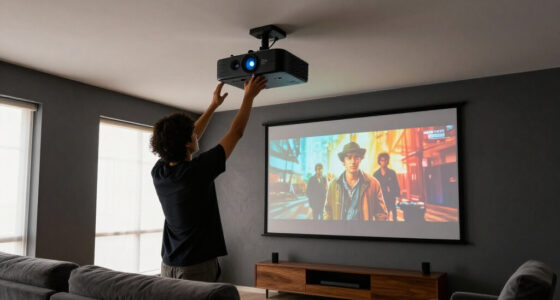
Yes, provided your projector and source devices can send audio to the soundbar through a compatible connection. Many projectors have limited audio outputs, so the cleanest signal path may be from a streaming box or disc player directly to the soundbar. Check whether that arrangement supports the audio formats you want and still sends video correctly to the projector. Also plan for speaker placement around the seating area, since projector rooms often have different cable routes and furniture layouts. Confirm connection compatibility before choosing a system based mainly on its audio features.
Should I choose a compact soundbar or a full surround system for a small media room?
A compact bar can be the better fit when seating is close to the screen, floor space is limited, or you want the fewest components. A full surround system can add separation and rear effects, but nearby speakers may feel overly prominent if the room is very small. Consider how many people usually watch at once and whether seats are spread across the room. A subwoofer also needs a sensible location, even in a compact setup. If you are unsure, prioritize clear dialogue and manageable placement before paying for channels you cannot position well.
Conclusion
For most dedicated media rooms, I recommend the JBL Bar 800 as the best overall because its detachable surrounds and wireless subwoofer provide a practical path to a more immersive setup. The JBL Bar 300MK2 is my value-oriented pick for buyers who want Dolby Atmos in a simpler, single-bar arrangement, while the JBL Bar 1300XMK2 is the best premium choice for shoppers seeking a more ambitious detachable-speaker system. Beginners who want minimal setup should look at the Amazon Fire TV Soundbar or Bose TV Speaker, depending on their need for a compact, straightforward upgrade. For small rooms, the Yamaha SR-C30A offers a compact system with a separate subwoofer; for dedicated rear-channel placement, consider the Sony HT-S40R. Choose by room layout and setup tolerance first, then narrow the list by features.