
TL;DR

Get business pricing on your home office setup
- Business-only prices and quantity discounts
- Tax-exempt purchasing
- Multiple users, one account, clear invoices
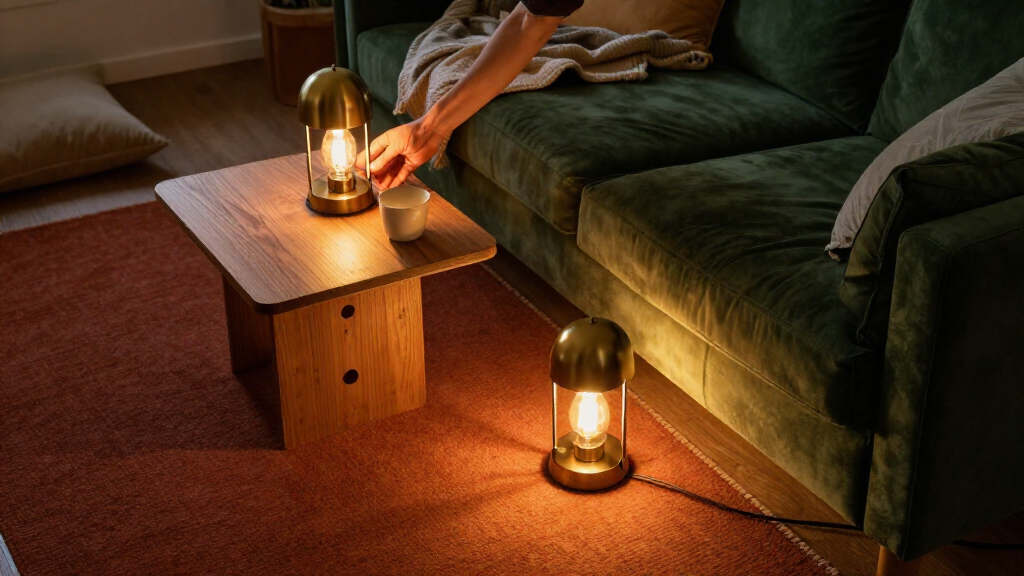
A Livingetc stylist says two lamps are a practical starting point for most living rooms, not a fixed rule. Larger or divided spaces may call for three or more, with placement guided by activities and the mood each area needs.
Livingetc’s living-room styling advice recommends starting with two lamps in most spaces, then adding another when a room is large, open-plan or split into distinct areas. The stylist’s point is that there is no fixed number: lamps should create useful, comfortable pools of light for the room’s activities and mood, rather than simply fill the space.
The stylist describes two lamps as a comfortable starting point alongside a ceiling light, if the room has one. A smaller living room may need only a table lamp and a floor lamp, while a larger room or one with separate reading and television areas could benefit from three or more. The number is presented as guidance, not a requirement.
Placement should reflect how people use the room. A table lamp near a sofa can soften evening light, while a floor lamp beside an armchair can support reading. A lamp on a console or sideboard can brighten a darker stretch of wall and draw attention to objects or artwork. The advice favors different lighting jobs over several lamps that all do the same thing.
Emma Deterding, founder and creative director of Kelling Designs and KDLoves, advises planning lighting around activities such as reading or working at a desk. Suzanne Duin, founder of Maison Maison, recommends combining ambient, task and accent lighting. Their guidance supports choosing lamps for their purpose and positioning, while the Livingetc stylist also suggests mixing shapes rather than buying matching pairs.
Lighting for Everyday Living
The advice offers readers a way to make a living room usable after the overhead light is switched off without treating lamp-count as a design formula. A well-placed lamp can provide focused light for reading; another can make a seating area feel more comfortable or illuminate a dark corner. In a room used for several activities, distributing light around the layout can help each zone serve its purpose.
That matters for both practical and decorative decisions. The source recommends considering outlets and switches early in a renovation, while noting that plug-in lamps can still create layered lighting in an existing room. It also advises checking a lamp’s height, light reach, bulb and dimmer compatibility before buying, alongside its shape and materials.
living room table lamp with dimmer
As an affiliate, we earn on qualifying purchases.
As an affiliate, we earn on qualifying purchases.
From Lamp Count to Lighting Layers
The Livingetc report frames the question against a broader design interest in expressive lamp shapes and softer, more atmospheric light. It describes lamps as objects that can contribute to a room’s character even when switched off. That aesthetic point is paired with a practical one: lighting should be arranged so the room remains comfortable when the main ceiling light is off.
The source distinguishes among general ambient light, task lighting for activities such as reading, and accent lighting that draws attention to a wall or display. It does not prescribe a universal spacing rule or a required number for every room. Instead, the stylist points to layout, seating positions and use as the factors that should shape the arrangement.
““There’s no magic number, I’d start with two lamps in most living rooms, then add another if the space is large, open-plan, or divided into different zones.””
— Livingetc stylist, in the report
floor lamp for reading beside armchair
As an affiliate, we earn on qualifying purchases.
As an affiliate, we earn on qualifying purchases.
No Universal Lamp Count
The advice is a stylist’s recommendation, not a building standard or a measured rule. The source provides no formula based on floor area, ceiling height or window placement, and it does not specify how much light a particular room needs. It also does not establish that two lamps will suit every layout. Room dimensions, existing lighting and personal activities will affect the result.
The report does not compare the recommendation with consumer research or lighting-performance measurements. Readers should treat the suggested count as a design starting point and judge whether each lamp provides useful light in their own space.
plug-in accent lamp for living room console table
As an affiliate, we earn on qualifying purchases.
As an affiliate, we earn on qualifying purchases.
Plan Placement Before Buying
The next step for a homeowner is to map where people sit and what they do there, then identify areas that need general, focused or accent light. The Livingetc advice suggests varying lamp height and spreading light around the room rather than concentrating it in the center. Before purchasing, check the intended position, the lamp’s reach and whether its bulb and dimmer will work together.
For renovation plans, Deterding’s recommendation is to account for lighting early, including outlet and switch locations. For a room that is not being renovated, plug-in table and floor lamps offer another way to adjust the arrangement. The source gives no later update or prescribed follow-up; the practical test is whether the chosen setup makes the room comfortable for its everyday uses.
warm white dimmable LED bulbs for table and floor lamps
As an affiliate, we earn on qualifying purchases.
As an affiliate, we earn on qualifying purchases.
Key Questions
How many lamps does a living room need?
The Livingetc stylist recommends starting with two in most living rooms. This is guidance rather than a fixed rule; larger or divided rooms may need three or more.
Can a small living room use just one lamp?
The report says a smaller room with a good ceiling light may be served by one table lamp and one floor lamp. It does not set a minimum number for every room.
Where should living-room lamps go?
Place them where they serve a purpose: near a sofa for softer evening light, beside an armchair for reading, or on a console to brighten a dim wall or display.
Should living-room lamps match?
The stylist says they do not have to. Pairing different forms, such as a table lamp and a floor lamp with distinct silhouettes, can make the arrangement feel more personal.
What should I check before buying a lamp?
Check the lamp’s height and light reach, and confirm that its bulb and dimmer are compatible. Consider whether it adds a useful lighting function as well as fitting the room’s existing furnishings.
Source: rss
Halloween Picks
halloween
As an affiliate, we earn on qualifying purchases.