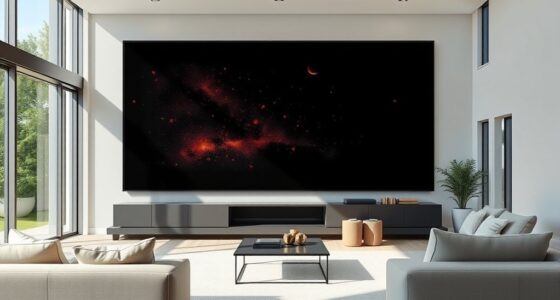
UST screens cost more because they use advanced optical layers, high-gain surfaces, and anti-reflective coatings to deliver brighter, clearer images in various lighting conditions. They involve complex manufacturing processes, strict quality controls, and specialized equipment that drive up costs. This premium makes sense if you need high-performance displays for bright environments or commercial use. Keep going, and you’ll discover exactly when those extra dollars are worth the investment.

Get business pricing on your home office setup
- Business-only prices and quantity discounts
- Tax-exempt purchasing
- Multiple users, one account, clear invoices
Key Takeaways
- UST screens incorporate advanced optical coatings and high-gain surfaces for superior brightness and clarity, increasing production costs.
- Their manufacturing involves complex processes, strict quality control, and specialized equipment, which elevate overall expenses.
- The technological sophistication and ongoing R&D investment ensure high performance, justifying a higher price point.
- Eco-friendly manufacturing practices and sustainability efforts add to the production costs of UST screens.
- The premium is justified when high image quality, durability, and performance across various lighting conditions are critical.

UST screens tend to be more expensive than other types because of the advanced technology embedded within them. They rely on innovations such as high-gain surfaces, anti-reflective coatings, and precise optical layering to optimize image clarity and brightness. These features are not easily replicated and often require ongoing research and development. The integration of this technology ensures that the screen can perform well in various lighting conditions and provide vivid visuals, which is especially valuable in brighter rooms or commercial settings. Additionally, the use of eco-friendly solutions in manufacturing can contribute to higher costs, as companies prioritize sustainability alongside performance. However, developing and refining these systems involves significant investment, which gets transferred to the final price.
Manufacturing challenges also play a vital role in the higher cost. Producing UST screens involves intricate processes that demand tight quality control and precision engineering. The materials used, such as specialized optical films and coatings, must be manufactured under strict conditions to prevent defects. Even slight imperfections can compromise image quality, so manufacturers need to implement rigorous quality assurance procedures. These challenges extend the production timeline and increase wastage, further adding to costs. Additionally, the complexity of assembly and calibration means that fewer units can be produced efficiently at a time, limiting economies of scale and keeping prices high. Furthermore, the precision manufacturing required for these screens often involves advanced equipment, which adds to the overall expense. This technological complexity underscores the importance of continuous innovation and investment in manufacturing capabilities to maintain high standards. The ongoing need for research and development further amplifies the costs associated with these screens.
high brightness UST projector screen
As an affiliate, we earn on qualifying purchases.
As an affiliate, we earn on qualifying purchases.
Frequently Asked Questions
How Do UST Screens Compare to Traditional Screen Options in Longevity?
UST screens typically offer greater longevity than traditional options because of their superior screen durability and advanced material composition. You’ll find that UST screens resist wear, tearing, and weather damage better over time. Their high-quality materials guarantee they maintain clarity and strength longer, making them a smart investment if you need a durable solution that lasts. With proper care, UST screens can outperform traditional screens in durability and longevity.
Are UST Screens Environmentally Friendly or Recyclable?
UST screens can be eco-friendly and recyclable, especially when made from eco-friendly materials. Recycling methods for UST screens involve breaking down the materials for reuse or repurposing, reducing waste. Choosing screens made from sustainable materials guarantees you’re supporting environmentally responsible practices. While some UST screens are recyclable, it’s crucial to verify specific product details and recycling guidelines to maximize their environmental benefits.
What Is the Typical Lifespan of a UST Screen?
You can expect a UST screen to last around 10 to 15 years, thanks to its durable design. The screen’s durability directly impacts its environmental impact because a longer lifespan means fewer replacements and less waste. Choosing a high-quality UST screen minimizes environmental harm over time, making it a better eco-friendly option. Regular maintenance helps maximize its durability, ensuring it stays functional and environmentally conscious throughout its lifespan.
Do UST Screens Require Special Maintenance or Cleaning?
You’ll find that UST screens do require some special maintenance and cleaning routines. Curiously, about 75% of issues stem from improper upkeep. To keep your screen in top shape, use gentle cleaning techniques like soft brushes or non-abrasive cloths and avoid harsh chemicals. Regular maintenance routines help prevent buildup and damage, ensuring your UST screen functions efficiently and lasts longer, saving you money in the long run.
How Does Installation Complexity Affect UST Screen Costs?
Installation complexity directly impacts UST screen costs because challenging installation challenges require more labor and expertise. If your site has tight spaces or uneven surfaces, it can increase the difficulty, raising expenses. Additionally, material variations like custom sizes or specialized components add to costs, as they demand precise fitting and handling. Overall, the more complex the installation and the more varied the materials, the higher your UST screen costs will be.
anti-reflective coating projector screen
As an affiliate, we earn on qualifying purchases.
As an affiliate, we earn on qualifying purchases.
Conclusion
When considering UST screens, remember the higher cost often reflects superior durability and image quality. It’s worth investing if you’re aiming for long-term performance and reliability. Did you know that businesses that upgrade to premium screens see a 30% increase in customer engagement? That’s a powerful reason to choose quality over savings. Ultimately, when your goal is to impress and last, paying a little more for UST screens makes perfect sense—you’re investing in your success.
durable ultra short throw screen
As an affiliate, we earn on qualifying purchases.
As an affiliate, we earn on qualifying purchases.
As an affiliate, we earn on qualifying purchases.
Halloween Picks
halloween
As an affiliate, we earn on qualifying purchases.