Choosing the right screen gain affects how bright your projected image appears, especially in ambient light. Higher gain screens reflect more light back to you, making images look more vivid and visible in well-lit rooms. However, too high gain can cause glare or hot spots if misaligned. Lower gain screens absorb more light, resulting in dimmer images but reducing glare. Keep in mind how your environment and setup influence the overall brightness—discover more to optimize your setup.
Key Takeaways
- Higher gain screens reflect more light, resulting in a brighter, more vivid image.
- Low gain screens absorb more light, producing dimmer images but reducing glare.
- The screen’s gain interacts with ambient light, affecting overall brightness and image clarity.
- Proper projector placement and angle are essential to optimize brightness and avoid hot spots.
- Choosing the right gain depends on room lighting conditions and desired image brightness.
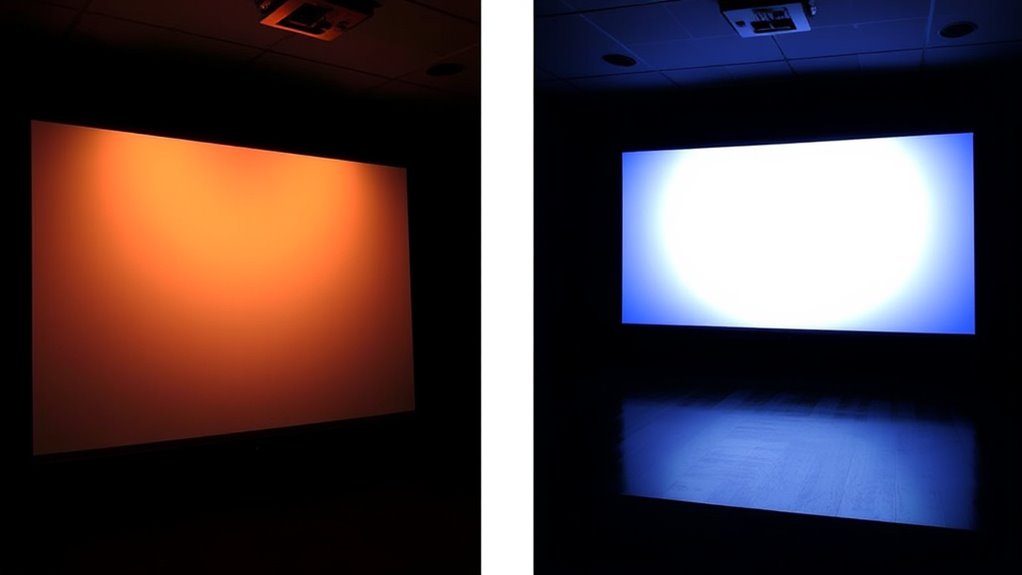
Have you ever wondered why some projectors produce brighter images than others? The answer often lies in the type of screen you choose and how it interacts with ambient light and projector placement. Screen gain plays a pivotal role in determining how much light is reflected back to your eyes, directly influencing the perceived brightness of your image. A higher gain screen reflects more light, making images appear brighter and more vivid, especially in well-lit environments. Conversely, a lower gain screen absorbs more light, which can be beneficial in darker settings but might result in a dimmer picture when ambient light is present.
Higher gain screens reflect more light, making images brighter and more vivid in well-lit environments.
Your environment’s ambient light considerably impacts how well a projector performs. If you’re in a room with lots of windows or strong overhead lighting, a high gain screen can help compensate by reflecting more of the projector’s light toward you. This means your image will stay bright and clear despite the ambient light, enabling better visibility without the need for complete darkness. However, it’s important to remember that high gain screens can sometimes introduce glare or hot spots, especially if the viewing angle isn’t ideal. So, choosing the right gain depends on your room’s lighting conditions and how you plan to use the system.
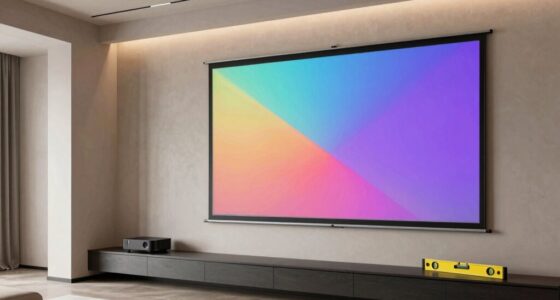
Projection setup and projector placement are equally essential when it comes to brightness. Positioning your projector correctly ensures that the light hits the screen uniformly, maximizing brightness and image quality. If the projector is placed too far away, the image may become dim and less sharp, regardless of screen gain. Conversely, placing it too close could cause oversaturation or distortion. When selecting a screen, consider how your projector’s throw distance aligns with the screen’s gain and size. A higher gain screen might require a carefully planned projector placement to avoid hot spots or glare, especially in larger rooms or when the projector is positioned off-center.
Additionally, the angle at which the projector is placed influences how evenly the light is distributed across the screen, affecting perceived brightness. Proper projector placement minimizes shadows, glare, and uneven brightness, ensuring you get the best image quality possible. Understanding the interaction of screen gain with ambient light and how it affects brightness will help you make smarter choices, enhancing your viewing experience and ensuring your images look their best under any conditions.

High gain 100 Inch Projector Screen – Wall Mounted – 2.6X Brightness and High Contrast 30% ALR -16:9 White Screen – by SilverMagic
- Brightness Boost: Up to 2.6x brighter images from center
- Ambient Light Rejection: Reduces ambient light by 30%
- Sharp Image Quality: Enhanced sharpness and vividness
As an affiliate, we earn on qualifying purchases.
As an affiliate, we earn on qualifying purchases.
Frequently Asked Questions
How Does Ambient Lighting Impact Screen Gain Effectiveness?
Ambient light considerably impacts screen gain effectiveness because bright surroundings can cause glare, reducing your screen’s visibility. When there’s high ambient light, a screen with higher gain can help maintain brightness and clarity, but glare reduction becomes essential. If you face lots of ambient light, choose a screen with appropriate gain and anti-glare features to minimize reflections and guarantee clear viewing. Balancing gain and glare reduction improves your overall visual experience.
Can Screen Gain Affect Image Color Accuracy?
Imagine your screen as a canvas, where screen gain plays a role like a painter’s brush, influencing color fidelity. Higher gain screens can sometimes reflect ambient light, causing colors to appear washed out or inaccurate. To guarantee true colors, you should use calibration techniques tailored for your screen gain. Proper calibration helps maintain color accuracy, making your images vivid and precise, no matter the gain level.
What Are the Best Screen Gain Options for Outdoor Use?
For outdoor use, opt for screens with a high gain, typically between 2.0 and 3.0, to maximize brightness and visibility in sunlight. Consider material durability, choosing weather-resistant fabrics that withstand elements. Also, think about installation considerations like mounting height and shading to reduce glare. High-gain screens reflect more light, so verify your setup accounts for ambient conditions to maintain clarity and color accuracy during outdoor events.
How Does Screen Gain Influence Projector Placement Flexibility?
Think of screen gain like a flexible map—higher gain screens, like 2.0, let you project from more angles, giving you greater placement options, especially with challenging projection angles. A lower gain screen, around 1.0, offers more forgiving viewing angles but requires precise positioning. Your choice of screen material influences this flexibility; for example, matte surfaces reduce glare, allowing more versatile projector placement, even if your setup isn’t perfectly aligned.
Is Higher Screen Gain Always Better for Brighter Images?
Higher screen gain isn’t always better for brighter images. While it boosts perceived brightness by reflecting more light, it can cause uneven brightness and reduce brightness uniformity across the screen. This means you might get a more vivid picture in the center but less consistent quality at the edges. Also, higher gain screens reflect more light, increasing glare and reducing image clarity, so choose a gain level suited to your room’s lighting conditions.

Elite Screens Manual B, 100-INCH Manual Pull Down Projector Screen Diagonal 16:9 Diag 4K 8K 3D Ultra HDR HD Ready Home Theater Movie Office Presentation, M100H
- SIZE: 100-INCH Diag. 16:9 Aspect Ratio….
- SCREEN MATERIAL: MaxWhite 2~ 8K / 4K…
- FEATURES: 2-inch Interval Auto-Lock Mechanism that…
As an affiliate, we earn on qualifying purchases.
As an affiliate, we earn on qualifying purchases.
Conclusion
Understanding screen gain helps you pick the right display for your needs, ensuring brighter images and better visibility in various lighting conditions. By considering gain, you can optimize your viewing experience and avoid dull or washed-out pictures. Don’t you want to get the most out of your screen? Remember, choosing the right gain isn’t just about brightness—it’s about creating an immersive, clear visual experience tailored to your environment.

Mdbebbron 120 inch Projector Screen 16:9 Foldable Anti-Crease Portable Projector Movies Screens for Home Theater Outdoor Indoor Support Double Sided Projection
- Portable and Foldable Design: Lightweight, compact, easy to carry and store
- Versatile Usage: Suitable for home, office, outdoor, and events
- Anti-Crease and High-Quality Material: Made of durable polyester for clear, bright projection
As an affiliate, we earn on qualifying purchases.
As an affiliate, we earn on qualifying purchases.
As an affiliate, we earn on qualifying purchases.