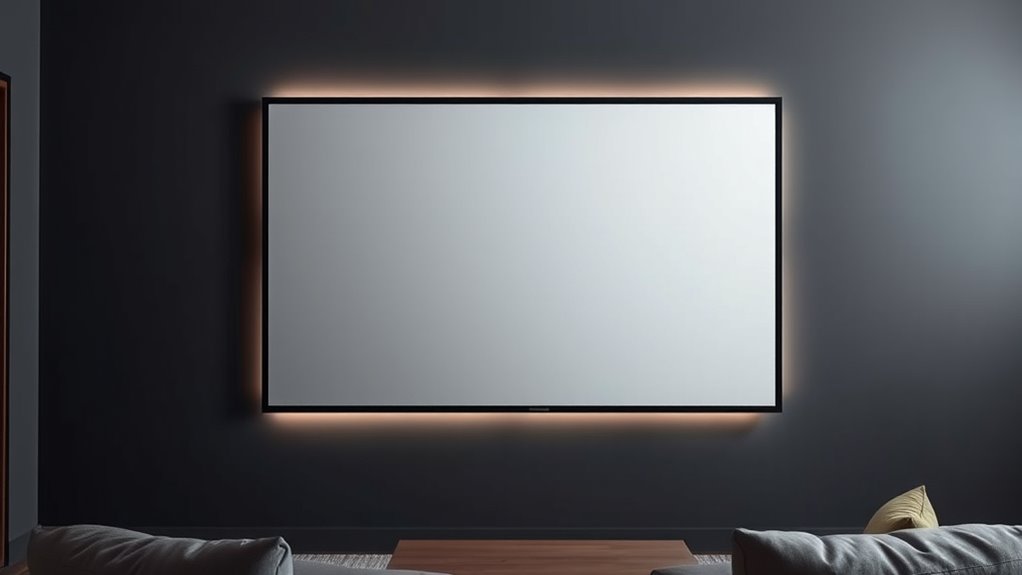
When choosing a projector screen, consider whether a portable setup suits your needs, such as foldable fabrics or roll-up designs for easy transport. Next, pick the right material—matte white for bright images or gray for better contrast in lit rooms. Think about durability, ease of cleaning, and setup convenience. The right combination will improve picture quality and make your viewing experience more enjoyable. Keep exploring to discover more tips for selecting the perfect screen for you.

Get business pricing on your home office setup
- Business-only prices and quantity discounts
- Tax-exempt purchasing
- Multiple users, one account, clear invoices
Key Takeaways
- Portable screens are designed for mobility, featuring foldable frames and lightweight materials for easy setup and storage.
- Screen material choice affects image brightness, contrast, and viewing angles; options include matte white and high-contrast gray fabrics.
- Gray screens excel in rooms with ambient light, enhancing contrast, while white screens are ideal for darker environments.
- Look for durable, wrinkle-resistant, and easy-to-clean fabrics to maintain image quality over time.
- Proper setup and material selection significantly improve picture clarity, contrast, and overall viewing experience for beginners.
Are you wondering which projector screen is right for your space? Choosing the perfect screen depends on several factors, including your available area, budget, and how you plan to use it. If portability is important, portable setups might be your best option. These are designed to be easy to move and store, making them ideal for those who need flexibility. Portable screens come in various styles, from foldable fabric frames to roll-up designs, so you can set up and pack away quickly without hassle. They’re perfect for presentations, outdoor movie nights, or even if you don’t want a permanent fixture in your room. When considering portable setups, think about how much space you have and how often you’ll be moving the screen. Some models are lightweight, while others offer sturdier frames for better stability.
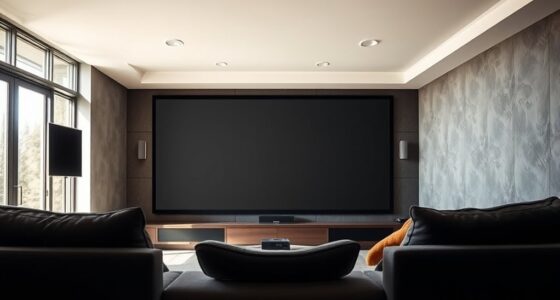
Screen material options are another vital aspect to weigh. The material affects picture quality, brightness, and viewing angles. Common options include matte white, high-contrast gray, and specialized fabrics. Matte white screens are versatile and provide bright, vibrant images, making them suitable for most environments. Gray screens, on the other hand, excel in rooms with ambient light, enhancing contrast and detail in darker images. If you’re setting up a portable screen, look for materials that are lightweight yet durable, like polyester or vinyl, which are easy to fold or roll without damage. Some screens feature a reflective surface that enhances color accuracy or a textured surface that minimizes glare. Your choice depends on your room’s lighting conditions and the type of projector you’re using. For instance, if you often watch movies in a darker room, a high-contrast gray might be best. If you’re outdoors or in a well-lit room, a bright white screen can make a noticeable difference.
Additionally, some screens come with special coatings or fabrics that resist wrinkles and creases, making them more suitable for portable use. When selecting a screen material, also consider maintenance and cleaning—easy-to-clean fabrics help keep your setup looking sharp. It’s also helpful to understand how contrast ratio impacts image quality, as it directly influences the depth and clarity of your visuals. Keep in mind that the right combination of portable setup and screen material options can dramatically improve your viewing experience. It’s worth investing a little extra time to understand these choices so you get a screen that fits your needs and space. Whether you want something lightweight for travel or a more permanent installation, knowing your options will help you make an informed decision and enjoy crisp, clear images every time.
portable projector screen foldable fabric
As an affiliate, we earn on qualifying purchases.
As an affiliate, we earn on qualifying purchases.
Frequently Asked Questions
Can Projector Screens Be Used Outdoors Effectively?
Yes, projector screens can be used outdoors effectively if you choose one designed for outdoor setup and weather durability. Look for screens with water-resistant materials and sturdy frames to withstand elements like rain or wind. Setting up in a shaded area helps reduce glare, and securing the screen properly prevents damage. With the right outdoor-friendly screen, you’ll enjoy clear visuals and a great viewing experience under the open sky.
What Is the Typical Lifespan of a Projector Screen?
Think of your projector screen as a trusted companion that stands the test of time. Typically, it lasts around 5 to 10 years with proper screen maintenance and care. The material’s durability plays a key role—high-quality fabrics can extend its lifespan, resisting wear and tear. Regular cleaning and protecting it from harsh elements help guarantee your screen remains vibrant and functional, so your investment keeps shining bright for years to come.
Are There Eco-Friendly or Biodegradable Projector Screens Available?
Yes, eco-friendly and biodegradable projector screens are available. You can find options made from eco-friendly materials like recycled fabrics or biodegradable polymers, which reduce environmental impact. These screens are designed to break down naturally over time, making them a sustainable choice. When shopping, look for products labeled as biodegradable or made from environmentally conscious materials to guarantee you’re making an eco-friendly decision for your setup.
How Do Ambient Light Conditions Affect Screen Choice?
Ambient light greatly influences your screen choice because it affects screen contrast and image clarity. In bright rooms with lots of ambient light, choose a high-gain or ambient light rejecting screen to maintain vivid visuals. For darker environments, a standard matte screen will do. By matching your ambient light conditions, you guarantee ideal contrast and image quality, giving you a better viewing experience regardless of your surroundings.
Can Projector Screens Be Customized for Specific Room Sizes?
Your projector screen can definitely be customized for your room size, making it feel like it was made just for you! With available custom size options and a modular design, you can precisely fit your space, whether it’s a cozy home theater or a large conference room. This flexibility guarantees ideal viewing and seamless integration, so you won’t have to settle for generic sizes—your perfect screen is within reach.
gray projector screen for ambient light
As an affiliate, we earn on qualifying purchases.
As an affiliate, we earn on qualifying purchases.
Conclusion
Now that you’ve explored these common projector screen questions, you’re better equipped to choose and set up your ideal screen. Remember, some believe that bigger screens always mean better visuals, but quality and placement matter just as much. Think of your projector as a trusted friend—know its quirks, and you’ll enjoy stunning movies and presentations. With a little research and experimenting, you’ll find the perfect setup that makes every viewing a true masterpiece.
matte white projector screen outdoor
As an affiliate, we earn on qualifying purchases.
As an affiliate, we earn on qualifying purchases.
As an affiliate, we earn on qualifying purchases.
Evergreen bestsellers Picks
bestsellers
As an affiliate, we earn on qualifying purchases.