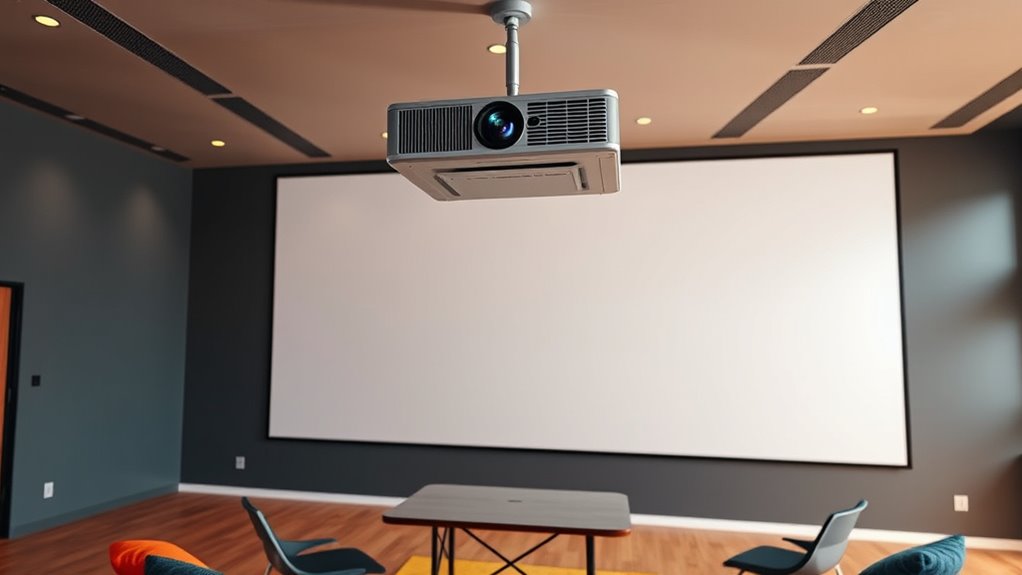

A projector in a multi-use room helps you seamlessly switch between everyday activities and home theater experiences. It offers flexibility by enabling you to create large, vibrant images for movies, presentations, or games, all without cluttering your space. Adjusting settings like keystone correction and screen size makes adjustments easy. With the right features, you can enjoy both functional space and entertainment—keep going to discover how to maximize this setup for every occasion.

Get business pricing on your home office setup
- Business-only prices and quantity discounts
- Tax-exempt purchasing
- Multiple users, one account, clear invoices
Key Takeaways
- Use adjustable features like keystone correction and brightness settings to seamlessly switch between home entertainment and everyday activities.
- Incorporate versatile connectivity options for easy access to both educational content and multimedia entertainment.
- Optimize room lighting with ambient light rejection screens or controlled lighting to maintain image quality in various scenarios.
- Design flexible layouts that accommodate projector setup for movies, presentations, and daily use without clutter.
- Regularly update projector features to enhance image quality and ease of transition between different room functions.
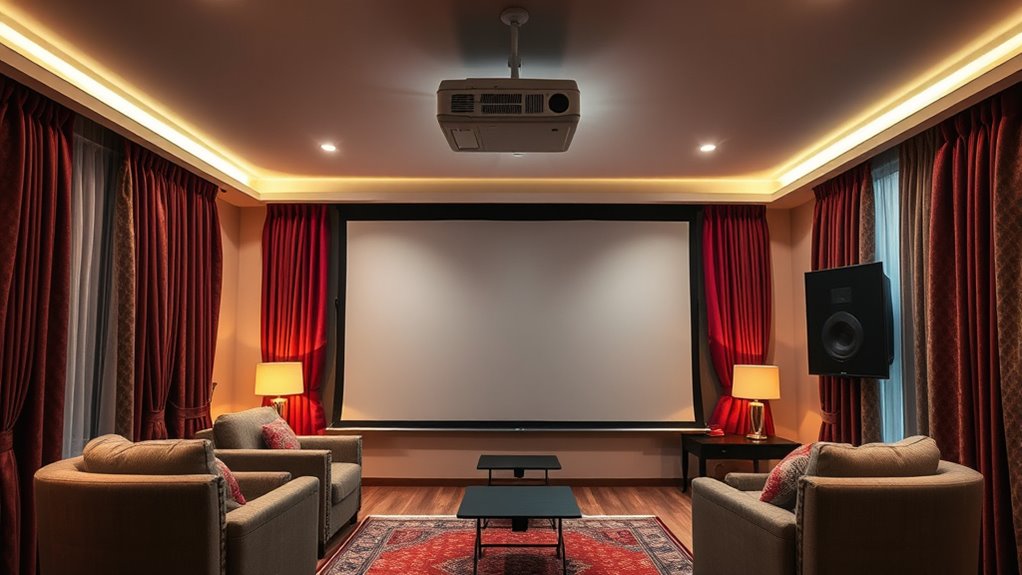
A projector in a multi-use room can considerably enhance its flexibility and functionality. Whether you’re transforming it into a home theater or a space for classroom technology, a projector offers versatility that traditional screens simply can’t match. With a good projector, you can enjoy movie nights, presentations, or interactive lessons without needing separate equipment for each activity. This adaptability not only saves space but also streamlines your setup, making the room more efficient and enjoyable to use.
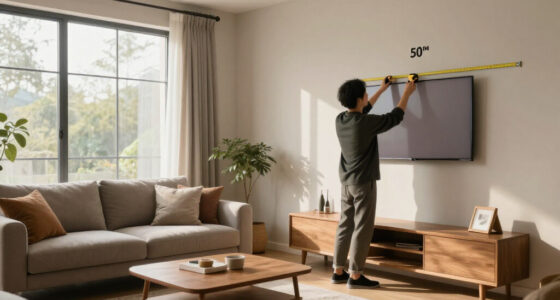
When you set up a projector for a home theater, you quickly realize how it elevates your entertainment experience. Unlike a fixed TV, a projector can produce larger images, immersing you in your favorite films and shows. You can easily adjust the screen size to fit the room’s dimensions, creating a cinematic environment right at home. Plus, modern projectors come with high-definition capabilities and excellent color accuracy, ensuring you get sharp visuals and vibrant hues that rival commercial theaters. This setup allows you to relax with friends or family, enjoying a movie night without the need for dedicated theater space or expensive large-screen TVs.
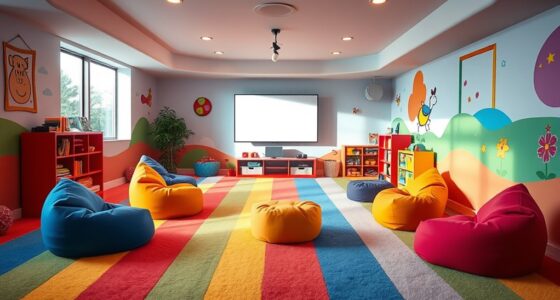
Switching the room into a classroom or training space is just as straightforward. In this scenario, a projector becomes an essential tool for classroom technology, enabling dynamic presentations, interactive lessons, and group collaborations. You can project educational materials, videos, or diagrams onto a wall or screen, making content more engaging and accessible. The portability of many projectors means you can easily move them around or store them when not in use, maintaining the room’s flexibility. Using a projector in an educational setting encourages participation and helps keep students attentive, especially when compared to traditional static displays.
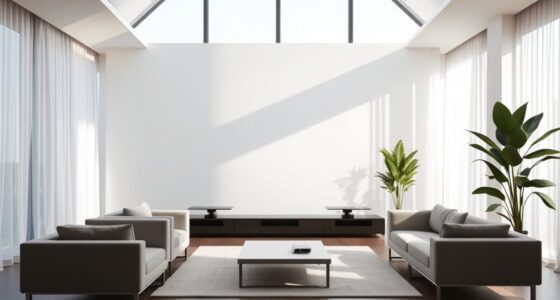
Balancing these uses involves a bit of planning. You’ll want a projector with adjustable keystone correction and good brightness levels so that switching from one setup to another is seamless. For home theater use, a projector with high contrast ratios and quiet operation enhances the experience. For classroom technology, look for models with multiple connectivity options and easy-to-use interfaces. Additionally, consider screen placement and ambient lighting; a room that’s well-controlled in lighting conditions will deliver clearer images regardless of the activity. Incorporating UST projectors and ALR screens can significantly improve image quality in rooms with ambient light, making transitions between uses even easier.
In essence, a projector in a multi-use room acts as a versatile hub that adapts to your changing needs. It allows you to enjoy immersive movies at home and facilitates engaging educational experiences without cluttering your space with multiple devices. By choosing the right projector and setting it up thoughtfully, you create a dynamic environment that seamlessly transitions between entertainment and learning, maximizing the potential of your multi-use room.
home theater projector with keystone correction
As an affiliate, we earn on qualifying purchases.
As an affiliate, we earn on qualifying purchases.
Frequently Asked Questions
How Do I Prevent Projector Heat Damage During Prolonged Use?
To prevent projector heat damage during prolonged use, you should implement ventilation strategies like ensuring proper airflow and using exhaust fans. Additionally, consider using heat-resistant covers when the projector isn’t in use to protect it from heat buildup. Regularly clean air filters and keep the room cool. These steps help maintain your projector’s performance and lifespan, avoiding heat-related issues during extended sessions.
What Are the Best Storage Solutions for a Projector in a Multi-Use Room?
You should invest in custom shelving to keep your projector safe and organized when not in use. Pair it with cable organizers to prevent tangles and damage to cords. Store the projector in a cool, dry place away from direct sunlight, and make certain of easy access for quick setup. This way, your equipment stays protected and ready for both everyday use and theater setups.
How Can I Improve Sound Quality for Movie Nights?
To improve sound quality for movie nights, focus on soundproofing techniques and speaker placement. Use rugs, curtains, and wall panels to minimize echo and outside noise. Position speakers at ear level and form an ideal triangle with your seating area for balanced sound. Avoid placing speakers too close to walls to prevent distortion. These steps create a richer, clearer audio experience, making your movie nights more immersive and enjoyable.
What Safety Precautions Should I Take With Projector Wiring?
To guarantee electrical safety with projector wiring, you should prioritize proper cable management by neatly organizing and securing cords to prevent tripping hazards or damage. Use cable clips or covers to keep wires off the floor and away from foot traffic. Always check for damaged cords and avoid overloading electrical outlets. Remember, maintaining good cable management not only improves safety but also enhances the overall setup and appearance of your multi-use room.
How Do I Ensure Proper Projector Alignment for Different Activities?
You should start by calibrating the projector to guarantee the image quality is ideal. Use alignment adjustments to position the projector correctly for each activity, whether it’s a presentation or movie night. Check the keystone settings and focus, then fine-tune the tilt and height to match the screen. Regularly recheck and recalibrate as needed, so your projector always delivers a clear, properly aligned image for every use.
portable multimedia projector for multi-use room
As an affiliate, we earn on qualifying purchases.
As an affiliate, we earn on qualifying purchases.
Conclusion
Balancing a projector in a multi-use room truly proves that practicality and entertainment can coexist smoothly. While some believe dedicated spaces are essential, evidence shows versatile setups work just as well when you prioritize flexibility. By choosing a quality projector and smart setup, you can effortlessly switch from daily tasks to movie nights without hassle. Ultimately, with thoughtful planning, your multi-use room becomes a seamless space where everyday life and theater magic blend effortlessly.
ambient light rejection projector screen
As an affiliate, we earn on qualifying purchases.
As an affiliate, we earn on qualifying purchases.
high brightness projector for classroom
As an affiliate, we earn on qualifying purchases.
As an affiliate, we earn on qualifying purchases.
Fall Picks
fall essentials
As an affiliate, we earn on qualifying purchases.