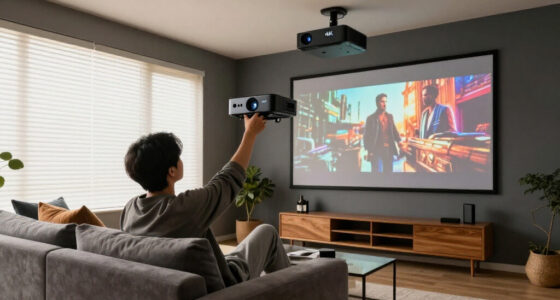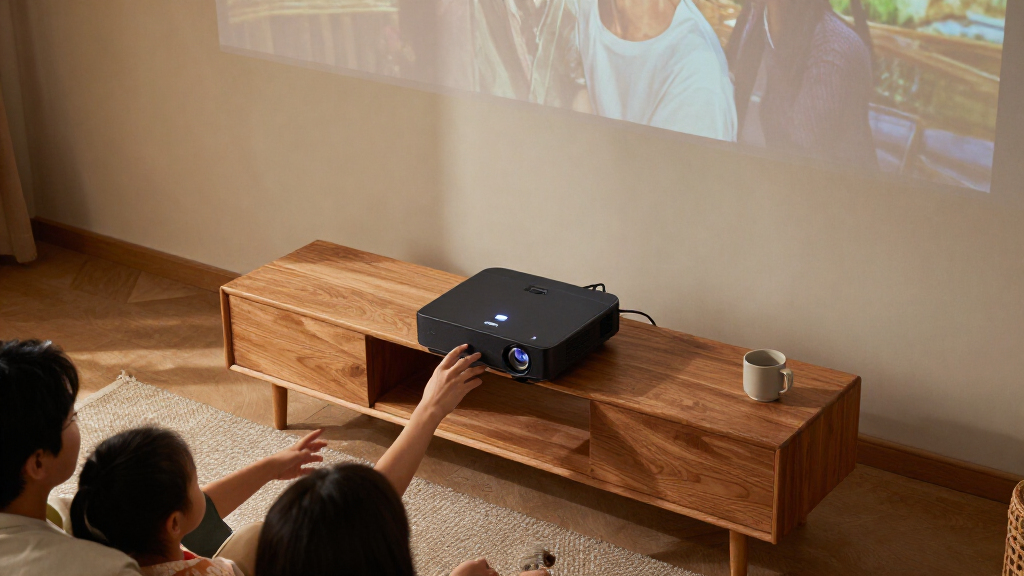

Ultra short throw projectors sit close to the wall, making a large image possible without a ceiling mount or a projector crossing the room. My best overall pick is the Hisense PX3-PRO, whose triple-laser design, Dolby Vision, and gaming features make it the most versatile home-theater choice in this lineup. The Formovie Theater stands out for a cinema-focused setup, while the Optoma Photon GO is a more portable option for buyers who value flexibility over a 4K image. The main tradeoffs are brightness in rooms with ambient light, the cost and precision of a suitable screen, and whether built-in sound or gaming features matter more than image quality. Read on for how the 15 options compare and which one best fits your room and viewing habits.
Complete the kit


Key Takeaways
- The Hisense PX3-PRO is the strongest all-rounder: it pairs triple-laser 4K projection with Dolby Vision, Google TV, and gaming features, while the Formovie Theater is more specifically aimed at movie-first setups.
- Triple-laser models define the high-end group: Hisense PX3-PRO, AWOL VISION Aetherion Max, JMGO O2S, and Aetherion Pro emphasize color and large-screen performance, but their room setup still affects what buyers see.
- Not every short-throw label means the same thing: the BenQ TH671ST and Optoma GT2000HDR are short-throw options, while several other listings target UST placement; confirm the throw distance and screen size for your exact room.
- Resolution and purpose separate the value picks: the BenQ TH671ST is 1080p, while the NEC UM361X and Epson PowerLite 760W are built around presentation use rather than a 4K home-cinema image.
- Built-in features can reduce extra gear, but not setup demands: options such as the Epson LS650, VIDAA model, and XGIMI AURA include smart or audio features, yet a flat, suitable screen remains important for consistent UST geometry.


| ultra short throw projector | Brightness | Connectivity | Contrast ratio | Native resolution |
|---|---|---|---|---|
| WEMAX Nova Pro 4K Ultra Short | 2100 lumens | HDMI, USB, audio, optical, LAN, Wi-Fi, Bluetooth | 3000:1 | 3840 x 2160 |
| Hisense PX3-PRO Ultra Short Th | 3000 lumens | Bluetooth, Ethernet, HDMI, USB, Wi-Fi | 3000:1 | 3840 x 2160 |
| AWOL VISION Aetherion Max 4K L | 3300 lumens | HDMI, DisplayPort | 3,000,000:1 | 3840 x 2160 |
| BenQ TH671ST 3000 Lumens 1080p | 3000 lumens | — | — | — |
| VIDAA 4K Projector with 65W Au | 5000 ANSI lumens | Wi-Fi, Bluetooth | 50,000:1 | — |
| XGIMI AURA Series UST Laser Pr | 2300 lumens | Bluetooth, HDMI, USB, Wi-Fi | 1,000,000:1 | 3840 x 2160 |
| Optoma ML1080UST Photon GO Ult | 650 lumens | HDMI, Wi-Fi, Bluetooth | 2,500,000:1 | 1920 x 1080 |
| Formovie Theater Ultra Short T | 1800 lm | HDMI, USB 3.0, 3.5mm audio | 3,000+:1 | 3840 x 2160 |
| Epson EpiqVision Ultra LS650 U | 3600 lumens | HDMI, USB | 2,500,000:1 | 3840 x 2160 |
| JMGO O2S Ultra 4K Ultra Short | 3600 lumens | Wi-Fi, HDMI, Bluetooth | 4000:1 | 3840 x 2160 |
| Aetherion Pro 4K Ultra Short T | 3000 ANSI lumens listed in specifications | HDMI, USB 2.0 | 3,000,000:1 listed in specifications | 3840 x 2160 |
| NEC UM361X LCD Ultra Short Thr | 3600 lumens | HDMI | 4000:1 | 1024 x 768 |
| Portable Mini Projector with U | 170 ANSI lumens | Wi-Fi 6, Bluetooth 5.4, HDMI, USB | — | 1280 x 720 |
| Optoma GT2000HDR Ultra-Compact | 3500 lumens | HDMI, USB, 3.5 mm audio | 300,000:1 | 1920 x 1080 |
| Epson PowerLite 760W Ultra Sho | 4100 lumens | Ethernet, HDMI, USB, Wi-Fi | 2,500,000:1 | — |
More Details on Our Top Picks
WEMAX Nova Pro 4K Ultra Short Throw Projector with Google TV
The WEMAX Nova Pro is a practical fit for buyers who want a 4K ultra short throw setup with streaming ready on the projector itself. Its 0.23:1 throw ratio can produce a 150-inch image from about 19 inches away, keeping the projector close to the wall rather than across the room. Built-in Google TV and Netflix also reduce the need for a separate streaming box. Compared with the brighter Hisense PX3-PRO, its stated 2100 lumens offer less headroom when room lights are on, so it suits controlled lighting better. HDR10, HLG, and 30W Dolby Audio round out an all-in-one living-room setup, but buyers seeking stronger ambient-light performance or a more gaming-focused feature set should look at the Hisense instead.
Pros:- 0.23:1 throw ratio supports a large image from close to the wall.
- Built-in Google TV and Netflix simplify streaming setup.
- 4K resolution with HDR10 and HLG support.
- 30W Dolby Audio provides built-in sound without requiring a separate speaker immediately.
Cons:- Its stated 2100 lumens provide less brightness headroom than the Hisense PX3-PRO’s 3000 lumens.
- Picture quality is described as best in a dark environment, limiting flexible daytime viewing.
- Warranty and long-term durability details are not provided.
Best for: Buyers setting up a compact living-room theater who want Google TV and Netflix built in and can dim the room.
Not ideal for: Viewers who regularly watch with substantial daylight or want the brighter output and gaming-oriented features listed for the Hisense PX3-PRO.
- Native resolution:3840 x 2160
- Display technology:DLP
- Brightness:2100 lumens
- Throw ratio:0.23:1
- Maximum image size:150 inches
- Contrast ratio:3000:1
- HDR support:HDR10, HLG
- Speaker power:30W
- Connectivity:HDMI, USB, audio, optical, LAN, Wi-Fi, Bluetooth
Our verdict“Choose the Nova Pro for close-wall 4K viewing with built-in streaming, provided you can control the room light.”
Hisense PX3-PRO Ultra Short Throw Triple Laser Projector, 4K UHD, 80” – 150”, 3,000 Lumens, Dolby Vision & Atmos, IMAX Enhanced, Google TV, Designed for Xbox
The Hisense PX3-PRO earns its place for buyers who want an ultra short throw projector to serve both as a movie display and a gaming centerpiece. Its 3000-lumen output gives it more stated brightness than the WEMAX Nova Pro, while 4K, Dolby Vision, IMAX Enhanced, and Google TV bring a broad home-theater feature set. The listed 80-to-150-inch image range also gives buyers room to choose a size that fits their wall and seating distance. Triple-laser color coverage and the listed color accuracy speak to buyers prioritizing vivid, carefully rendered images. Compared with the BenQ TH671ST, this is the more cinema-oriented choice, but the BenQ’s short-throw design may suit buyers who do not need UST placement or 4K. Hisense tradeoffs include an appropriate screen or wall requirement and limited noise information.
Pros:- 3000-lumen brightness is higher than the WEMAX Nova Pro’s stated 2100 lumens.
- 4K resolution with Dolby Vision and IMAX Enhanced support.
- Google TV and multiple control methods support a flexible entertainment setup.
- 80-to-150-inch projection range accommodates different room layouts.
Cons:- A suitable wall or screen is needed for the intended image quality.
- Operating-noise levels are not specified in the supplied product details.
- Its feature set may be more than needed for buyers seeking a basic short-throw display.
Best for: Home-theater and console-gaming buyers who want 4K UST placement, built-in Google TV, and advanced HDR formats.
Not ideal for: Buyers on a tight setup budget, or anyone who cannot provide a suitable projection surface and wants documented operating-noise details.
- Native resolution:3840 x 2160
- Brightness:3000 lumens
- Contrast ratio:3000:1
- Projection size:80–150 inches
- Throw distance:0.12–0.46 meters
- Color gamut:BT.2020 110%
- Light source life:25,000 hours
- Supported formats and features:Dolby Vision, IMAX Enhanced, HDR, Active 3D, 4K AI upscaler
- Connectivity:Bluetooth, Ethernet, HDMI, USB, Wi-Fi
Our verdict“Pick the PX3-PRO if you want a feature-rich 4K UST for movies and gaming and have a suitable screen location.”
AWOL VISION Aetherion Max 4K Laser Projector, Triple Laser UST, 3300 Lumens, 200″ Laser TV, Dolby Vision, 1ms Gaming
Among these choices, the AWOL VISION Aetherion Max is aimed at buyers who want a bright, large-screen UST system and place a premium on gaming responsiveness. Its listed 3300 lumens exceed the Hisense PX3-PRO’s 3000, giving it a brightness advantage on paper for rooms that are not fully dark. The product description also highlights 1ms gaming and Dolby Vision, a combination that makes its role distinct from the WEMAX Nova Pro, which emphasizes built-in streaming and a 150-inch image from 19 inches. However, the supplied specs list a maximum image size of 150 inches, despite the title and description referring to 200 inches; I would verify the supported size for the intended setup. Its floor-mount form and 300W draw also call for a planned, dedicated location.
Pros:- 3300-lumen stated brightness is higher than the Hisense PX3-PRO’s 3000 lumens.
- Product description highlights 1ms gaming performance.
- 4K resolution and Dolby Vision support target cinematic viewing.
- Listed 25,000-hour light-source life.
Cons:- Product details conflict on maximum image size: the title and description say 200 inches, while the specs say 150 inches.
- Floor-mount form and dedicated placement can make room changes less convenient.
- Listed 300W power consumption is substantial compared with lower-wattage options in the lineup.
Best for: Gamers and home-theater buyers prioritizing high stated brightness and low-latency play in a room with a fixed floor-level setup.
Not ideal for: Buyers who need a compact, easy-to-relocate projector or require confirmed support for a 200-inch image based on the listed specifications.
- Native resolution:3840 x 2160
- Brightness:3300 lumens
- Contrast ratio:3,000,000:1
- Maximum image size in specifications:150 inches
- Minimum throw distance:0.5 feet
- Maximum throw distance:20.19 feet
- Light-source operating life:25,000 hours
- Connectivity:HDMI, DisplayPort
- Power:300W
Our verdict“Consider the Aetherion Max for bright-room gaming and cinematic viewing, but confirm the actual maximum image size before planning around 200 inches.”
BenQ TH671ST 3000 Lumens 1080p Short Throw Home Entertainment Projector
The BenQ TH671ST is not an ultra short throw projector, and that distinction matters: its 0.69–0.83 throw ratio needs more distance from the screen than the WEMAX Nova Pro’s 0.23:1. I include it as a practical alternative for buyers whose priority is short-throw gaming rather than placing a projector immediately beside the wall. It offers native 1080p, 3000 lumens, and low input lag, while its 2.7 kg body is easier to move than a dedicated UST laser setup. Compared with the 4K Hisense PX3-PRO, it gives up resolution and built-in smart-TV features; in return, it has two HDMI ports and a conventional portable form. The lamp’s finite rated life and modest 5W speaker make external audio and eventual lamp replacement part of the ownership plan.
Pros:- 3000-lumen brightness supports a clear image in suitable viewing conditions.
- Low input lag is suited to responsive gaming.
- 2.7 kg weight and portable form are easier to move than a dedicated UST installation.
- Two HDMI inputs support multiple connected sources.
Cons:- It is short throw, not ultra short throw, and needs more placement distance than the WEMAX Nova Pro.
- Native 1080p resolution is below the 4K Hisense PX3-PRO and other UST options here.
- The 5W built-in speaker is limited for room-filling movie sound, and the lamp has a finite rated life.
Best for: Console gamers who want a portable, bright 1080p short-throw projector and can place it farther from the wall than a true UST model.
Not ideal for: Buyers who specifically need ultra short throw placement, 4K resolution, or built-in streaming apps.
- Resolution:1920 x 1080
- Brightness:3000 lumens
- Native contrast ratio:10,000:1
- Throw ratio:0.69–0.83
- Projection size:60–120 inches
- Zoom ratio:1.2x
- Lamp life:4,000 hours normal; 10,000 hours Eco
- Speaker power:5W
- Weight:2.7 kg (5.95 lb)
Our verdict“Choose the TH671ST if portability and responsive 1080p gaming matter more than true UST placement or 4K detail.”
VIDAA 4K Projector with 65W Audio, Voice & Smartphone Control, Short Throw, WiFi & Bluetooth
The VIDAA 4K Projector is a convenience-led pick for buyers who value built-in sound and app access more than the compact placement of a true UST unit. Its 65W Dolby-supported audio is the standout versus the WEMAX Nova Pro’s 30W speaker system, while listed apps, voice control, and smartphone control reduce dependence on add-on devices. But the product is described as short throw, not ultra short throw: its stated 4-to-25-foot throw distance is far less specific for close-wall use than the Nova Pro’s 0.23:1 ratio. The broad 50-to-500-inch projection range also depends on placement and room conditions, so buyers should verify the needed distance before choosing it for a small room. Its feature mix may suit flexible home or outdoor use, but the UST-focused Hisense is a clearer choice for a fixed close-wall theater.
Pros:- 65W Dolby-supported stereo audio is more powerful on paper than the WEMAX Nova Pro’s 30W speakers.
- Lists popular streaming apps and built-in games.
- Voice and smartphone controls offer alternatives to a standard remote.
- Rotatable stand supports flexible positioning.
Cons:- The product is described as short throw, not ultra short throw, and gives no throw ratio for close-wall planning.
- The stated 4-to-25-foot throw distance may not suit compact rooms.
- Its description says it is not suitable for very bright rooms despite the listed 5000 ANSI lumens.
Best for: Buyers who want a 4K projector with strong built-in audio, streaming apps, and flexible voice or phone control for varied home and outdoor setups.
Not ideal for: Small-room buyers who need verified ultra short throw placement close to the wall, or viewers who need dependable performance in very bright rooms.
- Resolution:4K
- Brightness:5000 ANSI lumens
- Audio power:65W
- Contrast ratio:50,000:1
- Projection size:50–500 inches
- Throw distance:4–25 feet
- Ports:2x HDMI 2.1, 2x USB, AV, 3.5 mm headphone jack
- Connectivity:Wi-Fi, Bluetooth
- Stand:360° rotatable
Our verdict“Pick the VIDAA for built-in audio and flexible streaming in varied spaces, but choose a verified UST model if the projector must sit close to the wall.”
XGIMI AURA Series UST Laser Projector with Dolby Vision, IMAX Enhanced, Harman Kardon, 2300 Lumens, Black
The XGIMI AURA is a strong fit for movie-focused rooms where Dolby Vision and IMAX Enhanced support matter as much as 4K resolution. Its 0.177:1 throw ratio places it very close to the screen, while the stated 2300 lumens and built-in Harman Kardon speakers reduce the need to build a system around separate components. Compared with the brighter Epson EpiqVision Ultra LS650, the AURA offers a more explicitly cinema-oriented format and a larger stated maximum image size, but gives up brightness headroom for rooms with substantial ambient light. The tradeoffs are its 7.91 kg weight and a one-year warranty; the supplied details also do not clarify software-update support. I’d shortlist it for a dedicated viewing setup, not a projector I expect to move often.
Pros:- 4K resolution with Dolby Vision and IMAX Enhanced support suits film-focused viewing.
- 0.177:1 throw ratio allows placement close to the screen.
- 2300-lumen brightness offers more headroom than compact, lower-brightness UST choices.
- Built-in Harman Kardon speakers simplify a basic home cinema setup.
Cons:- At 7.91 kg, it is less convenient to reposition than portable options such as the Optoma ML1080UST.
- Its 2300-lumen rating is below the Epson LS650’s stated 3600 lumens for rooms with more ambient light.
- The supplied product details do not specify software-update support.
Best for: Movie fans building a fixed, close-wall home cinema who want 4K, Dolby Vision, IMAX Enhanced, and integrated speakers.
Not ideal for: Buyers who need an easy-to-move projector or often watch in a brightly lit room; it is relatively heavy and its brightness is lower than the Epson LS650’s stated 3600 lumens.
- Native resolution:3840 x 2160
- Display type:Laser
- Brightness:2300 lumens
- Contrast ratio:1,000,000:1
- Throw ratio:0.177:1
- Maximum image size:150 inches
- Connectivity:Bluetooth, HDMI, USB, Wi-Fi
- Weight:7.91 kg
- Warranty:1 year
Our verdict“Choose the XGIMI AURA for a mostly fixed movie room where its cinema formats and integrated sound matter more than portability or maximum brightness.”
Optoma ML1080UST Photon GO Ultra Short Throw 1080p Portable Projector
The Optoma ML1080UST Photon GO takes a different route from the large-screen 4K models here: it pairs an ultra-short-throw design with portability, Google TV, and a built-in 1.5-hour battery. That makes it easier to use for an occasional movie night away from a permanent theater setup, though its stated maximum image size is 100 inches rather than the 150 inches offered by the Formovie Theater and JMGO O2S Ultra. Its 1080p resolution is also a clear step down from those 4K alternatives, but keeps the choice straightforward for viewers who value convenience over fine detail. At 650 lumens, it is best suited to dim rooms; bright daytime viewing is a poor match. I’d pick it for flexible placement and streaming, not as the main projector for a bright living room.
Pros:- Portable form and tabletop setup suit flexible placement.
- Built-in Google TV provides streaming access without requiring a separate device.
- Triple Laser RGB and HDR10 support add color and HDR capability.
- A 1.5-hour battery allows limited viewing without a nearby power connection.
Cons:- 1080p resolution offers less detail than the 4K Formovie Theater and JMGO O2S Ultra.
- 650 lumens is a poor fit for well-lit rooms.
- The battery is limited to 1.5 hours, and product details do not provide weight or dimensions.
Best for: People who want a portable UST for dim-room movie nights, casual streaming, or spaces where a permanent installation is impractical.
Not ideal for: Buyers seeking a large 4K home-theater image or regular viewing in a bright room; its resolution, 100-inch image limit, and 650-lumen brightness are modest beside the Formovie Theater.
- Native resolution:1920 x 1080
- Brightness:650 lumens
- Contrast ratio:2,500,000:1
- Laser technology:Triple Laser RGB
- Maximum image size:100 inches
- Throw distance:0.34–0.81 feet
- Battery life:1.5 hours
- Light source operating life:20,000 hours
- Connectivity:HDMI, Wi-Fi, Bluetooth
Our verdict“Choose the Optoma ML1080UST if portability and built-in streaming outweigh 4K detail, a very large image, and bright-room performance.”
Formovie Theater Ultra Short Throw 4K Laser Projector with Dolby Vision & Built-In Speakers
The Formovie Theater is the audio-focused 4K choice in this group: its built-in Bowers & Wilkins speakers support Dolby Atmos, while Dolby Vision and a stated 150-inch maximum image size suit a dedicated home cinema. Compared with the JMGO O2S Ultra, it has a shorter listed maximum throw distance, but the JMGO supplies a higher stated brightness and also supports Dolby Vision. Formovie’s listed brightness is 1800 lumens, so I would favor a controlled-light room rather than assume it will handle daylight as well as the Epson LS650, rated at 3600 lumens. Placement needs attention too: the stated minimum throw distance is 1.4 feet, so it is not designed to sit flush against the wall. Android TV 11.0 adds streaming convenience, but the listed power draw is 150 watts.
Pros:- 4K resolution and Dolby Vision support suit high-detail movie viewing.
- Built-in Bowers & Wilkins speakers support Dolby Atmos without requiring a separate sound system.
- Maximum image size of 150 inches supports a large home-cinema picture.
- Android TV 11.0 provides built-in streaming access.
Cons:- The stated 1800-lumen brightness is lower than the Epson LS650’s 3600 lumens.
- A minimum throw distance of 1.4 feet requires space between the projector and screen.
- Listed power consumption is 150 watts.
Best for: Home-cinema buyers who want 4K, Dolby Vision, and integrated Dolby Atmos-capable audio in a controlled-light room.
Not ideal for: Viewers who need stronger stated brightness for a bright living room or need the projector to sit immediately against the wall; the Epson LS650 lists higher brightness, and this model’s minimum throw distance is 1.4 feet.
- Native resolution:3840 x 2160
- Display type:DLP
- Brightness:1800 lm
- Contrast ratio:3,000+:1
- Throw distance:1.4–2.5 feet
- Maximum image size:150 inches
- Light source operating life:20,000 hours
- Connectivity:HDMI, USB 3.0, 3.5mm audio
- Wattage:150 watts
Our verdict“Choose the Formovie Theater for a controlled-light room where integrated cinematic audio and Dolby Vision matter more than brightness or flush-to-wall placement.”
Epson EpiqVision Ultra LS650 Ultra Short Throw 4K PRO-UHD Laser Projector with Android TV and Yamaha Sound (Renewed)
The renewed Epson EpiqVision Ultra LS650 stands out for its stated 3600 lumens, the highest brightness figure among these five models. That gives it a clearer role than the lower-brightness Formovie Theater: it is the better fit for a living space that cannot be fully darkened. Its 3-chip 3LCD system and 4K PRO-UHD output target colorful, large-screen viewing, though the maximum image size is 120 inches, below the 150-inch claims for the XGIMI AURA and JMGO O2S Ultra. The renewed condition also changes the buying calculation: warranty coverage may be more limited than with a new model, and the provided specs do not state warranty terms. I’d also budget for an ambient-light-rejecting screen if contrast matters, since a bright projector alone cannot control room light. The compact tabletop format helps with placement, but setup can take care.
Pros:- Stated 3600-lumen brightness is the highest among these five listed projectors.
- 3-chip 3LCD technology supports bright, colorful images.
- 4K PRO-UHD resolution and a maximum 120-inch image suit home entertainment.
- Built-in Yamaha sound and Android TV reduce the need for separate audio and streaming devices.
Cons:- Renewed condition may come with limited warranty coverage, which is not specified in the supplied details.
- Maximum image size is 120 inches, smaller than the 150-inch limits listed for the XGIMI AURA, Formovie Theater, and JMGO O2S Ultra.
- Best contrast may require a separate ambient-light-rejecting screen, and setup may be complex.
Best for: Buyers planning a large UST screen in a living room with some ambient light who are comfortable purchasing a renewed projector.
Not ideal for: Shoppers who want a new unit with clearly stated warranty coverage, a 150-inch image, or a simple setup without screen planning.
- Native resolution:3840 x 2160
- Display type:LCD
- Brightness:3600 lumens
- Contrast ratio:2,500,000:1
- Maximum throw distance:0.41 feet
- Image size range:60–120 inches
- Connectivity:HDMI, USB
- Wattage:278 watts
- Mounting type:Tabletop
Our verdict“Choose the renewed Epson LS650 if brightness for a less-than-dark room is your priority and you accept the uncertainty that can come with renewed condition.”
JMGO O2S Ultra 4K Ultra Short Throw Triple Laser Projector with Dolby Vision and Dynaudio Speakers
The JMGO O2S Ultra is the large-image pick: it combines 4K resolution, RGB triple-laser projection, and a stated maximum size of 150 inches with 3600 lumens. That brightness figure matches the Epson LS650, while the JMGO’s larger stated image ceiling gives it more room to scale up; the Epson, in turn, tops out at 120 inches and uses 3-chip 3LCD technology. Dolby Vision, Dolby Atmos support, and 20W Dynaudio speakers make the JMGO a strong all-in-one entertainment option, with Google TV and native Netflix listed for streaming. Its minimum throw distance is 1 meter, so “ultra short throw” does not mean it can be placed directly against the wall. The supplied information also leaves software-update support unclear. I’d choose it for a sizeable, planned screen area, not a cramped surface or frequent room changes.
Pros:- 4K RGB triple-laser projection supports detailed, vivid images.
- Maximum image size of 150 inches exceeds the Epson LS650’s stated 120-inch limit.
- 3600-lumen brightness matches the Epson LS650’s listed figure.
- Dolby Vision, 20W Dynaudio speakers, and Google TV with native Netflix add home-entertainment convenience.
Cons:- Minimum throw distance is 1 meter, so it cannot be placed directly against the screen wall.
- Minimum image size is 80 inches, limiting flexibility for smaller rooms.
- Software-update support is not detailed in the supplied product information.
Best for: Home-theater buyers who want a 4K triple-laser UST capable of a 150-inch image, with integrated sound and streaming.
Not ideal for: People with a very tight screen-to-projector gap or limited projection space; its listed minimum throw distance is 1 meter, and the image range starts at 80 inches.
- Native resolution:3840 x 2160
- Display type:Laser
- Projection technology:RGB Triple Laser
- Brightness:3600 lumens
- Contrast ratio:4000:1
- Throw distance:1–4 meters
- Image size range:80–150 inches
- Integrated speakers:20W Dynaudio
- Connectivity:Wi-Fi, HDMI, Bluetooth
Our verdict“Choose the JMGO O2S Ultra if you have room for an 80-to-150-inch image and want a bright 4K triple-laser system with built-in audio and streaming.”
Aetherion Pro 4K Ultra Short Throw Triple Laser Projector
The Aetherion Pro is the pick here for buyers who want native 4K detail and a very large image in a dedicated media room. Its stated 3,000 ANSI lumens and 200-inch maximum image size suit a bigger screen better than the portable mini projector, whose 170 ANSI lumens and 720p resolution are aimed at casual viewing. The Aetherion also lists HDR support, a wide 110% Rec.2020 color claim, and low-latency gaming features, giving it a broader movie-and-console brief than the presentation-focused Epson PowerLite 760W.
The tradeoff is that its 0.5-foot minimum throw distance does not mean the projector needs little overall room: the listed maximum throw distance is 20.19 feet, and large-screen placement still takes planning. At 300 watts, it also draws more power than the compact Optoma GT2000HDR. Buyers should note that the supplied title and description cite different brightness and contrast figures, so I would verify those specifications before choosing it for a demanding room.
Pros:- Native 3840 x 2160 resolution supports detailed 4K content.
- Listed 110% Rec.2020 color coverage and HDR support target vivid movie playback.
- Maximum image size of 200 inches suits large dedicated viewing spaces.
- App, remote, and voice control offer several operating options.
Cons:- The title and description give conflicting brightness and contrast figures.
- The 300-watt rating is higher than the Optoma GT2000HDR’s listed 98 watts.
- Large-screen placement and setup can demand substantial room planning.
Best for: Home theater and console-gaming buyers who want native 4K, wide color, and a screen approaching 200 inches.
Not ideal for: Small-room shoppers seeking a simple, low-power setup, or buyers who need consistent brightness and contrast figures before purchase.
- Native resolution:3840 x 2160
- Brightness:3000 ANSI lumens listed in specifications
- Contrast ratio:3,000,000:1 listed in specifications
- Maximum image size:200 inches
- Throw distance:0.5-foot minimum; 20.19-foot maximum
- Light source life:25,000 hours
- Connectivity:HDMI, USB 2.0
- Control:App, remote, voice
Our verdict“Choose the Aetherion Pro if native 4K gaming and large-screen cinema matter more than low power use or a simple setup.”
NEC UM361X LCD Ultra Short Throw Projector (Renewed)
The NEC UM361X makes more sense as a bright teaching or meeting-room projector than as a modern home-cinema choice. Its 3,600-lumen rating is higher than the portable mini projector’s 170 ANSI lumens, which can help keep slides visible with some room lighting. The ultra short throw design also places the unit near the display, reducing the chance that a presenter walks through the beam. HDMI provides a straightforward connection for common sources.
The major compromise is its 1024 x 768 native resolution. It can accept signals up to 1920 x 1080, but that does not make its projected image native Full HD; fine text and detailed video will look less crisp than on the Aetherion Pro or Optoma GT2000HDR. This listing is renewed and specifies a 90-day warranty, so it suits buyers who prioritize brightness and close placement over modern resolution or longer warranty coverage. The supplied 4.54 g weight also appears inconsistent and should be confirmed.
Pros:- 3,600-lumen brightness is suited to presentations in rooms with ambient light.
- Ultra short throw placement helps keep presenters out of the beam.
- HDMI offers a simple connection for laptops and other video sources.
Cons:- Native XGA resolution is visibly less detailed than the Aetherion Pro’s native 4K.
- Renewed condition and the listed 90-day warranty may not fit buyers wanting longer coverage.
- The stated 4.54 g weight appears inconsistent and needs verification.
Best for: Schools, trainers, and small meeting rooms that need a bright image for slides and can work with XGA native resolution.
Not ideal for: Home theater viewers, 4K or Full HD detail seekers, and buyers who require a long warranty or dependable weight information.
- Native resolution:1024 x 768
- Maximum display resolution:1920 x 1080
- Display type:LCD
- Brightness:3600 lumens
- Contrast ratio:4000:1
- Connectivity:HDMI
- Mounting:Tabletop
- Condition:Renewed
Our verdict“Pick the renewed NEC for bright classroom slides and close placement, not for high-definition movies or fine image detail.”
Portable Mini Projector with Ultra Short Throw, WiFi 6 & Bluetooth 5.4
This mini projector is the lineup’s portability-first option: at 1.32 pounds, with Android 11 apps and built-in speakers, it asks less of a bedroom or RV setup than the floor-mounted Aetherion Pro. Wi-Fi 6, Bluetooth 5.4, HDMI, and USB cover a useful mix of streaming and external sources, while the 25-to-110-inch image range gives it flexibility for occasional viewing. Its 30-watt rating is also far below the Aetherion’s listed 300 watts.
The catch is that this is not a bright-room or detail-first projector. Native resolution is only 1280 x 720, and 170 ANSI lumens is a modest output, so 4K decoding and HDR10 support should not be mistaken for a native 4K picture. Compared with the Optoma GT2000HDR, it gives up Full HD and substantially higher brightness in exchange for lighter, app-based convenience. It suits casual use in a darkened, small space rather than a main home theater.
Pros:- Light 1.32-pound body is easier to move than the full-size Aetherion Pro.
- Android 11 apps and integrated speakers support a simple standalone setup.
- Wi-Fi 6, Bluetooth 5.4, HDMI, and USB provide versatile connections.
- Listed 30-watt power draw is low compared with the larger laser models.
Cons:- Native 720p resolution falls short of the Optoma GT2000HDR’s Full HD image.
- 170 ANSI lumens limits useful viewing to dim or dark rooms.
- Maximum 110-inch image is smaller than the Aetherion Pro’s stated 200 inches.
Best for: Bedroom, dorm, and RV viewers who want a light projector with built-in streaming apps and speakers for dark-room use.
Not ideal for: Buyers planning bright-room viewing, a large dedicated theater screen, or native Full HD and 4K image detail.
- Native resolution:1280 x 720
- Brightness:170 ANSI lumens
- Maximum image size:110 inches
- Throw distance:0.6-meter minimum; 2.5-meter maximum
- Operating system:Android 11
- Connectivity:Wi-Fi 6, Bluetooth 5.4, HDMI, USB
- Weight:1.32 pounds
- Light source life:30,000 hours
Our verdict“Choose this mini projector for portable, casual streaming in a dark small room, not for bright viewing or sharp large-screen detail.”
Optoma GT2000HDR Ultra-Compact Short Throw Full HD Home Laser Projector
The Optoma GT2000HDR is the strongest fit here for buyers who want a compact Full HD gaming projector without moving up to the Aetherion Pro’s larger 4K home-theater brief. Its 1920 x 1080 native resolution gives games and films more detail than the NEC UM361X’s XGA panel or the portable mini projector’s 720p panel. The stated 3,500 lumens, enhanced game mode, 4K HDR input compatibility, and 30,000-hour laser life make it a practical living-room option where a lamp-free light source and responsive play matter.
Its short-throw claim is useful for smaller rooms: the description says a 120-inch image is possible from 4 feet 4 inches. That is close placement, but this model is short throw, not a true near-wall UST like the Aetherion Pro or Epson PowerLite 760W. The specs also contain a mismatch between minimum image size and maximum image size, so I would confirm screen-size geometry before buying. It lacks the native 4K sharpness of the Aetherion and the Epson’s presentation-oriented WXGA format.
Pros:- Native 1920 x 1080 resolution delivers more detail than the NEC UM361X and mini projector.
- 3,500-lumen brightness is suited to more than fully dark viewing conditions.
- Laser light source is rated for 30,000 hours of operation.
- Enhanced game mode and 4K HDR input compatibility support gaming and current video sources.
Cons:- Short-throw placement is less wall-adjacent than true UST models such as the Epson PowerLite 760W.
- It accepts 4K HDR input but its native resolution is Full HD.
- Listed minimum and maximum image-size figures conflict and need confirmation.
Best for: Console gamers and movie viewers who want native Full HD, a compact laser unit, and a large image from a shorter-than-standard distance.
Not ideal for: Buyers who need a projector positioned right beside the wall, native 4K resolution, or verified image-size specifications.
- Native resolution:1920 x 1080
- Brightness:3500 lumens
- Contrast ratio:300,000:1
- Image size:Maximum 300 inches listed; description cites 120 inches from 4 feet 4 inches
- Throw distance:1-meter minimum; 10-meter maximum
- Light source life:30,000 hours
- Connectivity:HDMI, USB, 3.5 mm audio
- Dust resistance:IPX6
Our verdict“Choose the Optoma for compact, bright Full HD gaming when short-throw placement is enough and native 4K is not required.”
Epson PowerLite 760W Ultra Short Throw 3LCD Projector
The Epson PowerLite 760W is the clearest choice in this group for bright, large-format presentations. Its 4,100-lumen rating exceeds the NEC UM361X’s 3,600 lumens, while the laser light source avoids the lamp replacement routine and is rated for 20,000 hours. WXGA resolution and a 16:10 format suit slides and classroom material better than the Aetherion Pro’s cinema-focused 4K setup, and Ethernet, HDMI, USB, and Wi-Fi give presenters several ways to connect.
This is a purpose-built display tool rather than a home-theater rival. Its 1280 x 800 resolution cannot match the Aetherion Pro’s native 4K or the Optoma GT2000HDR’s Full HD detail, so small text and detailed video will not look as crisp. The listed 1.11-to-3.04-foot throw range supports close placement, but the unit still needs a suitable wall or tabletop position. At 277 watts, it also uses more power than the portable mini projector.
Pros:- 4,100-lumen brightness is the highest listed among these five projectors.
- Laser light source is rated for 20,000 hours without conventional lamp replacement.
- WXGA 16:10 format is well suited to presentation slides and classroom content.
- Ethernet, HDMI, USB, and Wi-Fi cover a broad range of source connections.
Cons:- 1280 x 800 resolution lacks the fine detail of the Aetherion Pro and Optoma GT2000HDR.
- 277-watt power draw is much higher than the portable mini projector’s 30 watts.
- Close placement and wall-mount or tabletop positioning limit casual portability.
Best for: Teachers, trainers, and office presenters who need a bright, wide-format image with flexible wired and wireless connections.
Not ideal for: Home-cinema buyers focused on native 4K or Full HD movie detail, or anyone prioritizing low power draw and portability.
- Resolution:WXGA, 1280 x 800
- Brightness:4100 lumens
- Contrast ratio:2,500,000:1
- Display type:LCD
- Maximum image size:150 inches
- Throw distance:1.11-foot minimum; 3.04-foot maximum
- Light source:Laser diode, rated for 20,000 hours
- Connectivity:Ethernet, HDMI, USB, Wi-Fi
Our verdict“Choose the PowerLite 760W for bright classrooms and presentations, but look to the Aetherion Pro or Optoma for sharper home-cinema images.”
How We Picked
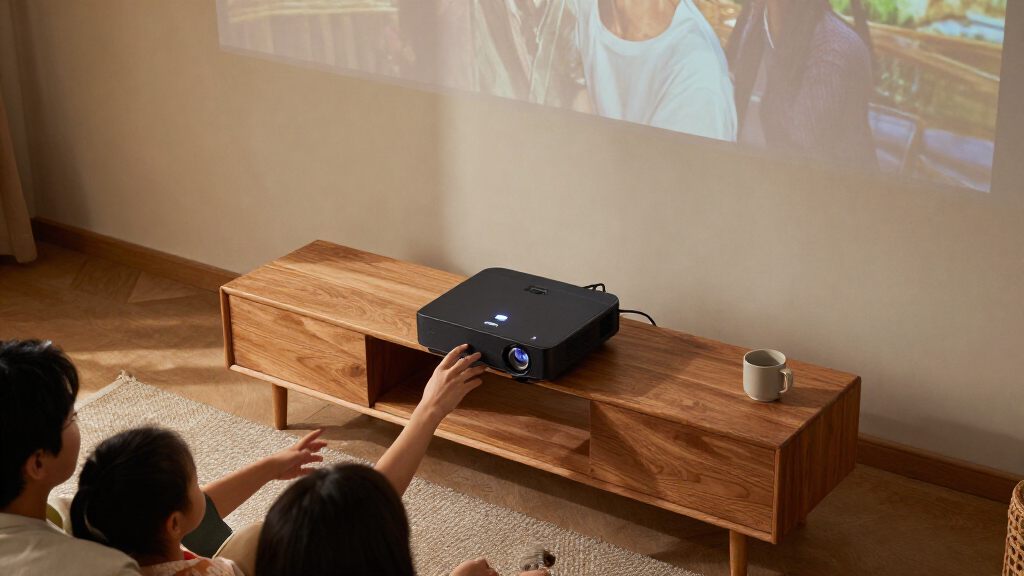
I ranked these models around the needs that define an ultra short throw purchase: how well the listed resolution, light source, brightness claims, image formats, and gaming features match a large-screen living-room setup. I also weighed day-to-day usability, including smart TV access, built-in sound, portability, and whether a model appears aimed at home entertainment, presentations, or classroom use. A projector’s lumen figure alone does not tell the whole story; room lighting, screen material, image size, and placement can change the result.
The order favors models with a clear home-theater role, a strong feature mix, and fewer compromises for everyday viewing. Premium triple-laser units rank above simpler or lower-resolution choices when they offer a more capable picture platform, while portable and presentation-oriented models rank for their particular use rather than being treated as cinema substitutes. I also distinguish true UST positioning from short-throw products, and flag renewed listings and less clearly specified models as choices that call for extra buyer checks.
Factors to Consider When Choosing Ultra Short Throw Projectors
Before choosing from this lineup, match the projector to the room and the way you watch. UST placement can simplify installation, but it does not make screen choice, brightness, or alignment irrelevant. These factors help prevent a feature-rich projector from becoming a poor fit.
Check Throw Distance Against Your Wall and Screen
UST projectors need to sit very close to the image surface, but the exact gap varies by model and target image size. Measure the available console depth and the intended screen width before buying; a small placement error can shift the image or make it larger than the screen. Do not assume that a product described as short throw has the same placement range as a UST model. A fixed UST setup is less forgiving than moving a conventional projector around the room. Confirm the manufacturer’s throw chart for the screen size you want, then leave room for ventilation and cable access.
Plan for Ambient Light and Screen Material
Brightness claims are useful for comparison, but they cannot promise a bright, high-contrast picture in every room. Sunlight and overhead lighting wash out dark scenes, and larger projected images spread available light over more area. A purpose-made UST screen can help manage ambient light and improve the viewing experience, but it adds cost and must be compatible with the projector’s geometry. A plain wall may work for casual viewing, though texture and color can make the image less even. Buyers who watch mostly at night can prioritize contrast and color; daytime viewers should pay closer attention to room control and screen choice.
Choose Resolution for the Content You Watch
On a very large screen, fine detail and source quality become easier to notice, so native or processed 4K capability can matter for films and detailed games. A 1080p model can still suit sports, casual viewing, or a tighter setup where the lower resolution is an acceptable tradeoff. Presentation-focused XGA or WUXGA models should not be mistaken for consumer 4K cinema projectors just because they use short-throw placement. Check which HDR formats and streaming services are supported, as format labels do not guarantee that every app or source will provide matching content. Spend on resolution when your sources and viewing distance can take advantage of it, not just because the largest number appears on the box.
Treat Built-In Audio and Smart TV as Convenience Features
Integrated speakers and streaming platforms can make installation simpler, especially in a multipurpose room without a receiver. Their presence does not mean they will match a separate soundbar or home-theater system for scale, dialogue clarity, or surround effects. Check whether the projector has the apps and audio connections you actually use, along with a practical way to connect a game console or streaming device. Some buyers may prefer a strong picture platform and external sound, while others benefit more from an all-in-one setup. Avoid paying extra for built-in features that duplicate equipment you already own.
Separate Gaming Needs from Movie Features
Gaming claims such as low input lag, high refresh support, or console-focused modes matter only when they match your console and preferred games. Fast competitive play makes response time more important than a long list of cinema formats, while story-driven games may benefit more from resolution and HDR support. Check the available HDMI connections and supported signal modes before assuming a projector will accept every console output at its highest setting. A large image can make gaming immersive, but it also magnifies alignment issues and room-light limitations. If gaming is occasional, a balanced home-theater projector may be a better fit than choosing solely for a specialized gaming feature.
Budget for Installation, Screen, and Ongoing Ownership
The projector is only one part of a UST system: a stable surface, suitable screen, accessible power, and clean cable routing all affect the finished setup. Renewed units can offer a different ownership proposition, but buyers should verify warranty coverage, included accessories, return terms, and the condition classification before purchase. For classroom or business use, prioritize brightness, aspect ratio, mounting needs, and service support over home-cinema features. For a living room, consider whether the projector will remain in one carefully aligned position or be moved often. Paying more makes sense when the added picture, gaming, or integration features solve a real need; it does not automatically remove the room’s limits.
Frequently Asked Questions
Can I use a UST projector on a regular painted wall?
Yes, a smooth, neutral-colored wall can work, especially for casual viewing or a temporary setup. Wall texture, paint sheen, and uneven color can become visible across a large image, and UST projection makes surface flaws harder to ignore. A compatible screen can provide a more consistent surface, though it adds to the total setup cost. Before investing in a screen, check whether the projector’s image size fits your wall and whether you can keep the unit precisely aligned. Buyers who watch mostly in a dark room may be more comfortable starting with a wall than those who need daytime performance.
Do I need a special screen for an ultra short throw projector?
A special UST screen is not mandatory, but it can help produce a more even image and manage ambient light. Standard screen materials may reflect light differently at the steep angle used by UST models, so compatibility matters. Screen size, gain, and ambient-light-rejection design should match both the projector and the room; a screen is not a universal upgrade. If you watch mainly in a dark room, a suitable neutral screen or smooth wall may be enough. For daytime viewing, compare screen options as part of the system budget rather than judging the projector by itself.
Is a short-throw projector interchangeable with a UST projector?
No. Both can sit closer to the screen than a conventional projector, but their throw ratios and required placement distances can differ substantially. That distinction matters if you have limited console depth or want the projector close to the wall. Some models in this roundup are described as short throw rather than explicitly UST, so check the throw ratio and image-size chart before treating them as direct substitutes. Also verify the distance from the projector’s lens or body reference point, since setup instructions can define measurements differently. A quick measurement before buying can prevent a model from failing to fit your room.
Is a 4K UST projector worth choosing over a 1080p model?
It depends on how large the image will be, how close you sit, and whether you regularly watch high-resolution content. A 4K-capable model can show more detail on a large screen, while a 1080p option may be sensible for casual viewing or a smaller image. Check whether a model’s 4K label refers to native resolution or processing, and consider the quality of your streaming sources. Image quality also depends on focus, screen surface, room light, and contrast—not resolution alone. Buyers choosing between the BenQ TH671ST and the 4K-focused home-theater models should weigh those factors alongside their budget and use case.
Should I choose a renewed projector for a home theater?
A renewed model can suit a buyer who values a particular feature set and is comfortable checking the seller’s condition and support terms. The Epson LS650 and NEC UM361X listings here are renewed, so verify what accessories are included, the warranty, return window, and any stated condition limits. Also confirm the projector’s intended role: the NEC’s presentation-oriented specifications are not a direct replacement for a 4K home-cinema model. For a projector expected to run daily, service availability and parts matter as much as the initial condition. If support terms are unclear, a new model with a better-defined home-entertainment fit may be the safer choice.
Conclusion
For most living rooms, I would start with the Hisense PX3-PRO as the best overall: its triple-laser 4K feature set, Dolby Vision, smart platform, and gaming support cover a wider mix of uses than the more specialized options. The BenQ TH671ST is my best value pick for buyers who can accept 1080p and want a simpler entertainment setup, while the AWOL VISION Aetherion Max is the best premium choice for shoppers drawn to high-end triple-laser features and a very large image. For beginners who want integrated streaming and sound, the Epson LS650 is worth a look, with the caveat that its renewed listing calls for extra checks. Choose the Optoma Photon GO for portability, the Formovie Theater for a movie-first setup, or the NEC UM361X and Epson PowerLite 760W for presentation-oriented needs. Before ordering, confirm that the throw distance, screen size, room lighting, and support terms match your setup.