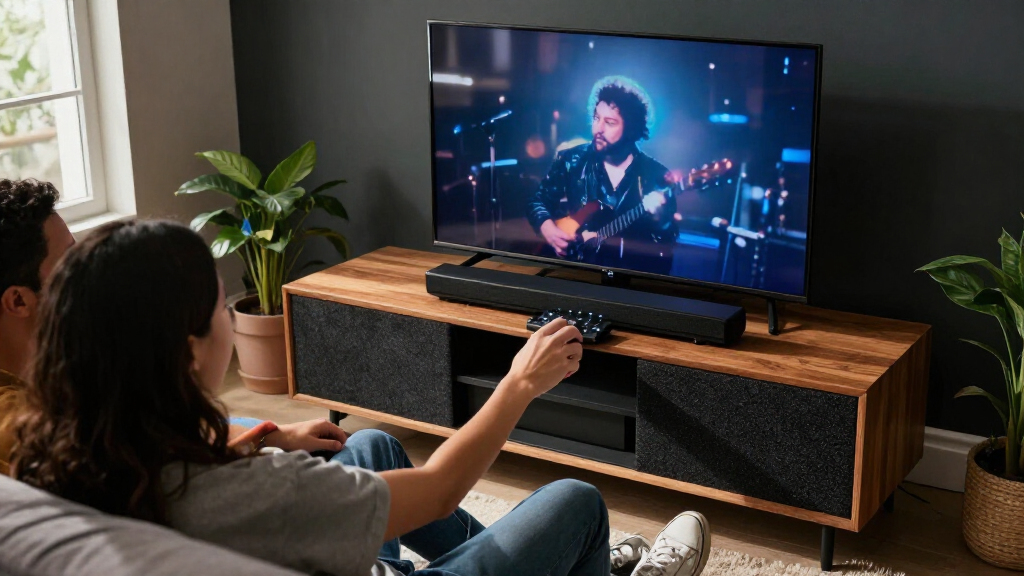
Home theater soundbars can make movies and shows clearer and more immersive, but the right choice depends on your room, setup tolerance, and need for real rear speakers. I’d make the JBL Bar 700MK2 my best overall pick for buyers seeking a more involving surround setup, while the Polk Audio MagniFi Max AX stands out for its dedicated subwoofer and height-channel format, and the Sony HT-S40R offers a straightforward path to physical rear speakers. The lineup ranges from compact dialogue-focused bars to multi-speaker systems, so a small footprint can mean less surround immersion, while a fuller system needs more space and setup. Connectivity, speaker placement, and whether rear channels are included matter as much as channel counts. Read on for the full breakdown and guidance on matching a system to your room.

Get business pricing on your home office setup
- Business-only prices and quantity discounts
- Tax-exempt purchasing
- Multiple users, one account, clear invoices
Complete the kit


Key Takeaways
- The lineup’s biggest divide is physical surround versus simpler stereo-style sound. The Sony HT-S40R and LG S40TR include rear speakers, while compact options such as the Bose TV Speaker prioritize a cleaner, simpler setup.
- Channel count alone does not tell the whole story. The Polk MagniFi Max AX and ULTIMEA Skywave X40 add height-channel formats, while placement and room acoustics still shape how convincing overhead effects sound.
- Subwoofer design affects both impact and room planning. Wireless-subwoofer systems reduce cable runs to the bar, but still need a suitable spot for the sub; the Fansbe Direct KB-M716 uses a wired subwoofer and calls for a closer placement decision.
- Setup simplicity is a real point of difference. A compact option like the Bose TV Speaker suits buyers who want fewer components, while multi-speaker systems ask for more space and placement work in return for more surround potential.
- The best fit depends on the job, not the longest feature list. Dialogue-focused viewing, gaming, and movie surround place different demands on a system, so buyers should match speaker layout and connectivity to their everyday use.
| TCL S55H 2.1-Channel Soundbar with Wireless Subwoofer |  | Best for Simple TV Upgrades | Channels: 2.1 | Maximum output: Up to 220 W | Audio formats: Dolby Atmos, DTS Virtual:X, surround sound | VIEW LATEST PRICE | See Our Full Breakdown |
| ULTIMEA Poseidon M30 2.1-Channel Soundbar with Wireless Subwoofer |  | Best for App-Based Sound Tuning | Channels: 2.1 | Peak output: 240 W | Frequency response: 45 Hz–18 kHz | VIEW LATEST PRICE | See Our Full Breakdown |
| Assistrust 2-in-1 Detachable Soundbar for TV, PC, and Gaming |  | Best Compact Pick for Desks | Channels: 2-channel stereo | Output power: 80 W | Drivers: 4 | VIEW LATEST PRICE | See Our Full Breakdown |
| Sony HT-S40R 5.1-Channel Home Theater Soundbar System, Black |  | Best for Discrete Rear-Speaker Surround | Channels: 5.1 | Maximum output: 600 W | Connections: HDMI, optical, analog, Bluetooth, USB | VIEW LATEST PRICE | See Our Full Breakdown |
| JBL Bar 700MK2 7.1-Channel Soundbar with Wireless Subwoofer |  | Best Premium Immersive Setup | Channels: 7.1 | Maximum output: 780 W | Subwoofer: 10-inch wireless | VIEW LATEST PRICE | See Our Full Breakdown |
| ULTIMEA Aura A40 Pro 7.1-Channel Surround Soundbar System with Subwoofer |  | Best for Full Rear-Speaker Surround | Channels: 7.1 | Peak power: 330 W | Included speakers: Soundbar, subwoofer, and four surround speakers | VIEW LATEST PRICE | See Our Full Breakdown |
| Bose TV Speaker Compact Soundbar with Bluetooth and HDMI-ARC, Black |  | Best Compact Dialogue Upgrade | Audio output: Stereo | Drivers: Two angled full-range drivers and a center tweeter | Connectivity: HDMI-ARC, optical, AUX, and Bluetooth | VIEW LATEST PRICE | See Our Full Breakdown |
| ULTIMEA Poseidon M60 5.1-Channel Dolby Atmos Soundbar System |  | Best for Atmos Without Rear Speakers | Audio output: 5.1-channel surround sound with Dolby Atmos | Peak power: 300 W | Drivers: Five built-in speakers and a wired subwoofer | VIEW LATEST PRICE | See Our Full Breakdown |
| ULTIMEA Skywave X40 5.1.2-Channel Soundbar System |  | Best for Height Effects and Deep Bass | Audio channels: 5.1.2 | Peak power: 530 W | Subwoofer: 6.5-inch driver; bass response down to 35 Hz | VIEW LATEST PRICE | See Our Full Breakdown |
| LG S40TR 4.1-Channel Home Theater Soundbar with Wireless Subwoofer and Rear Speakers |  | Best for LG TV Households | Audio channels: 4.1 | Included components: Soundbar, wireless subwoofer, and rear surround speakers | Audio compatibility: Dolby Digital and DTS Digital | VIEW LATEST PRICE | See Our Full Breakdown |
| Polk Audio MagniFi Max AX 5.1.2-Channel Soundbar with 10-Inch Wireless Subwoofer |  | Best for Immersive Atmos Sound | Channels: 5.1.2 | Driver array: 11 drivers, including 2 up-firing drivers | Subwoofer: 10-inch down-firing wireless | VIEW LATEST PRICE | See Our Full Breakdown |
| Fansbe Direct KB-M716 2.1ch TV Sound Bar with Wired Subwoofer |  | Best for Simple, Flexible Connections | Model: KB-M716 | Audio channels: 2.1 | Total output power: 90 W | VIEW LATEST PRICE | See Our Full Breakdown |
| Sony BRAVIA Theater Trio 3-Unit Home Theater Audio System HT-A8 |  | Best for Expandable Spatial Sound | Model: HTA8.UC2 | System design: Three-unit system with wireless front speakers | Audio formats: Dolby Atmos, DTS:X, IMAX Enhanced | VIEW LATEST PRICE | See Our Full Breakdown |
| LG S6FTR 5.1-Channel Home Theater Soundbar with Wireless Subwoofer and Rear Speakers |  | Best for Included Rear-Speaker Surround | Audio channels: 5.1 | Soundbar size: 33.5 inches | Woofer diameter: 6 inches | VIEW LATEST PRICE | See Our Full Breakdown |
More Details on Our Top Picks
TCL S55H 2.1-Channel Soundbar with Wireless Subwoofer
The TCL S55H suits viewers who want fuller TV sound and more bass without assembling a multi-speaker surround system. Its wireless subwoofer adds low-frequency weight for movie effects, while Dolby Atmos and DTS Virtual:X offer virtualized surround from a two-channel setup. AI Sonic calibration is a useful differentiator for adjusting sound to the room and listening position, and HDMI eARC/ARC keeps TV connection straightforward. Compared with the Sony HT-S40R, the TCL is the simpler, less room-filling choice: it avoids rear-speaker placement, but does not provide discrete 5.1-channel surround. Its 220 W output is described for small-to-medium rooms, so it is a better fit for a living room than a large, open space. I would skip it if physical rear speakers are a priority.
Pros:- Wireless subwoofer adds bass without an audio cable running to the soundbar.
- AI Sonic calibration adjusts audio to the room and listening position.
- HDMI eARC/ARC, optical, Bluetooth 5.2, and AUX support several source types.
- Low-profile bar includes a wall-mount kit and HDMI cable.
Cons:- Two-channel hardware cannot match the Sony HT-S40R’s discrete 5.1-channel surround.
- The stated output is aimed at small-to-medium rooms rather than large spaces.
Best for: TV owners in small-to-medium rooms who want a wireless subwoofer, room calibration, and straightforward HDMI connection without rear speakers.
Not ideal for: Buyers seeking discrete surround from rear speakers or stronger coverage for a large, open-plan room.
- Channels:2.1
- Maximum output:Up to 220 W
- Audio formats:Dolby Atmos, DTS Virtual:X, surround sound
- Connections:HDMI eARC/ARC, optical, Bluetooth 5.2, AUX
- Soundbar dimensions:31.89 × 2.36 × 3.86 in (W × H × D)
- Subwoofer dimensions:7.68 × 12.60 × 7.68 in (W × H × D)
- Included accessories:HDMI cable, power cord, remote with batteries, wall-mount kit
Our verdict“Choose the TCL S55H for a tidy, bass-enhanced TV upgrade in a modest room, but pick the Sony HT-S40R if you want rear-speaker surround.”
ULTIMEA Poseidon M30 2.1-Channel Soundbar with Wireless Subwoofer
The ULTIMEA Poseidon M30 is the tuning-focused pick for buyers who want to adjust dialogue and tonal balance rather than settle for a handful of fixed modes. Its VoiceMX dialogue enhancement targets speech clarity, while the app’s 10-band EQ and 121 preset matrices give more control than the TCL S55H’s room-calibration approach. The wireless subwoofer and tabletop or wall-mount placement keep setup flexible, and HDMI ARC covers the core TV connection. This remains a 2.1-channel system, though: app adjustments cannot create the discrete rear-speaker surround delivered by the Sony HT-S40R or the JBL Bar 700MK2. Its Bluetooth connection and wireless subwoofer also add wireless links to the setup. I would choose it for configurable TV and streaming sound, not for buyers whose main goal is a convincing physical surround layout.
Pros:- VoiceMX processing is designed to improve dialogue clarity.
- App includes a 10-band equalizer and 121 preset EQ matrices.
- Wireless subwoofer allows placement without an audio cable to the soundbar.
- Supports HDMI ARC, optical, and Bluetooth 6.0.
Cons:- Two-channel sound does not provide the discrete surround of the Sony HT-S40R or JBL Bar 700MK2.
- Bluetooth streaming and the subwoofer connection rely on wireless connectivity.
Best for: Viewers who want app-controlled EQ and dialogue tuning in a 2.1 setup, with a wireless subwoofer and flexible mounting.
Not ideal for: Home theater buyers who want discrete rear speakers, or anyone who prefers not to rely on app controls and wireless connections.
- Channels:2.1
- Peak output:240 W
- Frequency response:45 Hz–18 kHz
- Maximum SPL:95 dB
- Subwoofer:Wireless; 5.25-inch driver; 6.5 L cabinet
- Connections:HDMI ARC, optical, Bluetooth 6.0
- Equalizer:10-band EQ with 121 preset EQ matrices
- Mounting:Tabletop or wall mount
Our verdict“Pick the Poseidon M30 if hands-on EQ and dialogue controls matter more than adding physical surround speakers.”
Assistrust 2-in-1 Detachable Soundbar for TV, PC, and Gaming
At 17 inches wide, the Assistrust KY-8000 is the space-conscious option here, better suited to a desk, bedroom TV, or compact gaming setup than to a room built around cinematic sound. Its detachable design supports several placements, and the four drivers, automatic volume boost, and movie, music, and news modes give a small system some useful flexibility. Connections include ARC, optical, AUX, and Bluetooth 5.0. The tradeoff is its stereo-only output: unlike the TCL S55H, it has no listed wireless subwoofer to add dedicated bass, and it cannot match the Sony HT-S40R’s rear-speaker surround. Its 80 W output and compact footprint favor close listening over filling a large living room. I would pick it for limited space, not as a substitute for a full home theater system.
Pros:- 17-inch form and detachable design suit desks and smaller TV setups.
- Four drivers and 80 W output provide a compact stereo upgrade.
- Movie, music, and news EQ modes plus automatic volume boost offer straightforward sound adjustments.
- ARC, optical, AUX, and Bluetooth 5.0 cover common connections.
Cons:- Two-channel stereo lacks the surround speakers found with the Sony HT-S40R.
- No subwoofer is listed, so it is less suited to bass-heavy movie sound than the TCL S55H.
Best for: PC users, apartment dwellers, and bedroom-TV owners who need a compact bar with multiple placement options and basic input flexibility.
Not ideal for: Movie fans seeking deep subwoofer bass, wide-room output, or discrete surround channels.
- Channels:2-channel stereo
- Output power:80 W
- Drivers:4
- Soundbar size:17 inches
- EQ modes:Movie, music, news
- Connections:Bluetooth 5.0, ARC, optical, AUX
- Mounting options:Tabletop, wall mount
- Warranty:18-month limited warranty
Our verdict“Choose the Assistrust KY-8000 for a small desk or bedroom setup, but look to the TCL S55H for a dedicated subwoofer and stronger movie impact.”
Sony HT-S40R 5.1-Channel Home Theater Soundbar System, Black
The Sony HT-S40R makes the most sense for viewers who value actual rear speakers over a compact, all-in-one-style setup. Its 5.1-channel configuration and 600 W maximum output are aimed at a more enveloping movie presentation than the TCL S55H or ULTIMEA Poseidon M30 can deliver from their 2.1 layouts. Selectable sound modes and dialogue enhancement add practical controls, while HDMI, optical, and analog inputs support a range of TV connections. The tradeoff is a more involved speaker arrangement: buyers need room for the rear speakers, unlike with the simpler JBL Bar 700MK2 setup, whose surround speakers detach for flexible placement. The Sony’s listed connections also omit HDMI eARC, and the product data does not list Dolby Atmos support. I would favor it for conventional surround, not for a minimal setup or Atmos-focused system.
Pros:- 5.1-channel system includes rear speakers for physical surround effects.
- 600 W maximum output is more substantial than the 2.1-channel TCL S55H and Poseidon M30.
- HDMI, optical, and analog inputs suit a range of TV connections.
- Bluetooth streaming, selectable sound modes, and dialogue enhancement add everyday flexibility.
Cons:- Rear speakers require placement around the listening area, making setup less compact than a 2.1 system.
- Dolby Atmos and HDMI eARC are not listed among its supported features.
Best for: Movie watchers with space for rear speakers who want a discrete 5.1 layout and multiple ways to connect a TV.
Not ideal for: Buyers with limited room for rear speakers, or those prioritizing Dolby Atmos support and a minimal installation.
- Channels:5.1
- Maximum output:600 W
- Connections:HDMI, optical, analog, Bluetooth, USB
- Subwoofer connection:Wireless
- Bluetooth range:10 meters
- Dimensions:13.66 × 33.22 × 9.76 in (D × W × H)
- Power source:Corded electric
- Warranty:1 year
Our verdict“Choose the Sony HT-S40R if you can accommodate rear speakers and want discrete 5.1 sound; skip it for a compact or Atmos-focused setup.”
JBL Bar 700MK2 7.1-Channel Soundbar with Wireless Subwoofer
The JBL Bar 700MK2 is the most ambitious option in this group for buyers who want a wide, powerful presentation and flexible surround placement. Its detachable wireless surround speakers can sit behind the listener, while the 10-inch wireless subwoofer is built for substantial bass. Dolby Atmos, DTS Virtual:X, and MultiBeam 3.0 add to its immersive-audio pitch; PureVoice 2.0 is intended to keep dialogue clear when effects are prominent. Compared with the Sony HT-S40R, the JBL offers detachable speakers and broader listed streaming support, including Wi-Fi, AirPlay, Spotify Connect, and Google Cast. That flexibility comes with upkeep: the detachable speakers need to return to the bar to charge. It is also more system than a small room may need, and the data lists no water resistance. I would skip it if compactness is the priority.
Pros:- Detachable wireless surround speakers can be positioned behind the listening area.
- 10-inch wireless subwoofer is suited to deep, forceful bass.
- Dolby Atmos, DTS Virtual:X, and MultiBeam 3.0 target an immersive, broad soundstage.
- Bluetooth, Wi-Fi, AirPlay, Spotify Connect, and Google Cast provide varied streaming options.
Cons:- Detachable speakers must be returned to the soundbar for charging.
- The larger surround system and subwoofer may be more than compact rooms require.
- Not waterproof.
Best for: Movie and streaming enthusiasts who want detachable surround speakers, a large wireless subwoofer, and extensive wireless playback options.
Not ideal for: Buyers seeking a compact, low-maintenance soundbar or a system for rooms where a large subwoofer and surround speakers are impractical.
- Channels:7.1
- Maximum output:780 W
- Subwoofer:10-inch wireless
- Audio formats:Dolby Atmos, DTS Virtual:X
- Connectivity:Bluetooth, HDMI, optical, USB, Wi-Fi
- Wireless streaming:AirPlay, Spotify Connect, Google Cast
- Dialogue feature:PureVoice 2.0
- Mounting type:Wall mount
Our verdict“Choose the JBL Bar 700MK2 for a feature-rich, immersive setup with flexible rear placement, provided you are comfortable charging its detachable speakers.”
ULTIMEA Aura A40 Pro 7.1-Channel Surround Soundbar System with Subwoofer
I’d choose the Aura A40 Pro when real rear speakers matter more than a simple setup. Its 7.1-channel layout includes four surround speakers, giving films and games a more speaker-based surround arrangement than the Poseidon M60, which creates surround effects without rear speakers. VoiceMX processing aims to keep dialogue distinct, while the app’s equalizer and surround-level controls offer more tuning than a basic TV soundbar.
The tradeoff is installation: the rear arrangement needs a wire between the two rear speakers, so furniture placement and cable routing matter. Its 330 W peak output is also below the Skywave X40’s stated 530 W, and the supplied details don’t list HDMI connectivity. I’d pick this for a room where rear-speaker immersion and sound customization outweigh minimal wiring.
Pros:- Four surround speakers provide a dedicated rear-speaker layout.
- VoiceMX processing is designed to make dialogue clearer.
- App includes a 10-band EQ, 121 presets, and 13 surround levels.
- Subwoofer is specified for bass response down to 45 Hz.
Cons:- Left and right rear speakers require a wired connection to each other.
- The supplied specifications do not list an HDMI input or eARC connection.
- Its 330 W peak rating is lower than the Skywave X40’s 530 W.
Best for: Movie and gaming fans with space to place four surround speakers and route a cable between the rear pair.
Not ideal for: People who want a low-clutter installation, need HDMI connectivity, or cannot run a wire between rear speakers.
- Channels:7.1
- Peak power:330 W
- Included speakers:Soundbar, subwoofer, and four surround speakers
- Rear-speaker connections:Right rear connects wirelessly to soundbar; left rear connects by wire to right rear
- Subwoofer cabinet:6.1 L tuned cabinet
- Bass response:Down to 45 Hz
- App controls:10-band graphic EQ, 121 presets, 13 surround levels, and OTA updates
- Bluetooth:Version 6.0; 15 m range
Our verdict“Choose the Aura A40 Pro if you want four physical surround speakers and detailed app tuning, and can accommodate its rear-speaker wiring.”
Bose TV Speaker Compact Soundbar with Bluetooth and HDMI-ARC, Black
The Bose TV Speaker is the simplest choice here for improving TV dialogue without adding a subwoofer or rear speakers. Its two angled full-range drivers and center tweeter are aimed at clearer, more centered voices, while HDMI-ARC and optical input give buyers straightforward ways to connect it. Bluetooth adds an easy route for music and podcasts. Compared with the LG S40TR, this Bose system takes far less room and avoids rear-speaker setup, but it cannot create the same physical surround experience.
That compactness comes with limits: this is a stereo soundbar, not a multi-channel theater package, and there is no included subwoofer for deeper bass. The HDMI cable and wall brackets are sold separately, and the plastic enclosure is less substantial than the wood-and-metal construction listed for the Skywave X40. I’d choose it for clear speech and uncomplicated everyday TV sound, not cinematic impact.
Pros:- Dialogue-focused drivers and a dedicated center tweeter target clearer voices.
- Compact dimensions suit placement in front of a TV or wall mounting.
- HDMI-ARC, optical, AUX, and Bluetooth offer flexible connection options.
- Included remote provides dialogue and bass modes.
Cons:- Stereo output and no included subwoofer limit cinematic surround and low-bass impact.
- HDMI cable and wall brackets are sold separately.
- Plastic enclosure feels less substantial than the Skywave X40’s listed metal and wood materials.
Best for: Apartment dwellers and TV viewers who mainly want clearer dialogue from a compact bar with simple wired and Bluetooth connections.
Not ideal for: Home theater buyers seeking deep bass, dedicated rear speakers, or enveloping multi-channel surround sound.
- Audio output:Stereo
- Drivers:Two angled full-range drivers and a center tweeter
- Connectivity:HDMI-ARC, optical, AUX, and Bluetooth
- Dimensions:2.21 × 23.38 × 4.02 in (H × W × D)
- Mounting:Wall mount
- Remote features:Dialogue mode and bass boost
- Compatible subwoofers:Bose Bass Module 500 and 700
Our verdict“Pick the Bose TV Speaker for compact, dialogue-first TV audio, but choose a multi-speaker system if surround immersion is your priority.”
ULTIMEA Poseidon M60 5.1-Channel Dolby Atmos Soundbar System
The Poseidon M60 suits buyers who want a simpler room layout than a traditional rear-speaker package but still want Atmos and surround processing. Its five built-in speakers work with side-firing drivers to create surround effects, while the wired wooden subwoofer adds a separate bass source. HDMI eARC supports Dolby Atmos audio and TV control, a useful connection advantage over the Aura A40 Pro, whose supplied specifications do not list HDMI.
This design is less physically enveloping than the LG S40TR or Aura A40 Pro, both of which include rear speakers. Its subwoofer cable also restricts placement, even though the soundbar itself avoids rear-speaker wiring. App-based EQ, presets, and voice enhancement offer more adjustment than the compact Bose TV Speaker, but the M60 needs room for its subwoofer and is not a single-bar solution. I’d favor it for Atmos-focused setups where rear speakers are impractical.
Pros:- Dolby Atmos and side-firing drivers create surround effects without rear speakers.
- HDMI eARC supports Dolby Atmos audio and CEC control.
- App offers a 10-band EQ, 121 presets, and 13 surround levels.
- VoiceMX processing is designed to improve dialogue clarity.
Cons:- Wired subwoofer connection limits where the subwoofer can be placed.
- Virtualized surround effects do not provide the same physical rear-speaker layout as the LG S40TR.
- The soundbar and subwoofer require more room than the compact Bose TV Speaker.
Best for: TV owners who want Dolby Atmos, a separate subwoofer, and app-based sound tuning without placing rear speakers around the room.
Not ideal for: Buyers who want physical rear-channel speakers or need to place the subwoofer far from the soundbar without running a cable.
- Audio output:5.1-channel surround sound with Dolby Atmos
- Peak power:300 W
- Drivers:Five built-in speakers and a wired subwoofer
- Subwoofer cabinet:5.3 L tuned wooden enclosure
- Frequency response:45 Hz–18 kHz
- Connectivity:HDMI eARC, optical, and Bluetooth 5.4
- Equalizer:10-band graphic EQ with 121 presets
- Surround adjustment:13 levels
Our verdict“Choose the Poseidon M60 for Atmos-capable surround effects and detailed tuning without rear speakers, provided a wired subwoofer fits your room.”
ULTIMEA Skywave X40 5.1.2-Channel Soundbar System
The Skywave X40 is the performance-led pick in this group, pairing 5.1.2-channel audio with a wireless subwoofer and surround speakers. Its stated bass response reaches 35 Hz, lower than the 45 Hz listed for both ULTIMEA Aura A40 Pro and Poseidon M60, which points to a stronger low-end emphasis for action scenes and music. Dual 5GHz wireless transmission also reduces the need to run signal cables to the subwoofer and surround speakers, unlike the wired subwoofer on the M60.
The broader package asks more of the room: the bar is over 43 inches wide, and it still needs corded power. It also lacks the listed HDMI eARC detail provided for the M60, offering 4K HDR pass-through instead. Its black-and-gold styling and wood-crafted subwoofer may suit buyers who want a more finished-looking system, but those features do not make it the easiest fit for a small TV stand. I’d choose it for bass reach and height-channel effects.
Pros:- 5.1.2-channel configuration adds height audio to the surround setup.
- Specified bass response reaches 35 Hz, lower than the other ULTIMEA systems here.
- Dual 5GHz transmission supports wireless subwoofer and surround connections.
- 4K HDR pass-through and metal-and-wood construction add useful system and build features.
Cons:- The 43.31-inch bar may not suit narrow TV stands.
- The system still requires corded electric power.
- The supplied specifications list 4K HDR pass-through but do not specify HDMI eARC.
Best for: Home theater viewers with room for a wide bar who want height-channel effects, deeper specified bass, and wireless subwoofer and surround connections.
Not ideal for: Owners of narrow TV stands or anyone prioritizing a compact setup, a simple plug-in bar, or a listed HDMI eARC connection.
- Audio channels:5.1.2
- Peak power:530 W
- Subwoofer:6.5-inch driver; bass response down to 35 Hz
- Audio resolution:24-bit/192 kHz
- Wireless transmission:Dual 5GHz
- Connectivity:4K HDR pass-through
- Dimensions:43.31 × 2.76 × 3.94 in (D × W × H)
- Enclosure materials:Metal and wood
Our verdict“Pick the Skywave X40 if you have room for a wide system and want height effects with the deepest listed bass response in this group.”
LG S40TR 4.1-Channel Home Theater Soundbar with Wireless Subwoofer and Rear Speakers
The LG S40TR is a practical step up from a basic soundbar for LG TV owners who want a separate subwoofer and actual rear speakers. Its 4.1-channel layout supports Dolby Digital and DTS Digital, while Clear Voice Plus targets dialogue clarity. With a compatible LG TV, the WOW Interface lets one remote control both devices, giving it a convenience advantage over the ULTIMEA Aura A40 Pro and Poseidon M60, which rely on their own app or controls.
The included rear speakers make this a more room-filling option than the stereo Bose TV Speaker, but setup is not fully wireless: the rear units connect to each other by wire, and one needs AC power. The provided connection list names optical and USB rather than HDMI eARC, so buyers seeking a specified eARC path may prefer the Poseidon M60. I’d choose the LG for an existing compatible LG TV, not for a cable-free or brand-neutral system.
Pros:- Includes rear surround speakers and a wireless subwoofer.
- Supports Dolby Digital and DTS Digital audio.
- Clear Voice Plus and sound up-mixing support clearer, fuller TV playback.
- WOW Interface can control the soundbar and compatible LG TV with one remote.
Cons:- Rear speakers require a wired connection between them.
- One rear speaker requires AC power, so the system is not fully wireless.
- WOW Interface features require a compatible LG TV.
Best for: Owners of compatible LG TVs who want rear surround speakers, a wireless subwoofer, and shared control through the TV remote.
Not ideal for: Buyers without a compatible LG TV who want WOW control, or anyone unable to power a rear speaker and connect the rear pair by wire.
- Audio channels:4.1
- Included components:Soundbar, wireless subwoofer, and rear surround speakers
- Audio compatibility:Dolby Digital and DTS Digital
- Rear-speaker connection:Rear speakers connect wirelessly to soundbar and by wire to each other
- Soundbar dimensions:28.4 × 2.5 × 3.4 in (W × H × D)
- Subwoofer dimensions:6.7 × 12.6 × 9.9 in (W × H × D)
- Additional connections:Optical input and USB port
- Mounting:Tabletop
Our verdict“Choose the S40TR if you own a compatible LG TV and want rear speakers with shared remote control, but skip it if rear power and cabling are inconvenient.”
Polk Audio MagniFi Max AX 5.1.2-Channel Soundbar with 10-Inch Wireless Subwoofer
I’d choose the Polk MagniFi Max AX for a living room where overhead effects and substantial bass matter more than keeping the system minimal. Its 5.1.2 layout with up-firing drivers can give compatible Dolby Atmos and DTS:X soundtracks a more dimensional presentation than a basic 2.1 bar such as the Fansbe Direct KB-M716. The wireless 10-inch subwoofer also gives bass more presence and placement flexibility than the Fansbe’s wired 4-inch unit. VoiceAdjust is useful when effects threaten to obscure dialogue, while Wi-Fi, AirPlay 2, Chromecast, and Spotify Connect make it versatile beyond TV playback. The tradeoff is that the supplied system is not a full rear-speaker setup; expanding it requires optional SR2 speakers. Buyers seeking surround from included rear speakers may prefer the LG S6FTR.
Pros:- Up-firing drivers support height effects with Dolby Atmos and DTS:X content.
- Wireless 10-inch subwoofer offers deep bass and flexible placement.
- VoiceAdjust helps keep dialogue clear against sound effects.
- Supports Wi-Fi, Bluetooth, AirPlay 2, Chromecast, and Spotify Connect.
Cons:- Optional SR2 speakers are required to expand to a 7.1.2 configuration.
- Does not include rear speakers for physical surround sound.
- The separate subwoofer needs floor space and a nearby power outlet.
Best for: Movie and streaming fans with room for a separate subwoofer who want Atmos height effects, strong bass, and flexible wireless music playback.
Not ideal for: Buyers who want included rear speakers for surround placement or a compact, simple bar-and-subwoofer package.
- Channels:5.1.2
- Driver array:11 drivers, including 2 up-firing drivers
- Subwoofer:10-inch down-firing wireless
- Audio formats:Dolby Atmos, DTS:X
- Wireless connectivity:Wi-Fi, Bluetooth, AirPlay 2, Chromecast, Spotify Connect, Alexa MRM
- Video support:4K/60 fps HDMI, HDR10, Dolby Vision
- Mounting type:Tabletop
- Color:Black
Our verdict“Choose the Polk if Atmos height effects, a large wireless subwoofer, and broad streaming support matter more than included rear speakers.”
Fansbe Direct KB-M716 2.1ch TV Sound Bar with Wired Subwoofer
The Fansbe Direct KB-M716 is the straightforward choice for a secondary TV or a modest setup where multiple inputs matter more than enveloping surround. Its HDMI ARC, optical, coaxial, AUX, and USB connections cover older and newer sources, while Bluetooth 5.3 adds a simple way to play music. Compared with the Polk MagniFi Max AX, this is a much simpler 2.1 system: there are no Atmos or DTS:X features, and its small wired subwoofer cannot match Polk’s 10-inch unit for scale or placement freedom. Three EQ modes let viewers switch emphasis for movies, music, or news, but they do not replace room calibration or dedicated dialogue processing. I’d favor it when ease of connecting assorted devices and a slim profile outweigh a cinematic soundstage.
Pros:- Offers HDMI ARC, optical, coaxial, AUX, and USB inputs.
- Bluetooth 5.3 supports wireless music playback.
- Three EQ modes provide distinct settings for movies, music, and news.
- Slim profile can sit under a TV or be wall-mounted.
Cons:- Wired 4-inch subwoofer limits placement flexibility.
- Small full-range soundbar drivers may restrict midrange clarity at high volume.
- Lacks Dolby Atmos, DTS:X, and included rear speakers.
Best for: Budget-conscious buyers setting up a bedroom or secondary-room TV who need several wired input options and basic bass support.
Not ideal for: Home theater fans seeking Atmos, rear-channel surround, strong room-filling bass, or a wire-free subwoofer placement.
- Model:KB-M716
- Audio channels:2.1
- Total output power:90 W
- Subwoofer:Wired, 4 inches
- Frequency response:Down to 55 Hz
- Connectivity:Bluetooth 5.3, HDMI ARC, optical, coaxial, AUX, USB
- Sound modes:Music, Movie, News
- Mounting:Tabletop or wall-mountable
Our verdict“Pick the Fansbe for a compact, connection-rich 2.1 setup, not for the cinematic surround and bass of the Polk MagniFi Max AX.”
Sony BRAVIA Theater Trio 3-Unit Home Theater Audio System HT-A8
The Sony BRAVIA Theater Trio HT-A8 stands apart for buyers who want a spatial system they can build out, rather than a fixed soundbar package. It supports Dolby Atmos, DTS:X, and IMAX Enhanced, and automatic sound field optimization uses an included microphone to tune playback to the room. Sony’s 360 Spatial Sound Mapping can create phantom speaker positions, with the listed setup capable of up to 24 when compatible optional rear speakers are added. That makes this a different proposition from the Polk MagniFi Max AX, which includes a wireless subwoofer and up-firing drivers in its supplied package. Here, rear speakers and dual subwoofers are optional, so the fuller surround experience requires extra components. I’d shortlist Sony for an expandable system; buyers wanting more of the surround package included should look at the LG S6FTR.
Pros:- Supports Dolby Atmos, DTS:X, and IMAX Enhanced.
- Automatic sound field optimization adapts playback to room acoustics.
- 360 Spatial Sound Mapping supports an expanded phantom-speaker presentation with compatible optional rear speakers.
- Wireless front speakers help reduce visible cable runs.
Cons:- Rear speakers and subwoofers are sold separately.
- The fuller 360 Spatial Sound Mapping setup depends on compatible optional rear speakers.
- Bluetooth is the listed wireless connectivity, with fewer documented streaming options than the Polk MagniFi Max AX.
Best for: Sony-focused home theater buyers who want room calibration, spatial processing, and the option to add rear speakers or dual subwoofers later.
Not ideal for: Buyers who need included rear speakers and a subwoofer from the outset, or who want extensive streaming connectivity beyond Bluetooth.
- Model:HTA8.UC2
- System design:Three-unit system with wireless front speakers
- Audio formats:Dolby Atmos, DTS:X, IMAX Enhanced
- Surround technology:360 Spatial Sound Mapping; up to 24 phantom speakers with compatible optional rear speakers
- Room calibration:Automatic sound field optimization using included USB Type-C microphone
- Wireless connectivity:Bluetooth
- Expansion:Compatible optional rear speakers and dual subwoofers, sold separately
- Item weight:26.8 pounds
Our verdict“Choose the Sony if you value room calibration and a system you can expand, and are comfortable adding the rear speakers and subwoofers separately.”
LG S6FTR 5.1-Channel Home Theater Soundbar with Wireless Subwoofer and Rear Speakers
The LG S6FTR is a practical fit for viewers who want a conventional 5.1 layout with rear speakers and a wireless subwoofer in the package. That included hardware gives it a more direct route to physical rear-channel effects than the Sony BRAVIA Theater Trio HT-A8, whose rear speakers and subwoofers are optional. LG’s AI-based sound adjustment aims to keep dialogue and effects more balanced, and its HDMI, USB, and Bluetooth connections cover common TV and playback needs. The tradeoff is that the rear speakers still need a wired link between them, and one needs AC power, so this is not a fully cable-free surround system. Compatible LG TV owners may also benefit from WOW Interface features, but those extras depend on specific LG models. I’d pick it over the Fansbe for actual rear-channel surround, not for broad format support.
Pros:- Includes rear speakers and a wireless subwoofer for a ready-made 5.1 arrangement.
- AI-based sound adjustment supports clearer vocals and dynamic effects.
- Bluetooth, HDMI, and USB provide common connection options.
- Compatible LG TVs can offer control through the WOW Interface.
Cons:- Rear speakers require a wired connection between them, and one needs AC power.
- WOW Orchestra and some integration features are limited to select LG TV and soundbar models.
- The listed Dolby Audio support does not include Dolby Atmos or DTS:X.
Best for: LG TV owners and movie watchers who want a supplied 5.1 system with physical rear speakers and a wireless subwoofer.
Not ideal for: Buyers seeking Atmos or DTS:X, completely wireless rear speakers, or a feature set that works identically across TV brands.
- Audio channels:5.1
- Soundbar size:33.5 inches
- Woofer diameter:6 inches
- Connectivity:Bluetooth, HDMI, USB
- Subwoofer connection:Wireless
- Audio features:Dolby Audio, AI-based sound adjustment
- Bluetooth range:10 meters
- Mounting type:Shelf
Our verdict“Choose the LG if you want included physical rear speakers and own a compatible LG TV, but skip it if Atmos support or wireless rear placement is a priority.”
How We Picked
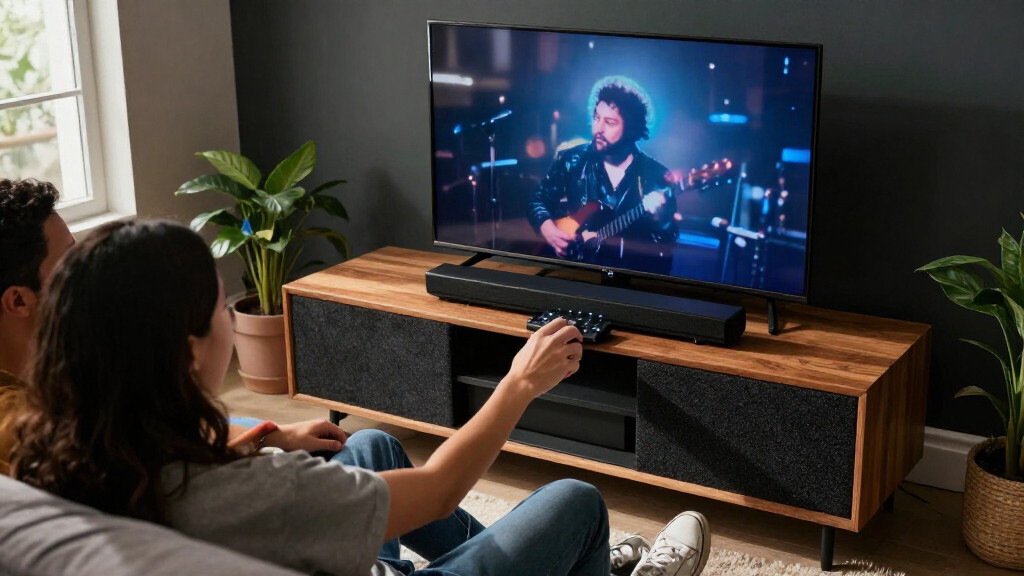
I ranked these home theater soundbars by how well their design matches common living-room needs: clear dialogue, satisfying low-frequency impact, surround potential, ease of setup, and the space required for the system. I also considered the practical difference between a bar with a subwoofer, a package with physical rear speakers, and a compact speaker built mainly to improve TV sound. Channel formats and named audio features matter, but I treated them as useful context rather than proof of performance on their own.
The order favors options with a strong balance of immersive sound, useful system components, and day-to-day usability. Systems with rear speakers or height-channel formats can offer a more enveloping movie presentation, but they rank below a simpler pick when their extra hardware may be unnecessary for a small room or a low-fuss setup. Compact and entry-level models still have a place for dialogue improvement and limited space; they rank lower for buyers seeking a full home theater effect. I also weighed connectivity and setup demands, since a system that does not fit the TV, room, or placement plan is a poor match regardless of its feature list.
Factors to Consider When Choosing Home Theater Soundbars
Before choosing a bar, decide what you want to improve most: dialogue, bass, surround immersion, or the simplicity of your TV setup. These factors can help you avoid paying for speakers you cannot place or expecting a compact bar to create the same effect as a multi-speaker system.
Choose the speaker layout for your room
A 2.1-channel setup generally keeps the system simple, adding a subwoofer without separate rear speakers. That can suit apartments and smaller rooms where speakers behind the seating area are impractical. Physical rear speakers can make directional effects more convincing, but they need sensible placement and power or signal connections. Before choosing a surround package, measure the space behind your sofa and check whether cables can be routed neatly. A larger channel number does not guarantee a better result if the room prevents useful speaker placement. Choose the layout you can install properly, not just the one with the most channels listed.
Treat Dolby Atmos and height channels as a room-dependent benefit
Height-channel formats can add a sense of sound above the listener, but the room and ceiling influence how well that effect comes across. Up-firing drivers need a ceiling surface that can reflect sound, and unusual angles or very high ceilings may weaken the impression. A system that processes height effects can still make an engaging movie setup, but its format label alone does not promise overhead sound in every room. If you cannot meet the placement conditions, put more weight on dialogue clarity and conventional surround performance. Buyers comparing Atmos systems should also check which compatible audio formats their TV can pass through. This avoids choosing a feature that the rest of the setup cannot use.
Plan the subwoofer location before buying
A subwoofer adds impact to explosions, music, and low cinematic effects, but it takes up floor space and can bother nearby rooms. Wireless connection usually means fewer cables between the sub and bar, not a cable-free subwoofer; it still needs power. A wired subwoofer can make placement more restrictive because its cable must reach the bar or system connection. Think about nearby outlets, walkways, and neighbors before prioritizing deeper bass. Avoid assuming that a larger subwoofer is automatically better for a small room, where bass can become boomy. If you mainly watch dialogue-heavy programs at modest volume, a strong sub may matter less than a clear center channel.
Check TV connections and format support
Confirm that the soundbar’s connection options match the ports on your television and any game console or streaming device. HDMI ARC or eARC can simplify volume control and audio routing, but the exact capabilities depend on both connected devices. Optical connections can handle basic TV audio, though they may not pass every higher-bandwidth format. Check whether your TV supports the audio formats you intend to use before paying extra for them in a soundbar. Bluetooth is handy for music from a phone, but it does not replace a reliable TV connection. A little port checking can prevent frustrating limits after installation.
Balance immersion against setup and daily use
More speakers can make movies feel larger, yet they also bring extra placement, power, and calibration tasks. If the TV sits in a shared living space, consider whether rear speakers will stay in position or become clutter. A compact bar is easier to live with and can be a better fit for casual viewing, though it cannot reproduce the same physical separation as speakers around the room. Detachable or multi-piece designs can serve more than one placement style, but check how you expect to use them most often. Prioritize controls and connection behavior that suit your household, especially if several people operate the TV. The best system is one that gets used in its intended layout rather than left partly disconnected.
Spend more only for a benefit you can use
Higher-end systems make the most sense when you will use their extra channels, stronger bass, format support, or broader connectivity. In a small bedroom or a secondary TV setup, those additions may contribute less than a compact, easy-to-operate bar. Conversely, a dedicated movie room can make rear speakers and height effects more rewarding. Compare the complete package: a separate subwoofer or rear speakers may add more practical value than a long list of processing modes. Also account for stands, cable routing, and the room needed around the TV. Match the added hardware to a specific listening goal instead of treating premium features as automatic upgrades.
Frequently Asked Questions
Do I need rear speakers for a home theater soundbar?
No, but rear speakers are the clearest way to get sound physically placed behind the seating area. A bar with a subwoofer can still improve TV audio and add bass without filling the room with extra speakers. Rear speakers make more sense if movies and games are a priority and you have a practical place to position them. They may be a poor fit when the sofa is against a wall, the room is shared, or cables would cross a walkway. Decide whether you value surround placement enough to accept the additional setup.
Will a Dolby Atmos soundbar work well in a room with a high or sloped ceiling?
It can work, but reflected height effects are less predictable when the ceiling is unusually high, angled, or irregular. Up-firing speakers depend on sound reflecting from the ceiling back toward the listening area. Check the soundbar’s placement guidance and your room shape rather than assuming the Atmos label guarantees overhead effects. If your ceiling is a poor match, prioritize a system’s conventional surround layout and dialogue performance. A direct rear-speaker setup may offer a more dependable sense of space in some rooms.
Can I connect a soundbar to an older TV without HDMI ARC?
Often, yes, if the TV and soundbar share another supported connection such as optical audio. The limitation is that older connections may not carry every surround or high-bandwidth audio format. You may also need to control volume with a separate remote, depending on the devices. Check the TV’s audio output and the soundbar’s input list before buying, especially if you use a console or streaming box. A connection that works for basic TV sound may not support every feature you want.
Is a wireless subwoofer really wireless?
Usually, wireless describes the audio link from the subwoofer to the soundbar, not its power supply. Most wireless subwoofers still need to sit near an electrical outlet, which limits placement. A wired subwoofer adds a signal cable to manage as well, so plan its route before setting up the system. The sub should have enough space to sit securely without blocking a walkway or being tucked into a spot that muddles bass. Check the included connection details for the specific model rather than relying on the word wireless.
Should I choose a compact soundbar or a system with separate rear speakers for a small apartment?
A compact bar is usually easier to place and less likely to add clutter or disturb neighbors with strong bass. A rear-speaker system can still suit an apartment if you have room behind the seating area and can keep volume at considerate levels. Consider how close your neighbors are and whether low-frequency sound travels through shared walls or floors. For a small space, clear dialogue and simple controls may improve everyday viewing more than a complex surround layout. Choose separate rears only if you can use them in a stable, practical arrangement.
Conclusion
For the broadest balance of movie immersion and system capability, I’d choose the JBL Bar 700MK2 as best overall. Buyers seeking a more feature-rich setup with a dedicated subwoofer and height-channel format should compare the Polk Audio MagniFi Max AX with the ULTIMEA Skywave X40 as premium-leaning options, while recognizing that room fit and placement matter. For best value, I’d start with the TCL S55H as a straightforward 2.1-channel option; for beginners, the Bose TV Speaker is the simpler choice when better TV dialogue matters more than surround effects. If you specifically want physical rear speakers, shortlist the Sony HT-S40R or LG S40TR. Match the system to the room and the way you watch: the right home theater soundbar is the one whose extra hardware you can place and use.