Choosing the right home theater AV receivers can be overwhelming given the sheer volume of technical specifications and marketing claims. The Denon AVR-X4800H stands out as the best overall choice for enthusiasts seeking future-proof 8K connectivity and robust room correction, while the Yamaha RX-V385 offers an accessible entry point for those prioritizing simplicity and reliability over advanced features. Buyers often face a difficult tradeoff between channel count and power output, where adding more speakers may reduce the per-channel wattage unless the unit is significantly larger and more expensive. This guide breaks down the specific strengths and weaknesses of each model to help you match your speaker setup with the appropriate receiver. Continue reading to see which unit fits your budget and room size best.

Get business pricing on your home office setup
- Business-only prices and quantity discounts
- Tax-exempt purchasing
- Multiple users, one account, clear invoices
Complete the kit


Key Takeaways
- The Denon AVR-X4800H dominates the high-end segment by offering 9.4 channels of processing power, allowing for complex Dolby Atmos setups that smaller 5.1 or 7.1 units simply cannot handle.
- Budget options like the Yamaha RX-V385 and JBL MA310 compromise on HDMI 2.1 features, meaning they are less suitable for next-generation gaming consoles running at 4K/120Hz.
- Room correction software makes a larger difference in sound quality than raw wattage for most living rooms, with Denon’s Audyssey MultEQ and Yamaha’s YPAO being the standout implementations.
- Wi-Fi and Bluetooth connectivity are no longer optional; models lacking built-in Wi-Fi, such as the Sony STR-DH590, require external streaming devices, which adds clutter and cost.
- Channel count dictates headroom; a 7.2-channel receiver like the Onkyo TX-NR6100 provides more flexibility for future upgrades than a 5.2-channel unit, even if you only use 5.1 speakers today.
| Denon AVR-S670H 5.2-Channel 8K Home Theater Receiver, 75W per Channel |  | Best for a 5.2-Channel Gaming and Streaming Setup | Channels: 5.2 | Output power: 75 watts per channel | HDMI ports: 8 | VIEW LATEST PRICE | See Our Full Breakdown |
| Yamaha RX-V385 5.1-Channel 4K Ultra HD AV Receiver with Bluetooth |  | Best for a Simple, Calibrated 5.1 Setup | Channels: 5.1 | Output power: 100 watts | HDMI ports: 4 inputs, 1 output | VIEW LATEST PRICE | See Our Full Breakdown |
| JBL MA310 5.2-Channel 4K AV Receiver, 60 W per Channel, Black |  | Best for AirPlay 2 and Chromecast Users | Channels: 5.2 | Amplifier: Five-channel Class D | Output power: 60 watts | VIEW LATEST PRICE | See Our Full Breakdown |
| Denon AVR-S770H 7.2-Channel 8K Home Theater Receiver |  | Best for Expanding to Dolby Atmos | Channels: 7.2 | Output power: 75 watts per channel | HDMI ports: 8 | VIEW LATEST PRICE | See Our Full Breakdown |
| Yamaha RX300A 5.2-Channel Home Theater AV Receiver with Dolby Atmos, 4K/120 and 8K/60 HDMI, and Bluetooth Multipoint |  | Best for a Compact Atmos-Ready Layout | Channels: 5.2 | Output power: 70 watts | Speaker layout support: Up to 3.1.2 channels | VIEW LATEST PRICE | See Our Full Breakdown |
| Sony STR-DH590 5.2-Channel 4K HDR Home Theater AV Receiver with Bluetooth |  | Best for Simple 5.2 Setups | Channels: 5.2 | HDMI inputs: 4 | HDMI outputs: 1 | VIEW LATEST PRICE | See Our Full Breakdown |
| Denon AVR-S570BT 5.2-Channel 8K AV Receiver |  | Best for 8K Gaming on a 5.2-Channel System | Channels: 5.2 | Output power: 70 watts per channel | HDMI ports: 5 total | VIEW LATEST PRICE | See Our Full Breakdown |
| Denon AVR-X1800H 7.2-Channel AV Receiver with Wi-Fi and Bluetooth | 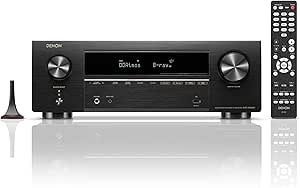 | Best Overall for an Atmos Upgrade | Channels: 7.2 | Output power: 80 watts per channel | HDMI inputs: 6 | VIEW LATEST PRICE | See Our Full Breakdown |
| Denon AVR-X4800H 9.4-Channel 8K Home Theater AV Receiver |  | Best Premium for Large, Expandable Systems | Channels: 9.4-channel receiver; 11.4-channel processing | Power output: 125 watts per channel | HDMI connectivity: 10 ports listed: 7 inputs and 3 outputs; description also specifies six HDMI 2.1 inputs | VIEW LATEST PRICE | See Our Full Breakdown |
| Denon AVR-X1700H 7.2-Channel AV Receiver, 80 W per Channel, Built-in HEOS |  | Best for Voice-Controlled Home Setups | Channels: 7.2 | Output power: 80 watts per channel | HDMI inputs: 6 | VIEW LATEST PRICE | See Our Full Breakdown |
| Pyle 5.2-Channel Hi-Fi Home Theater Receiver |  | Best Budget Entry-Level | Channel Configuration: 5.2-Channel | Video Support: 4K Ultra HD Pass-Through | Connectivity: Bluetooth, USB, Coaxial, 2x Mic Inputs | VIEW LATEST PRICE | See Our Full Breakdown |
| Donner MAMP4 5.1-Channel Stereo Receiver |  | Best for Karaoke & Parties | Channel Configuration: 5.1-Channel | Audio Decoding: PCM Only (No Dolby/DTS) | Microphone Inputs: 2 x 1/4-inch Jacks | VIEW LATEST PRICE | See Our Full Breakdown |
| Yamaha RX500A 7.2-Channel Home Theater AV Receiver |  | Best Premium Performance | Channel Configuration: 7.2-Channel (supports 5.2.2) | Audio Formats: Dolby Atmos, DTS:X | Video Support: 8K/60, 4K/120, HDR10+, Dolby Vision | VIEW LATEST PRICE | See Our Full Breakdown |
| Onkyo TX-NR6100 7.2-Channel THX Certified Network AV Receiver |  | Best for Gaming & Movies | Channel Configuration: 7.2-Channel | Certification: THX Select | Audio Formats: Dolby Atmos, DTS:X | VIEW LATEST PRICE | See Our Full Breakdown |
| home theater AV receiver | Audio formats | Channels | Output power | Video support |
|---|---|---|---|---|
| Denon AVR-S670H 5.2-Channel 8K | Dolby TrueHD, Dolby Digital, Dolby Digital Plus, DTS-HD Master Audio | 5.2 | 75 watts per channel | — |
| Yamaha RX-V385 5.1-Channel 4K | Dolby TrueHD, Dolby Digital+, DTS-HD | 5.1 | 100 watts | 4K Ultra HD, HDR10, Dolby Vision, HLG, BT.2020 |
| JBL MA310 5.2-Channel 4K AV Re | Dolby and DTS | 5.2 | 60 watts | 4K |
| Denon AVR-S770H 7.2-Channel 8K | Dolby Atmos, Dolby TrueHD, DTS:X, DTS Neural:X | 7.2 | 75 watts per channel | — |
| Yamaha RX300A 5.2-Channel Home | Dolby Atmos, DTS Virtual:X | 5.2 | 70 watts | 4K/120, 8K/60 |
| Sony STR-DH590 5.2-Channel 4K | — | 5.2 | 725 W | 4K HDR passthrough, HDCP 2.2 |
| Denon AVR-S570BT 5.2-Channel 8 | DTS-HD Master Audio, Dolby TrueHD | 5.2 | 70 watts per channel | — |
| Denon AVR-X1800H 7.2-Channel A | Dolby Atmos, DTS:X, DTS Virtual:X | 7.2 | 80 watts per channel | — |
| Denon AVR-X4800H 9.4-Channel 8 | Dolby Atmos, DTS:X Pro, IMAX Enhanced, Auro-3D | 9.4-channel receiver; 11.4-channel processing | — | 8K/60Hz, 4K/120Hz, HDR10+, HLG, Dolby Vision, Dynamic HDR |
| Denon AVR-X1700H 7.2-Channel A | Dolby Atmos, Dolby Atmos Height Virtualization, DTS:X, DTS Virtual:X | 7.2 | 80 watts per channel | 8K/60Hz passthrough, select 4K/120Hz passthrough, 8K upscaling |
| Pyle 5.2-Channel Hi-Fi Home Th | WAV, Stereo, Surround | — | — | 4K Ultra HD Pass-Through |
| Donner MAMP4 5.1-Channel Stere | — | — | 60W (Front) / 25W (Surround/Ctr) @ 4Ω | — |
| Yamaha RX500A 7.2-Channel Home | Dolby Atmos, DTS:X | — | — | 8K/60, 4K/120, HDR10+, Dolby Vision |
| Onkyo TX-NR6100 7.2-Channel TH | Dolby Atmos, DTS:X | — | — | 8K/60, 4K/120 HDR |
More Details on Our Top Picks
Denon AVR-S670H 5.2-Channel 8K Home Theater Receiver, 75W per Channel
The Denon AVR-S670H suits a living room where current gaming features and straightforward music streaming matter more than adding extra surround channels. Its 4K/120Hz and 8K/60Hz pass-through, plus VRR, ALLM, and QFT, give compatible game consoles and displays room to use their supported video features. HEOS, Wi-Fi, and Bluetooth also make it more flexible for music than the Bluetooth-only Yamaha RX-V385. It decodes Dolby TrueHD and DTS-HD Master Audio for conventional surround playback, but it does not add the Dolby Atmos and DTS:X support found on the seven-channel Denon AVR-S770H. Five amplified channels cap speaker expansion, so I’d choose this for a 5.1 or 5.2 system rather than a build intended to grow into height channels.
Pros:- 4K/120Hz and 8K/60Hz pass-through with VRR, ALLM, and QFT for compatible gaming gear
- HEOS, Wi-Fi, and Bluetooth support music playback from multiple sources
- Decodes Dolby TrueHD and DTS-HD Master Audio
- ARC/eARC supports TV audio connections
Cons:- Five amplified channels rule out larger surround layouts and height-speaker expansion
- Does not list Dolby Atmos or DTS:X decoding, unlike the AVR-S770H
- Some streaming features depend on compatible services, devices, or content
Best for: Console gamers and streaming listeners building a 5.1 or 5.2 system who want modern HDMI gaming features and networked music.
Not ideal for: Buyers planning Dolby Atmos or DTS:X speaker layouts, or anyone who expects to expand beyond five amplified channels.
- Channels:5.2
- Output power:75 watts per channel
- HDMI ports:8
- Video pass-through:8K/60Hz, 4K/120Hz
- Audio formats:Dolby TrueHD, Dolby Digital, Dolby Digital Plus, DTS-HD Master Audio
- Connectivity:HDMI, Bluetooth, Wi-Fi, HEOS
- HDMI features:ARC/eARC, HDCP 2.3, 8K upscaling
- Video and gaming features:HDR10+, HLG, Dolby Vision, VRR, ALLM, QFT
Our verdict“Choose the AVR-S670H for a connected 5.2-channel system with modern gaming support, but pick the AVR-S770H if you want Atmos or a path to more speakers.”
Yamaha RX-V385 5.1-Channel 4K Ultra HD AV Receiver with Bluetooth
The Yamaha RX-V385 is the straightforward pick for a first home theater: it handles 5.1-channel sound, supports 4K video with HDR formats, and includes a YPAO microphone to help adjust speaker output to the room. That supplied calibration gear gives it a practical setup advantage over the JBL MA310, whose listed features focus more on wireless streaming than room correction. Bluetooth covers basic wireless audio, but there’s no listed Wi-Fi or multi-room platform like the Denon AVR-S670H’s HEOS. Its four HDMI inputs are also fewer than the Denon models’ listed eight, so buyers with several consoles and players may need to manage connections carefully. The 5.1-channel limit keeps expansion modest, yet for a conventional surround system with a few HDMI sources, its simpler feature set may be a benefit rather than a drawback.
Pros:- YPAO auto-calibration microphone is included to help tune speaker levels to the room
- Supports 4K Ultra HD, HDR10, Dolby Vision, HLG, and BT.2020
- Decodes Dolby TrueHD, Dolby Digital+, and DTS-HD
- Bluetooth enables wireless audio playback
Cons:- Four HDMI inputs offer less connection capacity than the listed Denon AVR-S670H
- Limited to a 5.1-channel layout
- Bluetooth is the listed wireless connection; Wi-Fi and multi-room streaming are not specified
Best for: First-time home theater owners who want a conventional 5.1 setup, included room-calibration equipment, and 4K HDR support.
Not ideal for: Buyers with many HDMI sources, a need for network music streaming, or plans for Atmos height speakers.
- Channels:5.1
- Output power:100 watts
- HDMI ports:4 inputs, 1 output
- Video support:4K Ultra HD, HDR10, Dolby Vision, HLG, BT.2020
- Audio formats:Dolby TrueHD, Dolby Digital+, DTS-HD
- Connectivity:Bluetooth
- Auto calibration:YPAO; microphone included
- Dimensions:12.6 × 17.12 × 6.35 in (D × W × H)
Our verdict“Pick the RX-V385 for a basic 5.1 theater with included calibration, but look to a networked Denon if streaming and gaming connectivity matter more.”
JBL MA310 5.2-Channel 4K AV Receiver, 60 W per Channel, Black
The JBL MA310 has a distinct appeal for households that want a compactly specified 5.2-channel receiver with familiar wireless music options: it lists AirPlay 2, Google Chromecast, and Bluetooth 5.1. That gives it a broader stated streaming mix than the Yamaha RX-V385, which lists Bluetooth but not network streaming. Five-channel Class D amplification and native Dolby and DTS decoding cover the fundamentals for a 4K home theater, while ARC provides a route for TV audio. The tradeoff is a 60-watt output rating and a four-input HDMI layout, which offer less stated power and connection capacity than the Denon AVR-S670H. Its video support is listed as 4K, without the newer 4K/120Hz and 8K details provided for that Denon. I’d favor the JBL for its streaming compatibility, not for future-facing video or expansion.
Pros:- Apple AirPlay 2, Google Chromecast, and Bluetooth 5.1 are listed for wireless music
- Five-channel Class D amplification supports a conventional surround system
- Native Dolby and DTS decoding
- 4K video support and ARC for TV audio
Cons:- 60-watt output rating is lower than the listed power ratings of the Denon AVR-S670H and Yamaha RX-V385
- Four HDMI inputs may constrain systems with several connected sources
- 4K/120Hz and 8K pass-through are not specified
Best for: Listeners who use Apple AirPlay 2 or Google Chromecast and want a 4K-capable receiver for a five-speaker surround setup.
Not ideal for: Owners seeking 4K/120Hz or 8K pass-through, extensive HDMI inputs, or more than five amplified channels.
- Channels:5.2
- Amplifier:Five-channel Class D
- Output power:60 watts
- HDMI ports:4 inputs, 1 output
- Video support:4K
- Audio formats:Dolby and DTS
- Wireless connectivity:Bluetooth 5.1 Low Energy
- Streaming services:Apple AirPlay 2, Google Chromecast
Our verdict“Choose the MA310 if AirPlay 2 and Chromecast are central to your music setup; choose the Denon AVR-S670H for newer gaming-video support.”
Denon AVR-S770H 7.2-Channel 8K Home Theater Receiver
The Denon AVR-S770H earns its place as the expansion-minded pick: its seven amplified channels and Dolby Atmos/DTS:X decoding allow speaker layouts beyond the five-channel ceiling of the AVR-S670H. That added capacity matters to buyers who want height effects from compatible content, while Audyssey room calibration helps tailor playback to the listening space. It also matches the S670H’s headline 4K/120Hz and 8K/60Hz pass-through and adds AirPlay 2 alongside HEOS, Wi-Fi, and Bluetooth. The tradeoff is that a 5.2.2 layout needs physical height speakers; virtualization is not a substitute for those speakers. Its 75-watt-per-channel rating and 7.2-channel design are a more capable fit than the Yamaha RX-V385 for immersive audio, but buyers who will stay with 5.1 may not use the extra channel capacity.
Pros:- Seven-channel design supports more flexible layouts than the five-channel AVR-S670H
- Dolby Atmos and DTS:X decoding for compatible immersive audio content
- 8K/60Hz and 4K/120Hz pass-through with VRR, ALLM, and QFT
- HEOS, Wi-Fi, AirPlay 2, Bluetooth, and Audyssey room calibration
Cons:- A 5.2.2 layout requires physical height speakers for overhead channels
- Extra channel capacity offers little benefit in a system that remains 5.1
- 75 watts per channel is the stated output rating
Best for: Home theater builders who plan to add Atmos height speakers and want modern gaming video plus network music streaming.
Not ideal for: Buyers committed to a basic 5.1 setup who do not need Atmos, DTS:X, or the extra speaker-channel capacity.
- Channels:7.2
- Output power:75 watts per channel
- HDMI ports:8
- Video pass-through:8K/60Hz, 4K/120Hz
- Audio formats:Dolby Atmos, Dolby TrueHD, DTS:X, DTS Neural:X
- Video and gaming features:HDR10+, HLG, Dolby Vision, Dynamic HDR, VRR, QFT, ALLM
- Wireless connectivity:HEOS, Wi-Fi, AirPlay 2, Bluetooth
- Room calibration:Audyssey
Our verdict“Choose the AVR-S770H if you plan to build an Atmos-capable system; the AVR-S670H is a closer fit for a fixed five-channel setup.”
Yamaha RX300A 5.2-Channel Home Theater AV Receiver with Dolby Atmos, 4K/120 and 8K/60 HDMI, and Bluetooth Multipoint
The Yamaha RX300A stands apart from the other five-channel picks by supporting Dolby Atmos and DTS Virtual:X, with speaker layouts up to 3.1.2. That makes it a fit for buyers who want height-channel effects in a narrower speaker arrangement, while the Denon AVR-S770H offers seven channels for broader expansion into layouts such as 5.2.2. Yamaha also brings 4K/120Hz and 8K/60Hz support, VRR and ALLM, plus automatic room correction—features that make it more current for gaming and setup than the 4K-only JBL MA310. Bluetooth Multipoint can keep two source devices paired, but this is not a network-streaming feature like HEOS or AirPlay 2. With five channels and a 3.1.2 ceiling, it favors a specific compact layout over a system intended to grow into a larger surround array.
Pros:- Dolby Atmos and DTS Virtual:X support up to a 3.1.2 speaker layout
- 4K/120Hz and 8K/60Hz support with Dolby Vision, HDR10+, VRR, and ALLM
- Automatic room correction with included setup microphone
- Bluetooth Multipoint pairs two source devices
Cons:- Five-channel capacity limits layouts to the specified maximum of 3.1.2
- No Wi-Fi, AirPlay, or multi-room streaming platform is listed
- Five HDMI ports provide fewer inputs than the Denon AVR-S770H’s listed eight
Best for: Buyers building a compact 3.1.2 Atmos system who want modern gaming-video support, automatic calibration, and two paired Bluetooth sources.
Not ideal for: Those planning a 5.2.2 layout or wanting Wi-Fi, AirPlay, or a multi-room streaming platform.
- Channels:5.2
- Output power:70 watts
- Speaker layout support:Up to 3.1.2 channels
- Audio formats:Dolby Atmos, DTS Virtual:X
- Video support:4K/120, 8K/60
- HDMI ports:5 (4 inputs, 1 output)
- Gaming features:ALLM, VRR
- Wireless feature:Bluetooth Multipoint; pairs two source devices
Our verdict“Pick the RX300A for a compact Atmos-capable 3.1.2 system, but choose the AVR-S770H if you want more channels and a broader expansion path.”
Sony STR-DH590 5.2-Channel 4K HDR Home Theater AV Receiver with Bluetooth
The Sony STR-DH590 is the straightforward choice here for a basic home theater built around a TV, a few source devices, and up to two subwoofers. Its four HDMI inputs and 4K HDR passthrough cover common connections, while Bluetooth, FM radio, and a headphone jack add listening options without requiring a network setup. S-Force PRO can simulate surround from two speakers, but it is not a substitute for the discrete channels offered by the Denon AVR-X1800H or AVR-X1700H, both of which support Atmos and DTS:X. That makes the Sony a better fit for buyers who value uncomplicated stereo or 5.2 playback than for those planning an immersive upgrade. Its main limits are the five-channel layout and older 4K-focused video support, with no listed 8K or 4K/120 passthrough.
Pros:- Four HDMI inputs accommodate several connected sources.
- 4K HDR passthrough with HDCP 2.2 supports compatible video sources.
- Bluetooth, FM radio, and a headphone jack provide flexible listening options.
- S-Force PRO offers a virtual surround effect for a two-speaker setup.
Cons:- Five-channel amplification rules out discrete height-speaker configurations.
- No listed Wi-Fi streaming or modern 8K and 4K/120 video support.
- S-Force PRO is a virtual effect, not a replacement for physical surround speakers.
Best for: TV owners assembling a simple 5.1 or 5.2 system who want Bluetooth, several HDMI sources, and no need for Wi-Fi streaming or height speakers.
Not ideal for: Buyers planning Dolby Atmos, DTS:X, 8K video, or 4K/120 gaming; the five-channel design and listed 4K HDR passthrough do not match those goals.
- Channels:5.2
- HDMI inputs:4
- HDMI outputs:1
- Video support:4K HDR passthrough, HDCP 2.2
- Wireless connectivity:Bluetooth
- Audio inputs:4 stereo RCA
- Digital audio inputs:1 optical, 1 coaxial
- Output power:725 W
Our verdict“Choose the STR-DH590 for a simple 5.2-channel TV room, but pick the Denon AVR-X1800H if you want Atmos or a more upgrade-ready system.”
Denon AVR-S570BT 5.2-Channel 8K AV Receiver
For a compact speaker plan paired with newer consoles or an 8K source, the Denon AVR-S570BT prioritizes modern HDMI features over a larger channel count. Its four HDMI 2.1 inputs, eARC output, and VRR, QFT, and ALLM support help connect current gaming gear while passing compatible video formats. Dolby TrueHD and DTS-HD Master Audio cover lossless surround sound, but this is still a 5.2-channel receiver: unlike the Denon AVR-X1800H, it cannot power a 5.2.2 Atmos layout. Bluetooth and supported streaming services offer basic music access, though the X1800H’s Wi-Fi, AirPlay 2, and HEOS make it the stronger pick for networked listening. The S570BT’s appeal is focused and clear, but buyers trade room to grow for its gaming-ready connections.
Pros:- Four HDMI 2.1 inputs support compatible 8K sources and current gaming features.
- VRR, QFT, and ALLM are suited to responsive console gaming.
- eARC can send compatible TV audio back to the receiver.
- Dolby TrueHD and DTS-HD Master Audio support lossless surround sound.
Cons:- Five-channel output cannot support discrete Atmos height speakers.
- Bluetooth is the listed wireless connection, unlike the Wi-Fi and AirPlay 2 on the AVR-X1800H.
- The 70-watt-per-channel rating offers less stated output than the X1800H’s 80 watts per channel.
Best for: Console gamers and TV owners who need multiple HDMI 2.1 sources, eARC, and a straightforward 5.1 or 5.2 speaker setup.
Not ideal for: Home theater builders who want Atmos height channels, broader network streaming, or a system they can expand beyond five main channels.
- Channels:5.2
- Output power:70 watts per channel
- HDMI ports:5 total
- HDMI inputs:4 HDMI 2.1 inputs supporting 8K
- HDMI output:1 with eARC
- Video formats:HDR, HLG, Dolby Vision, HDR10+, Dynamic HDR
- Audio formats:DTS-HD Master Audio, Dolby TrueHD
- Gaming features:VRR, QFT, ALLM
Our verdict“Pick the AVR-S570BT when HDMI 2.1 gaming connections matter more than Atmos expansion or built-in Wi-Fi streaming.”
Denon AVR-X1800H 7.2-Channel AV Receiver with Wi-Fi and Bluetooth
The Denon AVR-X1800H offers the most balanced path in this group from a conventional surround setup to a discrete height-channel system. Its 7.2-channel design can run 5.2.2 speakers, giving Dolby Atmos and DTS:X soundtracks actual overhead channels rather than relying on virtualization. Three of its six HDMI inputs support 8K/60Hz and 4K/120Hz passthrough, while two outputs help serve a TV and another display. Compared with the 5.2-channel AVR-S570BT, it gives a system more room to grow; compared with the flagship AVR-X4800H, it costs less in complexity by stopping at seven amplified channels. Wi-Fi, AirPlay 2, Bluetooth, and HEOS also make everyday music playback more flexible. Its 80 watts per channel and small-to-medium-room positioning make it less suited to very large listening spaces.
Pros:- Seven channels support a discrete 5.2.2 Dolby Atmos or DTS:X layout.
- Three HDMI inputs handle 8K/60Hz and 4K/120Hz passthrough.
- Wi-Fi, AirPlay 2, Bluetooth, and HEOS provide varied streaming options.
- Two HDMI outputs offer flexibility for a TV and a second display.
Cons:- Its seven-channel amplification limits expansion compared with the AVR-X4800H.
- The listed 80 watts per channel and room guidance make it a less suitable fit for very large spaces.
- Height virtualization does not provide the physical overhead effects of dedicated height speakers.
Best for: Home theater buyers with a small or medium room who want real 5.2.2 Atmos capability, modern video passthrough, and built-in network music.
Not ideal for: Owners of large rooms or ambitious speaker plans needing more than seven amplified channels; the AVR-X4800H supports a larger system.
- Channels:7.2
- Output power:80 watts per channel
- HDMI inputs:6
- HDMI outputs:2
- 8K-capable HDMI inputs:3
- Video passthrough:8K/60Hz and 4K/120Hz
- Audio formats:Dolby Atmos, DTS:X, DTS Virtual:X
- Wireless connectivity:Wi-Fi, AirPlay 2, Bluetooth
Our verdict“Choose the AVR-X1800H if you want a practical, network-ready route to discrete Atmos without moving up to a much larger receiver.”
Denon AVR-X4800H 9.4-Channel 8K Home Theater AV Receiver
The Denon AVR-X4800H is the pick for a dedicated theater where a seven-channel receiver would leave too little room for the planned speakers. It amplifies nine channels and processes up to 11.4, with support for Dolby Atmos, DTS:X Pro, IMAX Enhanced, and Auro-3D. Four subwoofer outputs and Audyssey room correction give system builders more flexibility to manage bass across a room than the AVR-X1800H, which is a better match for a simpler 5.2.2 layout. Video support includes 8K/60Hz, 4K/120Hz, HDR, and gaming features, while HEOS Wi-Fi and Bluetooth cover network music. This scale brings a more involved setup, and physical overhead audio still requires height speakers. There is also a specification discrepancy: the data lists ten HDMI ports, while the description separately cites six HDMI 2.1 inputs.
Pros:- Nine amplified channels and 11.4-channel processing support broader speaker layouts.
- Dolby Atmos, DTS:X Pro, IMAX Enhanced, and Auro-3D cover several immersive formats.
- Four subwoofer outputs support flexible bass distribution.
- Audyssey room correction and HEOS Wi-Fi streaming add setup and listening flexibility.
Cons:- A full overhead effect requires physical height speakers; virtual effects are not equivalent.
- The HDMI specifications conflict, listing ten total ports in one place and six HDMI 2.1 inputs in another.
- Its channel capacity and setup flexibility are excessive for buyers who only need a basic 5.1 system.
Best for: Dedicated theater owners planning multiple height or surround channels, several subwoofers, and room correction for a complex speaker layout.
Not ideal for: Buyers building a modest living-room system or seeking a simple setup; the AVR-X1800H offers Atmos support with fewer channels and less system complexity.
- Channels:9.4-channel receiver; 11.4-channel processing
- Power output:125 watts per channel
- HDMI connectivity:10 ports listed: 7 inputs and 3 outputs; description also specifies six HDMI 2.1 inputs
- Video support:8K/60Hz, 4K/120Hz, HDR10+, HLG, Dolby Vision, Dynamic HDR
- Audio formats:Dolby Atmos, DTS:X Pro, IMAX Enhanced, Auro-3D
- Wireless connectivity:Wi-Fi, Bluetooth
- Subwoofer outputs:Four RCA/XLR outputs
- Room correction:Audyssey
Our verdict“Choose the AVR-X4800H for a large, expandable theater with multiple subwoofers; the AVR-X1800H is the more sensible fit for a smaller Atmos system.”
Denon AVR-X1700H 7.2-Channel AV Receiver, 80 W per Channel, Built-in HEOS
For buyers who want a 7.2-channel receiver tied into a voice-controlled or multi-room home, the Denon AVR-X1700H combines Dolby Atmos and DTS:X playback with HEOS streaming and integrations for Alexa, Google Assistant, Siri, and Josh.ai. Six HDMI inputs provide room for several sources, and the receiver supports 8K/60Hz plus select 4K/120Hz passthrough. That qualification matters to gamers with multiple high-refresh sources: the newer AVR-X1800H lists three inputs for 4K/120Hz and 8K/60Hz, making its port allocation clearer. The X1700H still gives buyers one HDMI output, Wi-Fi, Bluetooth, Ethernet, and USB, making it a capable hub for mixed TV, music, and smart-home use. Its height virtualization can add a perceived height effect, but physical height speakers remain the route to discrete overhead sound.
Pros:- Seven-channel amplification supports Dolby Atmos and DTS:X speaker layouts.
- Six HDMI inputs and 8K/60Hz passthrough accommodate a range of sources.
- HEOS supports streaming and multi-room audio.
- Broad voice-assistant and home-automation compatibility adds hands-free control options.
Cons:- 4K/120Hz passthrough is limited to select inputs.
- Height virtualization cannot reproduce the discrete overhead sound of dedicated height speakers.
- One HDMI output provides less display flexibility than the two outputs on the AVR-X1800H.
Best for: Smart-home households building a 7.2-channel theater who want voice-assistant links, HEOS multi-room music, and a mix of HDMI sources.
Not ideal for: Gamers with several 4K/120Hz devices or buyers who want clearly specified high-refresh support across multiple inputs; the AVR-X1800H lists three capable inputs.
- Channels:7.2
- Output power:80 watts per channel
- HDMI inputs:6
- HDMI outputs:1
- Video support:8K/60Hz passthrough, select 4K/120Hz passthrough, 8K upscaling
- Audio formats:Dolby Atmos, Dolby Atmos Height Virtualization, DTS:X, DTS Virtual:X
- Connectivity:Bluetooth, Ethernet, HDMI, USB, Wi-Fi
- Voice assistants:Amazon Alexa, Google Assistant, Apple Siri, Josh.ai
Our verdict“Choose the AVR-X1700H for voice-assistant and HEOS integration in a 7.2-channel system, but favor the AVR-X1800H if you need more clearly specified high-refresh HDMI inputs.”
Pyle 5.2-Channel Hi-Fi Home Theater Receiver
This unit stands out for its extreme affordability and basic 5.2-channel connectivity, making it a viable option for those on a strict budget. Unlike the Yamaha RX-V385, which offers superior audio decoding and build quality, the Pyle prioritizes raw wattage claims and basic Bluetooth streaming. While it supports 4K pass-through, the inconsistent power specifications (1000W vs 2000W) suggest aggressive marketing rather than realistic continuous output. It lacks the refined sound processing found in dedicated home theater receivers, but for a simple bedroom or dorm setup where audio fidelity is secondary to cost, it provides a functional entry point. The inclusion of microphone inputs is a unique bonus for casual karaoke, a feature often missing in budget AVRs.
Pros:- Very low price point for a 5.2-channel system
- Includes two microphone inputs for karaoke
- Supports 4K video pass-through
- Bluetooth streaming for easy music playback
Cons:- Exaggerated or inconsistent power output claims
- Lacks advanced audio decoding (Dolby/DTS)
- Build quality and audio fidelity are basic
Best for: Students or renters needing a cheap, basic 5.1 setup for occasional movie watching.
Not ideal for: Audiophiles or gamers who require accurate Dolby/DTS decoding and reliable power output.
- Channel Configuration:5.2-Channel
- Video Support:4K Ultra HD Pass-Through
- Connectivity:Bluetooth, USB, Coaxial, 2x Mic Inputs
- Audio Formats:WAV, Stereo, Surround
- HDMI Ports:4
- Protection Features:Overcurrent, Short Circuit, Overvoltage
Our verdict“This is the best choice if your budget is tight and you only need basic surround sound without high-fidelity audio demands.”
Donner MAMP4 5.1-Channel Stereo Receiver
Designed with social entertainment in mind, the Donner MAMP4 differentiates itself from standard home theater receivers like the JBL MA310 by focusing on microphone performance. It features dual 1/4-inch mic inputs with dedicated echo and talk-over controls, making it ideal for hosting events or karaoke nights. However, this specialization comes with a significant tradeoff: it does not support Dolby or DTS decoding, meaning it cannot process standard surround sound formats from Blu-rays or streaming services correctly. It relies on PCM stereo decoding, which limits its utility for immersive movie watching. If your primary goal is party music and vocals rather than cinematic immersion, this model offers features that traditional AVRs simply do not include.
Pros:- Dual microphone inputs with echo and talk-over
- Extensive input options including optical and coaxial
- Adjustable EQ (treble/mid/bass) via remote
- Bluetooth 5.3 for stable wireless streaming
Cons:- No Dolby or DTS decoding support
- Lacks HDMI inputs for video pass-through
- Remote batteries not included
Best for: Homeowners who host parties and need integrated karaoke functionality alongside background music.
Not ideal for: Movie enthusiasts who require Dolby Atmos or DTS:X support for immersive surround sound.
- Channel Configuration:5.1-Channel
- Audio Decoding:PCM Only (No Dolby/DTS)
- Microphone Inputs:2 x 1/4-inch Jacks
- Connectivity:Bluetooth 5.3, USB, Optical, Coaxial, RCA, AUX, FM
- Output Power:60W (Front) / 25W (Surround/Ctr) @ 4Ω
- Controls:Push-button, Remote, Echo/Talk-Over
Our verdict“Buy this if you want a versatile party hub with karaoke features, but skip it if you need true surround sound for movies.”
Yamaha RX500A 7.2-Channel Home Theater AV Receiver
The Yamaha RX500A represents the high-end end of this lineup, offering Dolby Atmos and DTS:X support with flexible 5.2.2 or 7.2 layouts. Compared to the Onkyo TX-NR6100, which is also a strong competitor, the Yamaha emphasizes robust streaming capabilities with Wi-Fi, Bluetooth Multipoint, and support for high-res services like TIDAL and Qobuz. Its inclusion of automatic room correction using a setup microphone ensures optimized audio regardless of your room’s acoustics, a feature that significantly enhances the listening experience. While the listed 70-watt output might seem modest on paper, Yamaha’s amplifier design is known for driving speakers effectively. This model is for those who prioritize audio accuracy and modern connectivity over raw, unrefined power claims.
Pros:- Supports Dolby Atmos and DTS:X with vertical height channels
- Automatic room correction with included microphone
- Extensive streaming support (Wi-Fi, Bluetooth, Spotify, TIDAL)
- HDMI 2.1 ready for 8K/60 and 4K/120 gaming
Cons:- Higher price point than entry-level models
- Listed output power is conservative (70W)
Best for: Serious home theater enthusiasts who want Atmos support, room correction, and high-res streaming.
Not ideal for: Budget-conscious buyers who don’t need advanced streaming features or 8K video readiness.
- Channel Configuration:7.2-Channel (supports 5.2.2)
- Audio Formats:Dolby Atmos, DTS:X
- Video Support:8K/60, 4K/120, HDR10+, Dolby Vision
- Connectivity:Wi-Fi, Bluetooth Multipoint, 4x HDMI In, 1x HDMI Out
- Room Correction:Yes (YPAO with included mic)
- Gaming Features:ALLM, VRR, eARC
Our verdict“This is the top pick for audiophiles seeking accurate surround sound, modern streaming, and future-proof gaming features.”
Onkyo TX-NR6100 7.2-Channel THX Certified Network AV Receiver
The Onkyo TX-NR6100 is a powerhouse for gamers and movie watchers, distinguished by its THX Select certification, which guarantees specific audio and video performance standards. Unlike the Yamaha RX500A, which focuses on streaming flexibility, the Onkyo leans into its HDMI 2.1 capabilities with three outputs and eight inputs, supporting 8K/60Hz and 4K/120Hz HDR. This makes it particularly appealing for households with multiple gaming consoles or future-proofing for 8K displays. The 100-watt per channel output provides ample headroom for dynamic action scenes. While it supports Dolby Atmos and DTS:X, its strength lies in its robust connectivity and certified performance, making it a reliable choice for dedicated home theater setups.
Pros:- THX Select certified for guaranteed performance
- 8 HDMI inputs and 3 outputs for maximum flexibility
- Supports 8K/60 and 4K/120 gaming features (VRR, ALLM, QFT)
- Strong 100W per channel output
Cons:- Requires compatible speakers for Atmos height channels
- Bulky size may be difficult for small media cabinets
Best for: Gamers and home theater builders who need multiple HDMI inputs and THX-certified performance.
Not ideal for: Users with limited speaker setups who don’t need 7.2-channel power or 8K video support.
- Channel Configuration:7.2-Channel
- Certification:THX Select
- Audio Formats:Dolby Atmos, DTS:X
- Video Support:8K/60, 4K/120 HDR
- HDMI Ports:8 Inputs, 3 Outputs
- Power Output:100 Watts per Channel
- Gaming Features:VRR, ALLM, Quick Frame Transport
Our verdict“Choose this receiver if you are a gamer or movie buff who demands THX-certified quality and extensive HDMI connectivity.”
How We Picked
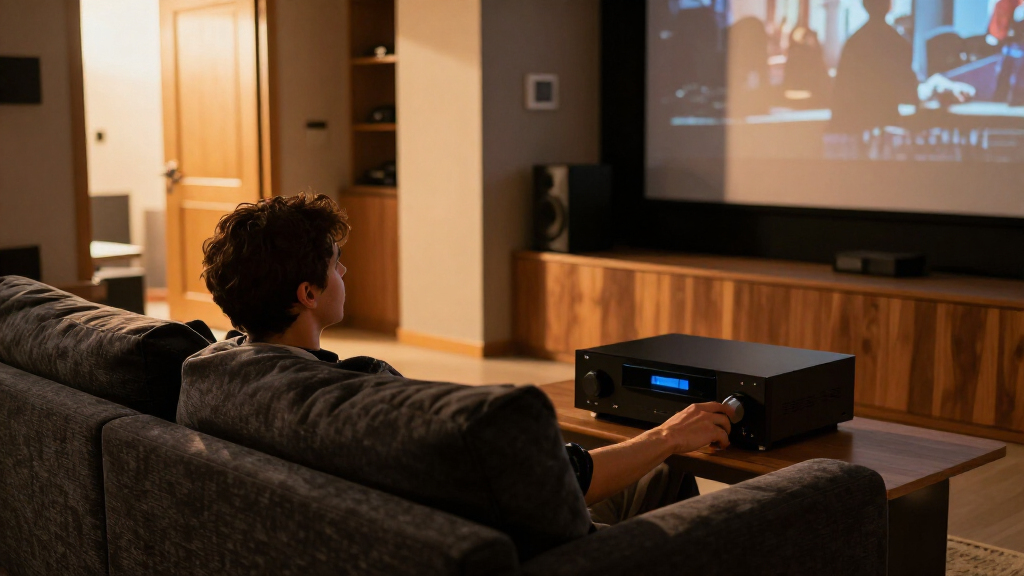
I evaluated these home theater AV receivers based on three core pillars: connectivity standards, processing power, and usability. First, I assessed whether each unit supports current HDMI 2.1 features like 8K/60 and 4K/120, which are necessary for PlayStation 5 and Xbox Series X owners. Second, I looked at channel configuration and power output, noting that many entry-level receivers advertise high wattage at low impedance, which is misleading for real-world listening. Third, I considered the ease of setup, specifically how effective the automatic room calibration systems are for non-audiophiles. The ranking prioritizes long-term value; a receiver with better processing and connectivity today will remain useful longer than a cheaper unit that lacks these standards.
Factors to Consider When Choosing Home Theater AV Receivers
Selecting a receiver is not just about matching the number of speakers you own today; it is about anticipating your needs for the next five years. This guide helps you navigate the technical jargon to find a unit that fits your specific lifestyle.Channel Count and Future-Proofing
Many buyers make the mistake of buying a receiver with exactly the number of channels their current speakers require, such as a 5.2-channel unit for a 5.1 setup. This limits your ability to add height channels for Dolby Atmos or a second zone later without replacing the entire receiver. A 7.2-channel receiver like the Denon AVR-X1800H offers two extra channels that can be used for Atmos or bi-amping front speakers, providing greater flexibility. If you plan to expand your system, the initial higher cost of a 7.2 or 9.2 unit is offset by the longevity it provides. Conversely, if you are certain your setup will remain 5.1 forever, a 5.2-channel unit saves space and money without sacrificing core audio performance.
Power Output and Real-World Listening
Manufacturer wattage ratings are often measured at 6 ohms with one channel driven, which inflates the numbers compared to real-world conditions where all channels are active. A receiver rated at 75 watts per channel into 8 ohms is more reliable for dynamic movie scenes than one rated at 100 watts into 6 ohms. For larger rooms or less efficient speakers, look for units with higher current delivery, such as the Onkyo TX-NR6100, which is designed to handle demanding loads. In smaller apartments, a lower-power receiver like the Yamaha RX-V385 is sufficient and generates less heat. Do not chase the highest wattage number; instead, match the power output to your room size and speaker sensitivity.
HDMI Standards and Gaming Features
If you use a modern gaming console, HDMI 2.1 support is non-negotiable. Features like Variable Refresh Rate (VRR) and Auto Low Latency Mode (ALLM) eliminate screen tearing and input lag, which are critical for competitive gaming. Older receivers with HDMI 2.0b ports cannot pass 4K content at 120Hz, forcing you to connect consoles directly to the TV and bypassing the receiver’s audio processing. Units like the Denon AVR-S770H and Yamaha RX500A include these modern ports, ensuring compatibility with current and future displays. If you primarily watch movies and do not game, HDMI 2.0b units may still offer good value, but you risk obsolescence as new devices adopt 2.1 standards.
Room Correction and Calibration
Automatic room correction systems are the most impactful feature in modern receivers, as they compensate for acoustic issues like standing waves and reflections. Audyssey MultEQ found in Denon units and YPAO in Yamaha receivers use a microphone to measure the room and adjust frequency response and timing. This process can dramatically improve dialogue clarity and bass integration, often making a budget receiver sound better than a high-end one with poor calibration. Some premium models offer advanced manual controls for fine-tuning, but the automatic systems are usually sufficient for most users. Skipping this step during setup is the most common mistake, leaving significant performance potential untapped.
Streaming and Smart Home Integration
Modern receivers act as the hub for your digital lifestyle, integrating streaming services like Spotify, Tidal, and Apple Music directly into the interface. Built-in Wi-Fi and Bluetooth allow you to control the receiver via smartphone apps, which are often more intuitive than the included remote. Units with HEOS or MusicCast ecosystems enable multi-room audio, letting you play different music in different parts of your house. If you rely heavily on voice assistants, check for native integration with Alexa, Google Assistant, or Siri. A receiver without robust app support feels dated quickly, as physical remotes are rarely used for streaming tasks anymore.
Build Quality and Thermal Management
Receivers generate significant heat, especially when driving multiple channels at high volumes. Cheaper models often use lighter heatsinks and smaller power supplies, which can lead to thermal throttling or shutdowns during extended movie watching. Premium units like the Denon AVR-X4800H feature larger transformers and better ventilation, ensuring consistent performance over long listening sessions. Check the rear panel layout; a crowded set of ports can make cable management difficult and restrict airflow if the unit is placed in an enclosed cabinet. Investing in a unit with robust construction protects your investment and ensures reliable operation for years.
Frequently Asked Questions
Do I need an 8K-capable receiver if I only watch 4K content?
While you may not watch 8K content today, 8K-capable receivers like the Denon AVR-S670H use the latest HDMI 2.1 hardware, which supports 4K/120Hz and other gaming features. An 8K label is often a proxy for having the newest processing chips and connectivity standards. If you buy an older 4K-only receiver, you might miss out on features like 8K upscaling or future-proof bandwidth. However, if you have no interest in gaming or upgrading your TV soon, a high-quality 4K receiver can still provide excellent performance at a lower cost.
Is it better to buy a 5.2-channel or 7.2-channel receiver?
A 7.2-channel receiver is almost always the better long-term investment, even if you currently only own 5.1 speakers. The extra two channels provide headroom for adding Dolby Atmos height speakers or a second zone of speakers without replacing the unit. Additionally, 7.2-channel models often have more powerful power supplies and better processing capabilities than their 5.2-channel counterparts. The price difference is usually minimal, making the 7.2-channel option a safer bet for future-proofing your home theater setup.
How much power do I actually need for my home theater?
For most living rooms under 400 square feet, 50-70 watts per channel is sufficient for dynamic movie audio and music. You only need higher wattage if you have a very large room, highly inefficient speakers, or if you listen at extremely high volumes. Overpowering speakers is less of a risk than underpowering them, which can cause clipping and damage tweeters. Focus on matching the receiver’s impedance rating to your speakers rather than chasing the highest wattage number.
Can I connect a record player to any AV receiver?
Not all receivers have a dedicated Phono input for turntables. If your receiver lacks this input, you will need a separate phono preamplifier to boost the turntable’s signal to line level. Some modern units, like the Yamaha RX-V385, include a built-in phono stage, making them convenient for vinyl enthusiasts. Always check the rear panel for a Phono port before purchasing if you plan to connect a turntable directly to the receiver.
Does Bluetooth quality matter for home theater use?
Standard Bluetooth compression can degrade audio quality, making it noticeable for music but less critical for movies and TV. If you primarily stream music, look for receivers that support aptX HD or LDAC codecs for higher fidelity. For casual background music, standard Bluetooth is acceptable. However, for critical listening, Wi-Fi streaming via apps like Spotify Connect or AirPlay 2 is vastly superior to Bluetooth in terms of stability and sound quality.
Conclusion
Choosing the right home theater AV receivers depends on your specific priorities, whether that is future-proof connectivity, budget-friendly performance, or advanced gaming features. For the best overall balance of power, processing, and connectivity, the Denon AVR-X4800H is the top choice for serious enthusiasts. If you are new to home theater and want a simple, reliable start, the Yamaha RX-V385 offers excellent value and ease of use. Gamers should prioritize the Denon AVR-S770H or Yamaha RX500A for their full HDMI 2.1 support and low-latency features. Finally, for those seeking premium build quality and multi-room capabilities, the Onkyo TX-NR6100 provides a robust and versatile option. Match the receiver to your current speakers, but buy for the setup you want to have in five years.