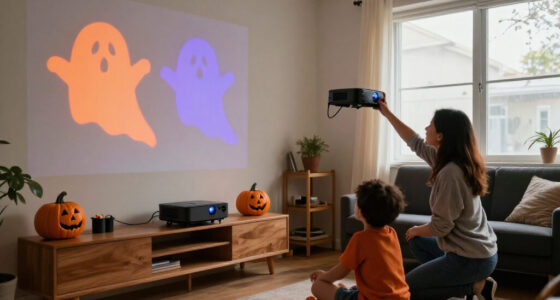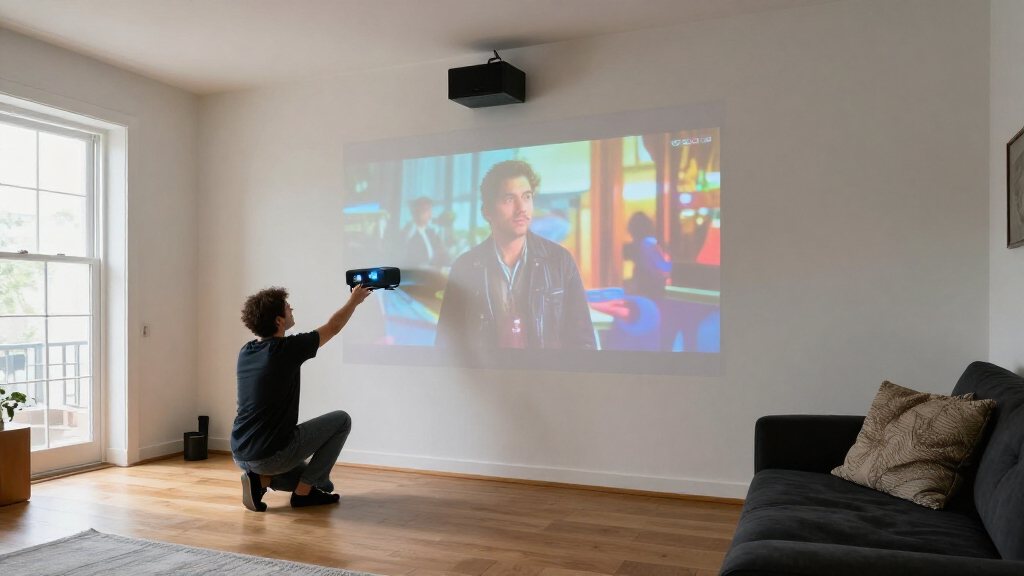
4K laser projectors range from ultra short throw home-theater models to gaming-focused and portable designs, so the best choice depends on your room and screen setup. I rank the Hisense PX3-PRO as the best overall for its triple-laser ultra short throw approach, while the ViewSonic LX700-4K stands out for gaming and the Epson LS800 for bright-room ultra short throw viewing. The main tradeoffs are placement flexibility, light output, color performance, gaming responsiveness, and the extra room planning some models need. A projector labeled 4K may also use different methods to deliver a 4K image, so resolution claims should be read alongside the rest of the feature set. Read on for the full breakdown and guidance on matching a projector to your space.

Get business pricing on your home office setup
- Business-only prices and quantity discounts
- Tax-exempt purchasing
- Multiple users, one account, clear invoices
Complete the kit


Key Takeaways
- The Hisense PX3-PRO earns the overall lead because it pairs a triple-laser design with an ultra short throw format, a strong fit for buyers who want a large image without ceiling mounting.
- The lineup splits by placement more than by resolution. Ultra short throw models such as the Epson LS800 and AWOL VISION LTV-3000 Pro sit close to the screen, while standard and short-throw options need more distance planning.
- Gaming choices are distinct from theater-first picks. The ViewSonic LX700-4K, BenQ TK710, and BenQ TK710STi put gaming use near the center of their appeal, with the short-throw TK710STi better suited to tighter rooms.
- Triple-laser models emphasize color and flexible viewing formats, but they are not automatically the best fit for every buyer; placement, room light, and intended use still matter.
- Portable models involve a different set of compromises. The Hisense M2 Pro and XGIMI Elfin Flip trade the fixed-room focus of larger projectors for easier relocation, making setup needs and screen expectations especially important.
| Hisense PX3-PRO 4K Ultra Short Throw Triple Laser Projector |  | Best Overall Ultra Short Throw | Native resolution: 3840 × 2160 | Projection size: 80–150 inches | Brightness: 3,000 lumens | VIEW LATEST PRICE | See Our Full Breakdown |
| ViewSonic LX700-4K 4K UHD Laser Gaming Projector |  | Best for High-Refresh Gaming | Native resolution: 3840 × 2160 | Brightness: 3,500 ANSI lumens | Maximum refresh rate: 240Hz | VIEW LATEST PRICE | See Our Full Breakdown |
| JMGO N1S 4K Triple Laser Projector |  | Best Portable Triple-Laser Pick | Resolution: 3840 × 2160 | Display type: DLP | Brightness: 1,700 ISO lumens | VIEW LATEST PRICE | See Our Full Breakdown |
| ViewSonic LS901-4K 4K UHD Laser Projector |  | Best for Bright, Large Rooms | Native resolution: 3840 × 2160 | Brightness: 5,500 ANSI lumens | Refresh rate: 240Hz | VIEW LATEST PRICE | See Our Full Breakdown |
| AWOL VISION LTV-3000 Pro 4K 3D Ultra Short Throw Triple Laser Projector |  | Best for 3D UST Home Theater | Native resolution: 3840 × 2160 | Image size: 80–150 inches | Throw ratio: 0.25:1 | VIEW LATEST PRICE | See Our Full Breakdown |
| Epson EpiqVision Ultra LS800 4K PRO-UHD Ultra Short Throw Laser Projector |  | Best for Bright Rooms | Resolution: 4K PRO-UHD (3840 x 2160) | Brightness: 4,000 lumens | Display technology: 3-chip 3LCD | VIEW LATEST PRICE | See Our Full Breakdown |
| BenQ TK710 4K HDR Laser Home Entertainment and Gaming Projector |  | Best for Competitive Gaming | Native resolution: 3840 × 2160 | Brightness: 3,200 ANSI lumens | Refresh rate: Up to 240 Hz at 1080p | VIEW LATEST PRICE | See Our Full Breakdown |
| Optoma UHZ36 4K UHD Laser HDR Home Theater Projector |  | Best for Large-Screen Flexibility | Native resolution: 3840 × 2160 | Display type: DLP | Brightness: 3,500 lumens | VIEW LATEST PRICE | See Our Full Breakdown |
| Hisense M2 Pro Triple Laser Portable 4K UHD Projector |  | Best Portable Smart Projector | Resolution: 3840 x 2160 (4K UHD) | Brightness: 1,300 ANSI lumens | Light source: Triple laser | VIEW LATEST PRICE | See Our Full Breakdown |
| XGIMI HORIZON 20 4K RGB Triple Laser Home Projector |  | Best All-in-One Gaming and Streaming Pick | Native resolution: 3840 x 2160 | Display technology: RGB triple laser | Brightness: 3,200 ISO lumens | VIEW LATEST PRICE | See Our Full Breakdown |
| XGIMI Elfin Flip 4K Portable Projector |  | Best Portable 4K Laser Pick | Native resolution: 3840 × 2160 | Display type: DLP | Light source: RGB triple laser | VIEW LATEST PRICE | See Our Full Breakdown |
| ViewSonic LS740-4K 4K UHD Laser Projector |  | Best for Bright Rooms and Golf Simulators | Resolution: 3840 × 2160 (4K UHD) | Brightness: 5,000 ANSI lumens | Light source: Laser phosphor | VIEW LATEST PRICE | See Our Full Breakdown |
| AWOL Aetherion Pro 4K Ultra Short Throw Triple Laser Projector |  | Best for Large-Screen UST Gaming | Native resolution: 3840 × 2160 | Display type: Laser | Brightness: Listed as 2,600 ISO lumens; product information also lists 3,000 lumens | VIEW LATEST PRICE | See Our Full Breakdown |
| BenQ TK710STi 4K HDR Short-Throw Laser Projector | 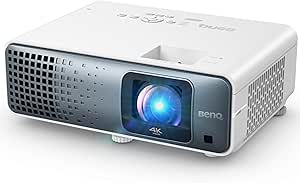 | Best Short-Throw Gaming Pick | Native resolution: 3840 × 2160 | Brightness: 3,200 ANSI lumens | Color coverage: 95% Rec.709 | VIEW LATEST PRICE | See Our Full Breakdown |
| 4K laser projector | Brightness | Native resolution |
|---|---|---|
| Hisense PX3-PRO 4K Ultra Short | 3,000 lumens | 3840 × 2160 |
| ViewSonic LX700-4K 4K UHD Lase | 3,500 ANSI lumens | 3840 × 2160 |
| JMGO N1S 4K Triple Laser Proje | 1,700 ISO lumens | — |
| ViewSonic LS901-4K 4K UHD Lase | 5,500 ANSI lumens | 3840 × 2160 |
| AWOL VISION LTV-3000 Pro 4K 3D | 2,000 lumens; maximum white brightness listed as 3,000 ANSI lumens | 3840 × 2160 |
| Epson EpiqVision Ultra LS800 4 | 4,000 lumens | — |
| BenQ TK710 4K HDR Laser Home E | 3,200 ANSI lumens | 3840 × 2160 |
| Optoma UHZ36 4K UHD Laser HDR | 3,500 lumens | 3840 × 2160 |
| Hisense M2 Pro Triple Laser Po | 1,300 ANSI lumens | — |
| XGIMI HORIZON 20 4K RGB Triple | 3,200 ISO lumens | 3840 x 2160 |
| XGIMI Elfin Flip 4K Portable P | 1,600 ISO lumens | 3840 × 2160 |
| ViewSonic LS740-4K 4K UHD Lase | 5,000 ANSI lumens | — |
| AWOL Aetherion Pro 4K Ultra Sh | Listed as 2,600 ISO lumens; product information also lists 3,000 lumens | 3840 × 2160 |
| BenQ TK710STi 4K HDR Short-Thr | 3,200 ANSI lumens | 3840 × 2160 |
More Details on Our Top Picks
Hisense PX3-PRO 4K Ultra Short Throw Triple Laser Projector
I’d put the Hisense PX3-PRO first for buyers who want a fixed home-theater setup without a ceiling-mounted projector. Its native 4K resolution, triple-laser color, and support for Dolby Vision and IMAX Enhanced make it the most cinema-focused UST choice here; Google TV also keeps streaming straightforward. Compared with the AWOL VISION LTV-3000 Pro, it offers a wider stated color gamut and higher color accuracy, while both target large images from a position close to the wall. The tradeoff is that 3,000 lumens and a large projected image still call for a suitable screen or controlled lighting, and the supplied throw-distance figures are confusing. I’d choose the ViewSonic LX700-4K instead for high-refresh gaming flexibility rather than a living-room UST layout.
Pros:- Native 4K resolution with AI upscaling for lower-resolution sources.
- Triple-laser system covers a stated 110% of BT.2020 with high color accuracy.
- Ultra short throw design supports 80–150-inch images without a ceiling mount.
- Includes Google TV, Dolby Vision, IMAX Enhanced, and Dolby Atmos support.
Cons:- Large images need a suitable wall or screen and careful room setup.
- The listed minimum and maximum throw distances are confusing.
- Its 3,000-lumen rating is less suited to bright rooms than the ViewSonic LS901-4K.
Best for: Home-theater buyers who want a large 80–150-inch image from a short wall-to-projector distance, plus built-in streaming and premium HDR formats.
Not ideal for: Buyers who need a portable projector, frequently rearrange their room, or want a clearly specified placement distance before installation.
- Native resolution:3840 × 2160
- Projection size:80–150 inches
- Brightness:3,000 lumens
- Contrast ratio:3,000:1
- Color gamut:110% BT.2020
- Light source life:25,000 hours
- Audio:Harman Kardon speakers; Dolby Atmos
- Connectivity:Bluetooth 5, Ethernet, HDMI, USB 3.0, Wi-Fi
Our verdict“Choose the PX3-PRO for a feature-rich, large-screen UST theater, but skip it if room placement or bright-room viewing is your priority.”
ViewSonic LX700-4K 4K UHD Laser Gaming Projector
The ViewSonic LX700-4K is the clearest gaming pick in this group: its support for up to 240Hz and a stated 4.2ms input lag suits players who value responsiveness over built-in streaming or triple-laser color. It also gives buyers optical zoom, lens shift, and corner adjustment, which make image placement more flexible than the fixed-ratio AWOL VISION LTV-3000 Pro. The large-image capability is appealing for a dedicated gaming room, though a 300-inch maximum should not be mistaken for a guarantee of equally bright or detailed viewing at every size. Its listing also has conflicting specifications, so I’d verify the exact brightness and light-source details before buying. Compared with the LS901-4K, this is the more focused gaming choice, while the LS901 is substantially brighter for large spaces.
Pros:- Supports refresh rates up to 240Hz and a stated 4.2ms input lag.
- Native 4K UHD resolution for detailed game images.
- Optical zoom, lens shift, keystone correction, and four-corner adjustment aid setup.
- Can project images up to 300 inches.
Cons:- Listing specifications differ on some details, including brightness and light-source lifespan.
- The supplied connectivity list is limited to HDMI, USB, and a 3.5mm audio jack.
- Less bright than the ViewSonic LS901-4K for large or well-lit spaces.
Best for: Console and PC gamers setting up a dedicated room who want high refresh rates, low stated input lag, and flexible installation.
Not ideal for: Buyers seeking an all-in-one streaming projector, triple-laser wide-gamut color, or a clearly consistent specification sheet.
- Native resolution:3840 × 2160
- Brightness:3,500 ANSI lumens
- Maximum refresh rate:240Hz
- Input lag:4.2ms
- Maximum image size:300 inches
- Optical zoom:1.3×
- Light source:Laser
- Mounting:Tabletop or ceiling mount
Our verdict“Pick the LX700-4K for responsive big-screen gaming and installation flexibility, provided you confirm its specifications before purchase.”
JMGO N1S 4K Triple Laser Projector
The JMGO N1S makes the most sense for buyers who want triple-laser color without committing to a permanent theater installation. At 4.4 pounds, with a 127-degree adjustable gimbal, autofocus, and auto keystone correction, it is easier to point at different walls or take between rooms than the larger, fixed-use Hisense PX3-PRO. Google TV and licensed Netflix also reduce the need for an external streaming device. The compromise is brightness: its 1,700 ISO lumens are a weaker fit for daytime viewing than the ViewSonic LX700-4K’s stated 3,500 ANSI lumens. Its stated 17ms latency is suitable for casual play, but the LX700-4K is the more compelling choice for competitive gaming. I’d treat this as a flexible entertainment projector, not a bright-room substitute for a dedicated installation.
Pros:- RGB triple-laser color with stated coverage of 110% BT.2020 and 151% DCI-P3.
- Lightweight 4.4-pound design with a 127-degree adjustable gimbal.
- Google TV includes licensed Netflix.
- Autofocus and auto keystone correction simplify repositioning.
Cons:- At 1,700 ISO lumens, it is less suited to bright rooms than the ViewSonic LX700-4K.
- Its 17ms latency is higher than the LX700-4K’s stated 4.2ms input lag.
- Active 3D glasses are required for 3D viewing.
Best for: People who want to move a 4K projector between rooms or take it along, while keeping streaming apps and setup assistance built in.
Not ideal for: Daytime viewers, competitive gamers prioritizing the lowest stated latency, or anyone who needs an ultra-short-throw installation.
- Resolution:3840 × 2160
- Display type:DLP
- Brightness:1,700 ISO lumens
- Color technology:MALC 3.0 RGB triple laser
- HDR:HDR10
- Maximum image size:200 inches
- Throw distance:1–5 meters
- Weight:4.4 pounds
- Latency:17ms
Our verdict“Choose the JMGO N1S for portable, app-ready triple-laser viewing, not for bright-room projection or competitive gaming.”
ViewSonic LS901-4K 4K UHD Laser Projector
With 5,500 ANSI lumens, the ViewSonic LS901-4K is the strongest fit here for a large room, golf simulator, or venue where a less powerful projector could struggle to keep an image visible. Its 1.7× optical zoom, lens shift, keystone adjustment, and 360-degree projection give installers more placement options than the ViewSonic LX700-4K. Both models target fast gaming, with a stated 240Hz refresh rate and 4.2ms input lag, but the LS901-4K adds much higher listed brightness and a 21:9 aspect ratio. That flexibility comes with a more involved installation: it is a ceiling-mount-oriented unit, and the supplied information conflicts on its maximum image size. I’d favor it for scale and room brightness, not for shoppers seeking a compact or simple living-room setup.
Pros:- 5,500 ANSI lumens suit larger spaces better than the other projectors in this batch.
- Supports 240Hz refresh rates and a stated 4.2ms input lag.
- 1.7× optical zoom, lens shift, keystone adjustment, and 360-degree projection offer installation flexibility.
- Includes a golf simulation mode and a 21:9 aspect ratio.
Cons:- Ceiling-mount installation and adjustment may be complex for a casual setup.
- The supplied maximum image-size figures conflict between 150 and 300 inches.
- Its large-room focus makes it a less natural fit for buyers seeking a portable projector like the JMGO N1S.
Best for: Golf-simulator owners and buyers outfitting large rooms or venues who need high brightness, broad placement adjustment, and fast refresh support.
Not ideal for: Small-room users, renters who cannot ceiling mount, or buyers who need unambiguous image-size specifications before installation.
- Native resolution:3840 × 2160
- Brightness:5,500 ANSI lumens
- Refresh rate:240Hz
- Input lag:4.2ms
- Aspect ratio:21:9
- Optical zoom:1.7×
- Maximum image size:300 inches listed; product description also states 150 inches
- Light source life:20,000 hours
Our verdict“Choose the LS901-4K when brightness and installation flexibility matter more than compact size or a straightforward setup.”
AWOL VISION LTV-3000 Pro 4K 3D Ultra Short Throw Triple Laser Projector
The AWOL VISION LTV-3000 Pro is the specialist pick for buyers building a short-throw theater around 3D playback, Dolby Vision, and HDR10+. Its built-in center-channel speaker gives dialogue a dedicated place in the setup, a useful distinction from the Hisense PX3-PRO, which instead lists Harman Kardon speakers and a broader set of built-in smart features. Both are triple-laser UST models for 80–150-inch images, but the Hisense has the stronger stated color gamut and color-accuracy figures; the AWOL’s appeal is its 3D support and center-channel design. At 2,000 lumens, it is better suited to darker rooms, and its fixed 0.25:1 throw ratio leaves little room to adjust placement. I’d plan the screen position carefully and consider an ALR screen if the room has ambient light.
Pros:- Supports 3D, Dolby Vision, and HDR10+.
- Triple-laser color covers a stated 107% of BT.2020 and 147% of DCI-P3.
- Built-in center-channel speaker is designed to clarify dialogue.
- UST design supports 80–150-inch images.
Cons:- Works best in darker rooms; brighter spaces may need an ALR screen.
- Fixed 0.25:1 throw ratio demands careful projector and screen placement.
- Its listed color gamut is narrower than the Hisense PX3-PRO’s stated 110% BT.2020.
Best for: Home-theater owners who want a triple-laser UST projector with 3D playback, premium HDR formats, and a built-in center-channel speaker.
Not ideal for: Viewers using the projector in bright rooms without an ALR screen, or people who need flexible placement or extensive listed connectivity.
- Native resolution:3840 × 2160
- Image size:80–150 inches
- Throw ratio:0.25:1
- Brightness:2,000 lumens; maximum white brightness listed as 3,000 ANSI lumens
- Contrast ratio:2,500:1
- Light source life:25,000 hours
- Color gamut:107% BT.2020; 147% DCI-P3
- Supported features:3D, Dolby Vision, HDR10+, Dolby Atmos
Our verdict“Pick the LTV-3000 Pro for a carefully planned dark-room UST theater centered on 3D and HDR, not for flexible placement or bright-room use.”
Epson EpiqVision Ultra LS800 4K PRO-UHD Ultra Short Throw Laser Projector
The Epson LS800 is the strongest fit here for a living room where blinds stay open or a ceiling-mounted projector would be impractical. Its 4,000 lumens and ultra-short-throw design put a large image close to the wall, so the projector can sit on a low cabinet rather than occupy the back of the room. Compared with the Hisense M2 Pro, it is much better suited to ambient light, though the Hisense offers a more flexible portable setup and Dolby Vision support. The Epson’s 4K PRO-UHD uses pixel shifting, not a native 4K panel, and bright-room performance benefits from an optional ambient-light-rejecting screen. Its 80-to-150-inch image range also makes it less suited to buyers seeking the largest picture in this group.
Pros:- 4,000 lumens suit rooms with more ambient light than the Hisense M2 Pro can comfortably handle.
- Ultra-short throw placement avoids ceiling mounting and long cable runs.
- Projects images from 80 to 150 inches.
- 3-chip 3LCD display and 10-bit HDR support.
Cons:- 4K PRO-UHD is pixel-shifted rather than native 4K.
- An ambient-light-rejecting screen is recommended for stronger performance in bright rooms.
- Its 150-inch maximum is smaller than the 300-inch claims for the Optoma UHZ36 and XGIMI HORIZON 20.
Best for: Living-room viewers who want a large, bright picture from a projector placed just inches from the wall.
Not ideal for: Buyers who need native 4K imaging, a 200-inch-plus picture, or a bright-room setup without budgeting for a suitable screen.
- Resolution:4K PRO-UHD (3840 x 2160)
- Brightness:4,000 lumens
- Display technology:3-chip 3LCD
- Light source:Laser
- Light source life:20,000 hours
- Throw distance:0.9–2 feet
- Image size:80–150 inches
- Connectivity:HDMI, USB, Wi-Fi, Bluetooth
Our verdict“Choose the LS800 if bright-room viewing and near-wall placement matter more than native 4K or a very large maximum image.”
BenQ TK710 4K HDR Laser Home Entertainment and Gaming Projector
The BenQ TK710 gives gaming a clearer priority than the room-filling flexibility of the Optoma UHZ36. Its headline advantage is 1080p at 240 Hz with a 4 ms response time, a combination aimed at fast play where motion response matters more than maximum resolution. It still supplies native 4K resolution for films and slower-paced games, and its 3,200 ANSI lumens make it a brighter option than the Hisense M2 Pro for rooms that are not fully dark. The tradeoffs are a conventional 8.4-to-16.3-foot throw range and sparse connectivity details: HDMI is the only listed connection. At 4K/60 Hz, listed input lag is 16 ms, so the fastest performance applies to 1080p rather than every gaming mode.
Pros:- Supports 1080p at 240 Hz with a listed 4 ms response time.
- Native 3840 × 2160 resolution for 4K content.
- 3,200 ANSI lumens offer more brightness than the Hisense M2 Pro.
- Laser light source is rated for 20,000 hours.
Cons:- The fastest listed refresh and response figures apply to 1080p, not 4K.
- Only HDMI is specified in the connectivity details.
- Its 8.4-to-16.3-foot throw distance requires more placement depth than an ultra-short-throw model.
Best for: Console and PC players with space for a standard-throw setup who prioritize high-refresh 1080p play alongside 4K viewing.
Not ideal for: Buyers seeking ultra-short-throw placement, extensive documented connections, or 240 Hz gaming at 4K.
- Native resolution:3840 × 2160
- Brightness:3,200 ANSI lumens
- Refresh rate:Up to 240 Hz at 1080p
- Response time:4 ms at 1080p
- Input lag:16 ms at 4K/60 Hz
- Throw distance:8.4–16.3 feet
- Maximum image size:144 inches
- HDR formats:HDR10, HLG
Our verdict“Pick the TK710 if high-refresh 1080p gaming is your priority and your room can accommodate a standard-throw projector.”
Optoma UHZ36 4K UHD Laser HDR Home Theater Projector
The Optoma UHZ36 stands out for its unusually broad stated throw range and 300-inch maximum image, making it the choice here for buyers planning a large dedicated viewing space. At 3,500 lumens, it also sits between the brighter Epson LS800 and the lower-output Hisense M2 Pro, though those figures come from different product descriptions and should not be treated as a direct lab comparison. Filmmaker Mode preserves the intended frame rate, color, and aspect ratio, while MEMC motion smoothing offers a separate option for viewers who prefer smoother movement. Unlike the BenQ TK710, the UHZ36 lists HDMI, USB, and RCA connections and a 15W speaker. The costs of that reach are its 10.4-pound body and a limited one-year warranty, including light-source coverage for one year or 20,000 hours.
Pros:- Listed image size reaches 300 inches, exceeding the Epson LS800’s 150-inch maximum.
- 3,500-lumen output and HDR support suit a range of home viewing setups.
- Filmmaker Mode provides a presentation option that preserves source framing and frame rate.
- HDMI, USB, RCA, and a 15W speaker are listed.
Cons:- At 10.4 pounds, it is heavier than the 8-pound BenQ TK710.
- Warranty coverage is limited to one year, with light-source coverage capped at one year or 20,000 hours.
- Its large maximum image size requires a suitable room and screen; it is not a compact, near-wall solution.
Best for: Home theater owners with room to place a standard-throw projector and a screen larger than the 150-inch ceiling of the Epson LS800.
Not ideal for: Buyers needing a lightweight portable unit, an ultra-short-throw design, or longer stated warranty coverage.
- Native resolution:3840 × 2160
- Display type:DLP
- Brightness:3,500 lumens
- Contrast ratio:1,500,000:1
- Light source life:Up to 30,000 hours
- Maximum image size:300 inches
- Throw distance:3.19–34.6 feet
- Speaker:15W
Our verdict“Choose the UHZ36 if a flexible throw range and very large screen matter more than portability or longer warranty coverage.”
Hisense M2 Pro Triple Laser Portable 4K UHD Projector
The Hisense M2 Pro is the most travel- and setup-friendly pick in this group, trading the brightness of the Epson LS800 for portable placement and built-in streaming. Its 1,300 ANSI lumens are best matched to a dim room, so it is a weaker choice for daytime viewing than the Epson or the 3,500-lumen Optoma UHZ36. In return, the triple-laser light source, optical zoom, and automatic picture adjustments make it easier to adapt the image to different rooms without committing to one fixed throw position. Dolby Vision support and VIDAA apps, including Netflix, also reduce the need for a separate streaming device. Its 60-to-200-inch range is broad, but large images will be harder to use well in anything but controlled lighting; active 3D also requires separately purchased DLP-Link glasses.
Pros:- Portable design with tabletop, ceiling, and rear mounting options.
- Triple-laser light source and native 4K UHD resolution.
- Optical zoom and automatic picture adjustments help with flexible placement.
- VIDAA includes streaming apps such as Netflix, with Dolby Vision support.
Cons:- 1,300 ANSI lumens are better suited to low-light rooms than the Epson LS800 or Optoma UHZ36.
- Active 3D requires separately purchased DLP-Link shutter glasses.
- A 200-inch picture may be difficult to use well at this brightness outside a dark room.
Best for: Movie fans who move a projector between rooms or take it on trips and usually watch in low-light settings.
Not ideal for: Daytime living-room viewers who need high brightness, or buyers who want active 3D without purchasing separate glasses.
- Resolution:3840 x 2160 (4K UHD)
- Brightness:1,300 ANSI lumens
- Light source:Triple laser
- Image size:60–200 inches
- Optical zoom ratio:1.0–1.3:1
- Light source life:25,000 hours
- Operating system:VIDAA
- Connectivity:Wi-Fi, Bluetooth 5, HDMI, USB 3.0
Our verdict“Choose the M2 Pro if you want portable 4K streaming flexibility and can control the room lighting.”
XGIMI HORIZON 20 4K RGB Triple Laser Home Projector
The XGIMI HORIZON 20 combines gaming features, streaming, and built-in audio more fully than the BenQ TK710, which is the more focused pick for 240 Hz 1080p gaming. XGIMI lists 240 Hz, 1 ms response, VRR, and ALLM, plus Google TV and Harman Kardon speakers, so a separate streaming box and basic sound system may be unnecessary. Its RGB triple-laser display supports native 4K and formats including Dolby Vision and HDR10+. The 3,200 ISO-lumen figure and 100,000:1 contrast ratio are listed specifications, but the brightness unit differs from the ANSI-lumen figures on the BenQ and Hisense, so they do not provide a clean direct comparison. A 300-inch maximum image offers room to scale up, while the 5.31-meter maximum throw and listed 220–240 V voltage may limit fit in some homes.
Pros:- Native 4K RGB triple-laser display with Dolby Vision, HDR10+, and IMAX Enhanced support.
- 240 Hz, 1 ms response, VRR, and ALLM are listed for gaming.
- Google TV and Harman Kardon speakers reduce the need for separate streaming and audio equipment.
- Image size ranges from 40 to 300 inches, with optical zoom and lens shift.
Cons:- The maximum 5.31-meter throw distance may not suit smaller rooms.
- The listed 220–240 V voltage may not match every home’s power supply.
- Its 3,200 ISO-lumen rating is not directly comparable with the ANSI-lumen figures listed for other models.
Best for: Gamers and movie watchers who want one 4K projector with integrated Google TV, built-in speakers, and advanced gaming modes.
Not ideal for: Buyers with a small room that cannot accommodate its throw distance, or homes whose power setup does not match the listed 220–240 V voltage.
- Native resolution:3840 x 2160
- Display technology:RGB triple laser
- Brightness:3,200 ISO lumens
- Contrast ratio:100,000:1
- Maximum image size:300 inches
- Throw distance:1.06–5.31 meters
- Gaming:Up to 240 Hz, 1 ms response, VRR, and ALLM
- Built-in features:Google TV, Harman Kardon speakers
- Listed voltage:220–240 V
Our verdict“Pick the HORIZON 20 if you want a feature-rich 4K gaming and streaming hub and have room for its throw distance.”
XGIMI Elfin Flip 4K Portable Projector
The XGIMI Elfin Flip is the most self-contained choice here for buyers who want 4K laser projection without building a fixed theater setup. Its RGB triple-laser source pairs with Google TV and dual Harman Kardon speakers, so casual viewing needs fewer add-ons than the installation-focused ViewSonic LS740-4K. The 0.98–1.3:1 optical zoom gives more placement flexibility than digital resizing, while VRR, ALLM, and a stated 1 ms latency make it more gaming-ready than many portable projectors. The tradeoff is brightness: 1,600 ISO lumens is a weaker fit for rooms with substantial ambient light than the LS740-4K’s 5,000 ANSI lumens. The supplied data also gives no weight or battery-life figure, so I would treat it as portable in setup rather than assume battery-powered use.
Pros:- 4K resolution with an RGB triple-laser light source
- Google TV and dual Harman Kardon speakers reduce the need for separate streaming and audio gear
- Optical zoom adjusts framing without digital scaling
- VRR, ALLM, and stated 1 ms latency support responsive gaming
Cons:- 1,600 ISO lumens is less suited to bright rooms than the ViewSonic LS740-4K
- Weight and battery life are not specified, limiting confidence about travel use
- The listed 240-volt specification may not suit every region
Best for: Viewers who want a tabletop 4K laser projector with streaming, built-in sound, optical zoom, and gaming features in one unit
Not ideal for: Buyers who need bright daytime projection, confirmed battery-powered portability, or a projector for a permanently installed large venue
- Native resolution:3840 × 2160
- Display type:DLP
- Light source:RGB triple laser
- Brightness:1,600 ISO lumens
- Dynamic contrast ratio:20,000:1
- Optical zoom:0.98–1.3:1
- Image size:40–200 inches
- Audio and streaming:Dual Harman Kardon speakers; Google TV
- Gaming features:VRR, ALLM, stated 1 ms latency
Our verdict“Choose the Elfin Flip if you want a flexible tabletop 4K laser setup with streaming and gaming features, but skip it for bright-room projection or confirmed battery-powered use.”
ViewSonic LS740-4K 4K UHD Laser Projector
The ViewSonic LS740-4K earns its place through 5,000 ANSI lumens, a major advantage when a room cannot be fully darkened. That makes it a different kind of 4K laser pick from the XGIMI Elfin Flip: the XGIMI prioritizes compact, all-in-one entertainment, while this ViewSonic is better suited to a bright multipurpose room or a dedicated golf simulator. Its Golf Mode, 1.6x optical zoom, and 360-degree projection support flexible simulator layouts and installation angles. The sealed IP6X optical engine also helps protect against dust, with a stated light-source life of 20,000–30,000 hours. The compromise is a larger installation footprint and less emphasis on built-in home-entertainment convenience; its listed connections are relatively limited, and the supplied information does not list smart TV features or built-in speakers.
Pros:- 5,000 ANSI lumens support clearer viewing in rooms with ambient light
- Dedicated Golf Mode is tailored to simulator use
- 1.6x optical zoom and 360-degree projection allow flexible installation
- IP6X-rated sealed optical engine and stated 20,000–30,000-hour light-source life
Cons:- Large form factor can complicate installation in smaller spaces
- The supplied connectivity list is limited to HDMI, USB 2.0 Type A, and 3.5 mm audio
- Built-in streaming and speaker features are not specified, unlike the XGIMI Elfin Flip
Best for: Golf simulator owners and organizations projecting 4K images in bright rooms that need flexible mounting
Not ideal for: Small-room movie viewers looking for a compact all-in-one projector with integrated streaming and sound
- Resolution:3840 × 2160 (4K UHD)
- Brightness:5,000 ANSI lumens
- Light source:Laser phosphor
- Light-source life:20,000–30,000 hours
- Throw ratio:1.4–2.24
- Optical zoom:1.6x
- Image size:30–300 inches
- Dust protection:IP6X sealed optical engine
- Special features:Golf Mode; 360-degree projection; LAN control
Our verdict“Pick the LS740-4K for bright-room projection or golf simulation when installation flexibility matters more than compact size and built-in entertainment features.”
AWOL Aetherion Pro 4K Ultra Short Throw Triple Laser Projector
The AWOL Aetherion Pro suits buyers who want a large image from a short throw and care about both HDR and gaming. Its 110% Rec.2020 color gamut, Dolby Vision and HDR10+ support give it a broader color-and-format pitch than the BenQ TK710STi, whose listed coverage is 95% Rec.709 and whose focus is short-throw gaming at up to 1080p and 240 Hz. AWOL also lists VRR, ALLM, 1 ms latency, and Anti-RBE technology, a useful mix for players sensitive to rainbow artifacts. The 80–200-inch image range and stated 0.5–20.19-foot throw distance suggest more setup variation than a simple fixed-distance UST description, so buyers should verify their screen and placement needs. There is also a data caveat: brightness is listed as both 2,600 ISO lumens and 3,000 lumens, while contrast figures need careful interpretation.
Pros:- 4K resolution with image sizes listed up to 200 inches
- 110% Rec.2020 color gamut and support for Dolby Vision and HDR10+
- VRR, ALLM, and stated 1 ms latency support gaming
- Anti-RBE technology is designed to reduce rainbow-effect distractions
Cons:- Brightness is reported inconsistently as 2,600 ISO lumens and 3,000 lumens
- The minimum listed image size is 80 inches, limiting use in smaller setups
- Included accessories and setup requirements are not specified
Best for: Home-theater and gaming buyers who want a large-screen ultra-short-throw setup with wide color coverage and multiple HDR formats
Not ideal for: Buyers who need unambiguous brightness figures, a small image below 80 inches, or clearly documented installation requirements
- Native resolution:3840 × 2160
- Display type:Laser
- Brightness:Listed as 2,600 ISO lumens; product information also lists 3,000 lumens
- Image size:80–200 inches
- Color gamut:110% Rec.2020
- Native contrast:Up to 6,000:1 with IRIS
- Gaming features:VRR, ALLM, stated 1 ms latency
- Light-source life:25,000 hours
- Warranty:2 years
Our verdict“Choose the Aetherion Pro for a large-screen UST setup that prioritizes color, HDR, and gaming, but verify its brightness and placement details before buying.”
BenQ TK710STi 4K HDR Short-Throw Laser Projector
The BenQ TK710STi is the more straightforward choice for buyers who want short-throw 4K projection with a clear gaming focus. Its 3,200 ANSI lumens and 95% Rec.709 coverage suit bright, punchy entertainment, while the stated 4 ms response time at 1080p and 240 Hz targets fast play. Compared with the AWOL Aetherion Pro, BenQ trades the AWOL’s 110% Rec.2020 coverage and listed Dolby Vision and HDR10+ support for a more clearly stated high-refresh gaming mode and Google-certified Android TV. The key limitation is that 240 Hz applies at 1080p, not 4K, so buyers should not mistake it for high-refresh 4K gaming. The supplied throw-distance range is 8.4–16.3 feet, and the listed maximum image figure of 3,200 inches looks unusual enough to verify against the intended installation.
Pros:- 3,200 ANSI lumens support brighter viewing than the XGIMI Elfin Flip
- 4K resolution with HDR10, HLG, and 95% Rec.709 color coverage
- Gaming mode is specified at 1080p, 240 Hz, with a 4 ms response time
- Google-certified Android TV supports streaming without a separate streaming device
Cons:- The 240 Hz gaming specification applies to 1080p, not 4K
- The supplied maximum image size of 3,200 inches is unusually large and should be checked
- The listed throw distance of 8.4–16.3 feet may not suit every short-throw room layout
Best for: Console and PC players who want a short-throw 4K laser projector with integrated Android TV and a documented high-refresh 1080p mode
Not ideal for: Gamers who require 240 Hz at 4K, buyers seeking the AWOL Aetherion Pro’s listed wide Rec.2020 coverage, or anyone relying on the stated maximum image size without confirming it
- Native resolution:3840 × 2160
- Brightness:3,200 ANSI lumens
- Color coverage:95% Rec.709
- Gaming response:4 ms at 1080p, 240 Hz
- Light-source life:20,000 hours
- Throw distance:8.4–16.3 feet
- Listed maximum image size:3,200 inches
- Streaming:Google-certified Android TV
- HDR formats:HDR10 and HLG
Our verdict“Choose the TK710STi for bright short-throw viewing, streaming, and fast 1080p gaming, but not if you expect 240 Hz at 4K.”
How We Picked
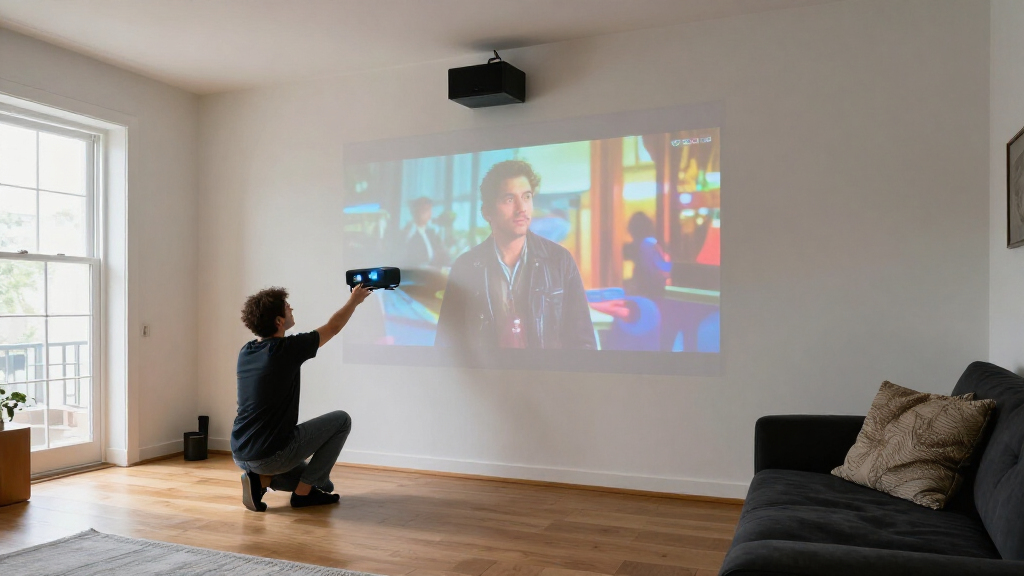
I compared these 14 models by how well their designs serve real viewing situations: dedicated home theater, mixed-use living rooms, gaming, short-throw setups, and portable viewing. I gave weight to the projector’s placement options, stated image and light-output capabilities, laser configuration, gaming-oriented features, setup convenience, and the upkeep expected from its form factor. A feature mattered most when it changed where or how a buyer could use the projector, rather than simply adding a specification to the list.
The ranking favors versatility and a clear use-case fit, not one spec in isolation. The Hisense PX3-PRO leads as a strong all-around ultra short throw choice; models with more focused advantages rank higher for their intended buyers but lower as universal recommendations. I also account for tradeoffs: a brighter design may suit ambient light better, a compact projector is easier to relocate, and a short-throw model can simplify room layout, yet none of those strengths erase the need to match the projector to the screen, throw distance, and viewing conditions.
Factors to Consider When Choosing 4K Laser Projectors
Before choosing among 4K laser projectors, I would start with the room rather than the feature list. Throw distance, screen type, ambient light, and how you plan to use the image can rule out a model before resolution or laser color becomes decisive.
Match Throw Distance to the Room
Throw distance determines where the projector can sit and how large an image it can make from that spot. Ultra short throw models are designed to work near the screen, which can avoid a ceiling mount and reduce the chance of people crossing the beam. Short-throw options can suit smaller rooms but still need more clearance than an ultra short throw design. Standard-throw models may offer more placement options in a dedicated room, provided you have enough distance and a suitable mounting position. A common mistake is buying by screen size alone without checking the manufacturer’s throw range and installation guidance. Measure the planned projector and screen positions before comparing other features.
Plan for Room Light and Screen Choice
Ambient light affects perceived contrast and image punch, so a projector used in a bright living room faces a different job from one used after dark. A brighter model can help in a room that cannot be fully darkened, but it does not remove the effects of light washing across the screen. Ultra short throw projectors also have specific screen placement and surface requirements; a standard wall may not give the same result as a compatible screen. Buyers sometimes focus on advertised brightness while overlooking screen gain, viewing angle, and room reflections. If daytime viewing matters, consider how the projector and screen work together rather than treating brightness as a standalone answer. For movie-focused viewing in a controlled room, contrast and light control can matter more than chasing maximum output.
Read 4K Claims Alongside Image Processing
The phrase 4K does not tell the whole story about how a projector forms its image, so check the model’s stated resolution method and supported signals. Image processing, focus uniformity, and the quality of the source can all affect what looks sharp from a normal seat. A very large screen may reveal softness or artifacts that are less apparent on a smaller image. Streaming services and game consoles also vary in the resolution and HDR formats they deliver. Avoid assuming that a 4K label guarantees identical detail across models or sources. Match the projector to the content you actually watch, and check whether your playback devices support the formats you want.
Choose Gaming Features for Your Console or PC
For gaming, resolution is only one part of the experience; input lag, refresh-rate support, and the connections available can affect responsiveness and compatibility. A projector marketed for gaming may be a better fit than a theater-first model, but the relevant performance can vary by resolution and display mode. Check the manufacturer’s stated gaming specifications and whether they apply to the settings you plan to use. Confirm that the projector has the ports needed for your console, PC, receiver, or sound system. Buyers who mainly watch films may not benefit from paying extra for gaming capabilities they rarely use. If you play competitively, give responsiveness priority over a feature that only improves occasional viewing.
Decide Whether Portability Is Worth the Compromise
A portable projector makes sense when you regularly move it between rooms or want a setup that can be packed away. That convenience can bring different limits around brightness, sound, connections, and ease of precise placement compared with a fixed home-theater unit. A compact form does not automatically mean a faster setup: focus, alignment, power, and screen position still need attention. Think about whether the projector will live on a shelf or travel often, since those routines call for different designs. Buyers who want a permanent, large-screen installation may gain more from a model built around the room. Choose portability for a real use pattern, not just because a smaller projector appears easier to own.
Budget for the Whole Projection Setup
The projector is only one part of the system: screen, mount or stand, cabling, audio, and room adjustments can shape the final experience. Ultra short throw installations may require a purpose-matched screen and careful alignment, while a ceiling-mounted design may call for a secure mount and longer cable runs. Built-in speakers can be convenient, but buyers who want cinema-style sound may need separate audio equipment. Before paying more for premium image features, decide which improvements will be visible in your room and which parts of the setup are still missing. A lower-priced projector can become a less appealing choice if it demands accessories that do not suit your space. Compare complete setup needs, not just projector specifications.
Frequently Asked Questions
Is an ultra short throw 4K laser projector a good fit if I cannot mount a projector?
It can be, since an ultra short throw model sits close to the screen rather than across the room or on the ceiling. The tradeoff is that these projectors need precise positioning and a suitable screen area, and small shifts can affect alignment. Check the required distance from the wall and the image size range before deciding. Also confirm whether your planned screen or wall surface is appropriate for the model. If you can place a projector farther back, a standard-throw option may offer a simpler fit for your room.
Will a 4K laser projector work well in a bright living room?
Some models are better suited to ambient light than others, but no projector is immune to light washing out the image. Consider the room’s windows, overhead lights, wall colors, and whether you can darken the space during viewing. A compatible screen may help, particularly with an ultra short throw setup, but it cannot solve every lighting problem. Check the projector’s light-output specifications and think about how much of the day you plan to watch. If you want the strongest image, controlling room light can be as useful as selecting a brighter projector.
Should I choose a triple-laser projector over a single-laser model?
Not automatically. Triple-laser designs can appeal to buyers seeking strong color performance, but the number of lasers alone does not establish which projector will look best in your room. Placement, brightness, image processing, screen, and your usual content all affect the result. Compare the specific models’ capabilities and installation needs rather than treating laser configuration as a complete quality ranking. A single-laser option may be the better match if its throw, gaming features, or room fit suit you more closely.
Can I use a 4K laser projector for both movies and gaming?
Yes, a mixed-use setup can work, but you should check the gaming specifications separately from the movie features. Input lag, supported refresh rates, resolution modes, and available connections can differ across models and settings. A home-theater projector may deliver the features you want for films but lack the gaming performance you expect. Conversely, a gaming-oriented option may be easier to recommend for consoles but not the best choice for every theater room. Match the projector to the activity you do most, then confirm it also supports your secondary use.
What should I measure before ordering a 4K laser projector?
Measure the screen or wall width, the available projector-to-screen distance, and the height and depth of the proposed shelf or mounting location. For ultra short throw models, check the specified gap between the projector and screen as well as the required furniture depth. Note nearby outlets, cable routes, and whether viewers or doors could block the beam. Check the image-size and throw-distance guidance for the exact model, since projector placement varies across the lineup. These measurements can prevent a projector from producing the screen size you expect in your room.
Conclusion
For most buyers seeking a large-screen setup with flexible, close-to-screen placement, I recommend the Hisense PX3-PRO as the best overall. The ViewSonic LX700-4K is my gaming-focused pick, while the Epson EpiqVision Ultra LS800 is worth prioritizing for buyers who want an ultra short throw option suited to a brighter room. For a premium triple-laser ultra short throw alternative, compare the AWOL VISION LTV-3000 Pro and AWOL Aetherion Pro against your screen and installation needs. Beginners should start with the projector whose placement and setup are easiest to manage in their room, not the one with the longest feature list. If portability matters most, look closely at the Hisense M2 Pro and XGIMI Elfin Flip; if you need a short-throw gaming setup, the BenQ TK710STi is the more targeted match. There is no single best projector for every space, so let your room, screen plan, and main use decide the final pick.