If you’re searching for the best 4K laser projectors, the JMGO N1S Ultimate stands out as my top overall pick thanks to its triple-laser color performance, built-in Google TV, and gimbal design that makes placement almost effortless. Close behind are the BenQ TK710STi, which is the smarter choice for gamers who need low input lag from a short-throw distance, and the ViewSonic LS901-4K, whose 5500 lumens make it the most practical option for rooms you can’t fully darken. The main tradeoff in this category is brightness versus color richness: triple-laser models like the Dangbei MP1 MAX deliver wider color but lower peak brightness, while lamp-class laser units punch harder in daylight at the cost of smart features. Throw distance is the other big fork in the road, separating ultra-short-throw bundles like the AWOL Aetherion Max from portable picks like the XGIMI Elfin Flip. Keep reading for the full breakdown of all 13 models.

Get business pricing on your home office setup
- Business-only prices and quantity discounts
- Tax-exempt purchasing
- Multiple users, one account, clear invoices
Complete the kit


Key Takeaways
- Triple-laser models (JMGO N1S Ultimate, Dangbei MP1 MAX, Hisense M2 Pro) dominated color accuracy and contrast, but high-brightness single-laser units like the ViewSonic LS901-4K won in well-lit rooms — no single model aced both.
- Built-in smart platforms varied widely: Google TV models (JMGO, Dangbei, XGIMI) streamed Netflix natively, while the BenQ TK710 and TK710STi assume you’ll supply your own streaming device.
- Gamers get a clear winner in the BenQ TK710STi, whose short throw plus low input lag lets you play on a 100-inch image from just a few feet away — something the long-throw ViewSonic models can’t match.
- The AWOL Aetherion Max is the only turnkey theater in the lineup, bundling a 132-inch screen with its ultra-short-throw design, but it demands a dedicated wall and a bigger commitment than plug-and-play portables.
- Portables (XGIMI Elfin Flip, Hisense M2 Pro) sacrificed brightness and lens flexibility for convenience, making them great second projectors but risky as a primary home theater unit.
| JMGO N1S 4K Triple Laser Projector with Google TV |  | Best Portable Pick | Resolution: 4K UHD with HDR10 | Brightness: 1700 ISO lumens | Light Source: Pure RGB triple laser (MALC 3.0) | VIEW LATEST PRICE | See Our Full Breakdown |
| BenQ TK710STi 4K HDR Short-Throw Home Entertainment Projector |  | Best for Bright Rooms | Brightness: 3,200 ANSI lumens | Resolution: 4K | Throw Type: Short throw | VIEW LATEST PRICE | See Our Full Breakdown |
| ViewSonic LS901-4K 4K UHD Laser Projector |  | Best Premium Performer | Resolution: 4K UHD (3840×2160) | Brightness: 5,500 ANSI lumens | Light Source: Laser | VIEW LATEST PRICE | See Our Full Breakdown |
| Optoma UHZ36 4K UHD Laser HDR Home Theater Projector |  | Best for Movie Purists | Resolution: 4K UHD | Light Source: Laser | HDR: Supported | VIEW LATEST PRICE | See Our Full Breakdown |
| Dangbei MP1 MAX 4K Triple Laser Projector |  | Best All-in-One Value | Native Resolution: 3840 x 2160 (4K) | Brightness: 3100 ISO lumens | Color Gamut: 110% BT.2020, ΔE<1 accuracy | VIEW LATEST PRICE | See Our Full Breakdown |
| AWOL Aetherion Max 4K 3D Ultra Short Throw Projector with 132-Inch Cinematic Screen Bundle |  | Best Big-Screen Bundle | Native resolution: 3840 x 2160 | Brightness: 3000 lumens | Light source: Laser | VIEW LATEST PRICE | See Our Full Breakdown |
| ViewSonic LS740-4K 4K UHD 5000 Lumens Laser Projector |  | Best for Bright Rooms and Large Venues | Resolution: Native 4K UHD (3840x2160p) | Brightness: 5,000 ANSI lumens | Light source: Laser | VIEW LATEST PRICE | See Our Full Breakdown |
| XGIMI Elfin Flip 4K Portable Projector with WiFi, Bluetooth & Google TV |  | Best Premium Portable | Resolution: 4K UHD | Light source: RGB Triple Laser | Brightness: 1,600 ISO lumens | VIEW LATEST PRICE | See Our Full Breakdown |
| Hisense M2 Pro Triple Laser Smart Portable Projector, 4K UHD |  | Best for Effortless Setup | Resolution: 4K UHD | Brightness: 1,300 ANSI lumens | Projection size: 65–200 inches | VIEW LATEST PRICE | See Our Full Breakdown |
| BenQ TK710 4K HDR Laser Home Entertainment & Gaming Projector |  | Best for Gamers Who Watch Movies Too | Native resolution: 3840 x 2160 (4K UHD) | Brightness: 3,200 ANSI lumens | Light source: Laser, 20,000-hour life | VIEW LATEST PRICE | See Our Full Breakdown |
| Dangbei DBOX02 4K Laser Projector with Google TV, 2450 ISO Lumens |  | Best Smart Features for the Price | Native Resolution: 3840 x 2160 (4K) | Brightness: 2450 ISO lumens | Display Technology: ALPD Laser | VIEW LATEST PRICE | See Our Full Breakdown |
| JMGO N1S Ultimate Triple Laser 4K Projector with Google TV, 3300 ISO Lumens |  | Best for Bright Rooms and Outdoor Movie Nights | Brightness: 3300 ISO lumens | Native Resolution: 3840 x 2160 (4K) | Display Type: Triple RGB Laser | VIEW LATEST PRICE | See Our Full Breakdown |
| JMGO N1S Ultra 4K Triple Laser Projector with Google TV | 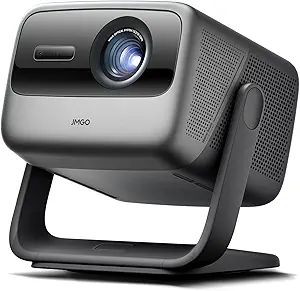 | Best Balanced Triple-Laser Pick | Resolution: 4K (3840 x 2160) | Light Source: Triple RGB Laser | Brightness: 2800 ISO lumens | VIEW LATEST PRICE | See Our Full Breakdown |
| 4K laser projector | Brightness | Light Source | Resolution |
|---|---|---|---|
| JMGO N1S 4K Triple Laser Proje | 1700 ISO lumens | Pure RGB triple laser (MALC 3.0) | 4K UHD with HDR10 |
| BenQ TK710STi 4K HDR Short-Thr | 3,200 ANSI lumens | Laser | 4K |
| ViewSonic LS901-4K 4K UHD Lase | 5,500 ANSI lumens | Laser | 4K UHD (3840×2160) |
| Optoma UHZ36 4K UHD Laser HDR | — | Laser | 4K UHD |
| Dangbei MP1 MAX 4K Triple Lase | 3100 ISO lumens | Triple laser + LED hybrid | — |
| AWOL Aetherion Max 4K 3D Ultra | 3000 lumens | Laser | — |
| ViewSonic LS740-4K 4K UHD 5000 | 5,000 ANSI lumens | Laser | Native 4K UHD (3840x2160p) |
| XGIMI Elfin Flip 4K Portable P | 1,600 ISO lumens | RGB Triple Laser | 4K UHD |
| Hisense M2 Pro Triple Laser Sm | 1,300 ANSI lumens | — | 4K UHD |
| BenQ TK710 4K HDR Laser Home E | 3,200 ANSI lumens | Laser, 20,000-hour life | — |
| Dangbei DBOX02 4K Laser Projec | 2450 ISO lumens | — | — |
| JMGO N1S Ultimate Triple Laser | 3300 ISO lumens | — | — |
| JMGO N1S Ultra 4K Triple Laser | 2800 ISO lumens | Triple RGB Laser | 4K (3840 x 2160) |
More Details on Our Top Picks
JMGO N1S 4K Triple Laser Projector with Google TV
The JMGO N1S 4K stands out for its 127° gimbal design, which lets you aim a 200-inch picture one-handed without mounts or shelving gymnastics — something no fixed chassis like the BenQ TK710STi can match. At 4.4 lbs, it moves between rooms as easily as a smart speaker, and the RGB triple laser engine covering 110% of BT.2020 delivers noticeably richer color than single-laser rivals. Google TV with licensed Netflix is built in, and 17ms latency over HDMI 2.1 keeps casual gaming playable. The tradeoff: 1,700 ISO lumens is modest next to the ViewSonic LS901-4K’s 5,500, so this is a lights-dimmed machine rather than a daytime one. Some units may also need recalibration to correct color tinting.
Pros:- True 4K resolution with 110% BT.2020 color coverage from a triple laser engine
- Gimbal stand enables one-handed aiming and instant repositioning
- Built-in Google TV with licensed Netflix — no external streaming stick needed
- Lightweight 4.4 lb build with 17ms gaming latency
Cons:- 1,700 ISO lumens limits performance in ambient light
- Possible color tint requiring manual recalibration out of the box
- Active 3D glasses sold separately
Best for: Renters, students, and anyone who wants a big-screen experience they can carry between rooms or to a friend’s house
Not ideal for: Bright living rooms with uncontrolled daylight — its brightness is the lowest in this lineup
- Resolution:4K UHD with HDR10
- Brightness:1700 ISO lumens
- Light Source:Pure RGB triple laser (MALC 3.0)
- Color Coverage:110% BT.2020, 151% DCI-P3
- Max Screen Size:200 inches
- OS:Google TV with licensed Netflix
- Weight:4.4 lbs
- Latency:17ms
Our verdict“This pick makes the most sense for buyers who prioritize portability and color punch over raw brightness.”
BenQ TK710STi 4K HDR Short-Throw Home Entertainment Projector
Where the JMGO N1S 4K demands darkness, the BenQ TK710STi is built to fight daylight head-on with 3,200 ANSI lumens — enough to keep a sports broadcast watchable with curtains open. The short-throw lens is the other differentiator: it produces a large image from inches away, sparing you the long cable runs a standard-throw model like the ViewSonic LS901-4K requires. Gamers get a genuine treat with 4ms response at 1080p and 240Hz, though be clear-eyed about the fine print — that speed applies to 1080p, not 4K. Color coverage is a more conservative 95% Rec.709, so it trades the triple-laser saturation of the Dangbei MP1 MAX for brightness and installation flexibility. For a family media room, that’s usually the right trade.
Pros:- 3,200 ANSI lumens keeps the image usable in ambient light
- Short-throw design works in tight spaces without long projection distances
- Laser light source eliminates lamp replacements
- 4ms latency at 1080p/240Hz for competitive gaming
Cons:- 240Hz mode is limited to 1080p, not 4K
- 95% Rec.709 color coverage falls short of BT.2020 triple-laser competitors
Best for: Families with bright, multi-use living rooms who watch sports and movies during the day
Not ideal for: Home cinema enthusiasts chasing maximum color gamut — Rec.709 coverage trails triple-laser rivals
- Brightness:3,200 ANSI lumens
- Resolution:4K
- Throw Type:Short throw
- Light Source:Laser
- Color Coverage:95% Rec.709
- Gaming Response:4 ms at 1080p and 240Hz
- Smart Platform:Google-certified Android TV
Our verdict“Compared with similar options, this model suits daytime viewers and short-distance installs who value brightness over color gamut.”
ViewSonic LS901-4K 4K UHD Laser Projector
This is the heavyweight of the batch. The ViewSonic LS901-4K pushes 5,500 ANSI lumens — nearly double the BenQ TK710STi — making it capable in genuinely large rooms and even venues where smaller projectors wash out entirely. Its native 21:9 aspect ratio is a rarity that gives films a true widescreen canvas, while 240Hz at 4.2ms input lag makes it a serious gaming machine, not an afterthought. Installation flexibility is class-leading: 1.7x optical zoom, lens shift, and 360° projection mean it fits spaces the fixed-stand Dangbei MP1 MAX simply can’t. The costs are real, though — you’ll need to buy the ceiling mount separately, and its premium positioning puts it out of casual-buyer territory. It also caps at 150 inches, less than some portable rivals.
Pros:- 5,500 ANSI lumens handles large rooms and ambient light with ease
- Native 21:9 widescreen aspect ratio with HDR/HLG for a cinematic feel
- 240Hz refresh and 4.2ms input lag for responsive gaming and sports
- 1.7x optical zoom, lens shift, and 360° projection for flexible installs
Cons:- Ceiling mount (PJ-WMK-007) sold separately
- Premium price point well above portable rivals
- 150-inch max screen size trails the Dangbei MP1 MAX’s 300 inches
Best for: Dedicated home theater builders and simulator/golf enthusiasts who need serious brightness and installation flexibility
Not ideal for: Budget-conscious or casual buyers — its premium tier demands a room and wallet to match
- Resolution:4K UHD (3840×2160)
- Brightness:5,500 ANSI lumens
- Light Source:Laser
- Refresh Rate:240Hz
- Input Lag:4.2ms
- Aspect Ratio:Native 21:9
- Optical Zoom:1.7x
- Max Screen Size:150 inches
Our verdict“This option is better suited to buyers building a permanent, high-end theater than anyone wanting a grab-and-go projector.”
Optoma UHZ36 4K UHD Laser HDR Home Theater Projector
The Optoma UHZ36 takes a different philosophical approach from the feature-stacked Dangbei MP1 MAX: instead of rotating stands and AI room correction, it focuses on image fidelity, with Filmmaker Mode that locks color and motion settings to preserve the director’s original intent. For viewers who care more about accurate contrast and natural motion than smart-platform extras, that restraint is a feature, not a shortfall. The 4K UHD panel with HDR and a long-lived laser light source cover the fundamentals well. What you give up is everything the convenience-first picks offer — no bundled smart platform or licensed streaming, and no built-in positioning hardware, so plan on a source device and a proper mount. Its spec sheet is also thinner than its rivals’, which will frustrate buyers who want every number confirmed before committing.
Pros:- Filmmaker Mode preserves accurate, director-intended color and motion
- True 4K UHD resolution with HDR support
- Laser light source for long life without lamp swaps
- Focused design without gimmicks keeps the picture the priority
Cons:- No built-in smart TV platform or licensed streaming apps
- Sparse published specs make comparison shopping harder
- Lacks the auto-focus and AI setup features of rivals like the Dangbei MP1 MAX
Best for: Film-focused viewers who want a set-and-forget image tuned for accuracy rather than gadget features
Not ideal for: Streamers who want everything built in — you’ll need to supply your own smart platform and mounting solution
- Resolution:4K UHD
- Light Source:Laser
- HDR:Supported
- Picture Mode:Filmmaker Mode
Our verdict“This pick makes the most sense for purists who already own a streaming source and want picture accuracy over convenience features.”
Dangbei MP1 MAX 4K Triple Laser Projector
The Dangbei MP1 MAX is the most complete package here: 3,100 ISO lumens from a hybrid triple-laser-plus-LED engine handles daytime viewing that defeats the dimmer JMGO N1S 4K, while ΔE<1 color accuracy across 110% BT.2020 means factory calibration you can actually trust. Its built-in 360° rotating stand removes the accessory shopping that fixed projectors like the Optoma UHZ36 impose, and the Dolby Audio/DTS:X speakers with 45Hz bass are good enough to skip a soundbar initially. Throw distance is the catch — 2 to 4.5 meters limits placement in smaller rooms aiming for its giant 300-inch maximum. At 190W, it’s also a plugged-in fixture rather than a carry-around companion. As a living-room centerpiece, though, it covers more bases than anything else at this tier.
Pros:- 3,100 ISO lumens from a triple laser + LED hybrid enables clear daytime viewing
- ΔE<1 factory color accuracy across 110% BT.2020
- Built-in 360° rotating, 135° tilting stand eliminates extra accessories
- Full smart package: Google TV with licensed Netflix, HDMI 2.1, Wi-Fi 6, Dolby/DTS:X audio
Cons:- 2-4.5m throw range limits large-screen setups in compact rooms
- 190W power draw makes it impractical for portable use
Best for: Living-room buyers who want bright, accurate color, built-in sound, and positioning flexibility in a single purchase
Not ideal for: Small rooms or portable setups — the throw distance range and 190W power draw demand space and a fixed outlet
- Native Resolution:3840 x 2160 (4K)
- Brightness:3100 ISO lumens
- Color Gamut:110% BT.2020, ΔE<1 accuracy
- Light Source:Triple laser + LED hybrid
- Image Size:40-300 inches
- HDR Support:HDR10+
- Audio:2x12W Dolby Audio / DTS:X speakers
- Smart Platform:Google TV with licensed Netflix
- Connectivity:HDMI 2.1 (eARC), Wi-Fi 6, Bluetooth 5.2
Our verdict“This model is the strongest single-box choice for buyers who want brightness, accuracy, and smart features without buying anything else.”
AWOL Aetherion Max 4K 3D Ultra Short Throw Projector with 132-Inch Cinematic Screen Bundle
Most 4K laser projectors on this list arrive as a bare unit and leave you hunting for a matching screen. The Aetherion Max flips that script by bundling a 132-inch cinematic screen, which means the image quality you pay for is actually delivered rather than diluted by a mismatched wall or bargain screen. Its 0.2:1 ultra-short throw lets it sit inches from the wall, unlike the ViewSonic LS740-4K, which needs over ten feet of clearance. Gaming credentials are serious too — 1 ms latency with VRR and ALLM rivals the BenQ TK710. The compromises are real: the verified 150-inch maximum falls short of loftier claims, and the conflicting brightness figures (3,000 vs. 3,300 lumens) make it hard to predict daylight performance. Still, for a one-box home theater, this option makes the most sense for buyers who want everything in a single purchase.
Pros:- Bundle includes a 132-inch cinematic screen, removing guesswork from pairing
- 0.2:1 ultra-short throw works in rooms where a long-throw projector like the ViewSonic LS740-4K cannot
- 1 ms latency with VRR and ALLM is genuinely competitive for console and PC gaming
- Supports multiple HDR formats with a 3,000,000:1 contrast ratio for deep blacks
Cons:- Verified maximum image size is 150 inches despite claims of 200-inch capability
- Listed brightness conflicts between 3,000 lumens and 3,300 ISO lumens, muddying real-world expectations
Best for: Home theater builders who want a projector and 132-inch screen delivered together without matching components separately
Not ideal for: Buyers in very bright living rooms or anyone needing images beyond 150 inches — the brightness figures are inconsistent and the size ceiling is lower than marketing suggests
- Native resolution:3840 x 2160
- Brightness:3000 lumens
- Light source:Laser
- Throw ratio:0.2:1
- Image size:80–150 inches
- Gaming latency:1 ms
- Included screen:132 inches
- Light source life:25,000 hours
Our verdict“Buy this if you want a complete, instant home theater with a huge included screen — skip it if daylight viewing or a 200-inch image is the goal.”
ViewSonic LS740-4K 4K UHD 5000 Lumens Laser Projector
If the XGIMI Elfin Flip struggles once curtains open, the LS740-4K simply does not care about daylight. With 5,000 ANSI lumens — more than triple the Hisense M2 Pro’s output — this model holds a watchable image under harsh ambient light, which is why classrooms, sports bars, and golf simulators gravitate toward it. The 30-to-300-inch range and 360-degree plus portrait mounting give installers unusual flexibility, and instant on/off with no warm-up makes it practical for spaces where nobody wants to babysit a projector. The catch is geometry: at a 1.4–2.24 throw ratio, you need roughly 10.5 feet of distance for a 100-inch picture, so apartment dwellers should look at the AWOL Aetherion Max instead. The ceiling mount is also sold separately, which quietly inflates the true cost of installation.
Pros:- 5,000 ANSI lumens outshines every portable option here for daylight viewing
- Huge 30–300 inch range with 1.6x optical zoom and four-corner adjustment
- Instant power on/off eliminates warm-up and cooldown delays
- LAN control allows IT teams to manage and schedule units remotely
Cons:- Requires about 10.5 feet of throw distance for a 100-inch image
- Ceiling mount bracket sold separately, adding hidden cost
Best for: Installers, classrooms, and venues that need a 4K image that survives full ambient light across very large screens
Not ideal for: Small or narrow rooms — the long throw distance makes a 100-inch image physically impossible without significant space
- Resolution:Native 4K UHD (3840x2160p)
- Brightness:5,000 ANSI lumens
- Light source:Laser
- Throw ratio:1.4–2.24
- Screen size:30–300 inches
- Optical zoom:1.6x
- Mounting:Ceiling, 360-degree, portrait
Our verdict“This is the pick when brightness and installation flexibility matter more than portability — a poor fit for compact rooms.”
XGIMI Elfin Flip 4K Portable Projector with WiFi, Bluetooth & Google TV
Portability usually means compromise, but the Elfin Flip packs RGB triple-laser color with SGS-certified accuracy (ΔE under 1) into a book-sized chassis — color fidelity most living-room projectors here can’t match. Compared with the Hisense M2 Pro, the tradeoffs run in opposite directions: the Hisense offers a gimbal and a wider 200-inch ceiling, while the Elfin Flip counters with Google TV built in, lossless 0.98–1.3:1 optical zoom that resizes without softening the image, and 1 ms gaming latency that rivals the BenQ TK710. Harman Kardon speakers mean no soundbar is needed for a movie night anywhere in the house. The honest weakness is brightness: 1,600 ISO lumens handles dim rooms beautifully but will wash out under afternoon sun, where only the ViewSonic LS740-4K genuinely thrives. This model is better suited to buyers who prioritize color and convenience over raw punch.
Pros:- RGB triple laser with SGS-certified ΔE<1 color accuracy for reference-grade visuals
- Lossless optical zoom preserves sharpness when adjusting image size
- Built-in Google TV with Netflix, YouTube, and Prime Video plus Harman Kardon speakers
- 1 ms latency with VRR and ALLM makes it a genuine portable gaming machine
Cons:- 1,600 ISO lumens is modest for anything beyond controlled lighting
- Premium feature set points to a high price relative to simpler portables
Best for: Movie lovers and gamers who want true 4K, calibrated color, and streaming apps in a projector they can move room to room
Not ideal for: Daytime sports watchers — 1,600 ISO lumens will struggle in bright rooms no matter what the marketing implies
- Resolution:4K UHD
- Light source:RGB Triple Laser
- Brightness:1,600 ISO lumens
- Contrast ratio:20,000:1 dynamic
- Optical zoom:0.98–1.3:1
- Smart platform:Google TV
- Gaming latency:1 ms
- Audio:Dual Harman Kardon speakers
Our verdict“The strongest all-in-one portable here for quality-focused viewers — pick the Hisense M2 Pro instead if flexibility matters more than color precision.”
Hisense M2 Pro Triple Laser Smart Portable Projector, 4K UHD
The M2 Pro’s headline trick is its built-in 360° gimbal: point it at the ceiling, angle it at a wall, rotate it mid-movie — no tripod, no re-leveling. Where the XGIMI Elfin Flip demands a bit more care with placement, the Hisense handles geometry for you with autofocus, auto keystone, obstacle avoidance, and automatic screen adaptation all working in the background. The 65-to-200-inch range beats the AWOL Aetherion Max’s 150-inch ceiling, giving backyard-movie-night flexibility few portables offer. Netflix, YouTube, and Disney+ are ready out of the box via VIDAA OS. The compromise is brightness: at 1,300 ANSI lumens, it sits at the bottom of this lineup alongside other portables, so expect to dim the lights for the best picture. Compared with the BenQ TK710, this option trades raw performance for convenience — a fair swap if you value grab-and-go simplicity over home theater punch.
Pros:- 360° horizontal and 135° vertical gimbal allows projection at virtually any angle
- Fully automatic setup: autofocus, keystone, obstacle avoidance, and screen adaptation
- 65–200 inch projection range covers both compact and enormous setups
- Streams Netflix, YouTube, and Disney+ directly through VIDAA OS
Cons:- 1,300 ANSI lumens limits daytime and bright-room viewing
- Little public feedback or durability information available for long-term confidence
Best for: Casual viewers and renters who want to project anywhere — ceilings, bedrooms, backyards — with zero manual adjustment
Not ideal for: Serious home theater enthusiasts; 1,300 ANSI lumens and automatic processing can’t match dedicated units like the BenQ TK710
- Resolution:4K UHD
- Brightness:1,300 ANSI lumens
- Projection size:65–200 inches
- Gimbal:360° horizontal, 135° vertical
- Setup features:Autofocus, auto keystone, obstacle avoidance, screen adaptation
- Operating system:VIDAA OS
Our verdict“Choose this for unmatched pointing flexibility and self-setting convenience — not for brightness-critical viewing.”
BenQ TK710 4K HDR Laser Home Entertainment & Gaming Projector
The TK710 occupies a sweet spot the portables can’t reach: 3,200 ANSI lumens of laser brightness for lights-on viewing paired with gaming specs that outclass everything else here at 4K. A 4ms response at 1080p/240Hz makes it a natural partner for high-refresh gaming, while 16ms input lag at 4K/60Hz keeps single-player titles responsive at full resolution — the AWOL Aetherion Max matches its latency features but not its brightness discipline, with honest, verified ANSI figures. Practical touches like lens shift, 1.3x zoom, and a 20,000-hour laser source with a 3-year warranty show this is built as a long-term centerpiece rather than a gadget. Frustrations exist: keystone correction is limited vertically, and the connectivity list leans almost entirely on HDMI, so streamers will need an external stick where the XGIMI Elfin Flip has Google TV built in.
Pros:- 4ms response at 1080p/240Hz plus 16ms lag at 4K/60Hz is elite gaming performance
- 3,200 ANSI lumens handles sports and movies with ambient light on
- Lens shift, 1.3x zoom, and auto focus give real installation flexibility
- 20,000-hour laser source backed by a 3-year warranty
Cons:- Limited vertical keystone correction narrows off-axis placement options
- Connectivity is essentially HDMI-only, with no built-in smart platform
Best for: Gamers with a dedicated media room who want high-refresh performance and lights-on movie brightness in one unit
Not ideal for: Cord-cutters who want built-in streaming — HDMI-only connectivity means you’ll need external devices
- Native resolution:3840 x 2160 (4K UHD)
- Brightness:3,200 ANSI lumens
- Light source:Laser, 20,000-hour life
- Contrast ratio:600,000:1
- Response time:4ms at 1080p/240Hz
- Input lag:16ms at 4K/60Hz
- Max image size:144 inches
- Connectivity:HDMI, Wi-Fi ready, eARC
- Warranty:3 years
Our verdict“The best pick here for serious gamers who also want a bright, warranty-backed home cinema — just plan on adding a streaming device.”
Dangbei DBOX02 4K Laser Projector with Google TV, 2450 ISO Lumens
The DBOX02 stands out for its software experience: officially licensed Netflix on a full Google TV platform means no awkward workarounds or third-party app sideloading, which still plagues several budget competitors. Its 2450 ISO lumens handle moderately lit living rooms, and the 5000:1 contrast ratio actually beats both JMGO models, whose 1600:1 figures will show flatter blacks in darkened rooms. Setup is refreshingly hands-off thanks to autofocus, auto keystone, and obstacle avoidance. Where it trails is brightness and color: the triple-laser JMGO N1S Ultimate delivers roughly a third more light and a far wider gamut, so serious home theater enthusiasts may find the DBOX02’s ALPD laser a step behind. The non-replaceable light source is also worth weighing against lamp-based rivals. This pick makes the most sense for streamers who prioritize app polish over raw image muscle.
Pros:- Officially licensed Netflix with full Google TV app ecosystem
- 5000:1 contrast ratio outperforms the triple-laser JMGO models
- Fully automatic setup with focus, keystone, and obstacle avoidance
- Dolby Audio and DTS:X via dual 12W speakers
- Blu-ray 3D playback support
Cons:- Laser light source cannot be replaced if it fails
- 2450 lumens falls short of brighter rivals for daytime or outdoor use
Best for: Streaming-first households who want licensed Netflix and a polished Google TV experience without paying triple-laser prices
Not ideal for: Dedicated dark-room home theater builders who want maximum contrast and color gamut over smart features
- Native Resolution:3840 x 2160 (4K)
- Brightness:2450 ISO lumens
- Display Technology:ALPD Laser
- Contrast Ratio:5000:1
- Image Size:60-200 inches
- Smart Platform:Google TV with licensed Netflix
- Audio:2x12W speakers, Dolby Audio, DTS:X
- Connectivity:Dual HDMI (eARC), 2x USB, Wi-Fi, Bluetooth
Our verdict“Buy this if seamless streaming convenience matters more to you than squeezing out the last bit of color performance.”
JMGO N1S Ultimate Triple Laser 4K Projector with Google TV, 3300 ISO Lumens
If your viewing happens before sundown or in the backyard, the N1S Ultimate is the brightness champion of this lineup at 3300 ISO lumens — noticeably ahead of its sibling, the N1S Ultra, at 2800, and far beyond the Dangbei DBOX02. The triple RGB laser engine covers 110% of Rec.2020 with ΔE<1 accuracy, so colors stay rich even when ambient light washes out lesser projectors. The 360° gimbal design is genuinely useful: aim it at any wall, rotate it mid-movie, and real-time keystone keeps the image square — something fixed units like the ViewSonic LS901-4K simply can’t do. The tradeoffs are real, though. Triple-laser pricing runs high, that 1600:1 contrast means weaker shadow detail in dark rooms, and movie fans with big spaces will still want an external sound system despite the built-in 20W subwoofer.
Pros:- Daylight-ready 3300 ISO lumens, the brightest in this lineup
- Triple laser with 110% Rec.2020 gamut and ΔE<1 color accuracy
- 360°/135° gimbal with real-time auto keystone and focus
- Certified Netflix on Google TV 3.0 with Google Assistant
- Up to 300-inch image size for large gatherings
Cons:- Premium triple-laser pricing
- 1600:1 contrast ratio limits shadow detail in dark rooms
- Built-in audio still benefits from external speakers in large spaces
Best for: Backyard movie hosts and bright living-room viewers who need daylight-ready brightness and flexible aiming
Not ideal for: Budget-conscious buyers or pitch-black home theater rooms where a cheaper, higher-contrast projector would look better
- Brightness:3300 ISO lumens
- Native Resolution:3840 x 2160 (4K)
- Display Type:Triple RGB Laser
- Color Gamut:110% BT.2020, ΔE<1
- Image Size:60-300 inches
- Gimbal Rotation:360° horizontal, 135° vertical
- Audio:10W Dolby Audio, DTS-HD, 20W subwoofer
- OS:Google TV 3.0 (Netflix certified)
Our verdict“This is the pick for anyone projecting in less-than-ideal light who refuses to compromise on color.”
JMGO N1S Ultra 4K Triple Laser Projector with Google TV
Compared with the N1S Ultimate, the N1S Ultra trades 500 lumens of brightness for a lower price while keeping everything that makes triple-laser projection special: ΔE<1 color accuracy, the flexible gimbal mount, and real-time autofocus that re-adjusts the instant you reposition it. For most living rooms, 2800 ISO lumens is plenty — the extra punch of the Ultimate only matters outdoors or in sunlit spaces. Clever touches like wall color adaptation via the 3D TOF sensor let it correct the image against a non-white wall, a convenience the fixed-mount BenQ TK710 can’t match. The HDMI 2.1 port with eARC also makes it friendlier for console gaming and soundbar hookups. Drawbacks remain: triple-laser pricing is still steep, contrast sits at a modest 1600:1, and USB 2.0 is sluggish for playing large local 4K files.
Pros:- 2800 ISO lumens bright enough for well-lit rooms
- Triple RGB laser with ΔE<1 color accuracy
- Gimbal design with wall color adaptation and real-time autofocus
- HDMI 2.1 with eARC suits gaming consoles and soundbars
- Google TV with 10,000+ apps and Chromecast
Cons:- Premium price typical of triple-laser projectors
- USB 2.0 is slow for large local media files
- 1600:1 contrast ratio is weaker than single-laser rivals like the Dangbei DBOX02
Best for: Buyers who want flagship triple-laser color and gimbal flexibility at a more approachable price than the Ultimate
Not ideal for: Daytime or outdoor projector users who should spend up for the N1S Ultimate’s extra brightness
- Resolution:4K (3840 x 2160)
- Light Source:Triple RGB Laser
- Brightness:2800 ISO lumens
- Contrast Ratio:1600:1 FOFO
- Color Accuracy:ΔE<1
- Audio:20W dual speakers, Dolby Digital Plus, bass to 45Hz
- Connectivity:HDMI 2.1 (eARC), USB 2.0, Chromecast
- Features:Gimbal mount, wall color adaptation, Blu-ray 3D
Our verdict“The smart middle path: nearly all of the Ultimate’s image quality and flexibility for buyers who don’t need maximum brightness.”
How We Picked
I ranked these 13 projectors by weighing real-room performance first: peak brightness in lumens, color gamut coverage (triple-laser versus single-laser light sources), contrast, and how each unit holds up with ambient light. From there I evaluated placement flexibility — throw ratio, keystone and lens shift, and whether the design (gimbal stands, ultra-short-throw optics, compact bodies) fits typical living rooms versus dedicated theater spaces. Smart-platform maturity mattered too: native Netflix licensing, Google TV integration, and voice control separated the streaming-ready models from the display-only ones.
The ranking also reflects use-case fit over raw specs. A brighter, dumber projector beats a dimmer smart one in a sunlit family room, while the reverse is true in a blackout basement. I penalized models for hidden costs — missing streaming apps, no 3D support, awkward mounting — and rewarded bundles and features that reduce total ownership friction. That’s why the lineup spans dedicated theater machines, gaming-focused short throws, and grab-and-go portables rather than thirteen variations on the same product.
| 4K laser projector | Light Source |
|---|---|
| JMGO N1S 4K Triple Laser Proje | Pure RGB triple laser (MALC 3.0) |
| BenQ TK710STi 4K HDR Short-Thr | Laser |
| ViewSonic LS901-4K 4K UHD Lase | Laser |
| Optoma UHZ36 4K UHD Laser HDR | Laser |
| Dangbei MP1 MAX 4K Triple Lase | Triple laser + LED hybrid |
| AWOL Aetherion Max 4K 3D Ultra | Laser |
| ViewSonic LS740-4K 4K UHD 5000 | Laser |
| XGIMI Elfin Flip 4K Portable P | RGB Triple Laser |
| Hisense M2 Pro Triple Laser Sm | — |
| BenQ TK710 4K HDR Laser Home E | Laser, 20,000-hour life |
| Dangbei DBOX02 4K Laser Projec | — |
| JMGO N1S Ultimate Triple Laser | — |
| JMGO N1S Ultra 4K Triple Laser | Triple RGB Laser |
Factors to Consider When Choosing Best 4K Laser Projectors
Before locking in a pick, it helps to understand what actually separates these projectors in practice — and where buyers most often regret their choice. These are the factors I’d weigh before spending money in this category.Brightness: Match Lumens to Your Room, Not the Spec Sheet
The single most common mistake is buying a projector for its brightest spec and ignoring the room it will live in. A 5,000+ lumen unit like the ViewSonic LS740-4K is built for living rooms with windows, while a 2,000-lumen triple-laser model can look stunning in a dark basement and washed out at noon. Manufacturers also measure brightness differently — ANSI and ISO lumen ratings aren’t directly comparable, so treat numbers from different brands as approximate rather than exact. My rule of thumb: if you’ll watch mostly at night or can control light with curtains, prioritize color tech over lumens. If daytime sports and gaming are on the menu, brightness wins every time. Also remember that laser brightness fades slowly over years, so buying slightly more headroom than you need today pays off over a decade of ownership.
Throw Distance: Measure Your Room Before You Browse
Throw ratio determines where the projector physically sits, and it’s the factor buyers most often get wrong. Standard long-throw models like the Optoma UHZ36 need ten or more feet of clearance for a 100-inch image, which rules out many apartments entirely. Short-throw units like the BenQ TK710STi cut that to a few feet, and ultra-short-throw models like the AWOL Aetherion Max sit inches from the wall — but UST projectors really need a flat, dedicated screen to avoid texture distortion from the wall itself. Gimbal-style units like the JMGO N1S series offer a middle path, letting you swivel and project onto any wall or ceiling without mounting hardware. Measure your space and decide placement before comparing specs, because no amount of brightness or color quality fixes a projector that can’t physically fit your room.
Triple Laser Versus Single Laser: What You’re Actually Paying For
Triple-laser projectors use separate red, green, and blue lasers to produce a much wider color gamut — often exceeding what a TV can show — with no color wheel and no rainbow artifacts. Single-laser designs pump more total brightness for the money but render a narrower palette, which shows up most in saturated reds and deep greens. Neither approach is universally better: cinephiles watching HDR films in dark rooms will see the difference immediately, while someone watching bright daytime content may never notice. Triple-laser models can also exhibit speckle (a subtle shimmer) for sensitive viewers, something worth checking in person if you’ve never viewed one. Decide whether color fidelity or brightness headroom defines your viewing, because that choice narrows this list faster than any other.
Smart Platform and Licensing: The Hidden Dealbreaker
Many buyers assume every smart projector streams everything — it doesn’t. Netflix is notoriously strict about licensing, and plenty of Android-based projectors require workarounds or an external streaming stick. Models like the Dangbei DBOX02 advertise native Netflix certification precisely because it’s rare, and it removes a genuine daily annoyance. Beyond app support, consider OS speed and update longevity: Google TV models from JMGO and XGIMI tend to receive better long-term support than proprietary platforms. If you already own a Roku, Apple TV, or Fire Stick you love, a display-only unit like the BenQ TK710 becomes more attractive since you’re not paying for software you won’t use. But if you want a one-cable, no-extra-remote setup, verify app licensing before buying, not after.
Gaming Features: Input Lag and Refresh Matter More Than Resolution
Every projector here outputs 4K, but none of that matters for gaming if the input lag ruins your aim. Look for a dedicated game mode, low latency at 4K/60 (ideally under 20ms), and support for 120Hz at lower resolutions if you play competitive titles. The BenQ TK710 and TK710STi are built with this audience in mind, while cinema-first models treat gaming as an afterthought. Also check HDMI 2.1 bandwidth if you own a PS5 or Xbox Series X — older HDMI chipsets cap refresh rates regardless of what the marketing says. One more overlooked point: fan noise during gaming sessions. Demanding titles push the light source hard, and a loud projector three feet from your head gets old fast.
Portability Versus Permanence: Be Honest About How You’ll Use It
A common pattern in this category is buying a heavy theater projector you never mount, or a portable unit you outgrow in three months. Portable models like the XGIMI Elfin Flip and Hisense M2 Pro trade brightness, lens flexibility, and audio power for the ability to move between rooms or take on trips. Fixed installation units like the ViewSonic LS901-4K reward you with superior image quality but assume a permanent spot on a shelf or ceiling mount. A growing middle ground — gimbal projectors like the JMGO N1S line — offers full-time home theater performance with enough flexibility to move occasionally. Think about your real habits, not your aspirational ones: if the projector will live in one room 95% of the time, buy for image quality and stop paying for portability you won’t use.
Frequently Asked Questions
Is a triple-laser projector worth the extra cost over a single-laser model?
It depends almost entirely on your viewing environment. Triple-laser designs like the JMGO N1S Ultimate and Dangbei MP1 MAX produce noticeably richer, more saturated colors and eliminate the rainbow artifacts some people see on other technologies, which makes them worth it for dark-room movie watching. But in a bright living room, that color advantage gets washed out by ambient light, and a higher-lumen single-laser unit like the ViewSonic LS740-4K will actually look better despite its narrower palette. If HDR films in controlled lighting are your priority, triple laser justifies the premium. If daytime versatility matters more, put that budget toward brightness instead.
Can I use a 4K laser projector in a room with windows?
Yes, but only if you pick one with enough brightness — roughly 3,500 lumens or more for daytime viewing on a 100-inch image. The ViewSonic LS901-4K at 5,500 lumens and the JMGO N1S Ultimate at 3,300 ISO lumens handle ambient light far better than portable models rated around 2,000 lumens. Even then, direct sunlight on the screen will beat any projector, so blinds or curtains remain your best accessory. A high-gain ambient-light-rejecting screen can help noticeably if wall-mounting is an option. For rooms you genuinely can’t darken, brightness should outrank every other spec on your list.
Do I need a separate soundbar if my projector has built-in speakers?
For casual viewing, the built-in audio on models like the Dangbei DBOX02 with Dolby Audio and DTS:X is genuinely passable, and portables like the Hisense M2 Pro are designed around their internal sound. But for a primary home theater, no projector speaker matches even a modest soundbar, because physics limits what small drivers facing the wrong direction can do. The bigger reason to add external audio is placement: your image comes from one wall position while proper sound should come from screen level, not a shelf behind you. My advice is to start with the built-in speakers, then add audio once you know whether the gap bothers you — eARC support makes that upgrade painless later.
What’s the difference between the BenQ TK710 and TK710STi, and which should I buy?
The core difference is throw distance: the TK710STi is a short-throw model that produces a 100-inch image from around six or seven feet away, while the standard TK710 needs roughly double that clearance. If your projector will sit close to the screen — or you want to game without casting a shadow when you stand up — the STi is the clear choice. The standard TK710 suits deeper rooms where the projector lives on a rear shelf or ceiling mount toward the back. Image quality and gaming performance are otherwise very similar, so this decision comes down purely to your room geometry. Measure your intended throw distance before choosing, because buying the wrong one means either moving furniture or returning the unit.
Are ultra-short-throw projectors like the AWOL Aetherion Max better than regular projectors?
They’re different tools rather than better or worse. Ultra-short-throw models sit inches from the wall, eliminate shadow-casting, and open up rooms where a ceiling mount is impossible — the Aetherion Max’s bundled 132-inch screen makes it a complete theater replacement. The tradeoffs are real, though: UST projectors demand a perfectly flat screen (textured walls create visible distortion), they cost more per lumen than standard throws, and their placement is far less forgiving — an inch of positioning error visibly shifts the image. A standard-throw unit on a ceiling mount delivers comparable image quality for less money when placement allows. Choose UST when your space forces it or when you want the cleanest installation; choose standard throw when you have the room and want maximum value per lumen.
Conclusion
After comparing all 13 models, the right pick comes down to your room and habits rather than a single spec sheet. For best overall, the JMGO N1S Ultimate balances triple-laser color, serious brightness, Google TV convenience, and gimbal flexibility in a way no other model here matches. The Optoma UHZ36 takes best value for buyers who want a dependable 4K laser image without paying for smart features they already own. For the best premium setup, the AWOL Aetherion Max with its bundled 132-inch screen is the closest thing to a turnkey cinema in this lineup. Gamers should go straight to the BenQ TK710STi (or the standard TK710 for deeper rooms), while beginners and casual streamers get the friendliest experience from the Dangbei DBOX02 with its native Netflix support. Bright-room buyers should prioritize the ViewSonic LS901-4K, and anyone wanting a movie night they can carry to the backyard will be happiest with the Hisense M2 Pro or XGIMI Elfin Flip. Match the projector to your actual room, and you can’t go far wrong with this list.
Fall Picks
fall essentials
As an affiliate, we earn on qualifying purchases.