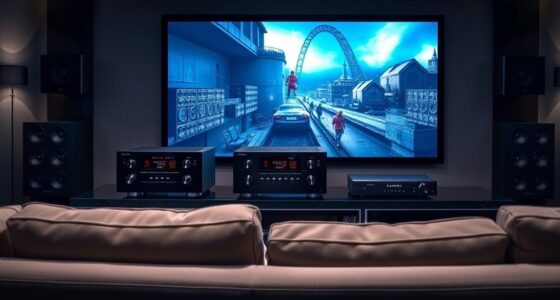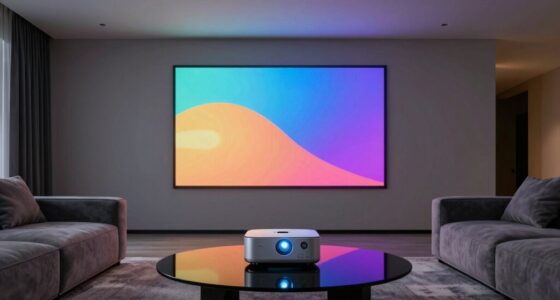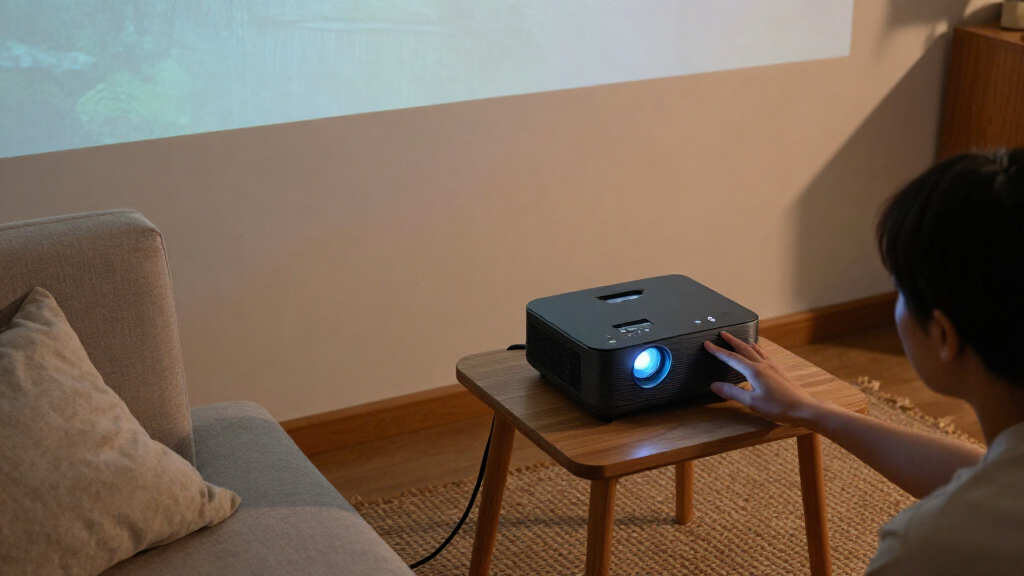
For most buyers, I’d start with the Hisense M2 Pro, whose triple-laser design makes it the strongest overall pick in this portable 4K projector lineup. The JMGO N1S is another standout for buyers who want triple-laser projection with Google TV, while the Epson Lifestudio Flex Plus offers a different route for shoppers drawn to Epson’s 4K PRO-UHD approach. The key tradeoff is that “4K” can mean native 4K resolution, pixel-shifted 4K enhancement, or simply support for a 4K input, and those are not equivalent. Brightness, setup flexibility, and smart-TV features also affect whether a projector works well in your space. Read on for how the 11 options compare and which type of buyer each one suits.

Get business pricing on your home office setup
- Business-only prices and quantity discounts
- Tax-exempt purchasing
- Multiple users, one account, clear invoices
Complete the kit


Key Takeaways
- The lineup’s clearest premium contenders are the Hisense M2 Pro and JMGO N1S: both use triple-laser designs, while their smart platforms and broader feature sets give buyers different reasons to choose between them.
- 4K support does not always mean 4K projection: several compact models specify native 1080p with 4K support, so buyers should distinguish input compatibility from the resolution shown on screen.
- The Nebula Cosmos 4K SE stands apart with a stated 1,800 ANSI lumens: that specification gives shoppers a clearer brightness reference than product names that focus on 4K without stating a comparable figure.
- Portability covers very different needs here: the rotating Thunrlge HY300 Pro and mini models emphasize flexible placement, while larger or more feature-rich 4K options favor image capability over pocket-sized convenience.
- Built-in apps and automatic setup are not substitutes for checking core image specs: Google TV, Android, autofocus, and auto adjustment can simplify use, but buyers still need to confirm native resolution, brightness, and the kind of 4K processing offered.
| Hisense M2 Pro 4K UHD Triple Laser Portable Projector |  | Best for Color and Flexible Placement | Resolution: 3840 × 2160 | Brightness: 1,300 ANSI lumens | Image size: 65–200 inches | VIEW LATEST PRICE | See Our Full Breakdown |
| XGIMI Elfin Flip 4K Portable Projector with Google TV |  | Best for Gaming and Built-In Streaming | Native resolution: 3840 × 2160 | Display type: DLP | Brightness: 1,600 ISO lumens | VIEW LATEST PRICE | See Our Full Breakdown |
| Epson Lifestudio Flex Plus 4K PRO-UHD Portable Projector |  | Best for Easy Setup and Built-In Audio | Native resolution: 3840 × 2160 | Display type: LCD; 3-chip 3LCD Triple Core Engine | Brightness: 1,000 lumens color; 1,000 lumens white | VIEW LATEST PRICE | See Our Full Breakdown |
| Nebula Cosmos 4K SE Portable Projector, 1,800 ANSI Lumens |  | Best for Automated Room Adaptation | Native resolution: 3840 × 2160 | Brightness: 1,800 ANSI lumens | Light source: LED + laser | VIEW LATEST PRICE | See Our Full Breakdown |
| Thunrlge HY300 Pro Portable Mini Projector with Android 11, Wi-Fi 6, Bluetooth, and 180° Rotation |  | Best for Casual, Flexible Placement | Native resolution: 1280 × 720 | Display type: TFT LCD | Image size: 40–130 inches | VIEW LATEST PRICE | See Our Full Breakdown |
| JMGO N1S 4K Triple Laser Projector with Google TV |  | Best True 4K Portable Pick | Native resolution: 3840 × 2160 | Display type: DLP | Brightness: 1,700 ISO lumens | VIEW LATEST PRICE | See Our Full Breakdown |
| ONOAYO ONO3Pro 2.0 Portable Projector with 4K Decoding, AI Auto Adjustment, Dolby Audio, and Built-in Apps |  | Best for Built-In Sound and Mounting Flexibility | Video support: 4K decoding; native resolution not specified | Audio: Dual 50W speakers, Dolby Audio, eARC | Weight: 2.4 lb | VIEW LATEST PRICE | See Our Full Breakdown |
| Portable Smart Projector with Google TV, Native 1080p, 4K Support, HDR10, Wi-Fi 6 and Bluetooth 5.3 |  | Best Compact Short-Throw Option | Native resolution: 1080p | 4K support: 4K decoding | Operating system: Google TV 14.0 | VIEW LATEST PRICE | See Our Full Breakdown |
| XuanPad Smart Mini Projector, Native 1080p with 4K Support, Wi-Fi, Bluetooth, Autofocus, and 360° Stand |  | Best Lightweight Stand-Mounted Pick | Native resolution: 1920 × 1080 | Maximum input resolution: 3840 × 2160 | Display type: LCD | VIEW LATEST PRICE | See Our Full Breakdown |
| ONOAYO ONO5Pro 2.0 4K-Support Smart Projector with Wi-Fi 6 and Dolby Audio |  | Best for Gaming and Big Sound | Resolution support: 4K support; native resolution not specified | Audio: Dual 60W Dolby Audio speakers | Input latency: 18 ms | VIEW LATEST PRICE | See Our Full Breakdown |
| Magcubic Portable Mini Projector with Wi-Fi 6, Bluetooth 5.4, and 4K Support |  | Best Ultra-Lightweight Option for Casual Viewing | Native resolution: 1280 × 720 | Maximum input resolution: 3840 × 2160 pixels (4K support) | Brightness: 200 ANSI lumens | VIEW LATEST PRICE | See Our Full Breakdown |
| portable 4K projector | Image size | Native resolution | Connectivity | Brightness |
|---|---|---|---|---|
| Hisense M2 Pro 4K UHD Triple L | 65–200 inches | — | Wi-Fi, Bluetooth, 5 HDMI, USB 3.0 | 1,300 ANSI lumens |
| XGIMI Elfin Flip 4K Portable P | 40–200 inches | 3840 × 2160 | — | 1,600 ISO lumens |
| Epson Lifestudio Flex Plus 4K | 30–150 inches | 3840 × 2160 | 3.5 mm jack, Bluetooth, HDMI, USB, Wi-Fi | 1,000 lumens color; 1,000 lumens white |
| Nebula Cosmos 4K SE Portable P | 20–200 inches | 3840 × 2160 | — | 1,800 ANSI lumens |
| Thunrlge HY300 Pro Portable Mi | 40–130 inches | 1280 × 720 | Wi-Fi 6, Bluetooth, HDMI, USB | — |
| JMGO N1S 4K Triple Laser Proje | 40–200 inches | 3840 × 2160 | Wi-Fi 6, Bluetooth 5.2, HDMI 2.1 with eARC, USB 2.0 | 1,700 ISO lumens |
| ONOAYO ONO3Pro 2.0 Portable Pr | — | — | Wi-Fi 6, Bluetooth | — |
| Portable Smart Projector with | — | 1080p | — | — |
| XuanPad Smart Mini Projector | 40–200 inches | 1920 × 1080 | — | — |
| ONOAYO ONO5Pro 2.0 4K-Support | — | — | Wi-Fi 6, Bluetooth, HDMI 2.1 | — |
| Magcubic Portable Mini Project | 35–135 inches | 1280 × 720 | Wi-Fi 6, Bluetooth 5.4, HDMI, USB | 200 ANSI lumens |
More Details on Our Top Picks
Hisense M2 Pro 4K UHD Triple Laser Portable Projector
The Hisense M2 Pro pairs native 4K UHD with a triple laser light source and Dolby Vision, making it a strong fit for movie fans who can dim the room and want a large, detailed image. Its optical zoom changes image size without relying on digital scaling, which gives it more placement flexibility than the Epson Lifestudio Flex Plus, whose listed maximum image size is smaller at 150 inches. The M2 Pro can reach 200 inches, but its 1,300 ANSI lumens are best suited to subdued lighting, not daytime viewing in a bright living room. VIDAA provides built-in streaming, while HDMI, USB, and wireless connections support other sources. I would skip it if bright-room use or active 3D without separately sourced glasses is a priority.
Pros:- Triple laser light source and Dolby Vision support suit color-rich film viewing.
- Optical zoom adjusts image size without digital scaling.
- Supports image sizes up to 200 inches.
- VIDAA streaming and ceiling, tabletop, or rear mounting add setup flexibility.
Cons:- 1,300 ANSI lumens are better suited to low-light viewing than bright rooms.
- Active 3D requires separately obtained DLP-Link shutter glasses.
Best for: Movie watchers who can control room lighting and want a portable 4K projector with triple-laser color, optical zoom, and flexible mounting.
Not ideal for: Buyers who need a bright image in a sunlit room or want active 3D without purchasing compatible DLP-Link glasses separately.
- Resolution:3840 × 2160
- Brightness:1,300 ANSI lumens
- Image size:65–200 inches
- Throw distance:4.7–18.8 feet
- Contrast ratio:5000:1
- Light source:Triple laser
- Light source life:25,000 hours
- Connectivity:Wi-Fi, Bluetooth, 5 HDMI, USB 3.0
- Operating system:VIDAA
Our verdict“Choose the Hisense M2 Pro for flexible, large-screen 4K movie viewing in a dim room; choose a brighter-room solution if ambient light is hard to control.”
XGIMI Elfin Flip 4K Portable Projector with Google TV
The XGIMI Elfin Flip is the most gaming-focused pick here: its listed 1 ms latency, VRR, and ALLM target players who want responsive play without adding a separate streaming box. Google TV and dual Harman Kardon speakers also make it a more self-contained setup than the Hisense M2 Pro, which uses VIDAA and does not list the same gaming features. Its RGB triple laser and optical zoom round out a capable portable 4K package, while autofocus helps reduce setup fuss. The tradeoff is that 1,600 ISO lumens may not be enough for a bright room, and the maximum throw distance is 5.7 meters, which can limit placement in larger spaces. Its tabletop-only mounting is less flexible than the Hisense’s options.
Pros:- Gaming features include 1 ms latency, VRR, and ALLM.
- RGB triple laser light source and 4K UHD resolution.
- Optical zoom adjusts image size without digital scaling.
- Google TV and dual Harman Kardon speakers reduce the need for add-on devices.
Cons:- 1,600 ISO lumens may limit viewing in bright rooms.
- Maximum throw distance is 5.7 meters.
- Listed mounting type is tabletop, offering fewer placement choices than the Hisense M2 Pro.
Best for: Console and PC players who want portable 4K projection, low-latency gaming features, and Google TV with built-in speakers.
Not ideal for: Buyers projecting in bright rooms, needing a longer throw than 5.7 meters, or planning ceiling or rear mounting.
- Native resolution:3840 × 2160
- Display type:DLP
- Brightness:1,600 ISO lumens
- Light source:RGB triple laser
- Optical zoom:0.98–1.3:1
- Image size:40–200 inches
- Maximum throw distance:5.7 meters
- Audio:Dual Harman Kardon built-in speakers
- Gaming features:1 ms latency, VRR, ALLM
Our verdict“Pick the Elfin Flip if responsive gaming and an all-in-one Google TV setup matter more than bright-room performance or flexible mounting.”
Epson Lifestudio Flex Plus 4K PRO-UHD Portable Projector
The Epson Lifestudio Flex Plus makes portable 4K viewing approachable with autofocus, automatic screen alignment, and an adjustable stand. Those setup aids are a meaningful advantage for buyers who move a projector between rooms; the Hisense M2 Pro offers optical zoom and broader mounting options, but its listed features do not include the same automatic alignment assistance. Epson adds Google TV and Sound by Bose stereo audio, so a casual film night can start without a separate streaming device or immediate speaker purchase. The compromises are a lower 1,000 lumens of both color and white brightness and a 150-inch image-size ceiling, below the 200-inch limit on the Hisense and XGIMI models. It is also limited to tabletop mounting and an 11-foot maximum throw.
Pros:- Autofocus and auto screen alignment simplify setup after moving the projector.
- Adjustable stand helps with positioning.
- Google TV is built in for streaming without an external box.
- Sound by Bose stereo audio is included.
Cons:- 1,000 lumens of color and white brightness are limiting in bright rooms.
- Maximum image size is 150 inches, smaller than the Hisense M2 Pro and XGIMI Elfin Flip limits.
- Maximum throw distance is 11 feet and mounting is listed as tabletop.
Best for: People who move a projector between rooms and value automatic setup, built-in Google TV, and onboard stereo sound over maximum brightness or screen size.
Not ideal for: Buyers seeking a 200-inch image, bright-room projection, ceiling mounting, or a throw distance beyond 11 feet.
- Native resolution:3840 × 2160
- Display type:LCD; 3-chip 3LCD Triple Core Engine
- Brightness:1,000 lumens color; 1,000 lumens white
- Image size:30–150 inches
- Throw distance:2–11 feet
- Light source operating life:20,000 hours
- Audio:Sound by Bose stereo system
- Streaming platform:Google TV
- Connectivity:3.5 mm jack, Bluetooth, HDMI, USB, Wi-Fi
Our verdict“Choose the Epson for an easy-to-place portable setup with built-in streaming and audio, but look elsewhere for larger images or brighter-room viewing.”
Nebula Cosmos 4K SE Portable Projector, 1,800 ANSI Lumens
The Nebula Cosmos 4K SE stands out for combining 1,800 ANSI lumens with a broad set of automatic picture adjustments: autofocus, keystone correction, obstacle avoidance, screen fit, and wall-color adaptation. That makes it a practical choice when the projection surface or furniture layout changes, whereas the Epson Lifestudio Flex Plus is capped at a 150-inch image and offers a shorter list of listed adaptation tools. Nebula also includes Google TV with 4K Netflix and Dolby Vision, covering streaming and HDR playback without an external dongle. Its 200-inch maximum image size gives it room to scale up, but the supplied contrast ratio is only 400:1, a concern for viewers focused on dark-scene depth. At 4.78 meters, its maximum throw is also shorter than the Hisense M2 Pro’s listed range.
Pros:- 1,800 ANSI lumens is the highest listed ANSI brightness among these five models.
- Autofocus, keystone correction, obstacle avoidance, and screen fitting simplify placement.
- Google TV includes 4K Netflix without an external dongle.
- Supports image sizes up to 200 inches and Dolby Vision.
Cons:- The listed contrast ratio is 400:1, which may concern viewers focused on dark-scene detail.
- Maximum throw distance is 4.78 meters, shorter than the Hisense M2 Pro’s 18.8-foot maximum.
- The combined LED-and-laser light source differs from the triple-laser systems in the Hisense and XGIMI models.
Best for: Households that regularly change projection locations and want automated image fitting, Google TV, and a larger screen option.
Not ideal for: Film viewers who prioritize dark-scene contrast, or buyers who need a throw distance beyond 4.78 meters.
- Native resolution:3840 × 2160
- Brightness:1,800 ANSI lumens
- Light source:LED + laser
- Image size:20–200 inches
- Throw distance:1.69–4.78 meters
- Contrast ratio:400:1
- Light source operating life:25,000 hours
- Smart TV platform:Google TV with 4K Netflix
- Image and setup features:Dolby Vision, autofocus, keystone correction, obstacle avoidance, screen fit, wall-color and ambient-light adaptation
Our verdict“Choose the Nebula for a feature-rich, automatically fitted portable 4K setup, but prioritize another model if listed contrast or long-throw placement matters most.”
Thunrlge HY300 Pro Portable Mini Projector with Android 11, Wi-Fi 6, Bluetooth, and 180° Rotation
The Thunrlge HY300 Pro is the outlier in a portable 4K roundup: its native resolution is 1280 × 720, so it does not match the 4K detail of the Hisense M2 Pro, XGIMI Elfin Flip, Epson Lifestudio Flex Plus, or Nebula Cosmos 4K SE. Its appeal is instead simple, flexible viewing: the body rotates 180 degrees, automatic keystone correction helps square the image, and Android 11 includes a Netflix app. Wi-Fi 6, Bluetooth, HDMI, and USB give it several ways to connect, though the listed image range tops out at 130 inches and throw distance at 3 meters. I would treat it as a compact casual projector rather than a true 4K choice; buyers who want fine detail for films or gaming should choose one of the native-4K options.
Pros:- 180-degree rotation supports flexible projection angles.
- Automatic keystone correction helps align the image.
- Android 11 and a built-in Netflix app support standalone streaming.
- Wi-Fi 6, Bluetooth, HDMI, and USB provide multiple connection options.
Cons:- Native 1280 × 720 resolution falls well short of the 4K resolution of the other four products.
- Maximum image size is 130 inches, smaller than the 150- to 200-inch limits on the other models.
- Maximum throw distance is 3 meters.
Best for: Casual viewers who prioritize a rotating, easy-to-position mini projector for occasional streaming and do not require native 4K detail.
Not ideal for: Buyers specifically seeking a 4K projector, large-screen sharpness, or a throw distance longer than 3 meters.
- Native resolution:1280 × 720
- Display type:TFT LCD
- Image size:40–130 inches
- Throw distance:0.5–3 meters
- Contrast ratio:1500:1
- Operating system:Android 11.0
- Connectivity:Wi-Fi 6, Bluetooth, HDMI, USB
- Rotation:180°
- Keystone correction:Automatic
Our verdict“Buy the HY300 Pro for flexible casual viewing rather than 4K image quality; choose the Epson, Hisense, XGIMI, or Nebula for native 4K resolution.”
JMGO N1S 4K Triple Laser Projector with Google TV
The JMGO N1S is the clearest fit here for buyers who want native 4K resolution in a portable projector, rather than a 1080p model that accepts 4K input. Its RGB triple-laser color, HDR10, and 1,700 ISO lumens give it a stronger image-focused case than the ONOAYO ONO3Pro 2.0, whose native resolution and brightness are unspecified. Google TV with licensed Netflix cuts down on extra streaming hardware, while the 127° rotating gimbal and automatic adjustments make aiming easier when the projector moves between rooms. The tradeoff is that its roughly 4.4-pound body is heavier than several alternatives, and the stated brightness is best suited to controlled lighting. I would skip it for daytime viewing or if 3D is a priority without compatible active glasses.
Pros:- Native 3840 × 2160 resolution makes it a genuine 4K choice, unlike the native-1080p XuanPad.
- RGB triple-laser color and HDR10 support detailed, vivid viewing in controlled lighting.
- Google TV includes licensed Netflix and supports wireless casting.
- Rotating gimbal, autofocus, and automatic keystone correction simplify setup.
Cons:- At approximately 4.4 lb, it is heavier than the ONO3Pro 2.0 and XuanPad.
- The 1,700 ISO-lumen rating is better suited to dark or controlled-light rooms than bright spaces.
- Blu-ray 3D requires compatible active 3D glasses.
Best for: Movie watchers who want verified native 4K, built-in licensed Netflix, and flexible placement in a darkened room.
Not ideal for: Buyers who need a lightweight projector for bright daytime rooms or want 3D playback without buying compatible active glasses.
- Native resolution:3840 × 2160
- Display type:DLP
- Brightness:1,700 ISO lumens
- Color technology:MALC 3.0 RGB triple laser
- HDR:HDR10
- Image size:40–200 inches
- Operating system:Google TV with licensed Netflix
- Weight:Approximately 4.4 lb
- Connectivity:Wi-Fi 6, Bluetooth 5.2, HDMI 2.1 with eARC, USB 2.0
Our verdict“Choose the JMGO N1S if native 4K and triple-laser color matter more than minimum weight or bright-room performance.”
ONOAYO ONO3Pro 2.0 Portable Projector with 4K Decoding, AI Auto Adjustment, Dolby Audio, and Built-in Apps
The ONO3Pro 2.0 suits buyers who value powerful built-in audio and easy placement more than confirmed 4K image detail. Its dual 50W speakers, Dolby Audio, and eARC give it a more self-contained sound setup than the JMGO N1S, whose listed speakers are dual 5W units. At 2.4 lb, it is also easier to carry, with desktop, tripod, wall, and ceiling mounting options. Automatic focus, screen fit, obstacle avoidance, and orientation detection can reduce setup adjustments; built-in apps and Chromecast add convenient viewing options. The central limitation for a 4K roundup is that the product data lists 4K decoding but no native resolution or brightness. I would not choose it over the JMGO when verified native 4K picture detail is the priority.
Pros:- Dual 50W speakers with Dolby Audio and eARC offer a more substantial built-in sound setup than the JMGO N1S’s dual 5W speakers.
- Weighs 2.4 lb and supports desktop, tripod, wall, and ceiling mounting.
- AI autofocus, keystone correction, screen fit, and obstacle avoidance simplify setup.
- Built-in apps and Chromecast provide several ways to stream or cast.
Cons:- The supplied specifications state 4K decoding but do not specify native resolution.
- No brightness measurement is provided, making room suitability harder to judge.
- Zoom is limited to 50%–100% and cannot replace moving the projector.
Best for: Renters or frequent room-to-room movers who want a lightweight projector with substantial built-in sound, streaming apps, and varied mounting options.
Not ideal for: Buyers who need confirmed native 4K resolution or a published brightness figure to judge performance for their room.
- Video support:4K decoding; native resolution not specified
- Audio:Dual 50W speakers, Dolby Audio, eARC
- Weight:2.4 lb
- Connectivity:Wi-Fi 6, Bluetooth
- Casting:Built-in Chromecast
- Built-in apps:Netflix, YouTube, Prime Video, Apple TV, Disney+, Live TV
- Automatic adjustments:AI autofocus, keystone correction, obstacle avoidance, screen fit, orientation detection
- Zoom:50%–100%
- Mounting:Desktop, tripod, wall, or ceiling; M4 screw port
Our verdict“Pick the ONO3Pro 2.0 for portability, flexible mounting, and strong onboard sound, but not when verified native 4K is non-negotiable.”
Portable Smart Projector with Google TV, Native 1080p, 4K Support, HDR10, Wi-Fi 6 and Bluetooth 5.3
This compact Google TV model is a sensible choice for small rooms, but it is not a native 4K projector: its panel is 1080p and 4K is supported through decoding. That distinction puts it behind the JMGO N1S for fine image detail, while its 0.8:1 throw ratio helps it create a large picture from less distance—a practical advantage in a bedroom or apartment setup. The built-in rotatable stand, autofocus, keystone correction, and obstacle avoidance make repositioning less fiddly, and Google TV 14.0 supplies a familiar streaming interface. Its listed image size reaches 120 inches, below the JMGO’s 200-inch maximum. I would choose this for compact placement and convenience, not for buyers who expect native 4K clarity at the largest sizes.
Pros:- The 0.8:1 throw ratio supports a large image with less room depth than the JMGO N1S may need.
- At 2.6 lb, it is easier to move and position than the JMGO N1S.
- Rotatable stand, autofocus, keystone correction, and obstacle avoidance simplify setup.
- Google TV, Wi-Fi 6, Bluetooth 5.3, HDMI ARC/CEC, and USB offer flexible streaming and connections.
Cons:- Native resolution is 1080p; 4K content is decoded rather than displayed at native 4K.
- The listed maximum image size is 120 inches, smaller than the JMGO N1S’s stated 200-inch maximum.
- Image clarity may soften at larger projection distances.
Best for: Apartment dwellers and bedroom viewers who need a short-throw, lightweight projector with Google TV and flexible aiming.
Not ideal for: Viewers seeking native 4K detail, particularly for very large images, or buyers whose room requires a projection beyond the listed 120-inch maximum.
- Native resolution:1080p
- 4K support:4K decoding
- Operating system:Google TV 14.0
- Throw ratio:0.8:1
- Screen size:60 in at 3.5 ft; 80 in at 4.6 ft; 100 in at 5.9 ft; up to 120 in at 6.9 ft
- HDR:HDR10
- Wireless connectivity:Wi-Fi 6, Bluetooth 5.3
- Weight:2.6 lb (1.2 kg)
- Mounting:Built-in rotatable stand; 1/4 in screw hole
Our verdict“Choose this model for short-throw convenience and compact Google TV viewing, but choose the JMGO N1S for native 4K.”
XuanPad Smart Mini Projector, Native 1080p with 4K Support, Wi-Fi, Bluetooth, Autofocus, and 360° Stand
At 1.89 lb, the XuanPad is the easiest option in this group to carry, and its detachable 360° stand offers a simple way to aim it at walls or ceilings. That makes it more appealing for casual indoor and outdoor setups than the 2.6-pound Google TV short-throw model, though the XuanPad’s product data does not give a throw ratio or comparable distance-to-image measurements. Its native 1080p LCD accepts 4K input, but it cannot match the JMGO N1S’s native 4K resolution. Autofocus, 6D keystone correction, built-in apps, and 50–100% zoom keep setup approachable. The tradeoff is that the 2.69-inch thickness is not especially slim, and the available data does not specify brightness. I’d favor it for portability, not as a picture-detail-first 4K choice.
Pros:- At 1.89 lb, it is lighter than the Google TV short-throw projector and JMGO N1S.
- Detachable 360° stand supports flexible aiming at walls or ceilings.
- AI autofocus and 6D keystone correction reduce manual setup work.
- Built-in apps, Wi-Fi, Bluetooth, HDMI, USB, and a 3.5 mm jack provide varied playback options.
Cons:- Native resolution is 1920 × 1080; 4K is a supported input resolution, not native display resolution.
- The 2.69-inch thickness may be less convenient to pack than a slimmer pocket projector.
- Brightness and throw ratio are not specified in the supplied product data.
Best for: Travelers and casual outdoor viewers who prioritize low carry weight, flexible stand positioning, and straightforward wireless playback.
Not ideal for: Buyers seeking native 4K, a slim pocket-sized body, or a published brightness figure for planning use in brighter spaces.
- Native resolution:1920 × 1080
- Maximum input resolution:3840 × 2160
- Display type:LCD
- Image size:40–200 inches
- Weight:1.89 lb
- Thickness:Approximately 2.69 inches
- Wireless connectivity:Dual-band 2.4 GHz and 5 GHz Wi-Fi; Bluetooth 5.2
- Zoom:50%–100%
- Setup features:AI autofocus, 6D keystone correction, detachable 360° stand
Our verdict“Choose the XuanPad for lightweight, flexible placement, but choose the JMGO N1S if native 4K detail matters more than portability.”
ONOAYO ONO5Pro 2.0 4K-Support Smart Projector with Wi-Fi 6 and Dolby Audio
The ONO5Pro 2.0 is the gaming-and-audio pick, built around 18 ms stated input latency, HDMI 2.1, and dual 60W Dolby Audio speakers. Its game mode and Chromecast add convenience, while autofocus, screen fit, obstacle avoidance, and orientation detection reduce setup work. Compared with the ONO3Pro 2.0, it lists more powerful speakers and a specific latency figure; compared with the JMGO N1S, it lacks the native-resolution detail needed to make a firm case as a true 4K image upgrade. The description says 4K support but does not state native resolution, and it gives no numeric brightness measurement. Those gaps matter for buyers choosing a projector by image sharpness or room lighting. I’d shortlist it for gaming and integrated sound, but not for a spec-led 4K cinema setup.
Pros:- Stated 18 ms input latency, HDMI 2.1, and a dedicated game mode support gaming use.
- Dual 60W Dolby Audio speakers provide a stronger listed audio setup than the ONO3Pro 2.0’s dual 50W speakers.
- Autofocus, keystone correction, screen fit, obstacle avoidance, and orientation detection simplify setup.
- Wi-Fi 6 and built-in Chromecast support streaming and casting.
Cons:- The product data says 4K support but does not specify native resolution.
- No numeric brightness measurement is provided, limiting room-use comparisons.
- Dynamic zoom is limited to 50%–100% and cannot substitute for changing projector position.
Best for: Casual gamers and streaming households who want a stated low-latency mode, strong onboard audio, and automatic image setup.
Not ideal for: Buyers who require confirmed native 4K resolution or a numeric brightness rating before choosing a projector for a specific room.
- Resolution support:4K support; native resolution not specified
- Audio:Dual 60W Dolby Audio speakers
- Input latency:18 ms
- Connectivity:Wi-Fi 6, Bluetooth, HDMI 2.1
- Operating system:Smart TV Pro OS 2.0
- Casting:Built-in Chromecast
- Color gamut:98% NTSC
- Color depth:1.07 billion colors
- Calibration features:Autofocus, keystone correction, obstacle avoidance, screen fit, orientation detection
Our verdict“Pick the ONO5Pro 2.0 for gaming features and substantial built-in sound, not when verified native 4K or brightness data is your main criterion.”
Magcubic Portable Mini Projector with Wi-Fi 6, Bluetooth 5.4, and 4K Support
At just 0.88 pounds, this Magcubic is the easiest option in the roundup to carry for an impromptu movie night, and its 180-degree rotation gives it flexible placement on a table, floor stand, or ceiling mount. Its 4K label needs careful interpretation: the projector accepts 4K input, but its native resolution is 720p, so it cannot show the fine detail of a true 4K model such as the Hisense M2 Pro. The 200 ANSI brightness also suits dim rooms or nighttime outdoor viewing rather than daylight. Built-in apps, a 5W speaker, Wi-Fi 6, Bluetooth 5.4, and an Air Mouse remote make setup more self-contained than a basic portable projector, but picture quality takes a back seat to low weight and convenience.
Pros:- At 0.88 pounds, it is exceptionally easy to carry between rooms or take outdoors.
- 180-degree rotation and tabletop, floor-stand, and ceiling-mount options allow flexible placement.
- Built-in apps and a 5W speaker support simple viewing without separate streaming hardware or speakers.
- Wi-Fi 6, Bluetooth 5.4, HDMI, USB, and voice control provide several ways to connect and navigate.
Cons:- Native 720p resolution falls well short of the detail available from true 4K models such as the Hisense M2 Pro.
- 200 ANSI brightness limits it mainly to dark or dim viewing spaces.
- A 5W speaker is convenient but may not satisfy viewers who want fuller sound for films.
Best for: Travelers and casual viewers who prioritize a very light projector, flexible mounting, and built-in apps for dim-room viewing.
Not ideal for: Buyers seeking native 4K detail, a bright picture for daytime use, or a large-screen centerpiece for a well-lit room.
- Native resolution:1280 × 720
- Maximum input resolution:3840 × 2160 pixels (4K support)
- Brightness:200 ANSI lumens
- Contrast ratio:8000:1
- Display type:LCD
- Weight:0.88 lb
- Connectivity:Wi-Fi 6, Bluetooth 5.4, HDMI, USB
- Image size:35–135 inches
- Rotation:180 degrees
Our verdict“Choose the Magcubic for lightweight, flexible viewing in dim spaces, but skip it if native 4K resolution or strong brightness is your priority.”
How We Picked
I ranked these portable 4K projectors by how well their stated specifications match the needs implied by the category: a sharp image, a form that can move between rooms or locations, and setup that does not demand a permanent installation. I gave more weight to products that describe their 4K approach clearly, identify meaningful image hardware such as triple lasers, or provide a stated brightness figure. I also considered smart-platform details, automatic adjustment, rotation, and connectivity as practical benefits rather than proof of picture quality.
The ranking separates projectors built for stronger 4K-focused viewing from small models that accept 4K content but list native 1080p resolution. That distinction matters: a low-cost, easy-to-position mini projector can still make sense for casual viewing, but it should not outrank a product whose specifications more directly support a buyer seeking 4K projection. Because the product details supplied do not establish comparable brightness, battery life, or native resolution for every model, I avoid treating unlisted capabilities as confirmed and favor transparent, buyer-relevant specifications.
| portable 4K projector | Display type |
|---|---|
| Hisense M2 Pro 4K UHD Triple L | — |
| XGIMI Elfin Flip 4K Portable P | DLP |
| Epson Lifestudio Flex Plus 4K | LCD; 3-chip 3LCD Triple Core Engine |
| Nebula Cosmos 4K SE Portable P | — |
| Thunrlge HY300 Pro Portable Mi | TFT LCD |
| JMGO N1S 4K Triple Laser Proje | DLP |
| ONOAYO ONO3Pro 2.0 Portable Pr | — |
| Portable Smart Projector with | — |
| XuanPad Smart Mini Projector | LCD |
| ONOAYO ONO5Pro 2.0 4K-Support | — |
| Magcubic Portable Mini Project | LCD |
Factors to Consider When Choosing Portable 4K Projectors
Before choosing among these models, I’d narrow the decision around the room and the meaning of “portable” for you. The right projector for a dark bedroom may be a poor match for a bright living room, and a compact body does not guarantee a sharp 4K image. These checks help separate genuine image priorities from convenience features.
Check Whether 4K Is Native, Enhanced, or Input Support
Product listings use “4K” to describe different capabilities, so check the resolution the projector actually displays before comparing names. Native 1080p with 4K support usually means the projector can accept a 4K signal but presents an image at 1080p. A 4K-enhancement system may create more perceived detail than standard 1080p without using a native 4K panel. Native resolution is only one part of image quality, but the distinction prevents paying for a label that does not match your expectations. If you watch from close to a large screen or prioritize fine detail, give this specification more weight than app count or wireless standards. For casual viewing on a smaller image, you may be more comfortable trading resolution for portability or easier placement.
Match Brightness to the Room, Not the Marketing Name
Brightness affects whether a projected image remains watchable when there is stray light, but figures are useful only when the measurement and conditions are clear. The Nebula Cosmos 4K SE lists 1,800 ANSI lumens, which gives buyers a stated reference point; do not assume a projector without a comparable figure will perform similarly. Even a bright model benefits from curtains or a dimmer room, especially when showing dark scenes. A common mistake is choosing for daytime living-room use based on resolution alone. Think about when you will watch, whether you can control the light, and how large an image you want. If light control is limited, prioritize verified brightness information over extra smart features.
Treat Portability as a Whole Setup, Not Just Projector Size
A projector is only portable in practice if you can move and set up the whole viewing system. Check the body’s weight and dimensions, but also account for its power supply, streaming needs, speaker arrangement, screen, and any stand or mount. A rotating design such as the Thunrlge HY300 Pro can make unusual placement easier, while a compact unit may still need a stable surface and careful alignment. Built-in apps and speakers can reduce accessories, yet they do not guarantee long battery operation or untethered use. Look for explicit battery details if you plan to watch away from an outlet; do not infer battery power from the word “portable.” For occasional room-to-room moves, a power-corded projector may still be convenient.
Decide How Much Setup Automation You Actually Need
Autofocus and automatic image adjustment can speed up setup, especially if you move the projector often or change its position between sessions. They do not remove every placement constraint: the lens still needs a suitable angle, enough throw distance, and a surface that can show the image cleanly. Digital correction can also alter the projected image rather than solve poor placement. If the projector will live in one spot, manual alignment may be perfectly manageable, so automation should not outweigh resolution or brightness. For a rotating or frequently relocated unit, automatic adjustment has more day-to-day value. Check whether the advertised feature names describe focus, keystone correction, obstacle avoidance, or a combination, since those functions address different problems.
Choose a Smart Platform Around Your Actual Viewing Habits
Built-in Google TV or Android can reduce reliance on an external streaming device, but the platform name alone does not confirm that every service you use is available or works as expected. Check app compatibility, account requirements, and whether the projector needs an internet connection for your intended setup. Wi-Fi and Bluetooth are useful for connecting to a network or audio gear, but they do not replace a reliable wired source when wireless playback is inconvenient. If you already own a streaming stick or console, you may not need to prioritize built-in apps. Simple software can be more useful than a long feature list if it gets you to the content you watch without extra setup. Confirm the ports and supported input formats when you plan to connect a laptop, game system, or disc player.
Pay More for the Limitation You Need to Solve
Higher-end image hardware makes the most sense when picture detail, color, or a more capable home-cinema setup is your main goal. It is a weaker investment if you mostly need a small screen for occasional travel or casual viewing. Before spending more, identify the limitation you want to fix: resolution, brightness, placement flexibility, or fewer external devices. Do not pay a 4K premium for 4K input support alone if the listed native resolution remains 1080p and that output will disappoint you. On the other hand, a mini projector’s low weight and flexible placement can be worth more than resolution for a secondary room. Compare the complete setup and your viewing habits, not a single headline specification.
Frequently Asked Questions
Does a portable projector that supports 4K show a native 4K image?
Not necessarily. “4K support” can mean the projector accepts a 4K video signal, then displays it at its native resolution, which may be 1080p. Check the stated native resolution separately from supported input formats and any 4K enhancement method. In this lineup, some compact models explicitly list native 1080p with 4K support, so they should not be treated as equivalent to a projector described as 4K UHD. If fine detail matters to you, confirm the image resolution before choosing.
Can I use a portable 4K projector in a room with the lights on?
It depends on the projector’s measured brightness, the amount of ambient light, the screen size, and how much light reaches the screen directly. A darker room usually gives better contrast and more convincing color, even with a projector that lists a brightness figure. The Nebula Cosmos 4K SE specifies 1,800 ANSI lumens, while not every product in this roundup provides a directly comparable figure. Treat unlisted brightness as unknown rather than assuming it matches a named competitor. If you cannot darken the room, look for reliable brightness specifications and plan on a more modest image size.
Do I need built-in Google TV or Android if I already own a streaming device?
No. A separate streaming stick or connected device may already cover the apps you use, so built-in software may add little value to your setup. It can still be convenient when you want fewer accessories or plan to move the projector between locations. Before relying on a built-in platform, check app support and the projector’s connection options. Also consider whether your streaming device can connect cleanly and receive power without clutter. Choose based on the setup you want, not on the assumption that more built-in features always mean a better picture.
Is a smaller mini projector a better choice for travel than a larger 4K model?
It can be, if minimizing the amount of gear you carry matters more than image detail or brightness. A small projector may accept 4K content while displaying it at native 1080p, so check the distinction before treating it as a travel-friendly 4K substitute. Also verify its power requirements, audio options, and connection method; a compact body does not automatically mean battery-powered or self-contained. For occasional trips with a dark room and a modest screen, portability may be the better trade. For a large, detailed home image, the more capable 4K-focused models are likely a better fit.
Which specification should I prioritize if I have a strict budget?
Start with the limitation that would make you regret the purchase: native resolution, usable brightness, or ease of placement. If you mainly watch casually in a dark room, a 1080p projector with 4K input support may be a reasonable compromise, provided you understand what the label means. If you want a large image or often watch with ambient light, prioritize clearly stated resolution and brightness instead of extra connectivity features. Automatic adjustment and built-in apps are helpful, but they cannot compensate for a picture that misses your needs. Compare the complete setup you will use, including any streaming device, stand, or screen you may need to add.
Conclusion
For the best overall balance in this roundup, I’d choose the Hisense M2 Pro; its triple-laser design makes it the strongest starting point for buyers focused on 4K-oriented viewing. The JMGO N1S is my pick for shoppers who want a premium triple-laser alternative with Google TV, while the Epson Lifestudio Flex Plus is worth comparing if Epson’s 4K PRO-UHD approach better matches your priorities. For a more budget-minded or flexible-placement choice, the Thunrlge HY300 Pro and the native-1080p mini models make more sense when portability and casual use matter more than native 4K. Beginners should favor a model whose apps and adjustment features suit their setup, but verify the resolution and brightness before buying. If your specific need is a stated brightness reference, put the Nebula Cosmos 4K SE on your shortlist; if you need true 4K-level detail, do not mistake 4K input support for native 4K projection.