
4K OLED TVs deliver the deepest blacks and best contrast you can buy, but choosing the right one comes down to panel size, brightness, gaming features, and price. The LG 65-inch C6 Series stands out as my best overall pick, pairing the OLED evo panel with Dolby Vision and Atmos in a size that fits most living rooms. The Samsung S90H (2026) challenges it with brighter HDR output and a 144Hz-capable design that gamers will appreciate, while the Sony A90K at 42 inches is the strongest small-screen option for tight spaces and desktop use. The main tradeoffs in this category are brightness versus color accuracy, screen size versus budget, and premium processing versus entry-level value — and one QLED model in this lineup proves OLED isn’t the only path to a great picture. Keep reading for the full breakdown of all ten picks.
Get ready for Prime Big Deal Days — try Prime free
Exclusive member deals on October 6–7, plus fast free delivery. Cancel anytime.
Start your free trialAs an affiliate, we earn on qualifying purchases.
Complete the kit


Key Takeaways
- The LG C6 lineup wins on balance — its OLED evo panel, Dolby Vision support, and multiple size options (42, 48, and 65 inches) make it the most versatile family in this comparison.
- Samsung‘s 2026 S90H out-brightens the LG equivalents for HDR content, but Samsung still skips Dolby Vision, which matters if you stream a lot of Netflix or Disney+.
- Screen size drives price more than panel quality here: the 77-inch Samsung S84F costs far more than the identically-featured 65-inch versions, while 42-48 inch OLEDs deliver near-identical picture quality for hundreds less.
- The Roku Select Series QLED costs a fraction of the OLEDs and suits bright rooms and casual viewing — proof that OLED’s advantages shrink in well-lit spaces and daytime sports watching.
- Last year’s models (LG C5, Samsung S90F) remain strong buys in 2026, offering 90% of the current-gen experience at clearance prices if you can find them.


| 4k OLED TV | Screen Size | Resolution | Processor | HDR |
|---|---|---|---|---|
| LG 65-Inch OLED evo AI 4K C5 S | 65 inches | 4K | α9 AI Processor Gen8 | Dolby Vision |
| Samsung 55-Inch Class S90H Ser | 55 inches | 4K | AI Processor | — |
| LG 65-Inch Class OLED evo AI 4 | 65 inches | 4K | a11 AI Processor Gen3 | Dolby Vision, HDR10 |
| Sony 42 Inch A90K BRAVIA XR 4K | 42 inches | — | — | — |
| Samsung 77-Inch Class OLED S84 | 77 inches | 4K | NQ4 AI Gen2 | OLED HDR |
| Samsung 65-Inch Class S90H Ser | 65 inches | 4K | NQ4 AI GEN3 | Auto HDR Remastering |
| LG 42-Inch Class OLED evo AI 4 | 42 inches | 4K | Alpha 11 AI Processor Gen3 | — |
| LG 48-Inch Class OLED evo AI 4 | 48 inches | 4K | a11 AI Processor Gen 3 | Dolby Vision |
| Samsung 65-Inch Class OLED S90 | 65 inches | 4K | NQ4 AI Gen3 | HDR+ |
| Roku 55-Inch Select Series 4K | 55 inches | 4K (2160p) | — | HDR10 |
More Details on Our Top Picks
LG 65-Inch OLED evo AI 4K C5 Series Smart TV (OLED65C5PUA, 2025)
This is the pick that makes the most sense for the largest group of buyers, because it balances picture quality, gaming muscle, and price better than anything else here. The Brightness Booster panel holds up in living rooms with windows — a weakness that plagued older OLEDs — while self-lit pixels deliver the deep blacks the technology is known for. Compared with the newer LG C6 Series, the C5 gives up the faster a11 processor and 165Hz ceiling, but most viewers will never notice the difference at normal seating distances. Gamers get four HDMI 2.1 ports, 144Hz VRR, and a 0.1ms response time, which is more than the Samsung S84F offers for competitive play. The tradeoff is complexity: webOS 25 is feature-dense, and the premium price stings if you mainly watch casual streaming content.
Pros:- Self-lit OLED pixels with Brightness Booster perform well even in sunlit rooms
- Four HDMI 2.1 ports with 144Hz VRR and 0.1ms response time make it a gaming flagship
- Dolby Vision and Atmos support covers the full premium home theater standard
- Nearly invisible bezel and Art Gallery Mode look elegant on a wall
Cons:- Premium price is hard to justify for casual viewing habits
- Deep settings menus and feature set involve a real learning curve
Best for: Movie lovers and serious gamers who want one TV that excels at both in a medium-to-large living room
Not ideal for: Budget-focused buyers or casual streamers who won’t use 144Hz gaming features and would be happier with the Roku Select Series at a fraction of the price
- Screen Size:65 inches
- Resolution:4K
- Technology:OLED evo with Brightness Booster
- Processor:α9 AI Processor Gen8
- HDR:Dolby Vision
- Refresh Rate:120Hz native, up to 144Hz VRR
- Gaming:0.1ms response, G-Sync, FreeSync Premium
- HDMI Ports:4 x HDMI 2.1
- Smart Platform:webOS 25
Our verdict“Buy this if you want the best all-around 4K OLED experience without stepping up to the pricier C6 — it handles movies, sports, and gaming at a genuinely high level.”
Samsung 55-Inch Class S90H Series OLED 4K Smart TV (2026 Model)
The S90H earns its spot as the sweet spot for apartments and bedrooms where 65 inches would overwhelm the wall. Its standout differentiator is the glare-free screen coating, which the LG C5 and C6 don’t match — if your room has an unshaded window opposite the TV, this model solves a problem the LGs simply don’t address. Samsung’s AI processor with Auto HDR Remastering punches up standard dynamic range content, so older shows and cable broadcasts look closer to HDR than they would on the LG C5. The tradeoff: Samsung pushes its own HDR+ format rather than Dolby Vision, so Dolby-encoded films won’t hit their full potential the way they do on the LG models. Picture quality is excellent; format support is where corners get cut.
Pros:- Glare-free coating handles bright rooms better than most OLED rivals
- Auto HDR Remastering noticeably improves SDR cable and legacy content
- AI-driven upscaling and Motion Enhancer keep fast action clean
- 55-inch size fits bedrooms and apartments where 65 inches won’t
Cons:- No Dolby Vision support, limiting HDR playback of Dolby-encoded titles
- Premium pricing with a feature set that rewards tweaking over plug-and-play
Best for: Apartment dwellers and bright-room viewers who want a 55-inch OLED that shrugs off reflections without darkening the space
Not ideal for: Home theater enthusiasts with controlled lighting who stream Dolby Vision content — the LG C5 supports the format and this doesn’t
- Screen Size:55 inches
- Resolution:4K
- Display Type:OLED
- Model Year:2026
- Key Features:HDR+, Glare Free, Auto HDR Remastering
- Processor:AI Processor
- Gaming:Gaming Pack with low latency and VRR
- Smart Platform:Samsung Smart TV
Our verdict“This model makes the most sense for bright, midsize rooms where reflections are the enemy — skip it if Dolby Vision movie nights are your priority.”
LG 65-Inch Class OLED evo AI 4K C6 Series Smart TV with Dolby Vision & Atmos
Think of the C6 as the C5 after another year of engineering: the newer a11 AI Processor Gen3 sharpens upscaling and motion handling, and gaming support stretches to 165Hz — a genuine edge over the C5’s 144Hz ceiling for competitive players with matching graphics cards. Picture quality follows the same self-lit pixel formula with Dolby Vision and HDR10 both covered, which keeps it ahead of the Samsung S90H on format flexibility. Where the comparison gets complicated is value: the C6 commands a higher price for improvements most viewers will perceive as subtle. If you’re choosing between the two LGs, the C6 is better suited to enthusiasts who want the latest processing headroom; the C5 remains the smarter spend for everyone else. Full smart functionality also leans on internet connectivity and subscriptions.
Pros:- Newest a11 AI processor delivers the best upscaling and motion in this LG pairing
- 165Hz gaming support with 0.1ms response time tops even the C5
- Full Dolby Vision and HDR10 coverage plus Dolby Atmos sound
- Slim 1.8-inch panel sits flush for wall mounting
Cons:- Meaningfully more expensive than the C5 for incremental gains
- Smart features depend on internet connection and paid subscriptions
- Feature-dense menus can overwhelm set-and-forget users
Best for: Enthusiasts and competitive PC gamers who want LG’s newest processor, 165Hz support, and maximum future-proofing
Not ideal for: Value-conscious buyers who would be equally served by the cheaper C5, or households without reliable broadband for webOS smart features
- Screen Size:65 inches
- Resolution:4K
- Processor:a11 AI Processor Gen3
- HDR:Dolby Vision, HDR10
- Refresh Rate:120Hz native, 165Hz gaming
- Gaming:G-Sync, FreeSync Premium, 0.1ms response
- Audio:Dolby Atmos
- Depth Without Stand:1.8 inches
Our verdict“Pay the premium for this one only if you’ll actually exploit 165Hz gaming and cutting-edge processing — otherwise the C5 delivers 90% of the experience for less.”
Sony 42 Inch A90K BRAVIA XR 4K HDR OLED Smart Google TV
At 42 inches, the A90K plays a role no other TV in this lineup covers: serious OLED quality at desk-and-bedroom scale. Compared with the LG C6 42-inch variant, Sony’s Acoustic Surface Audio+ is the differentiator — the screen itself acts as the speaker, producing sound that feels tied to the action instead of firing from downward drivers. Google TV with built-in Chromecast and AirPlay 2 makes it the friendliest option here for Apple households. HDMI 2.1 with 4K/120Hz, VRR, and ALLM means it pairs beautifully with a PS5 or Xbox at close range. The compromises are real, though: per-inch pricing runs high, and BRAVIA processing skews cinematic rather than raw-speed, so competitive gamers may prefer the C6’s faster refresh ceiling.
Pros:- Acoustic Surface Audio+ produces unusually immersive sound for the size class
- HDMI 2.1 with 4K/120Hz, VRR, and ALLM is ideal for close-range console gaming
- Google TV with AirPlay 2 and Alexa compatibility suits mixed Apple/Android homes
- Dolby Vision support outclasses Samsung’s HDR+ approach for movie streaming
Cons:- Poor size-to-price ratio compared with larger OLEDs in this roundup
- 42-inch panel limits its usefulness to small rooms and desks
Best for: Desk gamers, dorm rooms, and bedroom setups where 42 inches is the right scale but OLED quality is still non-negotiable
Not ideal for: Living room buyers — at 42 inches it simply can’t fill the space that the 65-inch LG C5 or 77-inch Samsung S84F are built for
- Screen Size:42 inches
- Display:OLED, 4K HDR
- Smart Platform:Google TV
- HDR Support:HDR10, Dolby Vision
- Audio:Acoustic Surface Audio+, Dolby Atmos
- Gaming:HDMI 2.1, 4K/120Hz, VRR, ALLM
- Connectivity:AirPlay 2, Alexa compatible
Our verdict“Buy this if you want genuine OLED picture and sound at desk distance — skip it if you have the wall space for a 55-inch or larger set.”
Samsung 77-Inch Class OLED S84F Series Smart TV (2025 Model, 77S84F)
When the goal is presence, the S84F delivers 77 inches of OLED that makes a 65-inch LG C5 look modest by comparison. Its Pantone-validated color is a real point of differentiation — skin tones and brand colors stay accurate out of the box without calibration, which matters at this scale where flaws become visible. The 120Hz panel handles sports motion cleanly, and 2,700+ free channels through Samsung TV Plus soften the subscription burden. Compared with the LG C6 at 65 inches, you’re trading the latest processor and 165Hz gaming for sheer screen real estate and stronger built-in audio — a reasonable swap for movie and sports households. The downsides are predictable: flagship pricing, and a panel this large demands serious viewing distance and wall support. It also lacks the glare-free coating of the smaller S90H.
Pros:- 77-inch OLED panel delivers immersion no 65-inch model here can match
- Pantone-validated colors look accurate without professional calibration
- 120Hz motion handling suits fast sports and gaming
- Multidimensional AI surround sound reduces the need for an immediate soundbar upgrade
Cons:- Very large footprint requires a big wall and generous seating distance
- Premium price point and missing the S90H’s glare-free screen treatment
Best for: Home theater and sports fans with a large room and 8+ feet of viewing distance who want maximum immersion
Not ideal for: Small or bright rooms — at 77 inches it overwhelms tight spaces, and without the S90H’s glare-free coating, reflections can be an issue
- Screen Size:77 inches
- Resolution:4K
- Processor:NQ4 AI Gen2
- Refresh Rate:120Hz
- HDR:OLED HDR
- Color Validation:Pantone Validated
- Smart Platform:Samsung TV Plus with 2,700+ free channels
- Model Year:2025
Our verdict“This pick makes the most sense for spacious rooms where screen size is the priority — choose the smaller S90H or LG C5 if reflections or room dimensions rule it out.”
Samsung 65-Inch Class S90H Series OLED 4K Smart TV (2026 Model)
The S90H sits at the top of this lineup because it solves two problems that plague most OLEDs: glare and aging content. The glare-free panel makes it far more forgiving in bright living rooms than the LG C6 Series, which leans on brightness rather than reflection control. Its NQ4 AI GEN3 processor aggressively remasters older HDR content and upscales sub-4K sources, so a classic movie library actually benefits from the screen. Gamers get the most complete package here too — 165Hz Motion Xcelerator, G-SYNC, and FreeSync Premium Pro together beat the 144Hz ceiling of the 2025 S90F below. The tradeoff is real, though: you pay a premium for the 2026 badge, and the sheer depth of picture and sound settings means casual viewers may never touch half of what they paid for.
Pros:- Glare-free panel performs in bright rooms where most OLEDs wash out
- AI upscaling and HDR remastering genuinely improve older and sub-4K content
- Full 165Hz gaming suite with G-SYNC and FreeSync Premium Pro
- Deep OLED contrast paired with strong peak brightness
Cons:- Premium pricing over the nearly-as-capable S90F
- Overwhelming settings menu for non-enthusiasts
- 65 inches is a poor fit for bedrooms or small apartments
Best for: Enthusiasts and gamers with bright, reflection-prone living rooms who want the most future-proofed feature set
Not ideal for: Budget-conscious buyers or casual streamers who won’t use the gaming and calibration features funding the premium price
- Screen Size:65 inches
- Display Technology:OLED
- Resolution:4K
- Model Year:2026
- Processor:NQ4 AI GEN3
- Gaming Features:Motion Xcelerator 165Hz, NVIDIA G-SYNC, AMD FreeSync Premium Pro
- HDR:Auto HDR Remastering
- Upscaling:4K AI Upscaling
Our verdict“Buy it if you want the most complete 2026 OLED package and are willing to pay for features you’ll actually use; everyone else should look at the S90F or C6 Series first.”
LG 42-Inch Class OLED evo AI 4K C6 Series Smart TV, 2026 Model
A 42-inch OLED is a niche product, and this C6 Series model earns its place by being the right niche. Compared with the Sony A90K 42-inch, it trades some cinematic refinement for raw gaming muscle: a 165Hz refresh rate and 0.1ms response time make it feel closer to a high-end gaming monitor than a television. The Alpha 11 AI processor keeps self-lit-pixel contrast and color tight at this smaller scale, where flaws are easier to spot up close. Dolby Vision and Atmos round out a genuinely cinematic experience for a bedroom or dorm. The honest catch: on a dollar-per-inch basis this is the most expensive screen in the roundup — you’re paying OLED premiums for a small panel, and anyone wanting a living-room centerpiece should step up to the 48-inch C6 or the LG C5 instead.
Pros:- 165Hz refresh and 0.1ms response rival dedicated gaming monitors
- Perfect black levels and self-lit pixels in a footprint that fits desks and bedrooms
- Dolby Vision and Atmos deliver cinematic quality at close viewing distances
- Slim 1.6-inch panel without stand
Cons:- Highest cost-per-inch in this roundup
- 42 inches feels small for shared living-room viewing
Best for: PC gamers, dorm dwellers, and bedroom viewers who want monitor-grade responsiveness with true OLED picture quality
Not ideal for: Value-focused buyers — at 42 inches, the price-per-inch is steep versus larger OLEDs or the Roku QLED alternative
- Screen Size:42 inches
- Resolution:4K
- Processor:Alpha 11 AI Processor Gen3
- Refresh Rate:165Hz
- Response Time:0.1ms
- Dimensions with Stand:36.7 x 22.7 x 6.7 inches
- Panel Depth without Stand:1.6 inches
Our verdict“This is the pick for gamers and small-space viewers who refuse to compromise on response time and contrast — everyone else gets more screen for the money elsewhere.”
LG 48-Inch Class OLED evo AI 4K C6 Series Smart TV, 2026 Model
The 48-inch C6 is the sweet spot between the cramped 42-inch C6 and the living-room-sized 65-inch models like the LG C5. Its Brightness Booster gives it a visible edge over the 42-inch version — the extra luminance matters more at typical TV viewing distances, keeping HDR highlights punchy without washing out OLED blacks. Filmmaker Mode and Dolby Vision support make it the better choice for movie watchers compared with the Samsung S90F’s HDR+, which processes the image more aggressively than purists prefer. Gaming credentials carry over too: 165Hz, G-Sync, FreeSync, and 0.1ms response. The compromise is inherent to the size — 48 inches is a great den or large-bedroom television but undersized for a home theater, and the evo panel and a11 processor still command flagship pricing.
Pros:- Brightness Booster delivers noticeably punchier HDR than the 42-inch C6
- Filmmaker Mode plus Dolby Vision preserves director intent for film purists
- 165Hz gaming support with G-Sync and FreeSync
- webOS with AI integration offers deep streaming customization
Cons:- Flagship pricing for a mid-size panel
- 48 inches limits its role as a primary living-room TV
Best for: Movie lovers and gamers in medium-sized rooms who want flagship picture quality without a 65-inch footprint
Not ideal for: Home theater builders — at 48 inches it’s too small to anchor a main viewing room at typical sofa distances
- Screen Size:48 inches
- Resolution:4K
- Processor:a11 AI Processor Gen 3
- Refresh Rate:165Hz
- HDR:Dolby Vision
- Sound:Dolby Atmos
- Gaming Features:G-Sync, FreeSync Premium, 0.1ms response time
- Dimensions with Stand:42.2 x 26.6 x 9.1 inches
Our verdict“The 48-inch C6 is the best-balanced choice here if your space is too small for a 65-inch OLED but you refuse to give up flagship picture and gaming performance.”
Samsung 65-Inch Class OLED S90F 4K Smart TV (2025 Model) with AI Processor, HDR+, Motion Xcelerator 144Hz, Alexa Built-in
Buying last year’s flagship is the classic smart-TV move, and the S90F makes it easy. Against the 2026 S90H, you give up the glare-free coating and 21Hz of Motion Xcelerator headroom — 144Hz versus 165Hz — but keep the same NQ4 AI Gen3 processor, meaning upscaling and AI picture tuning are effectively identical. For most consoles and streaming content, the difference is theoretical; only a high-end gaming PC can even push 4K at those frame rates. The built-in Alexa support is a genuine convenience the LG C6 models don’t match, letting the TV double as a smart home hub without extra hardware. Be aware that Samsung’s HDR+ takes a more interpretive approach than LG’s Dolby Vision — some viewers love the extra pop, film fans may find it heavy-handed. As a discounted near-flagship, the tradeoffs are easy to live with.
Pros:- Same NQ4 AI Gen3 processor as the pricier 2026 S90H
- Built-in Alexa turns the TV into a smart home control point
- 144Hz Motion Xcelerator handles fast sports and console gaming smoothly
- AI upscaling sharpens lower-resolution streaming content
Cons:- 144Hz ceiling trails the 165Hz S90H and LG C6 models
- Realizing 4K 144Hz gaming depends heavily on your PC hardware
- Some features require compatible devices or content to activate
Best for: Smart-home households and deal hunters who want 95% of flagship OLED performance at a lower price
Not ideal for: PC gamers chasing 165Hz, and buyers in sun-drenched rooms who need the S90H’s glare-free panel
- Screen Size:65 inches
- Resolution:4K
- Display Technology:OLED
- Processor:NQ4 AI Gen3
- Refresh Rate:144Hz
- HDR:HDR+
- Smart Features:Alexa Built-in
- Model Year:2025
Our verdict“If the S90H is priced beyond your comfort zone, the S90F delivers nearly the same experience for less — just skip it if glare or maximum refresh rate top your priority list.”
Roku 55-Inch Select Series 4K QLED Smart TV
Full transparency: the Roku Select Series is the one QLED in an OLED roundup, and I’m including it because it answers the question every shopper eventually asks — is OLED worth double the price? For bright-room daytime viewing, the answer isn’t obvious. QLED brightness holds up well against reflections, and while it can’t match the perfect blacks of the LG C5 or Samsung S90F, casual viewers watching sports and sitcoms in a lit room may never notice. Where the gap is undeniable is movie night: without OLED’s per-pixel contrast, dark scenes flatten out. The Roku interface is arguably the simplest smart platform anywhere — a real advantage over the denser webOS and Tizen menus — and it works with every major voice assistant plus AirPlay. Weak built-in speakers and vague port specs mean budgeting for a soundbar and checking connectivity before buying.
Pros:- Dramatically lower price than every OLED in this roundup
- Roku platform is the simplest, fastest smart TV interface available
- Works with Roku Voice, Alexa, Google Assistant, Siri, and Apple AirPlay
- Frameless design looks more premium than the price suggests
Cons:- QLED can’t match OLED black levels or per-pixel contrast in dark rooms
- Built-in speakers warrant an external soundbar
- No published HDMI or port specifications to verify gaming capability
Best for: First-time 4K buyers and casual households who want a big, easy picture for far less than any OLED here
Not ideal for: Film enthusiasts and dark-room viewers — without OLED’s per-pixel dimming, black levels and shadow detail can’t compete
- Screen Size:55 inches
- Resolution:4K (2160p)
- Display Type:QLED
- HDR:HDR10
- Smart TV:Yes (Roku platform)
- Voice Control:Roku Voice, Siri, Alexa, Google Assistant
- Connectivity:Bluetooth, Wi-Fi, Apple AirPlay
Our verdict“Choose this if OLED pricing pushes you out of the market and your viewing is mostly casual and daytime — but if movie nights in a dark room are your priority, stretch for the LG C5 or S90F instead.”
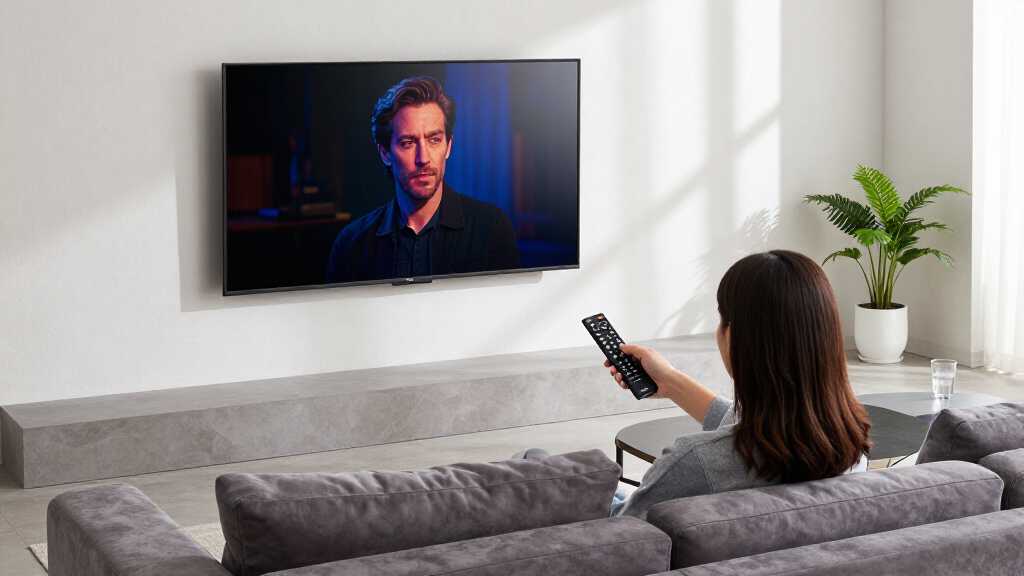
How We Picked
I ranked these 4K OLED TVs on four buyer-facing criteria. Picture quality came first: peak brightness, color accuracy, and how well each TV’s processor handles motion and upscaling, since that separates a premium OLED from a merely acceptable one. Gaming and input features mattered too — 120Hz/144Hz support, VRR, and low input lag decide whether a TV belongs in a console or PC setup. Size-versus-price value shaped the ordering heavily, because the same panel technology can be a bargain at 48 inches and a stretch at 77. Finally, I weighed smart platform and format support, including the Dolby Vision gap that quietly divides the LG and Sony models from the Samsungs.
The ranking logic is straightforward: TVs that balance all four criteria rank highest, with the LG C6 series leading because it compromises the least across the board. Samsung’s S90H sits just behind on brightness strength, Sony’s A90K earns its place on processing excellence in a compact frame, and the Roku QDEL-style option closes the list as the budget outlier — included deliberately to show what you give up, and what you don’t, when you skip OLED.
| 4k OLED TV | HDR |
|---|---|
| LG 65-Inch OLED evo AI 4K C5 S | Dolby Vision |
| Samsung 55-Inch Class S90H Ser | — |
| LG 65-Inch Class OLED evo AI 4 | Dolby Vision, HDR10 |
| Sony 42 Inch A90K BRAVIA XR 4K | — |
| Samsung 77-Inch Class OLED S84 | OLED HDR |
| Samsung 65-Inch Class S90H Ser | Auto HDR Remastering |
| LG 42-Inch Class OLED evo AI 4 | — |
| LG 48-Inch Class OLED evo AI 4 | Dolby Vision |
| Samsung 65-Inch Class OLED S90 | HDR+ |
| Roku 55-Inch Select Series 4K | HDR10 |
Factors to Consider When Choosing 4k OLED TVs
Before settling on a specific model, it helps to understand the bigger forces at play in the 4K OLED market — the mistakes buyers commonly make and the tradeoffs that don’t show up on a spec sheet.Panel Generation Matters More Than Marketing
Every manufacturer refreshes its OLED panels yearly, and the differences between generations are real but rarely dramatic. A 2026 LG C6 improves on the 2025 C5 in brightness and processing, but the gap is incremental — often 5-10% in measurable output rather than a generational leap. The mistake buyers make is paying full launch price for the newest model when the previous generation sits at a steep discount. My advice: if the current model is more than 25% dearer than its predecessor at the same size, last year’s panel is usually the smarter buy. Reserve the newest generation for when a specific feature — like a faster refresh rate or a new processor — actually matters to your setup.
Brightness Determines Where an OLED Belongs
OLED’s perfect blacks are its famous strength, but its historical weakness is peak brightness compared to high-end QLED and mini-LED sets. Modern OLED evo panels have narrowed that gap, yet a very sunny living room can still wash out an OLED where a brighter LED-based TV would hold up. Before buying, watch your room at different times of day: if direct sunlight hits the screen during your main viewing hours, factor that in heavily. This is exactly why the Roku QLED earns a spot in this lineup despite not being OLED — in bright, casual-viewing rooms, its higher peak brightness can genuinely look better than an OLED costing twice as much. OLED performs best in controlled lighting, which is when its contrast advantage becomes unmistakable.
Size Should Match Viewing Distance, Not Ambition
The most common OLED buying mistake is upsizing beyond what the room supports. A 77-inch screen demands roughly 8-10 feet of comfortable viewing distance; cram it into a small space and every flaw in the source material becomes visible, because 4K OLEDs resolve detail ruthlessly. Conversely, buyers in large rooms routinely under-buy at 55 inches and regret it within months. The small OLEDs in this comparison — the 42 and 48-inch models — occupy a specific niche: desks, bedrooms, and gaming setups where you sit close and the pixel density shines. A useful rule: divide your viewing distance in inches by 1.2 to get a starting screen size, then adjust for budget and wall space.
The Dolby Vision Question Nobody Asks Until It’s Too Late
Format support is the quietest differentiator in this category. Samsung, across its entire S90 and S84 range, does not support Dolby Vision — it backs HDR10+ instead. Netflix, Disney+, and Apple TV+ stream most of their flagship content in Dolby Vision, which means Samsung owners watch those titles in standard HDR10. LG and Sony support Dolby Vision natively, giving them a genuine edge for streaming-heavy households. The visual difference is subtle — dynamic tone mapping closes much of the gap — but cinephiles and streamers who care about seeing content exactly as mastered should factor this in before choosing between similarly priced LG and Samsung panels. It’s the kind of detail that never appears on a store placard.
Gaming Features Are Where Premium Tiers Earn Their Price
If a PlayStation 5, Xbox Series X, or gaming PC is part of the equation, refresh rate support changes the calculus entirely. The 144Hz-capable Samsung S90H and high-refresh LG panels deliver visibly smoother motion in supported games, and features like VRR and ALLM prevent screen tearing and manual input switching. What buyers miss is that these features only activate with compatible hardware and HDMI 2.1 cables — an older receiver or a cheap cable can silently cap a premium TV at 60Hz. Also check input count: some models dedicate only one or two full-bandwidth HDMI ports, which forces console and PC owners into awkward swaps. Gamers should verify port specs before purchase, not after.
Burn-In Risk Is Real but Overblown — Plan for It, Don’t Fear It
Burn-in remains the most-asked-about OLED concern, and the honest answer is that it’s far less of an issue than a decade ago. Modern panels include pixel shifting, logo dimming, and periodic refresh cycles that protect against static image retention. The risk profile matters most for specific habits: news channels with constant tickers, static HUD-heavy games played for hours daily, or using the TV as a computer monitor with a fixed taskbar. For varied viewing — movies, streaming, rotation across channels and games — burn-in is rare enough that most owners will never encounter it. If your usage is static-heavy by nature, that’s the one scenario where a QLED like the Roku Select Series becomes the more rational choice despite its weaker contrast.
Frequently Asked Questions
Is the LG C6 worth the premium over the 2025 C5 at the same size?
It depends on how the prices compare when you buy. The C6 offers a modestly brighter OLED evo panel and a newer processor, which translates to slightly better HDR punch and marginally cleaner motion handling — but the core viewing experience is very close. If the C5 is discounted by 20% or more, it’s the better value for almost everyone. Choose the C6 if you want the latest processing for gaming at 120Hz, plan to keep the TV for many years, or the price gap has narrowed to under 10%. The C5 remains one of the best price-to-performance OLEDs you can buy in 2026.
Should I get a 42 or 48-inch OLED, or is that too small for 4K?
Small OLEDs are not a compromise — they’re a different product with a specific purpose. At 42 and 48 inches, 4K pixel density is extremely high, which makes these panels exceptional for desk gaming, bedroom setups, and close-up viewing where you sit within five or six feet of the screen. The picture quality is essentially identical to their 65-inch siblings; you’re paying less for the same panel technology. Where they fall short is home theater use — from a couch ten feet away, a 42-inch screen will feel undersized no matter how good it looks. Match the small sizes to close viewing distances and they’re among the smartest buys in this lineup.
Why is the Roku QLED included in an OLED roundup, and should I consider it?
It’s here as the honest budget alternative, because many shoppers comparing 4K TVs encounter OLED and QLED side by side and wonder whether the price gap is justified. The Roku Select Series costs a fraction of any OLED here and delivers bright, colorful 4K picture with the simplest smart platform in the business — genuinely great for casual viewing, sports, and bright rooms. What it can’t match is contrast: OLED’s per-pixel lighting means blacks are truly black, which transforms movies in dim lighting. If your viewing is mostly daytime, varied, and budget-sensitive, the Roku is the rational pick. If you watch films at night and care about image depth, the OLED premium is worth it.
Does missing Dolby Vision on Samsung OLEDs actually matter?
For most viewers the difference is modest; for streamers it’s a genuine factor. Netflix, Disney+, and Apple TV+ flagship titles are mastered in Dolby Vision, and Samsung TVs play them in standard HDR10 instead. Samsung’s dynamic tone mapping does a respectable job compensating, so scenes won’t look wrong — just slightly less precisely tuned in highlights and shadow detail. If you subscribe to those services and watch primarily in a dark room, LG and Sony models give you the format as the creators intended. If your content comes from YouTube, physical media, gaming, or broadcast, the omission barely registers. It’s a tiebreaker, not a dealbreaker.
Is a 77-inch OLED overkill, and what should I check before buying one?
Size is the first check: you’ll want at least eight feet of viewing distance, and ideally closer to ten, for a 77-inch screen to look immersive rather than overwhelming. Verify your wall or stand can handle the weight and width — these panels are large and deceptively heavy. Also confirm your seating arrangement, because OLED viewing angles are wide but very close seating exposes source-quality flaws at this scale. The 77-inch Samsung S84F in this lineup delivers a genuine theater experience at home, but it costs substantially more than the same picture quality at 65 inches. Buy it because your room demands it, not because bigger always means better.
Conclusion
After comparing all ten options, the right choice comes down to who you are as a viewer. For the best overall pick, the LG 65-inch C6 Series hits the sweet spot of picture quality, Dolby Vision support, gaming features, and price — it’s the TV I’d point most buyers toward. For best value, the LG C5 (2025) delivers nearly the same experience at clearance pricing, with the Samsung S90F as the equivalent choice for brighter rooms. The premium pick is the Samsung S90H 65-inch (2026), whose superior brightness and 144Hz motion handling justify the extra spend for home theater enthusiasts and serious gamers.
For beginners and casual viewers, the Roku Select Series QLED offers the easiest setup and a bright, pleasing picture without the OLED price tag — an honest starting point if you’re unsure whether OLED matters to you. For specific needs: the Sony A90K at 42 inches suits desktop and small-room cinephiles who want the best processing in a compact frame, the LG C6 at 42 and 48 inches is the small-screen gamer’s choice, and the Samsung S84F at 77 inches is built for large home theaters with the room to match. Whatever your budget, matching screen size to your space and panel type to your viewing habits will do more for satisfaction than any spec on the box.
NFL season / tailgating Picks
team gear
As an affiliate, we earn on qualifying purchases.