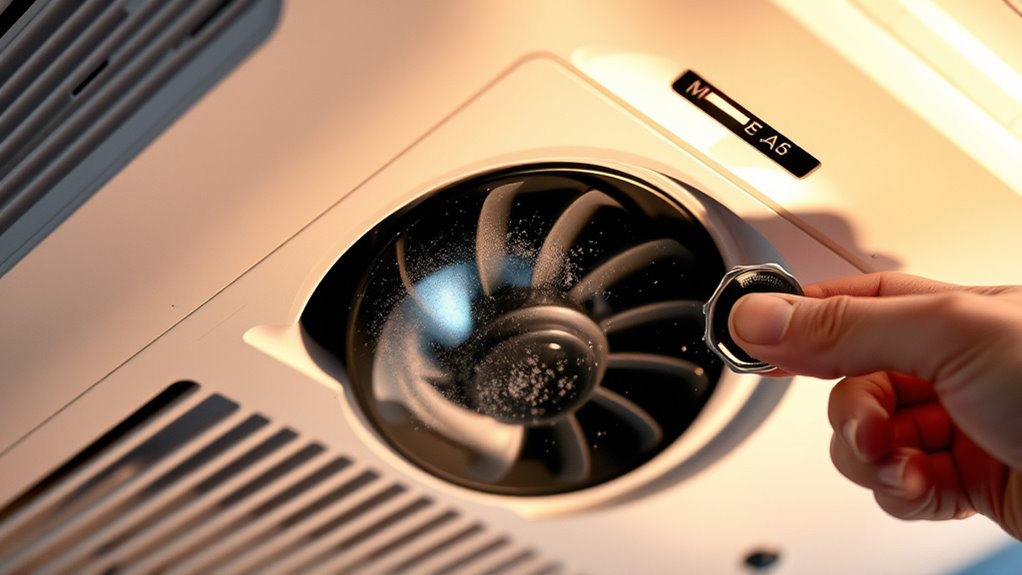
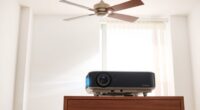
If your projector fan is too loud, start by turning it off and unplugging it. Use compressed air or a soft brush to clean dust from the vents and inside components if comfortable. Make sure it’s placed in a well-ventilated area, and avoid confined spaces. If noise persists, the fan might need replacing. For tips on proper cleaning techniques and potential repairs, keep exploring to guarantee quieter operation and better performance.
Key Takeaways
- Regularly inspect and clean vents with compressed air or a soft brush to remove dust and debris.
- Ensure proper projector placement in well-ventilated, open areas to prevent overheating and reduce fan workload.
- Turn off and unplug the projector before cleaning to avoid damage and ensure safety during maintenance.
- Replace the fan if cleaning does not reduce noise, as mechanical wear can cause increased noise levels.
- Seek professional assistance for disassembly or fan replacement to avoid internal damage and ensure correct installation.
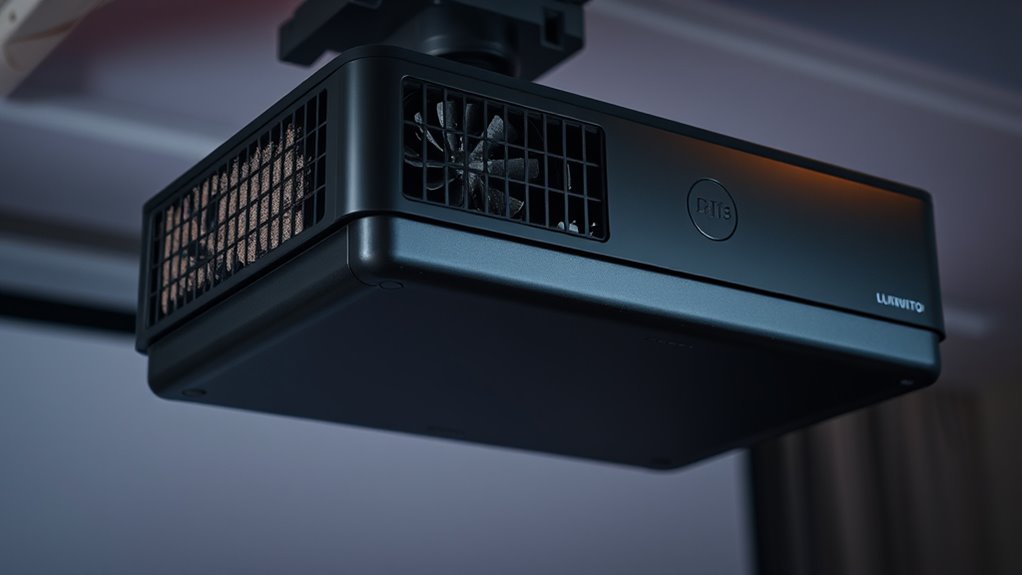
Ever wondered why your projector fan sometimes sounds louder than you’d like? It’s a common issue that can stem from ventilation issues inside the device. Over time, dust, debris, or even accumulated dirt can clog the vents, restricting airflow and causing the fan to work harder and spin faster to cool the projector. When this happens, the increased fan activity results in louder noise, which can be distracting during movies or presentations. To address this, you need to focus on cleaning and maintenance first. Regularly inspecting the vents and cleaning out dust with compressed air or a soft brush can considerably reduce noise caused by ventilation issues. Make sure the projector is turned off and unplugged before cleaning, and avoid using liquids that could damage internal components. Proper ventilation isn’t just about cleaning; it’s also about ensuring the projector is placed in a well-ventilated area, away from heat sources or confined spaces that trap heat and force the fan to work overtime. Additionally, understanding AI security vulnerabilities can help in designing more resilient hardware and software systems that prevent overheating caused by malicious attacks or system failures. If cleaning doesn’t resolve the noise, the fan itself might be faulty or worn out. Fans have a limited lifespan, and after extensive use, they can become noisy or develop imbalance due to dust buildup or mechanical wear. In such cases, fan replacement becomes necessary. Replacing the fan is often straightforward but requires some technical skill. First, you’ll need to source the correct replacement fan compatible with your projector model. Once you have the new fan, carefully disassemble the projector following instructions specific to your device. Remove the faulty fan, and install the new one, making sure all connections are secure. After reassembling, test the projector to see if the noise level has decreased. If you’re uncomfortable with disassembly or unsure about the process, it’s best to seek professional help to avoid damaging your device.
Frequently Asked Questions
Can Using a Quieter Fan Reduce Noise Effectively?
Yes, using a quieter fan can effectively reduce noise during fan noise mitigation. When you switch to quieter fan options, you’ll notice less disturbance and a more comfortable viewing experience. Make sure to choose fans designed for low noise levels and compatible with your projector. Regularly maintain and clean your existing fan to guarantee peak performance, but upgrading to a quieter fan is often the best way to minimize noise markedly.
How Often Should I Replace the Projector’s Fan?
You should replace your projector’s fan roughly every 2 to 5 years, depending on its fan lifespan and usage intensity. Regularly check for signs of wear, such as unusual noise or overheating, which indicate it’s time for a replacement. Following proper maintenance and adhering to recommended replacement intervals can help guarantee peak performance and reduce noise. Don’t ignore signs of fan failure to avoid potential damage to your projector.
Does Ambient Temperature Affect Fan Noise Levels?
Yes, ambient temperature affects fan noise levels. When the temperature around your projector rises, the fan works harder to cool the device, which can increase noise. Conversely, cooler environments help the fan run more quietly. To keep noise levels down, make certain your projector is in a well-ventilated, moderate-temperature space. Proper placement prevents overheating, reducing the need for the fan to work excessively and keeping noise manageable.
Are There Specific Brands Known for Quieter Fans?
Yes, some brands are known for quieter fans due to their reputation for innovative fan technology. Brands like Epson, BenQ, and Optoma focus on reducing noise levels, making your viewing experience more comfortable. Their fan technology minimizes vibrations and operates more efficiently, resulting in less noise. When choosing a projector, consider these brands’ reputation for quiet operation to guarantee your setup remains peaceful and distraction-free.
Can Software Updates Help Reduce Fan Noise?
Yes, software updates can help reduce fan noise by improving fan control algorithms. When you install the latest updates, your projector’s firmware can optimize fan speeds based on temperature, reducing unnecessary noise. Make sure to check for updates regularly, as manufacturers often release enhancements that improve overall performance and noise levels. Keeping your projector’s software current is a simple way to guarantee quieter operation and better fan management.
Conclusion
Just like a whispering breeze calms a restless forest, keeping your projector clean and well-maintained guarantees its fan runs quietly. Regularly dust and check for obstructions, and you’ll enjoy crisp images without the distracting hum. Think of your projector as a silent guardian, quietly working behind the scenes. With a little care, you’ll create a smooth, peaceful viewing experience—no more noisy distractions, just the pure clarity of your favorite films shining through.