
Screen gain measures how well your projector screen reflects light back to you. A higher gain makes your image look brighter, which is helpful in well-lit rooms, but can reduce the viewing angle. Low-gain screens offer a wider viewing cone but reflect less light overall. Balancing gain and angle ensures *ideal* brightness and clarity for your space. Keep exploring to get a clearer picture of how to choose the best screen for your needs.
Key Takeaways
- Higher gain screens reflect more light, making images appear brighter and more vibrant in well-lit environments.
- Increased gain results in a narrower viewing angle, focusing light directly forward and reducing off-angle brightness.
- Low-gain screens offer wider viewing angles but reflect less light, providing more uniform brightness across seating.
- The balance between gain and viewing angle affects image clarity, glare, and overall viewing experience depending on room setup.
- Selecting the appropriate gain depends on ambient lighting conditions and seating arrangement to optimize brightness and image quality.
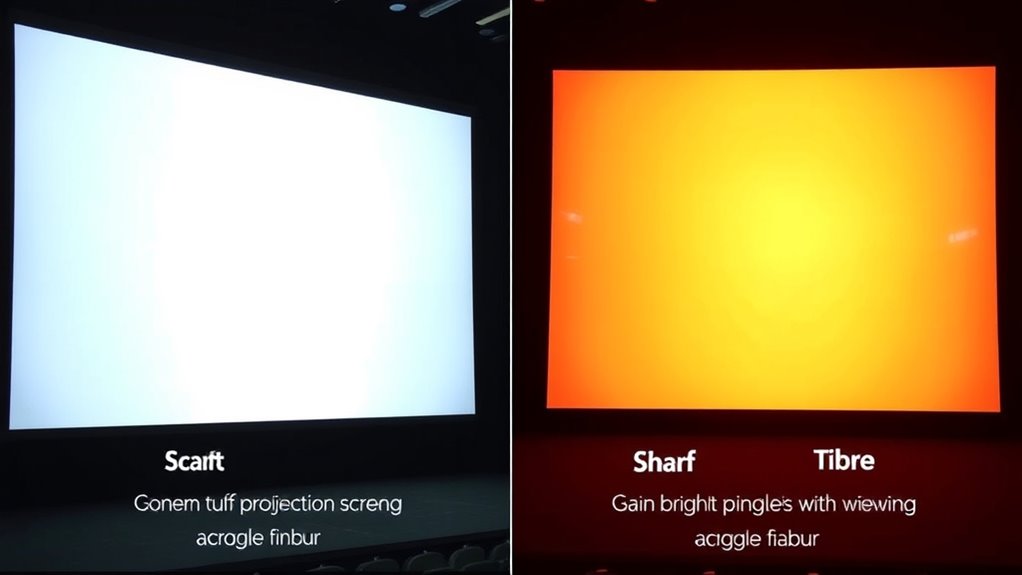
Ever wondered how certain projectors deliver brighter images even in well-lit rooms? It all comes down to the screen’s gain and how it interacts with the projection angle and ambient light. Gain refers to the screen’s ability to reflect light towards the viewer, with higher gain screens reflecting more light back to you. This means that in environments with significant ambient light, selecting a screen with a higher gain can make a noticeable difference in image brightness. When you increase the gain, the screen becomes more reflective, intensifying the image and making it appear brighter, even if the room isn’t darkened completely.
However, it’s essential to think about the projection angle, which is the angle at which the projector’s light hits the screen relative to your viewing position. A high-gain screen typically has a narrower viewing cone, so if you sit off to the side or change your position, the image might look dimmer or washed out. This is because the light is more concentrated directly in front of the screen, and the reflected light diminishes when viewed from sharp angles. Conversely, a lower gain screen offers a wider viewing angle, providing more consistent brightness across different seating positions but generally reflecting less light overall.
In rooms with a lot of ambient light, choosing the right gain becomes even more critical. High-gain screens can help combat the washout caused by ambient light, making the projected image appear clearer and more vibrant. This is especially useful in conference rooms, classrooms, or spaces where controlling light is difficult. But keep in mind that if you’re planning to sit at an angle rather than directly in front of the screen, a very high-gain screen might not be your best choice. You could end up with a dimmer image or unwanted glare if the projection angle isn’t ideal.

Mdbebbron 120 inch Projector Screen 16:9 Foldable Anti-Crease Portable Projector Movies Screens for Home Theater Outdoor Indoor Support Double Sided Projection
CONVENIENT TO STORAGE AND CARRY : Compact one-piece,lightweight and folding design. You can fold the projector screen in...
As an affiliate, we earn on qualifying purchases.
Frequently Asked Questions
How Does Screen Gain Impact Projector Placement?
Screen gain directly influences your projector placement and screen positioning choices. Higher gain screens reflect more light, so you can place your projector farther back without losing brightness, but they may narrow your viewing angle. Conversely, lower gain screens require closer placement to guarantee sufficient brightness and wider viewing angles. Adjust your projection placement based on your screen’s gain to optimize image quality and viewing experience.
Can High Gain Screens Cause Glare Issues?
Yes, high gain screens can cause glare issues. When you use a high gain surface, it reflects more light directly back to you, which can lead to glare concerns. This increased reflectivity may also cause viewing discomfort, especially if you’re seated at off-angles. To minimize these problems, choose a screen with a moderate gain and position it carefully to balance brightness and comfort during your viewing experience.
Does Screen Gain Affect Color Accuracy?
You might think screen gain doesn’t impact color accuracy, but it’s a game-changer. Higher gain screens can cause color saturation to look overly vivid or washed out, especially if the screen isn’t properly calibrated. Using calibration techniques guarantees you maintain true colors, regardless of gain. So, yes, screen gain does affect color accuracy, and managing it carefully helps you get the best picture quality possible.
How Is Screen Gain Measured in Manufacturing?
In manufacturing, screen gain is measured using standardized measurement standards, such as a luminance meter, to guarantee consistency. During production, technicians place the screen at a specific angle and illuminate it with a controlled light source to evaluate its brightness at different points. These manufacturing processes help verify that the gain levels meet industry standards, ensuring the display performs as expected across various viewing conditions.
Are There Differences in Gain for Outdoor Screens?
Yes, outdoor screens often have higher gain to guarantee brightness and visibility in sunlight. You’ll find that they’re designed with outdoor durability and weather resistance in mind, which can influence gain levels. Higher gain screens reflect more light, making images brighter during daylight. However, this can sometimes reduce viewing angles, so it’s important to choose a gain level that balances brightness with wide viewing from various angles.

TOWOND Projector Screen and Stand, 150 inch Indoor Outdoor Projection Screen, Portable 16:9 4K HD Rear Front Movie Screen with Carry Bag Wrinkle-Free Design for Home Theater Backyard Cinema
Projector Screen with Stand. 150-inch diagonal, 160°wide viewing angle, aspect ratio 1:1 and 16:9 4k HD portable projector...
As an affiliate, we earn on qualifying purchases.
Conclusion
Now that you understand screen gain, imagine the projector’s light pouring over your screen like sunlight spreading across a clear sky, making images vivid and bright. Higher gain reflects more light, creating a dazzling display even in well-lit rooms, while lower gain offers a softer, more natural view. Think of gain as the secret ingredient that controls how your screen responds to light—shaping your viewing experience from stunning brightness to wide-angle clarity.

DINAH 120 Inch Electric Projector Screen with Remote, Automatic Air Indoor Drop Down, Motorized 4K 3D HD Projection for Movies
Large 120-inch screen: The DINAH electric projector screen is an ideal choice for movie enthusiasts and professionals alike,...
As an affiliate, we earn on qualifying purchases.

Epson SilverFlex Ultra 120-Inch Ambient Light Rejecting Super Mega Screen for Short-Throw Projectors
Ultra high-definition 120" Super Mega Screen — larger-than-life screen engineered for the most demanding high-resolution content, including 4K...
As an affiliate, we earn on qualifying purchases.