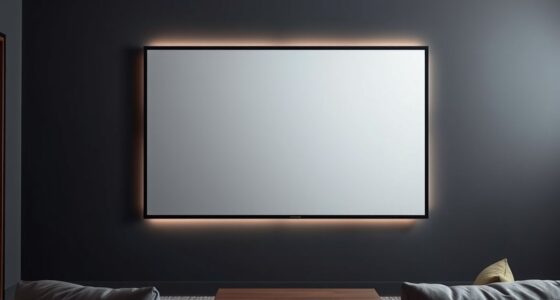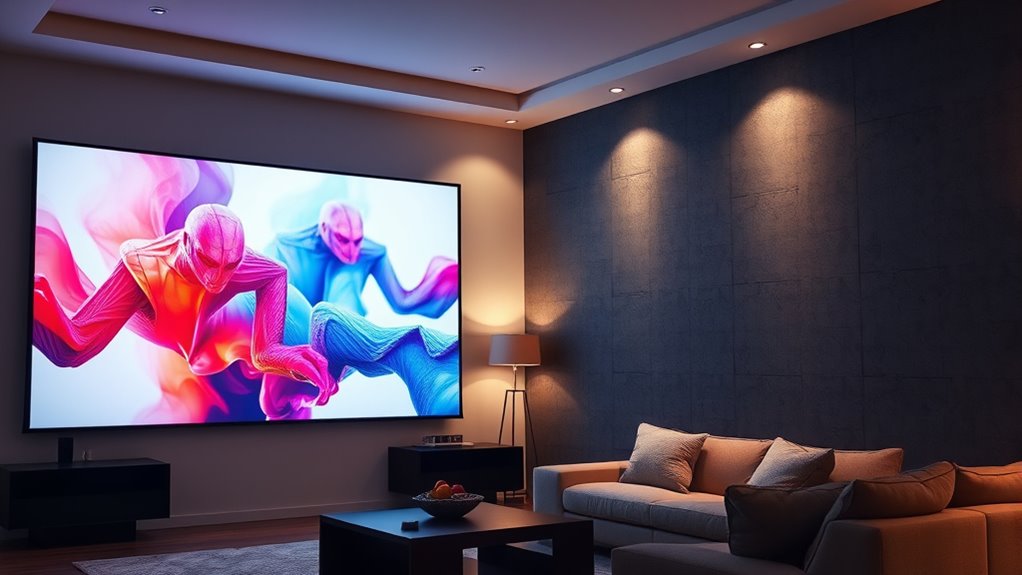

Using a dedicated projector screen over a plain wall definitely boosts your viewing experience. Screens are designed to enhance contrast, reduce glare, and provide brighter, more vibrant images, even in ambient light. They also offer more consistent picture quality and fewer surface irregularities. Walls may seem convenient and cheaper, but they often diminish image sharpness and color accuracy. Want to discover which option will give you the best value? Continue exploring to find out the details.
Key Takeaways
- Dedicated screens provide superior image clarity, color accuracy, and brightness compared to walls.
- Screens ensure consistent performance over time, while walls may degrade or vary in quality.
- Installation of screens is straightforward and secure, whereas walls may require surface preparation.
- Screens help reduce glare and surface irregularities, improving overall viewing experience.
- Investing in a projector screen offers better long-term value for high-quality visuals.
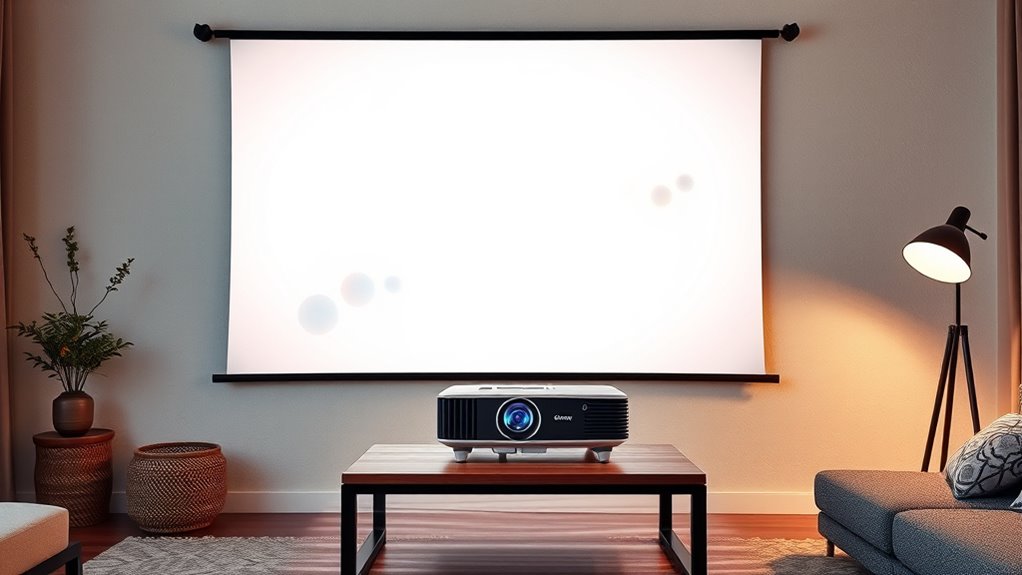
When deciding between using a projector screen or a plain wall for your home theater or presentation setup, understanding the key differences can help you make the best choice. One of the main factors to reflect on is image quality. A dedicated projector screen is designed specifically to optimize visual clarity, ensuring bright, vibrant images with accurate color reproduction. The surface of a screen is often coated with special materials that improve contrast and reduce glare, resulting in sharper detail and better visibility even in ambient light. In contrast, a plain wall can vary greatly in texture and color, which can negatively impact the image. The wall’s surface may reflect light unevenly or absorb certain wavelengths, leading to less crisp visuals and duller images. If you’re aiming for high-quality viewing experiences, especially for movies or detailed presentations, a projector screen generally provides a noticeable upgrade in image fidelity. Additionally, a proper screen can help maintain consistent image quality over time, unlike a wall which may change with wall paint or wear.
Another important aspect is the installation process. Setting up a projector screen tends to be more straightforward and consistent. Most screens come with clear instructions and mounting hardware, allowing you to attach them securely to walls or ceilings with relative ease. Portable options are also available, making it simple to move or store the screen when not in use. On the other hand, using a plain wall involves less initial setup but can require more effort to optimize the viewing experience. You might need to repaint or choose a specific wall that’s free of textures, patterns, or imperfections that could interfere with the projection. Additionally, if you want to make a permanent setup, you may need to invest in mounting brackets or other hardware, which could involve more precise measurements and adjustments.
While installing a projector screen might seem like an extra step upfront, it pays off in the long run with consistent performance and a better viewing experience. A dedicated screen provides a clean, uniform surface that enhances image quality and minimizes distractions caused by uneven reflections or surface irregularities. Conversely, a plain wall can be an easy, cost-effective solution for casual use, but it often sacrifices clarity and consistency. Ultimately, your choice depends on your priorities—whether you value the simplicity and flexibility of a wall or the optimized quality and ease of use that a purpose-built projector screen offers. If you’re serious about improving your viewing or presentation quality, investing in a good screen is worth contemplating, especially given how it can elevate the overall experience. Considering visual performance factors can help you make an informed decision that best suits your needs.
best projector screens for home theater
As an affiliate, we earn on qualifying purchases.
As an affiliate, we earn on qualifying purchases.
Frequently Asked Questions
Can a Plain Wall Support 4K Projector Resolution Effectively?
A plain wall can support 4K projector resolution effectively if it has good wall durability and a smooth, even texture. A textured or uneven wall can distort the image, reducing clarity and sharpness. For ideal 4K quality, choose a wall with minimal imperfections and durable paint or finish. Keep in mind that a dedicated projector screen generally offers better contrast, color accuracy, and a more uniform surface for the best viewing experience.
How Does Ambient Light Affect Projected Image Quality Versus a Wall?
Ambient light is like a noisy crowd, dulling your projector’s brilliance and washing out the image clarity. When bright lights flood the room, both a plain wall and a screen struggle to deliver sharp, vivid visuals. However, screens are like a shield, reflecting more light and maintaining clarity even in brighter settings. So, controlling ambient light is vital to guarantee your projected image stays crisp and vibrant, regardless of the surface.
Are Portable Projector Screens More Cost-Effective Than Fixed Installations?
Portable projector screens are generally more cost-effective upfront, thanks to their lower installation costs and flexibility. Their portability benefits mean you can easily move and store them, saving money on permanent setup. However, fixed screens might offer better long-term value if you use your projector frequently in the same location. Consider your usage needs and space to determine which option provides the best balance of cost and convenience.
What Maintenance Is Required for a Projector Screen Compared to a Wall?
You need to clean your projector screen less often than a plain wall, typically once a month with a soft, damp cloth. This helps maintain surface durability and image clarity. Walls, on the other hand, require more frequent dusting or cleaning to prevent dirt buildup. Regular maintenance extends your screen’s lifespan and keeps projection quality high, making it a worthwhile investment compared to the constant upkeep of a plain wall.
How Does Screen Material Impact Image Brightness and Contrast?
Ever wonder how your screen material influences your viewing experience? It directly affects image brightness and contrast through its reflectivity; a high-quality material reflects more light, making images brighter and more vivid. Durability matters too, as sturdy materials maintain reflectivity over time without warping or fading. Choosing the right screen material guarantees sharp contrast and longevity, immersing you fully in your favorite movies or presentations without losing clarity or brightness.
portable projector screen with mounting hardware
As an affiliate, we earn on qualifying purchases.
As an affiliate, we earn on qualifying purchases.
Conclusion
Choosing a projector screen can substantially enhance your viewing experience, especially since screens can improve image clarity by up to 30% compared to plain walls. If you value sharp, vibrant visuals, investing in a screen is worth it. While walls are budget-friendly, a dedicated screen offers better brightness and contrast, making every movie night more immersive. Ultimately, if you want the best picture quality, a projector screen is definitely worth considering.

Silver Ticket Products STR Series 6 Piece Home Theater Fixed Frame 4K / 8K Ultra HD, HDTV, HDR & Active 3D Movie Projection Screen, 16:9 Format, 120" Diagonal, High Contrast Material STR-169120-HC
Wall Mounted Fixed Frame Projection Screen (Overall Size 63.625" Tall x 109.25" Wide) (Viewing Area 120" Diagonal x…
As an affiliate, we earn on qualifying purchases.
As an affiliate, we earn on qualifying purchases.

AAJK ALR Projector Screen, 4K Movie Projector Screen 16:9 HD Foldable Anti-Crease Portable Projector, Movies Screen for Home Theater Outdoor Indoor Support (120in Pro)
【Watch What You Want, When You Want!】 Remember when you could only really use your projector at night?…
As an affiliate, we earn on qualifying purchases.
As an affiliate, we earn on qualifying purchases.