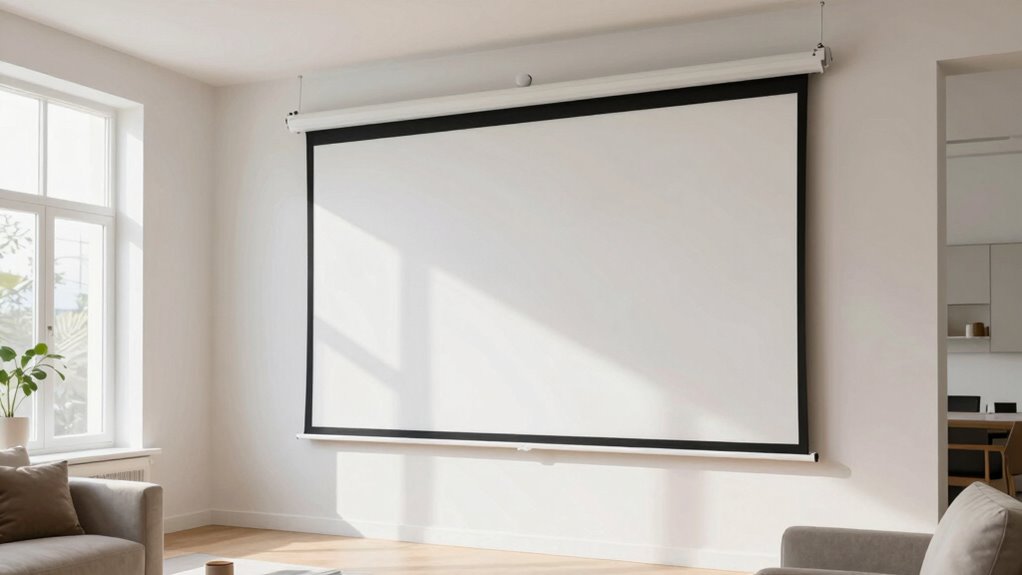

To pick a projector screen for a bright apartment, select a high-gain, ambient light rejection (ALR) screen that reflects more light and reduces glare. Position your projector and screen away from direct sunlight or bright sources, and use window treatments to block ambient light. Pair a high-lumen projector with a suitable screen size for your space to boost brightness and contrast. Proper installation and maintenance will keep your display vibrant. Keep exploring to discover even more tips for ideal setup.
Key Takeaways
- Choose a high-gain, ambient light rejection (ALR) screen to reduce reflections and enhance contrast in bright environments.
- Opt for a projector with higher lumen output to maintain brightness on larger screens.
- Position the screen away from direct light sources and use window treatments to minimize ambient light.
- Select a screen size that balances immersion with brightness to prevent washout.
- Ensure proper installation and regular cleaning to maximize image clarity and prevent glare.
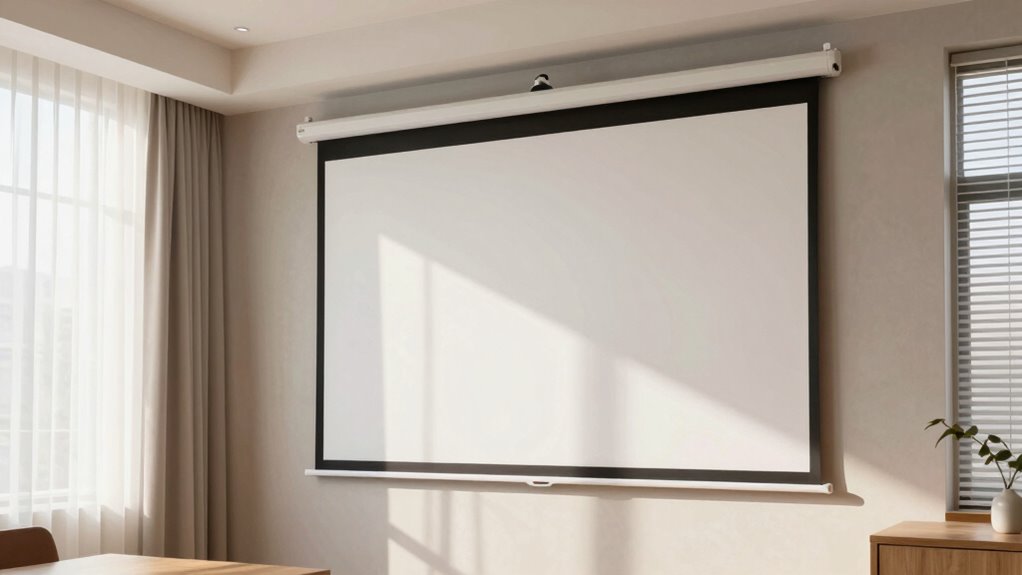
If you have a bright apartment, choosing the right projector screen can seem challenging, but with the right approach, you can still enjoy clear, vibrant images. The key lies in understanding how screen material and ambient light influence your viewing experience. Bright environments tend to wash out images, so selecting a screen designed to handle high ambient light levels is essential. Look for screens with specialized screen material that enhances contrast and brightness, making images pop even in well-lit spaces.
Choose high-gain, ambient light rejecting screens to enjoy vibrant images in bright apartments.
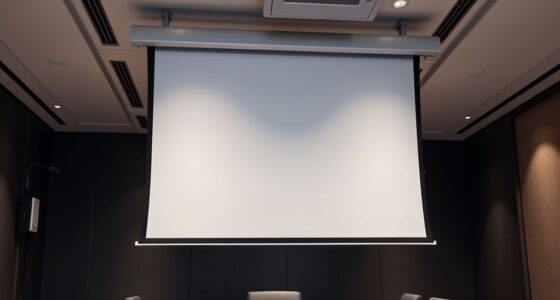
The screen material you choose affects how light reflects and how colors appear. Matte surfaces are common, but not all are created equal. For bright apartments, opt for screens made from high-gain materials. These screens reflect more light toward your eyes, increasing brightness and contrast, which is vital when ambient light is high. Be cautious, though; screens with very high gain can produce hot spots—areas where the brightness is uneven—so find a balance that maintains uniformity across the surface. Additionally, some high-gain screens incorporate ambient light rejection technology to maximize image clarity in bright settings.
Ambient light is a major factor. In bright apartments, sunlight and artificial lighting can diminish the clarity of your projected image. To combat this, position your projector and screen strategically—preferably away from direct light sources. Additionally, consider blackout curtains or blinds to reduce ambient light during viewing. When selecting a screen, look for options with a high ambient light rejection (ALR) or ambient light rejecting screen material. These screens are designed with special surface coatings or optical layers that help minimize the impact of ambient light, making your images appear sharper and more vibrant. Incorporating the right ambient light management techniques can significantly improve your viewing experience. Properly choosing and managing screen placement can also greatly reduce unwanted reflections and glare, further enhancing image quality.
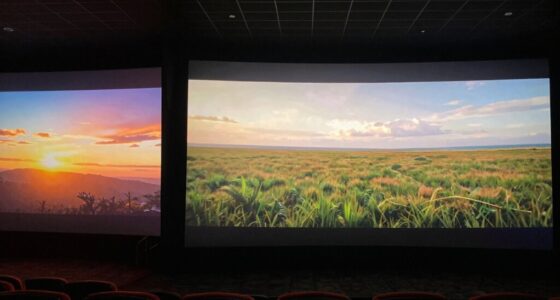
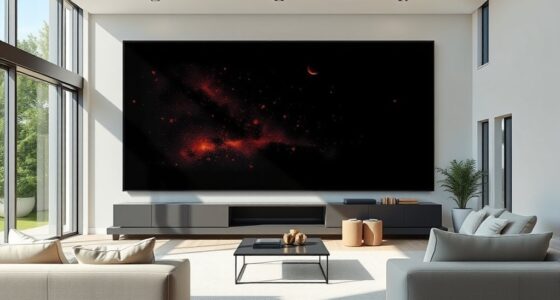
Another consideration is screen size; larger screens in bright rooms can make the image appear less vivid, so choose a size that balances immersion with brightness. Keep in mind the projector’s lumen output—higher lumens are better suited for bright environments. Pairing a high-lumen projector with a high-gain, ALR screen maximizes image quality.
Finally, installation matters. Mount your screen in a location that avoids reflections and direct light glare, and ensure it’s at an ideal height for viewing comfort. Regularly clean the screen surface to prevent dust and smudges from dulling image quality. When you pay attention to screen material and control ambient light effectively, even a bright apartment can become a perfect space for enjoying your favorite movies and shows with crisp, vibrant visuals. And understanding the importance of ambient light and how to manage it can make all the difference in achieving a stunning viewing experience.
high gain ambient light rejecting projector screen
As an affiliate, we earn on qualifying purchases.
As an affiliate, we earn on qualifying purchases.
Frequently Asked Questions
What Is the Ideal Projector Screen Size for a Small Apartment?
For a small apartment, an ideal projector screen size is around 80-100 inches. Choose a screen material with high gain or matte finish to reduce glare in bright spaces. Keep your projection distance in mind; a shorter distance produces a clearer image on this size. This size balances immersive viewing with space limitations, ensuring you enjoy sharp visuals without overwhelming your room.
How Does Ambient Light Impact Screen Material Choices?
Ambient lighting considerably impacts your screen material choice because bright rooms can cause screen glare, reducing image clarity. To combat this, opt for matte or ambient light rejecting screens that minimize reflections and enhance contrast. These materials absorb ambient light instead of reflecting it, delivering a clearer picture even in well-lit environments. Choosing the right screen material helps you enjoy a sharp, vivid viewing experience despite bright ambient lighting conditions.
Can Portable Screens Work Well in Bright Environments?
Did you know that portable screens with high gain and ambient light rejection can improve picture quality by up to 50% in bright environments? Portable screens actually work well in bright environments because they’re designed to reflect more light, making the image clearer. When choosing a portable screen, look for one with a matte surface and high gain to combat glare and guarantee vivid visuals even in well-lit spaces.
Are There Specific Screen Coatings to Reduce Glare?
Yes, there are specific screen coatings to reduce glare. You should look for screens with a matte finish or anti-glare coating, which help minimize reflections and improve image clarity in bright environments. These coatings diffuse ambient light, making your projector image more visible and vibrant. Choosing a screen with these features guarantees better viewing quality, especially in bright apartments where natural light can wash out standard screens.
How Do I Mount a Projector Screen Securely in an Apartment?
You can mount your projector screen securely by choosing wall mounting or ceiling installation options. For wall mounting, use sturdy brackets and anchors suitable for your wall type, guaranteeing they support the screen’s weight. For ceiling installation, attach a ceiling mount bracket into ceiling joists for stability. Always double-check measurements and follow manufacturer instructions to ensure safety and a perfect setup, especially in a bright apartment environment.
high lumen projector for bright rooms
As an affiliate, we earn on qualifying purchases.
As an affiliate, we earn on qualifying purchases.
Conclusion
Choosing the right projector screen for your bright apartment is like finding your lighthouse in a foggy sea—guiding your entertainment safely through the glare and brightness. With the right screen, you’ll turn any wall into a cinematic oasis, where clarity and contrast dance in harmony. Remember, the perfect screen isn’t just a piece of equipment; it’s your portal to countless stories and memories. Light the way, and let your home be your grand theater.
projector screen with ALR technology
As an affiliate, we earn on qualifying purchases.
As an affiliate, we earn on qualifying purchases.
large projector screen for bright apartments
As an affiliate, we earn on qualifying purchases.
As an affiliate, we earn on qualifying purchases.