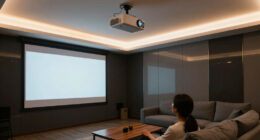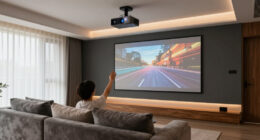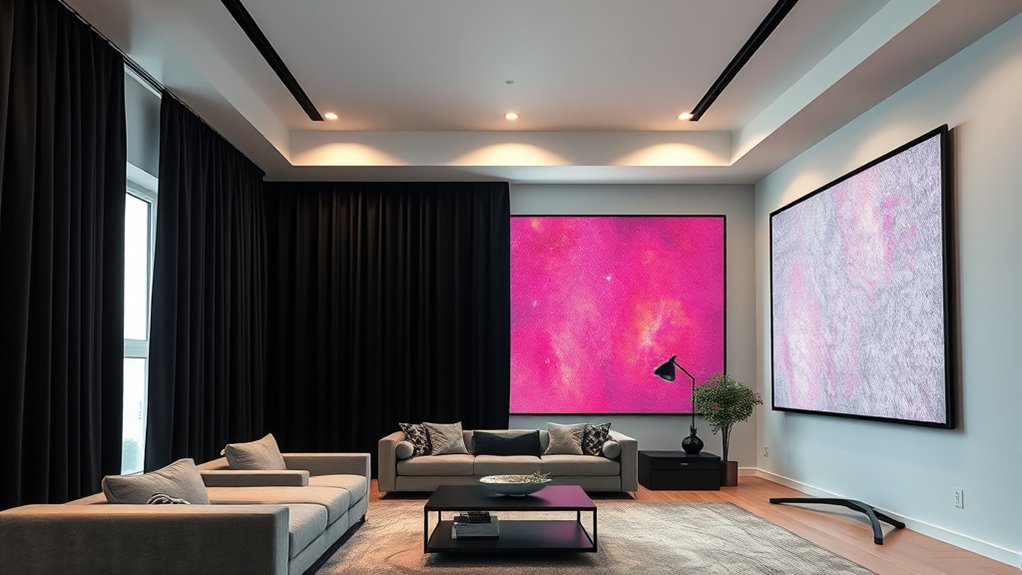

For DIY ambient light control, blackout curtains are a simple and affordable choice that block outside light but may leave gaps if not installed carefully. ALR screens offer better light absorption and reflection, reducing light leakage and enhancing image quality even in less ideal lighting conditions. Both options work well with proper setup, but your choice depends on your budget and room setup. Keep exploring to discover how to optimize your space effectively.

Get business pricing on your home office setup
- Business-only prices and quantity discounts
- Tax-exempt purchasing
- Multiple users, one account, clear invoices
Key Takeaways
- Blackout curtains block external light sources, while ALR screens reflect projector light and absorb ambient room light for better contrast.
- Proper installation and sealing of blackout curtains improve light blocking effectiveness; ALR screens require precise setup for optimal performance.
- Blackout curtains are cost-effective and easy to install, suitable for quick light control; ALR screens offer superior contrast in ambient light conditions.
- Combining blackout curtains with ALR screens enhances room darkening and image quality for an immersive experience.
- Both solutions can be DIY-installed, but ALR screens often need careful alignment, whereas curtains offer flexible, removable light control.
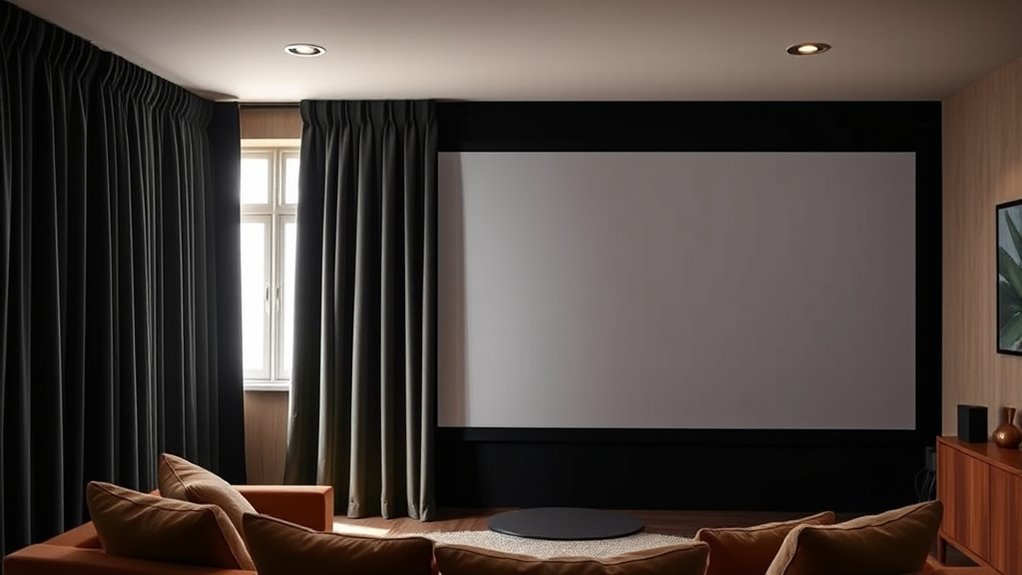
Creating your own ambient light solutions allows you to customize your space effortlessly and cost-effectively. When it comes to blocking out unwanted light, blackout curtains and ALR (ambient light rejecting) screens are popular options, each with their own strengths. If you’re aiming for a dark, immersive viewing environment, understanding how these solutions handle light leakage and room darkening is essential.
Blackout curtains are a straightforward and affordable way to minimize light entering a room. Made from dense, opaque fabrics, they substantially reduce light leakage, creating a darker environment ideal for watching movies or gaming. Their room darkening properties are usually impressive—they can block most external light sources, including streetlights or sunlight, depending on the fabric’s thickness. However, remember that no curtain is perfect. Gaps around the edges or at the top can allow some light in, especially if the curtain isn’t fitted precisely or if the rod isn’t installed correctly. For ideal performance, you might consider adding a liner or choosing curtains with a tighter seal, which enhances light blocking and helps achieve a more consistent dark environment.
On the other hand, ALR screens are designed specifically for home theater setups, offering advanced technology to combat ambient light. These screens have a special surface finish that reflects light coming from your projector while absorbing ambient room light, drastically reducing light leakage and improving contrast. Unlike blackout curtains, they don’t block outside light directly, but they help maintain room darkness by managing the light that hits the screen. This makes ALR screens particularly effective in rooms with some unavoidable light sources or windows that can’t be fully covered. Plus, they can deliver a more uniform image with better contrast, even in less-than-ideal lighting conditions. If your main concern is room darkening, an ALR screen can be a more precise solution, especially in rooms with partial light exposure.
Choosing between blackout curtains and an ALR screen depends on your specific needs and setup. If you’re looking for an easy, budget-friendly way to darken a room, blackout curtains are a solid choice. They’re simple to install and can be removed or replaced easily. But if you want to enhance picture quality and minimize light interference, investing in an ALR screen might be worth it. Both options require some attention to detail—like ensuring proper installation and sealing gaps—to effectively manage light leakage and achieve the room darkening you desire. Additionally, understanding lighting control strategies can significantly improve your viewing experience. Whatever you choose, customizing your ambient environment with these solutions puts you in control, creating a perfect space for your entertainment needs.
blackout curtains for home theater
As an affiliate, we earn on qualifying purchases.
As an affiliate, we earn on qualifying purchases.
Frequently Asked Questions
Can Blackout Curtains Improve Soundproofing in a Home Theater?
Blackout curtains can improve soundproofing benefits by reducing noise transfer and enhancing acoustic performance in your home theater. They absorb sound waves, minimizing echoes and external disturbances, which creates a better listening environment. While they aren’t as effective as dedicated soundproofing materials, blackout curtains are a simple, cost-effective way to boost your theater’s acoustics and dampen unwanted noise, making your viewing experience more immersive and enjoyable.
What Is the Cost Difference Between DIY Blackout Curtains and ALR Screens?
You’ll find that DIY blackout curtains are generally much more budget-friendly than ALR screens. The cost comparison shows blackout curtains can cost anywhere from $50 to $200 depending on fabric and size, while ALR screens typically range from $200 to over $1,000. If you’re working with a tight budget, blackout curtains offer a cost-effective solution, but if you want high-performance, investing in an ALR screen might be worthwhile.
How Durable Are Homemade Blackout Curtains Compared to Commercial Options?
They say “you get what you pay for,” and homemade blackout curtains can be quite durable if you choose quality materials. The material longevity depends on fabric type; heavier, tightly woven fabrics tend to last longer and resist wear. Regular fabric maintenance, like washing and proper storage, helps preserve their durability. While commercial options often have factory finishes for added longevity, homemade curtains can be just as resilient if you select the right fabric and care for them properly.
Are There Aesthetic Considerations When Choosing Between Blackout Curtains and ALR Screens?
When choosing between blackout curtains and ALR screens, consider how each impacts your room decor and visual appeal. Blackout curtains add softness and texture, blending seamlessly with cozy or elegant decor styles. ALR screens, on the other hand, offer a sleek, modern look that complements minimalist or high-tech aesthetics. Your choice should enhance your space’s overall style, ensuring the solution complements your decor while effectively controlling light.
Can Blackout Curtains Be Used Effectively in Rooms With Irregular Window Sizes?
Yes, blackout curtains can work well in rooms with irregular window sizes if you opt for custom fitting. You should choose fabric selection carefully to guarantee the curtains effectively block light and complement your room’s aesthetic. Custom fitting allows the curtains to cover uneven edges seamlessly, providing a blackout effect. Focus on selecting high-quality, dense fabrics that suit your style and provide maximum light control for an ideal viewing environment.
ambient light rejecting (ALR) projector screen
As an affiliate, we earn on qualifying purchases.
As an affiliate, we earn on qualifying purchases.
Conclusion
So, whether you prefer blackout curtains or an ALR screen, remember: one’s just fabric and frustration, the other’s a high-tech miracle. But hey, who needs perfection when you can DIY your way to mediocrity? Just keep telling yourself that every glare or light leak adds character—like a vintage filter for your eyes. After all, in the world of ambient lighting, chaos is just “creative expression” waiting to happen. Happy hacking your space!
As an affiliate, we earn on qualifying purchases.
best ALR projector screen for ambient light
As an affiliate, we earn on qualifying purchases.
As an affiliate, we earn on qualifying purchases.
Fall Picks
fall essentials
As an affiliate, we earn on qualifying purchases.