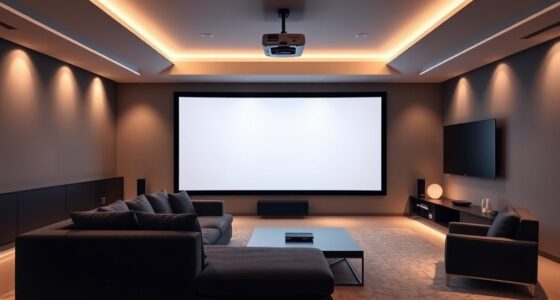
A better screen can beat a top-tier projector because it offers superior control over color accuracy, contrast, and brightness, regardless of your room’s lighting. Premium screens reflect light evenly, reduce glare, and maintain image quality over time, making visuals sharper and more vibrant. Unlike projectors, which need dark rooms and regular bulb replacements, high-quality screens provide a consistent, hassle-free viewing experience. Keep exploring to discover how investing in the right screen can transform your viewing setup.
Key Takeaways
- High-quality screens deliver consistent, true-to-life colors and sharp details regardless of ambient lighting conditions.
- They reduce glare and reflections, enhancing viewing comfort during extended sessions.
- Screens require less maintenance and do not need bulb replacements or frequent calibration like projectors.
- Advanced screen materials improve contrast, brightness, and color fidelity better than many projectors.
- A premium screen creates a more reliable and immersive viewing experience in various lighting environments.

When choosing between a better screen and a projector, understanding how each option impacts your viewing experience is essential. One of the biggest advantages a high-quality screen offers is superior control over color accuracy. Unlike projectors, which can sometimes struggle with accurate color reproduction due to lamp variations or bulb aging, a good screen provides a stable, consistent backdrop that preserves the true colors of your content. This means you’ll see more vibrant, true-to-life images, especially important for detailed visuals like movies, sports, or gaming. A better screen is designed to reflect light evenly, ensuring that colors stay consistent no matter where you’re sitting, which enhances your overall experience. Additionally, the material and technology used in high-quality screens can help mitigate issues related to ambient light, making them more adaptable to different environments. Ambient light is another critical factor where a better screen can outperform a projector. Projectors generally require a dark or dimly lit room to produce bright, clear images. Even then, ambient light can wash out the picture, reducing contrast and making details harder to see. The quality of your screen makes a significant difference here. High-quality screens are often designed with ambient light rejection (ALR) technology, which helps minimize the impact of stray light and enhances contrast. This means you can enjoy a vibrant picture even in well-lit rooms, without constantly dimming the lights or closing curtains. The better the screen, the less you’ll notice ambient light interference, giving you a more consistent viewing experience across different lighting conditions. In addition, the material used in premium screens can influence aspects like glare and reflection, further improving your viewing comfort. An additional benefit of high-quality screens is their capacity to reduce glare, making prolonged viewing sessions more comfortable and less straining on the eyes. Moreover, the durability of high-quality screens ensures they maintain their reflective properties and visual clarity over time, providing long-term value and consistent performance. Advances in screen technology also mean that many modern screens can now dynamically adapt to varying lighting environments, further enhancing the viewing experience. Another point in favor of a high-quality screen is its ability to optimize the overall image quality. It acts as a perfect canvas, enhancing contrast, brightness, and color accuracy. When you’re watching content, the screen’s reflective properties ensure that details are sharp and colors are rich, delivering a more immersive experience. While projectors can provide large images, they often require careful calibration and high-end bulbs to match the clarity and color fidelity that a good screen inherently offers. Plus, screens are generally easier to maintain; they don’t need bulb replacements or frequent adjustments like projectors do.
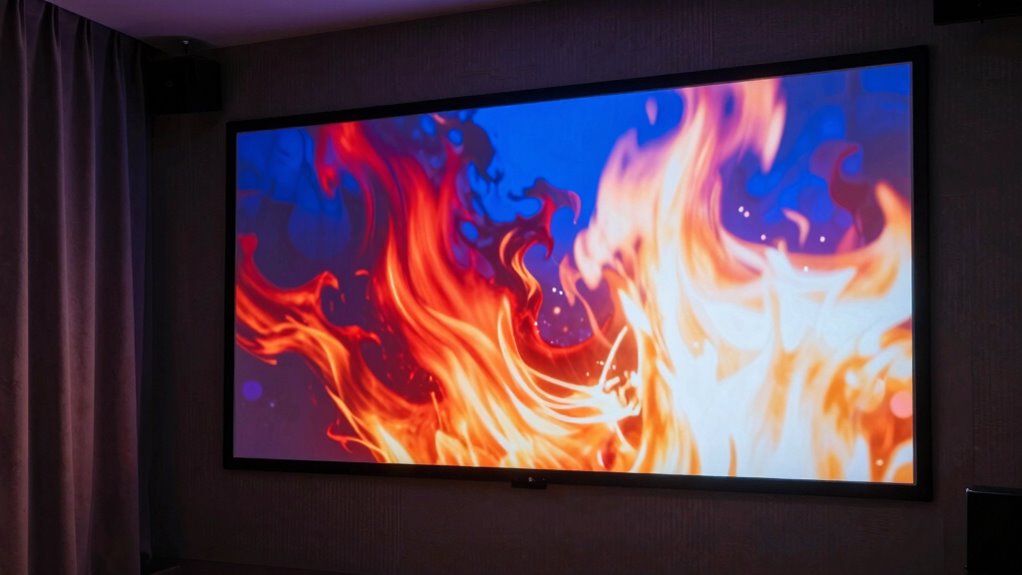
A high-quality screen ensures vibrant, true-to-life colors and consistent images from any viewing angle.
In essence, investing in a better screen improves your viewing experience by offering superior color accuracy, better performance under ambient light, and a more consistent picture quality. It’s a straightforward upgrade that can make a significant difference, especially if you value sharp, vibrant images and want flexibility in your room’s lighting conditions. Instead of battling with the limitations of projectors, you get a reliable, high-quality display surface that elevates everything you watch, making a better screen a compelling choice for many home entertainment setups.

Projector Screen Material Ambient Light Rejecting Fabric 69×118 inch for Max 130 inch 16:9 Projection Screen DIY, Black Backing 4K Ultra HD Front Projection EVA Polymer Material (Grey)
- Material Type: Multi-layer composite EPPE polymer
- Environmental Standards: Meets EU REACH testing standards
- Surface Finish: Diffuse matte reflective surface
As an affiliate, we earn on qualifying purchases.
As an affiliate, we earn on qualifying purchases.
Frequently Asked Questions
How Does Ambient Light Affect Screen Versus Projector Visuals?
Ambient light markedly impacts screen visuals more than projectors because it affects reflection quality. When there’s a lot of ambient light, screens struggle to maintain vibrant images, as reflections wash out colors and details. A high-quality screen with good reflection quality can better resist ambient light, providing clearer visuals. Conversely, projectors are less affected by ambient light because their image is projected directly onto a surface, making screens essential for bright environments.
Can Screens Improve Image Quality in Small Rooms?
Yes, screens can improve image quality in small rooms. Their portability allows you to set up and move them easily, optimizing viewing angles. Proper screen installation guarantees the surface is flat and free of distortions, which enhances clarity and brightness. In tight spaces, a high-quality screen minimizes ambient light interference and provides a sharper, more vibrant picture, making your viewing experience much better than with a projector alone.
Are There Specific Screen Materials for Enhanced Contrast?
Yes, certain screen materials with specialized coatings can enhance contrast. Look for screens with matte or high-gain coatings that optimize reflective properties, reducing ambient light interference. These coatings improve the depth of blacks and overall contrast, making images look more vivid. By choosing a screen with the right reflective properties, you guarantee sharper details and richer colors, especially in well-lit environments, giving your projector the best possible image quality.
How Durable Are Screens Compared to Projectors?
A screen’s durability is like a sturdy shield, often lasting longer than projectors. You’ll find that screens typically have greater longevity, resisting scratches and wear better over time. While projectors may need bulb replacements and maintenance, screens remain resilient with proper care. So, if you’re looking for a long-term investment, a high-quality screen can outlast projector durability and keep your viewing sharp and vibrant.
What’s the Maintenance Cost Difference Between Screens and Projectors?
You’ll find that screens typically have lower maintenance costs than projectors because they require less upkeep. With a simple projection setup and straightforward screen installation, you avoid frequent bulb replacements and complex cleaning routines that projectors demand. Over time, this means fewer expenses and less hassle. Choosing a quality screen guarantees durability with minimal ongoing maintenance, making it a cost-effective solution for consistent, high-quality viewing without the frequent upkeep of a projector.

NothingProjector ALR Screen for Ultra Short Throw Projector, 100 inch
- Ambient Light Rejection: Rejects up to 85% of ambient light
- Cinema-Grade 4K Clarity: Supports 4K/8K UHD and 3D content
- Optimized for UST Projectors: Wide 160° viewing angle with minimal distortion
As an affiliate, we earn on qualifying purchases.
As an affiliate, we earn on qualifying purchases.
Conclusion
So, next time you’re choosing between a better screen and a projector, consider what truly matters—picture quality, brightness, and ease of use. A high-quality screen can often outshine a top-tier projector, delivering sharper images and vibrant colors. Why settle for less when you can enjoy a stunning viewing experience with the right screen? Remember, sometimes the simplest upgrade can make the biggest difference in your home theater. Wouldn’t you want the best possible picture?

120inch Projector Screen with Stand: Portable Projector Screen Outdoor Indoor Front/Rear16:9 4K HD with Carry Bag Sandbag- Movie Screen for Backyard Moive Night, Camping, Theater
- Stable and Durable Base: Reinforced steel support for stability
- Weather-Resistant Design: Includes windproof accessories and sandbags
- High-Quality Visuals: Crisp 4K HD image with wide 160° view
As an affiliate, we earn on qualifying purchases.
As an affiliate, we earn on qualifying purchases.

Mdbebbron 120 inch Projector Screen 16:9 Foldable Anti-Crease Portable Projector Movies Screens for Home Theater Outdoor Indoor Support Double Sided Projection
- Portable and Foldable Design: Lightweight, compact, easy to carry and store
- Versatile Usage: Suitable for home, office, outdoor, and events
- Anti-Crease and High-Quality Material: Made of durable polyester for clear, bright projection
As an affiliate, we earn on qualifying purchases.
As an affiliate, we earn on qualifying purchases.