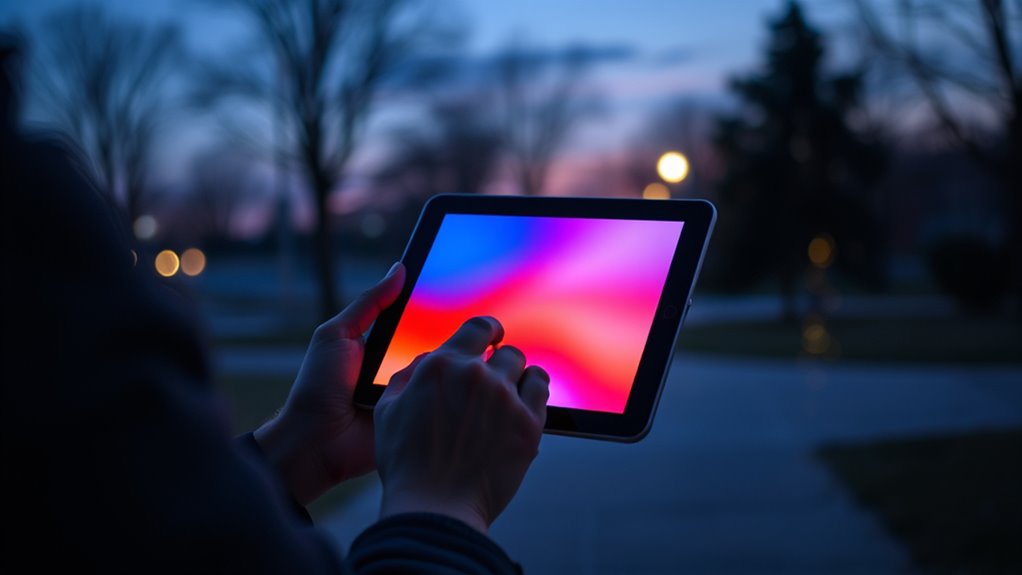
To balance ambient light and screen gain effectively, you need to match your projector’s brightness with your environment. High ambient light requires a projector with high lumens and a high-gain screen to boost visibility, but be aware of potential hotspots. In darker settings, a lower gain screen with a contrast-rich projector offers clarity and color accuracy. Adjusting these factors helps you achieve vivid, sharp images even in challenging conditions. Keep exploring to discover more ways to optimize your setup.
Key Takeaways
- High ambient light environments require projectors with higher lumen output to maintain image visibility.
- High-gain screens reflect more light, increasing brightness but may cause hotspots and limited viewing angles.
- Balancing projector brightness and screen gain ensures clear images without glare or washout in challenging lighting.
- In darker settings, lower gain screens optimize contrast and color accuracy, reducing the impact of ambient light.
- Selecting the right combination depends on ambient light levels and desired image quality, ensuring an optimal viewing experience.
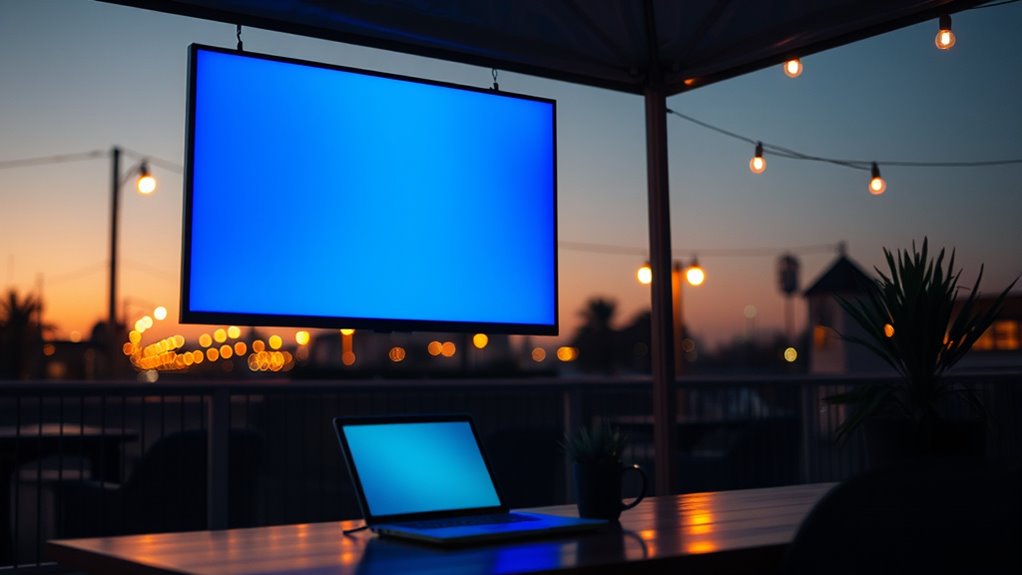
When choosing a projector, understanding how ambient light and screen gain affect image quality is vital. These factors directly influence how vibrant, clear, and sharp your projected images will appear, especially in challenging environments. Your selection of projection technology plays a significant role here. Different types, such as LCD, DLP, or LCoS, have varying sensitivities to light and contrast. For instance, some projection technologies perform better in brightly lit rooms, offering higher brightness levels, while others excel in darker settings with richer color accuracy. Equally important is the ergonomic design of the projector itself. A well-designed projector isn’t just about aesthetics; it guarantees ease of setup and ideal positioning, which can help you control ambient light effects more effectively. A projector with adjustable lens shift, keystone correction, and flexible mounting options allows you to minimize shadows and glare, thereby improving image quality in environments with unpredictable lighting conditions. Additionally, understanding how ambient light interacts with your projection setup can help you optimize your viewing experience by choosing appropriate equipment and placement. Screen gain is another critical piece of the puzzle. It measures how much light the screen reflects back to the viewer. Higher gain screens, typically above 1.5, reflect more light, making images appear brighter even under ambient light. However, they can also cause hotspots and reduced viewing angles, so you need to balance gain with the environment. Lower gain screens, around 1.0 or less, diffuse light more evenly and are better suited for rooms with variable lighting, but they may require a projector with higher lumen output to achieve the desired brightness. When you’re in a space with lots of ambient light, opting for a screen with higher gain can help you see details clearly without turning up the projector’s brightness excessively, which might cause eye strain or energy inefficiency. Ultimately, the key is balancing ambient light levels with the screen gain to maximize image quality. If your environment is bright, you’ll want a projector with higher lumen output and a high-gain screen to combat washout. Conversely, in darker settings, lower gain screens paired with projectors offering excellent contrast and color reproduction will deliver the best experience. Remember, the ergonomic design of the projector can simplify adjustments and positioning, making it easier to find the perfect balance. By understanding how projection technology, ambient light, and screen gain interact, you can select a setup that consistently delivers sharp, vivid images regardless of lighting conditions. This careful consideration ensures your viewing experience remains immersive and enjoyable, even in challenging environments.

ViewSonic PA503HD 4000 Lumens High DLP Brightness Projector with 1.1x Optical Zoom, USB, and HDMI inputs for Home and Office
High Brightness DLP Lamp FHD Projector: Full HD (1920x1080p) resolution with a 1.4-1.6 throw ratio and 4,000 ANSI…
As an affiliate, we earn on qualifying purchases.
As an affiliate, we earn on qualifying purchases.
Frequently Asked Questions
How Does Ambient Light Affect Projector Image Quality?
Ambient light can considerably decrease your projector’s image quality by causing glare and washing out colors. To combat this, you need glare reduction techniques, like using blackout curtains or adjusting the projector placement. These steps also help with contrast enhancement, making your images clearer and more vibrant. By controlling ambient light, you ensure your projected image remains sharp, bright, and easily viewable, even in challenging lighting conditions.
What Are the Best Screen Materials for High Gain in Bright Rooms?
You might think matte finishes are your best bet, but for high gain in bright rooms, reflective surfaces actually shine. They amplify brightness and contrast, making your image pop despite ambient light. Look for screens with a glossy or semi-glossy finish designed for high gain. Matte finishes, while reducing glare, tend to wash out in bright settings. So, embrace the reflective surfaces and turn up the brightness without losing detail.
Can Adjustable Gain Screens Improve Visibility in Varying Light Conditions?
Adaptive screens can definitely improve visibility in changing light conditions. By automatically adjusting their gain, they help you see clearly without manual tweaks. These screens often feature glare reduction, which cuts down on reflections and eye strain, especially in bright environments. With adaptive technology, you’ll experience a balanced picture, ensuring ideal brightness and contrast whether the room is sunny or dim, making your viewing more comfortable and effective.
How Does Ambient Light Influence Color Accuracy on Screens?
Did you know that ambient light can distort color accuracy by up to 30%? It affects your screen primarily through light reflection, which washes out colors and impacts color calibration. When ambient light is bright, it can cause glare and reduce the fidelity of colors on your display. To maintain true colors, you need to minimize reflections and optimize your lighting conditions for better color calibration, ensuring accurate visuals in any environment.
What Technological Advancements Help Optimize Screen Gain and Ambient Light Management?
Modern screens use smart sensor technology to optimize screen gain and ambient light management. These sensors detect changing lighting conditions and automatically adjust brightness, ensuring clear images without glare or distortion. Automatic brightness adjustment helps you maintain color accuracy and comfort, especially in challenging environments. This technology creates a balanced viewing experience, reducing eye strain while enhancing visual clarity, so you can focus on your content without manual adjustments.
high gain projection screen
As an affiliate, we earn on qualifying purchases.
As an affiliate, we earn on qualifying purchases.
Conclusion
Balancing ambient light and screen gain gently guides you toward a more comfortable viewing experience. When you tune into your environment’s subtle cues, you create a harmony that feels almost effortless. By softly adjusting brightness, you make sure your screen remains inviting without overpowering, allowing your focus to flow seamlessly. Embrace the delicate dance between light and gain, and you’ll find your visual comfort naturally enhancing, turning every challenge into a smooth, enjoyable visual journey.
adjustable lens projector
As an affiliate, we earn on qualifying purchases.
As an affiliate, we earn on qualifying purchases.
projector with keystone correction
As an affiliate, we earn on qualifying purchases.
As an affiliate, we earn on qualifying purchases.