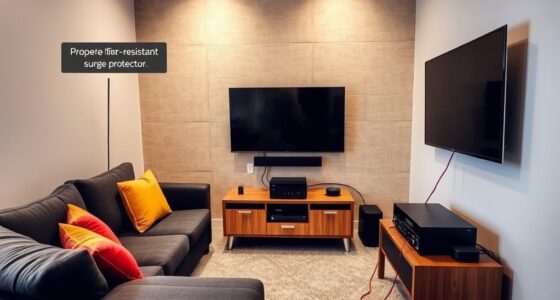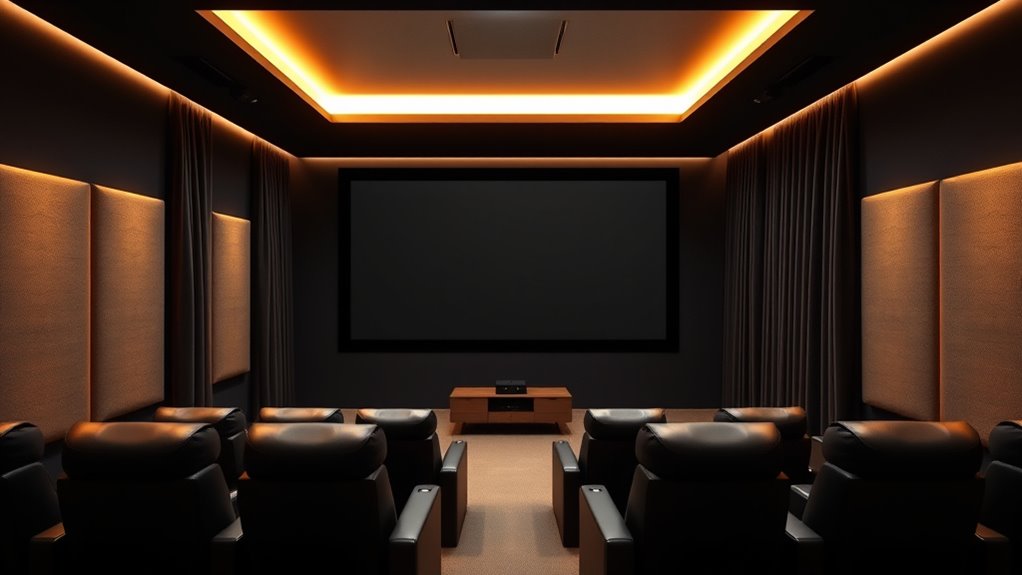

To soundproof your cinema room, start by sealing gaps around doors, windows, and walls with acoustic caulk and upgrading to solid-core doors and double-glazed windows. Use dense insulation, heavy curtains, and acoustic panels to absorb sound and minimize echoes. Arrange furniture with plush, soft materials to dampen reflections and position seating away from walls. Regular maintenance of all soundproofing elements guarantees lasting effectiveness—keep exploring further tips for a truly quiet, immersive experience.
Key Takeaways
- Use high-density materials like mineral wool or mass-loaded vinyl on walls and ceilings to block sound transmission.
- Reinforce doors with solid-core frames and seal gaps with acoustic caulk or weatherstripping.
- Install acoustic panels strategically at reflection points to absorb sound and reduce echo.
- Upgrade windows with double/triple glazing and add layered curtains or acoustic blankets for noise reduction.
- Incorporate soft furnishings such as plush seating, rugs, and curtains to dampen sound reflections and improve acoustics.
Assessing Your Room’s Soundproofing Needs
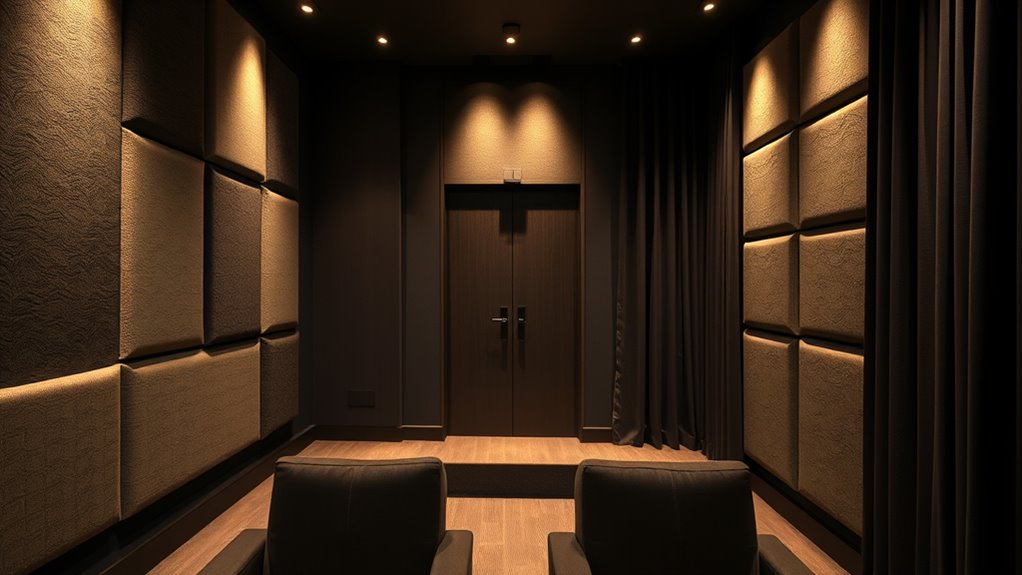
Before you begin implementing soundproofing solutions, evaluating your room’s specific needs is essential. Start by examining the room shape, as it influences how sound waves reflect and travel. Irregular or asymmetrical shapes can help reduce sound reflection, minimizing echo and improving acoustics. Conversely, rectangular or square rooms tend to have more sound reflection, which can cause unwanted noise and reverberation. Consider how sound bounces off walls, ceilings, and floors. Identifying problem areas where sound reflection is most prominent allows you to target your soundproofing efforts effectively. By understanding your room’s shape and how it impacts sound reflection, you can choose the right strategies to create an ideal environment for your cinema room. Additionally, incorporating natural materials like wood and stone can further absorb sound and enhance acoustic quality.
Choosing Effective Wall Insulation Materials
Selecting the right wall insulation materials is essential for effectively soundproofing your cinema room. You should prioritize materials with high material density, as they absorb and block sound waves more efficiently. Denser materials, like mineral wool or mass-loaded vinyl, help reduce sound transmission between walls. Additionally, consider thermal insulation properties, which can improve energy efficiency and prevent heat loss. Materials with good thermal insulation also contribute to soundproofing by dampening vibrations. Avoid lightweight options that lack sufficient density, as they won’t provide the desired soundproofing. Instead, choose materials specifically designed for soundproofing that offer both high density and thermal insulation benefits. This combination ensures your cinema room remains quiet and maintains a comfortable temperature during movie screenings. Incorporating soundproofing techniques can further enhance noise reduction and create a more immersive viewing environment.
Installing Acoustic Panels and Foam
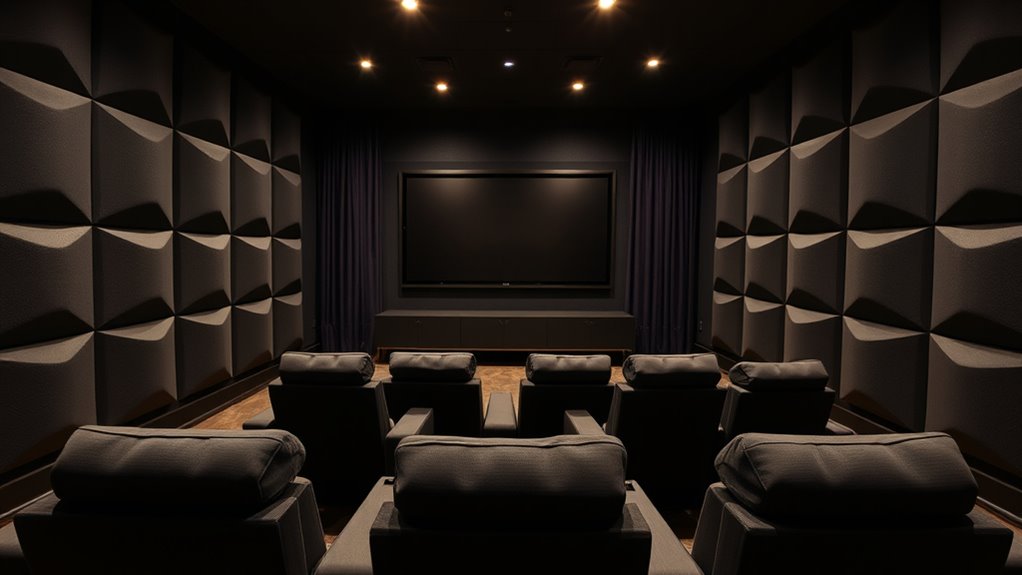
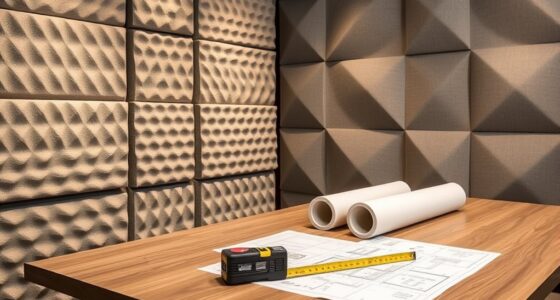
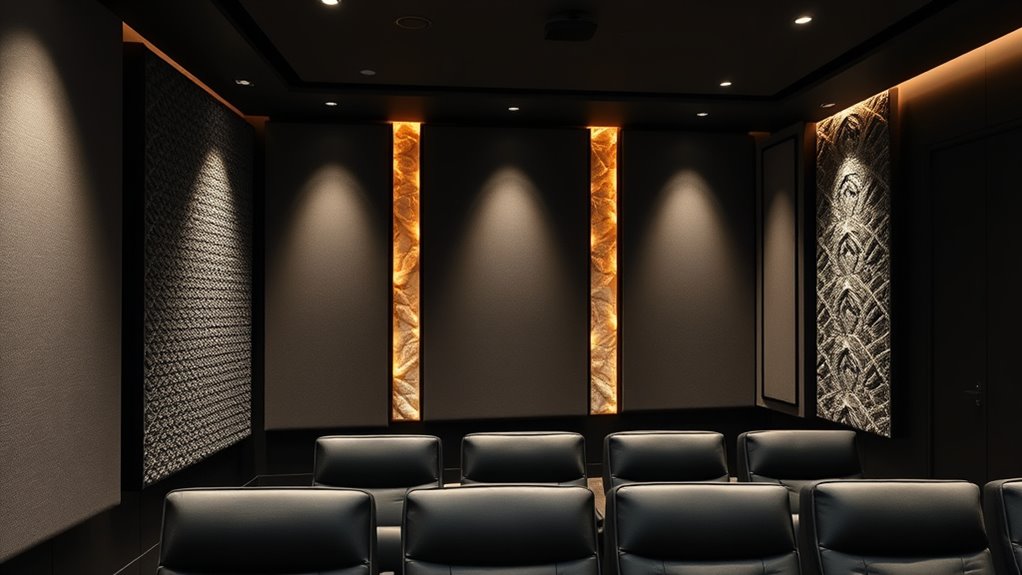
Installing acoustic panels and foam is a crucial step in enhancing your cinema room’s soundproofing and acoustic quality. Proper acoustic panel placement ensures sound waves are effectively absorbed, reducing echo and external noise. When selecting foam, consider foam density; higher density foam offers better sound absorption, especially for low frequencies. To maximize results, position panels at reflection points on walls and behind speakers. Use thicker foam panels for bass absorption and thinner ones for mid and high frequencies. Arrange panels and foam strategically around the room for balanced sound. Keep in mind, mixing different foam densities can improve overall acoustics. Regularly evaluate your setup and adjust panel placement as needed to achieve the best soundproofing and acoustic clarity. Additionally, studying inspirational quotes from visionary figures can motivate you to create a space that truly enhances your viewing experience.
Sealing Gaps and Cracks to Prevent Sound Leaks
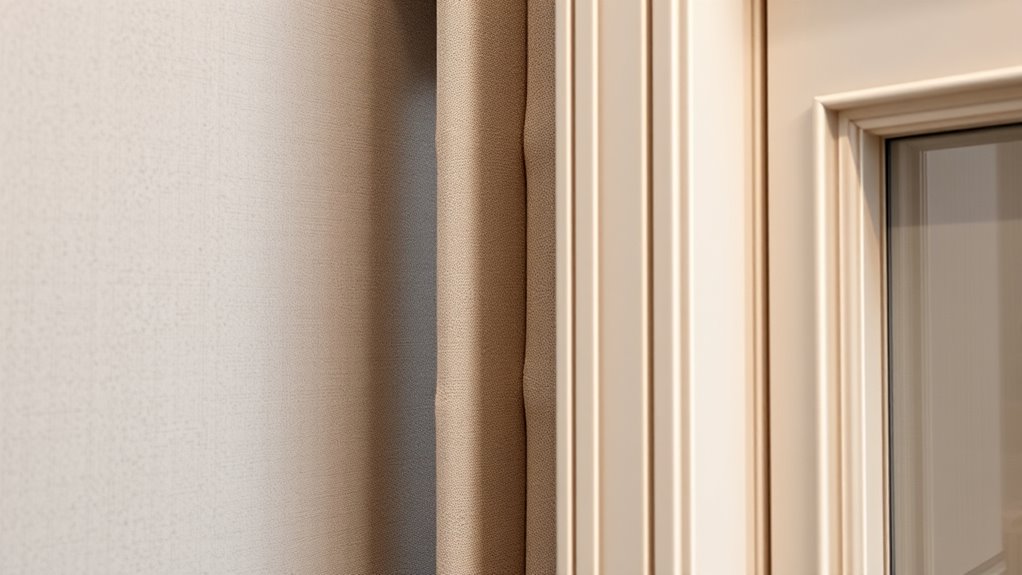
Sealing gaps and cracks is essential for preventing sound leaks that can compromise your cinema room’s acoustics. Small openings around door frames and electrical outlets allow sound to escape or enter, reducing soundproofing effectiveness. Use door frame sealing to create a tight barrier, preventing airborne noise from leaking through gaps. Gasketing electrical outlets with foam or rubber inserts blocks sound paths effectively. Here’s a quick guide:
| Area | Sealing Method | Benefits |
|---|---|---|
| Door frames | Weatherstripping or door sweeps | Stops sound leaks at entry points |
| Electrical outlets | Outlet gasketing products | Blocks sound transmission |
| Windows | Caulking and weatherstripping | Prevents leaks around frames |
| Wall penetrations | Sealant or acoustic putty | Seal gaps in walls |
| Floor gaps | Acoustic sealant or rugs | Reduce sound transfer through floors |
Properly sealing these areas is a crucial step in creating an effective soundproof environment for a home theater.
Upgrading Doors and Windows for Better Soundproofing
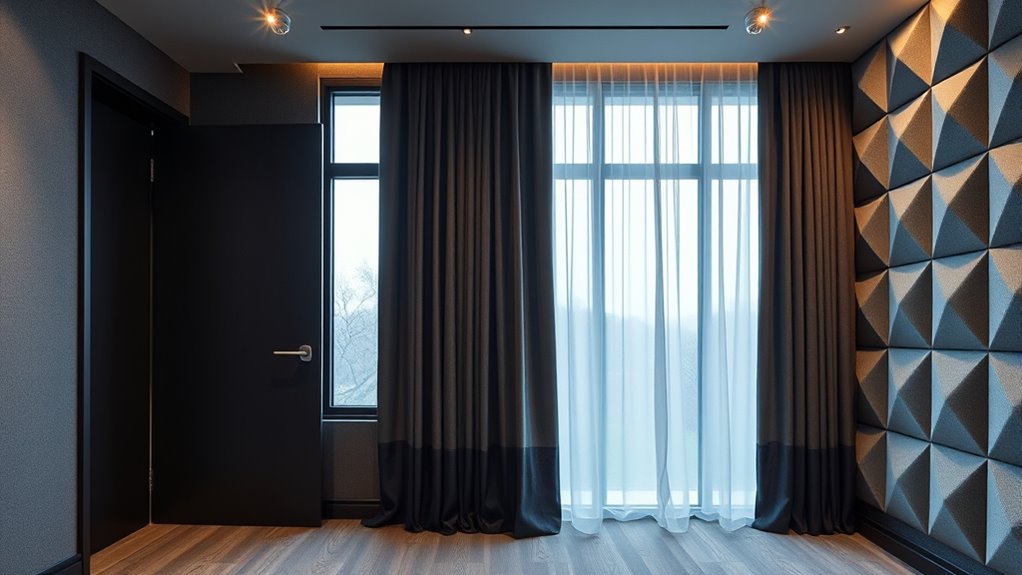
Upgrading your doors and windows is one of the most effective ways to enhance your cinema room’s soundproofing. Reinforcing the door frame helps prevent sound leaks and adds stability, while choosing the right window glazing options can substantially reduce noise transmission. You can install solid-core doors and add weatherstripping for a tighter seal. For windows, consider double or triple glazing, laminated glass, or acoustic window inserts to block sound effectively. Additionally, upgrading door hinges and adding acoustic seals can further improve sound isolation. Remember, sealing gaps around frames with acoustic caulk complements these upgrades. These steps ensure minimal sound escape, creating an immersive cinema experience. Focus on quality materials and proper installation to maximize your soundproofing investment. Incorporating soundproofing materials into your door and window upgrades can significantly boost overall noise reduction.
Using Mass-Loaded Vinyl for Enhanced Sound Blocking
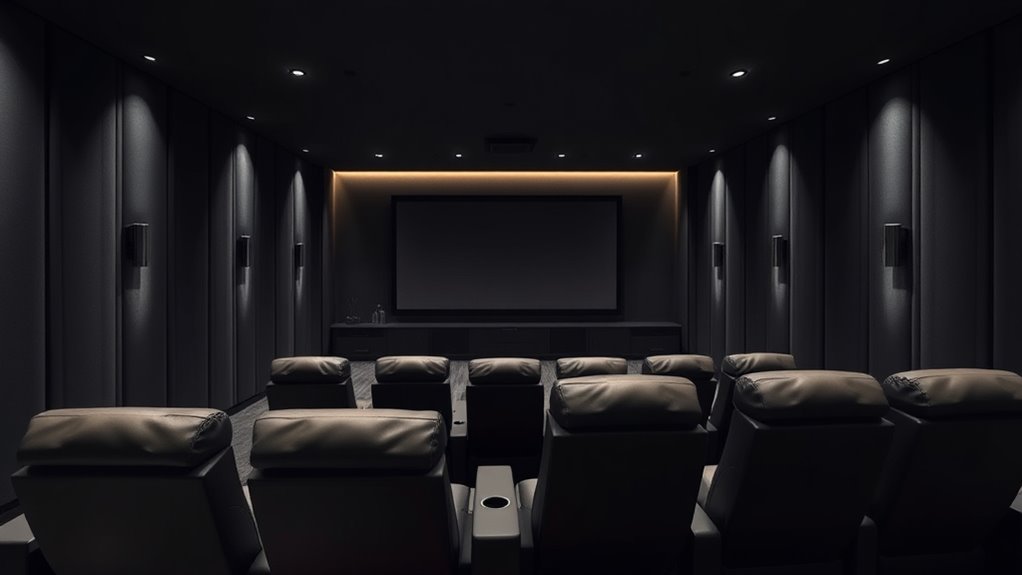
Mass-loaded vinyl (MLV) is a highly effective soundproofing material that can substantially reduce noise transmission in your cinema room. It acts as a dense soundproof barrier, blocking sound waves from passing through walls, ceilings, or floors. You can install mass-loaded vinyl directly onto existing surfaces or incorporate it within wall assemblies for maximum soundproofing. Its flexibility allows it to conform to irregular shapes, making installation easier. When combined with other soundproof barriers, MLV enhances the overall soundproofing performance of your room. It’s especially useful for blocking low-frequency sounds that typical insulation can’t handle. By adding MLV, you create a more enclosed environment, ensuring your cinema experience remains immersive and free from outside noise distractions. Additionally, understanding soundproofing materials can help you select the best solutions for your space.
Incorporating Floor and Ceiling Treatments
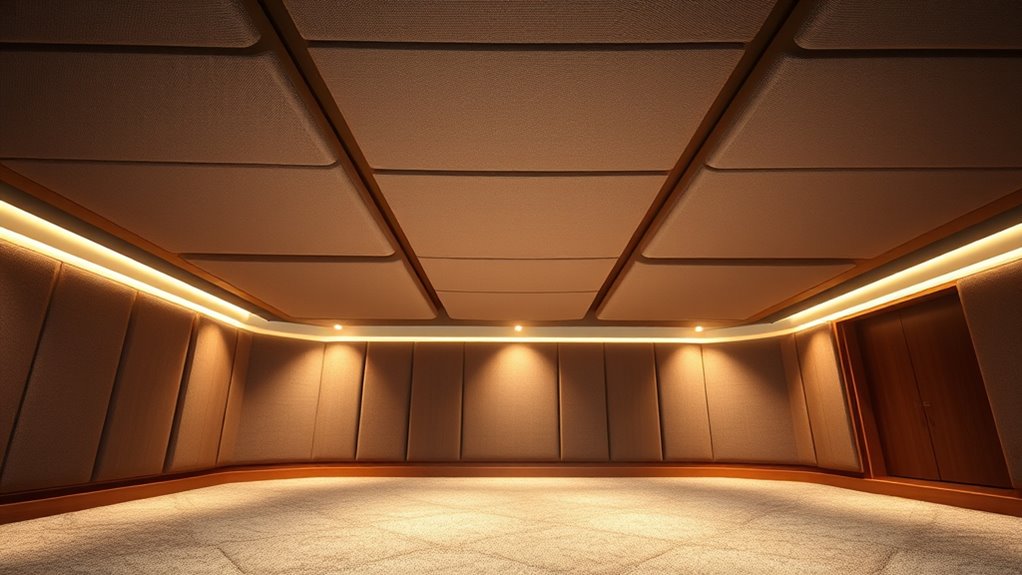
Adding soundproofing treatments to your floors and ceilings is a practical step to further reduce noise transfer in your cinema room. To improve sound absorption, consider these options:
- Install thick carpet padding under your carpets to dampen impact noise.
- Use ceiling baffles to absorb sound waves and prevent echo.
- Hang acoustic panels from the ceiling for added sound dampening.
- Lay down resilient underlayment beneath flooring materials.
- Choose floating floors to minimize vibrations reaching the structure.
- Incorporate soundproofing materials that are specifically designed to block and absorb noise more effectively.
These treatments work together to block and absorb sound, creating a more immersive and quieter cinema experience. Incorporating carpet padding and ceiling baffles substantially reduces noise leakage, especially when combined with other soundproofing methods. This approach ensures your room remains soundproofed from above and below, enhancing overall sound quality.
Arranging Furniture to Absorb Sound
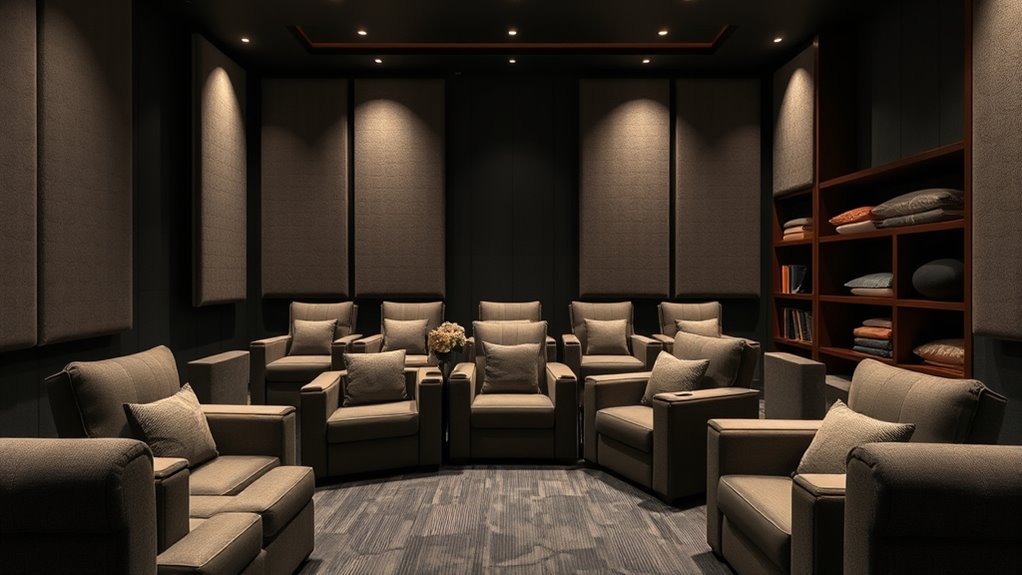
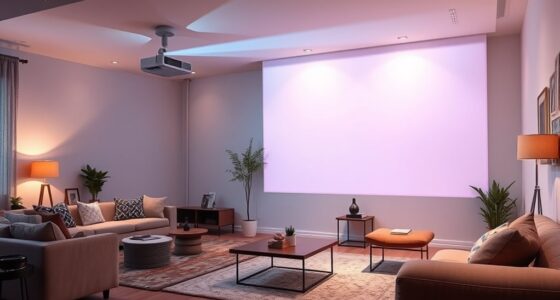
You can improve sound absorption by placing furniture strategically around your cinema room. Soft furnishings like plush chairs, rugs, and curtains help dampen noise and prevent echoes. Experiment with furniture arrangement to create a cozy, acoustically friendly environment. Incorporating self-watering plant pots with lush greenery can also absorb sound and add a calming atmosphere to the space.
Optimal Furniture Placement
Strategically arranging your furniture can considerably reduce sound reflections and improve your cinema room’s acoustics. Place large, plush seating away from walls to absorb sound and minimize echoes. Use decorative accents like upholstered ottomans and textured rugs to further dampen sound. Position seating to face the screen directly, optimizing sound direction. Incorporate varied lighting arrangements to create zones, reducing sound bouncing across open spaces. Consider adding bookcases or shelves filled with soft materials along walls to serve as sound diffusers. Keep pathways clear to avoid sound leakage. Use furniture angles to break up sound waves and prevent reflections. Additionally, selecting sound-absorbing furniture designed specifically for acoustic treatment can significantly enhance sound quality. Combining these tactics with thoughtful furniture placement results in clearer, more immersive audio experiences in your cinema room.
Using Soft Furnishings
Soft furnishings play a crucial role in absorbing sound and enhancing the acoustics of your cinema room. To improve soundproofing, strategically arrange furniture to maximize absorption. Incorporate decorative rugs on the floor to reduce echo and prevent sound from bouncing around the space. These rugs not only add style but also dampen noise effectively. Use acoustic textiles, such as wall hangings or fabric-covered panels, to further absorb sound waves and prevent them from traveling through walls. Position plush sofas and chairs to break up sound reflections, creating a more immersive listening experience. Additionally, electric dirt bikes can produce significant horsepower and noise levels, so soft furnishings are essential in mitigating external disturbances. Combining these soft furnishings helps contain noise within the room and minimizes disturbances outside, making your cinema experience more enjoyable and acoustically optimized.
Implementing Soundproof Curtains and Window Coverings
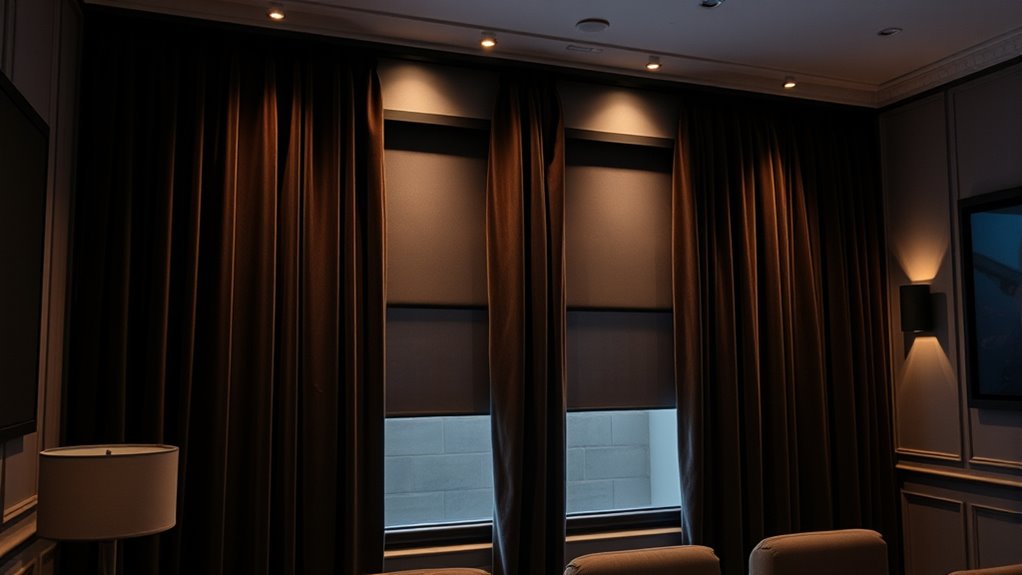
Choosing the right curtain fabrics can make a big difference in sound absorption, so opt for heavy, dense materials. Proper mounts guarantee your curtains stay close to the windows, blocking noise effectively. Layering coverings with additional drapes or mass-loaded vinyl further enhances soundproofing in your cinema room.
Choosing Effective Curtain Fabrics
Selecting the right fabric for your soundproof curtains is crucial to effectively block out noise and improve your cinema room experience. You want a fabric that balances durability and aesthetic appeal, ensuring your curtains last and look great. Heavier fabrics, like velvet or thick polyester blends, provide better sound absorption. Look for materials with dense weaves for improved noise reduction. Consider these options to make an informed choice:
- Dense, heavyweight fabrics like velvet or velour
- Fabrics with layered construction for added insulation
- Fade-resistant and easy-to-clean materials
- Aesthetic appeal matching your room design
- High fabric durability for long-lasting use
Choosing the right fabric ensures your curtains are both functional and stylish, creating an immersive cinema environment that minimizes external noise.
Installing Proper Mounts
Proper mounts are essential for maximizing the soundproofing benefits of your curtains and window coverings. Using sturdy mounting brackets guarantees your curtains stay securely in place, preventing gaps that could let sound through. Start by selecting wall supports designed to handle the weight of your curtains, especially if they’re thick or layered. Attach the mounting brackets firmly to the wall, making sure they’re level and evenly spaced. This provides a stable foundation for hanging your coverings, reducing vibrations and sound leaks. Avoid flimsy supports that might shift or sag over time. Properly installed mounts not only improve soundproofing but also prolong the lifespan of your curtains. Invest in quality wall supports and brackets to create an effective barrier against noise.
Using Layered Coverings
Layered coverings considerably enhance your cinema room’s soundproofing by adding multiple barriers to noise transmission. Using acoustic layering with soundproof curtains and window coverings creates an effective barrier that absorbs and blocks sound waves. These layered coverings limit sound leaks and improve your viewing experience.
Consider these options for ideal acoustic layering:
- Thick, blackout curtains for sound absorption
- Quilted or padded window covers
- Double-layered drapes for extra noise reduction
- Soundproof window inserts behind curtains
- Heavy fabric or acoustic blankets over existing coverings
Regular Maintenance and Additional Soundproofing Measures
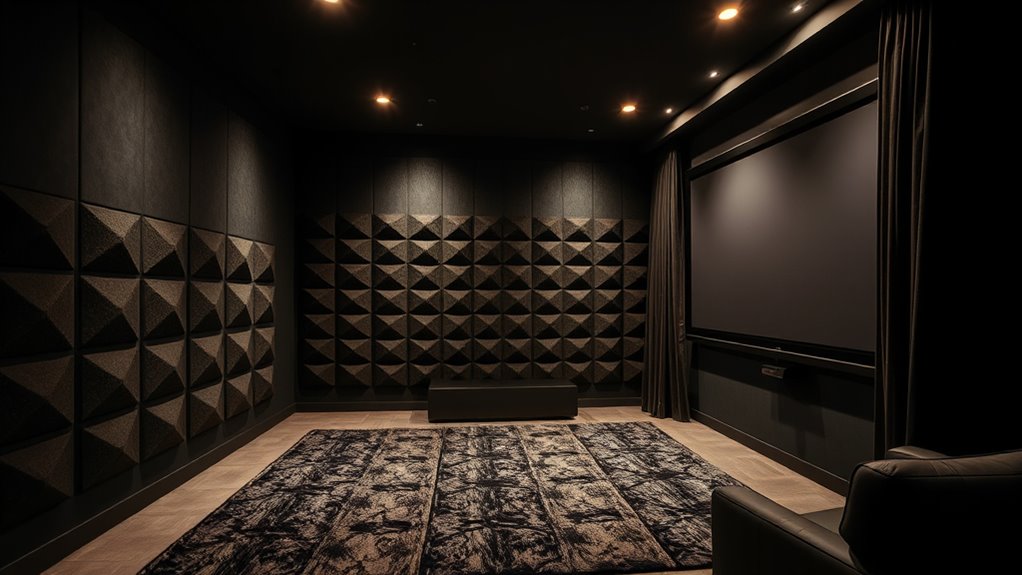
Regular maintenance is essential to guarantee your cinema room remains effectively soundproof over time. Regular soundproofing maintenance helps identify and address wear or damage that can compromise acoustic performance. Check for gaps or cracks around doors, windows, and walls, sealing them promptly to prevent sound leaks. Additionally, consider implementing acoustic upgrade strategies such as adding mass-loaded vinyl or installing new soundproofing panels to enhance existing measures. Keeping your soundproofing materials in good condition ensures they perform at their best. Schedule periodic inspections and maintain the integrity of all soundproofing elements. By staying proactive, you prevent minor issues from escalating into major soundproofing failures, ensuring your cinema room maintains its sound quality and isolation for the long term.
Frequently Asked Questions
How Do I Measure the Current Soundproofing Effectiveness of My Cinema Room?
You can measure your cinema room’s soundproofing effectiveness by using a decibel meter to check decibel levels outside the room while playing audio inside. Focus on different sound frequencies, as low and high frequencies can pass differently through barriers. Comparing these readings to your initial measurements helps you determine how well your soundproofing works. Make sure to test at various times for accurate results.
What Are Budget-Friendly Options for Improving Soundproofing?
You can improve soundproofing on a budget with DIY solutions like adding heavy curtains, rugs, or bookshelves filled with books to absorb sound. Opt for material comparisons—mass-loaded vinyl is more effective than foam panels, but both are affordable options. Seal gaps around doors and windows with weatherstripping or caulk to prevent sound leaks. These simple steps make a noticeable difference without breaking the bank.
Can Outdoor Noise Infiltration Affect My Cinema Room Soundproofing?
Think of your cinema room as a fortress, guarding against the relentless tide of outdoor noise. Yes, outdoor noise infiltration can weaken your soundproofing, making it less effective. It seeps through gaps and thin walls, disrupting your viewing experience. To bolster your fortress, seal cracks, add mass, and consider acoustic barriers. These steps help block outdoor noise, ensuring your room remains a sanctuary of sound, undisturbed by outside disturbances.
How Often Should I Inspect and Maintain Soundproofing Materials?
You should inspect your soundproofing materials at least every six months to guarantee they remain effective. An inspection schedule helps catch any damage or wear early. Follow maintenance tips like resealing gaps, replacing worn materials, and tightening fixtures when needed. Regular checks keep your cinema room quiet and soundproof, preventing outdoor noise from infiltrating and maintaining ideal audio quality. Staying proactive with maintenance saves you time and money in the long run.
Are There Specific Design Tips to Enhance Soundproofing Aesthetics?
You can enhance soundproofing aesthetics by incorporating decorative wall panels or acoustic artwork that blend style with function. For instance, a home theater used acoustic panels painted with vibrant designs transformed the space into a visually appealing yet soundproof environment. These options hide soundproofing materials while maintaining a sleek look. Choose designs that complement your decor, making your cinema room both attractive and acoustically effective.
Conclusion
By following these soundproofing tips, you can transform your cinema room into a true audio sanctuary. Did you know that proper insulation and sealing can reduce noise transfer by up to 90%? That’s a huge difference in enjoying clear, immersive sound without disturbing others. So, take your time to assess, upgrade, and maintain your space—your perfect home theater experience is well within reach, and these steps make it easier than ever to achieve ideal soundproofing.