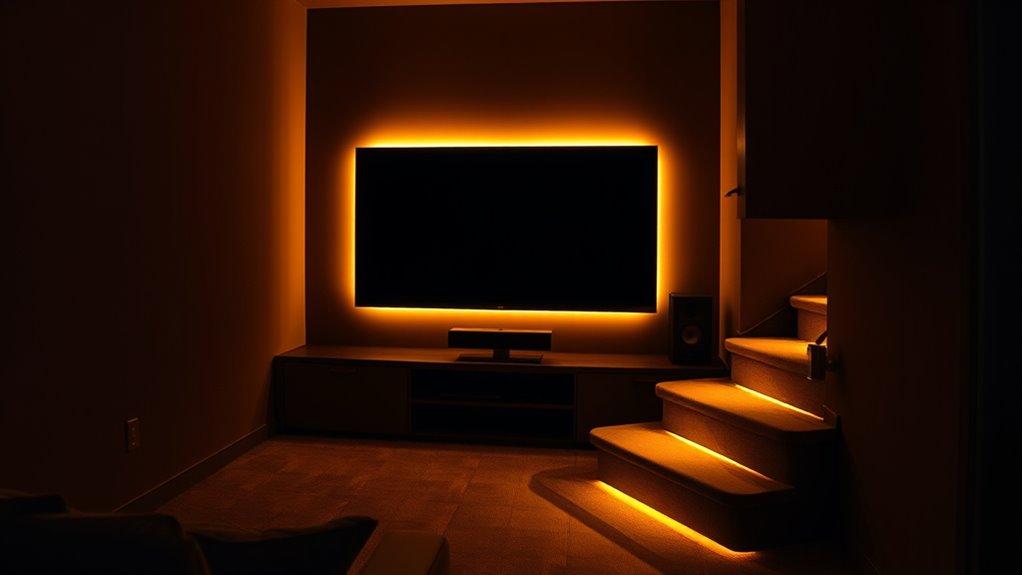
Bias lighting is a soft light placed behind your screen that reduces eye strain and enhances contrast, making images appear more vibrant. Step lights along pathways or stairs add safety and create an immersive atmosphere with adjustable brightness and color temperature. Both types of lighting help balance ambiance and visual comfort, making your home theater more enjoyable. If you keep exploring, you’ll discover how to optimize your setup for the perfect viewing experience.
Key Takeaways
- Bias lighting reduces eye strain by providing a soft glow behind the screen, improving contrast and visual comfort.
- Step lights enhance safety and ambiance by illuminating pathways and seating areas with adjustable brightness and color temperature.
- Proper ambient lighting balances cool and warm tones to create a cozy or modern home theater environment.
- Adjustable bias and step lights improve image perception and reduce glare, leading to a more immersive viewing experience.
- Combining bias lighting with step lights optimizes room atmosphere, comfort, and visual clarity for movies, gaming, or shows.
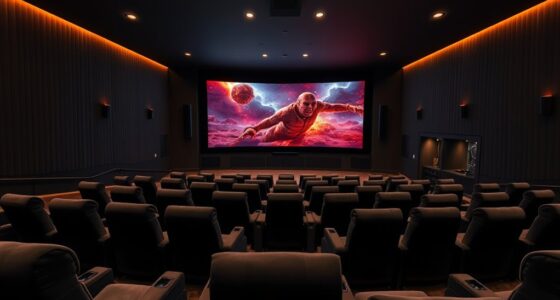
Ever wondered how the right lighting can transform your home theater experience? It’s all about creating an environment that enhances your viewing while reducing eye strain and avoiding glare. One key element is ambient illumination, which provides a soft, overall light that sets the mood without overpowering the screen. Choosing the proper ambient lighting involves paying attention to color temperature. Cooler temperatures, like 5000K or higher, give off a bluish hue that can feel clinical and harsh, while warmer temperatures around 2700K produce a cozy, inviting glow. For a home theater, you want a balance—warm enough to be pleasant but not so warm that it dims the screen’s contrast. Proper ambient illumination guarantees you can see your surroundings comfortably without competing with the picture quality. Understanding lighting control systems can help you automate and optimize your lighting setup for different viewing scenarios.
Optimal home theater lighting balances warm and cool tones to enhance visuals and reduce eye strain.
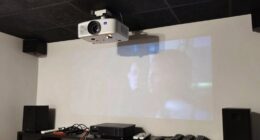
Bias lighting is a game-changer for visual comfort. It’s a subtle light source placed behind or around your TV or projector screen, designed to reduce eye strain during long viewing sessions. When your eyes continuously shift focus between the bright screen and the darker room, it causes fatigue. Bias lighting helps by providing a consistent, gentle glow that matches the screen’s brightness, easing your eyes’ workload. It also enhances perceived contrast and color accuracy, making images appear more vibrant. To optimize bias lighting, consider LED strips with adjustable color temperature and brightness. You can set the color temperature to match the content—warmer tones for movies and cooler shades for sports or gaming—ensuring the lighting complements what you’re watching.
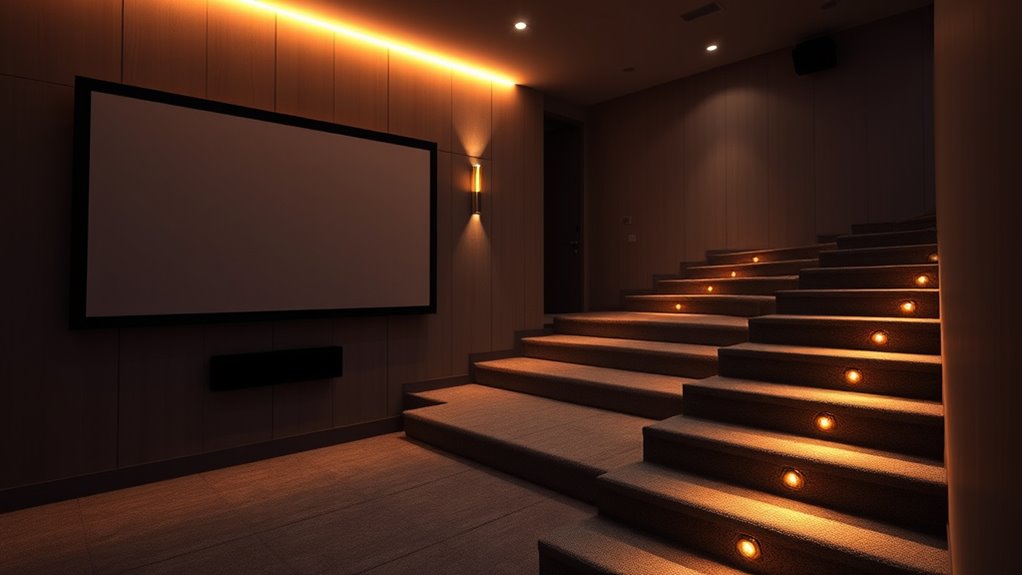
Step lights are another essential component. These are small, low-intensity lights installed along pathways, stairs, or around the seating area. Their purpose isn’t just safety; it’s about creating an immersive atmosphere without distracting from the screen. When selecting step lights, look for options with dimming capabilities and the ability to adjust color temperature. This allows you to tailor the ambiance to your preference, whether you want a soft glow that barely illuminates the floor or a gentle wash of light that adds depth to the room. By controlling the color temperature of your step lights, you can also influence the overall mood—warmer tones for a cozy vibe or cooler ones for a sleek, modern look.
In essence, mastering ambient illumination, bias lighting, and step lights with attention to color temperature can dramatically improve your home theater experience. It’s about creating a balanced environment where your eyes are comfortable, your visuals are enhanced, and the overall atmosphere is inviting. When you get the lighting right, every movie, game, or show becomes a more immersive, enjoyable event.
bias lighting LED strip for TV
As an affiliate, we earn on qualifying purchases.
As an affiliate, we earn on qualifying purchases.
Frequently Asked Questions
Can Bias Lighting Improve Overall TV Picture Quality?
Yes, bias lighting can improve your overall TV picture quality by providing ambient illumination that reduces eye strain and enhances viewing comfort. When you add bias lighting behind your TV, it creates a subtle contrast that makes colors appear more vivid and details clearer. This ambient light minimizes reflections and glare, resulting in a more immersive experience, so you enjoy better picture quality and comfort during long viewing sessions.
What Is the Ideal Color Temperature for Home Theater Lighting?
You should aim for a color temperature around 6500K for your home theater lighting. Studies show that this neutral white light matches daylight, reducing eye strain and enhancing picture quality. This color temperature creates a balanced lighting ambiance, preventing glare and maintaining vivid colors on your screen. By choosing the right color temperature, you guarantee an immersive viewing experience, making your home theater as comfortable and visually appealing as possible.
Are Step Lights Suitable for High-Humidity Home Theater Rooms?
Yes, step lights can be suitable for high-humidity home theater rooms if they have moisture resistance or waterproof fixtures. You should look for fixtures specifically designed to withstand moisture, preventing rust and electrical issues. Installing waterproof fixtures guarantees safety and longevity, especially in environments with high humidity. Always verify the product specifications to confirm they’re rated for moist or wet conditions before installation.
How Do I Install Bias Lighting Without Causing Screen Glare?
To install bias lighting without causing screen glare, you should position the lights behind your monitor or TV, ensuring they’re indirect and not directly facing your eyes. Use dimmable, warm-colored LEDs to create ambient contrast that enhances eye comfort. This setup minimizes reflections on the screen, reduces eye strain, and maintains a balanced viewing experience, allowing you to enjoy your home theater comfortably without distraction.
What Are the Energy-Saving Options for Home Theater Lighting?
Think of your home theater lighting as a wise owl—efficient and alert. You can conserve energy by switching to LED strips, which use less power and last longer. Installing motion sensors ensures lights turn off automatically when not in use, preventing waste. These options not only cut costs but also make your setup smarter and more eco-friendly, letting you enjoy your movies guilt-free while conserving energy effortlessly.
adjustable step lights for stairs
As an affiliate, we earn on qualifying purchases.
As an affiliate, we earn on qualifying purchases.
Conclusion
Just like the faint glow of a lighthouse guiding ships safely to shore, the right lighting in your home theater sets the mood and protects your eyes. Bias lighting and step lights create a seamless, immersive experience, turning your space into a personal cinema. Embrace these lighting tricks, and you’ll find yourself lost in your favorite movies, as effortlessly as Odysseus steering uncharted waters. Light the way, and enjoy every cinematic adventure.
ambient lighting control system for home theater
As an affiliate, we earn on qualifying purchases.
As an affiliate, we earn on qualifying purchases.
color temperature adjustable LED lights
As an affiliate, we earn on qualifying purchases.
As an affiliate, we earn on qualifying purchases.