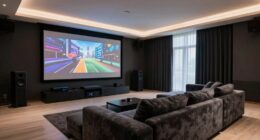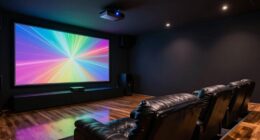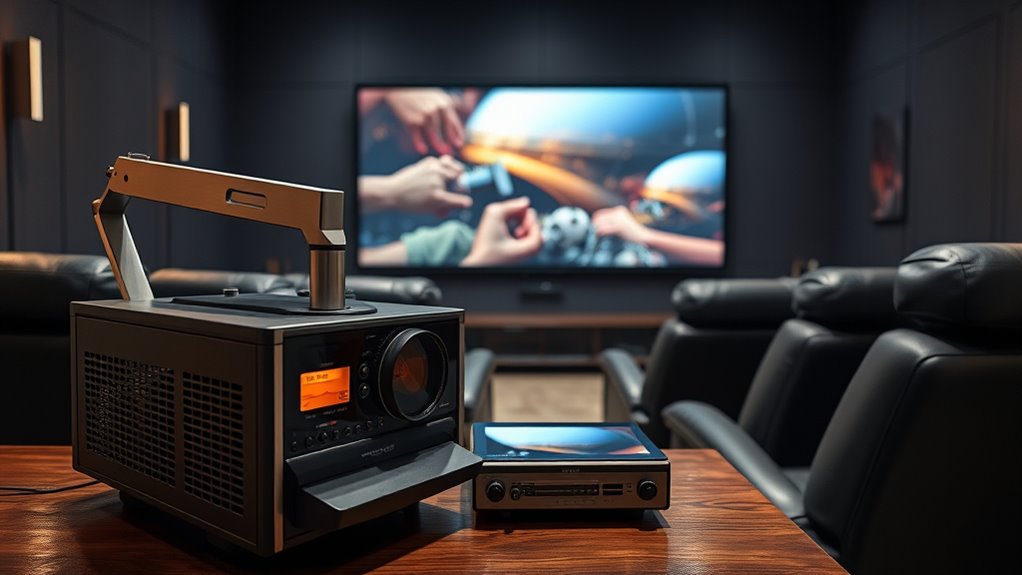
Projectors started in the 19th century with simple devices like magic lanterns using oil lamps and painted slides. Over time, advancements such as electric light sources, lenses, and film technology improved brightness and image quality, leading to cinema projectors in the 20th century. Today, digital innovations like LCD, DLP, and laser tech bring stunning 4K home theaters. If you keep exploring, you’ll discover how these innovations continue to transform entertainment and presentations.
Key Takeaways
- Early projection devices started in the 19th century with magic lanterns using oil lamps and painted slides.
- Technological milestones include electric light sources and lens improvements, enabling brighter, larger images.
- 20th-century advancements introduced cinema projectors with film reels, later replaced by digital systems.
- Modern digital projectors use LCD and DLP tech, offering high image quality, portability, and user-friendly features.
- Contemporary trends focus on 4K resolution, laser light sources, wireless connectivity, and immersive viewing experiences.
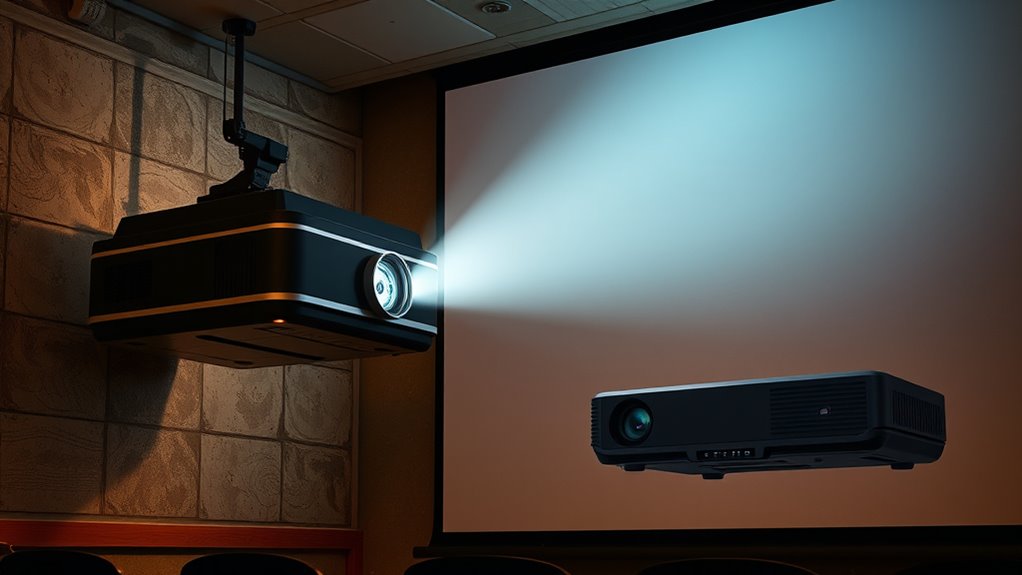
Have you ever wondered how projectors evolved from simple devices to the advanced tools we use today? The journey begins with early projection, where inventors sought ways to display images on surfaces beyond paper. These initial attempts, dating back to the 19th century, involved primitive devices like magic lanterns that used oil lamps and hand-painted slides. Early projection was limited in brightness and clarity, but it laid the groundwork for future innovations. As technology progressed, so did the capabilities of these devices, slowly transforming into more reliable and versatile tools. The advent of electric light sources, such as electric lamps and arc lamps, marked a noteworthy milestone in early projection, allowing brighter images and longer display times. This period saw the first use of lenses and mirrors to focus and enlarge images, making projection more practical for entertainment and education.
Moving into the 20th century, modern advancements accelerated the evolution of projectors. The development of cinema projectors brought about high-quality, large-scale image projection, primarily for movies. These projectors used film reels, with improvements in lens technology and light sources enhancing image clarity and brightness. As electronics advanced, the introduction of digital technology revolutionized projectors. Digital projectors replaced bulky film reels with compact, electronic components, making them more accessible and easier to operate. The shift also brought about innovations like LCD and DLP (Digital Light Processing) technologies, which markedly improved image quality, color accuracy, and contrast. Portable and short-throw projectors emerged, allowing users to set up presentations or home theaters in small spaces with minimal hassle.
In the domain of home entertainment, modern advancements continue to push the boundaries of what projectors can do. Today, 4K resolution projectors deliver stunning, cinema-quality images right in your living room. Laser light sources have replaced traditional lamps, offering longer lifespan and brighter images, even in well-lit rooms. Connectivity options like HDMI, wireless streaming, and smart features make these projectors highly versatile. What’s more, the advent of 3D and HDR support enhances the viewing experience, making it more immersive. As technology progresses, projectors are becoming more compact, affordable, and user-friendly, turning once specialized equipment into everyday entertainment and presentation tools. From their humble beginnings in early projection to the cutting-edge devices of today, projectors have continually evolved, driven by a desire to create clearer, brighter, and more engaging visual displays.

Official Licensed Google TV Smart Projector, HAPPRUN 4K UHD Home Theater with Dolby Sound, Wi-Fi & Bluetooth, Built-in Streaming Apps, Compatible with Games Consoles & Smartphone, Indoor & Outdoor Use
[ Built-in Official Licensed Google TV ] – Without additional equipment, the smart projector can directly access Netflix,…
As an affiliate, we earn on qualifying purchases.
As an affiliate, we earn on qualifying purchases.
Frequently Asked Questions
What Were the Earliest Methods of Visual Projection?
You should know that the earliest methods of visual projection involved early optical techniques like shadow puppetry, where light shines on carved figures to cast shadows onto a surface. These simple forms of visual storytelling utilized basic light and shadow principles, laying the groundwork for later technological advances. Shadow puppetry and other early optical methods captivated audiences and demonstrated how light could be used creatively to project images.
How Did Projector Technology Evolve During the 20TH Century?
Coincidentally, your experience with portable projectors highlights how technology evolved in the 20th century. You saw the shift from early black-and-white models to advanced color technology, making images vivid and lifelike. During this time, innovations made projectors more compact and portable, allowing you to take presentations anywhere. From bulky overheads to sleek devices, the century saw rapid advancements that transformed projectors into essential tools for entertainment and communication.
What Are the Key Differences Between LCD and DLP Projectors?
You’ll notice that LCD projectors offer better color accuracy and consistent brightness, making images look vibrant and true to life. DLP projectors, however, typically provide higher contrast ratios, resulting in deeper blacks and more dynamic images. If you prioritize color fidelity, LCD is ideal, but if you want richer contrast, DLP performs better. Your choice depends on whether color accuracy or contrast ratios matter most to your viewing experience.
When Did 4K Resolution Become Standard in Home Projectors?
When 4K resolution became standard in home projectors, it was around 2017-2018, marking a big step forward. You might say it’s a case of catching up with resolution standards, as consumer adoption gradually increased. Now, more brands offer 4K models, making it easier for you to enjoy stunning clarity. Although it took some time, 4K has become the new norm, giving you an immersive viewing experience.
How Have Projector Prices Changed Over the Decades?
You’ll notice that projector prices have fluctuated considerably over the decades. Market trends show that early models were costly, but as technology advanced, prices generally dropped, making projectors more accessible. However, premium features and higher resolutions, like 4K, now cause some fluctuations in prices. Overall, you can expect a mix of affordable options and high-end models, reflecting ongoing price fluctuations driven by technological improvements and market demand.
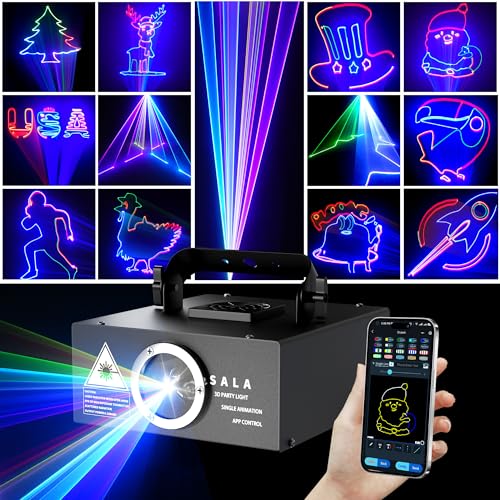
DJ Laser Light with App Control, 3D Animation Laser Projector for Party, Supports Custom Drawings, Text Playback, Personalized Programming, Sound Activated Laser Machine for Stage, Disco, KTV, Bar
Creative Control at Your Fingertips: Wirelessly connect to the mobile app to design custom 3D animations. Draw your…
As an affiliate, we earn on qualifying purchases.
As an affiliate, we earn on qualifying purchases.
Conclusion
Over the years, projectors have evolved from simple overhead devices to stunning 4K home theaters. Did you know that the global projector market is expected to reach $4.4 billion by 2028? This rapid growth shows how technology keeps advancing, making immersive viewing more accessible than ever. Whether for movies, gaming, or presentations, projectors continue to transform how you enjoy visual content—bringing bigger, brighter, and sharper images right into your home.
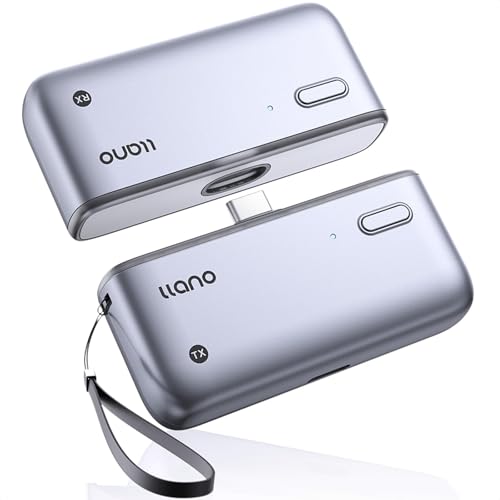
llano S850 Upgraded Type-C Wireless HDMI Transmitter and Receiver, 50M, Ultra 4K Decode Input 1080P@60Hz Output, Plug&Play 5G+2.4G and Audio for Phone/Tablet/Laptop/PC to Monitor/Projector/TV Box
Wireless HDMI Transmitter and Receiver Latest Upgrade Technology: Our Wireless HDMI has two connection modes for 90% of…
As an affiliate, we earn on qualifying purchases.
As an affiliate, we earn on qualifying purchases.

Philoent【Google TV Included】Smart Mini Projector, Ultra Short Throw for Big Screen in Small Room, Auto Keystone Portable Proyector with WiFi Bluetooth, Support 4K Movie – Home Theater Bedroom Outdoor
🥇【Instant Full Google TV Access – No Setup Needed】 Experience the complete Google TV ecosystem directly, with no…
As an affiliate, we earn on qualifying purchases.
As an affiliate, we earn on qualifying purchases.