DLP projectors use spinning color wheels to produce vibrant images with high contrast, making them great for sharp visuals and deep blacks. LCD projectors often offer higher native resolutions with accurate colors, ideal for detailed and color-critical work. LCOS combines the best of both, delivering smooth, high-resolution images with excellent color and contrast. Understanding these differences helps you choose the right technology for your needs—continue exploring to learn more about their unique strengths.

Get business pricing on your home office setup
- Business-only prices and quantity discounts
- Tax-exempt purchasing
- Multiple users, one account, clear invoices
Key Takeaways
- DLP projectors excel in high contrast and vibrant colors, ideal for detailed visuals and deep blacks.
- LCD projectors offer higher native resolutions and superior color accuracy, suitable for bright environments.
- LCOS combines high resolution, smooth gradations, and near-filmlike image quality, but at a higher cost.
- DLP may have color uniformity issues, while LCD provides crisp images and accurate color reproduction.
- Understanding each technology’s strengths and trade-offs helps select the best projector for specific needs.

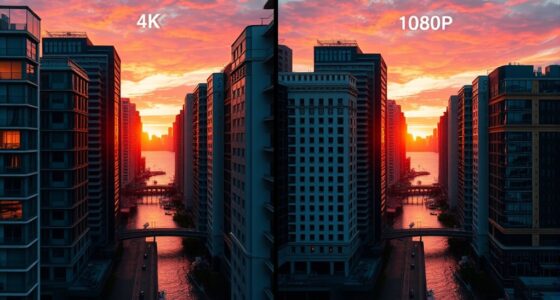
When choosing a projector, understanding the differences between DLP, LCD, and LCOS technologies is essential, as each offers distinct advantages and drawbacks. One of the key factors to contemplate is image resolution, which determines the clarity and detail of the projected image. DLP projectors often produce sharp images with high contrast, making them ideal for detailed visuals. LCD projectors, on the other hand, tend to deliver higher native resolutions, providing crisp and clear images, especially in well-lit environments. LCOS, combining features of both, can offer very high-resolution images with smooth, near-filmlike quality. The image resolution can also be influenced by the quality of the projector’s components, impacting overall performance. Color accuracy is another critical aspect. DLP projectors generally excel at producing vibrant colors due to their ability to manage contrast effectively, resulting in rich, striking images. However, they may sometimes struggle with color brightness uniformity across the entire image. LCD projectors tend to have better color accuracy out of the box because their three separate LCD panels directly manage red, green, and blue light. This results in more precise color reproduction, making them suitable for applications where color fidelity is paramount, like digital art or professional presentations. LCOS technology offers a balance, providing excellent color accuracy and smooth gradations, thanks to its reflective design which minimizes pixel gaps and enhances image quality. In terms of image resolution, DLP projectors often come with a variety of resolution options, but they tend to perform best in environments where high contrast and deep blacks are essential. LCD projectors, in comparison, usually support higher native resolutions, making them suitable for detailed video playback and high-definition content. LCOS projectors, though often more expensive, tend to deliver the highest image resolution with minimal pixel structure visible, providing a more seamless viewing experience that closely resembles cinema quality. When it comes to practical use, your choice should align with your priorities. If you want sharp images with bold colors and good contrast, DLP might be your best bet. If color accuracy and resolution are more important, especially in brightly lit rooms, LCD projectors can deliver superior performance. For those seeking the highest image quality with smooth gradations and superior resolution, LCOS projectors are worth considering, despite their typically higher cost. Ultimately, understanding how each technology manages image resolution and color accuracy helps you select the right projector for your specific needs, ensuring you get the best visual experience for your space and budget.
DLP projector with high contrast
As an affiliate, we earn on qualifying purchases.
As an affiliate, we earn on qualifying purchases.
Frequently Asked Questions
Which Projector Technology Offers the Best Color Accuracy?
You’ll find that LCD projectors generally offer the best color accuracy and reproduction, making them ideal if vivid, true-to-life colors matter most to you. They also tend to have better calibration accuracy, ensuring consistent color performance over time. DLP and LCOS projectors can produce vibrant images, but LCDs usually excel in delivering precise, natural colors right out of the box, giving you more reliable results for detailed color work or presentations.
How Durable Are DLP, LCD, and LCOS Projectors Over Time?
Think of your projector like a trusty car—its projection lifespan depends on component durability. DLP projectors typically last around 10,000 to 20,000 hours, thanks to their sealed chip design. LCD projectors might reach similar lifespans, but their panels can degrade faster with prolonged use. LCOS projectors are durable but can be pricier to maintain. Overall, proper care extends your projector’s lifespan, ensuring it keeps performing like a reliable vehicle.
Are There Any Maintenance Differences Among These Projector Types?
You’ll find maintenance varies among projector types. DLP projectors often have longer lamp lifespans and less filter replacement, making them easier to maintain. LCD projectors require regular filter changes to prevent dust buildup and maintain image quality. LCOS projectors may need more careful handling of lamps and filters, but overall, your maintenance will depend on the specific model and usage, so check manufacturer guidelines for ideal upkeep.
Which Technology Is Most Energy-Efficient for Long-Term Use?
You’ll find that LCD projectors are generally the most energy-efficient, using about 50% less power than DLP or LCOS models. This means they consume less energy over long-term use, saving you money on electricity bills. Their better power efficiency also means less heat generation and longer lifespan, making them a smart choice if you want a projector that balances performance with energy savings over time.
How Do These Technologies Affect Projector Size and Portability?
You’ll find that DLP, LCD, and LCOS technologies influence projector size and portability differently. DLP projectors generally have a compact design, making them highly portable and easy to carry around. LCD projectors tend to be slightly larger but still portable, while LCOS projectors often come in bulkier builds. Overall, if portability benefits are your priority, DLP projectors are usually the best choice due to their smaller, lightweight design.
As an affiliate, we earn on qualifying purchases.
Conclusion
So, now that you’ve seen how DLP, LCD, and LCOS differ, you can make a smarter choice for your projector needs. Think of it like choosing your trusty steed—each has its quirks and strengths. Whether you prefer the vibrant colors of LCD, the sharpness of DLP, or the smoothness of LCOS, pick what suits your style. Just don’t be a knave and forget to contemplate your room and budget—your projector adventure awaits!
LCOS projector for cinema quality
As an affiliate, we earn on qualifying purchases.
As an affiliate, we earn on qualifying purchases.
As an affiliate, we earn on qualifying purchases.
Fall Picks
fall essentials
As an affiliate, we earn on qualifying purchases.