When comparing DLP, LCD, and LCOS projectors, each technology offers unique strengths. DLP uses tiny mirrors for sharp images and high contrast, making it ideal for home theaters. LCD provides bright, vibrant visuals with accurate colors, perfect for classrooms or presentations. LCOS combines smooth motion with stunning clarity and color—great for professional use. To choose the best fit and discover detailed differences, explore further to find out more about each technology’s features.
Key Takeaways
- DLP uses tiny mirrors for pixel control, offering high contrast and smooth motion, ideal for home theaters.
- LCD projectors produce bright, vibrant images with consistent color accuracy but tend to be bulkier and have shorter lifespan.
- LCOS combines LCD and DLP benefits, providing high-quality, sharp images with excellent color reproduction, suitable for professional use.
- DLP generally has longer durability and lower repair costs, while LCDs are more energy-efficient but may require frequent maintenance.
- The choice depends on environment, image quality needs, portability, and budget, with DLP for contrast, LCD for brightness, and LCOS for high-end clarity.
Top picks for "understand lcos technology"
Open Amazon search results for this keyword.
As an affiliate, we earn on qualifying purchases.
How DLP Technology Works
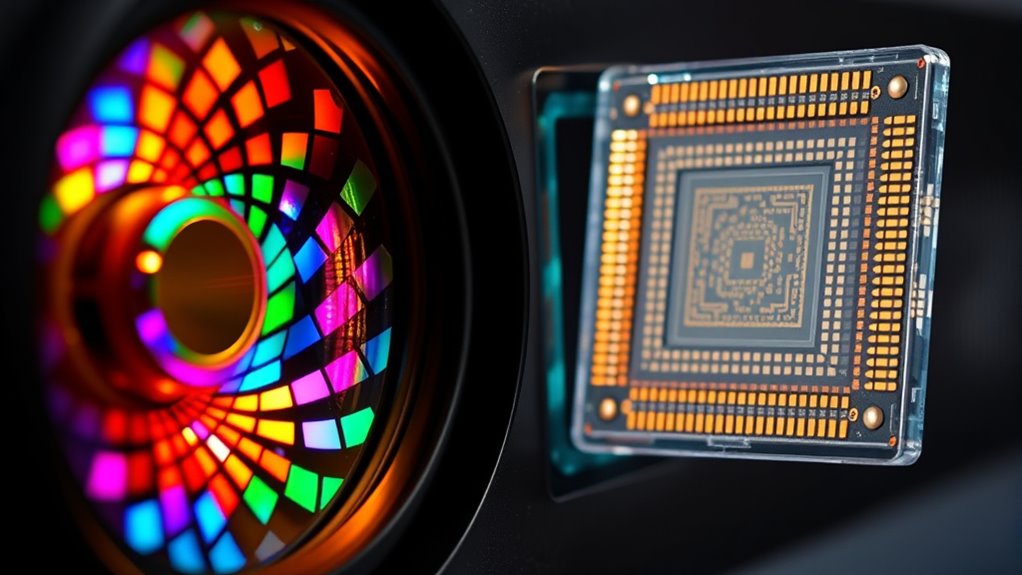
DLP technology works by using a chip covered with thousands of tiny mirrors, each representing a pixel. These mirrors tilt rapidly to reflect light through a color wheel or separate color channels, creating vibrant images. Because the mirrors can switch on and off quickly, DLP projectors deliver sharp, high-contrast visuals with excellent color accuracy. This rapid switching also makes DLP devices energy efficient since less power is needed to produce bright images. Additionally, the precise control over each pixel reduces light loss, enhancing overall image quality. This combination makes DLP a popular choice for both home theaters and professional presentations. Moreover, the technology’s ability to minimize motion blur contributes to smoother video playback, making it ideal for dynamic visuals.
The Mechanics of LCD Projectors
LCD projectors operate through a different mechanism that relies on liquid crystal displays to produce images. You’ll find that they use three separate LCD panels—red, green, and blue—to create vibrant, accurate color reproduction. Light from the projector’s lamp passes through these panels, which modulate the light to form the desired image. The modulated light then combines and projects onto the screen. This process allows for sharp, bright images with consistent color accuracy. Additionally, LCD projectors tend to be more energy efficient than other types, consuming less power while maintaining good brightness levels. Their design also enables slim, lightweight models, making them portable and easy to set up. Understanding the cycle of breakups helps you appreciate the balance of color quality and energy savings LCD projectors offer.
LCOS: The Hybrid Approach
LCOS (Liquid Crystal on Silicon) technology combines the strengths of LCD and DLP systems to deliver high-quality images with smooth motion and excellent color reproduction. As a hybrid technology, it leverages the best features of both systems, providing sharp images and better contrast. Its advanced image processing capabilities help reduce artifacts and improve color accuracy, resulting in a more natural and immersive viewing experience. Unlike traditional LCD or DLP projectors, LCOS offers a seamless blend of clarity and fluidity, making it ideal for home theaters and professional settings. The hybrid approach allows for smoother progressions and detailed images, giving you a balanced and consistent picture quality. This combination of technologies ensures you get the benefits of both worlds without compromising on performance.
Image Quality and Clarity Comparison
When evaluating image quality and clarity, LCOS technology often stands out due to its ability to produce sharp, detailed visuals with rich colors. You’ll notice impressive color accuracy, making images vibrant and true to life. Motion handling is smooth, reducing blurring during fast scenes. To paint a clearer picture:
- Crisp, high-resolution images with fine details
- Rich, accurate colors that enhance realism
- Smooth motion with minimal motion blur
- Its advanced display technology ensures consistent performance even during extended viewing sessions, making it a preferred choice for high-quality visuals.
Brightness and Contrast Capabilities
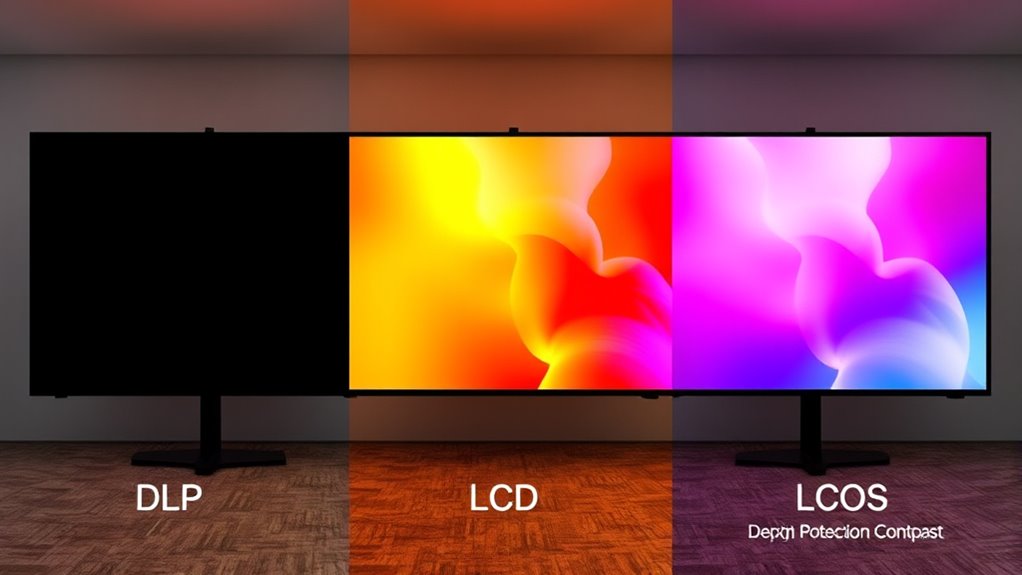
Brightness and contrast are key factors that impact your viewing experience. You’ll notice differences in brightness levels and how well each technology handles contrast ratios. Understanding these differences helps you choose the right display for your needs. For example, visual and auditory elements in ads create a compelling experience that can influence perception of display quality.
Brightness Levels Comparison
While each display technology offers unique advantages, their brightness and contrast capabilities vary considerably. DLP projectors typically produce higher brightness levels, making them suitable for well-lit environments and ambient light conditions. LCD displays tend to have moderate brightness, which can struggle under bright lighting but excel in darker rooms. LCOS projectors often offer lower brightness but deliver better color accuracy and smoother images. Additionally, the ongoing development of AI safety measures aims to address security vulnerabilities associated with these display technologies, enhancing overall reliability. Display technology helps inform your choice based on ambient lighting needs and energy efficiency priorities.
Contrast Ratio Differences
Understanding contrast ratios is key to evaluating display quality beyond just brightness. It determines how well a projector can produce deep blacks and vibrant colors, enhancing the overall image depth. Higher contrast ratios mean better differentiation between dark and light areas, making images appear more lifelike. DLP projectors often boast higher contrast ratios than LCDs, giving you sharper shadows. LCOS displays typically offer balanced contrast with smooth gradations. Here’s a quick comparison:
| Technology | Typical Contrast Ratio | Image Depth Quality |
|---|---|---|
| DLP | 10,000:1+ | Excellent |
| LCD | 2,000:1 to 4,000:1 | Moderate |
| LCOS | 5,000:1 to 8,000:1 | Very Good |
Choosing the right tech depends on your need for deep blacks and vivid image depth. Additionally, contrast ratio is an important factor in overall image quality, influencing how immersive a display can appear.
Cost and Maintenance Factors
When choosing between DLP, LCD, and LCOS projectors, you’ll want to take into account the initial purchase price and how much you’ll spend over time on maintenance. Some technologies may cost less upfront but could have higher repair or replacement costs later. Understanding these factors helps you make a cost-effective decision that fits your budget. Additionally, consider the technology’s lifespan and long-term durability to ensure your investment remains reliable over time.
Initial Purchase Price Differences
Initially, DLP projectors tend to have a higher purchase price compared to LCD and LCOS models, largely due to their more complex optical components and advanced technology. This price disparity impacts your initial investment, making DLP options more expensive upfront. You might notice that:
- DLP projectors often cost more due to their precision-engineered micro-mirrors.
- LCD models usually have a lower initial price, appealing for budget-conscious buyers.
- LCOS projectors tend to fall between the two, with higher costs linked to their hybrid technology.
- The artificial intelligence integration in some projectors also influences pricing and performance features.
Your choice depends on your budget and desired image quality. While DLP projectors may require a larger initial investment, their performance and durability can justify the cost over time. Understanding these price differences helps you make a more informed purchase decision.
Long-term Maintenance Costs
While the upfront cost is an important factor, considering long-term maintenance expenses is equally vital for making a smart projector choice. Projection durability and component longevity directly impact these costs. DLP projectors typically offer higher component longevity, reducing the need for frequent replacements and lowering ongoing expenses. LCD projectors, on the other hand, may have shorter projection durability due to issues like LCD panel degradation, which can increase maintenance over time. LCOS projectors often strike a balance, with durable components and solid projection lifespan, but they can still require periodic cleaning and calibration. By evaluating how long the components last and how durable the projection remains, you’ll better understand the ongoing costs associated with each technology, helping you choose a projector that fits your budget in the long run. Additionally, understanding Projection durability can help you anticipate future replacement and repair needs, ultimately saving you money over the lifespan of your projector.
Replacement and Repair Expenses
Replacement and repair expenses can considerably impact the total cost of owning a projector, as these costs vary depending on the technology. DLP projectors typically offer longer projector longevity and may have better warranty coverage, reducing repair costs over time. LCD projectors, on the other hand, might require more frequent replacements of parts like the light source or color filters. LCOS projectors often have higher repair expenses due to their complex components but can last longer with proper maintenance. Additionally, understanding the best anime movies can help in choosing entertainment during downtime caused by repairs. Consider these factors: – DLP projectors usually have lower repair costs and longer durability – LCD projectors may incur frequent bulb replacements – LCOS projectors often involve higher repair expenses due to intricate parts Your choice depends on balancing initial costs with ongoing replacement and repair needs.
Ideal Use Cases for Each Technology
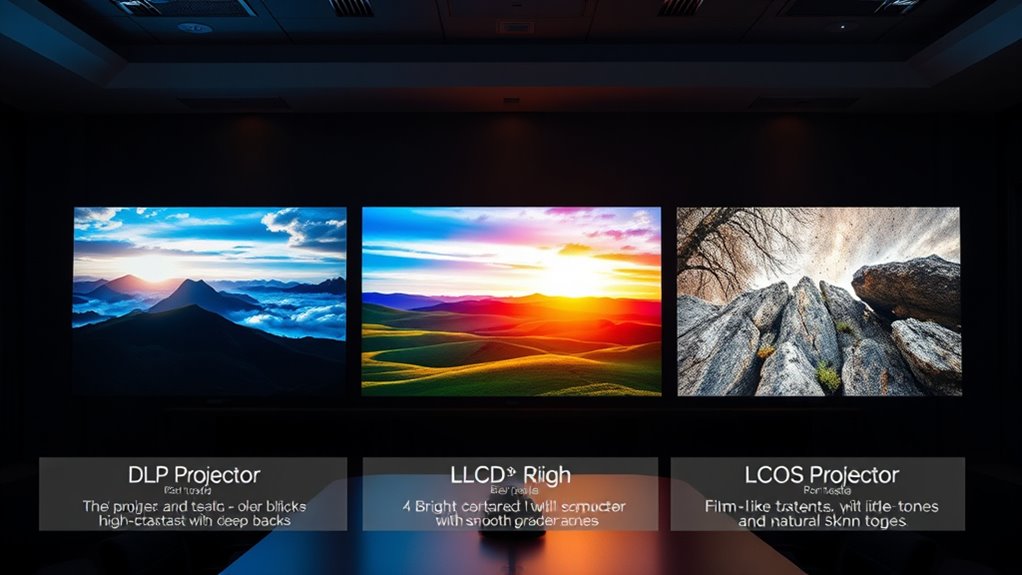
Each display technology excels in specific scenarios based on its strengths. DLP is ideal for home theater setups because of its high contrast ratios and vibrant colors, providing an immersive viewing experience. LCD displays are well-suited for education presentations, offering sharp images and reliable color accuracy for detailed visuals. LCOS combines the benefits of both, making it perfect for environments that demand high resolution and smooth motion, such as professional conferences or high-end home theaters. If you prioritize portability and affordability, LCD projectors are a practical choice for classrooms. DLP’s quick response time is great for fast-paced content, while LCOS’s superior image quality suits high-end home cinema systems. By understanding these use cases, you can select the best technology for your specific needs.
Pros and Cons of DLP, LCD, and LCOS
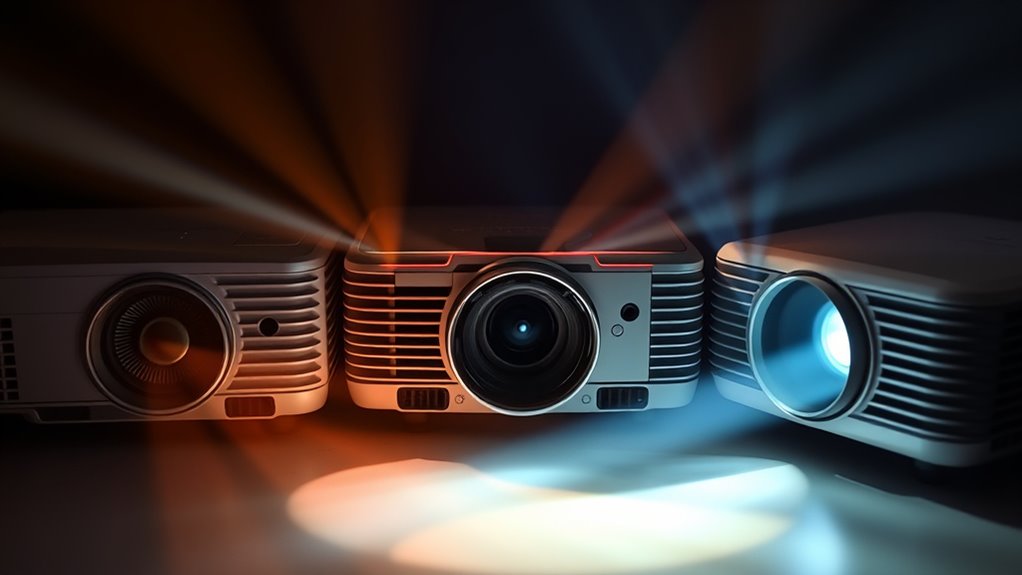
Understanding the pros and cons of DLP, LCD, and LCOS technologies helps you make an informed choice based on your specific needs. DLP projectors excel with high contrast and smooth motion, making them great for vibrant images, but may have limited color accuracy. LCD projectors offer excellent color reproduction and sharper images but can be bulkier and less portable. LCOS combines the benefits of both, providing better color accuracy and smoothness, though it often comes with a higher price and limited availability.
DLP offers high contrast and smooth motion; LCD delivers vivid colors and sharp images; LCOS combines benefits with higher cost.
- DLP: Compact and portable, but sometimes with rainbow effects.
- LCD: Bright, with vivid colors, yet less portable.
- LCOS: Superior image quality, but costlier and less common.
Which Projector Technology Is Right for You
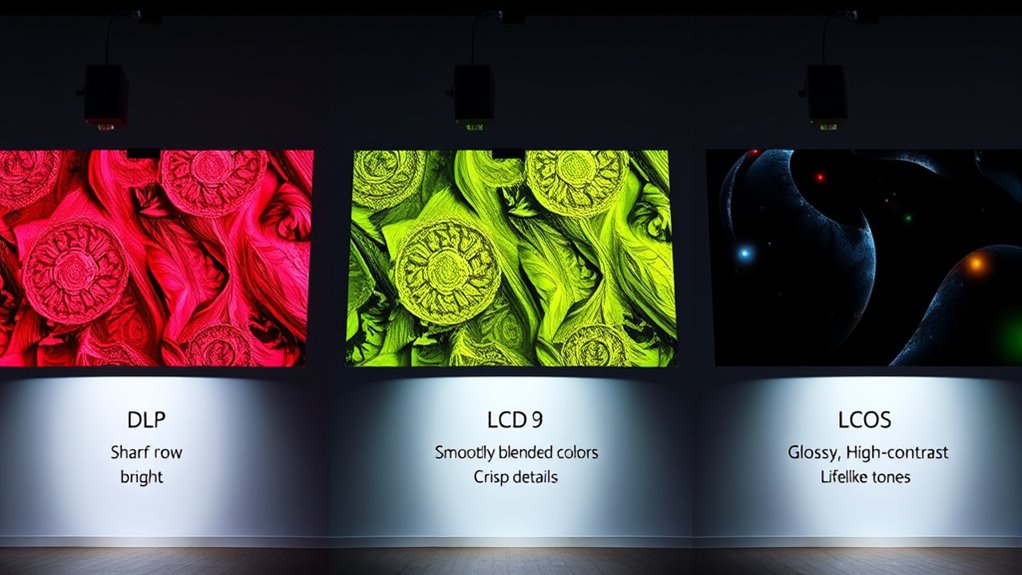
Choosing the right projector technology depends on what matters most to you, whether it’s image quality, portability, or budget. If you prioritize vibrant projection color, LCD projectors often deliver bright, vivid images with excellent color accuracy. For wider viewing angles, DLP projectors excel, allowing everyone in the room to see a clear picture from different positions. If you want a balance of high contrast, sharpness, and compact design, LCOS might be the best fit. Consider where you’ll use your projector—home, office, or portable setups—and your lighting environment. Your choice should align with your needs: for rich color and flexibility, LCD or LCOS are great; for broad viewing angles, DLP is advantageous. Knowing your priorities helps you select the technology that best enhances your viewing experience.
Frequently Asked Questions
How Do Projector Technologies Impact Long-Term Durability?
Projector technologies considerably impact long-term durability through their projection longevity and technology resilience. DLP projectors, for instance, often have fewer moving parts, making them more resilient and less prone to wear over time. LCD projectors may experience color fading or LCD panel degradation, affecting longevity. LCOS combines elements of both, offering good durability. Your choice influences how well your projector withstands extended use and maintains image quality over the years.
What Environmental Factors Influence Projector Performance?
Environmental factors like ambient light and dust resistance greatly influence your projector’s performance. Excess ambient light can wash out images, reducing clarity and contrast, so you’ll want a projector with high brightness levels. Dust accumulation can clog vents and affect internal components, leading to overheating or damage. To keep your projector running smoothly, make sure it’s placed in a clean, controlled environment with minimal ambient light, and regularly clean filters for maximum dust resistance.
Are There Any Health Concerns With Projector Light Emissions?
Think of projector light emissions like sunlight—generally safe, but prolonged exposure can cause eye strain or discomfort. While most projectors emit low levels of light that aren’t harmful, it’s wise to avoid staring directly into the beam. For eye safety and light exposure, use the projector as intended and take breaks during long sessions. If you notice eye discomfort, consult an eye care professional to guarantee safe viewing habits.
How Do Projector Sizes and Portability Compare Across Technologies?
You’ll find that projector sizes vary considerably across technologies, with DLP projectors being compact and highly portable, perfect for on-the-go use. LCD projectors tend to be larger but still manageable, offering a balance between size and image quality. LCOS projectors are generally bulkier and less portable, suited for stationary setups. Your choice depends on your need for portability versus size, with DLP leading in travel-friendly options.
What Future Innovations Are Expected in Projector Display Tech?
You can expect future projector display tech to focus on higher projection resolutions and improved color accuracy, making visuals sharper and more vibrant. Innovations like laser light sources and advanced image processing will enhance brightness and contrast. Smaller, more portable designs will become common, allowing you to enjoy high-quality images anywhere. These advancements will revolutionize your viewing experience, offering stunning clarity and true-to-life colors in increasingly compact devices.
Conclusion
Choosing the right projector technology depends on your needs and preferences. DLP, LCD, and LCOS each have their own unique charm, offering different strengths. While one might whisper promises of vibrant colors, another may gently assure you of smooth images. Consider what matters most—be it image clarity, budget, or maintenance—and you’ll find the perfect match. Ultimately, the best choice will subtly enhance your viewing experience, making every moment feel just right.