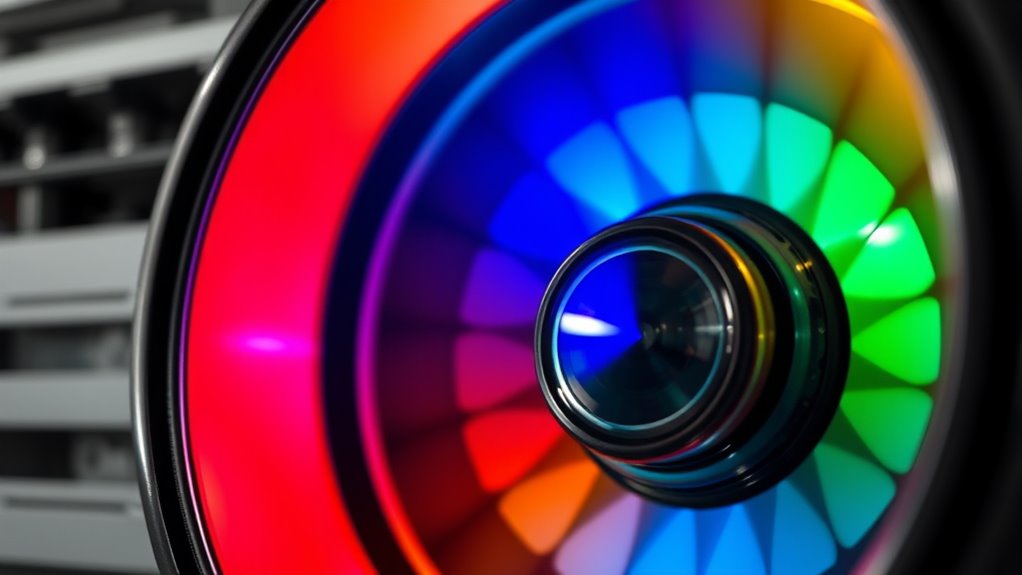

A single-chip DLP projector creates color by using a rapidly spinning color wheel that filters light into red, green, blue, and sometimes additional colors. The wheel spins so fast that your eyes perceive it as a seamless, full-color image. The projector modulates light intensity and timing as the wheel spins, blending the colors smoothly. If you want to understand how this precise process works and how it’s optimized, there’s more to explore.
Key Takeaways
- Single-chip DLP projectors use a rapidly spinning color wheel to filter white light into different color segments.
- The wheel typically includes red, green, blue, and sometimes yellow or white segments for full-color display.
- As the wheel spins, the projector synchronizes light modulation with segment positions to produce seamless colors.
- Rapid switching and blending of light from each segment create the illusion of continuous, full-spectrum images.
- Different segment sizes and configurations optimize color accuracy, brightness, and reduce visual artifacts like rainbow effects.

Understanding the color wheel is essential for anyone interested in art and design because it helps you see how colors relate to each other. When it comes to digital displays, especially single-chip DLP projectors, this understanding becomes crucial for creating vibrant, accurate colors. The color wheel design plays a vital role in how these projectors produce a full spectrum of hues. Unlike three-chip systems that use separate light paths, single-chip DLPs rely on a spinning color wheel that rapidly filters light into different color segments—red, green, blue, and sometimes additional colors like yellow or white. As the wheel spins at high speed, your eyes perceive these rapid flashes as a continuous full-color image. This process hinges on light modulation techniques that control how light is filtered and projected, ensuring smooth and accurate color reproduction.
The key to effective color creation in single-chip DLP projectors lies in the precise design of the color wheel. This involves selecting the right segment sizes and sequencing to optimize color accuracy and minimize artifacts like color breakup or rainbow effects. The color wheel design must balance several factors: segment width, the number of segments, and the material used for filtering light. For instance, a wheel with narrower segments can produce more accurate colors but may require faster rotation speeds to prevent flickering. Conversely, wider segments reduce the speed needed but might compromise color precision. Manufacturers often experiment with various light modulation techniques, such as adding a white segment to boost brightness or using multiple segments for improved color depth.
Light modulation techniques are also central to how well the projector blends colors seamlessly. By rapidly switching the light’s intensity and color, the system creates an illusion of a continuous tone. This involves precisely controlling the timing of the spinning wheel and the projector’s internal electronics. When done correctly, the viewer perceives a stable, vibrant image with rich color gradations. Some advanced designs incorporate dual or multi-segment wheels to enhance color accuracy further, while others use specialized coatings or filters to improve light transmission and color purity. All these elements hinge on a well-thought-out color wheel design combined with sophisticated light modulation techniques, ensuring you get crisp, vibrant images without distracting artifacts.
Frequently Asked Questions
How Does the Color Wheel Affect Image Brightness?
The color wheel affects your image brightness by controlling how much light passes through each color segment. When the wheel spins faster or has more segments, it allows more light to reach the screen, increasing light intensity and making the image brighter. Conversely, slower spins or fewer segments reduce brightness. This balance impacts color saturation, as sharper, brighter images often have richer color due to better light transmission.
What Materials Are Used in Color Wheel Manufacturing?
You might think color wheels are just simple discs, but they’re actually marvels of material science! They’re made from high-quality, ultra-lightweight materials like glass or plastic, with precise color segments. Manufacturers use advanced processes like molding and coating to guarantee durability and perfect color separation. These materials and techniques create a spinning wheel that’s as reliable as your favorite gadget, delivering vibrant images every single time.
Can the Color Wheel Cause Color Artifacts?
Yes, the color wheel can cause color artifacts if it malfunctions or becomes misaligned. These issues might result in color flickering or uneven color distribution. To prevent color artifacts, manufacturers design color wheels with precise manufacturing standards and incorporate features like smooth rotation and high-quality materials. Regular maintenance and timely calibration also help guarantee proper color wheel operation, reducing the risk of color artifacts in your DLP projector.
How Often Does the Color Wheel Need Maintenance?
You should check your color wheel’s lifespan regularly, typically every 6 to 12 months, to guarantee peak performance. Maintenance tips include keeping the projector clean, avoiding dust buildup, and ensuring proper cooling. If you notice unusual noises or color artifacts, it’s time for a professional inspection or replacement. Proper maintenance helps extend the color wheel’s lifespan, maintains picture quality, and prevents costly repairs down the line.
Are There Differences in Color Wheel Designs Across Brands?
Think of the color wheel as a musical instrument, unique to each brand like a master craftsman’s signature. You’ll notice brand variation in design evolution, with some wheels spinning faster or offering smoother color blending. These differences impact performance and maintenance needs. As you explore, you’ll see how each brand’s design choices aim to optimize color accuracy and durability, tailoring the experience to your viewing preferences.
Conclusion
So, next time you marvel at a vibrant projector image, thank the humble spinning color wheel—without it, your screen would look as dull as a black-and-white TV. Who knew that a tiny, rotating disc could wield such power over your viewing experience? It’s almost impressive how something so simple can turn chaos into color. Just imagine, all those hues swirling around, making your favorite movies look like a masterpiece—thanks to a wheel that’s basically a tiny magician.