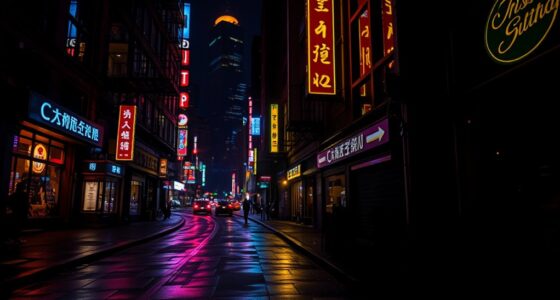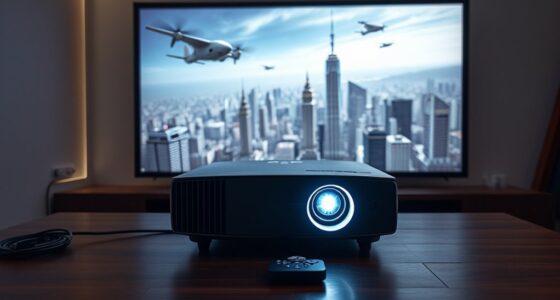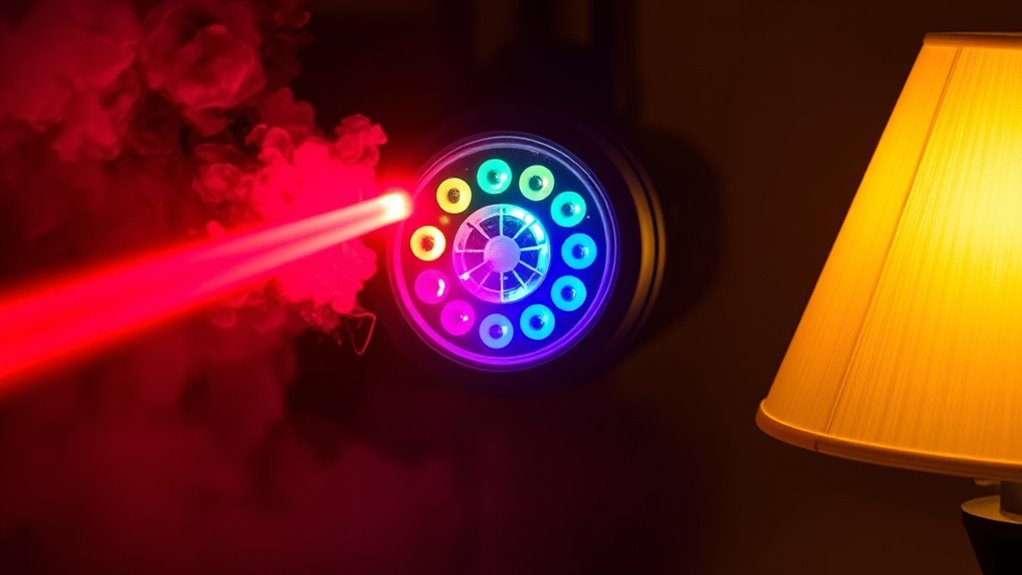

Laser, LED, and lamp lights differ in color and brightness due to their light sources. Lasers produce very vivid, highly saturated colors with intense brightness and narrow spectral output, making them ideal for precision tasks. LEDs offer bright, vibrant colors with good spectral purity and energy efficiency, suitable for everyday use. Traditional lamps emit soft, warm light across a broad spectrum but lack vibrancy and efficiency. To understand which suits your needs best, exploring these differences more deeply will show how each option can enhance your environment.
Key Takeaways
- Lasers produce highly monochromatic, intense, and focused light with vivid, true-to-color output, unlike broader-spectrum lamps.
- LEDs offer bright, vibrant colors with good spectral purity, balancing efficiency and color accuracy better than traditional lamps.
- Lamps emit broad-spectrum, diffuse, softer light with less color precision, suitable for ambient lighting rather than color-critical applications.
- Laser brightness is extremely high with sharp color distinctions, while LEDs provide high efficiency and good brightness for general use.
- Overall, lasers excel in precision and vividness, LEDs in energy efficiency and versatility, whereas lamps are less suitable for color and brightness-sensitive tasks.
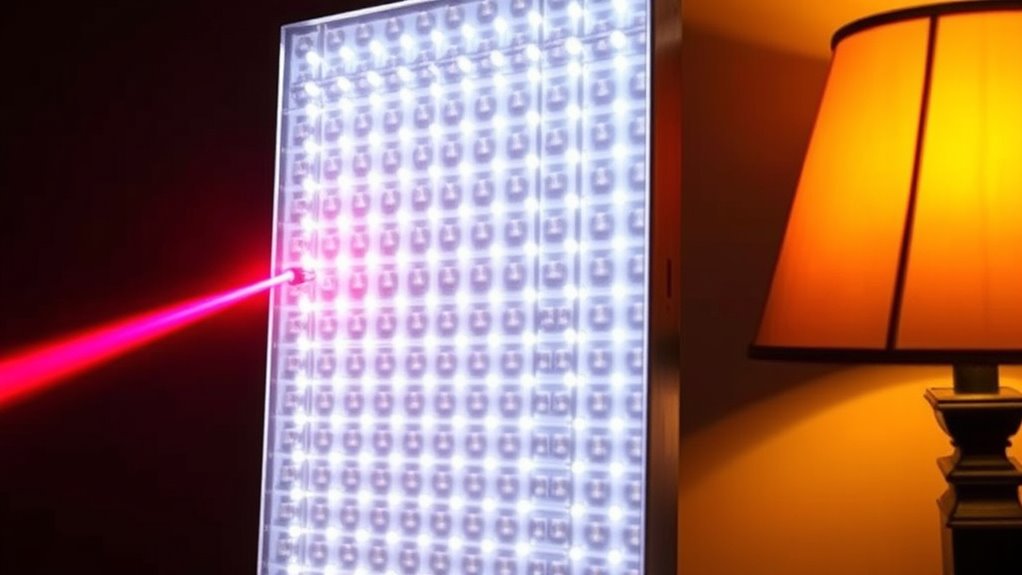
When choosing a light source for your project or application, understanding the differences between laser, LED, and lamp technologies is vital. Each type offers distinct advantages in terms of color, brightness, and efficiency, which can greatly impact your results. For example, lasers produce highly monochromatic light with exceptional spectral purity, meaning the emitted light is concentrated at a very narrow wavelength. This makes lasers ideal when you need precise color control or a highly focused beam. LEDs, on the other hand, emit light over a broader spectrum but still maintain good spectral purity for many applications. They are also remarkably energy-efficient, converting most of the electrical energy into visible light, which reduces power consumption and heat output. Traditional lamps, such as incandescent or halogen, produce broad-spectrum light with a less defined color profile, often resulting in a warmer, more diffuse glow. However, they tend to be less energy-efficient compared to LEDs and lasers, as much of the electrical energy is lost as heat. Additionally, advancements in lighting technology have led to the development of more sustainable and eco-friendly options, expanding the choices based on specific needs.
In terms of color and brightness, lasers deliver intense, highly saturated colors with high brightness levels that can be tightly focused or directed over long distances. Their spectral purity allows for vibrant, true-to-color illumination, which is vital for applications like laser displays or scientific measurement. LEDs also offer bright, vibrant colors, but their spectral output spans a wider range, which can sometimes lead to less precise color rendering but provides versatility across various applications. Their energy efficiency means they can produce high brightness levels without consuming excessive power, making them suitable for everything from home lighting to signage. Traditional lamps generally emit a softer, warmer light with less intensity and a broader spectral distribution, which can be advantageous for creating cozy atmospheres but less suitable where precise color rendering or high brightness is required.
When considering spectral purity, lasers stand out because they emit light in a very narrow wavelength, resulting in sharper, more vivid colors. LEDs, while not as monochromatic, still maintain decent spectral purity, which allows for a wide array of color options with good energy efficiency. Lamps, with their broad-spectrum emission, lack spectral purity and are less efficient at producing specific colors or high-intensity light. Overall, the choice depends on your priorities: if you need pinpoint color accuracy and efficiency, lasers and LEDs are superior, with lasers excelling in spectral purity and LEDs in energy efficiency. For softer, ambient lighting, traditional lamps might suffice, but they fall short in precision and efficiency compared to the modern options. Selecting the appropriate light source also involves considering environmental impact, as energy-efficient options like LEDs and lasers contribute to sustainability efforts.
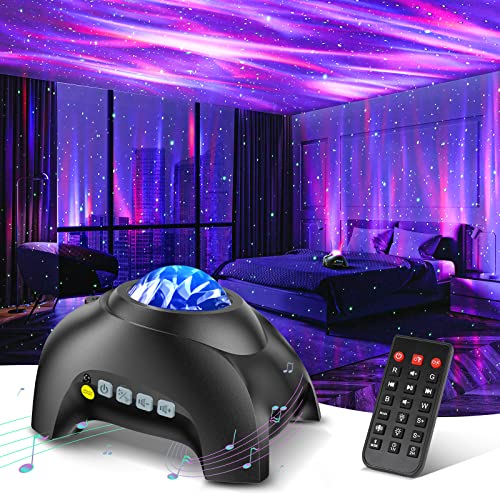
Northern Galaxy Light Aurora Projector with 33 Light Effects, LED Star Projector for Bedroom Nebula Lamp, Remote Control, White Noises, Bluetooth Speaker for Parties
🏡【𝐔𝐩𝐠𝐫𝐚𝐝𝐞𝐝 𝟑-𝐢𝐧-𝟏 𝐆𝐚𝐥𝐚𝐱𝐲 𝐏𝐫𝐨𝐣𝐞𝐜𝐭𝐨𝐫】Watch the splendid aurora views without chasing around or hiking far away, turning your home…
As an affiliate, we earn on qualifying purchases.
As an affiliate, we earn on qualifying purchases.
Frequently Asked Questions
How Do Lifespan and Durability Compare Among Laser, LED, and Lamp Sources?
You’ll find that LEDs generally offer the longest lifespan and high long-term reliability, needing minimal maintenance. Lasers also boast impressive durability and can last many years, but they may require more specialized upkeep. Lamps tend to have shorter lifespans and lower durability, often needing more frequent replacements and maintenance. Overall, LEDs are your best choice for durability and minimal maintenance, ensuring consistent performance over time.
What Are the Energy Efficiency Differences Between These Lighting Options?
You’ll find that LEDs are the most energy-efficient, consuming less energy and offering significant power savings compared to lamps and lasers. Lamps use more energy, leading to higher energy consumption, while lasers, although efficient in some applications, often require more power for operation. By choosing LEDs, you maximize energy efficiency, reduce power costs, and enjoy longer-lasting performance. Switching to LED lighting helps you save energy and cut down on electricity bills effectively.
How Do Color Rendering Indices Vary Across Laser, LED, and Lamp Lights?
You’ll find that laser lights typically offer superior spectral accuracy, providing precise and vibrant color reproduction. LEDs tend to have good color consistency, but their spectral output can vary more than lasers. Traditional lamps often have broader spectra, which can reduce color precision. Overall, lasers excel in spectral accuracy, making colors appear more true-to-life, while LEDs and lamps might slightly compromise on this aspect but still provide adequate color rendering for most applications.
Are There Any Health or Safety Concerns With Each Lighting Type?
You should be aware that each lighting type poses unique health and safety concerns. Laser lights can emit UV exposure if not properly shielded, so avoid direct eye contact to protect your eye safety. LEDs generally pose minimal risks, but high-intensity models can cause eye strain. Lamps usually have safe UV levels, but prolonged exposure to intense brightness can still affect your eyes. Always follow manufacturer guidelines and wear protective eyewear if necessary.
Which Lighting Technology Is Most Suitable for Outdoor or Industrial Use?
For outdoor or industrial use, LED lighting stands out because it offers excellent weather resistance and is easy to install. LEDs handle harsh conditions like rain, dust, and extreme temperatures better than lasers or lamps. They provide reliable brightness, energy efficiency, and durability, making them ideal for challenging environments. Choose LED technology for a resilient, straightforward solution that withstands tough weather and simplifies installation, ensuring long-lasting performance in demanding settings.

Govee RGBIC LED Strip Lights, Smart LED Lights for Bedroom, Bluetooth LED Lights APP Control, DIY Multiple Colors on One Line, Color Changing LED Strip Lighting Music Sync, Home Decor, 16.4ft
Smart RGBIC Effects: RGBIC LED Strip lights for bedroom display multiple colors on one line at a time…
As an affiliate, we earn on qualifying purchases.
As an affiliate, we earn on qualifying purchases.
Conclusion
So, now you know the shocking truth: lasers can blast colors so vivid they seem to leap off the wall, LEDs dazzle with their incredible efficiency, and lamps shower your space with warm, radiant glow. Choosing the right one could transform your world into a spectacular wonderland or a dull, gray wasteland. Don’t settle for mediocrity—embrace the ultimate brightness and color power today, and turn your environment into a mind-blowing masterpiece!

Satco S3950 A19 Incandescent Bulb, 25W, 130V, Frosted Finish, 180 Lumens, Medium E26 Base, Dimmable, 2700K Warm White, 2,500 Hour Lifespan (12 Bulbs)
Energy-Efficient Performance: Designed for 130V operation, this 25-watt incandescent bulb extends its lifespan to 2,500 hours, providing cost-effective,…
As an affiliate, we earn on qualifying purchases.
As an affiliate, we earn on qualifying purchases.
![MIPREZT [2 Packs Green+Red] Rechargeable Laser Pointer High Power Green Red Beam Laser Light Long Distance Range for TV/LED/LCD Screens Tactical Flashlights Presentation Office/Outdoors/Astronomic](https://m.media-amazon.com/images/I/514g7B0FpOL._SL500_.jpg)
MIPREZT [2 Packs Green+Red] Rechargeable Laser Pointer High Power Green Red Beam Laser Light Long Distance Range for TV/LED/LCD Screens Tactical Flashlights Presentation Office/Outdoors/Astronomic
[Good Quality & Long Distance] This flashlight is made of aluminum alloy, very strong and durable, good quality,…
As an affiliate, we earn on qualifying purchases.
As an affiliate, we earn on qualifying purchases.