
High lumen projectors may seem like a great choice for bright images, but they come with hidden costs. They use more energy, increasing your utility bills and straining electrical systems. Faster component wear, like lamps and cooling parts, means frequent repairs and replacements that add up. Plus, the intense brightness can cause your image quality to dull faster over time. To avoid these pitfalls and keep your display vibrant, learn how to make smarter, cost-effective choices.
Key Takeaways
- High lumen projectors consume more electricity, increasing energy costs and risking electrical system strain.
- Larger cooling systems and faster lamp wear lead to frequent maintenance and replacement expenses.
- Powerful lamps can cause quicker color deterioration, resulting in dull images over time.
- The combined costs of higher power use and maintenance may outweigh visual benefits, reducing overall value.
- Using high lumen projectors in bright environments is beneficial, but unnecessary in controlled lighting, avoiding extra costs.
While high lumen projectors promise bright, vivid images, they often come with hidden costs that can catch you off guard. One of the first things you’ll notice is their power consumption. These projectors typically draw more electricity than their lower-lumen counterparts, which means higher utility bills over time. If you plan to use your projector frequently or for extended periods, expect a noticeable uptick in energy costs. This increased power draw can also strain your electrical system, especially if your setup isn’t designed to handle high loads, potentially requiring upgrades that add to your expenses.
Beyond power consumption, maintenance expenses tend to escalate with high lumen projectors. They often rely on more complex cooling systems, such as larger fans or advanced filters, to prevent overheating due to their intense light output. These parts can wear out faster and need regular cleaning or replacement, adding to ongoing maintenance costs. For example, the lamp life in high lumen models tends to be shorter, meaning you’ll need to replace bulbs more frequently. These replacements aren’t cheap, and they can quickly become a recurring expense if you’re using the projector intensively. Additionally, the high heat generated can accelerate wear on internal components, leading to more frequent servicing or repairs, which can be both time-consuming and costly.
High lumen projectors require frequent maintenance due to complex cooling systems and shorter lamp life, increasing long-term costs.
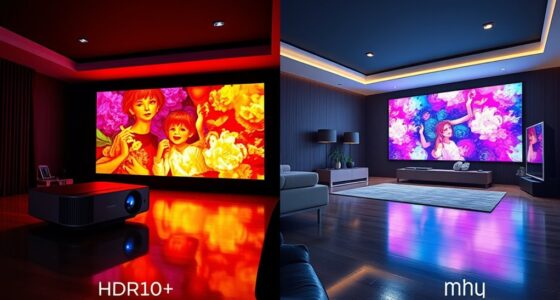
Another aspect to consider is the potential for color dulling over time. High lumen projectors often rely on powerful lamps that can degrade faster, causing colors to lose vibrancy and appear duller sooner than expected. This deterioration might tempt you to upgrade or replace your projector earlier than planned, further increasing costs. Moreover, maintaining ideal image quality may require additional calibration and adjustment, which could mean hiring technicians or investing in calibration tools. According to market trends, the reliance on powerful lamps and complex components can lead to faster depreciation of image quality, making early replacements or upgrades more likely.
If you’re trying to keep costs down, it’s essential to evaluate these hidden expenses against the benefits of brighter images. While high lumen projectors can deliver impressive visuals in large or well-lit environments, their increased power and maintenance costs can outweigh the advantages if you’re not prepared. Consider your usage environment carefully—if you only use it occasionally or in controlled lighting, a less powerful, more energy-efficient model might serve you better and save money in the long run. Being aware of these hidden costs allows you to make smarter choices, ensuring you don’t get caught off guard by expenses that could otherwise diminish the value of your investment.
Frequently Asked Questions
Can High Lumen Projectors Damage Your Eyes?
High lumen projectors don’t directly damage your eyes, but they can cause eye strain and visual fatigue if used improperly. Bright images may force you to squint or strain to see details clearly, leading to discomfort over time. To protect your eyes, avoid staring at the projector’s light source directly, take regular breaks, and adjust brightness levels to comfortable settings. This helps prevent unnecessary eye strain during prolonged use.
Do High Lumen Projectors Consume More Energy?
Yes, high lumen projectors do consume more energy because they require more power to produce brighter images. You’ll notice increased energy consumption and potentially higher electricity bills. To maximize power efficiency, consider using eco modes or projectors with better energy-saving features. Selecting a projector with a lower lumen rating for your needs can also help reduce power usage without sacrificing image quality.
Are High Lumen Projectors Suitable for Small Rooms?
High lumen projectors can be suitable for small rooms if you carefully consider room size and projector placement. Their brightness helps overcome ambient light, but placing them too close may cause glare or washout. Keep the projector at an appropriate distance and adjust the settings to avoid dull colors. With proper positioning, high lumen projectors deliver vivid images even in small spaces, making them a versatile choice.
How Do High Lumen Projectors Affect Image Longevity?
High lumen projectors can lead to faster image degradation over time, reducing brightness lifespan. You might notice that images become duller or less vibrant sooner than expected, especially with frequent use. To avoid this, you should regularly maintain your projector, avoid running it at maximum brightness constantly, and choose models with better image longevity features. Proper care ensures your projector maintains ideal brightness and image quality longer.
Can High Lumen Projectors Be Used Outdoors Effectively?
You can use high lumen projectors outdoors effectively, especially since they offer up to 10,000 lumens or more, ensuring bright images even in daylight. Their outdoor brightness makes them ideal for open-air events, while weather durability features like water resistance and sturdy casings help them withstand weather conditions. Just remember to shield your projector from extreme elements, and you’ll enjoy clear, vibrant visuals outside without worry.
Conclusion
Did you know that high lumen projectors can cost up to 50% more in maintenance and energy? While brighter projectors seem ideal, these hidden expenses can quickly add up, leaving your budget stretched thin. To avoid dull colors and unnecessary costs, choose a projector that balances brightness with color accuracy and energy efficiency. Being mindful of these hidden costs guarantees you get the best performance without breaking the bank or sacrificing image quality.