
TL;DR

Get business pricing on your home office setup
- Business-only prices and quantity discounts
- Tax-exempt purchasing
- Multiple users, one account, clear invoices
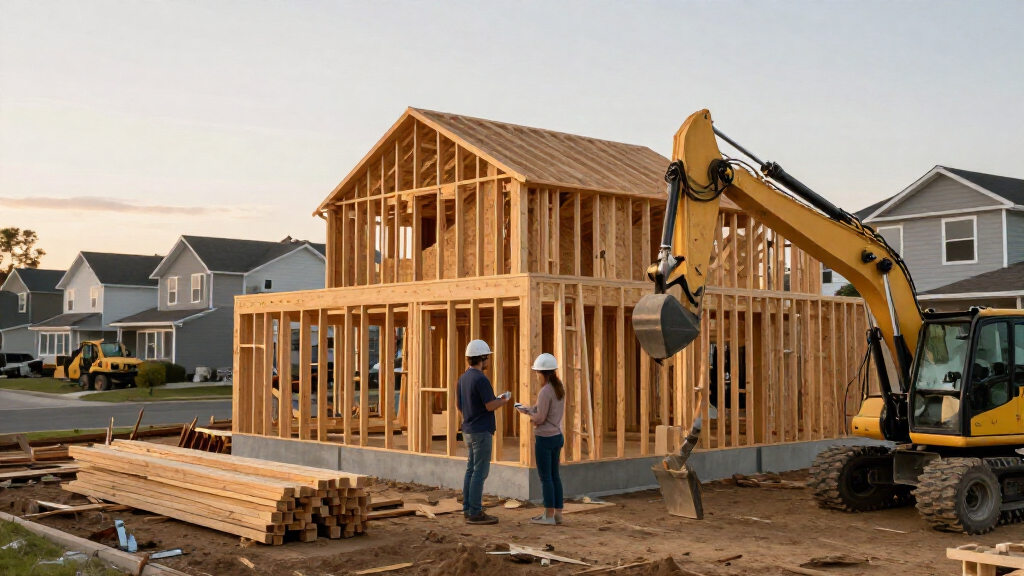
U.S. single-family housing starts fell 4.6% in September to a seasonally adjusted annual rate of 859,000, according to HUD and Census Bureau data. Total housing starts declined 5.2% to 1.22 million, while industry representatives pointed to borrowing costs, affordability pressures and construction expenses as constraints.
U.S. single-family housing starts fell 4.6% in September to a seasonally adjusted annual rate of 859,000 units, according to data from the U.S. Department of Housing and Urban Development and the Census Bureau. Total housing starts dropped 5.2% to a 1.22 million-unit annual rate, a pullback that industry representatives linked to financing, affordability and construction-cost pressures.
The overall September figure represents the pace at which builders would start homes over 12 months if construction continued at the same rate, adjusted for seasonal patterns. It is an annualized measure, not a count of homes begun during September. The agencies reported that single-family starts were up 2.6% compared with September 2025, despite the month-to-month decline.
Starts in the multifamily sector, which includes apartments and condominiums, fell 6.7% from the previous month to an annualized rate of 362,000 units. That pace was 24.9% below September 2025, according to the source report.
Permits, an indicator of planned construction, also edged down overall. Total permits slipped 0.2% to a 1.40 million-unit annualized rate. Single-family permits fell 4% to 845,000, while multifamily permits rose 6.1% to 555,000. Those monthly movements do not establish how many permitted projects will ultimately proceed.
Fewer Starts Could Limit New Supply
Housing starts matter because they track new construction entering the pipeline. A sustained slowdown can mean fewer newly built homes become available later, potentially limiting choices for buyers and renters. September’s declines are a single month of data, however, and do not by themselves establish a lasting change in construction or housing availability.
The mix of results is relevant to different parts of the market. Single-family starts fell from August but remained higher than a year earlier, while multifamily starts were down both month to month and against September 2025. The separate permit figures offer another signal about planned building, but permits are not a guarantee that construction will begin.
Builders’ costs and access to financing also affect activity across the construction industry, including demand for building materials and related services. The NAHB attributed the decline to borrowing costs, affordability challenges and construction expenses; the federal figures record starts and permits but do not assign causes.
As an affiliate, we earn on qualifying purchases.
September’s Starts and Permits
The figures were reported by the U.S. Department of Housing and Urban Development and the Census Bureau, as described in the supplied Hardware Retailing report. Seasonally adjusted annual rates express one month’s construction pace as a hypothetical year-long rate, making it easier to compare months while accounting for typical seasonal variation.
Regional year-to-date comparisons in the report combine single-family and multifamily starts. They were 8.3% higher in the Northeast, 2% lower in the Midwest, 0.3% lower in the South and 6.3% lower in the West. These figures describe year-to-date regional changes, not September’s month-to-month movement in each region.
For permits, the report’s year-to-date regional comparisons showed increases of 10.6% in the Northeast and 2.2% in the Midwest, a 3.2% decline in the South and no change in the West. The supplied material does not provide the underlying monthly regional starts or permit figures.
As an affiliate, we earn on qualifying purchases.
One Month Does Not Set a Trend
The September release shows a monthly decline, but the supplied material does not include later data that would indicate whether starts rebounded or continued falling. It also does not give the prior month’s exact rates, revisions to earlier estimates, or detailed regional monthly results.
The NAHB’s explanation and outlook are attributed industry views. The data provided do not quantify how much of the change came from mortgage rates, labor availability, materials, regulation or other factors. Nor do permits show whether planned projects will be completed, or when.
The source gives year-over-year comparisons for starts and permits, but not a year-over-year comparison for total starts. The September 2025 comparisons provided are single-family starts up 2.6%, multifamily starts down 24.9%, single-family permits down 4.8%, and multifamily permits down 0.2%.
construction cost estimating software
As an affiliate, we earn on qualifying purchases.
As an affiliate, we earn on qualifying purchases.
Watch the Next Construction Reports
The next monthly housing-starts and permits release will show whether September’s declines persisted or were followed by a change in pace. Readers can compare both the seasonally adjusted monthly rates and the year-over-year figures, while keeping in mind that early estimates can be revised.
Mortgage rates, builder financing, material expenses and labor conditions are among the factors cited by the NAHB as relevant to construction. The association’s projection of lower production in 2026 and further declines in 2027 remains a forecast; the supplied report does not specify the assumptions behind it or provide a date for the next federal release.
As an affiliate, we earn on qualifying purchases.
Key Questions
How many single-family homes did builders start in September?
The seasonally adjusted annual rate was 859,000 units. That is a projected 12-month pace based on September’s activity, not a count of homes started during the month.
How much did total housing starts decline?
Total starts fell 5.2% from the previous month to a seasonally adjusted annual rate of 1.22 million units.
Did multifamily starts also fall?
Yes. Multifamily starts declined 6.7% month to month to an annualized rate of 362,000 units. The report says that pace was 24.9% below September 2025.
What did building permits show?
Total permits edged down 0.2% to a 1.40 million-unit annualized rate. Single-family permits fell 4% to 845,000, while multifamily permits increased 6.1% to 555,000.
Why did housing starts decline?
The NAHB cited high mortgage rates, affordability challenges and rising construction costs, and also discussed labor and financing pressures. The federal starts figures report activity but do not independently establish what caused the decline.
Source: rss
Halloween Picks
halloween
As an affiliate, we earn on qualifying purchases.