
Latency is the delay in data traveling between your device and the game server, affecting how quickly your actions are registered. Lag, on the other hand, is the noticeable gameplay issue that occurs because of high latency or network problems, causing freezes, teleportation, or delays. While low latency usually results in smoother gameplay, lag is what you actually see during play. To understand how these issues impact your gaming, keep exploring the details.
Key Takeaways
- Latency is the measurable delay in data transmission between your device and the game server, expressed in milliseconds.
- Lag is the perceptible gameplay delay or disruption caused by latency, network issues, or server problems.
- High latency results in sluggish in-game reactions, while lag manifests as character freezes, teleportation, or unpredictable movements.
- Network instability, packet loss, and server overload are common causes of lag, often exacerbated during peak usage times.
- Improving connection quality and reducing latency can help minimize lag and enhance overall gameplay responsiveness.
Latency, also called ping, is the delay between your device sending a request and receiving a response. Think of it as the time it takes for data to travel from your computer to the game server and back. When your latency is high, your actions—like shooting or moving—are delayed, making the game feel sluggish. Several factors influence latency, including the speed of your internet connection, the distance to the server, and network congestion. Network congestion occurs when too many users are accessing the same network segment, causing data packets to queue up and increasing delay. Even if your connection is fast, heavy traffic on your network can elevate latency. Server stability also plays a role; if the game servers are overwhelmed or experiencing issues, response times slow down, raising your latency. A stable server maintains consistent response times, minimizing delays and ensuring your commands are registered promptly. Additionally, dedicated gaming hardware can help reduce latency by optimizing data processing and minimizing interference. Lag, on the other hand, is the tangible experience of delays during gameplay. It manifests as characters teleporting unpredictably, delayed shooting responses, or sudden freezes. Lag is often caused by real-time issues like network instability, packet loss, or server problems. Unlike latency, which is a measure of delay, lag is the noticeable symptom of those delays impacting gameplay. You might see lag spikes during peak hours when servers are overloaded or when your internet connection drops packets due to poor signal quality. Sometimes, even with low latency, you can experience lag if your connection fluctuates or if your device is overwhelmed with other processes. Lag can also be caused by server instability, where the server isn’t able to handle the load efficiently, resulting in inconsistent performance and delays.

GL.iNet GL-BE9300 (Flint 3) Tri-Band WiFi 7 Router, High-Speed 6GHz Gaming WiFi Router for Wireless Internet, Long Range, 5 x 2.5G VPN Routers for Fiber Optic Modem, Computer Routers, Home & Business
【Rapid OpenVPN & Wireguard speed】Wireguard VPN and OpenVPN speeds both up to 680Mbps, giving you complete control over…
As an affiliate, we earn on qualifying purchases.
As an affiliate, we earn on qualifying purchases.
Frequently Asked Questions
How Does Packet Loss Affect Gaming Performance?
Packet loss hurts your gaming performance by causing data to not reach your device properly, leading to interruptions. Network congestion often causes packet loss, making your connection unstable. When packets are lost, your system requests data retransmission, which adds delays and causes lag. This results in choppy gameplay, missed actions, and frustration. To improve, guarantee a stable connection, avoid congestion, and reduce background data usage to minimize packet loss.
Can Hardware Upgrades Reduce Latency?
Sure, upgrading your hardware can reduce latency—if you pick compatible parts, that is. It’s ironic how many think tossing in the latest GPU magically fixes all delays, but hardware compatibility and upgrade compatibility matter just as much. A faster CPU or better network card can help, but only if everything works seamlessly together. Otherwise, you might just upgrade in vain, stuck with the same frustrating lag.
What’s the Difference Between Ping and Jitter?
Ping measures the time it takes for your data to travel to the server and back, while jitter shows how much that time varies. High network congestion or unstable servers cause jitter, leading to inconsistent gameplay. You might have a good ping but still experience lag if jitter is high. To improve your gaming experience, make certain your connection is stable and the server you’re connecting to is reliable.
How Do VPNS Impact Gaming Latency?
Think of a VPN as a secret tunnel that your data travels through. While it encrypts your connection for security, it can also add extra miles via server routing, increasing your gaming latency. Sometimes, this tunnel’s congestion or distance to the VPN server causes delays, making your game feel sluggish. To minimize impact, choose a VPN with fast servers close to your location and reliable encryption.
Are Wireless Connections More Prone to Lag Than Wired?
Wireless connections are more prone to lag than wired because of wireless interference and signal stability issues. When you rely on Wi-Fi, your signal can be disrupted by other devices, walls, or distance from the router, causing delays. Wired connections provide a more stable signal, reducing lag and ensuring smoother gameplay. If you’re serious about minimizing lag, using an Ethernet cable is the better choice for consistent, reliable performance.
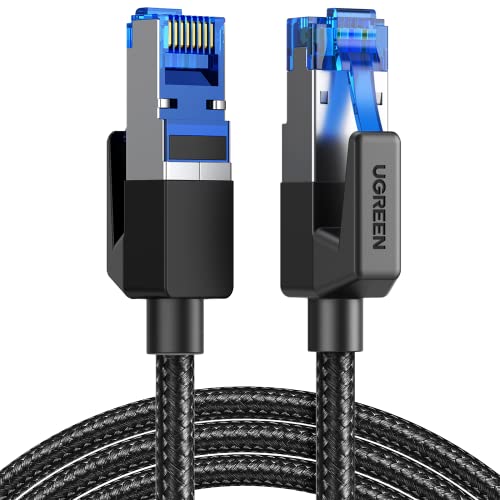
UGREEN Cat 8 Ethernet Cable 10FT, High Speed Braided 40Gbps 2000Mhz Network Cord Cat8 RJ45 Shielded Indoor Heavy Duty LAN Cables Compatible for Gaming PC PS5 Xbox Modem Router 10FT
40 Gbps 2000 Mhz High Speed: The Cat 8 Ethernet cable support max.40 Gbps data transfer and 2000…
As an affiliate, we earn on qualifying purchases.
As an affiliate, we earn on qualifying purchases.
Conclusion
Now that you know the nuances between latency and lag, you can better battle the burdens of buffering and blips. Remember, reducing delays demands diligent diagnostics, dedicated devices, and a decisive dash of determination. Don’t let data delays derail your game; instead, stay savvy, streamline your setup, and swiftly solve setbacks. Stay sharp, stay swift, and savor smooth, seamless sessions—success is just a few steps away from suppressing sluggish setbacks!

HYPEREV AX3000 Gaming Router WiFi Booster for PS5, PC & Consoles – Dual Band WiFi 6 Game Accelerator, Low Ping & Lag Reduction, 2402Mbps, Includes 90-Day GearUP VIP Core Plan
Instant Gaming Acceleration Without Replacing Your Router. Connect the AX3000 gaming router to your existing network to reduce…
As an affiliate, we earn on qualifying purchases.
As an affiliate, we earn on qualifying purchases.

ASUS RT-AX1800S Dual Band WiFi 6 Extendable Router, Subscription-Free Network Security, Parental Control, Built-in VPN, AiMesh Compatible, Gaming & Streaming, Smart Home
New-Gen WiFi Standard – WiFi 6(802.11ax) standard supporting MU-MIMO and OFDMA technology for better efficiency and throughput.Antenna :…
As an affiliate, we earn on qualifying purchases.
As an affiliate, we earn on qualifying purchases.