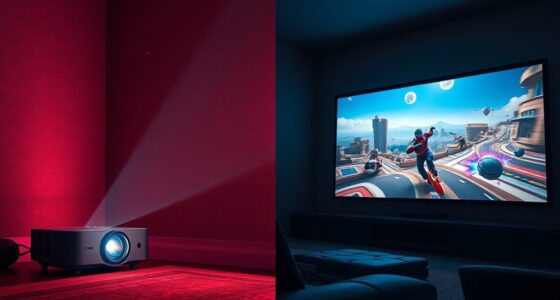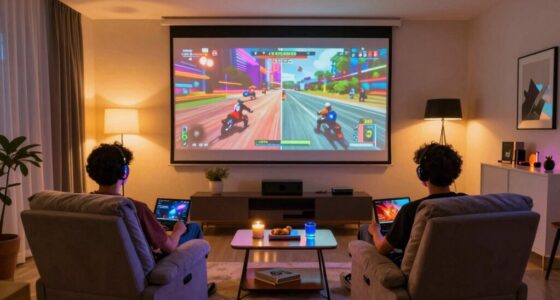

Frame interpolation creates smoother motion by adding intermediate frames, which can improve visual fluidity in games. However, it increases your GPU workload, leading to higher temperatures and potential input lag. While it reduces choppiness, artifacts like ghosting can appear, affecting clarity. For competitive gaming, turning it off usually helps responsiveness. To learn how to balance visual quality and performance, keep exploring the details behind this technique and its effects.

Get business pricing on your home office setup
- Business-only prices and quantity discounts
- Tax-exempt purchasing
- Multiple users, one account, clear invoices
Key Takeaways
- Frame interpolation can increase input lag, reducing responsiveness in fast-paced games.
- It adds extra processing load on the GPU, potentially causing stuttering or performance drops.
- Smoothing motion may cause visual artifacts like ghosting, impacting visual clarity during gameplay.
- Disabling interpolation helps maintain stable frame rates and lower input delay for competitive gaming.
- Enabled frame smoothing improves visual fluidity but may compromise responsiveness and introduce artifacts.
gaming monitor with low input lag
As an affiliate, we earn on qualifying purchases.
As an affiliate, we earn on qualifying purchases.
Understanding How Frame Interpolation Works
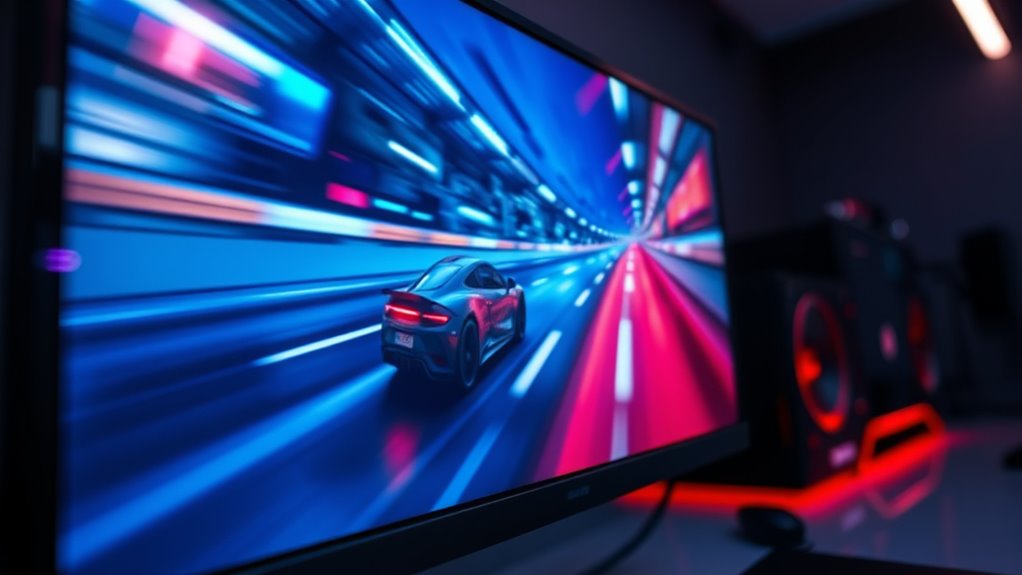
Have you ever wondered how frame interpolation creates smoother motion on your screen? It works through a process called motion smoothing, which involves generating new frames between the original ones. This is achieved using frame generation technology, where the system analyzes the movement of objects from existing frames and predicts what the next frames should look like. By adding these intermediate frames, your display appears to have more fluid motion, especially during fast-paced scenes. This technique is common in modern TVs and monitors to enhance visual clarity. However, it’s important to know that while frame interpolation can improve visual smoothness, it might also introduce artifacts or reduce the natural feel of motion, which can impact your gaming experience.
As an affiliate, we earn on qualifying purchases.
The Benefits of Using Frame Interpolation in Gaming
Frame interpolation can considerably enhance your gaming experience by delivering smoother, more fluid motion, especially in fast-paced scenes. This technique, often called motion smoothing, reduces motion blur and choppiness, making action appear more natural and immersive. You’ll notice clearer visuals during rapid movements, which can improve your ability to track fast-moving objects or opponents. The visual enhancement provided by frame interpolation makes gameplay feel more lifelike and dynamic, heightening your overall enjoyment. It also minimizes distractions caused by stuttering or frame drops, allowing you to focus better on gameplay. While some gamers prefer a more “raw” look, many find that the benefits of smoother motion and improved clarity profoundly amplify their gaming experience. Additionally, understanding how refresh rates influence motion smoothness can help you optimize your setup for the best possible performance.
gaming performance optimization tools
As an affiliate, we earn on qualifying purchases.
As an affiliate, we earn on qualifying purchases.
Common Drawbacks and Performance Issues
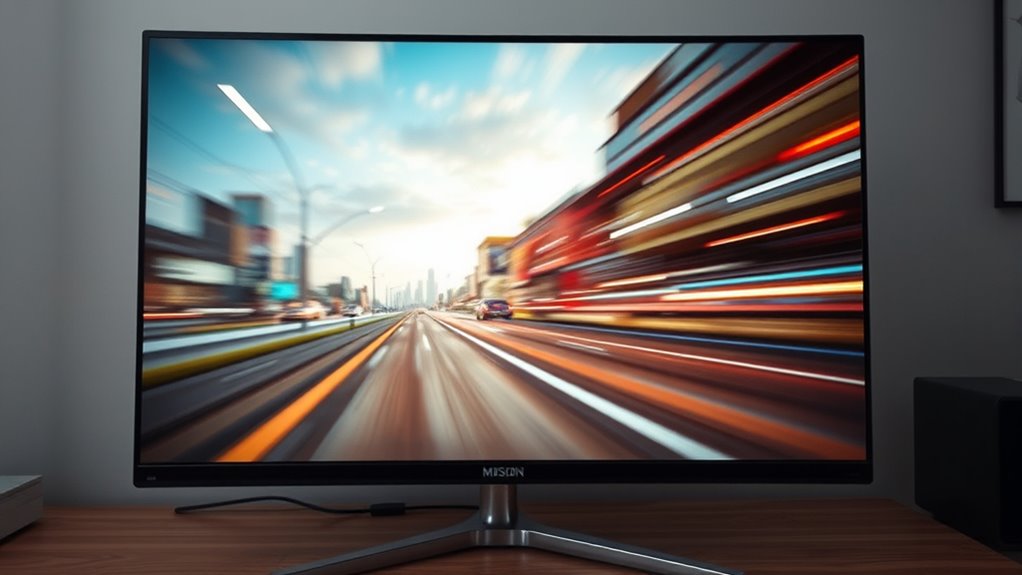
While frame interpolation can enhance your gaming experience, it also introduces some drawbacks. You might notice increased input lag, which can affect your responsiveness, or see visual artifacts that disrupt immersion. Additionally, your GPU has to work harder, leading to higher loads that can impact overall performance. For example, enabling certain tuning options like performance exhaust systems can increase the GPU’s workload during gaming sessions.
Increased Input Lag
Although frame interpolation can make gameplay appear smoother, it often introduces increased input lag, which can negatively impact your performance. The delay between your actions and on-screen responses becomes noticeable, making precise movements more difficult. This lag can cause frustration, especially in fast-paced games requiring quick reflexes. Additionally, the delayed feedback may lead to eye strain as your eyes struggle to adjust to the mismatched motion. For some players, the discomfort can trigger motion sickness, further impairing focus and gameplay enjoyment. If you’re sensitive to input lag or prone to eye fatigue, frame interpolation might hinder your ability to perform at your best. Recognizing these drawbacks helps you decide whether the smoother visuals are worth the potential decline in responsiveness. Understanding motion perception can help you better evaluate the impact of visual processing on your gaming experience.
Visual Artifacts Appear
Have you ever noticed strange visual glitches or distortions when using frame interpolation? These issues often appear as motion smoothing creates visual artifacts, disrupting the smoothness you expect. You might see ghosting, where previous frames linger, or unwanted halos around moving objects. Sometimes, rapid motions generate visual distortion, making scenes look blurry or unnaturally doubled. These artifacts occur because frame interpolation predicts intermediate frames that don’t always match real motion accurately. As a result, your gaming experience can be marred by distracting glitches, reducing immersion and clarity. While motion smoothing aims to enhance fluidity, it can unintentionally introduce visual artifacts that diminish overall picture quality. Recognizing these common drawbacks helps you decide whether enabling frame interpolation suits your gaming preferences or if you should disable it for cleaner visuals. Additionally, understanding juice cleansing effects can help you maintain optimal health while adjusting your gaming routines.
GPU Load Rise
Frame interpolation can improve visual smoothness, but it also increases the workload on your GPU. When you enable motion smoothing, your GPU works harder to generate additional frames that match your display’s refresh rate. This extra processing markedly raises GPU load, especially during fast-paced scenes. As the GPU struggles to keep up, you might notice increased temperatures, higher power consumption, and potential frame drops. A higher refresh rate amplifies this effect, demanding even more from your graphics card. If your GPU isn’t powerful enough, the increased load can cause stuttering or lag, undermining the benefits of smoother visuals. Be mindful that while motion smoothing enhances perceived fluidity, it can also push your GPU toward its limits, impacting overall gaming performance. Crochet styles for locs can also be affected by GPU performance issues when attempting to render high-quality visual effects in games.
frame interpolation gaming settings
As an affiliate, we earn on qualifying purchases.
As an affiliate, we earn on qualifying purchases.
Impact on Input Lag and Responsiveness
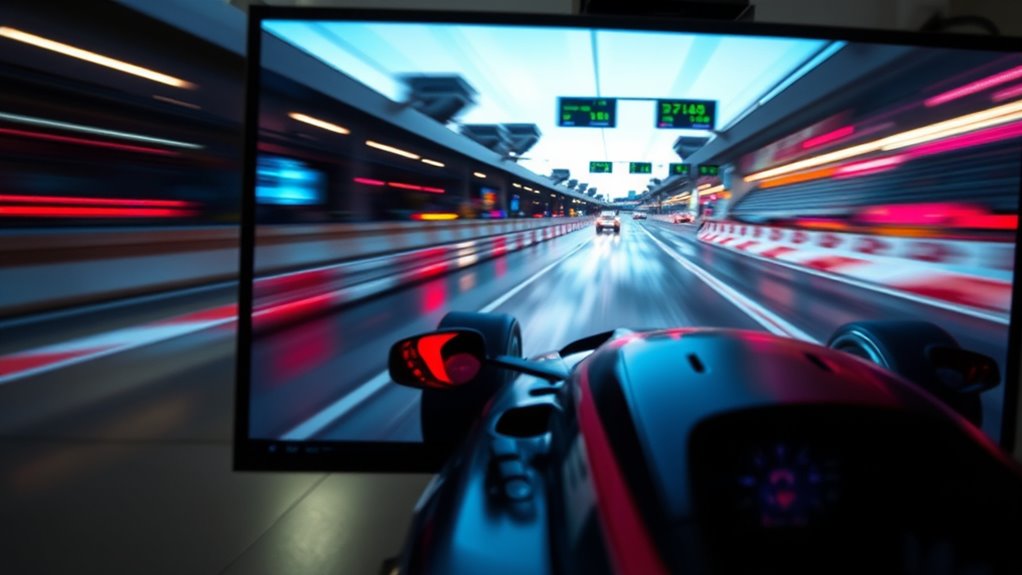
Frame interpolation can increase your input delay, making actions feel less responsive. You might notice variability in how quickly your commands register, especially during fast-paced gameplay. Understanding these effects helps you decide whether the smoother visuals outweigh the potential responsiveness issues. Additionally, some displays use specific utensils to enhance viewing experience, which can further influence how motion is perceived during gaming.
Increased Input Delay
While frame interpolation enhances visual smoothness, it often introduces increased input delay, which can considerably affect your gaming responsiveness. This happens because motion smoothing processes frames in the background, adding latency between your actions and what appears on screen. The delay becomes more noticeable in fast-paced games where quick reactions matter. Although artifact reduction improves image quality by reducing visual distortions, it doesn’t eliminate the extra lag caused by interpolation. The result is a less direct connection between your inputs and their in-game effects. If you prioritize responsiveness, especially in competitive gaming, increased input delay from frame interpolation can hinder your performance. Turning off motion smoothing can help maintain lower input lag, ensuring your responses stay sharp and timely. Understanding how visual enhancements impact performance can help you make smarter choices for your gaming setup.
Responsiveness Variability
Responsiveness variability caused by frame interpolation can lead to inconsistent input lag, making your gaming experience unpredictable. When motion smoothing is active, the display attempts to create additional frames, which can cause fluctuations in frame rate consistency. These fluctuations disrupt the smoothness of gameplay, resulting in variable response times to your inputs. You might notice that your controls feel delayed or imprecise during fast-paced scenes, as the system struggles to maintain steady responsiveness. This variability can be especially frustrating in competitive games where every millisecond counts. Turning off motion smoothing helps maintain stable frame rates, ensuring your input lag remains consistent. Additionally, low light office plants can help create a more comfortable gaming environment by reducing eye strain during extended sessions. Ultimately, reducing responsiveness variability improves your overall gaming experience by providing more reliable and predictable responsiveness during gameplay.
Best Practices for Gamers Considering Frame Interpolation
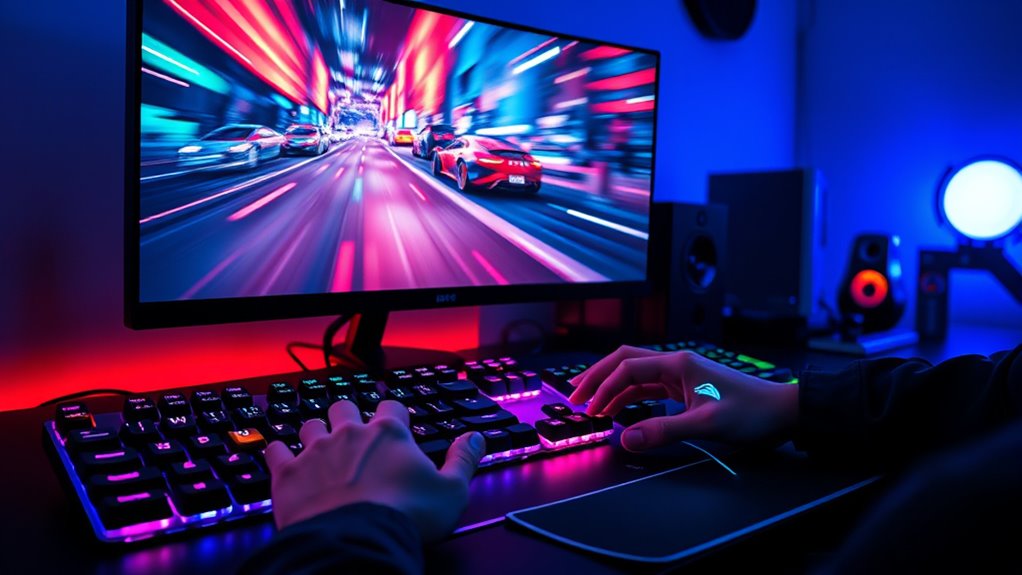
If you’re considering using frame interpolation to enhance your gaming experience, it’s important to understand how it can impact your gameplay. Activating motion smoothing can make fast-paced action appear smoother, but it may also reduce visual clarity, making details less sharp. To find the right balance, start by toggling frame interpolation on and off during gameplay to see how it affects your perception. Adjust the settings gradually, prioritizing clarity for competitive gaming and smoothness for casual or cinematic experiences. Keep in mind that some games benefit more from reduced motion blur, so test different options to determine what works best for you. Additionally, understanding the differences between techniques used in various display enhancements can help you make more informed choices. Ultimately, experimenting with these settings helps you optimize your gaming setup for both performance and visual quality.
Making an Informed Decision: To Enable or Not?
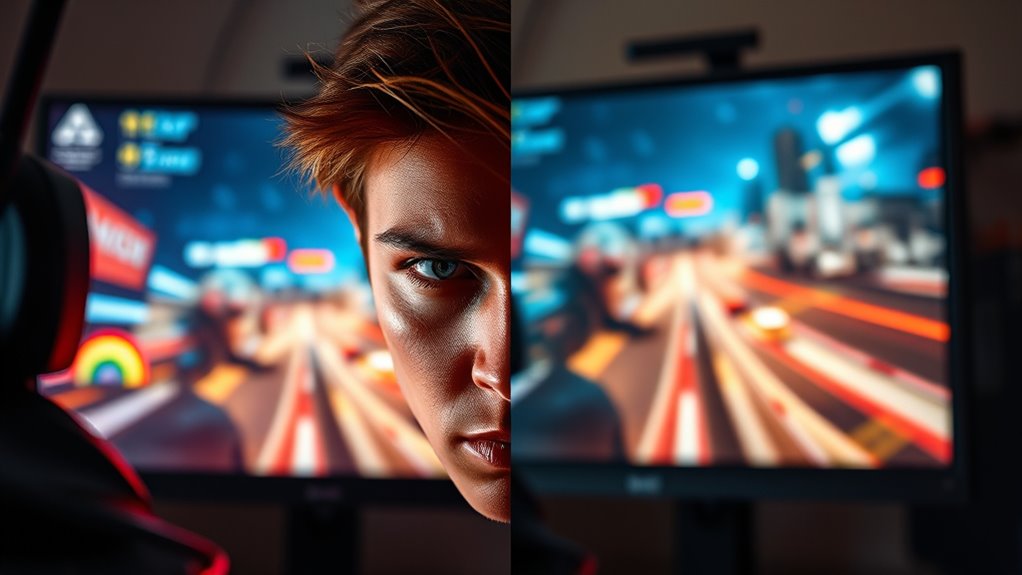
Deciding whether to enable frame interpolation depends on your gaming priorities and the types of games you play. If you value visual clarity and prefer a more natural look, you might want to keep it off, as interpolation can sometimes create a soap opera effect. However, if you prioritize motion smoothness, especially in fast-paced games like shooters or racing titles, enabling frame interpolation can enhance your experience. Consider how it affects latency and input responsiveness, as some gamers find it distracting or detrimental to gameplay. Ultimately, you need to weigh the benefits of smoother motion against potential drawbacks like reduced visual realism or delayed input. Testing both settings in your favorite games will help you make an informed choice aligned with your gaming style. Additionally, understanding how frame interpolation interacts with your display’s refresh rate can help optimize your gaming setup.
Frequently Asked Questions
Does Frame Interpolation Reduce or Increase Overall Gaming System Power Consumption?
Frame interpolation generally increases your gaming system’s power draw because it requires extra processing power to generate new frames smoothly. This added workload can reduce system efficiency, making your device work harder and consume more energy. If you’re aiming to optimize power consumption, turning off frame interpolation can help, as it reduces unnecessary processing. So, yes, it tends to increase overall power consumption due to higher system demands.
How Does Frame Interpolation Affect VR Gaming Experiences?
Think of motion smoothing as a gentle wave that steadies your VR experience, making fast movements feel smoother and more natural. It enhances visual clarity, reducing motion blur and disorientation, so you stay immersed without dizziness. However, it can introduce slight latency or artifacts. When used wisely, frame interpolation elevates your VR gaming, creating a seamless, fluid journey through virtual worlds, like a clear stream flowing effortlessly.
Can Frame Interpolation Cause Visual Artifacts in Competitive Gaming?
Yes, frame interpolation can cause visual artifacts in competitive gaming, making fast-moving objects appear blurry or distorted due to added motion blur. It may also introduce input lag, which affects your reaction time. This can be problematic in fast-paced games where precision is vital. You might prefer to disable frame interpolation to maintain clarity and guarantee minimal input lag, giving you a competitive edge.
Is Frame Interpolation Supported on All Gaming Consoles?
Coincidences often highlight the limits of technology, and support for frame interpolation varies across gaming consoles. You’ll find that not all consoles natively support this feature, as it depends on hardware capabilities and software support. For example, some modern consoles like the PlayStation 5 and Xbox Series X may offer frame interpolation options, but older or budget models often lack this feature entirely. Always check your console’s specifications for compatibility details.
How Does Frame Interpolation Impact Battery Life on Portable Gaming Devices?
Frame interpolation can increase power consumption on portable gaming devices because it requires additional processing power, which drains the battery faster. Your device’s display technology also plays a role; high-refresh-rate screens need more energy when frame interpolation is active. So, if you enable this feature, expect shorter battery life, especially during extended gaming sessions. To conserve power, consider turning off frame interpolation when you don’t need the smoothest visuals.
Conclusion
Think of frame interpolation like a magic paintbrush that adds extra strokes to your gaming canvas. While it can make scenes smoother and more vibrant, it may also blur your view and slow down your reactions—like trying to catch a butterfly with muddy hands. Weigh its magic carefully. Decide if you want your gaming experience to be a swift eagle or a dazzling painting. The choice is yours—choose wisely for the perfect adventure.
Fall Picks
fall essentials
As an affiliate, we earn on qualifying purchases.