
Competitive gaming on a projector is possible, but it depends on choosing the right equipment. You’ll need a low-latency projector with a high refresh rate to keep up with fast-paced action, along with a powerful console or PC. Larger screens boost immersion but can introduce eye strain and hardware demands. Proper setup and optimization are key to minimizing lag and motion blur. Want to discover how to turn your projector into a competitive edge? Keep exploring to learn more.
Key Takeaways
- Low-latency projectors designed for gaming can reduce input lag, making competitive play feasible.
- Larger screens improve immersion but may increase eye strain and hardware demands.
- High refresh rate projectors (120Hz or higher) are essential for fast-paced, responsive gameplay.
- Proper setup and pairing with responsive hardware optimize performance and minimize latency issues.
- Standard consumer projectors may struggle with responsiveness, but gaming-specific models can keep pace.
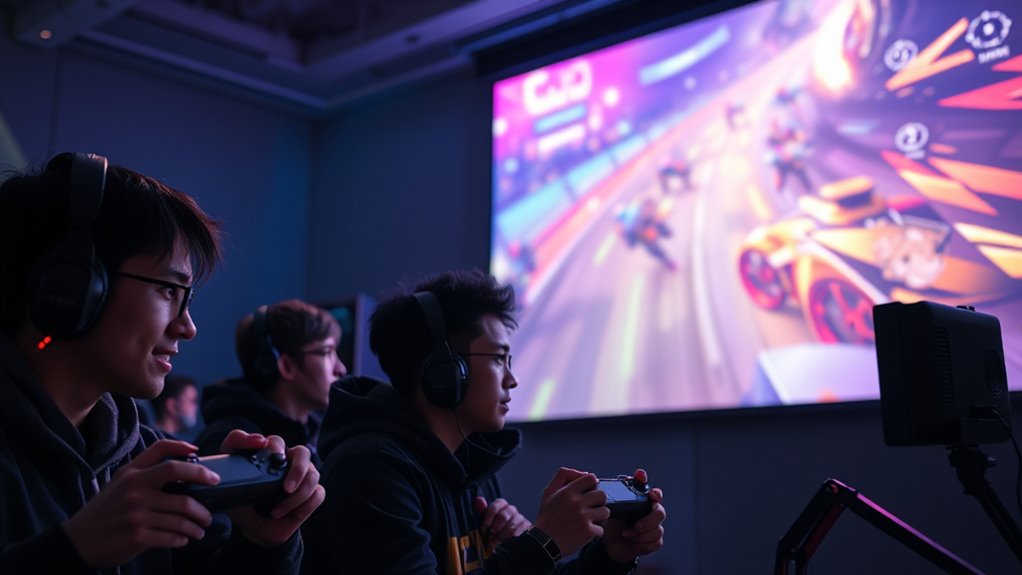
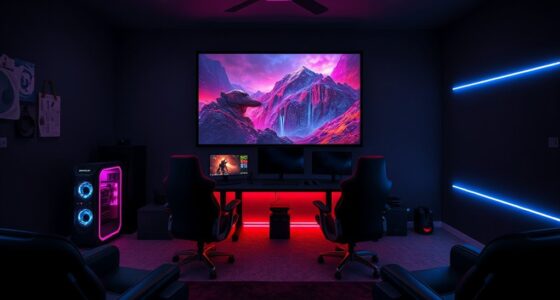
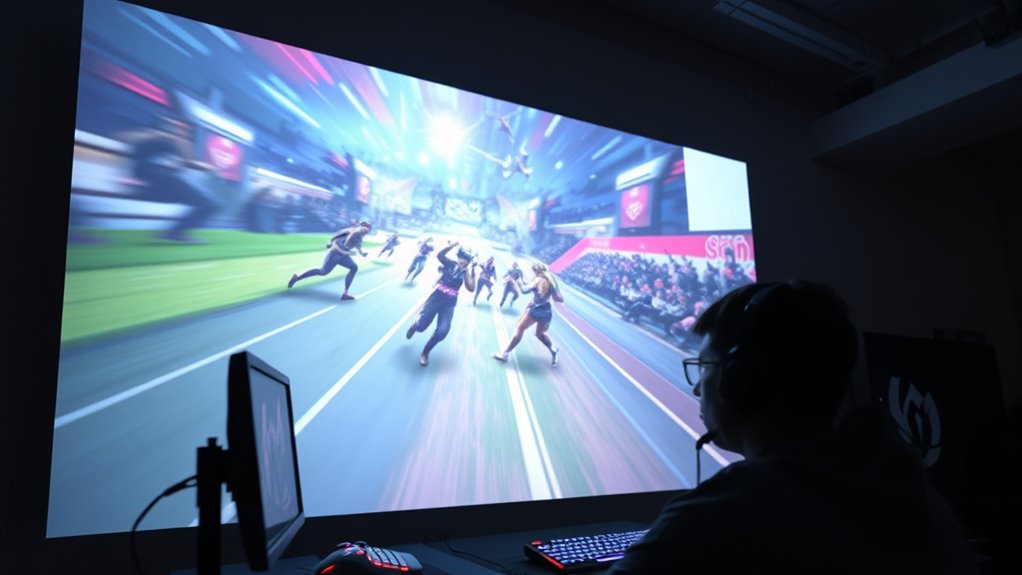
Gaming on a projector can transform your competitive experience by immersing you in a larger-than-life display that rivals professional setups. The expansive screen size makes every detail pop, giving you a tactical advantage and enhancing your sense of immersion. However, when it comes to competitive gaming, there are vital factors to consider—most notably latency issues and screen size. Latency can make or break your gameplay, especially in fast-paced titles where split-second reactions are essential. Projectors, especially those not designed for gaming, may introduce noticeable delays between your input and what appears on the screen. This delay can cause you to miss essential timing windows or react too late, negatively impacting your performance.
Gaming on a projector offers immersive size but requires low latency for competitive success.
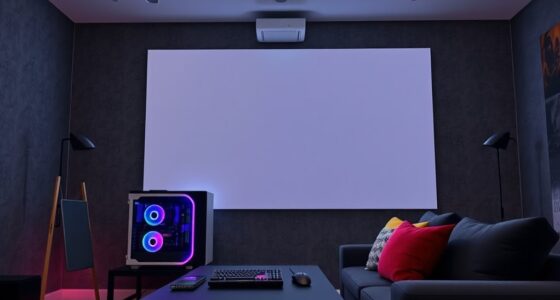
The size of the screen is a double-edged sword in this scenario. While a larger display can provide a more immersive experience and better spatial awareness, it also demands more from your hardware and your setup. A bigger screen means your eyes have to cover a wider area, which can lead to increased eye strain over prolonged sessions. Furthermore, if you’re using a standard projector that isn’t optimized for low latency gaming, the larger image can exaggerate latency issues, making them more noticeable and disruptive. To truly benefit from a projector in competitive gaming, you’ll need a model designed with low input lag and quick response times, making sure your actions are reflected on-screen almost instantaneously. Additionally, integrating software optimization techniques can help reduce perceived latency and improve overall responsiveness.
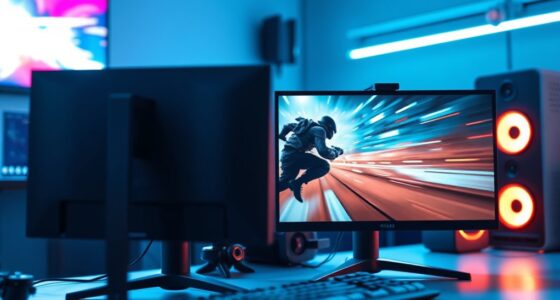
Another challenge is the projector’s refresh rate, which must be high enough to keep up with the rapid movements in competitive games. Many consumer projectors prioritize image quality over refresh rate, so finding one that offers 120Hz or higher is essential. Without it, you risk motion blur or screen tearing, which can hinder your ability to track fast-moving opponents or react swiftly. Additionally, you should consider the resolution; 4K projectors are ideal for crisp visuals, but they also tend to require more processing power and can introduce additional latency if your hardware isn’t top-tier.
Setting up a projector for competitive gaming isn’t just about size—it’s about balancing screen size, latency, and refresh rates. You’ll want to invest in a projector specifically designed for gaming or one that supports low latency modes. Pair it with a fast, responsive gaming console or PC, and you’ll be better positioned to handle the demands of competitive play. While projectors can give you an immersive advantage, overcoming their inherent latency issues and optimizing screen size are essential steps to make sure they can truly keep up with traditional gaming monitors in the heat of competition.
![Projector-4K with WiFi and Bluetooth:[3000 ANSI/40W Dolby Audio/Official Licensed Apps], Outdoor-Projector with Smart OS 2.0 & AI Auto Focus,ONOAYO ONO5Pro 2.0 Smart Movie Projector for Indoor/Outdoor](https://m.media-amazon.com/images/I/411TCiwZ0EL._SL500_.jpg)
Projector-4K with WiFi and Bluetooth:[3000 ANSI/40W Dolby Audio/Official Licensed Apps], Outdoor-Projector with Smart OS 2.0 & AI Auto Focus,ONOAYO ONO5Pro 2.0 Smart Movie Projector for Indoor/Outdoor
[Hear the Difference–Hollywood-Grade Dual 40W Dolby Audio] Why spend $500 on a TV + soundbar or settle for...
As an affiliate, we earn on qualifying purchases.
Frequently Asked Questions
Do Projectors Support High Refresh Rates for Competitive Gameplay?
Projectors can support high refresh rates, but it depends on their compatibility and specifications. Many standard projectors struggle with refresh rate challenges, especially for fast-paced competitive gameplay. To get smooth performance, you need a projector designed for gaming, with high refresh rate support and low input lag. Always check the projector’s compatibility with your gaming setup to ensure it can handle the demands of competitive play.
How Does Projector Latency Compare to Gaming Monitors?
Like a runner sprinting to catch a ball, your projector’s latency can be faster or slower than a gaming monitor, depending on the model. Generally, projectors have higher input lag and response times, making them less ideal for fast-paced competitive gaming. While some high-end projectors aim to reduce latency, most still lag behind gaming monitors, which are optimized for minimal input lag and quick response times essential for competitive play.
Are There Projectors Specifically Designed for Gaming Purposes?
Yes, there are projectors designed specifically for gaming purposes. These gaming projectors offer large projection sizes and improved color accuracy, which enhance your gaming experience. They often feature low latency to keep up with fast-paced gameplay, making them suitable for competitive gaming. You can enjoy immersive visuals on a big screen without sacrificing image quality, ensuring your gaming sessions are both exciting and visually stunning.
Can Ambient Light Affect Projector Gaming Performance?
Ambient light can definitely affect your projector gaming performance. When there’s too much ambient light, your projector’s brightness might not be enough to produce a clear, vibrant image, making it harder to see details during fast-paced gameplay. To improve your experience, use a projector with high brightness levels or control the ambient light by dimming or closing curtains. This way, you get sharper visuals and better reaction times.
What Are the Best Projectors for Esports and Fast-Paced Games?
You should look for projectors with high projection brightness, ideally over 3000 lumens, to guarantee clear visuals even in well-lit rooms. Fast response times, low input lag, and high refresh rates are vital for esports and fast-paced games. Also, prioritize models with good speaker quality to enhance your experience without needing extra audio equipment. Combining these features helps you stay competitive and enjoy smooth, immersive gameplay.

Official Licensed Google TV Smart Projector, HAPPRUN 4K UHD Home Theater with Dolby Sound, Wi-Fi & Bluetooth, Built-in Streaming Apps, Compatible with Games Consoles & Smartphone, Indoor & Outdoor Use
[ Built-in Official Licensed Google TV ] - Without additional equipment, the smart projector can directly access Netflix,...
As an affiliate, we earn on qualifying purchases.
Conclusion
So, can projectors truly keep pace in the fast-paced world of competitive gaming? Think of a projector as a race car—powerful, but sometimes lacking the precision of a sleek sports car. While they offer an immersive experience, they might not always deliver the lightning-fast response you crave. If you’re chasing victory, remember: the right gear can make all the difference. Choose wisely, and let your gaming dreams shine brighter than ever.
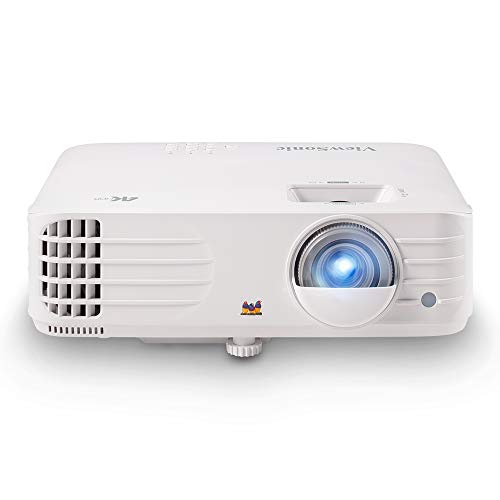
ViewSonic PX701-4K UHD 4K Projector with 3200 Lumens, 240Hz, 4.2ms, HDR, Auto Keystone, Dual HDMI for Home Theater
4K Home Theater Projector: UHD (3840x2160p) 4K resolution with a 1.5-1.6 throw ratio and 3,200 ANSI lumens perfect...
As an affiliate, we earn on qualifying purchases.

WALI Projector Mount Ceiling/Wall - Universal 3-in-1 Bracket with Extension Pole, Height Adjustable Holder for LCD/DLP Projectors, Supports up to 44lbs (PM-003-W), White
Compatibility: Universal Projector Mount Bracket for Both Ceiling and Wall Installation. Applicable to mounting holes distance between 8.9’’to...
As an affiliate, we earn on qualifying purchases.