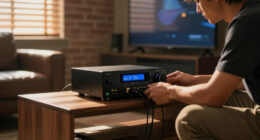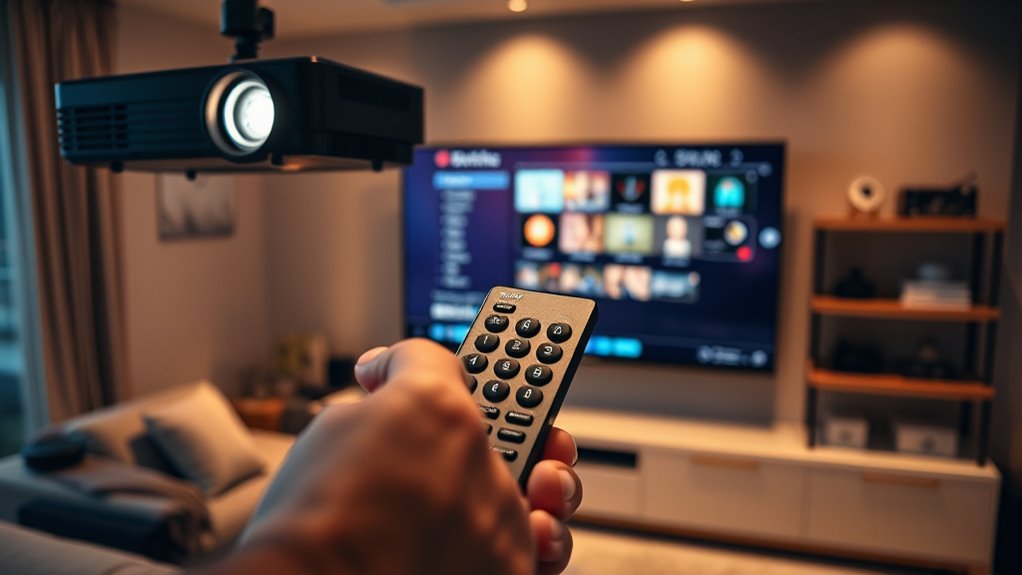
To control your projector and system with a universal remote, start by checking if your remote supports these devices and find their codes in the manual or online. Use the manual code search to program each device or input specific codes manually. Test each device afterward to guarantee it responds properly. If you encounter issues, try different codes or repeat the setup. Keep going, as you’ll discover more tips to make setup easier.

Get business pricing on your home office setup
- Business-only prices and quantity discounts
- Tax-exempt purchasing
- Multiple users, one account, clear invoices
Key Takeaways
- Verify remote compatibility with your projector and system using the manufacturer’s code list or website.
- Program the remote by manually entering device-specific codes or using automatic code search.
- Test each device after programming to ensure proper response and functionality.
- If a device doesn’t respond, try different codes or repeat the programming process.
- Utilize advanced features like macros or button customization for streamlined control of your system.
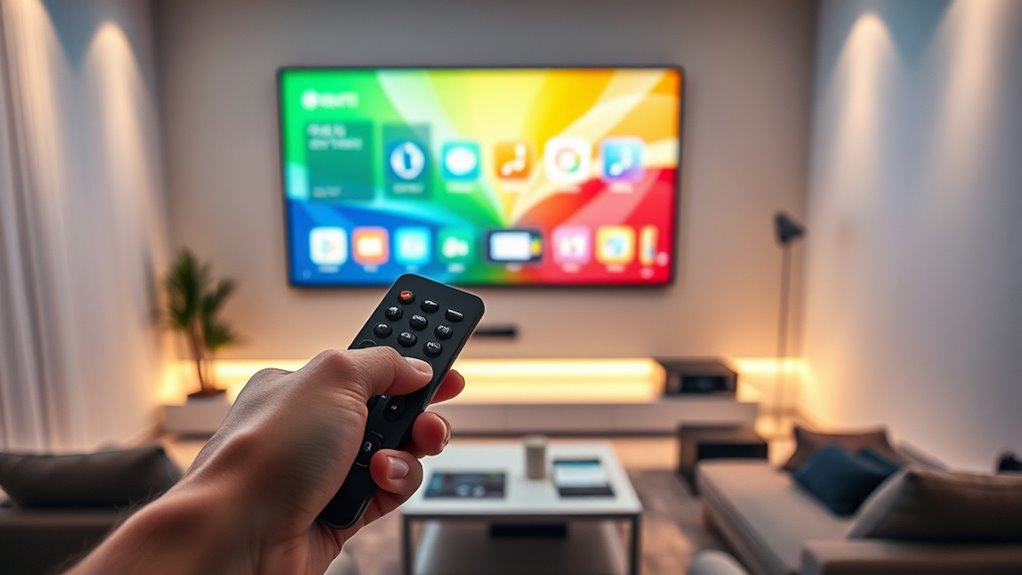
Have you ever struggled to operate multiple remote controls for your TV, cable box, and sound system? If so, you’re not alone. Managing several remotes can be frustrating and time-consuming, especially when each device has its own set of buttons and functions. Thankfully, universal remote programming offers a convenient solution that simplifies your entertainment setup. The first step is understanding the remote control setup process, which involves configuring your universal remote to communicate effectively with all your devices. To do this successfully, you need to consider device compatibility—making sure your remote can handle the brands and models of your TV, projector, and audio equipment. Many universal remotes come with extensive code databases that cover a wide range of brands, but it’s essential to verify compatibility beforehand.
When setting up your universal remote, start by consulting the device compatibility list included in the remote’s user manual or on the manufacturer’s website. This step ensures that your specific devices are supported and helps prevent frustration during programming. Once you’ve confirmed compatibility, you’ll typically need to enter a code for each device into your remote. This can be done manually by inputting the code or automatically through a code search feature if your remote has one. Manual code entry often involves referencing the code list and pressing specific buttons, while automatic search scans through all available codes until it finds one that works with your device.
During the remote control setup, it’s vital to test each device after programming to confirm proper operation. Turn on your TV, projector, and sound system individually to see if the remote controls them as intended. If something doesn’t respond correctly, you might need to try a different code or repeat the process. Some advanced remotes even allow you to customize button functions or create macros, streamlining complex activities like watching a movie with one button press. Additionally, understanding the device compatibility and ensuring your remote supports your specific models can make the setup process smoother and more reliable.
universal remote control for projector
As an affiliate, we earn on qualifying purchases.
As an affiliate, we earn on qualifying purchases.
Frequently Asked Questions
Can I Program My Universal Remote Without the Original Device Remote?
You can program your universal remote without the original device remote, but it might be tricky due to remote compatibility issues. Many remotes allow manual code entry, but some require the original remote to complete setup, which can pose programming challenges. If your remote supports learning functions, you can often copy signals from the device remote. Otherwise, you’ll need to find compatible codes online or through the remote’s manual to avoid programming hassles.
How Do I Update My Remote’s Firmware or Software?
To update your remote’s firmware or perform a software upgrade, first visit the manufacturer’s website. Download the latest firmware or software version onto your computer. Connect your remote to the computer using the recommended cable or method. Follow the on-screen instructions carefully to complete the firmware update or software upgrade. This process guarantees your remote stays compatible with new devices and features, improving its performance and functionality.
What Should I Do if My Remote Doesn’T Recognize My Projector Model?
Suppose your remote doesn’t recognize your projector model, like in a recent case where a user couldn’t sync their remote with a new projector. First, perform remote troubleshooting by checking device compatibility and ensuring the remote is programmed correctly. Try reprogramming or updating the remote’s code for your projector. If issues persist, consult the remote’s manual or manufacturer’s website for compatible codes or firmware updates.
Is It Possible to Program Multiple Devices on One Remote?
Yes, you can program multiple devices on one remote through multi-device programming. Most universal remotes support remote integration, allowing you to control your projector, TV, sound system, and more with a single device. To do this, access the remote’s setup mode, select each device type, and follow the instructions to assign the correct codes. This way, you streamline control and enhance your viewing experience.
How Long Does It Typically Take to Complete Remote Programming?
It usually takes just a few minutes—sometimes less than the blink of an eye—to program your remote, but remote compatibility and programming complexity can stretch this time from lightning-fast to a bit of a marathon. If your devices are widely compatible and straightforward, you’ll be done before you can yawn. However, with more complex systems, you might need a little patience, but it’s worth it for seamless control!
programming universal remote with codes
As an affiliate, we earn on qualifying purchases.
As an affiliate, we earn on qualifying purchases.
Conclusion
Now that you’ve learned how to program your universal remote, it’s almost like magic how effortlessly you can control your projector and system. Sometimes, the simplest steps lead to the best experiences—who would’ve thought a few button presses could bring such convenience? Just imagine the coincidence of finally mastering your remote, making your movie nights smoother than ever. With this knowledge, you’re all set to enjoy seamless entertainment whenever you want.
universal remote with macro functions
As an affiliate, we earn on qualifying purchases.
As an affiliate, we earn on qualifying purchases.
best universal remote for multiple devices
As an affiliate, we earn on qualifying purchases.
As an affiliate, we earn on qualifying purchases.
Fall Picks
fall essentials
As an affiliate, we earn on qualifying purchases.