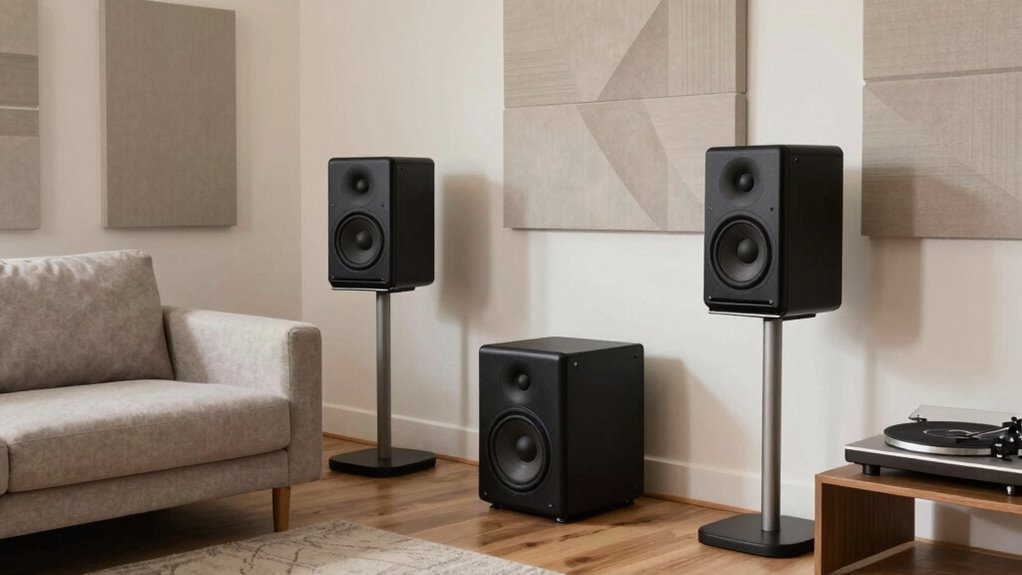

To avoid buying more audio gear than your room can handle, focus on optimizing your existing setup instead of chasing upgrades. Pay attention to room acoustics, furniture, and speaker placement—small adjustments can make a big difference. Remember, more gear doesn’t mean better sound and can lead to clutter. By refining what you already have and understanding your space, you’ll improve sound quality without unnecessary purchases. Keep exploring to discover how to make the most of your current setup.

Get business pricing on your home office setup
- Business-only prices and quantity discounts
- Tax-exempt purchasing
- Multiple users, one account, clear invoices
Key Takeaways
- Focus on optimizing your current setup through proper speaker placement and room acoustics before considering new gear.
- Assess your room’s size, shape, and reflective surfaces to determine what equipment is appropriate.
- Use acoustic treatments like rugs and panels to improve sound quality without additional equipment.
- Avoid impulse purchases driven by excitement; prioritize adjustments that enhance existing gear’s performance.
- Remember that good acoustics and placement often have a greater impact than adding more equipment.
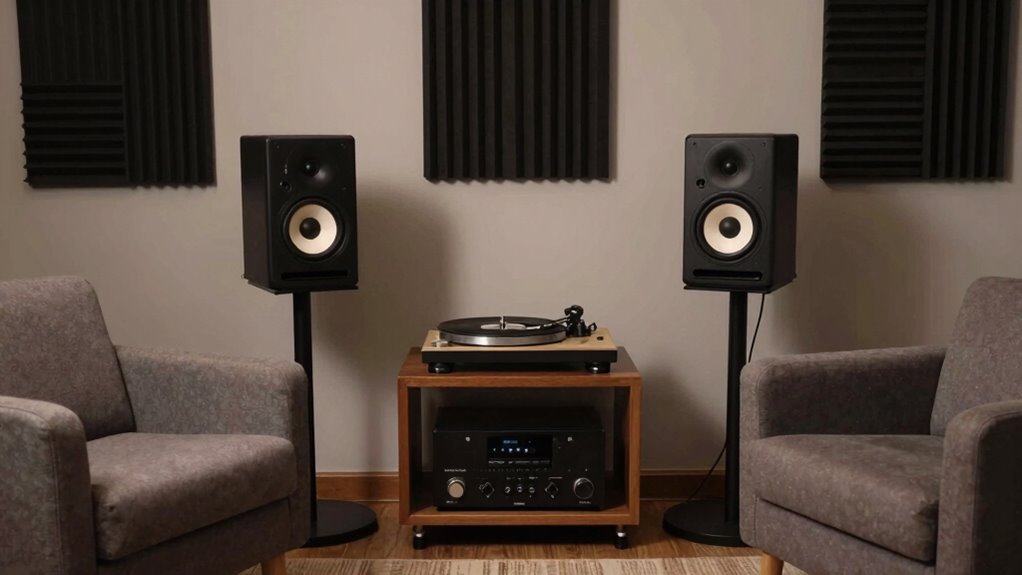
Getting caught up in the excitement of audio gear can lead to impulse purchases and clutter. It’s easy to fall into the trap of thinking that more gear automatically equals better sound, but the truth is, your room’s acoustics and speaker placement play a bigger role than you might realize. Before you buy another piece of equipment, take a step back and evaluate what your space truly needs. Focus on optimizing what you already have rather than constantly adding more.
Prioritize optimizing your current setup over buying new gear; room acoustics and placement matter most for great sound.
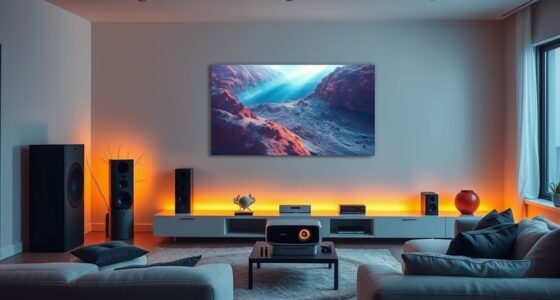
Start by examining your room’s acoustics. Every space is different, with unique reflective surfaces, furniture, and dimensions that influence sound quality. If your room creates echoes or dead spots, no amount of gear will fix that. Instead, invest in acoustic treatments like rugs, curtains, or panels that absorb or diffuse sound. These adjustments improve clarity and help you hear the benefits of your current setup without the clutter of unnecessary gear. Good acoustics make even modest equipment sound impressive, saving you the temptation to upgrade prematurely. Being aware of room acoustics can help prevent unnecessary purchases and ensure your space is optimized for sound. Additionally, understanding how sound reflections interact within your space can guide your placement and treatment choices more effectively.
Next, pay close attention to speaker placement. Proper positioning can dramatically enhance your listening experience. Place your speakers at ear level and ensure they form an equilateral triangle with your listening position. Keep them away from walls and corners, as these can cause unwanted reflections and muddiness. Experiment with angles and distances to find the sweet spot where sound is balanced and immersive. When your speakers are correctly positioned, you’ll notice a richer, more precise sound stage, which can make your existing gear sound more than adequate. This often means you don’t need to spend extra money on upgrades or additional components.
Avoid the impulse to buy more gear just to compensate for subpar acoustics or poor placement. Instead, prioritize refining your current setup. Take the time to learn about your room’s acoustics and experiment with speaker positioning. Small adjustments can lead to significant improvements in sound quality, making your investment in new gear unnecessary. Remember, the best sound isn’t always about having the latest or most expensive equipment—it’s about making the most of what you already have. By focusing on these fundamentals, you’ll prevent unnecessary purchases, reduce clutter, and create a more satisfying listening environment that truly showcases your audio system’s potential. Recognizing the importance of audio gear and how it interacts with your room can transform your listening experience more than any additional gear ever could.
acoustic panels for room treatment
As an affiliate, we earn on qualifying purchases.
As an affiliate, we earn on qualifying purchases.
Frequently Asked Questions
How Do I Determine My Room’s Optimal Speaker Placement?
To determine your room’s best speaker placement, start by positioning speakers at ear level, considering the ideal speaker height for clear sound. Keep your setup symmetrical by placing speakers equally distant from walls and centered in the room, which enhances soundstage and imaging. Make small adjustments based on listening tests, ensuring the speakers form an equilateral triangle with your seating area. This approach helps you achieve balanced, immersive audio.
What Are the Signs of Audio Gear Overload in a Room?
If you notice speaker clutter, with too many speakers crowded in your space, it’s a sign of overload. Sound distortion is another key indicator, as excessive gear can muddy audio clarity and cause uneven sound. You might also feel overwhelmed by the setup or find it hard to achieve a balanced sound, which signals your room is overloaded. Simplify your setup to restore clarity and prevent audio issues.
How Can I Measure My Room’s Acoustics Effectively?
You can measure your room’s acoustics effectively by using a sound level meter or a measurement microphone with acoustic analysis software. Place acoustic panels strategically to identify problem areas, and test sound response at different points. Incorporate soundproofing techniques like bass traps and diffusers to improve acoustics. Regularly analyze your room’s frequency response to guarantee it’s balanced, preventing overload and optimizing your listening environment.
Are There Budget-Friendly Ways to Test Audio Setup Limits?
Yes, there are budget testing options for your audio setup limits. You can use your smartphone with free or inexpensive room acoustics apps to measure sound levels and reflections. Place your gear in different positions, listen critically, and note distortion or resonance issues. This budget testing helps you understand your room’s acoustics, ensuring you don’t buy gear that exceeds your space’s capabilities. It’s a simple way to optimize your setup without breaking the bank.
How Often Should I Reassess My Audio Equipment Needs?
Think of your audio setup as a garden needing regular care. You should reassess your needs every few months, especially after changes like new equipment or room modifications. During these checks, focus on audio calibration and equipment compatibility to guarantee everything works harmoniously. Regularly reviewing your setup helps you avoid overloading your space, keeps sound quality at its best, and ensures your gear still meets your evolving listening or mixing needs.
As an affiliate, we earn on qualifying purchases.
Conclusion
So, next time you’re tempted to splurge on that shiny new piece of gear, remember—sometimes, the best sound comes from what you already have. It’s funny how the perfect setup often appears just when you stop searching. Keep your focus on your room’s actual needs, and you might just find that less really is more. After all, the greatest audio moments often happen when you least expect them—right in your own space.
sound absorbing rugs for acoustics
As an affiliate, we earn on qualifying purchases.
As an affiliate, we earn on qualifying purchases.
As an affiliate, we earn on qualifying purchases.
Fall Picks
fall essentials
As an affiliate, we earn on qualifying purchases.