
For a dedicated home theater, the Sony VPL-XW6000ES is my best overall pick for its native 4K imaging and laser light source. The Epson Home Cinema LS5000 is a strong alternative for buyers weighing room flexibility, while the LG CineBeam HU715Q suits a living room where a short throw helps avoid ceiling mounting. The tradeoffs are clear: native 4K models prioritize image detail, ultra-short-throw designs simplify placement, and brighter installation models can serve rooms with more ambient light. Features such as lens placement, screen distance, and sound setup matter as much as the 4K label. Read on for the full breakdown and a guide to matching a projector to your room.

Get business pricing on your home office setup
- Business-only prices and quantity discounts
- Tax-exempt purchasing
- Multiple users, one account, clear invoices
Complete the kit


Key Takeaways
- Sony VPL-XW6000ES leads this lineup for a theater-first setup because it pairs native 4K imaging with laser illumination.
- The Sony VPL-XW5000ES offers another native 4K route, while the higher-positioned XW6000ES is the stronger fit for buyers prioritizing the premium theater experience.
- LG HU715Q and AWOL VISION LTV-3000 Pro use ultra-short-throw designs, which can reduce installation demands but require careful screen and furniture planning.
- ViewSonic LS740-4K and LS901-4K emphasize high brightness, making them more relevant when room light is harder to control than in a fully dark cinema.
- The BenQ TK710 and Optoma GT1090HDRx suit buyers who value gaming or short-throw placement, while their feature priorities differ from dedicated native 4K cinema models.
| BenQ TK710 4K HDR Laser Projector |  | Best for Gaming | Native resolution: 3840 x 2160 | Brightness: 3,200 ANSI lumens | Display type: Laser | VIEW LATEST PRICE | See Our Full Breakdown |
| LG CineBeam HU715Q 4K UHD Laser Ultra-Short-Throw Projector |  | Best Ultra-Short-Throw for a Living Room | Resolution: 3840 x 2160 (4K UHD) | Display type: Laser | Brightness: 2,500 lumens | VIEW LATEST PRICE | See Our Full Breakdown |
| Optoma GT1090HDRx Short-Throw Laser Home Theater Projector |  | Best for Bright Rooms on a Short Throw | Native resolution: 1920 × 1080 | Maximum input resolution: 3840 × 2160 | Display type: DLP | VIEW LATEST PRICE | See Our Full Breakdown |
| Valerion StreamMaster Plus2 4K RGB Laser Projector with Google TV | 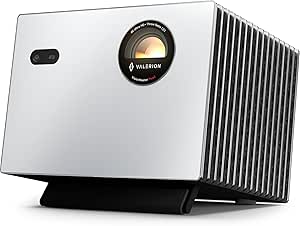 | Best for Built-In Streaming and Color | Native resolution: 3840 x 2160 | Brightness: 2,000 ISO lumens | Color technology: RGB triple laser | VIEW LATEST PRICE | See Our Full Breakdown |
| ViewSonic LS740-4K 4K UHD 5000 Lumens Laser Projector |  | Best for Large, Bright Rooms | Native resolution: 3840 x 2160 | Brightness: 5,000 ANSI lumens | Display type: Laser phosphor | VIEW LATEST PRICE | See Our Full Breakdown |
| Sony VPL-XW6000ES Native 4K HDR Laser Home Theater Projector |  | Best for Native 4K Cinema | Resolution: 3840 × 2160 | Display type: LCoS | Brightness: 2,500 lumens | VIEW LATEST PRICE | See Our Full Breakdown |
| Optoma UHZ36 4K UHD Laser HDR Home Theater Projector – Black |  | Best for Bright, Flexible Rooms | Resolution: 3840 × 2160 | Display type: DLP | Brightness: 3,500 ANSI lumens | VIEW LATEST PRICE | See Our Full Breakdown |
| Epson Home Cinema LS5000 4K HDR Laser Projector |  | Best for Gaming and Installation Flexibility | Display technology: 4K display technology with 3-chip 3LCD | Native resolution: 3840 × 2160 | Brightness: 2,500 lumens color and white | VIEW LATEST PRICE | See Our Full Breakdown |
| AWOL VISION LTV-3000 Pro 4K 3D Ultra Short Throw Triple Laser Projector |  | Best Ultra Short Throw Theater Pick | Native resolution: 3840 × 2160 | Throw ratio: 0.25:1 | Image size: 80 to 150 inches | VIEW LATEST PRICE | See Our Full Breakdown |
| ViewSonic LS901-4K 4K UHD Laser Projector 5500 Lumens, HDR Home Theater |  | Best for High-Brightness Rooms and Gaming | Native resolution: 3840 × 2160 | Brightness: 5,500 ANSI lumens | Contrast ratio: 3,000,000:1 | VIEW LATEST PRICE | See Our Full Breakdown |
| Sony VPL-XW5000ES Native 4K HDR Laser Home Theater Projector, Black |  | Best for Native 4K Detail | Native resolution: 3840 × 2160 | Display type: LCoS | Brightness: 2000 lumens | VIEW LATEST PRICE | See Our Full Breakdown |
| Epson Home Cinema LS6000 4K HDR Laser Projector |  | Best for Bright, Flexible Theaters | Display technology: 4K Display Technology; 8.29 million pixels | Projection engine: 3-chip 3LCD with laser array light source | Color and white brightness: 3,400 lumens each | VIEW LATEST PRICE | See Our Full Breakdown |
| 4K laser projectors for home theater | Brightness | Connectivity | Native resolution | Display type |
|---|---|---|---|---|
| BenQ TK710 4K HDR Laser Projec | 3,200 ANSI lumens | — | 3840 x 2160 | Laser |
| LG CineBeam HU715Q 4K UHD Lase | 2,500 lumens | HDMI, Bluetooth, Apple AirPlay 2, HomeKit | — | Laser |
| Optoma GT1090HDRx Short-Throw | 4,200 lumens | Ethernet, HDMI, USB | 1920 × 1080 | DLP |
| Valerion StreamMaster Plus2 4K | 2,000 ISO lumens | Bluetooth 5.2, Ethernet, HDMI 2.1, Wi-Fi 6E | 3840 x 2160 | — |
| ViewSonic LS740-4K 4K UHD 5000 | 5,000 ANSI lumens | 3.5mm audio, HDMI, USB 2.0 Type A | 3840 x 2160 | Laser phosphor |
| Sony VPL-XW6000ES Native 4K HD | 2,500 lumens | HDMI | — | LCoS |
| Optoma UHZ36 4K UHD Laser HDR | 3,500 ANSI lumens | HDMI, USB | — | DLP |
| Epson Home Cinema LS5000 4K HD | 2,500 lumens color and white | Ethernet, dual HDMI; one HDMI port with eARC | 3840 × 2160 | — |
| AWOL VISION LTV-3000 Pro 4K 3D | 2,000 lumens; maximum white brightness listed as 3,000 ANSI lumens | — | 3840 × 2160 | — |
| ViewSonic LS901-4K 4K UHD Lase | 5,500 ANSI lumens | Dual HDMI, USB, 3.5mm audio, LAN control | 3840 × 2160 | — |
| Sony VPL-XW5000ES Native 4K HD | 2000 lumens | HDMI | 3840 × 2160 | LCoS |
| Epson Home Cinema LS6000 4K HD | — | — | — | — |
More Details on Our Top Picks
BenQ TK710 4K HDR Laser Projector
The BenQ TK710 is the strongest fit here for viewers who split their theater time between films and fast games. Its 4K UHD resolution and HDR10/HLG support suit movie nights, while the 4ms response time at 1080p and 240Hz refresh rate target responsive play. That 240Hz mode is limited to 1080p; for 4K gaming, the listed rate is 60Hz. Compared with the Valerion StreamMaster Plus2, which pairs 4K gaming features with Google TV and a broader color gamut, the BenQ offers higher stated brightness at 3,200 ANSI lumens. The tradeoff is a more limited stated connection set: HDMI is the only listed connectivity. Its 20,000-hour laser life also suits frequent use without routine lamp replacement.
Pros:- 3,200 ANSI lumens support viewing in rooms with some ambient light.
- 4K UHD resolution with HDR10 and HLG support.
- 4ms response time at 1080p and 240Hz suits fast-paced gaming.
- Laser light source rated for 20,000 hours.
Cons:- The 240Hz refresh rate applies to 1080p; listed 4K gaming is 60Hz.
- HDMI is the only specified connectivity.
Best for: Home theater owners who game competitively at 1080p and want a bright 4K-capable projector for movies and sports.
Not ideal for: Viewers who require 240Hz gameplay at native 4K or a wider range of listed connections.
- Native resolution:3840 x 2160
- Brightness:3,200 ANSI lumens
- Display type:Laser
- HDR support:HDR10, HLG
- Color coverage:95% Rec.709
- Refresh rate:Up to 240Hz at 1080p
- Response time:4ms at 1080p@240Hz
- Light source life:20,000 hours
Our verdict“Choose the TK710 if you want a bright 4K home theater projector with especially responsive 1080p gaming.”
LG CineBeam HU715Q 4K UHD Laser Ultra-Short-Throw Projector
The LG CineBeam HU715Q is built for a room where a conventional projector placement would get in the way. Its 0.22 throw ratio lets it form an 80-inch image from about 4.65 inches away, keeping the projector close to the wall instead of across the room. That can simplify a living-room setup, while built-in speakers and Apple AirPlay 2 and HomeKit add convenient playback and control options. Compared with the BenQ TK710, the LG is better suited to short-distance placement but lists lower brightness at 2,500 lumens and does not specify gaming response or refresh rates. Its listed screen range starts at 80 inches, and no maximum image size is provided, so buyers wanting a smaller picture or a clearly specified larger screen should look elsewhere.
Pros:- 0.22 throw ratio supports very close placement to the wall.
- 4K UHD resolution for detailed home theater images.
- Apple AirPlay 2 and HomeKit compatibility.
- Built-in speakers simplify a basic setup.
Cons:- Listed screen sizes start at 80 inches.
- Maximum image size is not specified.
- Brightness is lower than the BenQ TK710’s stated 3,200 ANSI lumens.
Best for: Living-room viewers who need a 4K projector placed just inches from the wall and use Apple devices at home.
Not ideal for: Buyers who want a screen smaller than 80 inches, a specified maximum screen size, or detailed high-refresh gaming specs.
- Resolution:3840 x 2160 (4K UHD)
- Display type:Laser
- Brightness:2,500 lumens
- Throw ratio:0.22
- Screen size:80–120 inches
- Throw distance:4.65 inches for 80-inch image; 8.54 inches for 100-inch image; 12.48 inches for 120-inch image
- Connectivity:HDMI, Bluetooth, Apple AirPlay 2, HomeKit
- Light source life:20,000 hours
Our verdict“Pick the HU715Q if close-to-wall placement and Apple home integration matter more than flexible screen sizing or gaming specifications.”
Optoma GT1090HDRx Short-Throw Laser Home Theater Projector
The Optoma GT1090HDRx suits a home theater where distance and ambient light are bigger constraints than native resolution. Its 4,200-lumen output and short-throw design can produce a 120-inch image from about four feet away, while auto keystone and four-corner correction help square the picture during setup. The key compromise is that this is a 1080p projector: it accepts 4K HDR input but does not display native 4K detail. That makes it a different choice from the BenQ TK710, which provides 4K UHD output but has lower stated brightness. The Optoma’s 30,000-hour laser life and IPX6 dust resistance favor demanding spaces, though buyers seeking crisp 4K movie detail should choose a native 4K model instead.
Pros:- 4,200 lumens help maintain visibility with ambient light.
- Projects a 120-inch image from about four feet away.
- Laser light source rated for up to 30,000 hours.
- Auto keystone and four-corner correction support easier placement.
Cons:- Native resolution is 1920 × 1080; 4K is accepted as input only.
- 3D viewing requires optional DLP-Link glasses.
Best for: Viewers setting up a large screen in a short-throw room with ambient light who prioritize brightness over native 4K detail.
Not ideal for: Home theater buyers who want native 4K resolution or need 3D playback without buying optional DLP-Link glasses.
- Native resolution:1920 × 1080
- Maximum input resolution:3840 × 2160
- Display type:DLP
- Brightness:4,200 lumens
- Throw ratio:0.50:1
- Light source life:Up to 30,000 hours
- Throw distance:3–11 feet
- Connectivity:Ethernet, HDMI, USB
Our verdict“Choose the GT1090HDRx for a bright, short-throw 1080p setup, but select the BenQ TK710 or another native 4K model for finer detail.”
Valerion StreamMaster Plus2 4K RGB Laser Projector with Google TV
The Valerion StreamMaster Plus2 is the most self-contained entertainment option in this group: it combines 4K resolution, Google TV, casting, and automatic focus and alignment features in one stationary projector. Its RGB triple-laser system and stated 110% Rec. 2020 gamut give it a color-focused profile, while Dolby Vision, HDR10, and IMAX Enhanced support cover several home theater formats. Compared with the BenQ TK710, Valerion lists broader streaming features and 4ms input lag at up to 240Hz; BenQ, however, specifies higher brightness at 3,200 ANSI lumens versus Valerion’s 2,000 ISO lumens. Valerion’s automatic setup tools help with placement, but it still needs a stable table, ceiling mount, or tripod, and its minimum listed image size is 40 inches.
Pros:- RGB triple-laser system with a stated 110% Rec. 2020 color gamut.
- Google TV plus AirPlay 2, Miracast, and Chromecast support.
- Dolby Vision, HDR10, and IMAX Enhanced support.
- Automatic focus, alignment, obstacle avoidance, and keystone correction.
Cons:- Stationary design requires a planned tabletop, ceiling, or tripod placement.
- 2,000 ISO lumens is lower than the BenQ TK710’s stated 3,200 ANSI lumens.
- Minimum listed image size is 40 inches.
Best for: Movie and streaming fans who want Google TV, wide-gamut RGB laser color, and automatic picture setup in one stationary unit.
Not ideal for: Buyers who need a highly bright projector for a room with substantial ambient light or a portable unit they can move between rooms.
- Native resolution:3840 x 2160
- Brightness:2,000 ISO lumens
- Color technology:RGB triple laser
- Color gamut:110% Rec. 2020
- HDR support:Dolby Vision, HDR10, IMAX Enhanced
- Refresh rate and input lag:Up to 240Hz; 4ms
- Operating system:Google TV
- Image size:40–300 inches
- Connectivity:Bluetooth 5.2, Ethernet, HDMI 2.1, Wi-Fi 6E
Our verdict“Pick the StreamMaster Plus2 if built-in streaming, broad color, and automated setup matter more than maximum brightness or portability.”
ViewSonic LS740-4K 4K UHD 5000 Lumens Laser Projector
The ViewSonic LS740-4K is the brightness-first pick for a large multipurpose room where lights cannot always be dimmed. Its 5,000 ANSI lumens and 4K UHD resolution are paired with a 1.6x optical zoom, horizontal and vertical keystone, and four-corner adjustment, giving installers room to adapt the picture to varied placements. It can project images from 30 to 300 inches and includes a Golf Mode for simulator use. Compared with the Valerion StreamMaster Plus2, ViewSonic specifies much higher brightness, but it is oriented toward broad installation and venue use rather than built-in streaming; Google TV is not listed. Its ceiling-mount form and 1.4–2.24 throw ratio call for more deliberate placement than the LG HU715Q’s ultra-short-throw design.
Pros:- 5,000 ANSI lumens support use where the room cannot be fully darkened.
- 4K UHD resolution with a stated 3,000,000:1 contrast ratio.
- 1.6x optical zoom and multiple image adjustment tools aid installation.
- Golf Mode and 360-degree projection suit specialized room layouts.
Cons:- Ceiling-mount form and conventional throw range require planned placement.
- Built-in streaming features are not specified.
- Its broad installation feature set may be unnecessary for a simple living-room setup.
Best for: Owners of large, bright home theaters or golf simulator rooms who need strong light output and flexible ceiling installation.
Not ideal for: Buyers seeking an ultra-short-throw living-room projector, built-in Google TV, or a compact unit for casual repositioning.
- Native resolution:3840 x 2160
- Brightness:5,000 ANSI lumens
- Display type:Laser phosphor
- Contrast ratio:3,000,000:1
- Throw ratio:1.4–2.24
- Zoom:1.6x optical
- Image size:30–300 inches
- Light source life:20,000 hours
- Connectivity:3.5mm audio, HDMI, USB 2.0 Type A
Our verdict“Choose the LS740-4K for a bright, large-screen or golf-simulator room where installation flexibility matters more than built-in streaming.”
Sony VPL-XW6000ES Native 4K HDR Laser Home Theater Projector
The Sony VPL-XW6000ES is the pick for a dedicated theater where fine image detail and color matter more than headline brightness. Its native 4K LCoS panel and stated 95% DCI-P3 gamut suit film libraries, while the laser light source is rated for up to 20,000 hours. Compared with the ViewSonic LS901-4K, it offers less listed brightness and fewer gaming-focused details, but its native 4K imaging makes it the more cinema-centered choice. Picture Position Memory stores settings for five screen formats, useful for owners who switch between aspect ratios. The tradeoff is a fixed installation: it is designed for ceiling mounting, and connected sources need HDMI. Buyers seeking maximum light output or a portable setup should look elsewhere.
Pros:- Native 3840 × 2160 resolution from an LCoS display
- Laser light source rated for up to 20,000 hours
- 95% DCI-P3 color gamut
- Picture Position Memory stores settings for up to five screen formats
Cons:- Listed brightness of 2,500 lumens is lower than the ViewSonic LS901-4K’s 5,500 lumens
- Stationary design calls for a planned mounting position
- HDMI is the listed connectivity for connected devices
Best for: Dedicated theater owners who prioritize native 4K film presentation and switch between multiple screen formats.
Not ideal for: Buyers setting up a bright multipurpose room or seeking a tabletop projector with flexible placement.
- Resolution:3840 × 2160
- Display type:LCoS
- Brightness:2,500 lumens
- Light source:Laser; up to 20,000 hours
- Color gamut:95% DCI-P3
- Connectivity:HDMI
- Mounting:Ceiling mount
- Picture position memory:Stores settings for up to five screen formats
Our verdict“Choose the Sony for a fixed home theater where native 4K detail, wide color, and saved screen settings take priority over high brightness.”
Optoma UHZ36 4K UHD Laser HDR Home Theater Projector – Black
The Optoma UHZ36 makes sense when a theater also needs to handle sports, games, and some ambient light. Its listed 3,500 ANSI lumens exceed the Sony VPL-XW6000ES’s 2,500 lumens, while Filmmaker Mode preserves frame rate, color, and aspect ratio for movie viewing. MEMC is aimed at smoother motion for sports, and the built-in 15W speaker can simplify casual setups. Its DLP display and 4K UHD resolution offer a different proposition from the Sony’s native 4K LCoS approach: the Optoma emphasizes output and versatility over the Sony’s cinema-focused panel and saved screen-format settings. The UHZ36 supports tabletop or ceiling mounting and claims up to 300-inch images, but the provided information does not specify lens shift or zoom. Its stated 1,500,000 contrast ratio also does not remove the limits of using a bright projector in a dark-room film setup.
Pros:- 3,500 ANSI lumens for stronger output than the Sony VPL-XW6000ES
- Filmmaker Mode preserves frame rate, color, and aspect ratio
- MEMC supports smoother motion for sports
- Tabletop or ceiling mounting and a built-in 15W speaker broaden setup options
Cons:- DLP display is a different imaging approach from the Sony VPL-XW6000ES’s native 4K LCoS panel
- The provided product data does not specify lens shift or optical zoom
- RCA is listed as the connectivity technology even though HDMI and USB are listed under hardware connectivity
Best for: Households that want a bright 4K projector for mixed movie, sports, and gaming use with tabletop or ceiling placement.
Not ideal for: Film-focused buyers prioritizing native 4K LCoS imaging, or installers who need documented lens shift and zoom flexibility.
- Resolution:3840 × 2160
- Display type:DLP
- Brightness:3,500 ANSI lumens
- Light source:DuraCore laser; up to 30,000 hours
- Contrast ratio:1,500,000:1
- Maximum image size:300 inches
- Mounting:Tabletop or ceiling mount
- Picture features:Filmmaker Mode, HDR, PureMotion
- Connectivity:HDMI, USB
Our verdict“Pick the UHZ36 for a brighter, mixed-use room where Filmmaker Mode and flexible mounting matter more than Sony-style native 4K LCoS imaging.”
Epson Home Cinema LS5000 4K HDR Laser Projector
The Epson Home Cinema LS5000 is the most balanced fit here for buyers who split a large screen between movies and games. Its 3-chip 3LCD system pairs 2,500 lumens of both color and white brightness with HDR10 and HLG support, and it accepts refresh rates up to 120Hz with input lag below 20ms. That makes it more clearly specified for responsive gaming than the Sony VPL-XW6000ES, whose supplied details center on native 4K cinema and screen-format memory. Manual lens shift of ±21% horizontally and ±59% vertically gives installers useful placement range, though adjustments happen physically during setup. It supports screens up to 300 inches and 16:9 or 21:9 formats. The tradeoff is that its listed brightness is well below the ViewSonic LS901-4K, and Bluetooth audio is limited to two channels.
Pros:- 3-chip 3LCD system with 2,500 lumens of both color and white brightness
- Supports refresh rates up to 120Hz and input lag below 20ms
- Manual lens shift offers substantial horizontal and vertical adjustment
- Supports HDR10, HLG, and screen sizes up to 300 inches
Cons:- Lens shift requires physical adjustment during installation
- 2,500-lumen brightness is lower than the ViewSonic LS901-4K’s listed 5,500 lumens
- Bluetooth audio streaming is limited to two-channel audio
Best for: Home theater and gaming households that want 120Hz support, low input lag, and broad manual lens-shift adjustment.
Not ideal for: Buyers who need very high brightness for a room with substantial ambient light or want wireless multichannel audio.
- Display technology:4K display technology with 3-chip 3LCD
- Native resolution:3840 × 2160
- Brightness:2,500 lumens color and white
- Dynamic contrast ratio:800,000:1
- HDR support:HDR, HDR10, HLG
- Refresh rate:Up to 120Hz
- Input lag:Below 20ms
- Lens shift:±21% horizontal, ±59% vertical
- Connectivity:Ethernet, dual HDMI; one HDMI port with eARC
Our verdict“Choose the LS5000 if your home theater needs gaming responsiveness and flexible lens placement alongside 4K HDR viewing.”
AWOL VISION LTV-3000 Pro 4K 3D Ultra Short Throw Triple Laser Projector
The AWOL VISION LTV-3000 Pro is the lineup’s specialist for a living room where a conventional projector throw is impractical. Its 0.25:1 ultra short throw ratio can produce an 80-to-150-inch image from close to the wall, while Dolby Vision, HDR10+, and 3D support broaden the movie options. A built-in center channel speaker is intended to anchor dialogue near the image, and PJ Link IP control suits compatible home automation setups. Compared with the Epson Home Cinema LS5000, AWOL trades lens-shift installation flexibility and a stated 120Hz gaming specification for near-wall placement and a much wider stated color gamut. Its 2,000-lumen rating and dark-room guidance make it a weaker choice for bright spaces; a suitable ambient light rejecting screen may help, but the fixed throw ratio still requires careful cabinet planning.
Pros:- 0.25:1 ultra short throw ratio supports close-to-wall placement
- Supports Dolby Vision, HDR10+, and 3D content
- Built-in center channel speaker is designed to place dialogue at the screen
- PJ Link IP control supports compatible home automation systems
Cons:- Works best in darker rooms; brighter spaces may call for an ambient light rejecting screen
- Fixed ultra short throw ratio requires careful cabinet depth and placement planning
- 3D playback needs compatible content, a 3D-capable source, and active shutter glasses
Best for: Living-room theater owners who need a large screen close to the wall and value Dolby Vision, HDR10+, 3D, and automation control.
Not ideal for: Buyers with a bright viewing room, limited cabinet depth, or a need to reposition the image with lens shift.
- Native resolution:3840 × 2160
- Throw ratio:0.25:1
- Image size:80 to 150 inches
- Brightness:2,000 lumens; maximum white brightness listed as 3,000 ANSI lumens
- Contrast ratio:2,500:1
- Color gamut:107% BT.2020; 147% DCI-P3
- Light source:Triple laser; up to 25,000 hours
- Supported features:Dolby Vision, HDR10+, 3D-ready, Dolby Atmos
- Control:App, remote, voice, PJ Link IP
Our verdict“Choose the AWOL if you need a big-screen theater close to the wall and can control room light and cabinet placement.”
ViewSonic LS901-4K 4K UHD Laser Projector 5500 Lumens, HDR Home Theater
The ViewSonic LS901-4K is the high-output choice for large rooms where 2,500-lumen models such as the Sony VPL-XW6000ES may leave less headroom against ambient light. Its listed 5,500 ANSI lumens, 1.7x optical zoom, and vertical lens shift help with big-screen installation, while 240Hz and 4.2ms input lag target fast gaming. It also supports HDR/HLG and 21:9 projection, plus Golf Mode for simulation setups. Those strengths make it more of a versatile room and gaming projector than a cinema-first pick like Sony. Buyers should note conflicting supplied image-size details: the description says up to 150 inches, while the product specs say up to 300 inches. Its 520W rating and ceiling-oriented installation also point to a substantial fixed setup.
Pros:- 5,500 ANSI lumens, substantially above the Sony VPL-XW6000ES’s listed 2,500 lumens
- 240Hz refresh rate and 4.2ms input lag target fast gaming
- 1.7x optical zoom and vertical lens shift support installation adjustment
- HDR/HLG, 21:9 aspect ratio, and Golf Mode add use-case flexibility
Cons:- Supplied data conflicts on maximum image size, listing both 150 and 300 inches
- At 520 watts, it has the highest listed power draw among these five models
- Ceiling mounting is the specified installation type
Best for: Owners of large, brighter rooms who want high output, gaming-focused refresh performance, and optical zoom for installation.
Not ideal for: Dedicated film viewers prioritizing Sony’s native 4K LCoS approach, or buyers who need a confirmed maximum screen size before planning.
- Native resolution:3840 × 2160
- Brightness:5,500 ANSI lumens
- Contrast ratio:3,000,000:1
- Light source life:Up to 20,000 hours
- Refresh rate:Up to 240Hz
- Input lag:4.2ms
- Optical zoom:1.7x
- Aspect ratio:21:9
- Connectivity:Dual HDMI, USB, 3.5mm audio, LAN control
Our verdict“Pick the LS901-4K for a large, brighter room or gaming setup where output and placement adjustment matter more than cinema-focused imaging.”
Sony VPL-XW5000ES Native 4K HDR Laser Home Theater Projector, Black
The VPL-XW5000ES is the pick for a dedicated theater where native 4K resolution and carefully rendered color matter more than sheer brightness. Its SXRD imaging system produces a 3,840 × 2,160 picture, while 95% DCI-P3 coverage and TRILUMINOS PRO processing support rich, wide-gamut HDR imagery. Compared with the Epson Home Cinema LS6000, the Sony gives up 1,400 lumens of stated brightness, so it is a less flexible fit for rooms with ambient light or very large screens. Its laser light source rated for 20,000 hours avoids routine lamp replacement, and low input lag at supported refresh rates makes it suitable for gaming as well as films. The tradeoff is a fixed, ceiling-mounted installation and 310-watt power draw; buyers should plan the room around it.
Pros:- Native 3,840 × 2,160 resolution for detailed 4K images
- 95% DCI-P3 color gamut with TRILUMINOS PRO processing
- Laser light source rated for up to 20,000 hours
- Low input lag at supported 4K 60 Hz and 2K 120 Hz
Cons:- 2,000 lumens provide less headroom for ambient light than the Epson LS6000
- Stationary design requires suitable mounting space
- 310-watt power draw
Best for: Dedicated dark-room theater owners who prioritize native 4K film detail, wide color, and occasional low-latency gaming.
Not ideal for: Viewers using a bright multipurpose room or needing a portable projector, since this stationary model has lower stated brightness than the Epson LS6000 and calls for a planned mounting setup.
- Native resolution:3840 × 2160
- Display type:LCoS
- Brightness:2000 lumens
- Light source:Laser; rated for up to 20,000 hours
- Color gamut:95% DCI-P3
- Input lag:Under 21 ms at 4K 60 Hz; under 13 ms at 2K 120 Hz
- Connectivity:HDMI
- Power:310 watts
Our verdict“Choose the Sony VPL-XW5000ES for a planned, light-controlled theater where native 4K detail and color take priority over brightness and installation flexibility.”
Epson Home Cinema LS6000 4K HDR Laser Projector
The LS6000 suits buyers who need a projector to adapt to a room as well as to films. Its 3,400 lumens of both color and white brightness give it more room to handle ambient light and larger screens than the Sony VPL-XW5000ES, which is rated at 2,000 lumens. Manual lens shift—±21% horizontally and ±59% vertically—can make placement easier when a ceiling mount cannot sit directly in line with the screen. Support for HDR10 and HLG, refresh rates up to 120 Hz, and gaming features add flexibility for mixed movie and game use. The listed 4K technology provides 8.29 million pixels, though the supplied data does not specify a native 4K panel, so buyers seeking that particular distinction may prefer the Sony. Manual adjustment and two-channel-only Bluetooth audio are notable compromises.
Pros:- 3,400 lumens of color and white brightness for brighter-room flexibility
- Manual lens shift supports more flexible projector placement
- HDR10 and HLG support with refresh rates up to 120 Hz
- ALLM and input lag below 20 ms support gaming
Cons:- Lens shift adjustments are manual
- Bluetooth audio is limited to two-channel streaming
- Listed 4K technology does not specify a native 4K panel
Best for: Home theater owners with a larger screen or some ambient light who also want lens-shift flexibility and gaming features.
Not ideal for: Buyers who specifically require a native 4K panel or want Bluetooth audio beyond two-channel streaming.
- Display technology:4K Display Technology; 8.29 million pixels
- Projection engine:3-chip 3LCD with laser array light source
- Color and white brightness:3,400 lumens each
- Dynamic contrast ratio:800,000:1
- HDR formats:HDR, HDR10, HLG
- Refresh rate:Up to 120 Hz
- Input lag:Below 20 ms
- Lens shift:Manual; ±21% horizontal and ±59% vertical
- Screen size:Up to 300 inches
Our verdict“Choose the Epson LS6000 for a brighter, more placement-flexible theater, and the Sony VPL-XW5000ES if native 4K resolution is your priority.”
How We Picked
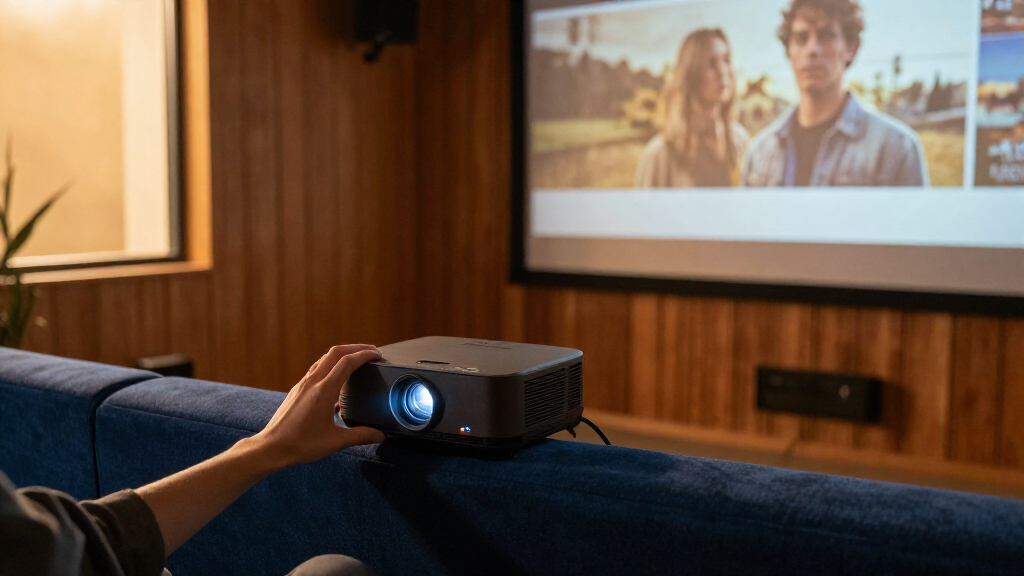
I ranked these projectors by how well their design and capabilities serve a home theater, rather than treating every 4K label as equivalent. Image technology, HDR support, brightness, throw distance, installation flexibility, and built-in smart features all affect how a projector fits a real room. I gave more weight to native 4K imaging and cinema-oriented performance for the overall ranking, while recognizing that high brightness or short-throw placement can matter more for some households.
I also considered the practical compromises: room light, screen choice, mounting position, gaming needs, and whether a buyer wants a simple living-room setup or a dedicated theater. That puts the Sony VPL-XW6000ES ahead for a theater-first buyer, while models such as the LG HU715Q, AWOL LTV-3000 Pro, and bright ViewSonic options earn their place for distinct installation needs. A model ranks lower when its specific strength serves a narrower set of rooms or priorities.
| 4K laser projectors for home theater | Display type |
|---|---|
| BenQ TK710 4K HDR Laser Projec | Laser |
| LG CineBeam HU715Q 4K UHD Lase | Laser |
| Optoma GT1090HDRx Short-Throw | DLP |
| Valerion StreamMaster Plus2 4K | — |
| ViewSonic LS740-4K 4K UHD 5000 | Laser phosphor |
| Sony VPL-XW6000ES Native 4K HD | LCoS |
| Optoma UHZ36 4K UHD Laser HDR | DLP |
| Epson Home Cinema LS5000 4K HD | — |
| AWOL VISION LTV-3000 Pro 4K 3D | — |
| ViewSonic LS901-4K 4K UHD Lase | — |
| Sony VPL-XW5000ES Native 4K HD | LCoS |
| Epson Home Cinema LS6000 4K HD | — |
Factors to Consider When Choosing 4K Laser Projectors For Home Theaters
Choosing a projector starts with the room and viewing habits, then moves to resolution and extra features. These factors help separate a theater-focused investment from a flexible living-room display.
Match Throw Distance to Your Room
Throw distance determines how far the projector must sit from the screen to create the image size you want. Measure the room and identify likely mounting points before comparing models, since a short-throw unit and a conventional projector solve different layout problems. Ultra-short-throw models can sit near the wall, but they need a suitable surface and careful alignment. A common mistake is buying around the projector’s advertised maximum image size without checking whether your room can support that distance. If the projector must sit behind seating, verify that its placement will not put fan noise or light in an uncomfortable position. Room measurements can rule out poor fits before picture specifications become a distraction.
Decide How Much Ambient Light You Can Control
Brightness matters most when the room cannot be made dark, but it does not replace good light control for movie viewing. A bright projector may help with sports or daytime use, while a dedicated cinema room can make image contrast and dark-scene performance more valuable. Light-colored walls and ceilings can reflect light back onto the screen and soften the image, even with a capable projector. Consider curtains, wall finishes, and viewing times alongside the projector’s lumen rating. Buyers often assume a brighter number automatically means a better theater picture; the screen and room affect the result. Choose brightness for the conditions you will actually use, rather than for an idealized spec comparison.
Understand What 4K Means for Your Setup
Projectors marketed as 4K can use different imaging approaches, so the label alone does not describe how detail is produced. Native 4K models such as the Sony options appeal to buyers who put pixel-level detail high on their list. For a typical seating distance, screen size and source quality also shape how much difference viewers can see. Check which devices will feed the projector and whether they can provide the resolution and HDR formats you want. A frequent misstep is paying extra for resolution while using a small screen or sitting far enough away that the added detail is hard to notice. Put the projector, screen size, seating distance, and content sources together before choosing.
Plan for Screen and Placement Requirements
The screen is part of the projection system, not a neutral surface that every projector will use equally well. Ultra-short-throw designs are especially sensitive to screen flatness and alignment, so an ordinary wall may show texture or unevenness. A ceiling-mounted projector brings different questions, including mount position, cable routing, and access for adjustments. Decide whether a fixed screen fits the room or whether you need a retractable option shared with other uses. Buyers can overlook the cost and space involved in the screen and mounting hardware when comparing projector specifications alone. Planning these details early helps avoid a setup that technically works but is awkward to live with.
Choose Features Around Your Viewing Habits
Gaming, streaming, and movie watching place different demands on a projector. A low-latency mode or suitable gaming connections may matter for fast play, while built-in smart TV features can simplify streaming in a room without a separate player. Those conveniences do not automatically replace an external streaming device or audio system. Check the connection needs of your console, receiver, and media sources before buying. If several people will use the room, simpler controls and easy switching between inputs may matter more than a feature used only occasionally. Prioritize the functions you will use weekly, then treat extras as useful only if they suit your setup.
Think About Ownership Beyond the Image
Laser illumination can reduce the need for routine lamp changes, but the projector still needs ventilation, accessible installation, and occasional cleaning. A ceiling location can make maintenance harder, while a nearby shelf may make access easier but constrain placement. Listen for operating noise in the seating area if the projector will be close to viewers. Consider how long you expect to keep the unit and whether its features will still suit your room after other equipment changes. Paying more makes sense when it brings a lasting benefit such as native 4K imaging or a placement design that solves a real room constraint. If the premium feature will not change your viewing, a more focused model may be the better fit.
Frequently Asked Questions
Should I choose native 4K or a projector marketed as 4K?
Choose native 4K if fine detail is a priority and you have a large screen or close seating that can reveal it. Projectors with other 4K imaging approaches may still produce a detailed picture, so the label alone should not decide the purchase. Compare the specific imaging method, room fit, and the content you watch. If your screen is modest or your seating is far away, other factors such as contrast and placement may matter more. The Sony native 4K models are the clearest fit in this lineup for shoppers who want native 4K imaging.
Is an ultra-short-throw projector a good choice for a living room?
It can be a practical choice when you cannot mount a projector at the back of the room or want to keep it near the screen wall. Models such as the LG HU715Q and AWOL LTV-3000 Pro are designed around that placement style. The setup still needs a flat screen surface, accurate alignment, and enough wall or furniture space. Ambient light can also affect the perceived picture, so a short throw does not remove the need to think about the room. Measure the intended screen area and furniture positions before choosing one.
How bright should a home theater projector be?
There is no single brightness level that suits every theater: room light, screen size, and viewing habits all change the answer. A dark room used mainly for films may favor image characteristics beyond maximum brightness. A multipurpose room used during the day may benefit more from a bright model such as one of the ViewSonic options. Treat stated brightness as one factor, and check how the screen and room will affect the final image. If you can control light with curtains and dimmable lighting, you may not need to prioritize the brightest projector in the lineup.
Can I put an ultra-short-throw projector on a regular wall?
You can project onto a wall, but surface texture, waviness, or uneven color may become visible, particularly when the projector sits close to it. A suitable screen can provide a flatter, more consistent surface. Ultra-short-throw placement makes small surface imperfections easier to notice because the image reaches the screen at a steep angle. Check the projector maker’s screen guidance and the room’s wall dimensions before committing to a setup. If you are renting or sharing the room, factor in whether a screen can be installed or positioned without permanent changes.
When does it make sense to pay more for a premium projector?
Pay more when the higher-end model delivers a difference you will see or use regularly, such as native 4K imaging in a large theater setup. A premium projector is harder to justify if your room cannot support its placement or if the screen and sources will limit the picture. Compare the complete setup, including screen, mount, audio, and playback devices. For a room that needs short-throw placement or daytime flexibility, a model built around that need may fit better than a theater-first premium unit. The right upgrade is the one that solves a real constraint or improves a priority you care about.
Conclusion
For a dedicated home theater, I recommend the Sony VPL-XW6000ES as best overall, with the Sony VPL-XW5000ES as a native 4K alternative for buyers whose priorities favor that model’s fit. The BenQ TK710 is my value-oriented pick for shoppers focused on a gaming-friendly feature set, while the LG CineBeam HU715Q is a more approachable choice for buyers who want an ultra-short-throw living-room setup. For a premium installation, compare the Sony XW6000ES with the Epson LS5000 based on your room and placement needs. Choose the ViewSonic LS740-4K or LS901-4K when high brightness is a central requirement, and look to the AWOL LTV-3000 Pro for an ultra-short-throw system with 3D support. The best fit depends on whether your room calls for native 4K cinema performance, simpler placement, gaming features, or extra brightness.