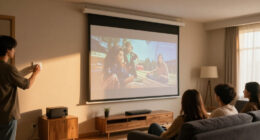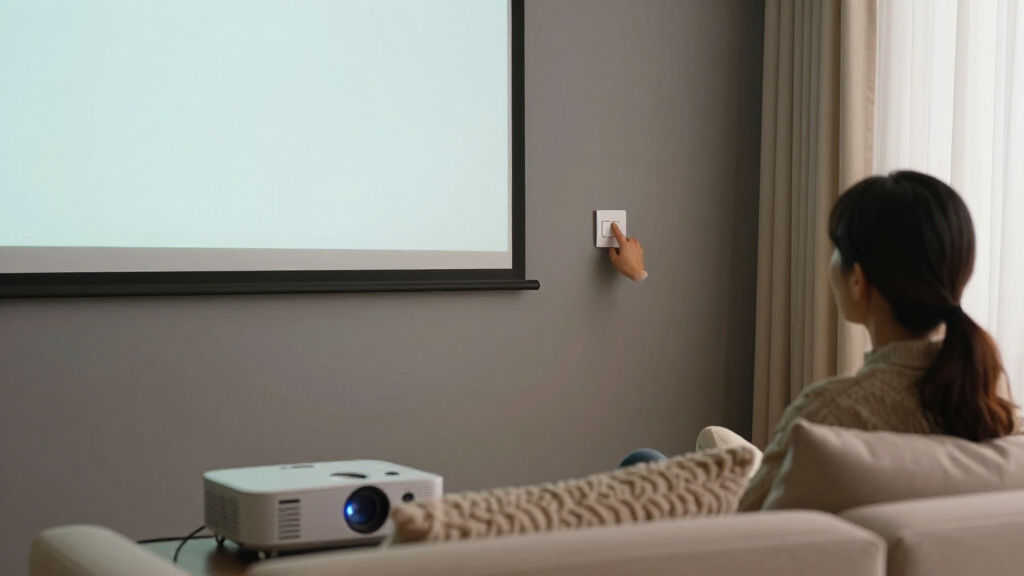
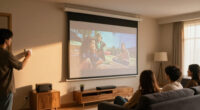
Motorized projector screens turn any room into a theater at the press of a button, but the category is full of tradeoffs between screen size, motor quality, gain, and case construction. Elite Screens Spectrum RC1 (ELECTRIC125H2) earns my top spot for its 4K/8K-ready surface, quiet motor, and brand-backed reliability that most budget imports can’t match. For value hunters, the YODOLLA 120-Inch delivers a huge 16:9 picture at a fraction of premium pricing, while the YODOLLA 150-Inch suits buyers who want maximum image area without professional installation. The main tension in this category is between cheap 100–120 inch models with noisy motors and flimsy casings versus established brands that cost more but roll smoothly and hold tension for years. Read on for the full breakdown, including which sizes actually fit real living rooms and which remotes are worth having.

Get business pricing on your home office setup
- Business-only prices and quantity discounts
- Tax-exempt purchasing
- Multiple users, one account, clear invoices
Complete the kit


Key Takeaways
- The Elite Screens Spectrum RC1 was the only screen in the lineup explicitly rated for 4K/8K Ultra HD, making it the safest choice for high-resolution projectors and future upgrades.
- Screen size was the single biggest source of buyer regret in this roundup: the two 150-inch models (YODOLLA, FRAYSCENT) demand seating distances of roughly 15–20 feet, which rules out most living rooms and bedrooms.
- Brand-name motor quality (Elite Screens, VIVOHOME) consistently outperformed generic imports — quieter roll-down, slower controlled retraction, and less curling at the screen edges over time.
- 4:3 options like the VEVOR 72-inch and the 100-inch 4:3 model only make sense for older projectors, presentations, or retro gaming; for movies and modern content, 16:9 is the better investment.
- Several white-housing models (YODOLLA, Kayle white) blend into light ceilings while black-cased options like the Kayle 120-inch black and the Elite Spectrum hide dust and look better in dark home theater rooms.


| motorized projector screen | Aspect Ratio | Screen Size | Viewing Angle | Gain |
|---|---|---|---|---|
| YODOLLA Motorized Projector Sc | 16:9 | 150-inch diagonal (130.71" × 73.62") | 160° | 1.2 |
| 92-inch Motorized Projector Sc | 16:9 | 92-inch diagonal | 160° | 1.3 |
| YODOLLA 100-Inch Motorized Pro | 16:9 | — | 160° | 1.2 |
| Motorized Projector Screen | 4:3 (adjustable to 16:9) | 120-inch diagonal | 160° | 1.2 |
| VIVOHOME 72 Inch 16:9 Motorize | 16:9 | 72-inch diagonal | — | — |
| Kayle 120 Inch Motorized Proje | 16:9 | 120 Inches | 180° | 1.2 |
| Elite Screens Spectrum RC1 Mot | 16:9 | — | 180 degrees | — |
| YODOLLA 120-Inch Motorized Pro | 16:9 | 120 inches | — | — |
| DINAH 120 Inch Electric Projec | 4:3 | 120 Inches | — | — |
| Kayle 120-Inch Motorized Proje | 16:9 | 120 inches | 180° | 1.2 |
| Motorized Projector Screen wit | 4:3 | 100 inches | 160° | 1.3 |
| Aoxun 100-Inch Motorized Proje | 16:9 | 100 inches diagonal | 160° | 1.2 |
| VIVOHOME 84-Inch Motorized Pro | 16:9 | — | 160° | — |
| VEVOR 72-inch 4:3 Motorized Pr | 4:3 | 72 inches | 160° | — |
| FRAYSCENT 150-Inch Motorized E | 16:9 | 150 inches | 160° | 1.2 |
More Details on Our Top Picks
YODOLLA Motorized Projector Screen 150″ 16:9 White Electric Auto Pull-Down with Remote
Sheer scale is the argument here, and it’s a convincing one if your room can handle it. The 150-inch diagonal viewing area turns a basement or dedicated media room into something close to a commercial cinema, and the 1.2 gain matte PVC surface keeps 4K and 3D content looking clean rather than washed out. Compared with the YODOLLA 100-inch model, this one covers roughly 2.2 times the surface area — which also means it demands roughly twice the wall and throw distance to work properly. The auto-lock height control and dual wired/wireless remotes give it the same convenient operation as its smaller sibling, just at cinema scale. The tradeoffs are physical: at 23.59 lbs, installation is realistically a two-person job, and fresh PVC can carry a slight odor for the first days. This pick makes the most sense for buyers with a genuinely large, light-controlled room.
Pros:- Massive 150-inch diagonal delivers a genuine cinema experience at home
- Ultra-quiet motor with auto-lock height control for precise positioning
- Both wired and wireless remotes included for flexible operation
- Wall or ceiling mounting hardware included for indoor or outdoor use
Cons:- At 23.59 lbs, installation realistically requires two people and a sturdy mounting surface
- New PVC material can emit a noticeable odor that needs airing out
Best for: Owners of dedicated home theaters or large media rooms with 13+ feet of throw distance who want a true cinema-scale image
Not ideal for: Apartment dwellers or anyone with a small living room — a 150-inch surface will overwhelm modest spaces and won’t fit standard ceilings comfortably
- Screen Size:150-inch diagonal (130.71″ × 73.62″)
- Aspect Ratio:16:9
- Gain:1.2
- Viewing Angle:160°
- Material:3-layer PVC matte
- Controls:Wired and wireless remote
- Mounting:Wall or ceiling
- Weight:23.59 lbs
Our verdict“Buy this if you have the room for it — no other option in this lineup matches its immersive scale, but small spaces should stick to the 92-inch or 100-inch picks.”
92-inch Motorized Projector Screen with Remote Control (16:9 HD)
This 92-inch screen earns its spot by being the right size for shared spaces rather than the biggest or cheapest. Its 1.3 gain surface is actually the brightest in this lineup, which matters in classrooms and conference rooms where you can’t always dim the lights — a real advantage over the 1.2 gain on the VIVOHOME 72-inch and the 120-inch electric screens. The 160° viewing angle means students or meeting attendees seated off to the side still get a watchable picture. Where it gives ground: unlike the YODOLLA models, it relies on a wireless remote only, so there’s no wired backup if the remote goes missing in a shared space. Installation also demands careful alignment so the roller drops smoothly. This option stands out for organizations that need dependable daily operation at a moderate size.
Pros:- 1.3 gain surface delivers the brightest image in this lineup for lights-on rooms
- Wide 160° viewing angle suits audiences seated off-center
- Wireless remote enables operation from anywhere in the room
- Dual wall and ceiling mounting fits varied room layouts
Cons:- Wireless-only control means no backup if the remote is lost or batteries die mid-presentation
- Requires careful alignment during installation to guarantee smooth drop and retraction
Best for: Schools, training rooms, and offices that need a mid-size screen bright enough for lights-on presentations
Not ideal for: Home theater enthusiasts chasing maximum immersion — 92 inches is modest next to the YODOLLA 150-inch or 120-inch options
- Screen Size:92-inch diagonal
- Aspect Ratio:16:9
- Viewing Area:80″ × 45″
- Gain:1.3
- Viewing Angle:160°
- Control:Wireless remote
- Mounting:Wall and ceiling
Our verdict“The most practical pick for institutional settings where brightness and wide visibility matter more than raw size.”
YODOLLA 100-Inch Motorized Projector Screen, 16:9
The 100-inch size is the sweet spot for most homes — big enough to feel cinematic, small enough to fit a typical living room — and this YODOLLA delivers it with the brand’s full feature set. You get both wired and wireless remotes plus an auto-lock mechanism, matching what the larger YODOLLA 150-inch offers at a far more manageable footprint. At 15.65 lbs, it’s also the lightest motorized option here among the 100-inch-plus screens, making solo installation plausible where the 120-inch alternatives (typically 24 lbs) really aren’t. The three-layer matte PVC handles 4K and 3D capably, though its 1.2 gain trails the 1.3 gain of the 92-inch model in brighter rooms. The tradeoff for the convenience: it needs a permanent power connection and a fixed mounting spot, so it’s a fixture, not a portable accessory. Measure the 97.24-inch overall width carefully before committing.
Pros:- 100-inch size hits the sweet spot between immersion and room compatibility
- Lightest of the large-format options at 15.65 lbs, easing installation
- Dual wired and wireless remotes with auto-lock height positioning
- Handles 4K, 3D, and 1080p across indoor and outdoor setups
Cons:- Requires a dedicated power supply and permanent mounting location
- 97.24-inch overall width demands careful pre-purchase measurement
Best for: Homeowners wanting a big-screen experience in an average living room without heavy installation hassle
Not ideal for: Renters or anyone who moves equipment frequently — the fixed power and mounting requirements make this a permanent installation
- Aspect Ratio:16:9
- Viewable Area:87.01 × 49.21 inches
- Overall Size:97.24 × 60.24 inches
- Gain:1.2
- Viewing Angle:160°
- Material:Three-layer matte PVC
- Supported Formats:3D, 4K, 1080p
- Controls:Wired and wireless remote
- Weight:15.65 lbs
Our verdict“The most balanced pick in the lineup for typical home use — cinema feel without the size and weight penalties of the 150-inch model.”
Motorized Projector Screen – 120 Inch Electric Screen with Remote Control
What separates this 120-inch screen is its adjustable aspect ratio: native 4:3, but stop the motor partway and you get a proper 16:9 image. That flexibility is genuinely rare in this lineup — the Kayle 120-inch and DINAH 120-inch are locked to 16:9 — and it makes this model a fit for households that mix old 4:3 content, gaming, and widescreen movies. The 4-layer PVC surface is one step up in construction from the 3-layer materials on the YODOLLA and VIVOHOME screens, and the motor runs under 42dB, quiet enough not to interrupt a paused movie. It also arrives fully assembled for genuine plug-and-play. The cost of that flexibility is weight: at 24.3 lbs, it matches the YODOLLA 150-inch for heft and demands a solid mounting surface. RF remote plus a wall panel gives redundant control, a nice touch the wireless-only 92-inch screen lacks.
Pros:- Motor-stop adjustment allows switching between 4:3 and 16:9 on one screen
- 4-layer PVC construction is a step above the 3-layer alternatives for color fidelity
- Under-42dB motor stays quiet during operation
- Arrives fully assembled for plug-and-play wall or ceiling mounting
Cons:- At 24.3 lbs, it requires a very sturdy mounting surface and likely a helper
- Native 4:3 format wastes surface area if you almost always watch widescreen content
Best for: Mixed-use viewers who switch between 4:3 classics, presentations, and widescreen movies and want one screen for all of it
Not ideal for: Widescreen-only home theater purists — a native 16:9 screen like the Kayle or YODOLLA 120-inch uses the full surface more elegantly
- Screen Size:120-inch diagonal
- Aspect Ratio:4:3 (adjustable to 16:9)
- Screen Dimensions:93.7 × 69.69 inches
- Material:4-layer premium PVC matte
- Gain:1.2
- Viewing Angle:160°
- Motor Noise:<42dB
- Controls:RF remote and wall panel
- Weight:24.3 lbs
Our verdict“The most versatile screen here for households juggling multiple content formats, provided your wall can support its weight.”
VIVOHOME 72 Inch 16:9 Motorized Projector Screen with Remote
For small rooms, bedrooms, or tight home offices, 72 inches is often the right answer, and the VIVOHOME is the most complete package at this size. Its standout feature is the 82-foot remote range — far beyond what the 92-inch screen’s standard remote offers — so you can lower the screen from across an open-plan space without pointing precisely at the casing. Build quality also punches above its size class: an 8mm metal housing and water-resistant 3-layer PVC make it viable for covered outdoor use, and it carries CE, UL, and FCC certifications plus a one-year warranty, which most budget screens in this roundup don’t advertise. Compared with the VEVOR 72-inch, this one’s 16:9 format suits modern projectors better than 4:3. The compromises are minor but real: the 12V remote battery isn’t included, and expect a brief airing-out period for the PVC.
Pros:- Exceptional 82-foot remote range for operation from anywhere in a large space
- 8mm metal casing and waterproof PVC allow covered outdoor use
- Certified (CE, UL, FCC, ROHS) with a one-year warranty
- Compact footprint fits bedrooms and small offices where larger screens won’t
Cons:- Required 12V remote battery is not included in the box
- New PVC fabric carries a slight initial odor requiring airing out
Best for: Apartment dwellers, bedroom movie setups, or small offices where a 72-inch screen fits but anything larger overwhelms
Not ideal for: Anyone with a dedicated theater space — 72 inches undercuts the immersion the 120-inch and 150-inch options provide
- Screen Size:72-inch diagonal
- Aspect Ratio:16:9
- Display Area:63″ W × 35.4″ H
- Material:3-layer waterproof PVC fabric
- Casing:8mm metal
- Remote Range:Up to 82 ft
- Mounting:Wall or ceiling
- Warranty:1 year
Our verdict“The most polished small-format option here — choose it when space constraints rule out the 100-inch and larger picks.”
Kayle 120 Inch Motorized Projector Screen with Wireless Remote, 16:9, Black
What sets this Kayle 120-inch model apart in a crowded field of motorized screens is its dual control setup: a wireless RF remote plus a detachable three-way wall switch. Compared with the YODOLLA 120-inch, which relies on remote control alone, the Kayle gives households a permanent wall-mounted fallback — helpful when the remote goes missing behind the couch. The 1.2 gain on its three-layer black-backed surface is slightly brighter than the Elite Screens Spectrum’s 1.1 gain, which matters if your projector struggles with lumens in a semi-lit room. It arrives fully assembled, so setup is genuinely plug-and-play. The tradeoff is that a 1.2 gain surface narrows effective viewing angles off-axis compared with matte white options, and the black casing is a visual commitment in lighter rooms.
Pros:- Both wireless RF remote and detachable 3-way wall switch included
- 1.2 gain delivers a brighter picture than lower-gain rivals like the Elite Spectrum
- Fully assembled out of the box for straightforward wall or ceiling installation
- Silent synchronous motor keeps operation discreet during movies
Cons:- Higher gain surface reduces image quality at extreme side viewing angles
- Black housing is conspicuous on light-colored walls or ceilings
Best for: Families and home theater builders who want flexible control options and a brighter image from a mid-lumen projector
Not ideal for: Buyers with ultra-short-throw projectors or very wide rooms where seating sits far off-center — the higher gain favors head-on viewing
- Screen Size:120 Inches
- Aspect Ratio:16:9
- Gain:1.2
- Viewing Angle:180°
- Resolution Support:4K Ultra HD, Active 3D
- Control:Wireless RF Remote, 3-way Wall Switch
- Mount Type:Ceiling or Wall Mount
- Warranty:1 Year
Our verdict“This pick makes the most sense for buyers who want redundant control options and a brighter image without paying premium-brand prices.”
Elite Screens Spectrum RC1 Motorized Projection Screen, 125-inch, 16:9 (ELECTRIC125H2)
The Elite Screens Spectrum RC1 is the most finished package in this batch. Unlike the Kayle or DINAH models, it offers a true integration layer: a wired 12V trigger that syncs the screen’s drop with your projector powering on, plus both IR and RF remotes. That trigger alone changes daily use — no fumbling for remotes before every movie night. The MaxWhite 2 material at 1.1 gain trades a touch of brightness for consistent color across a wide seating area, and the 2-year (3-year with registration) warranty doubles what most budget brands here offer. The catch: it is not compatible with short-throw or ultra-short-throw projectors, which rules out a fast-growing category of living-room projectors.
Pros:- Wired 12V trigger syncs screen drop with projector power-on for true automation
- Both IR and RF remotes plus wireless trigger options included
- MaxWhite 2 material delivers even color across wide seating positions
- 2-year warranty, extendable to 3 years with registration
Cons:- Incompatible with short-throw and ultra-short-throw projectors
- Larger overall case dimensions demand generous wall or ceiling clearance
Best for: Dedicated home theater owners with standard-throw projectors who want projector-triggered automation and stronger warranty backing
Not ideal for: Owners of short-throw or ultra-short-throw projectors — the screen material simply doesn’t support them
- Screen Size (Diagonal):125 inches
- Aspect Ratio:16:9
- Viewable Area:61.3″ H x 109.0″ W
- Material:MaxWhite 2, 1.1 Gain
- Viewing Angle:180 degrees
- Remote Types:Infrared (IR) & Radio Frequency (RF)
- Trigger Options:Wired RJ50 12V trigger, Wireless RF remote
- Installation:Fully assembled, wall/ceiling mount kit included
- Warranty:2-Year/3-Year ENR-G Manufacturer’s Warranty
Our verdict“The closest thing to an installed-theater experience in this lineup, provided you’re running a standard-throw projector.”
YODOLLA 120-Inch Motorized Projector Screen, 16:9, White
If the goal is simply the biggest picture for the least commitment, the YODOLLA 120-inch covers the basics without frills. Where the Elite Spectrum RC1 layers on triggers and dual remotes, YODOLLA keeps it simple: one remote, auto-stop operation, and mounting hardware in the box. Its matte white surface handles 4K, 8K, and 3D sources, and at under 19 pounds it’s lighter and easier for one person to hang than most 120-inch competitors. The flexibility to use it indoors or outdoors is a genuine differentiator against fixed-role models like the DINAH. The tradeoffs are real, though: a white casing shows scuffs and dirt, outdoor use depends on calm weather, and there’s no wall switch backup if the remote fails.
Pros:- Large 120-inch 16:9 viewing area at a budget-friendly position in the lineup
- Lightweight at under 19 lbs, easier solo installation than similar-size screens
- Auto-stop motor prevents over-extension during raise and lower cycles
- Versatile enough for indoor or sheltered outdoor setups
Cons:- No wall switch or trigger option — remote is the only control path
- Outdoor use depends on calm weather and available power
- White housing is prone to visible scuffs and marks over time
Best for: Budget-conscious buyers and casual movie hosts who want a big 120-inch screen and occasional backyard flexibility
Not ideal for: Buyers building a permanent, polished home theater — no trigger integration and no wired control fallback
- Screen Size:120 inches
- Aspect Ratio:16:9
- Viewing Area:104.33 × 59.06 inches
- Weight:18.96 lbs
- Operation:Motorized, remote controlled with auto stop
- Mounting:Wall or ceiling
- Compatibility:4K, 8K, and 3D-ready
- Included Items:Remote control and mounting accessories
Our verdict“A sensible value choice for casual viewers who want size and flexibility over integration features.”
DINAH 120 Inch Electric Projector Screen with Remote
The DINAH 120-inch is the outlier here, and deliberately so: its 4:3 aspect ratio is a feature, not a flaw, for anyone projecting slides, documents, or legacy media. Every other screen in this batch is 16:9, which letterboxes presentation content with black bars — the DINAH fills the frame with PowerPoint, spreadsheets, and classroom material. Its quiet drop-down retraction is well suited to offices and classrooms where noise during meetings matters, and the 2-year warranty beats the shorter coverage on both Kayle models. Against the YODOLLA 120-inch, you trade widescreen movie immersion and indoor/outdoor flexibility for a purpose-built business format. For home movie nights, though, 4:3 crops or shrinks most modern content, so this is a purchase with a clear audience.
Pros:- Native 4:3 format displays presentations and legacy content without letterboxing
- Smooth, quiet retraction suits noise-sensitive offices and classrooms
- Supports 4K, 3D, and HD projection sources
- 2-year warranty exceeds coverage on comparable budget models
Cons:- Fixed 4:3 aspect ratio wastes screen space on widescreen movie content
- Installation requires ceiling or wall mounting that may be complex in rented offices
Best for: Offices, classrooms, and training rooms where slide decks and 4:3 legacy content dominate
Not ideal for: Home theater buyers — 4:3 crops or shrinks nearly all modern widescreen movies and streaming content
- Screen Size:120 Inches
- Aspect Ratio:4:3
- Type:Electric/Motorized Drop Down
- Resolution Support:4K, 3D, HD
- Control Method:Remote Control
- Warranty:2 Years
Our verdict“Choose this only if your content is 4:3 — it’s a presentation workhorse, not a movie screen.”
Kayle 120-Inch Motorized Projector Screen, 16:9, White
This white-cased Kayle 120-inch shares its sibling’s core hardware — the synchronous motor, 1.2 gain, and RF remote plus three-way wall switch — but the details shift its audience. The textured three-layer black-backed surface resists washout better than the matte white YODOLLA when ambient light creeps in, and unlike that model, you keep the wall switch as a backup control. It’s also easy to clean, which matters in a living room rather than a dedicated theater. Compared with the Elite Spectrum RC1, you give up the 12V trigger and longer warranty, but gain a brighter surface for rooms you can’t fully darken. The textured finish, while practical, isn’t as perfectly smooth as premium materials, so pixel-peepers may notice slight texture at close seating distances.
Pros:- Textured black-backed surface fights ambient light washout better than matte white screens
- RF remote plus detachable three-way wall switch for redundant control
- Textured surface wipes clean easily for high-traffic living spaces
- Arrives assembled with a full installation kit for wall or ceiling mounting
Cons:- Requires a nearby power connection, limiting mounting placement
- Textured surface can show slight grain at close viewing distances
- No projector trigger integration unlike the Elite Spectrum RC1
Best for: Living room movie watchers who can’t black out their space and need a brighter, cleanable surface with backup controls
Not ideal for: Dedicated dark-room theater builders who’d prefer the smoother surface and trigger automation of the Elite Spectrum
- Screen Size:120 inches
- Aspect Ratio:16:9
- Gain:1.2
- Viewing Angle:180°
- Screen Material:Textured, three-layer black-backed surface
- Projection Compatibility:4K Ultra HD and active 3D
- Motor:Synchronous motor
- Mounting:Wall or ceiling
- Included Accessories:RF remote, detachable three-way wall switch, installation kit
Our verdict“The right pick for shared living spaces where light control is imperfect and practicality beats premium polish.”
Motorized Projector Screen with Remote Control (100in 4:3)
Most screens in this roundup chase widescreen formats, but this 100-inch 4:3 model serves a niche that still matters: buyers projecting older films, presentations, slideshows, or classic gaming content that fills a squarer frame without ugly letterboxing. The 1.3 gain surface is the standout here — higher than the 1.2 gain on the Aoxun 100-inch or the FRAYSCENT 150-inch — which translates to a measurably brighter, punchier picture in rooms where you can’t fully control ambient light. Dual wall and ceiling mounting gives it install flexibility similar to the VIVOHOME 84-inch, and the motor runs smoothly without the jerking that plagues cheaper pull-down mechanisms.
The tradeoff is honesty in the listing: the description conflicts on whether you’re getting a 100- or 92-inch diagonal, so measure your wall and verify before installing. Compared with the VEVOR 72-inch, you get more real estate but less certainty about material durability.
Pros:- 1.3 gain surface delivers a brighter picture than the 1.2 gain screens elsewhere in this lineup
- Wireless remote allows operation from anywhere in the room
- Wall and ceiling mounting options match more expensive picks
- Smooth motorized drop-down without jerking
Cons:- Listing contains conflicting size information (100in vs 92in diagonal)
- No details on screen material durability compared with documented multi-layer fabrics like Aoxun’s
Best for: Buyers who regularly project 4:3 presentations, older media, or classroom content and want a brighter image in imperfect lighting
Not ideal for: Widescreen-first home theaters — the 4:3 frame wastes image area on modern 16:9 movies and streaming content
- Screen Size:100 inches
- Aspect Ratio:4:3
- Gain:1.3
- Viewing Angle:160°
- Installation:Wall and ceiling
- Control:Wireless remote
Our verdict“This pick makes the most sense for presentation-heavy users who need 4:3 framing and a brighter gain, provided they verify the actual size before mounting.”
Aoxun 100-Inch Motorized Projector Screen, 16:9
The Aoxun earns its spot by getting the fundamentals right at 100 inches without the premium pricing of something like the Elite Screens Spectrum 125-inch. Its four-layer matte PVC with black backing does real work — the backing blocks light bleed-through from windows behind the screen, something single-layer budget screens can’t manage, and it wipes clean with soap and water. The sub-42 dB motor is quieter than typical budget mechanisms, which matters during quiet dialogue scenes in a living room.
Compared with the FRAYSCENT 150-inch, you trade sheer size for a more practical footprint and a fabric spec that’s clearly documented. The dual control scheme — RF remote plus a wall-mountable control panel — beats the VEVOR 72-inch’s remote-only setup for households where remotes go missing. The obvious limitation: like every motorized screen here, it needs a nearby power outlet, so plan your mounting location around cord reach.
Pros:- Quiet, energy-efficient motor rated under 42 dB
- RF remote plus wall-mountable control panel gives two ways to operate
- Arrives fully assembled for straightforward wall or ceiling installation
- Four-layer black-backed PVC blocks light bleed and cleans easily
Cons:- Requires a power outlet near the mounting location
- 1.2 gain surface is dimmer than the 1.3 gain 4:3 model for bright rooms
Best for: Home theater buyers who want dependable 100-inch 16:9 performance, quiet operation, and backup wall controls without overspending
Not ideal for: Viewers wanting maximum immersion — at 100 inches it’s noticeably smaller than the FRAYSCENT 150-inch or Kayle 120-inch options
- Screen Size:100 inches diagonal
- Aspect Ratio:16:9
- Screen Dimensions:87 x 48.82 inches
- Material:Four-layer matte PVC, black-backed
- Viewing Angle:160°
- Gain:1.2
- Motor Noise:Less than 42 dB
- Controls:RF remote and wall-mountable control panel
- Installation:Wall or ceiling mounting
Our verdict“The most balanced choice for typical living rooms — quiet, well-built, and sensibly sized for buyers who don’t need a 150-inch wall.”
VIVOHOME 84-Inch Motorized Projector Screen
Not every space can swallow a 120-inch Kayle or the FRAYSCENT 150-inch, and the VIVOHOME 84-inch is the right-sized answer for compact rooms. Its 73.2 × 41.1-inch viewing area fits bedrooms, dens, and small offices where a larger screen would overpower the wall — though note the housing still spans 82.1 inches wide, so check your actual wall space rather than the image size. The 82-foot remote range is generous for the screen class, and the three-layer waterproof PVC makes it a smart fit for covered patios or humid spaces where the VEVOR 72-inch’s wall-only mount and standard PVC would be less forgiving.
Support for 3D, 1080p, and 4K keeps it current with modern sources. Two annoyances temper the appeal: the remote ships without its 23A 12V battery, and the screen may carry a noticeable odor when first unpacked — unpack it in a garage or well-ventilated room before install day.
Pros:- Compact 84-inch footprint fits rooms where larger screens won’t
- Three-layer waterproof PVC suits covered patios and humid spaces
- Remote works from up to 82 feet away
- Supports 3D, 1080p, and 4K content with wall or ceiling mounting
Cons:- Remote requires a 23A 12V battery that isn’t included
- Housing is 82.1 inches wide overall — larger than the image suggests
- May have a noticeable odor when first unpacked
Best for: Apartment dwellers and small-office users who want motorized convenience in a space too tight for 100-inch-plus screens
Not ideal for: Large home theaters — at 84 inches it underdelivers for viewers who have the wall space for the Aoxun 100-inch
- Display Size:84 inches
- Aspect Ratio:16:9
- Viewing Area:73.2 × 41.1 inches
- Surface:Matte white, 3-layer waterproof PVC
- Viewing Angle:160°
- Supported Formats:3D, 1080p, 4K, Full HD
- Control:Remote, up to 82 feet
- Mounting:Wall or ceiling
- Warranty:1 year
Our verdict“A smart space-conscious buy for small rooms, as long as you budget for a remote battery and air it out first.”
VEVOR 72-inch 4:3 Motorized Projector Screen with Remote Control
The VEVOR is the smallest screen in this batch, and that’s its entire argument. At 72 inches with a 4:3 frame, it’s built for the classic classroom, training room, or kids’ playroom rather than the home theater — the same 4:3 logic as the 100-inch remote-control model, but scaled for tight walls and shorter throw distances. Its 164-foot remote range is the longest in this group, out-reaching even the VIVOHOME 84-inch’s 82 feet, which genuinely matters when a presenter wants to lower the screen from the back of a room. The wired touch panel gives a fallback control the battery-dependent VIVOHOME remote lacks.
Arriving fully assembled keeps install simple for facilities staff or a single person with a drill. The compromises are structural: the fixed 4:3 ratio letterboxes modern widescreen content into a smaller image, and wall-only mounting rules out the ceiling-housing installs that the Aoxun and FRAYSCENT both allow.
Pros:- Arrives fully assembled for single-person wall installation
- 164-foot remote range is the longest in this lineup
- Wired touch panel provides backup control without batteries
- High-reflectivity wrinkle-free PVC handles 4K and 3D sources
Cons:- Fixed 4:3 aspect ratio wastes image area on widescreen content
- Wall mounting only — no ceiling-mount option unlike the Aoxun or FRAYSCENT
Best for: Schools, training rooms, and presenters who need a compact assembled-out-of-the-box screen with long-range remote control
Not ideal for: Movie nights and modern streaming setups — the 4:3 frame and 72-inch size shrink widescreen content considerably
- Brand:VEVOR
- Model:ES72
- Screen Size:72 inches
- Aspect Ratio:4:3
- Resolution Support:1080 HD / 4K
- Material:PVC
- Viewing Angle:160°
- Remote Range:164 ft / 50 m
- Mount Type:Wall mounted
Our verdict“A practical, presentation-first screen for classrooms and small training spaces where 4:3 framing and long-range control beat home-theater spectacle.”
FRAYSCENT 150-Inch Motorized Electric Projector Screen
For buyers whose priority is sheer scale, the FRAYSCENT delivers the largest picture in this roundup’s current batch — 150 inches of 16:9 real estate that turns a basement or dedicated media room into something close to a commercial cinema. Like the YODOLLA 150-inch it competes with, it pairs a 1.2 gain surface with a 160° viewing angle, but differentiates itself with a four-layer scrubbable polyester fabric designed to resist wrinkles — a meaningful upgrade over single-layer surfaces that develop creases from motor tension over time. The quiet motor supports both wireless and wired control, giving redundancy the remote-only VEVOR lacks.
The honest caveats: a 150-inch screen demands an enormous unobstructed wall and serious viewing distance — this is not a living-room purchase. You also need a power outlet within reach, and as a newer listing there’s no track record of long-term reliability to lean on, unlike established options such as the Elite Screens Spectrum.
Pros:- Massive 150-inch 16:9 image for true cinema-scale viewing
- Four-layer wrinkle-resistant polyester fabric is scrubbable and cleanable
- Quiet motor with both wireless and wired control options
- Handles 3D, 1080p, 4K, and Full HD sources
Cons:- Requires substantial wall space and a nearby power outlet
- Newer listing with no established reliability track record compared with veteran brands
Best for: Dedicated home theater owners with a large dark room who want maximum image size and wrinkle-resistant fabric
Not ideal for: Average living rooms — the 150-inch footprint overwhelms typical walls and demands 15-plus feet of seating distance
- Screen Size:150 inches
- Aspect Ratio:16:9
- Gain:1.2
- Viewing Angle:160°
- Fabric:Four-layer polyester
- Operation:Motorized; wireless or wired control
- Mounting:Wall or ceiling
- Compatibility:3D, 1080p, 4K, Full HD
Our verdict“The pick for scale-obsessed home theater builders who have the room to do 150 inches justice — everyone else should size down to the Aoxun 100-inch.”
How We Picked
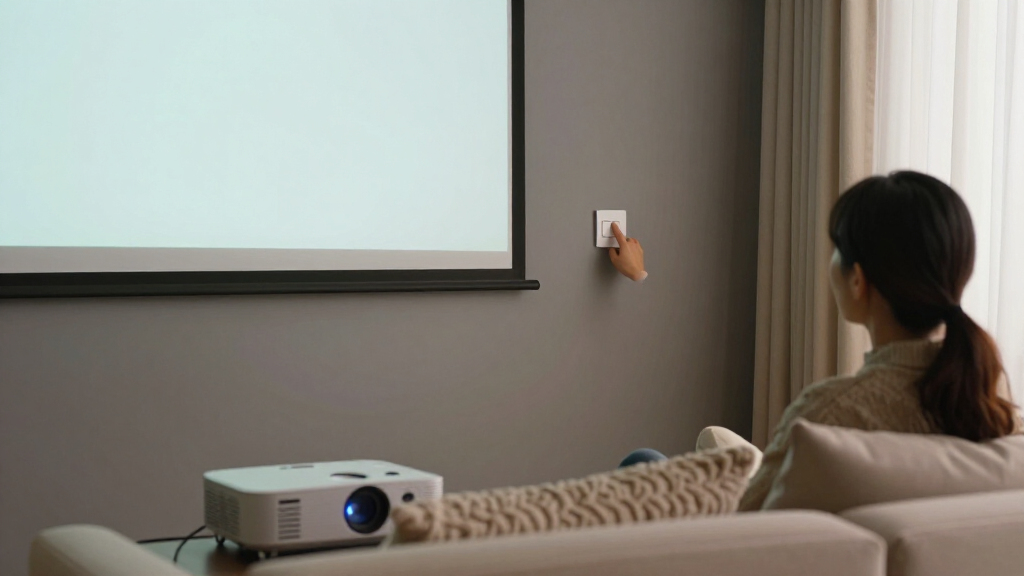
I evaluated each screen on five factors that actually determine long-term satisfaction. Motor and mechanism quality came first — a motorized screen lives or dies by smooth, quiet operation and a fabric that retracts flat without curling. Surface performance was second: gain rating, texture, and whether the material is fine-grained enough for 4K content versus only acceptable for 1080p. Build quality of the housing mattered because flimsy cases flex during installation and sag over time. I also weighed size-to-room fit, since a 150-inch screen is only a bargain if your room can actually use it, and overall value, which balanced price-class features against what comparable models offer.
The ranking favors established brands with consistent quality control (Elite Screens, VIVOHOME) at the top, places value-focused YODOLLA models in the middle tiers where they excel, and positions generic and specialty-aspect-ratio screens lower or in niche roles. A screen ranked lower isn’t necessarily bad — it’s usually a worse fit for most buyers, whether because of aspect ratio, size, or cut-corner construction.
Factors to Consider When Choosing Motorized Projector Screens
Before clicking buy on any motorized screen, a few decisions will shape whether you’re happy with it two years from now. These are the factors I weighed during the comparison, plus the mistakes I see buyers make most often.Measure Your Room Before Choosing a Diagonal
The most common mistake in this category is buying the biggest diagonal that fits the wall. Screen size must match seating distance: sit too close to a 120-inch or 150-inch screen and you’ll see pixel structure and eye strain. A rough rule is one foot of viewing distance per 10 inches of diagonal, so a 120-inch screen wants around 12 feet of seating. You also need vertical clearance — a drop-down screen hangs from the ceiling or wall, and the bottom edge should sit above speaker height and furniture. Buyers with 8-foot ceilings often discover too late that a 150-inch screen leaves the black border dragging near the floor. Measure width, height, and seating distance in that order, then pick the largest diagonal that satisfies all three.
Motor Quality Separates the Brands From the Bargains
Every screen in this roundup has a motor, but they are not equal. Cheap units tend to whir loudly during drop and retraction, retract too fast so the fabric slaps the case, and fail within a couple of years of regular use. Established brands invest in slower, damped mechanisms that protect the screen material and keep noise low enough not to interrupt a movie’s quiet scenes. Remote quality varies too: some models include a simple infrared remote that requires line-of-sight, while others support wall switches or radio-frequency remotes that work even when the screen is behind you. If your screen will drop in front of a window or be used daily, spend more on the mechanism — it’s the part you can’t repair yourself.
Screen Surface, Gain, and Resolution Readiness
The fabric determines image quality far more than the housing does. Gain describes reflectivity: matte white surfaces around 1.0–1.2 gain work in controlled lighting and preserve viewing angles, while higher-gain surfaces look brighter head-on but wash out off-axis. Texture matters for sharp projectors — a coarse weave that looks fine at 1080p can soften 4K detail, which is why explicitly 4K-rated surfaces command a premium. Black-backed fabric is also worth checking: it prevents light from a window behind the screen bleeding through the image. Finally, look at edge flatness. Tensioned or heavier fabrics stay flat; thin unsupported fabric can develop curling waves at the sides that are visible during panning shots.
Aspect Ratio: Why 16:9 Wins for Most Buyers
Nearly every modern source — streaming, gaming consoles, Blu-ray — outputs 16:9, which is why most screens in this comparison use it. 4:3 screens like the VEVOR 72-inch or the 100-inch 4:3 model still have a place for business presentations, classroom use, older projectors, and classic console gaming, but they letterbox most modern content and waste vertical image area. If you watch a lot of cinematic 2.35:1 films, note that a 16:9 screen will show black bars top and bottom — some enthusiasts accept this, others plan for it. The wrong aspect ratio is the one mistake in this category that no accessory can fix, so match it to your actual content, not to a spec sheet.
Case Color and Installation Realities
Motorized screens live in your room even when retracted, so the housing is furniture. White cases disappear against light ceilings and apartment walls; black cases suit dedicated theater rooms and hide dust better. Installation is the other hidden cost: all of these screens need solid anchoring into studs or masonry, and a 120-inch aluminum case is heavy and awkward for one person to mount. Check whether mounting brackets and a level are included or whether you’ll need a hardware run. Also confirm power access — most models need an outlet near the screen, and running a new circuit costs more than upgrading the screen itself.
When It Makes Sense to Pay More
Premium pricing in this category buys three things: a better motor, a flatter and finer screen surface, and multi-year manufacturer support. If your projector is 4K, if the screen will descend daily, or if the room doubles as a living space where a noisy motor would be annoying, the upgrade pays for itself. If you’re setting up an occasional movie night with a 1080p projector in a basement, a value-tier screen does nearly the same job. The mistake to avoid is paying for size instead of quality — a cheap 150-inch screen delivers a huge, mediocre image, while a well-built 100-inch screen delivers a great one. Buy the best mechanism your budget allows, then take the largest size that fits your room.
Frequently Asked Questions
How far away should I sit from a 120-inch or 150-inch motorized screen?
For a 120-inch 16:9 screen, aim for roughly 12–14 feet of seating distance; a 150-inch screen really wants 15–20 feet. Sitting closer than that makes pixel structure visible on lower-resolution projectors and forces constant head movement during fast action. It also puts you close enough to notice fabric texture and any curling at the screen edges, flaws that are invisible at proper distance. In a typical living room or bedroom, a 92–100 inch screen is often the better fit than the headline-grabbing 150-inch models. If your room can’t support the viewing distance, buy the smaller diagonal — the picture will actually look bigger and sharper from where you sit.
Are motorized screens worth it over fixed-frame or manual pull-down screens?
A motorized screen earns its premium when the room is multipurpose — you can hide the screen when it’s not in use, protect the fabric from dust and damage inside the case, and lower it with a remote from the couch. Fixed-frame screens are cheaper at any given quality level and hold flatter tension, which is why dedicated theater purists often prefer them. Manual pull-down screens cost the least but wear out fastest, since hand-pulling stresses the spring mechanism and fabric. Choose motorized if the room is shared space or you drop the screen frequently; choose fixed-frame if the wall belongs to the projector permanently. The motor is the part you’re paying extra for, so buy from a brand whose mechanism has a track record.
Can I use these motorized screens with a 4K projector, or do I need a special surface?
You can project 4K onto almost any screen, but the surface determines whether you actually see 4K detail. Coarse or textured fabric scatters fine detail and makes a 4K projector look barely better than 1080p. That’s why the Elite Screens Spectrum, with its explicitly 4K/8K-rated surface, earns the top spot in this comparison when paired with high-resolution projectors. Budget screens with smooth matte-white fabric perform respectably at 1080p and are acceptable for casual 4K viewing at normal seating distances. If you’ve invested in a 4K projector, though, the screen is the wrong place to save money. Check that the material is listed as fine-grained or ultra-HD ready, and prefer black-backed fabric to prevent light bleed-through.
What happens if the power goes out — will my motorized screen get stuck down?
Yes, without power the screen stays wherever it is, since these mechanisms don’t have manual cranks. If it’s stuck mid-drop, most models can be carefully hand-rolled back up, though you should check the manual first because forcing the roller can damage the motor’s gears. The practical risks are low — power outages are brief, and a lowered screen is an inconvenience, not a disaster. The bigger reliability question is the motor itself: budget mechanisms are the most common failure point after two to three years of daily cycling. If your screen will be used constantly, prioritize models from established brands and check the warranty length on the mechanism specifically, not just the fabric.
Is a white or black housing case better for my room?
The case is visible whenever the screen is retracted, so treat it like ceiling furniture. White cases like the YODOLLA and Kayle white models blend into white ceilings and light-colored walls, which is why they dominate apartment and living-room setups. Black cases like the Elite Spectrum and Kayle black version suit dedicated theater rooms, pair well with dark walls, and hide the dust that gathers on top of the housing. There is zero image-quality difference between the two — this is purely an interior-design decision. If the screen will hang in an open living space, white is nearly always the safer choice; if the room gets dark for movie nights anyway, black looks more intentional.
Conclusion
The right pick depends less on specs and more on your room and projector. For most buyers, the Elite Screens Spectrum RC1 125-inch is the best overall choice — its 4K/8K-ready surface, quiet motor, and build quality make it the screen you won’t outgrow when you upgrade projectors. Best value goes to the YODOLLA 120-Inch, which delivers a genuinely large 16:9 image at budget pricing and suits casual movie nights and 1080p projectors. Beginners and small-room buyers should start with the VIVOHOME 72-inch or 84-inch — their manageable size, light weight, and easy installation make them forgiving first screens. For maximum image area on a budget, the YODOLLA or FRAYSCENT 150-inch works if your room has the seating distance to support it, and the Kayle 120-inch black is the pick for dedicated dark theater rooms. Finally, if you’re buying for presentations or legacy 4:3 content, the VEVOR 72-inch 4:3 avoids wasting money on an aspect ratio you don’t need. Match the screen to the room first, the projector second, and the budget last — in that order — and you’ll end up with a setup you’re happy with for years.
Fall Picks
fall essentials
As an affiliate, we earn on qualifying purchases.