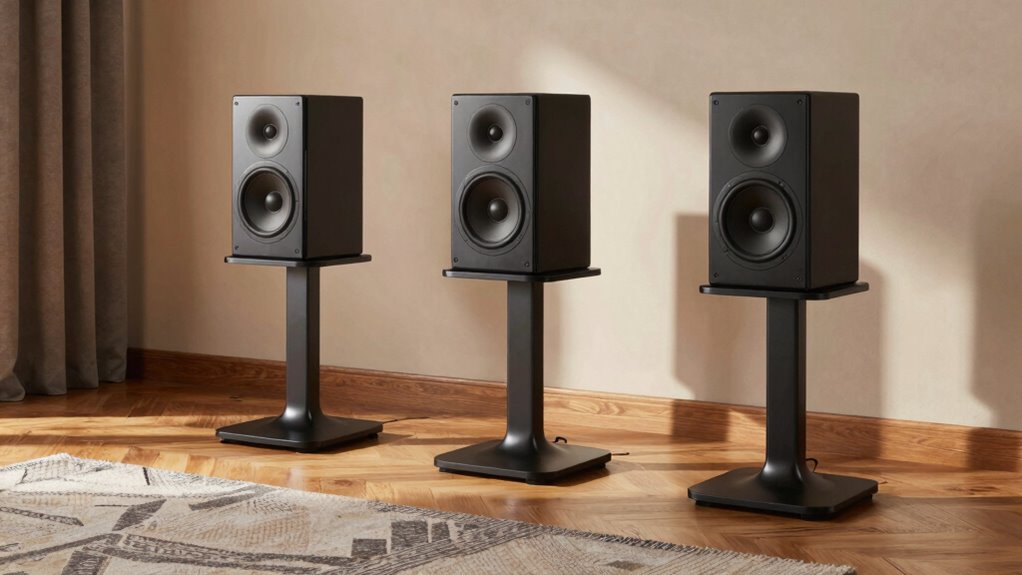
Finding the right low profile center channel speaker stand can significantly enhance your home theater experience. For 2026, the choices range from sturdy steel options to sleek, adjustable supports. The Sanus Steel Series SFC22 stands out for its durability and cable management, ideal for those prioritizing stability. Meanwhile, the Kanto SCH offers adjustable height and resonance damping for precise placement. If you need a versatile, heavy-duty solution, the Monolith 18-inch Stand provides exceptional support for larger speakers. Each of these picks balances height, stability, and design, but tradeoffs like weight limits or complexity of assembly mean your choice depends on your specific needs.

Get business pricing on your home office setup
- Business-only prices and quantity discounts
- Tax-exempt purchasing
- Multiple users, one account, clear invoices
Complete the kit


Key Takeaways
- Sturdy steel stands excel in durability but may be heavier and less flexible in height adjustment.
- Tilt and resonance damping features improve sound direction and clarity but can limit support weight or size.
- Adjustable height options offer better positioning but often require more complex setup or assembly.
- Design choices influence compatibility with larger or unconventional speakers—compact models may not fit all setups.
- Cable management is a common, valuable feature, especially in low-profile designs to keep setups tidy.


| low profile center channel speaker stand | Material | Weight Capacity |
|---|---|---|
| Sanus Steel Series 22" Speaker | Steel | 35 lbs |
| Kanto S12 Low-Profile Angled S | Bent metal with foam padding | — |
| Height Adjustable Speaker Stan | Wood | 50 lbs |
| Kanto SCH Universal Height Adj | Steel | 50 lbs |
| Monolith 18-inch Speaker Stand | — | — |
More Details on Our Top Picks
Sanus Steel Series 22″ Speaker Stand for Center Channel Speakers Black
The Sanus Steel Series SFC22 stands out for its robust steel construction and adjustable top plate, making it ideal for those seeking a stable, long-lasting solution. Its 22-inch height is a versatile choice that works well beneath most TVs, and the concealed wire path keeps cables organized. Compared with other options, it offers superior durability and a more secure base, though it’s limited to speakers up to 35 lbs, which may not suit larger models. Assembly can be somewhat complex, but the stability it provides makes it a top pick for dedicated home theater setups.
Pros:- Heavy-gauge steel construction for durability
- Adjustable brass studs for precise alignment
- Includes optional carpet spikes for stability
- Concealed wire path for cable organization
Cons:- Limited to speakers up to 35 lbs
- Sold as a single stand, requiring multiple for stereo setup
- Assembly may be complex for some users
Best for: Buyers needing a sturdy, durable stand for center-channel speakers up to 35 lbs.
Not ideal for: Those with heavier or larger speakers, or seeking a very simple, no-fuss setup.
- Brand:Sanus
- Model Number:SFC22-B1
- Material:Steel
- Height:22 inches
- Weight Capacity:35 lbs
- Base Size:14 x 8 inches
- Top Plate Dimensions:14 x 8 inches
- Color:Black
Our verdict“A highly durable, stable option ideal for mid-weight center speakers in dedicated setups.”
Kanto S12 Low-Profile Angled Sound Bar and Center Channel Speaker Stand for Home Theater – Supports up to 32 lb – Reduces Unwanted Resonance – 16 Degree Upward Tilt
The Kanto S12 is designed with sound clarity in mind, featuring a 16-degree upward tilt that directs sound toward your ears. Its low-profile, angled design makes it ideal for placing under TVs or above media consoles. Supporting speakers up to 32 lbs, it also incorporates foam padding that minimizes vibrations and resonance, delivering cleaner audio. Compared with bulkier stands, its sleek profile makes it less obtrusive, though it may not support very large or unconventional speakers, limiting its use for heavier or oddly shaped models. Its tilt feature is perfect for those who prioritize sound quality and positioning precision.
Pros:- Tilts speakers for optimal sound direction
- Supports up to 32 lbs
- Reduces vibrations and resonance
- Low-profile design complements modern aesthetics
Cons:- Limited weight support for very heavy speakers
- Design may restrict larger or unconventional speakers
Best for: Home theater enthusiasts seeking precise sound direction with minimal visual bulk.
Not ideal for: Larger speakers over 32 lbs or unconventional shapes that don’t fit the angled design.
- Support Weight:32 lbs
- Tilt Angle:16 degrees
- Material:Bent metal with foam padding
- Design:Low-profile, angled stand
Our verdict“A sleek, tilt-enabled stand perfect for enhancing sound clarity in compact setups.”
Height Adjustable Speaker Stand Pair for Bookshelf and Studio Monitors
This pair of wooden stands offers unmatched flexibility with adjustable heights from 18 to 28 inches, making them suitable for a wide range of speakers and listening environments. Supporting up to 50 lbs, they are ideal for larger bookshelf or studio monitors, providing stable, customizable positioning. The wooden construction adds a premium aesthetic, and cable clips help maintain a tidy setup. However, the assembly process can be time-consuming, and their bulkier profile might not suit minimalist decors. These stands are best for users who need maximum support and height adjustment, especially in studio or multi-use spaces.
Pros:- Adjustable height for precise positioning
- Supports up to 50 lbs
- Includes cable clips for organization
- Heavy-duty wood construction
Cons:- Assembly required and potentially time-consuming
- Bulkier design may not suit minimalist aesthetics
- Limited to speakers up to 50 lbs
Best for: Users needing adjustable, heavy-duty supports for larger or varied speakers.
Not ideal for: Those seeking a simple, quick-to-assemble stand or minimalist aesthetics.
- Top Plate Dimensions:12.2″ x 9.1″
- Weight Capacity:50 lbs
- Adjustable Height:18″ – 28″
- Material:Wood
- Base Size:12.2″ x 9.1″
- Cable Management:Yes
Our verdict“A versatile, sturdy choice for customizable speaker positioning in versatile setups.”
Kanto SCH Universal Height Adjustable Center Channel Stand for Speakers up to 50 lbs
The Kanto SCH offers a sleek, minimalist look combined with practical features. Its adjustable height from 15 to 24 inches allows fine-tuning beneath your TV or above furniture. The resonance damping design and internal cable management help maintain sound clarity and tidy appearance. Supporting up to 50 lbs, it’s a solid choice for those who want a low-profile, versatile stand that can be tailored to different room setups. Compared with fixed-height models, its adjustability adds a layer of convenience, though some may find the assembly process a bit involved.
Pros:- Adjustable height for exact positioning
- Resonance damping reduces vibrations
- Internal cable management keeps setup clean
- Supports speakers up to 50 lbs
Cons:- Limited to 50 lbs weight capacity
- Requires assembly
Best for: Those prioritizing precise placement with vibration control in modern home theaters.
Not ideal for: Speakers over 50 lbs or users desiring a very simple, no-assembly solution.
- Height Adjustment:15″ to 24″
- Weight Capacity:50 lbs
- Material:Steel
- Color:Black
- Features:Resonance damping, cable management
Our verdict“A sleek, adjustable stand ideal for precise placement and vibration damping in contemporary setups.”
Monolith 18-inch Speaker Stand – 75 lbs Max Weight, Scratch-Resistant, Black
The Monolith 18-inch Stand is built for strength, supporting up to 75 lbs with its sturdy steel construction. Its 18-inch height is ideal for standard listening positions, and its vibration dampening options—such as fillable columns with sand or steel shot—make it a top pick for minimizing resonances. The inclusion of adjustable spikes aids in floor isolation, improving sound clarity. Compared with lighter or less robust options, this stand offers unmatched support for larger speakers, but its weight and somewhat industrial aesthetic might not suit all decors or portable setups. It’s best for dedicated home theater environments where support and vibration control are priorities.
Pros:- Supports up to 75 lbs for large speakers
- Adjustable spikes for floor isolation
- Vibration dampening through fillable columns
- Scratch-resistant finish
Cons:- Heavy and less portable
- May require filling for optimal damping
- Design may seem industrial
Best for: Heavy-duty support for large speakers in fixed home theater or studio settings.
Not ideal for: Lightweight or portable setups, or those seeking a minimalist aesthetic.
- Max Weight:75 lbs
- Height:18 inches
- Finish:Scratch-resistant black
- Support Columns:Fillable with sand or steel shot
- Supports:Adjustable spikes, rubber pads
Our verdict“A robust, high-capacity stand perfect for supporting heavy speakers while reducing floor vibrations.”

How We Picked
Our selection process focused on low profile design, stability, weight capacity, adjustability, and ease of assembly. We prioritized products that are specifically engineered for center-channel use, ensuring they support typical speaker sizes and weights. Compatibility with modern home theater setups was a key factor, along with features like vibration damping and cable management. Finally, we balanced price against build quality to recommend options suitable for different budgets and aesthetic preferences.
| low profile center channel speaker stand | Material |
|---|---|
| Sanus Steel Series 22" Speaker | Steel |
| Kanto S12 Low-Profile Angled S | Bent metal with foam padding |
| Height Adjustable Speaker Stan | Wood |
| Kanto SCH Universal Height Adj | Steel |
| Monolith 18-inch Speaker Stand | — |
Factors to Consider When Choosing Low Profile Center Channel Speaker Stands
Choosing the right low profile center channel speaker stand involves balancing stability, adjustability, and aesthetic considerations. A good stand should support your speaker’s weight without wobbling, allow precise placement for optimal sound, and complement your room’s decor. Since these stands are often placed beneath TVs or in tight spaces, their design and cable management features are especially important. The ideal stand varies depending on your speaker size, room layout, and personal preferences for features like tilt or height adjustment.Material and Durability
Steel stands, like the Sanus SFC22, excel in robustness and long-term stability, making them suitable for heavier speakers and more permanent setups. Wooden supports, such as the adjustable pair, offer a more aesthetic appeal and can blend seamlessly into home decor but may lack the same level of vibration damping as steel. When choosing, consider the environment—high-traffic rooms benefit from sturdy, vibration-resistant materials, while lightweight options suit temporary or less demanding settings.
Height and Adjustability
Adjustable stands, like the Kanto SCH or the height-tunable pair, provide flexibility in positioning your speaker exactly at ear level or beneath your TV for cleaner sound and better integration. Fixed-height models are simpler but less adaptable, which can impact sound quality if the speaker placement isn’t ideal. Think about your room’s layout and whether you need fine-tuning for sound alignment or a quick setup without adjustments.
Support Capacity and Compatibility
Matching your stand’s weight capacity to your speaker’s weight is critical. Overloading can cause instability or damage, especially with larger, heavier models like the Monolith. Check the supported weight limits carefully—most low-profile stands support between 32 to 50 lbs, but some heavy-duty options go up to 75 lbs. Also, consider the shape and size of your speaker; some stands have specific top plate dimensions or tilt features that improve sound direction and fit.
Design and Aesthetics
Low profile stands should complement your room’s aesthetic, whether sleek and modern or traditional. Minimalist designs with internal cable management, like the Kanto models, keep setups tidy. If you prefer a more rustic or classic look, wooden or black steel options work well. Remember, a stand’s visual impact can be just as important as its functionality, especially in open-concept living spaces.
Additional Features
Features like tilt for sound direction, vibration damping, or cable management can greatly enhance your listening experience. Tilt features, such as on the Kanto S12, help aim sound precisely at your ears. Vibration damping, either through foam padding or fillable columns, reduces resonance and improves clarity. Cable management keeps cords out of sight, preventing clutter and potential tripping hazards. Prioritize these based on your setup’s specific needs.
Frequently Asked Questions
Why is height adjustment important for center channel stands?
Height adjustment allows you to position your center channel speaker precisely at ear level or beneath your TV, ensuring optimal sound projection and clarity. Proper alignment can significantly improve dialogue intelligibility and overall audio experience, especially in multi-seat viewing setups. Adjustable stands also provide flexibility if your furniture arrangement changes over time.
Are steel stands better than wooden ones?
Steel stands generally offer higher durability and better vibration damping, which translates into more stable support and clearer sound. Wooden stands, however, can add a touch of elegance and blend nicely with home decor while supporting moderate weights. The choice depends on your priority—whether it’s longevity and stability or aesthetic integration.
Can I use these stands for larger speakers?
Some stands, like the Monolith, support larger speakers up to 75 lbs, making them suitable for sizeable models. Many low-profile options max out around 32 to 50 lbs, so it’s essential to match your speaker’s weight to the stand’s capacity. Using a stand that’s too weak can lead to instability or damage, so always verify weight limits before purchasing.
Is assembly complicated for these stands?
Most stands require some assembly, which varies from straightforward to moderately complex. Steel and metal models often need tightening of bolts and alignment of support columns, while wooden stands might need screwing together. Checking the included instructions and whether tools are provided can help you gauge the effort required. For those who prefer a quick setup, models with fewer parts or pre-assembled options are advantageous.
What features should I prioritize in a low profile stand?
Prioritize stability, support capacity, and adjustability—these ensure your speaker stays secure and positioned correctly. Features like tilt, vibration damping, and cable management enhance sound quality and setup tidiness. The aesthetic should also match your room’s decor, especially since low profile designs are often showcased in visible locations. Balancing these factors based on your specific environment will lead to the best choice.
Conclusion
For buyers seeking maximum durability and stability for medium-weight speakers, the Sanus Steel Series is a reliable choice. Those prioritizing precise sound placement and resonance reduction should consider the Kanto SCH, especially in modern setups. If you need a highly adjustable, heavy-duty stand for larger or studio monitors, the Monolith provides exceptional support. Casual users or those with lightweight speakers may find the Kanto S12 or adjustable wooden options more suitable. Ultimately, your selection hinges on your speaker size, aesthetic preferences, and whether you value adjustability or raw support strength most.
Halloween Picks
halloween
As an affiliate, we earn on qualifying purchases.