You’ll notice some projector and screen combos look better because the materials and ambient lighting conditions match well. The right screen material, like high-contrast or gray surfaces, helps deal with room light and enhances color and contrast. If the projector’s brightness and resolution align with the screen, you’ll enjoy sharper images. When everything fits your environment, the picture stays vibrant and clear. Keep exploring, and you’ll discover how to optimize your setup for the best experience.

Get business pricing on your home office setup
- Business-only prices and quantity discounts
- Tax-exempt purchasing
- Multiple users, one account, clear invoices
Key Takeaways
- Compatible screen materials enhance projector image quality by optimizing contrast, color accuracy, and glare reduction based on lighting conditions.
- High-contrast or gray screens perform better in ambient light, preserving blacks and vibrant colors.
- Matching screen texture and coating to projector type ensures sharper images and better color reproduction.
- Proper selection of screen material based on room lighting conditions maintains optimal picture quality.
- Combining suitable screen material with projector capabilities maximizes overall image clarity and immersion.
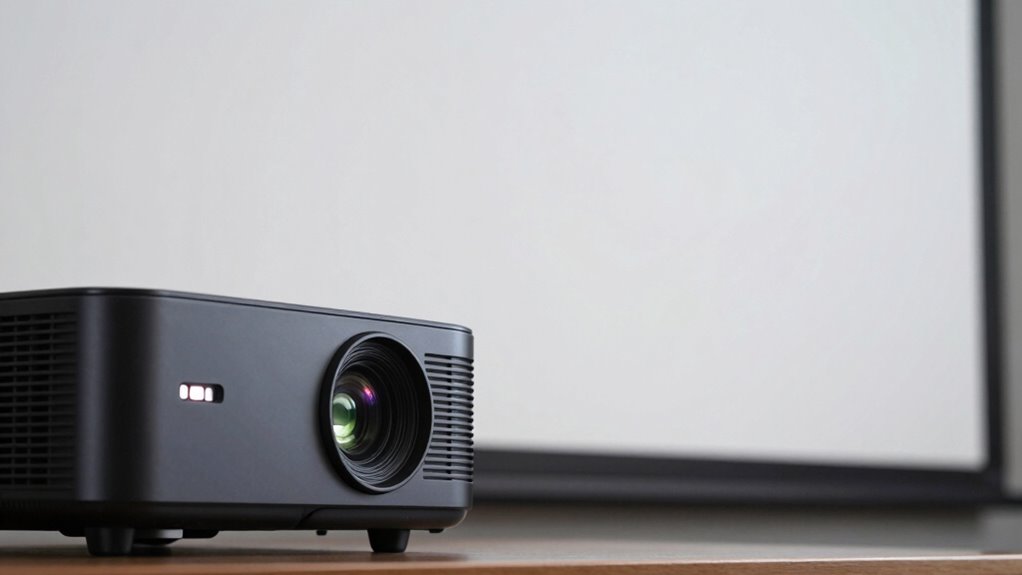
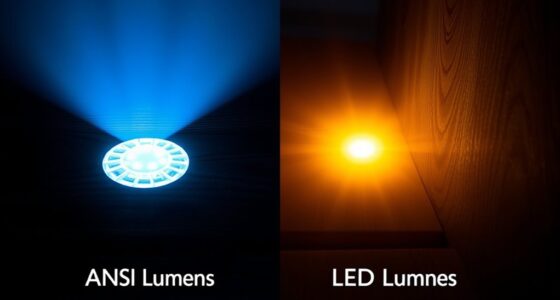
If you’re looking to create a seamless home theater experience, projector and screen combos offer an easy and efficient solution. But not all combos deliver the same quality, and understanding why some work better than others can help you make a smarter choice. One key factor is how well the screen material handles ambient lighting. If your room isn’t perfectly dark, you’ll want a screen that can cut through ambient light without washing out the image. Matte white screens are common and affordable, but they tend to reflect light uniformly, which can diminish contrast and color richness when there’s ambient lighting. On the other hand, high-contrast screens or gray screen materials are designed specifically to absorb ambient light, helping maintain deeper blacks and vibrant colors even in less-than-ideal lighting conditions. Choosing the right screen material is essential because it directly impacts picture quality, especially if you can’t control every source of ambient light in your room. Additionally, understanding the properties of screen material can help you select the best option for your environment. When selecting a screen, considering its reflectivity and texture can further optimize your viewing experience based on your specific projector and room setup. For example, some screen materials feature a coating that enhances contrast in brighter environments, making them suitable for rooms with unavoidable ambient light. The material of the screen also influences how well the projector’s image is rendered. Some materials are optimized for specific projector types, whether they’re LCD, DLP, or LCoS, ensuring maximum clarity and color accuracy. For example, certain screen materials have a textured surface to diffuse light evenly, reducing hotspots and glare, which makes the image appear more uniform and natural. Others have a smooth, reflective surface to deliver sharper images with high contrast. When selecting a screen material, you should consider your projector’s brightness, resolution, and the kind of viewing experience you want. A screen that’s compatible with your projector’s specs can greatly enhance image clarity, color fidelity, and contrast, making your home theater feel more immersive. Ambient lighting plays a fundamental role in the effectiveness of your projector and screen combo. If your room has uncontrolled light sources like windows or bright lamps, you’ll want a screen that compensates for that environment. Some screens are designed with coatings that boost contrast and color saturation in well-lit rooms, ensuring you still get a crisp, vivid picture. Moreover, screen material selection can influence how well your setup performs under different lighting conditions, making it a crucial aspect of choosing the right combo. Conversely, if your space can be kept dark, you might opt for a less specialized screen material to save costs. The ambient lighting conditions of your room should therefore influence your choice of screen material, as they directly impact the overall picture quality. Ultimately, the best projector and screen combo considers both the screen material and your room’s ambient lighting conditions. By matching these elements thoughtfully, you guarantee your viewing experience remains sharp, colorful, and immersive, regardless of external lighting.
Products Worth Considering

Philips Hue Large Smart Light Tube, Black – White and Color Ambiance LED Color-Changing Light – 1 Pack
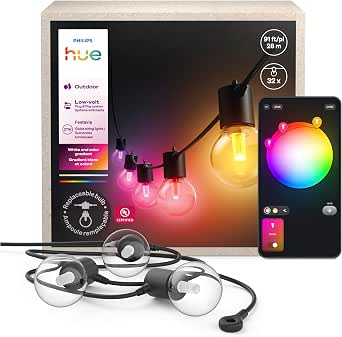
Philips Hue Festavia Globe Outdoor String Lights, 32 Bulbs, 91 ft

Coway Airmega 250 Air Purifier for Large Rooms
As an affiliate, we earn on qualifying purchases.
Frequently Asked Questions
How Do Ambient Light Conditions Affect Projector Screen Performance?
Ambient light conditions directly affect your projector screen performance by causing ambient glare, which reduces image contrast and clarity. Bright room conditions increase room brightness, making it harder to see details clearly. To improve viewing, you should control ambient glare with curtains or blinds and consider screens designed for high ambient light environments. Adjusting your projector’s brightness settings also helps offset the effects of ambient light, ensuring a better viewing experience.
What Is the Ideal Projector Resolution for Home Theater Use?
For home theater use, aim for a projector resolution of at least 1080p to guarantee sharp, detailed images. You’ll want a projector with high contrast ratios to enhance picture depth and vibrancy, especially in darker scenes. Additionally, consider a screen that’s durable and resistant to scratches or warping, so your setup stays pristine over time. This combo provides immersive visuals with lasting quality, elevating your viewing experience.
How Does Screen Gain Influence Image Brightness and Clarity?
Did you know that a screen’s gain directly impacts brightness and clarity? Higher gain screens, like 1.5 or above, make images appear brighter, especially in well-lit rooms. Your choice of screen material influences this gain, with matte surfaces reducing glare and enhancing clarity. If you want vivid images without glare issues, opt for a moderate gain screen that balances brightness and glare reduction, ensuring a sharp, clear picture.
Can a Projector and Screen Combo Be Used Outdoors Effectively?
Yes, you can use a projector and screen combo outdoors effectively if you consider outdoor lighting and weather resistance. Choose a screen with high gain and a weatherproof design to withstand elements like rain or dew. Use a projector with enough brightness (lumens) to cut through ambient light. Setting up in a shaded area and using a protective cover for the equipment also helps guarantee a clear, enjoyable outdoor viewing experience.
What Maintenance Is Required to Keep the Projector and Screen in Optimal Condition?
You need to stay vigilant with your projector and screen’s maintenance to keep them performing at their best. Follow a regular cleaning schedule to prevent dust buildup that can dim your image, and don’t forget about bulb replacement—an indispensable step before your projector suddenly dims during an important moment. With consistent upkeep, you’ll enjoy crisp images and a reliable setup, making every movie night or presentation a seamless experience.
Conclusion
Choosing the right projector and screen combo isn’t just about specs; it’s about creating an immersive experience. While a high-quality projector can deliver stunning visuals, a poorly matched screen can turn that brilliance into disappointment. Think of it like a dance—without the perfect partner, even the best moves fall flat. So, invest wisely, match your gear thoughtfully, and watch your movies and presentations come alive, transforming any space into a true cinematic or presentation haven.