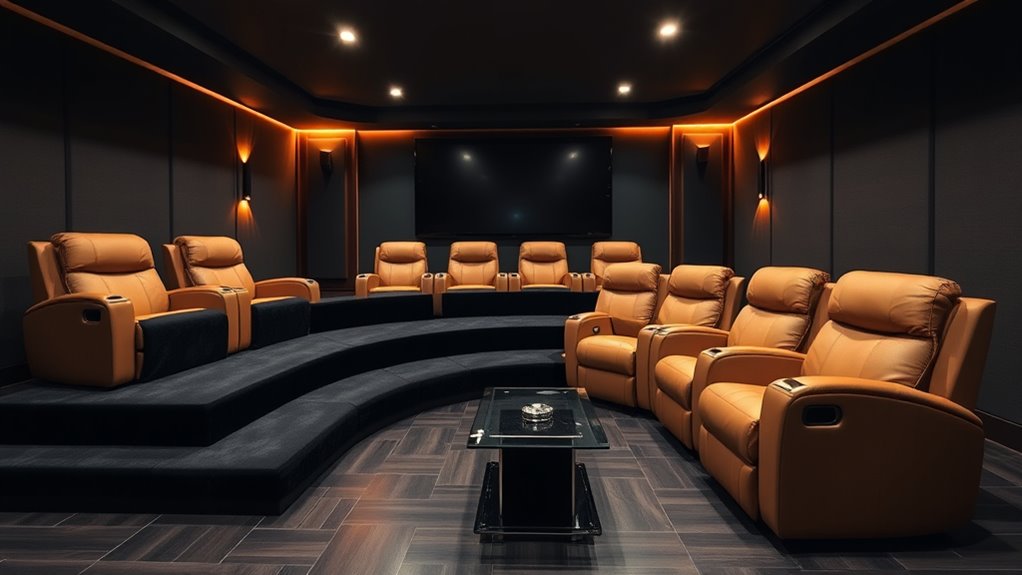
The best theater seating risers in this lineup are the 3-Tier Metal Choir Stage Risers for buyers who want an adjustable, anti-slip platform with multiple height levels. The NPS 2 Level Tapered Standing Choral Riser is a more fixed, hardboard option for a wide platform, while the folding metal risers suit users who need to store or move seating between events. The main tradeoffs are portability versus rigidity, adjustable tiers versus a simpler fixed layout, and stage-style construction versus fit for a home theater. Check the listed dimensions, tier heights, and intended use before choosing, since these products vary more in setup and format than their names suggest. Read on for the full comparison and help matching a riser to your room or event.

Get business pricing on your home office setup
- Business-only prices and quantity discounts
- Tax-exempt purchasing
- Multiple users, one account, clear invoices
Complete the kit


Key Takeaways
- The 3-tier adjustable metal model leads for buyers who need varied elevation and an anti-slip surface, while its event-oriented format may be more than a fixed home setup requires.
- The NPS hardboard riser stands apart with a stated 18-by-96-inch platform and two tapered levels; its fixed design is less suited to frequent reconfiguration.
- Folding models prioritize storage and transport, making them more practical for changing venues than a permanent theater layout, but buyers should verify setup dimensions and tier capacity.
- The 1/2/3-tier metal option offers configuration flexibility; shoppers should confirm which tier arrangement is included and how the pieces connect before relying on a particular layout.
- Several products are choir or event platforms rather than dedicated home-theater systems, so check seat compatibility, total footprint, and height before treating them as plug-in seating solutions.
| 3-Tier Metal Choir Stage Risers with Anti-Slip Surface, Portable and Adjustable |  | Best for Flexible Tier Heights | Material: Galvanized steel and plywood | Number of tiers: 1, 2, or 3 | Tier heights: 20 cm, 40 cm, or 60 cm | VIEW ON AMAZON | See Our Full Breakdown |
| Choir Stage Risers 1/2/3 Tiers Metal Anti-Slip Public Seating Standing Platform |  | Best Value for Multi-Use Venues | Material: Plywood and galvanized steel | Number of tiers: 1, 2, or 3 | Tier heights: 20 cm, 40 cm, or 60 cm | VIEW ON AMAZON | See Our Full Breakdown |
| Multi-Level Home Theater Seating, Choral Stairs Stage Riser Platform, Non-Slip, Black |  | Best for a Defined Three-Tier Footprint | Material: Plywood and galvanized steel | Color: Black and silver | Size: 128 × 90 × 60 cm (L × W × H) | VIEW ON AMAZON | See Our Full Breakdown |
| Folding Choral Stairs Stage Riser Platform with Anti-Slip Metal, Portable Multi-Level Home Theater Seating, Tiered Choir Risers for Performances, School Events & Speeches |  | Best for Expandable Event Setups | Material: Metal and plywood | Expandable layers: Up to 4 | Load capacity: Up to 500 kg per layer | VIEW ON AMAZON | See Our Full Breakdown |
| NPS 2 Level Tapered Standing Choral Riser, Hardboard (18″ x 96″ Platform), Black |  | Best for a Fixed, Specified Platform | Number of levels: 2 | Platform dimensions: 18 × 96 inches | Surface material: Hardboard | VIEW ON AMAZON | See Our Full Breakdown |
| Folding Choral Stairs Stage Riser Platform with Anti-Slip Metal, Portable Multi-Level Seating for Performances and Events |  | Best for Modular Event Use | Materials: Plywood and galvanized steel | Maximum load: 500 kg per layer (approximately 1,102 lb) | Configuration: Expandable to multiple layers | VIEW ON AMAZON | See Our Full Breakdown |
| theater seating riser | Surface | Material | Load capacity | Assembly |
|---|---|---|---|---|
| 3-Tier Metal Choir Stage Riser | Non-slip honeycomb | Galvanized steel and plywood | 600 kg per tier | Tool-free |
| Choir Stage Risers 1/2/3 Tiers | Anti-slip honeycomb | Plywood and galvanized steel | 500 kg per tier | — |
| Multi-Level Home Theater Seati | Non-slip honeycomb | Plywood and galvanized steel | Up to 500 kg per panel | — |
| Folding Choral Stairs Stage Ri | Anti-slip | Metal and plywood | Up to 500 kg per layer | Tool-free |
| NPS 2 Level Tapered Standing C | — | — | — | — |
| Folding Choral Stairs Stage Ri | Anti-slip | — | — | Tool-free |
More Details on Our Top Picks
3-Tier Metal Choir Stage Risers with Anti-Slip Surface, Portable and Adjustable
For a theater setup that needs more than one fixed arrangement, this model’s 1-, 2-, or 3-tier configurations make it more adaptable than the fixed two-level NPS 2 Level Tapered Standing Choral Riser. Its listed tier heights range from 20 to 60 cm, so buyers can choose a modest seating lift or a taller staging arrangement. The galvanized-steel and plywood construction, honeycomb grip surface, and tool-free assembly suit venues that reset the room for different events. A stated 600 kg capacity per tier is higher than the 500 kg listed for the Choir Stage Risers from B0GK76GXKD, though the description does not clarify how that rating applies to every configuration. The tradeoff is substantial bulk: at up to 128 × 90 × 60 cm, moving or storing the assembled unit may take planning, and the theater-seating fit is less clearly specified than its choir and event uses.
Pros:- Available in one-, two-, and three-tier configurations with listed heights from 20 to 60 cm.
- Galvanized steel and plywood construction with a non-slip honeycomb surface.
- Tool-free assembly supports event setups that change frequently.
- Listed capacity of 600 kg per tier exceeds the 500 kg per tier stated for B0GK76GXKD.
Cons:- The larger configurations may be difficult to carry and store without help.
- The description does not explain maximum occupancy beyond stating three people per level.
- Specifications focus on performance staging rather than theater-seat spacing or permanent home installation.
Best for: Schools, churches, and community theaters that need adjustable tier counts and heights for changing performances or audience layouts.
Not ideal for: Home theater buyers seeking a permanent, furniture-like seating platform or anyone who needs detailed guidance on seating dimensions and simultaneous occupancy.
- Material:Galvanized steel and plywood
- Number of tiers:1, 2, or 3
- Tier heights:20 cm, 40 cm, or 60 cm
- Load capacity:600 kg per tier
- Dimensions:1 tier: 128 × 30 × 20 cm; 2 tiers: 128 × 60 × 40 cm; 3 tiers: 128 × 90 × 60 cm
- Stated capacity:3 people per level
- Surface:Non-slip honeycomb
- Assembly:Tool-free
Our verdict“Choose this model if adjustable tier heights matter more than easy storage or detailed guidance for a permanent home theater layout.”
Choir Stage Risers 1/2/3 Tiers Metal Anti-Slip Public Seating Standing Platform
This is the straightforward pick for venues that want a three-person-per-tier platform with several setup heights, without the higher capacity claim of B0GVTRSRJZ being the deciding factor. Like that model, it combines plywood and galvanized steel, a honeycomb anti-slip surface, and one-, two-, or three-tier formats. The stated 500 kg per tier is ample by the product description, but lower than the 600 kg rating listed for the 3-Tier Metal Choir Stage Risers. Its dimensions also match that alternative’s configurations, which makes the choice less about footprint and more about the capacity claim and how much documentation a buyer needs. Compared with the NPS 2 Level Tapered Standing Choral Riser, this option offers more height arrangements, but it lacks the NPS model’s stated platform dimensions, frame gauge, and warranty. Weight is not specified, so transport planning remains uncertain.
Pros:- One-, two-, and three-tier configurations provide multiple setup heights.
- Galvanized steel and plywood construction is paired with a non-slip honeycomb surface.
- States capacity for three people per tier and a 500 kg load rating per tier.
- Dimensions are provided for all three configurations.
Cons:- Unit weight is not specified, making transport and storage planning harder.
- Its listed 500 kg per-tier capacity is lower than the 600 kg stated for B0GVTRSRJZ.
- The description provides less structural detail than the NPS riser, including no frame gauge or warranty.
Best for: Schools, churches, and event spaces that need adjustable choir or group-photo staging and can work with limited product documentation.
Not ideal for: Buyers who need a confirmed unit weight, a fixed two-level platform, or a more complete specification set for venue planning.
- Material:Plywood and galvanized steel
- Number of tiers:1, 2, or 3
- Tier heights:20 cm, 40 cm, or 60 cm
- Load capacity:500 kg per tier
- Stated capacity:3 people per tier
- Dimensions:1 tier: 128 × 30 × 20 cm; 2 tiers: 128 × 60 × 40 cm; 3 tiers: 128 × 90 × 60 cm
- Surface:Anti-slip honeycomb
- Weight:Not specified
Our verdict“Pick this riser for adaptable event staging when clear dimensions matter more than a specified weight or extended structural documentation.”
Multi-Level Home Theater Seating, Choral Stairs Stage Riser Platform, Non-Slip, Black
Unlike B0GVTRSRJZ and B0GK76GXKD, which are described in multiple tier configurations, this model specifies one 128 × 90 × 60 cm, three-level layout. That makes it easier to plan around a known footprint, provided that size suits the room. Its black-and-silver finish and honeycomb surface fit performance spaces, while galvanized steel and plywood support the stated use for concerts, schools, churches, and theaters. The 500 kg per-panel capacity is below the 600 kg per-tier figure listed for B0GVTRSRJZ, and the product data does not give a specific number of people per level. Although described as lightweight and easy to assemble, the same listing warns that some users may need help moving it; assembly instructions may also be unclear. I’d favor it for a fixed staging plan, not for buyers who need several size options or polished setup guidance.
Pros:- Provides a defined three-level footprint of 128 × 90 × 60 cm.
- Galvanized steel and plywood construction with a non-slip honeycomb surface.
- Listed for indoor and outdoor use across theater, school, church, and event settings.
- Black-and-silver finish offers a distinct alternative to the other risers’ less-specified colors.
Cons:- Only one size and configuration are specified, unlike the one-, two-, and three-tier choices on B0GK76GXKD.
- The 500 kg per-panel rating is lower than B0GVTRSRJZ’s stated 600 kg per tier.
- The product data gives no people-per-level figure, and assembly instructions may be unclear.
Best for: Theater groups and schools that have measured space for a fixed three-level platform and want a black-and-silver finish.
Not ideal for: Buyers who need a choice of tier counts, a stated people-per-level limit, or clear assembly instructions before purchase.
- Material:Plywood and galvanized steel
- Color:Black and silver
- Size:128 × 90 × 60 cm (L × W × H)
- Load capacity:Up to 500 kg per panel
- Surface:Non-slip honeycomb
- Applications:Concerts, church, school, theater, and group photos
- Use:Indoor and outdoor
Our verdict“Choose this model when a fixed three-level footprint and dark finish suit your venue better than configurable tier counts.”
Folding Choral Stairs Stage Riser Platform with Anti-Slip Metal, Portable Multi-Level Home Theater Seating, Tiered Choir Risers for Performances, School Events & Speeches
The strongest distinction here is modularity up to four layers, giving event planners more room to expand than the one-to-three-tier choices listed for B0GK76GXKD. Tool-free assembly and a folding design point toward setups that need to be packed away or reconfigured, rather than a permanent theater platform. Its stated 500 kg capacity per layer matches B0H18F74Q3’s panel rating, but the description does not provide dimensions, individual layer heights, or a people-per-tier figure. That missing information makes it harder to confirm seat spacing and room fit before committing to a layout. The metal-and-plywood build and anti-slip surface suit performance use, but “portable” does not mean light: the listing notes that moving it may take assistance. I’d shortlist it for flexible school or event staging, not for buyers who need precise theater-seating plans from published measurements.
Pros:- Expandable up to four layers, beyond the three-tier options listed for B0GK76GXKD.
- Folding and modular design supports changing event layouts and storage needs.
- Tool-free assembly can simplify repeated setup and teardown.
- Anti-slip surface and a stated 500 kg capacity per layer suit performance staging.
Cons:- No dimensions or layer heights are provided, limiting room-fit planning.
- The description does not state a people-per-layer capacity.
- Heavy construction may require assistance despite the portable design.
Best for: Event coordinators and school theater teams that need a tool-free, expandable platform and can confirm dimensions before ordering.
Not ideal for: Home theater buyers or venue managers who need published footprint, tier-height, weight, or occupancy details to plan a fixed installation.
- Material:Metal and plywood
- Expandable layers:Up to 4
- Load capacity:Up to 500 kg per layer
- Surface:Anti-slip
- Design:Folding and modular
- Assembly:Tool-free
- Intended use:Performances, speeches, choir staging, and home theater
Our verdict“Choose this riser for expandable event staging if you can obtain the missing measurements before planning a theater layout.”
NPS 2 Level Tapered Standing Choral Riser, Hardboard (18″ x 96″ Platform), Black
Where the metal-and-plywood risers emphasize adjustable setups, the NPS offers a defined two-level platform measuring 18 × 96 inches, with a 14-gauge steel frame and a 3/4-inch solid plywood core beneath the hardboard surface. Those details make it easier to plan a repeatable venue layout than the expandable B0GHFK4H14, which does not list dimensions or tier heights. Its spring-loaded support brackets and ability to attach other risers suit organizations building a consistent staging system over time. The tradeoff is less flexibility out of the box: it has two levels rather than the one-to-three configurations offered by B0GVTRSRJZ, and no guard rails are included. The stated capacity is over 200 lb per square foot, not a per-tier total, so buyers should avoid comparing it directly with the other products’ per-tier figures.
Pros:- Published 18 × 96 inch platform dimensions help with room planning.
- 14-gauge tubular steel frame, support brackets, and a 3/4-inch solid plywood core provide specific construction details.
- Spring-loaded support brackets support quicker setup.
- Can attach to other risers for a larger, connected configuration.
Cons:- Fixed two-level format is less adaptable than the adjustable configurations of B0GVTRSRJZ.
- No guard rails are included.
- The 18 × 96 inch platform may be too large for smaller rooms, and its area-based load rating is not directly comparable to per-tier ratings.
Best for: Schools, churches, and performance venues that want a repeatable two-level platform with published dimensions and the option to connect compatible risers.
Not ideal for: Buyers needing adjustable tier counts, guard rails, or a compact footprint for a small room.
- Number of levels:2
- Platform dimensions:18 × 96 inches
- Surface material:Hardboard
- Core:3/4-inch solid plywood
- Frame:14-gauge steel
- Legs:Tubular steel with support brackets
- Weight capacity:Over 200 lb per square foot
- Warranty:10 years
Our verdict“Pick the NPS when you need a clearly dimensioned, connectable two-level platform rather than a multi-height modular system.”
Folding Choral Stairs Stage Riser Platform with Anti-Slip Metal, Portable Multi-Level Seating for Performances and Events
I’d choose this riser when a performance space needs a configurable, multi-level platform that can serve more than one event. Its plywood-and-galvanized-steel construction and stated 500 kg per-layer capacity make it a more substantial option than a simple fixed two-level setup, while tool-free assembly can help crews reconfigure tiers without a lengthy build. The anti-slip surface is useful for performers moving between levels, though the supplied details don’t specify dimensions, overall assembled height, or how the layers connect.
Compared with the NPS 2 Level Tapered Standing Choral Riser, this model offers expansion rather than a defined two-level layout, but the NPS provides a clearer platform size. The tradeoff here is flexibility against uncertainty: it may be heavy to move, and buyers should confirm fit, transport needs, and configuration details before choosing it for a home theater.
Pros:- Modular design supports expansion into multiple layers for different event layouts.
- Tool-free assembly can reduce setup effort when reconfiguring a performance space.
- Plywood and galvanized steel construction is specified alongside a high per-layer load limit.
- Anti-slip surface helps performers maintain footing while using the tiers.
Cons:- The platform may be heavy to transport and could require more than one person to move.
- No platform dimensions, assembled height, or detailed layer-connection information is supplied.
- Its substantial materials and modular construction may be more than a fixed, occasional-use setup needs.
Best for: Schools, community theaters, and event crews that need expandable tiers for changing performance layouts and can manage heavier components.
Not ideal for: Home theater buyers who need a precisely sized, ready-to-place riser or anyone who must carry and assemble the platform alone, since dimensions and transport details are not provided.
- Materials:Plywood and galvanized steel
- Maximum load:500 kg per layer (approximately 1,102 lb)
- Configuration:Expandable to multiple layers
- Assembly:Tool-free
- Surface:Anti-slip
- Portability:Folding design; may be heavy to transport
- Intended uses:Performances, speeches, and events
Our verdict“Pick this for adaptable performance spaces that need expandable, high-capacity tiers, but choose a dimension-specific riser if home theater fit is your priority.”

How We Picked
I compared these six options by how clearly their design suits theater-style tiered seating: tier count and adjustability, stated platform dimensions, surface traction, construction type, portability, and likely setup demands. I gave more weight to specific, decision-useful details than broad claims, and treated choir-stage construction as a meaningful fit difference rather than assuming every platform works equally well behind home-theater seats.
The ranking favors the 3-tier adjustable metal riser for its combination of multiple levels and anti-slip construction. The NPS hardboard model earns a distinct place for buyers who need a stated wide platform and can accept a fixed format; folding models rank well for storage and event use, but their fit depends on setup details buyers should verify. The two closely named folding options are separated only where their listings state different use details; neither should be assumed to have different construction without confirmation. The 1/2/3-tier choice remains appealing for layout flexibility, though buyers should confirm the supplied configuration.
| theater seating riser | Material | Surface |
|---|---|---|
| 3-Tier Metal Choir Stage Riser | Galvanized steel and plywood | Non-slip honeycomb |
| Choir Stage Risers 1/2/3 Tiers | Plywood and galvanized steel | Anti-slip honeycomb |
| Multi-Level Home Theater Seati | Plywood and galvanized steel | Non-slip honeycomb |
| Folding Choral Stairs Stage Ri | Metal and plywood | Anti-slip |
| NPS 2 Level Tapered Standing C | — | — |
| Folding Choral Stairs Stage Ri | — | Anti-slip |
Factors to Consider When Choosing Theater Seating Risers
Choosing theater seating risers is less about picking the tallest platform and more about matching the structure to the room, seating, and frequency of use. I would settle the fit and load questions before weighing convenience features, since a riser that does not suit the seats or floor plan can create a poor viewing layout.
Match the platform footprint to seats and room
Measure the full width and depth of the seats, including recliners when extended, then compare those measurements with the platform dimensions. A stated 18-by-96-inch surface, like the NPS option, gives a useful starting point, but it does not answer whether your seating arrangement will fit with safe margins. Leave room for access and avoid placing a platform so close to a wall that people cannot enter or exit comfortably. A common mistake is measuring only the chair bases while overlooking footrests, side tables, or seat spacing. For a shared room, mark the proposed footprint on the floor before committing to a fixed riser. A larger platform can help with flexibility, but it also claims more floor area.
Plan tier height around sightlines, not height alone
Measure the seated eye line from the front row and identify what the row behind must see over, such as heads, a screen edge, or a speaker. Tier count alone does not reveal how much elevation each row gains, so request or verify the actual rise between levels. A steep platform may improve visibility while making seat access less convenient. With adjustable or modular metal designs, check whether the chosen arrangement creates consistent elevation across the full seating width. Do not assume that a choir riser’s standing layout automatically suits deep recliners. Sketch the screen and seat positions from the side to catch sightline problems before assembly.
Check load support and floor protection
Calculate the combined weight of the riser, seats, and occupants, and compare it with the manufacturer’s stated capacity for the complete assembly and each tier. A metal frame and an anti-slip top address different needs: frame strength supports the load, while surface grip helps limit movement underfoot. Neither feature alone confirms safe use with a particular chair or flooring. Ask how the feet contact the floor and whether protective pads are needed on wood, laminate, or carpet. Skip any platform whose capacity or assembly instructions are unclear for your intended use. For shared venues, also check whether the unit is meant for repeated setup rather than occasional placement.
Choose fixed, adjustable, or folding construction by routine
A fixed hardboard platform can make sense when the layout rarely changes and the room can accommodate a permanent structure. Folding or portable models better suit schools, performances, and multipurpose rooms where storage matters, though each setup adds handling and assembly tasks. Adjustable tier arrangements offer more layout options, but flexibility has little value if the parts are cumbersome or the instructions are incomplete. Consider where the riser will be stored and whether it can pass through doors, hallways, and stairways in its folded or disassembled form. Buyers often focus on portability without checking the packed dimensions or the number of people needed to move it. Paying for a more mobile design makes sense only when the room or schedule calls for it.
Confirm seat compatibility and intended use
Choir platforms are often designed for standing performers, while theater seating adds concentrated loads and may include wide bases or reclining mechanisms. Check whether the platform is approved for seated use and whether its surface can hold the intended chair feet without rocking or overhang. A non-slip finish helps with footing but does not guarantee that a chair will stay put. If you plan to secure seats, verify whether fastening is allowed and how it affects the platform. For a home theater, prioritize compatibility with the exact seats; for performances, prioritize safe circulation and fast setup. The product label alone is not enough to establish either use case.
Compare the full setup, not just the riser
Think through stairs or access points, edge visibility, lighting, and how viewers will reach each row. A platform may need separate steps or a clear aisle, and those additions can affect both footprint and budget. Ask whether the listed configuration includes all tiers, connectors, and hardware, especially for products described as 1/2/3-tier or adjustable. Confirm assembly requirements and whether routine inspection is needed after moving the unit. This planning matters even more for event spaces, where several different users may set up the riser. A straightforward layout with adequate access can be a better fit than a more elaborate tier system that is difficult to manage.
Frequently Asked Questions
Can choir risers be used for home theater seats?
Some may suit seated use, but choir-stage labeling does not confirm that a model supports chairs and their concentrated loads. Check the manufacturer’s seated-use guidance, per-tier capacity, platform dimensions, and rules for placing or fastening seats. Recliners need extra depth and clearance for extended footrests. Also check whether the chair feet sit fully on the platform and remain stable when the seat moves. If those details are not supplied, ask the manufacturer before using the riser for home theater seating.
Should I choose a folding riser or a fixed platform?
Choose folding construction when the riser must be stored, transported, or reset for different events. A fixed platform is a better match for a room with a stable layout and enough space to leave the structure in place. Folding models can take more time to set up and may need careful checks after each move. Fixed models can be harder to relocate and may limit future room changes. Compare storage space and setup frequency, not just the assembled footprint.
How do I know whether two tiers will give enough screen visibility?
Start by measuring the seated eye height in the front row and the height of the screen area that must remain visible. Then find the platform’s actual rise per tier; the number of levels alone does not tell you whether heads will clear the sightline. Account for seat-back height and the people who will use each row. A side-view sketch with the screen, seats, and eye lines can expose problems that a floor plan will miss. If the listed rise is unavailable, request it before deciding.
What measurements should I confirm before ordering?
Measure the room’s usable width and depth, each seat’s footprint, and the clearance needed when recliners are open. Confirm the riser’s assembled dimensions, individual tier dimensions, total height, and access space for steps or aisles. For a folding model, check its folded or packed dimensions against doors and storage areas as well. Verify that the full seating arrangement fits without placing chair feet near an edge. These checks matter more than relying on a general product name such as multi-level or three-tier.
Is a metal anti-slip riser always better than hardboard?
No. Metal construction with an anti-slip surface can fit portable event use and may offer useful traction, but it does not automatically make a platform right for every room or seating load. A hardboard design can make more sense for a fixed layout when its dimensions and capacity suit the application. Compare load limits, surface behavior, floor contact, maintenance instructions, and whether the platform is approved for seated use. The best material is the one that fits the room and routine while meeting the stated safety requirements.
Conclusion
Best overall: I would start with the 3-Tier Metal Choir Stage Risers for buyers seeking adjustable levels and an anti-slip surface. Best value: the 1/2/3-tier metal option is the practical pick for shoppers who can confirm the included configuration and want layout flexibility without needing a fixed platform. Best premium: the NPS 2 Level Tapered Standing Choral Riser suits buyers who prioritize a stated 18-by-96-inch hardboard platform and a stable, less portable setup. Best for beginners: choose the configuration whose dimensions, capacity, and assembly instructions are clearest; among these options, the straightforward two-level NPS format may be easier to plan around than an adjustable multi-tier design. Best for specific needs: the folding metal models make the most sense for schools and event users who must store or move risers. Before choosing any of them for home theater seats, verify seated-use approval, tier capacity, and fit with your actual chairs.