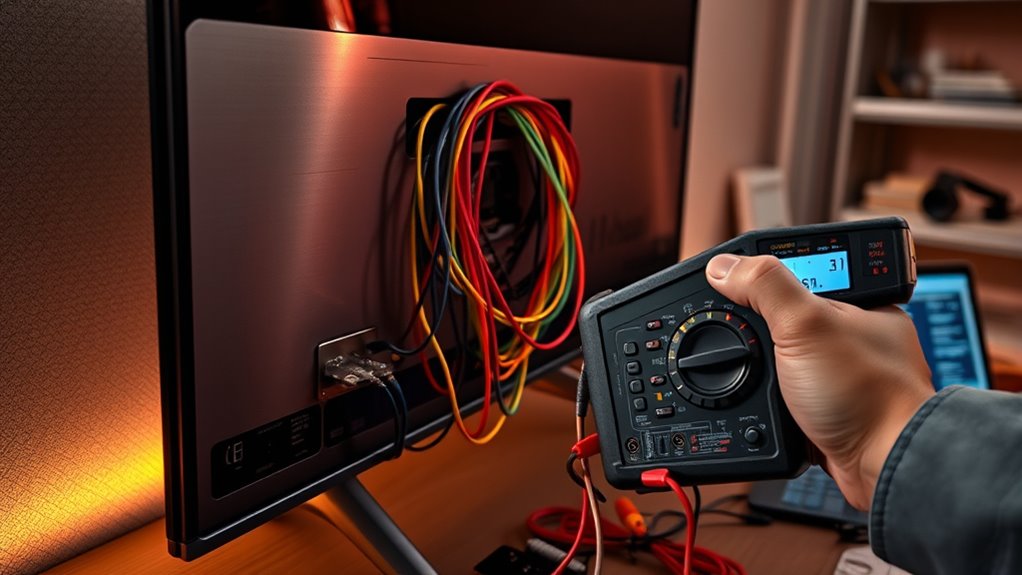

If CEC control isn’t working, start by verifying all devices support CEC and that it’s enabled in each device’s settings. Check your HDMI cables are secure and high-quality, and confirm the connections are correct. Power cycle your devices, unplugging them for at least 30 seconds before restarting. Make sure firmware is up to date and reset CEC settings to default if needed. Keep going, and you’ll discover more ways to fix common issues.
Open a free Amazon Business account
Business pricing, bulk buying and tax-exempt orders.
As an affiliate, we earn on qualifying purchases.
Key Takeaways
- Verify all devices support CEC and ensure the feature is enabled in their settings menus.
- Check HDMI cable quality, secure connections, and proper port alignment to ensure reliable communication.
- Power cycle devices by unplugging, waiting 30 seconds, then reconnecting and restarting sequentially.
- Update firmware and software on all devices to fix bugs and improve CEC compatibility.
- Reset CEC settings to default on devices and reconfigure, then test CEC functionality again.
As an affiliate, we earn on qualifying purchases.
Understanding How CEC Works
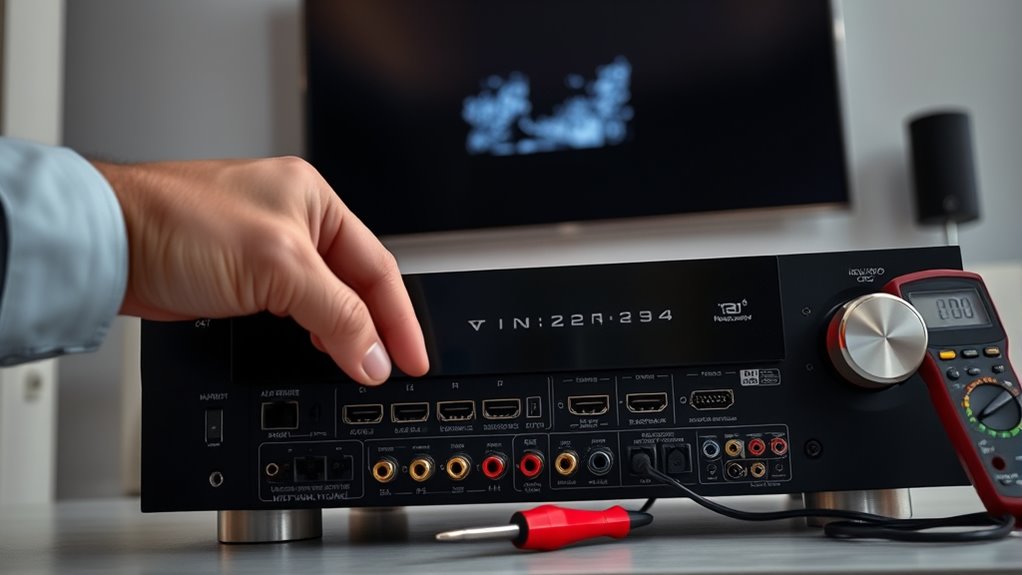
Consumer Electronics Control (CEC) is a feature that allows your connected devices to communicate and work together seamlessly through a single HDMI connection. The CEC protocol enables these devices to send commands and share information, making it easier to control multiple gadgets with one remote. When you connect devices via HDMI, they perform an HDMI handshake, establishing a communication link. During this handshake, the devices negotiate capabilities and set up the CEC protocol to guarantee smooth interaction. This process helps your TV, soundbar, and other devices coordinate actions like power on/off or volume control. Understanding how the CEC protocol and HDMI handshake work together clarifies how your devices become interconnected, providing a more integrated and user-friendly experience. Additionally, certain devices such as Honda Tuning systems can benefit from similar integrated control features to optimize performance and user convenience.
high-quality HDMI cables for CEC
As an affiliate, we earn on qualifying purchases.
As an affiliate, we earn on qualifying purchases.
Checking Device Compatibility
Before troubleshooting CEC control failures, it’s important to verify that all your devices support CEC functionality. Device diversity means some gadgets may not be compatible with CEC or might implement it differently, causing communication issues. Check each device’s user manual or settings menu to confirm CEC support. Additionally, ensure that your devices adhere to standard protocol standards, as incompatible or outdated standards can prevent proper communication. If one device doesn’t support CEC or uses a non-standard implementation, it could disrupt the entire control chain. Confirm compatibility across your equipment before proceeding with further troubleshooting. This step safeguards time and helps you identify whether the problem stems from device limitations or configuration issues.
Understanding the electric power output of bikes can also help diagnose connectivity problems, as insufficient or inconsistent power levels may affect device communication.
As an affiliate, we earn on qualifying purchases.
Ensuring Proper HDMI Cable Connections
Start by making sure your HDMI cable is securely plugged into the correct ports and properly aligned. Using high-quality HDMI cables can improve signal transmission and reduce connection issues. Double-check that the connections are firm and that you’re using cables rated for HDMI standards to guarantee reliable CEC communication. Additionally, verifying that your HDMI technology is compatible with your devices can prevent CEC control failures.
Check HDMI Port Alignment
Ensuring the HDMI cable is properly connected begins with checking the port alignment. You want to make sure the HDMI cable is fully inserted into the HDMI port on your device. Misaligned or loosely connected cables can cause connection problems, including CEC control failures. Carefully inspect the port to see if the HDMI connector sits flush and secure. Alignment issues often happen if the cable isn’t pushed in all the way or if the port is damaged. If you notice any gaps or if the cable feels loose, unplug it and reinsert it firmly, ensuring it’s properly aligned. Proper port alignment guarantees a solid connection, reducing the chances of signal interruptions and improving the reliability of CEC control. Additionally, verifying the integrity of the connection can help prevent potential signal disruptions that affect device communication.
Use High-Quality Cables
Using high-quality HDMI cables can substantially improve the stability of your CEC control. Poor cable quality often leads to weak signals, causing intermittent or failed communication between devices. Invest in cables with solid shielding and gold-plated connectors to reduce interference and guarantee a stable connection. When cables are reliable, your devices can consistently send and receive CEC commands without disruptions. Check that your HDMI cables are rated for high-speed data transfer, especially if you’re using 4K or HDR content. Properly connecting high-quality cables minimizes signal degradation and boosts connection stability, reducing the chances of CEC control failures. Remember, even the best devices can struggle if the cable isn’t up to standard, so prioritize quality to achieve reliable CEC performance. Data-driven strategies can help you identify the most effective ways to troubleshoot connectivity issues and optimize your setup.
As an affiliate, we earn on qualifying purchases.
Verifying CEC Settings on Devices
Start by ensuring CEC functionality is enabled on all your devices, as this is essential for communication. Next, check that your devices are compatible with CEC and support the features you need. Finally, confirm that CEC settings are correctly configured on each device to prevent communication issues. Additionally, verifying that your devices are using proper connection types can help maintain reliable CEC communication.
Enable CEC Functionality
To verify CEC settings on your devices, begin by checking that the CEC feature is enabled in the device’s menu. Ensuring CEC functionality is active allows proper communication according to the CEC protocol, which is essential for device interoperability. Navigate to your device’s settings, often found under the HDMI or system menu, and look for options like “CEC,” “HDMI-CEC,” or “Anynet+.” Enable these options if they’re turned off. Keep in mind that different brands may label CEC differently, but the goal is to activate this feature to facilitate seamless control between devices. Confirming CEC is enabled on all connected devices helps eliminate basic setup issues and improves the chances of successful device communication. Additionally, verifying that your devices support room-wide device control can help ensure comprehensive connectivity.
Check Device Compatibility
Before troubleshooting further, you should verify that all your devices support and have CEC enabled. Check the device labeling, as manufacturers often label HDMI ports or settings with terms like “CEC,” “ARC,” or “HDMI Control.” Confirm that each device explicitly supports CEC functionality, since not all devices do. If you’re unsure, consult the manufacturer support resources or user manuals for your equipment. Ensuring compatibility is critical because some devices may need firmware updates to enable CEC or may have settings that are turned off by default. Without proper device labeling and confirmed support, CEC control is unlikely to work. Verifying these compatibility details helps eliminate potential issues before diving into more detailed troubleshooting steps. Additionally, understanding the role of Hydrotherapy in physical recovery can be useful if your devices are part of a wellness or rehabilitation setup.
Confirm CEC Settings
Once you’ve confirmed that your devices support CEC, the next step is to verify that CEC is activated in their settings. Check each device’s menu for CEC protocol options, often labeled as “CEC,” “Anynet+,” “BRAVIA Sync,” or similar. Ensure the feature is turned on to facilitate proper device interoperability. Sometimes, CEC settings are disabled by default, so enabling it is essential for seamless communication. Additionally, confirm that no other settings or device restrictions are blocking CEC functionality. Verifying these settings helps prevent control failures caused by incompatible or disabled CEC protocols. Once enabled, test the system by using your remote to control connected devices, ensuring the CEC function operates smoothly across all components. Proper device interoperability is crucial for maintaining consistent CEC performance.
Power Cycling Your Devices
Power cycling your devices is often a simple yet effective step in troubleshooting CEC control failures. By turning your devices off and unplugging them for a few moments, you can resolve many issues related to device power cycles and HDMI port issues. This process resets the connection and clears temporary glitches. When you power everything back on, it often restores proper communication between devices. Additionally, using Vetted products can help ensure compatibility and optimal performance during troubleshooting.
Power cycling your devices can resolve CEC control issues by resetting connections and clearing glitches.
Try these steps:
- Turn off all connected devices
- Unplug them from power sources
- Wait 30 seconds or more
- Plug devices back in
- Power them on sequentially
This simple method can often fix device power cycles and HDMI port issues, ensuring your CEC controls work smoothly again.
Updating Firmware and Software

Keeping your devices’ firmware and software up to date is essential for resolving CEC control failures. Firmware updates often include bug fixes and improvements that enhance communication between devices, guaranteeing smoother CEC functions. Similarly, installing the latest software patches can fix security vulnerabilities and compatibility issues that might interfere with CEC signals. To update your devices, visit the manufacturer’s website or use the device’s settings menu to check for available updates. Regularly updating firmware and software minimizes the chances of control failures caused by outdated code. Remember, even minor updates can make a significant difference in CEC performance. Staying current with firmware updates and software patches ensures your devices communicate effectively and reduces troubleshooting time.
Resetting CEC Settings to Default
Resetting your CEC settings to default can often resolve communication issues between devices. This process, known as a CEC reset, restores the default settings, clearing any misconfigurations causing control failures. To perform a CEC reset, access your device’s settings menu, find the CEC or HDMI-CEC options, and select the reset or restore to default option. Doing so can fix problems like unresponsive remotes or devices not turning on together. Keep in mind, after the reset, you might need to reconfigure some preferences. Here are some tips to contemplate during the process:
Reset CEC settings to default to fix device communication issues and restore proper control functions.
- Double-check your HDMI connections
- Restart all devices afterward
- Ensure CEC is enabled on each device
- Update firmware if needed
- Test CEC functionality again
Additional Troubleshooting Tips
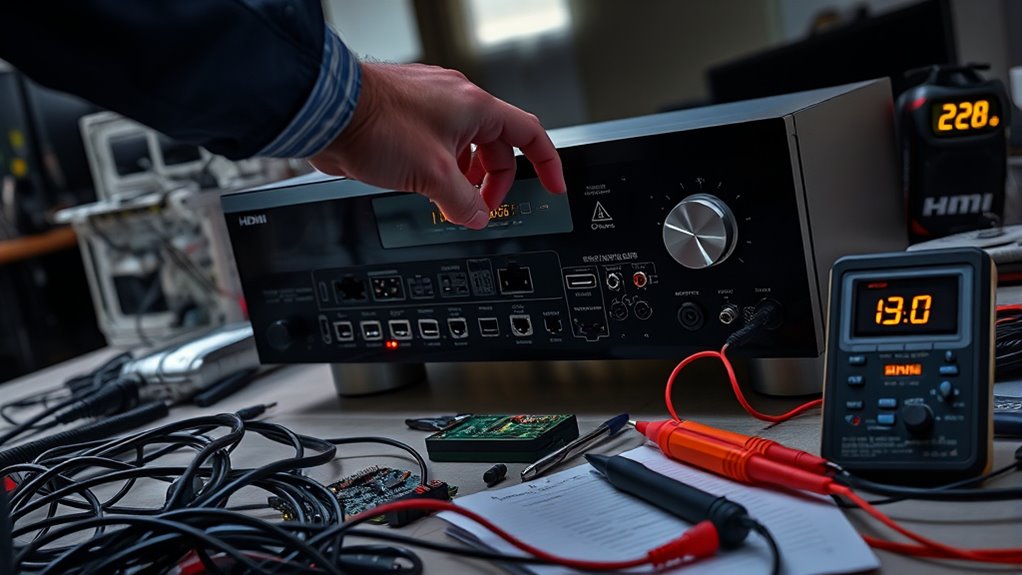
If you’re still experiencing CEC control failures after resetting the settings, there are several additional troubleshooting steps you can try. First, check if your remote control is functioning properly and has fresh batteries, as a weak signal can interfere with CEC commands. Next, try using voice commands to control your devices, which can bypass potential remote control issues. Ensure your devices support voice command features and that these are enabled in settings. Also, verify that all HDMI cables are securely connected and of high quality, as faulty cables can hinder communication. Finally, update firmware on your TV and connected devices, since outdated software can cause compatibility problems with CEC. These steps can help isolate and resolve issues blocking proper CEC operation.
Frequently Asked Questions
Can CEC Issues Be Caused by Interference From Other Electronic Devices?
Yes, CEC issues can be caused by interference from other electronic devices. Electromagnetic interference from gadgets like microwaves, wireless routers, or cordless phones can disrupt the CEC signal, leading to control failures. This signal disruption prevents proper communication between your devices. To fix this, try moving electronic devices away from your AV equipment, or turn off potential sources of interference to restore reliable CEC functionality.
How Long Does a Typical Firmware Update Take for Cec-Enabled Devices?
A firmware update for CEC-enabled devices usually takes about 10 to 30 minutes, depending on the device and update size—think of it like a quick tune-up for your tech engine. The update process time varies, but patience pays off. During this time, your device is working behind the scenes, much like a craftsman fine-tuning a masterpiece. Be sure to keep your device powered and connected for a smooth update.
Are There Specific Brands More Prone to CEC Control Failures?
Some brands are more prone to CEC control failures due to inconsistent brand reliability and hardware compatibility issues. You might notice frequent problems with certain manufacturers that don’t prioritize robust CEC implementation or have hardware that doesn’t sync well with other devices. To reduce these issues, stick to reputable brands known for better compatibility, and always make certain firmware updates are current to enhance overall device interoperability and minimize control failures.
What Environmental Factors Might Affect CEC Performance?
Poor power supply and ambient temperatures can considerably strain your CEC control’s performance. When power sources are weak or inconsistent, CEC signals stumble, causing failures. Similarly, extreme ambient temperatures—either too hot or too cold—can hamper electronic efficiency, leading to sluggish or failed communication. You should keep your environment moderate and your power stable, ensuring CEC control stays consistent, clear, and reliable, avoiding avoidable failures and frustrations.
Can Third-Party HDMI Cables Impact CEC Functionality?
Yes, third-party HDMI cables can impact CEC functionality. Poor HDMI cable quality or incompatibility with your devices may lead to CEC control failures. When you use cables with subpar shielding or incorrect specifications, signals may weaken or get lost, disrupting device communication. To guarantee proper CEC performance, opt for high-quality cables designed for device compatibility, and verify that they support CEC features.
Conclusion
When CEC control fails, it’s like trying to tune a delicate orchestra—every device must play in harmony. By checking compatibility, cables, settings, and updates, you’re conducting a symphony of seamless communication. Don’t let glitches mute your entertainment experience; troubleshoot with patience and precision. With each step, you’re weaving a web of connectivity that transforms chaos into harmony, ensuring your devices dance in perfect sync—turning technical static into a symphony of clarity.
Fall Picks
fall essentials
As an affiliate, we earn on qualifying purchases.