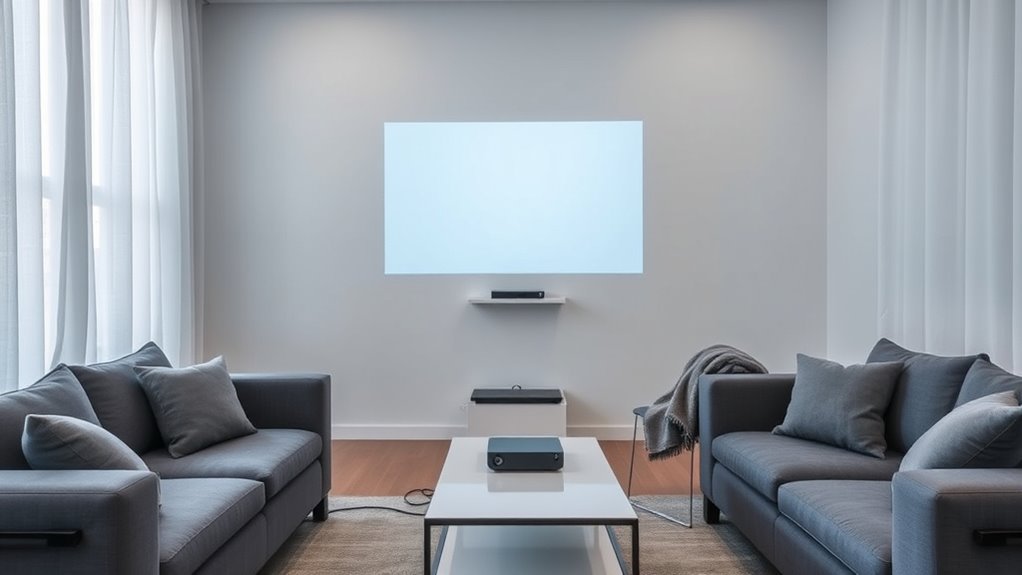

To set up a projector outdoors without permanent changes, follow your condo or HOA rules by opting for portable equipment and temporary setups. Get approval if required, and choose locations away from neighbors to prevent disturbances. Use screens that don’t spill light or interfere with shared spaces. Communicate your plans with management or the HOA to guarantee compliance. If you want to learn more about steering community rules for outdoor entertainment, keep exploring how to do it responsibly.

Get your home office setup delivered free — and shop member deals
- Fast, free delivery on millions of items
- Access to Prime Big Deal Days deals on October 6–7
- Prime Video, Amazon Music and more included
Key Takeaways
- Obtain HOA or property management approval before outdoor projector setup to ensure compliance with community rules.
- Use portable, non-permanent equipment like temporary screens and projectors to avoid structural modifications.
- Position the projector and screen to minimize light spill and disturbance to neighbors or shared spaces.
- Follow community guidelines regarding noise, lighting, and quiet hours to maintain harmony.
- Communicate plans clearly with neighbors and management to prevent conflicts and ensure responsible use.
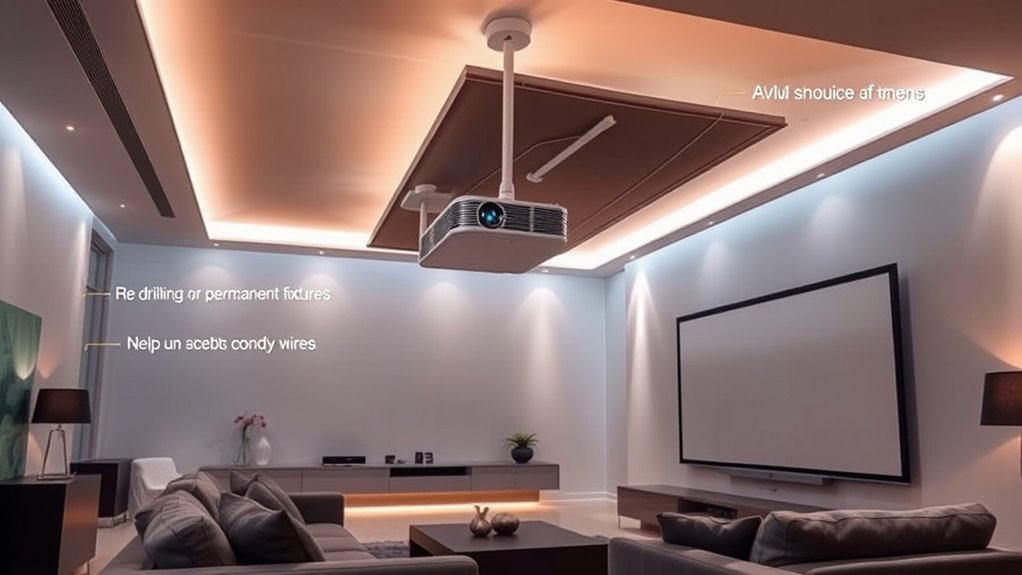
Are you familiar with the rules that govern condo and homeowner communities? If you’re considering setting up a projector for movie nights or outdoor screenings, understanding these regulations is essential. Many communities have specific guidelines to ensure residents’ renters’ rights are respected and that common areas remain harmonious. HOA regulations often outline what’s permissible when it comes to temporary modifications or equipment that might impact shared spaces or neighboring units. Knowing these rules upfront can save you time, frustration, and potential conflicts down the line.
First, it’s important to recognize that most HOA regulations differentiate between permanent alterations and temporary setups. Installing a projector usually falls under temporary use, but that doesn’t mean you can overlook the rules. Many HOAs require residents to submit a request or obtain approval before engaging in activities that could disturb others or violate community standards. This process helps protect your renters’ rights by ensuring you’re not infringing on others’ comfort or safety, and it prevents misunderstandings with your HOA management. You’ll want to review your community’s governing documents, including the CC&Rs (Covenants, Conditions, & Restrictions), rules, and policies, which often specify what’s allowed for outdoor or shared space usage.
When setting up a projector, consider the potential impact on neighbors. Keep in mind that noise, light pollution, and visual disturbance can be legitimate concerns. Many HOA regulations include quiet hours or restrictions on outdoor lighting at certain times. To avoid conflicts, choose a setup that minimizes these issues. For instance, position the projector away from neighboring units and use a screen that doesn’t spill light into others’ windows. Renting or using a portable projector can help you avoid permanent changes to shared structures or landscaping. This way, you’re respecting your renters’ rights and adhering to HOA rules, while still enjoying your movie nights. Additionally, investing in portable and non-permanent equipment can help ensure your setup remains flexible and compliant with community guidelines. Remember, communicating openly with your HOA or property management is also beneficial. Inform them of your plans and ask if any specific approvals are needed. Some communities have designated areas or approved times for outdoor entertainment, and following these guidelines demonstrates your commitment to being a responsible resident. Remember, many HOA regulations are designed to maintain community harmony, so working within these rules ensures you don’t accidentally breach your agreements.
As an affiliate, we earn on qualifying purchases.
Frequently Asked Questions
Can I Use a Projector Outdoors Without Violating Rules?
Yes, you can use a projector outdoors without violating rules. Just guarantee your outdoor lighting won’t interfere with the projector’s image quality. Use a weather-resistant projector and consider projector maintenance by protecting it from moisture and dirt. Set it up temporarily, avoiding permanent installations, and check with your community guidelines for any restrictions. This way, you enjoy outdoor movie nights without risking rule violations or equipment damage.
Are There Specific Noise Restrictions When Using Projectors?
Imagine your projector as a gentle whisper in a bustling library. You should check your community’s noise ordinances and sound level restrictions before you start. Many places have quiet hours or noise limits, especially in shared spaces. To avoid trouble, keep the volume low, especially late at night, and be mindful of neighbors. Respecting these rules guarantees everyone enjoys your outdoor movie night without disturbance.
How Do I Prevent Damage to Walls When Setting Up?
To prevent damage when setting up your projector, focus on wall mounting carefully. Use damage prevention methods like installing brackets with drywall anchors or command strips that won’t harm your walls. Avoid drilling or heavy nails unless permitted. Always check for studs and avoid fragile surfaces. By choosing the right mounting accessories and following proper installation techniques, you can enjoy your setup without risking wall damage.
Is There a Time Limit for Projector Use in Common Areas?
Yes, there are usually time restrictions for projector use in common areas. You should check with your building management or review the community guidelines to comprehend any specific limits on projector duration. These rules help ensure everyone gets a fair chance to use the space. Be mindful of the allotted time, and plan your projector sessions accordingly to avoid conflicts or violations.
Can I Rent or Borrow Projectors From the HOA or Management?
Think of HOA equipment like a shared toolbox—you can’t just take what you want without asking. You can usually rent or borrow projectors from management, but you need to follow their projector policies. Contact the HOA or management to check availability and rules. They often require reservations and adherence to usage guidelines to keep everything fair and in good shape for everyone.
outdoor projector screen portable
As an affiliate, we earn on qualifying purchases.
As an affiliate, we earn on qualifying purchases.
Conclusion
By following condo or homeowner rules, you can enjoy your projector without risking penalties or permanent damage. Did you know that over 60% of residents who adhere to building guidelines report higher satisfaction with their living environment? This shows that respecting shared rules fosters a harmonious community while allowing you to personalize your space temporarily. So, plan your setup carefully, use portable equipment, and keep your entertainment options open—your neighbors will thank you, and your lease will stay intact.
As an affiliate, we earn on qualifying purchases.
outdoor movie projector with HDMI
As an affiliate, we earn on qualifying purchases.
As an affiliate, we earn on qualifying purchases.
Fall Picks
fall essentials
As an affiliate, we earn on qualifying purchases.