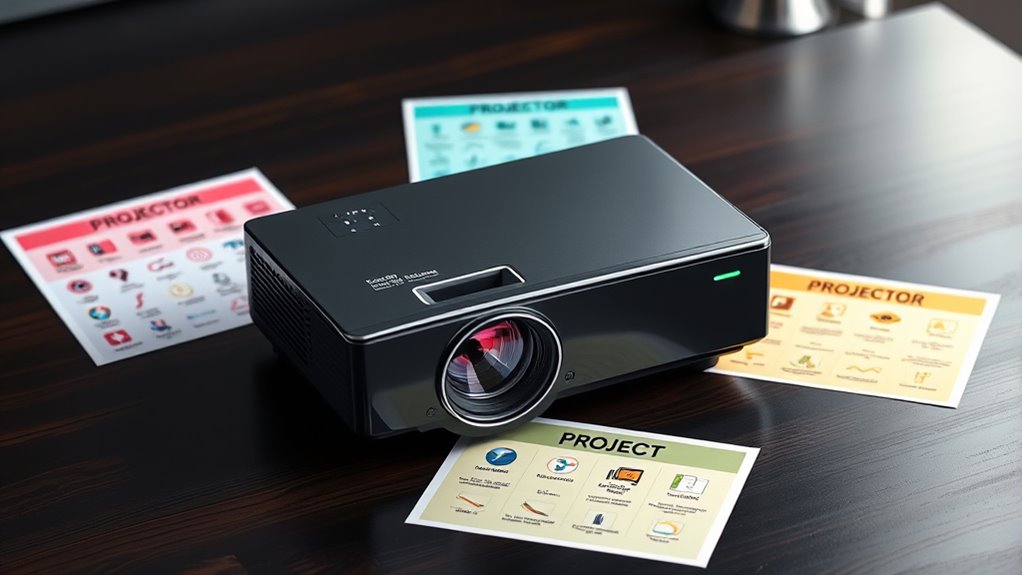
Exploring projector terminology from A to Z helps you understand key concepts like fixed-frame and portable screens, lamp hours, contrast, resolution, and setup terms. Knowing these terms makes it easier to choose the right equipment, troubleshoot issues, and optimize your viewing. Whether you’re selecting a screen type or planning maintenance, understanding these basics is essential. Keep going to discover more detailed explanations that can help you become confident in using and maintaining your projector.
Key Takeaways
- Familiarize yourself with basic terms like resolution, contrast ratio, and throw distance for better projector understanding.
- Learn specific screen types such as fixed-frame, portable, and tensioned for selecting the right viewing surface.
- Understand lamp lifespan, brightness, and maintenance terms to optimize projector performance and longevity.
- Know key components like lenses, filters, and cooling systems to troubleshoot and maintain your projector effectively.
- Use a comprehensive glossary to decode technical jargon, aiding in informed purchasing and setup decisions.
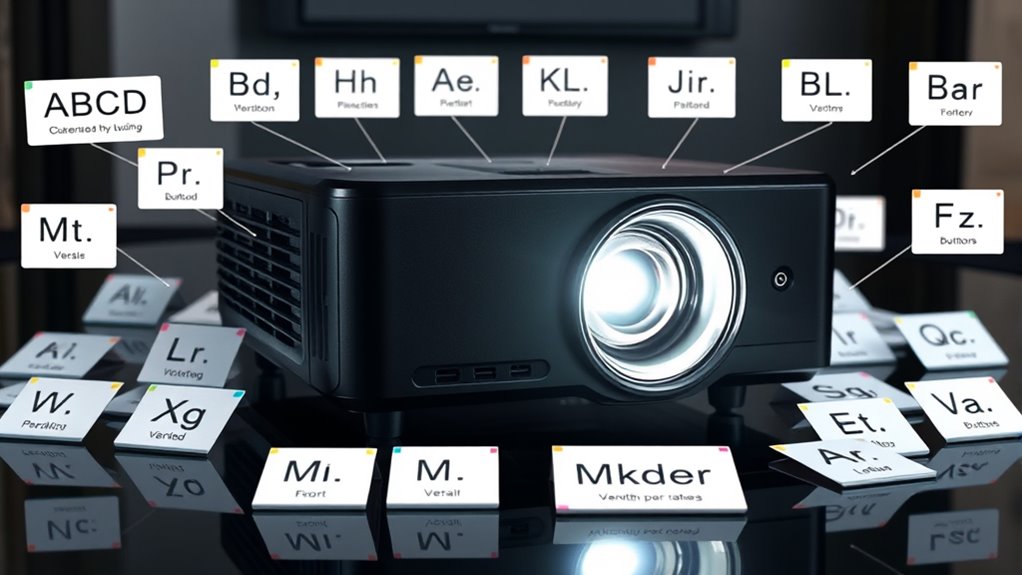
Ever wondered what all those projector terms mean? Let’s start by exploring some basics that can help you understand the essentials. When shopping for a projector, you’ll notice there are different types of projector screens available. The type of screen you choose can considerably impact your viewing experience. Some screens are designed for high contrast and vibrant colors, while others prioritize portability or ease of setup. For example, fixed-frame screens are ideal for permanent setups, offering a flat, taut surface for crisp images. Portable screens, on the other hand, are lightweight and foldable, perfect for presentations or movie nights on the go. There are also tensioned screens that prevent wrinkles and distortions, providing a smooth surface for projection. Knowing which type of projector screen suits your needs helps you get the most out of your device.
Another key aspect to contemplate is the projector lamp lifespan. The lamp is the heart of your projector, providing the light necessary to display images. Most projector lamps have a lifespan measured in hours, usually ranging from 2,000 to 10,000 hours, depending on the model and usage. A longer lamp lifespan means fewer replacements and lower maintenance costs over time. But keep in mind, the lamp’s brightness gradually dims as it ages, so you might notice a decline in image quality before it needs replacing. Some projectors come with features like lamp hour counters, which tell you exactly how long the lamp has been in use, helping you plan for replacements and maintain ideal image quality. Using your projector properly—like avoiding frequent on/off cycles and keeping it in a cool, dust-free environment—can extend the lamp’s lifespan. When the lamp does reach the end of its life, you’ll need to replace it to restore brightness and color accuracy. Additionally, understanding the lamp lifespan helps you budget for replacements and guarantees your viewing experience remains sharp and vibrant.
Understanding these foundational terms—types of projector screens and projector lamp lifespan—sets you up for better choices and prolonged enjoyment of your projector. Whether you’re setting up a home theater or preparing for a business presentation, knowing what to look for ensures you get the right equipment for your needs. It’s all about making informed decisions so that your projector performs consistently and delivers the quality you expect. With a clear grasp of these concepts, you’ll be well on your way to mastering more advanced projector terminology and getting the most out of your device.

XGIMI 100'' Fixed Frame Projector Screen 16:9 HD for Home Theater Cinema Business Presentations,Lightweight,Simple Installation,Ultra-Thin Design
Tailored for XGIMI Long-Throw Projectors: Providing an expansive, uniform viewing experience on select XGIMI long-throw projectors.
As an affiliate, we earn on qualifying purchases.
As an affiliate, we earn on qualifying purchases.
Frequently Asked Questions
How Do I Choose the Right Projector for My Needs?
To choose the right projector, consider your screen size and throw distance. Measure the space where you’ll set it up and decide how large your image should be. A short throw projector works well in small rooms, while a long throw is better for bigger spaces. Also, think about your environment’s lighting and resolution needs. By matching these factors, you’ll find a projector that fits your needs perfectly.
What’s the Difference Between LCD and DLP Projectors?
Imagine you’re hosting a movie night, and you notice DLP projectors often have better contrast, making dark scenes pop, while LCDs offer brighter images. DLP projectors typically have a longer lamp lifespan and handle throw distance better, making them ideal for larger rooms. LCD projectors tend to be more affordable but might struggle with color accuracy. Choose based on your room size and how long you want your lamp to last.
How Important Is Resolution for Home Projection?
Resolution is vital for home projection because it directly impacts image quality. Higher resolution means sharper details, especially on larger screens, making your viewing experience more immersive. When choosing a projector, consider your preferred screen size and throw distance, as these factors influence how well the resolution performs. A good resolution ensures clear images, even at a distance or on a big screen, enhancing your overall entertainment.
What Maintenance Is Required for Projectors?
You need to regularly maintain your projector by replacing the bulb when it dims or burns out. Keep the lens clean by gently wiping it with a soft, lint-free cloth to guarantee a clear picture. Additionally, check and clean air filters to prevent overheating. Regular maintenance like these helps prolong your projector’s life and preserves peak image quality, making your viewing experience consistently sharp and bright.
Can Projectors Be Used Outdoors Effectively?
Yes, you can use projectors outdoors effectively, but you need to take into account outdoor lighting and weatherproof features. Use projectors with weatherproof designs to withstand elements like rain and humidity. Also, choose a dark area or use a screen with high gain to combat ambient light from outdoor lighting. Proper setup ensures clear images and longevity, making outdoor projection enjoyable and practical for events or movie nights.

Portable Projector Screen with Stand Outdoor: Camping Projection Screen 80 inch 4K Movie Screen for Home Backyard Indoor 16:9 HD Night
【Convenient to Carry】The portable projector screen made by lightweight but sturdy aluminum, More suitable for outdoor, indoor, backyard…
As an affiliate, we earn on qualifying purchases.
As an affiliate, we earn on qualifying purchases.
Conclusion
Understanding projector terminology is like learning a new language—once you get the basics, everything becomes clearer. With this A-Z glossary, you’re equipped to navigate specs and features confidently. Think of it as your map through the world of projectors, guiding you to make smarter choices. Just as a compass points north, this knowledge keeps you focused on finding the perfect projector for your needs. Now, go ahead and bring your visuals to life with confidence!

COOBAN ELPLP96 /V13H010L96 Replacement Projector Lamp Bulb with Housing for Epson VS250 VS355 VS350 EX5260 EH-TW650 EB-S41 Powerlite Home Cinema 2150 /Powerlite Home Cinema 1060 2100 660 760 760HD
Life:Increasing the brightness of the bulb seems to be an easy task,The most difficult thing to break through…
As an affiliate, we earn on qualifying purchases.
As an affiliate, we earn on qualifying purchases.

BenQ WXGA Business Projector (MW560C) – DLP – 4,000 Lumens High Brightness – 20,000:1 High Contrast Ratio – HDMI, VGA – Auto Keystone Correction – Simple Setup – SmartEco Technology
BRILLIANT IMAGE QUALITY: 4000 ANSI Lumens high brightness and 20000:1 contrast deliver stunning display presentations
As an affiliate, we earn on qualifying purchases.
As an affiliate, we earn on qualifying purchases.