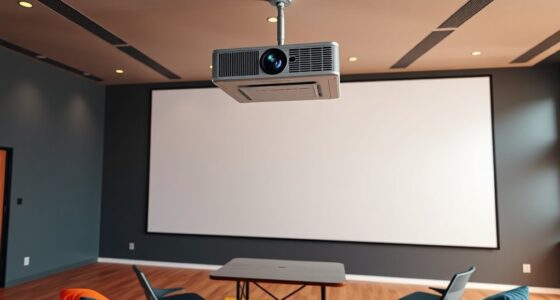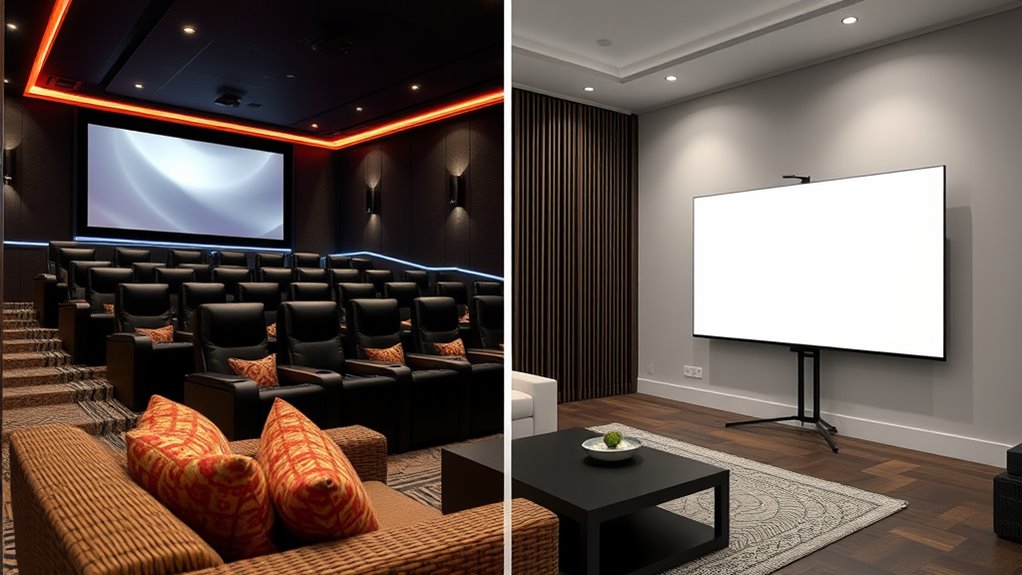

Setting up a projector works best in a dedicated home theater room because it offers better control over lighting, soundproofing, and space customization, creating an ideal viewing environment. Living rooms are more flexible but come with challenges like ambient light, noise, and limited control over the environment, which can affect picture and sound quality. To find out how to make the most of each space and improve your setup, explore the key differences and tips below.

Get business pricing on your home office setup
- Business-only prices and quantity discounts
- Tax-exempt purchasing
- Multiple users, one account, clear invoices
Key Takeaways
- Dedicated home theaters offer optimal lighting control, blackout options, and soundproofing for the best projector experience.
- Living rooms are flexible but often have ambient light and noise challenges that can affect picture quality.
- Customization and installation are easier in home theaters for sound, lighting, and screen placement.
- Living rooms may require additional modifications like blackout curtains or strategic lighting to improve viewing conditions.
- Overall, home theaters provide superior audiovisual performance, but living rooms offer convenience and multi-use functionality.
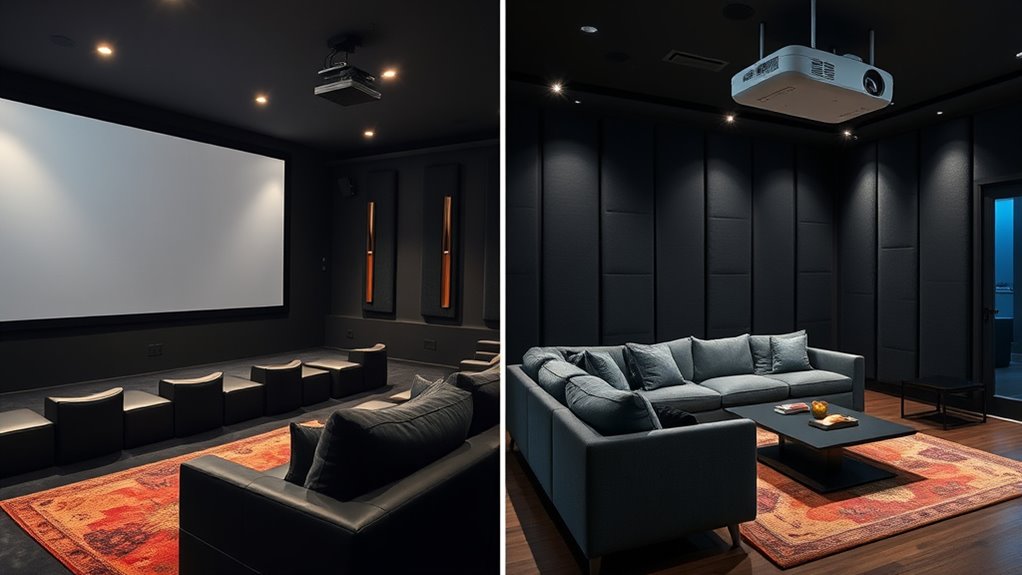
When deciding between creating a dedicated home theater room or using your living room for entertainment, it’s important to contemplate how each space affects your viewing experience. Your choice impacts everything from sound quality to lighting, and understanding these differences can help you make the right decision. If you opt for a home theater room, you get the advantage of customizing it to suit your needs, but you also face specific challenges like soundproofing and lighting control. Soundproofing is vital here because it prevents noise from spilling into other parts of your house and helps keep outside noise from disrupting your movie sessions. This often means adding insulation, sealing gaps, and installing acoustic panels, which can be time-consuming and sometimes costly. On the other hand, using your living room for your projector setup means you don’t have to worry about extensive soundproofing, but it can make controlling sound and light more difficult. Your living room is likely a shared space, so managing noise levels becomes trickier, especially if others are around or if you want to keep the space versatile for daily use.
Lighting control is another essential factor. In a dedicated theater room, you can install blackout curtains or dimmable lighting, giving you full control over the environment. This allows you to eliminate glare and reflections that would otherwise wash out your projected image. In contrast, living rooms tend to have windows and multiple light sources that are harder to control, leading to reflections and brightness issues that diminish picture quality. You might need to invest in additional window coverings or strategic lighting arrangements, but these solutions aren’t always perfect. Furthermore, since your living room is a multi-purpose space, you’re limited in how much you can modify the lighting without sacrificing its everyday functionality.
Ultimately, if you’re passionate about getting the best possible picture and sound, building a dedicated home theater room makes sense despite the initial investment and effort. It gives you the freedom to address soundproofing challenges and lighting control, creating an optimized environment for movie nights. However, if your space is limited or you prefer a flexible setup, using your living room might be more practical—even if it means accepting some compromises on sound isolation and lighting. Whichever option you choose, understanding these factors helps you set realistic expectations and guarantees your projector setup delivers the best possible viewing experience suited to your space.
blackout curtains for projector room
As an affiliate, we earn on qualifying purchases.
As an affiliate, we earn on qualifying purchases.
Frequently Asked Questions
How Does Ambient Lighting Affect Projector Image Quality?
Ambient lighting can greatly impact your projector performance by reducing image contrast and brightness. When there’s too much ambient light, your projector’s image may appear washed out, making details hard to see. To optimize quality, control ambient light with curtains or dimming options. Keep the room darker during viewing to ensure your projector delivers sharp, vibrant images, regardless of your space.
What Are the Best Soundproofing Options for Each Space?
Ever wondered how to keep sound from escaping your space? To soundproof effectively, you should use soundproofing materials like mass-loaded vinyl and acoustic panels. These materials absorb and block noise, creating a quiet environment. Consider adding acoustic treatments such as bass traps and diffusers to improve sound quality. Combining these options helps you enjoy your projector or music without disturbing others or being disturbed, regardless of your room type.
How Much Space Is Needed for Optimal Projector Placement?
You’ll need enough space for ideal projector placement, generally a projection distance of about 8 to 12 feet, depending on your projector’s specs. Make certain your ceiling height is sufficient—at least 8 feet—to avoid shadows and guarantee clear image projection. Measure carefully to align your projector with your screen, and consider room dimensions to prevent distortion and maximize viewing quality.
Can a Living Room Be Easily Converted Into a Home Theater?
Yes, you can easily convert your living room into a home theater. Think of it as transforming a chameleon’s skin—adaptable and seamless. Start by adjusting your furniture arrangement to focus on a blank wall or screen. Incorporate thematic décor to create an immersive vibe, and remove distractions. With some strategic planning, your living room will become a cozy, cinematic escape in no time.
What Are the Maintenance Differences Between Spaces?
In a living room, decor maintenance can be more frequent due to everyday use, spills, and clutter, while furniture upkeep might involve regular cleaning and occasional repairs. A dedicated home theater room usually requires less decor maintenance, focusing more on projector and sound system upkeep. You’ll find that maintaining the space involves keeping screens and equipment clean, and furniture in good condition, with fewer distractions and wear from daily activities.
soundproofing acoustic panels for home theater
As an affiliate, we earn on qualifying purchases.
As an affiliate, we earn on qualifying purchases.
Conclusion
Choosing between a dedicated home theater room and a living room depends on your space and priorities. Imagine transforming a spare room into a dedicated theater, like Sarah did, for immersive movie nights without distractions. Or, if you prefer flexibility, setting up a projector in your living room works best. Ultimately, whether you prioritize convenience or immersion, understanding your space helps you create the perfect viewing experience. Your ideal setup is just a decision away.
dimmable LED lighting for home theater
As an affiliate, we earn on qualifying purchases.
As an affiliate, we earn on qualifying purchases.
projector screen for living room
As an affiliate, we earn on qualifying purchases.
As an affiliate, we earn on qualifying purchases.
Fall Picks
fall essentials
As an affiliate, we earn on qualifying purchases.