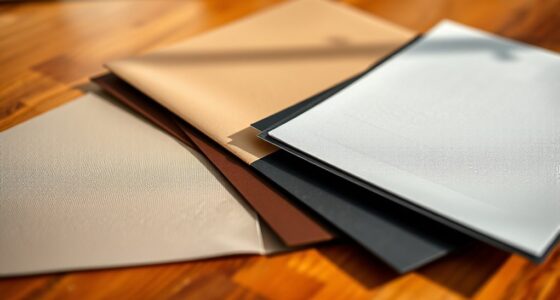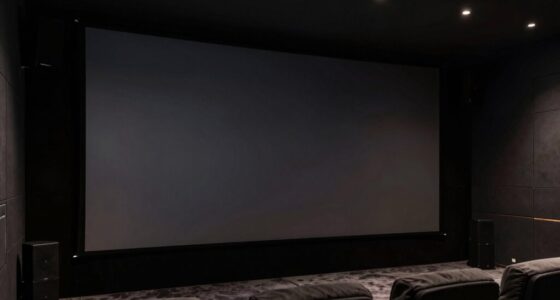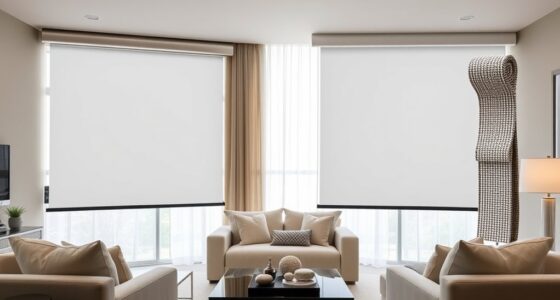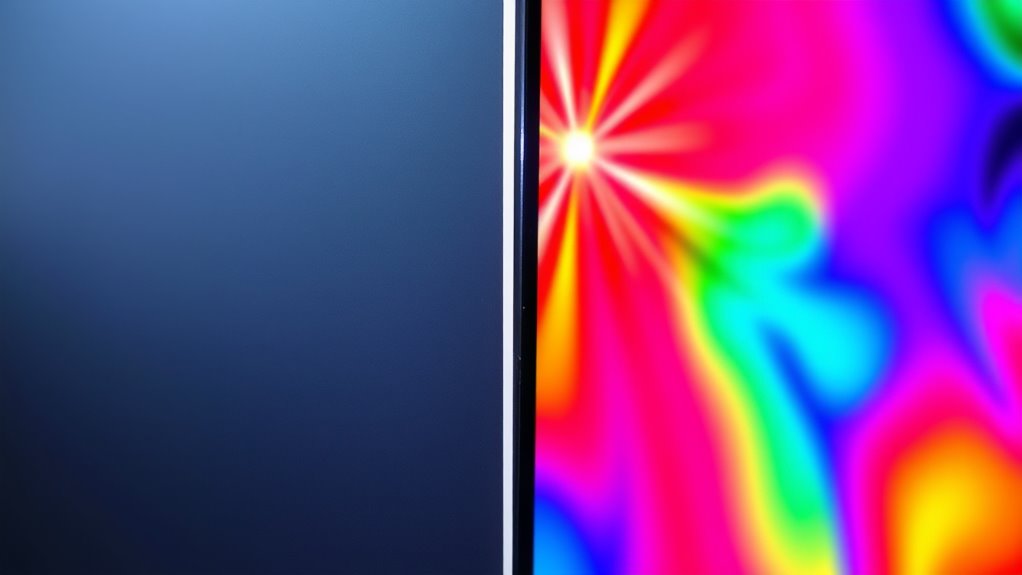
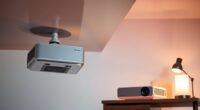
High gain screens boost brightness and contrast, making them great for well-lit rooms, but they’re more fragile and prone to hotspots or uneven images. Low gain screens offer durability, diffuse light evenly, and work well in environments with ambient light or frequent use, though they might not be as bright. Choosing depends on your space, usage, and preference for image quality. Keep exploring to find out which option suits your needs best.

Get business pricing on your home office setup
- Business-only prices and quantity discounts
- Tax-exempt purchasing
- Multiple users, one account, clear invoices
Key Takeaways
- High gain screens offer increased brightness and contrast for controlled environments but are more prone to hotspots and surface damage.
- Low gain screens provide durable, matte surfaces suitable for frequent use and diffuse ambient light evenly.
- High gain screens excel in environments with ambient light but require careful handling to prevent surface degradation.
- Low gain screens are ideal for versatile settings with varying light conditions, offering wider viewing angles and less glare.
- Choosing between them depends on environmental durability needs, ambient lighting, and desired image uniformity.
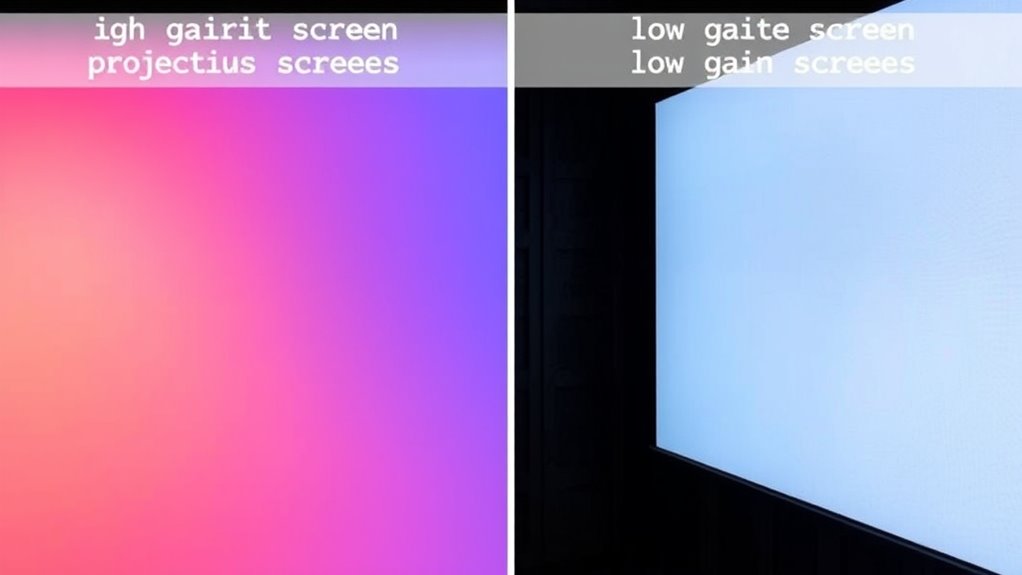
When choosing a projection screen, understanding the difference between high gain and low gain options is essential. One of the first factors to consider is screen durability. High gain screens are often made with reflective surfaces that are more sensitive to handling and environmental factors. If you plan to set up your screen in a busy or rough environment, you’ll want a model with sturdy construction to prevent damage over time. Low gain screens, on the other hand, tend to have a more robust, matte surface that withstands frequent use and cleaning better. This makes them a reliable choice for long-term durability, especially in settings where the screen might be touched or moved often.
Ambient light plays a vital role in determining which type of screen is best for you. High gain screens are designed to reflect more light back to the viewer, which makes them ideal for spaces with some ambient light. When you’re in a room that’s not fully darkened, a high gain screen can boost image brightness and contrast, ensuring you don’t lose detail or color vibrancy. However, this increased reflectivity can also cause hot spots—bright spots in the image where the light is most concentrated—and may lead to uneven picture quality if you’re not positioned correctly. Conversely, low gain screens have a more diffuse surface that scatters light evenly across the screen. This quality helps maintain consistent image quality regardless of ambient lighting conditions, making them suitable for rooms where controlling ambient light is difficult.
Choosing between high gain and low gain ultimately hinges on your environment and usage needs. If your space has controlled lighting and you want a brighter, more vivid image, a high gain screen might be the better option. Just be mindful of the potential for hotspots and the need for precise viewing angles to avoid image distortion. If you frequently watch in a room with ambient light or need a wider viewing angle, a low gain screen offers more uniformity and less glare, providing a more consistent viewing experience. Both types have their pros and cons, but understanding how screen durability and ambient light affect performance will help you select the right projection surface for your specific situation.
As an affiliate, we earn on qualifying purchases.
Frequently Asked Questions
How Do Ambient Light Conditions Affect Screen Gain Choices?
Ambient light considerably influences your screen gain choice. In a brightly lit viewing environment, you should opt for a high gain screen to reflect more light and maintain image brightness. Conversely, in darker rooms, a low gain screen prevents glare and offers better contrast. Adjusting screen gain based on ambient light ensures ideal picture quality, so consider your environment carefully to select the right screen for your needs.
Can High Gain Screens Cause Image Distortion or Hotspots?
Think of a high gain screen like a spotlight at a theater—it can cause hotspots and uneven lighting. Yes, it can lead to image distortion and compromised screen uniformity, especially if not positioned correctly. This affects image sharpness, making some areas overly bright while others are dull. To avoid this, make certain of proper installation and consider your room’s ambient light, so the image stays crisp and evenly lit.
What Maintenance Is Required for High Versus Low Gain Screens?
You should clean high gain screens more frequently, about once a month, to prevent dust buildup that can affect image quality. Low gain screens require less maintenance, typically every few months. Use a soft, damp cloth for surface material maintenance, avoiding harsh chemicals. Regular cleaning keeps both types in top condition, reduces hotspots, and prolongs their lifespan. Always follow manufacturer guidelines for specific cleaning techniques and recommended products.
Are There Specific Projector Models Better Suited for Each Screen Type?
You should choose projector models that match your screen’s gain; high gain screens often work best with short-throw or high-lumen projectors, while low gain screens suit standard models. When selecting a projector, check compatibility to guarantee ideal brightness and image quality. Also, follow screen installation tips like mounting at the right angle and height to maximize performance. This ensures your setup delivers the best viewing experience tailored to your screen type.
How Does Screen Gain Impact Long-Term Image Quality and Durability?
Screen gain considerably influences your screen’s durability and image longevity. Higher gain surfaces tend to reflect more light, which can lead to quicker wear and potential image degradation over time. Conversely, lower gain screens often provide more durable, long-lasting images with less risk of damage. To maximize long-term image quality and durability considerations, choose a screen with an appropriate gain level that balances brightness needs and resilience for your specific setup.
As an affiliate, we earn on qualifying purchases.
Conclusion
So, now you see the epic battle between high gain and low gain screens! Choosing the wrong one could turn your home theater into a dull, lifeless cave or an overexposed, blinding wasteland. It’s like picking between a superhero’s power or a kryptonite weakness—your viewing experience depends on it! Pick wisely, or risk sacrificing vivid clarity or deep contrast. Trust me, your eyes will thank you for making the perfect choice!
projection screen for ambient light
As an affiliate, we earn on qualifying purchases.
As an affiliate, we earn on qualifying purchases.
As an affiliate, we earn on qualifying purchases.
Fall Picks
fall essentials
As an affiliate, we earn on qualifying purchases.